
Table of Contents
- Why Hospital Groups Struggle with CPR Training Costs
- What Makes Group Pricing Actually Affordable
- How We Deliver Certification Without Breaking Your Budget
- Flexible Scheduling for Busy Healthcare Teams
- Our Blended Learning Approach Saves Time and Money
- Same-Day Certification Cards and Compliance
- Group Training at Over 100 California Locations
- Customized Corporate Training Programs for Healthcare Facilities
- RQI Simulation Technology for Better Skill Retention
- How to Get Started with Your Hospital Group Training
- Customer Support Throughout Your Certification Journey
- Frequently Asked Questions (FAQ)
Why Hospital Groups Struggle with CPR Training Costs
Your hospital or healthcare facility faces a real challenge: keeping your entire team current on life-saving certifications while managing tight budgets and competing staffing demands. When nurses, physicians, dentists, and EMS personnel all need Basic Life Support (BLS) or Advanced Cardiac Life Support (ACLS) certification, the costs add up fast. Traditional individual training routes force you to send staff members one at a time, creating scheduling nightmares and dragging out your training timeline across months.
Many healthcare organizations feel trapped between two bad options: expensive per-person training that strains departmental budgets, or delayed certifications that create compliance gaps. The real problem isn’t that quality training costs money. It’s that most providers don’t structure their pricing or delivery around how hospitals actually operate. We designed our group training specifically to address this tension, recognizing that your team needs affordable, efficient certification without sacrificing the hands-on skills practice that saves lives.
Your next step: Document how many staff members need certification renewal this year and what your current per-person training costs are. That baseline number becomes your benchmark for evaluating real savings.
What Makes Group Pricing Actually Affordable
We offer transparent group CPR discounts built around the reality of healthcare group training. When you bring your team together, you’re not just getting a volume discount tacked onto standard pricing. Our model eliminates redundant overhead costs: one instructor session, shared equipment, streamlined scheduling, and coordinated logistics all reduce what we pay to deliver training.
Here’s how this works in practice: A hospital department in Sacramento or San Jose bringing 15 nurses for BLS certification pays significantly less per person than if each nurse registered individually. The cost per certification drops further as your group size increases. We maintain this affordable pricing through our efficiency, not by cutting corners on instruction quality or equipment.
Our low price guarantee means you won’t find better rates elsewhere in California. This isn’t a promotional hook. We’re committed to keeping group certifications accessible so healthcare organizations can prioritize staff development without budget conflicts between departments.
What to do next: Contact us with your group size and certification needs. We’ll provide a custom quote that shows exactly what your team would invest per person and the total savings versus individual registrations.
How We Deliver Certification Without Breaking Your Budget
Our blended learning model combines virtual coursework with focused in-person skills sessions, allowing us to be efficient without compromising what matters most. Your team completes the knowledge-based portions online at their own pace, then arrives for a shorter, intensive skills practice with our instructors.
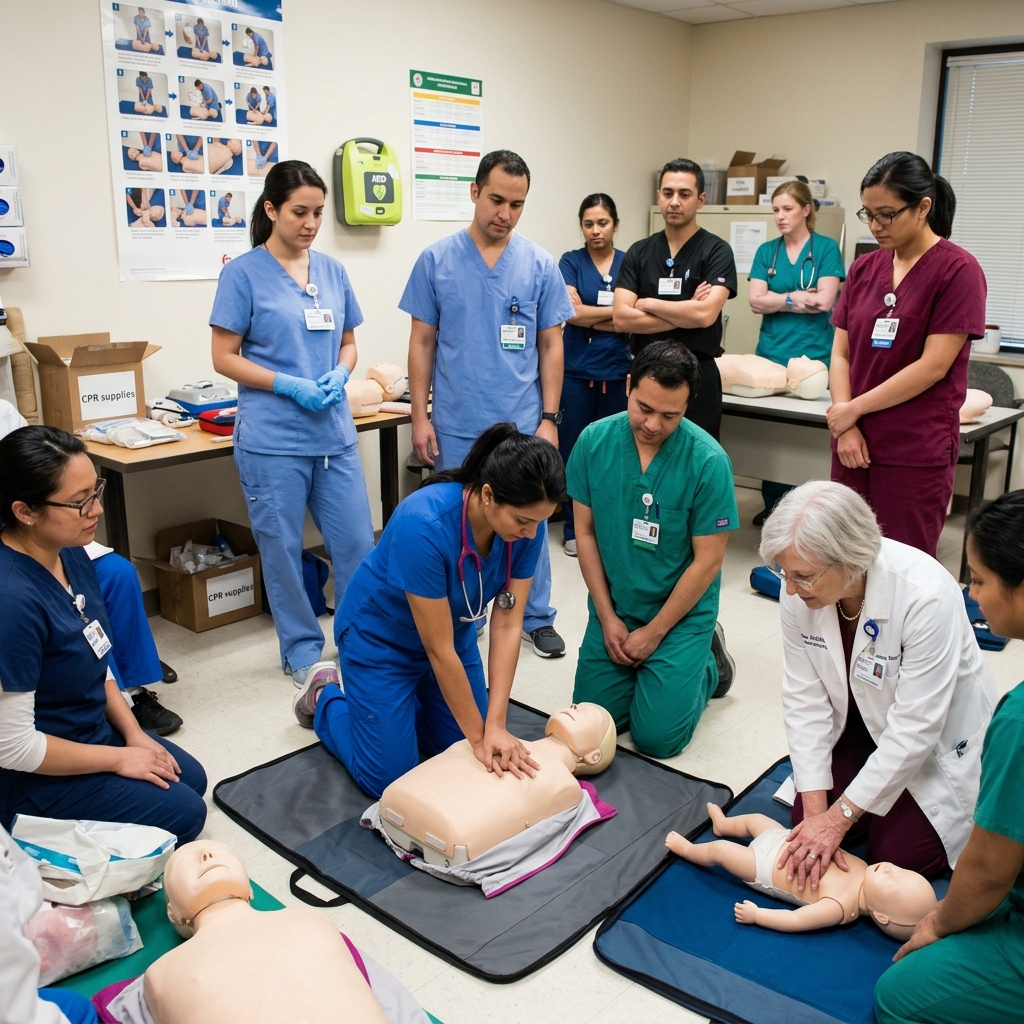
This structure reduces your facility’s disruption costs. Instead of taking staff offline for a full day of classroom lectures, you’re scheduling targeted hands-on practice sessions that typically run 2-4 hours. Your team members retain more knowledge because they’re already familiar with the material when they arrive to practice on manikins and receive real-time feedback from certified instructors.
We’re transparent about what each certification level requires. BLS certification focuses on chest compressions, rescue breathing, and defibrillator operation. ACLS builds on BLS to include medication administration and rhythm interpretation for healthcare providers managing cardiac emergencies. Pediatric Advanced Life Support (PALS) and Neonatal Resuscitation Program (NRP) certifications address specialized populations. Pricing reflects these different complexity levels, so you’re paying for exactly what your team needs, not padded packages.
Your action item: Request a sample learning schedule for your team size. Review whether the blended format works better for your facility’s operational rhythm than traditional all-day classroom sessions.
Flexible Scheduling for Busy Healthcare Teams
Healthcare facilities run 24/7, and we schedule training accordingly. We offer sessions throughout the week, including early morning and evening slots to accommodate shifts. Whether your team works emergency departments in Fresno or surgical centers in Palo Alto, we coordinate timing that minimizes coverage gaps.
Group training also lets you consolidate scheduling complexity. Instead of coordinating multiple individual registrations across different dates, you schedule one cohort session and manage a single logistics plan. We work with your leadership to find timing that works, whether that’s back-to-back sessions over two days or spread across a week.
Our multiple California locations spanning from Redding in the north to Visalia in the south means your team likely trains near your facility. This cuts travel time and makes it easier for staff to participate without extended time away from patient care. Locations in San Francisco, Oakland, Sacramento, San Jose, and virtually every major California metro area give you nearby options.
What to do: Contact us with your preferred training window (month, preferred days, morning or evening). We’ll propose specific dates at your nearest training location and explain any flexibility available.
Our Blended Learning Approach Saves Time and Money
The efficiency of blended learning extends beyond scheduling. By moving theoretical content online, we dedicate in-person time exclusively to where instructors add the most value: watching your team perform compressions, correcting hand placement, observing defibrillator use, and assessing real-world decision-making.
Your staff completes online modules before arriving, so instructors immediately dive into skills stations rather than lecturing. This focused approach means participants practice more, ask questions about specific scenarios, and develop muscle memory in manikin work. Retention improves because learning is active, not passive.
The cost savings compound across your organization. When you train 20 nurses simultaneously instead of individually, you’re not repeating the same instructor-led content five times over. You’re covering the material once with your full team, reducing instructor hours and facility space rental. That efficiency translates directly to lower per-person costs while maintaining certification quality.
Your next step: Ask about the typical time commitment for your team. We’ll break down how many hours they’ll spend online versus in-person, helping you plan coverage accordingly.
Same-Day Certification Cards and Compliance
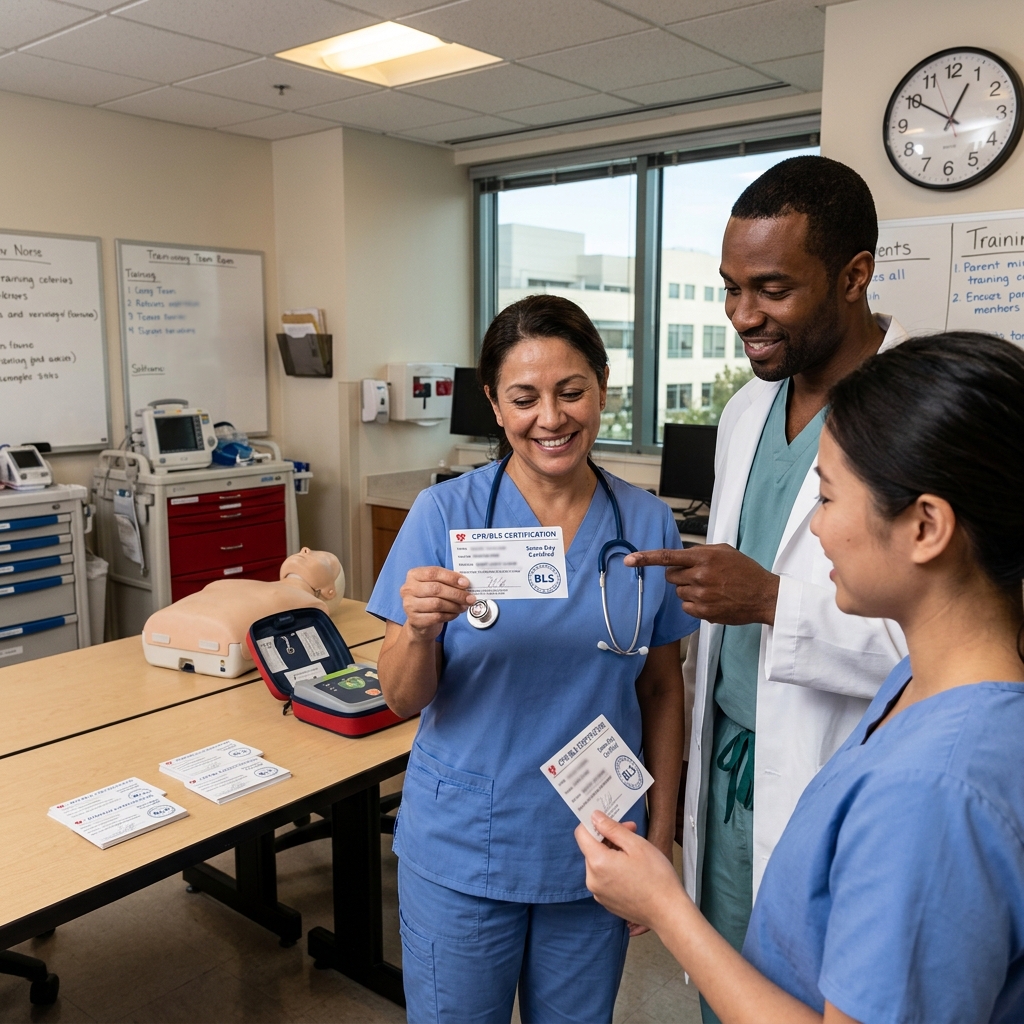
Your team walks out with valid certification cards the same day they complete their in-person skills session. No waiting for paperwork processing. No compliance gaps while you’re waiting for credentials to arrive in the mail. Immediate certification means your staff can return to full practice without delay.
This same-day credential delivery matters because healthcare licensing boards and employers need proof of current certification. Your staff members can update their professional files immediately. For departments coordinating certifications across multiple facilities in locations like Walnut Creek, San Mateo, or Berkeley, having credentials in hand same-day eliminates administrative friction.
We maintain digital records accessible through your account, so you can track your entire team’s certification status, renewal dates, and training history in one place. This centralized tracking simplifies compliance verification and helps you plan future renewal cycles.
Action to take: When you schedule your group, ask about your administrative dashboard. Understanding how to access records and track renewal dates prevents last-minute certification gaps.
Group Training at Over 100 California Locations
We operate training centers across California specifically because proximity matters. Your team shouldn’t need to drive an hour to reach a training facility. Whether you’re in Campbell, Modesto, Visalia, or Santa Rosa, we have a location nearby.
Our extensive location network also supports multi-facility healthcare systems. If your organization operates campuses in different cities, we can coordinate group training across locations. A hospital system with facilities in both Sacramento and Folsom can schedule separate cohorts with aligned certification dates, ensuring your entire organization maintains consistent training schedules.
Local presence means familiar instructors who understand California healthcare compliance requirements and local licensing board expectations. Your team receives training from experienced professionals who know what your regulatory environment demands.
What to do next: Find your nearest training location on our website. Confirm it works logistically, then mention it when you contact us about group pricing. This helps us tailor scheduling to your specific location.
Customized Corporate Training Programs for Healthcare Facilities
Your hospital or clinic has unique needs. Maybe you need ACLS for physicians and nurses, BLS for administrative staff, and PALS for pediatric units. We build custom training programs that address exactly what different departments require rather than forcing everyone through identical certification tracks.
We work with your leadership to assess which certifications each department needs, which renewal cycles are approaching, and what your multi-year training roadmap looks like. This strategic approach prevents certification gaps, spreads training investments across multiple fiscal periods, and ensures your team stays current without sudden budget spikes.
For facilities in Hayward, Livermore, or anywhere across our service area, customized programs might include regular quarterly training for new hires, annual refresher sessions scheduled in advance, or intensive certification pushes before peak staffing seasons. We adapt to how your organization operates.
Your action: Schedule a consultation with our corporate training specialists. Bring your current staff roster and certification requirements. We’ll design a program that fits your budget and operational calendar.
RQI Simulation Technology for Better Skill Retention
Our instructors use proven simulation technology and evidence-based teaching methods that improve how long your team retains critical skills. High-quality manikins allow realistic practice for chest compressions, airway management, and defibrillator scenarios. This hands-on repetition builds muscle memory that participants can access in actual emergencies.
Research consistently shows that simulation-based training improves performance outcomes compared to classroom instruction alone. When your nurses and physicians practice compressions with immediate feedback, correct their technique based on instructor guidance, and repeat scenarios multiple times, they develop automaticity. That means in a real cardiac emergency, their response is instinctive rather than hesitant.
We invest in current equipment and instructor training specifically because this investment protects your patients. Staff who have practiced compressions on quality manikins with skilled instructors perform better in actual cardiac events.
Next step: Ask about our simulation approach during your initial consultation. Understanding our equipment quality and instructor training philosophy helps you feel confident about the certification your team receives.
How to Get Started with Your Hospital Group Training
Start by contacting our team with basic information: your facility name, the number of staff members needing certification, which certification types you need (BLS, ACLS, PALS, NRP), and your preferred training window. We’ll respond with a customized quote showing per-person costs and total group investment.
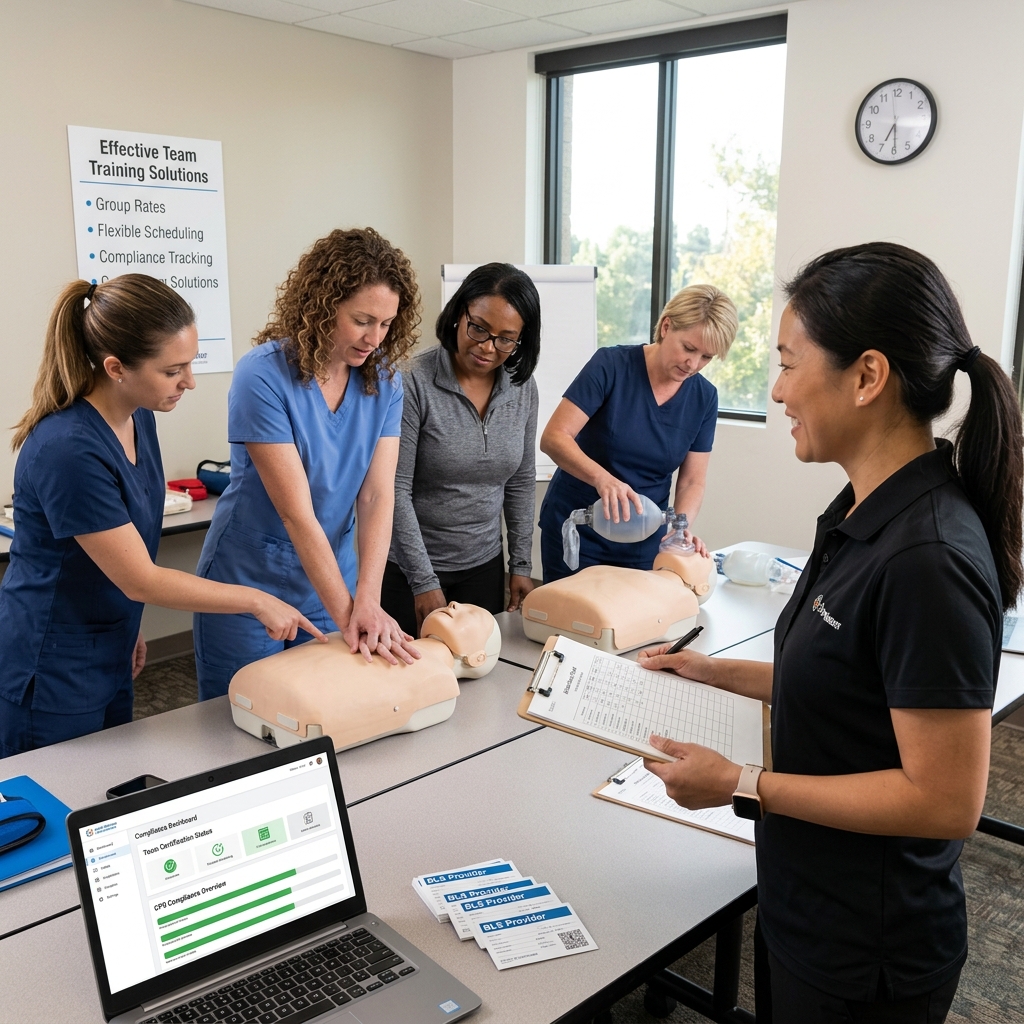
Review the quote alongside your current training expenses. Compare not just the dollar cost, but the operational efficiency gains: reduced staff time away from patient care, coordinated scheduling, same-day credentials, and centralized compliance tracking. Often the true savings extend beyond per-person pricing to include the administrative time your organization spends managing training logistics.
Once you approve pricing and timing, we handle the registration process, confirm your group’s online learning timeline, schedule your in-person skills sessions, and coordinate any facility-specific requirements you might have.
Your immediate action: Email us or call with your group details. Include your facility location (whether that’s Folsom, San Leandro, Petaluma, or elsewhere) so we can confirm your nearest training site and propose specific dates within your preferred timeframe.
Customer Support Throughout Your Certification Journey
We support your team before, during, and after certification. If a participant has questions about online modules, our support team helps them progress through the material. Before in-person sessions, we confirm attendance, answer logistical questions, and ensure everyone arrives ready to practice.
After certification, we maintain records of your group’s training history, renewal dates, and performance notes. This creates a foundation for planning future training cycles. Many facilities work with us on recurring annual or quarterly refresher programs, knowing exactly when certifications expire and when to schedule renewals.
Our customer-first approach means your experience matters. If scheduling needs change, if you need to add staff members to your group, or if you have questions about compliance requirements in Antioch, Redwood City, Stockton, or anywhere else in California, we’re here to help.
Your commitment: After your initial group training, schedule a brief follow-up conversation with us about your team’s experience and any feedback. This input helps us continue improving, and it gives us a chance to discuss your next training cycle timeline.
Healthcare teams deserve affordable, accessible certification training that doesn’t compromise quality or create operational stress. We’re committed to delivering exactly that across California. Your team’s ability to respond confidently in cardiac emergencies starts with effective training, and our group programs make that training both achievable and affordable.
Register for a class today.
Frequently Asked Questions (FAQ)
How much can we save with your group CPR training program?
We offer significant discounts on group BLS and CPR certifications compared to individual pricing, with savings that scale based on your team size. Our low price guarantee means you won’t find better rates for certified instruction in California, and we handle all the logistics across our 100+ locations so your budget stretches further. We can provide a custom quote based on your specific group size and certification needs.
Can we schedule training around our hospital’s staffing needs?
We absolutely can work around your schedule with our blended learning model, which combines virtual coursework with short in-person skills sessions at times that fit your team. We have daily BLS certification courses available, and we can coordinate multiple sessions across different shifts or days to minimize disruption to your operations. With locations throughout California, we can likely accommodate training right at or near your facility.
How quickly will our team receive their certification cards after training?
We provide same-day certification cards upon completion of our in-person skills session, so your staff can document their credentials immediately for compliance purposes. This means your team satisfies licensing and job requirements without waiting for processing or shipping delays. We understand hospitals need rapid turnaround on certifications, and we’ve built our process to deliver exactly that.