
Table of Contents
- 1. Blended Learning Programs with Virtual and In-Person Skills Sessions
- 2. Nationwide Training Locations for Maximum Accessibility
- 3. Specialized Certifications for Healthcare Professionals
- 4. Corporate Group Training with Competitive Pricing
- 5. Same-Day Certification Cards and Fast Processing
- 6. Why Safety Training Seminars Stands Out
- 7. Low Price Guarantee Without Compromising Quality
- Frequently Asked Questions (FAQ)
1. Blended Learning Programs with Virtual and In-Person Skills Sessions
Your healthcare team faces mounting pressure to maintain current certifications while juggling patient care, administrative duties, and ongoing professional development. Finding corporate CPR training that fits your schedule, delivers genuine hands-on skill-building, and provides legitimate credentials can feel overwhelming. The right training provider makes all the difference between a box-checked compliance exercise and transformative instruction that your team actually trusts to save lives.
We’ve helped thousands of California healthcare professionals and organizations solve this exact challenge. Our approach combines flexibility, accessibility, and uncompromising quality across over 100 locations statewide. Here’s what sets effective corporate CPR training apart and why we’re the provider healthcare teams choose when certification truly matters.
Your nursing staff can’t afford to lose an entire day to classroom-only training. We understand that constraint, which is why we designed blended learning to maximize efficiency without sacrificing hands-on competency.
Our model splits the training process strategically. Team members complete knowledge-based content online at their own pace, covering CPR fundamentals, rhythm recognition, and protocol refreshers from any location. This asynchronous component means your team doesn’t sit idle waiting for instructors to review basics everyone already partially knows.
The real training happens during scheduled in-person skills sessions. Your participants arrive ready to practice chest compressions, airway management, and defibrillator operation under direct instructor observation. These focused, hands-on sessions typically run 2-4 hours rather than full-day commitments, dramatically reducing scheduling friction for departments already stretched thin.
Participants in San Francisco (Mission Bay), Oakland (Lake Merritt), and Sacramento (Midtown) have found this approach cuts total time investment by 40% compared to traditional all-day formats. Your team builds practical confidence while you maintain operational continuity.
What to do next: Ask your training provider whether virtual content covers your specific certification level (BLS for Healthcare Providers versus ACLS or PALS). Confirm that skills sessions include live, hands-on practice with actual equipment, not just video demonstrations.
2. Nationwide Training Locations for Maximum Accessibility
Scheduling logistics multiply quickly when your team spans multiple facilities or departments. Centralizing everyone at a single training site often requires transportation, time away from their primary location, and coordination nightmares.
We operate over 100 training locations throughout California, placing classes within reasonable reach of most healthcare teams. Whether your dentists practice in San Jose (Japantown), your EMS personnel are based in Fresno, or your nurses work across Campbell, Walnut Creek (Shadelands), and Santa Rosa (Downtown), we offer classes nearby.
This geographic density means your staff can attend sessions close to work or home, attending morning classes before shifts or evening sessions afterward. Your corporate coordinator contacts one provider and accesses multiple location options rather than researching scattered availability across different regions.
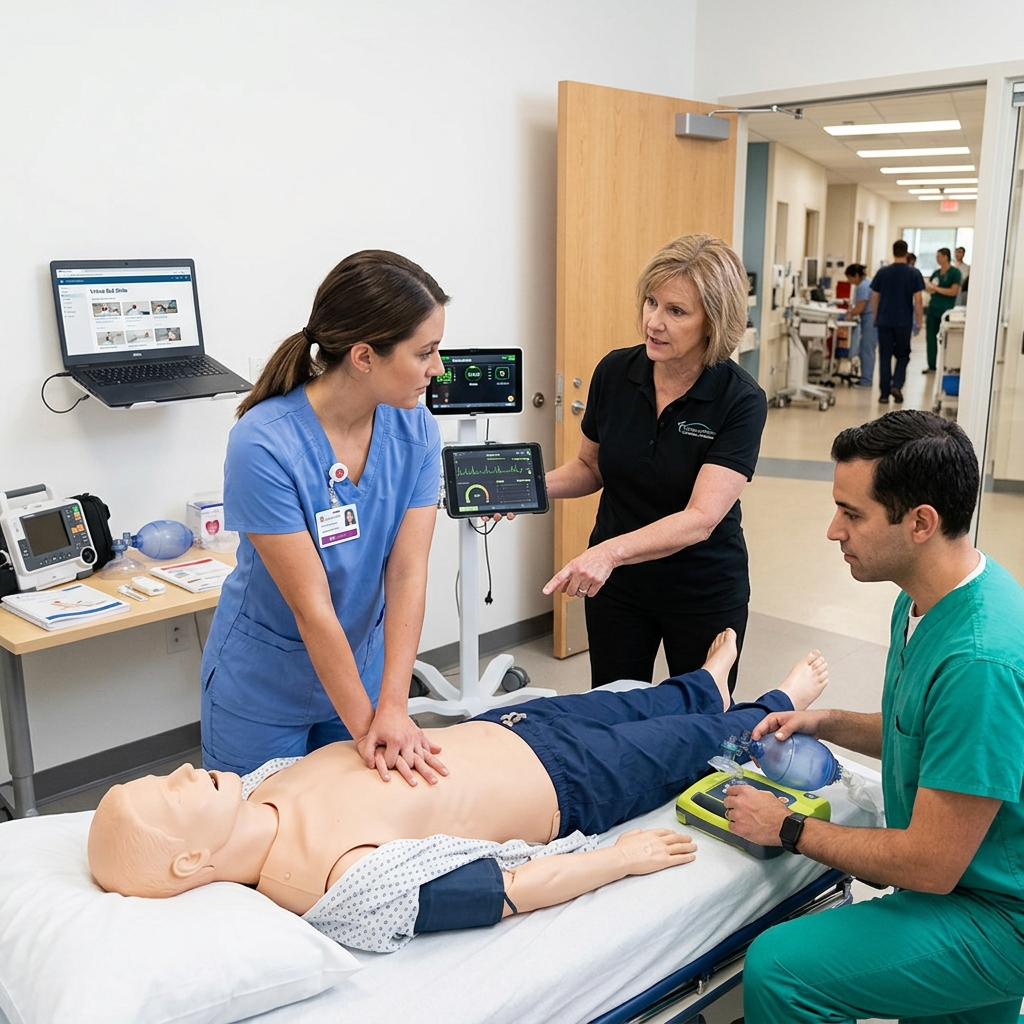
Local availability also reduces travel time per employee. A session 15 minutes away from the workplace generates far less scheduling strain than one requiring 45-minute commutes, particularly for shift-based healthcare workers who can’t simply extend a lunch break.
What to do next: Request a location map or list for your primary service area. Confirm that class times (morning, evening, weekend options) align with your team’s actual work schedules, not just theoretical availability.
3. Specialized Certifications for Healthcare Professionals
Not all CPR training addresses the specific scenarios your team faces. General adult BLS differs meaningfully from ACLS (Advanced Cardiac Life Support) protocols, which differ again from PALS (Pediatric Advanced Life Support) or neonatal resuscitation.
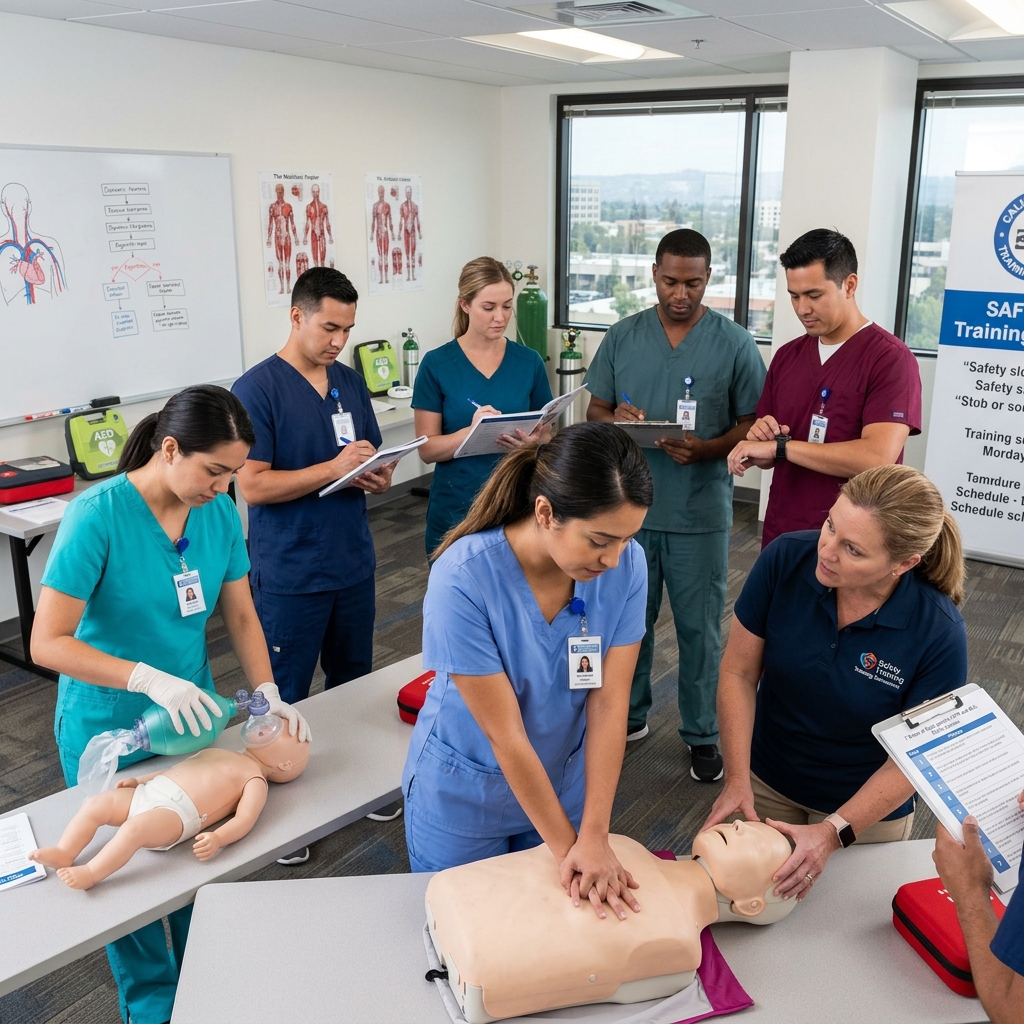
We offer certifications specifically designed for healthcare providers at every level. BLS for Healthcare Providers covers the fundamentals your nurses, technicians, and support staff absolutely require. ACLS deepens knowledge for nurses managing critically ill adults, covering medication administration, advanced airway techniques, and post-resuscitation care in realistic hospital scenarios.
PALS certification trains providers who care for children, covering pediatric-specific algorithms, medication dosing, and equipment modifications. Our NRP (Neonatal Resuscitation Program) certification serves labor-and-delivery staff and neonatal intensive care teams.
Your staff doesn’t sit through irrelevant content. A dental team in Palo Alto takes focused BLS training, while your critical care nurses at a Sacramento (Arden) facility pursue ACLS with faculty who understand the protocols they’ll actually implement. This specialization means faster learning curves and genuinely applicable skills.
What to do next: Audit your staff roles and determine which certifications your organization actually requires. Many healthcare employers mandate specific levels, and mismatched training wastes time and money. Confirm your provider offers all required specializations.
4. Corporate Group Training with Competitive Pricing
Individual certification courses help one person at a time. Corporate group training transforms your entire team’s readiness while dramatically lowering per-person costs.
We offer group CPR discounts structured around your team size and scheduling needs. Groups of eight or more unlock significantly reduced per-person rates, turning individual $150-200 sessions into team investments under $100 per participant. For larger organizations with 50+ staff, custom on-site training at your facility becomes economically feasible and operationally seamless.
Custom on-site sessions eliminate travel entirely. We bring instructors to your Merced clinic, Livermore urgent care, or San Leandro outpatient center. Your entire team trains together, building confidence as a cohesive unit and reducing scheduling complexity to a single day or evening.
Group training also creates accountability. When your whole team certifies together, no one falls behind. You avoid the HR nightmare of chasing down incomplete certifications across departments, and your compliance metrics strengthen overnight.
What to do next: Contact us with your team size and note any scheduling constraints (shift-based staff, multiple locations, preferred timing). We’ll calculate group pricing and explore whether on-site training becomes viable for your organization.
5. Same-Day Certification Cards and Fast Processing
Certification delays complicate hiring, transfers, and compliance audits. If your new critical care nurse must wait two weeks for official credentials, you’re stuck with restricted assignments and frustrated staff.
We issue certification cards immediately upon successful completion, often same-day. Your team leaves the skills session with physical proof of competency in hand. No waiting for processing, no digital-only credentials that supervisors question, no gaps in your compliance documentation.
This rapid turnaround matters clinically and administratively. Your ED (emergency department) can assign newly certified BLS holders to patient-facing roles immediately. Your credentialing department completes physician privileging faster. Your compliance officer can verify current certifications without chasing down documentation.
We also maintain verification stations at select locations in Bakersfield, Berkeley (Downtown), Concord, Danville, and Dublin, allowing your team to validate credentials at any point during their three-year certification window.
What to do next: When scheduling group training, confirm card issuance timing with your coordinator. Ask whether your training location offers verification services for future recertification cycles.
6. Why Safety Training Seminars Stands Out
The marketplace offers training options, but most fall short in consistency, accessibility, or genuinely hands-on instruction. Many providers stretch thin across multiple states or nations, unable to maintain regional expertise. Others rely heavily on online content, treating skills sessions as afterthoughts. Still others charge premium prices while cutting corners on instructor experience or equipment quality.
We built our operation around California healthcare professionals specifically. Our instructors work in or have worked in healthcare delivery, bringing real-world understanding of your actual protocols and scenarios. They train in your context, not generic CPR theory disconnected from emergency medicine.
Our commitment to accessibility means 100+ locations, daily class offerings, and flexible scheduling options that actually accommodate shift workers and multi-site organizations. Your team doesn’t squeeze training into inconvenient slots; we bend our schedule to yours.
On price, we stand behind our low price guarantee. If you find equivalent certification at a lower price, we match it. This eliminates the false choice between affordability and quality, ensuring your budget stretches further without betting your team’s competency.
What to do next: Request instructor backgrounds or experience credentials. Verify that your provider’s instructors have genuine healthcare delivery experience, not just training certifications.
7. Low Price Guarantee Without Compromising Quality
Many organizations assume better training costs proportionally more. That’s simply untrue when a provider operates efficiently and focuses on your market rather than premium positioning.
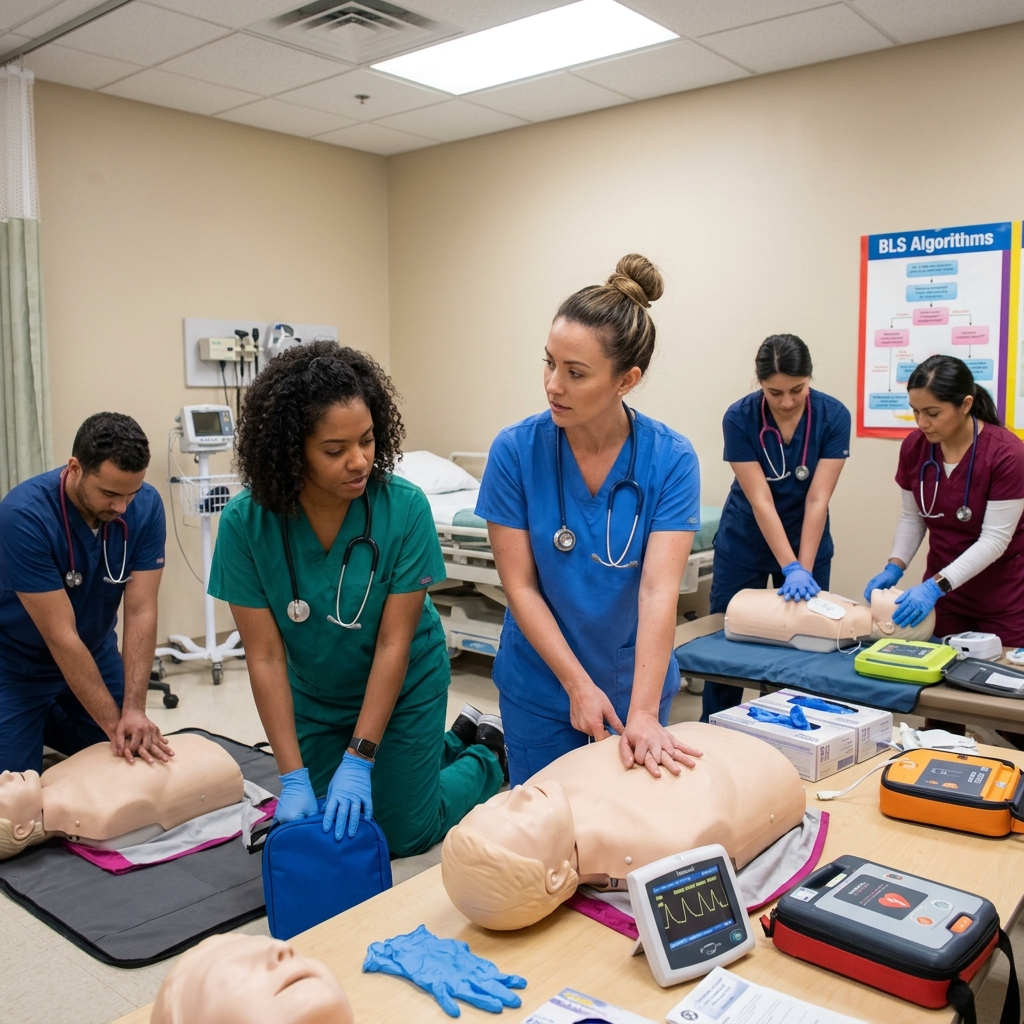
Our pricing reflects operational efficiency and scale across California rather than overhead burden. We keep class sizes reasonable (typically 6-12 participants), ensuring every student gets hands-on practice and individual feedback. We maintain equipment quality without luxury mark-ups. We pay competitive instructor salaries without inflating course costs.
Your investment covers exactly what matters: skilled instructors, actual mannequins and equipment, realistic scenarios, and legitimate credentials. No frills, no unnecessary cost layers, no hidden fees.
Organizations in Antioch, Stockton, Visalia, and Woodland have switched to us from higher-priced alternatives and found training quality actually exceeds expectations. Your budget doesn’t determine whether your team receives competent instruction; our guarantee ensures you get both quality and affordability.
What to do next: Compare our pricing to alternatives offering equivalent certifications. Request a detailed quote including group discounts for your organization. We’re confident our rates win, and our guarantee backs that promise.
—
Your healthcare team’s readiness depends on training that’s genuinely accessible, specifically designed for your role, and delivered by instructors who understand your reality. We’ve built Safety Training Seminars to be exactly that provider. With over 100 California locations, blended learning flexibility, specialized healthcare certifications, corporate group pricing, same-day cards, and our low price guarantee, we remove every excuse between your team and current, confident CPR competency.
Contact us today to schedule your group training. We’ll work within your schedule, deliver at your preferred location, and ensure every team member completes certification ready to save lives.
Register for a class today.
Frequently Asked Questions (FAQ)
How does our blended learning approach work for corporate teams?
We combine virtual instruction with hands-on in-person skills sessions so your team can learn at their own pace before coming together for practical training. Our model lets employees complete online coursework on their schedule, then attend a focused session at one of our 100+ California locations to practice and demonstrate competency. This approach keeps your team productive while ensuring everyone receives comprehensive, certification-ready instruction.
What locations do we serve for on-site corporate training?
We operate across California from the Bay Area through Sacramento, Central Valley, and Southern regions with over 100 training sites. Whether your healthcare facility is in San Francisco, Los Angeles, San Diego, or anywhere between, we can bring our certified instructors to your workplace or arrange classes at a convenient nearby location. Our extensive network means minimal travel time for your staff and maximum scheduling flexibility for your organization.
Can we get same-day certification cards after completing training?
Yes, we issue certification cards immediately upon successful course completion so your team can return to work with documentation in hand. Our fast processing system eliminates delays in credential verification and keeps your staffing schedules uninterrupted. We also maintain CPR verification stations at our locations for quick card updates and renewals.