Table of Contents
- The Challenge EMS Agencies Face with Rigid Training Schedules
- How Traditional Training Falls Short for Busy Personnel
- Why Blended Learning Works for Emergency Responders
- Our Comprehensive Blended Approach to EMS Certification
- Flexibility That Fits Your Agency's Operational Needs
- Real Skills Practice with Virtual Foundation Learning
- Fast-Track Certification Without Compromising Quality
- Scaling Training Across Your Entire EMS Agency
- Cost-Effective Solutions for Multi-Location Departments
- Supporting Ongoing Recertification Requirements
- Partner With Us for EMS Training Excellence
- Frequently Asked Questions (FAQ)
The Challenge EMS Agencies Face with Rigid Training Schedules
Your EMS team operates on unpredictable schedules. Shift rotations, emergency calls, and critical staffing gaps make traditional classroom training nearly impossible to coordinate. When you schedule a two-day in-person certification course, someone’s always covering a station or pulling a double. The result: training gets postponed, staff remain uncertified, and compliance deadlines slip closer.
We understand this friction firsthand. EMS agencies across California, from Sacramento to San Diego, tell us the same story: they need their personnel trained on their timeline, not an instructor’s predetermined schedule. Rigid training blocks don’t align with how emergency services actually operate. A paramedic working 24-hour shifts can’t afford to lose two consecutive business days, and a supervisor managing multiple stations can’t pull everyone at once.
This scheduling inflexibility has real consequences. Staff miss recertification windows, agencies face compliance gaps, and the training that should strengthen patient care gets delayed or rushed. The solution isn’t better scheduling software; it’s redesigning how EMS training itself works.
How Traditional Training Falls Short for Busy Personnel
Traditional training models ask EMS personnel to absorb everything in a compressed classroom environment. You sit for hours absorbing theory, watching demonstrations, and hoping the knowledge sticks when you’re back on shift. But traditional approaches overlook how emergency responders actually learn and retain critical skills.
Real-world EMS work demands muscle memory and rapid decision-making. You can’t learn these from lectures alone. Yet traditional programs often front-load classroom time and squeeze hands-on skills practice into the final hours. Personnel leave with certificates but without the repetition and spacing that builds true competence.
There’s also the isolation problem. Classroom training separates learning from the clinical context where you’ll apply it. A nurse reviewing cardiac algorithms in isolation processes information differently than when she’s reviewing those same algorithms while practicing compressions on a manikin. Context matters profoundly for retention and confidence.
Cost and accessibility compound these issues. Traveling to a distant training center, covering shift costs, and blocking out consecutive days strains both individual budgets and agency resources. For multi-location departments, coordinating training across all your stations becomes logistically nightmarish.
Why Blended Learning Works for Emergency Responders
Blended learning combines virtual foundation work with in-person skills sessions, creating a model that matches how EMS professionals actually learn. The approach leverages the strengths of both modalities while eliminating the weaknesses of either alone.
Virtual learning handles what doesn’t require hands-on practice. Algorithm review, case scenario analysis, and theoretical foundation work happen on your schedule, at your pace. You watch a module on the ACLS cardiac arrest algorithm at 2 AM if that fits your rhythm. You pause, review, take notes. No pressure to keep up with a live class. No wasted time waiting for others to catch up.
Then, when you’re ready for skills practice, you come to an in-person session fully prepared. Your instructor doesn’t waste time lecturing you on concepts you’ve already absorbed. Instead, you spend focused time on what matters: performing compressions correctly, using equipment confidently, and practicing decision-making under realistic conditions.
This separation of concerns improves outcomes. Research on learning science consistently shows that spacing practice across time increases retention. Blended learning naturally creates that spacing. You engage with material asynchronously, then apply it physically days or weeks later. Your brain consolidates knowledge differently than it would from a single compressed session.

Blended learning also adapts to individual learning styles. Some personnel learn fastest through video. Others prefer written materials. Some need multiple practice reps before confidence builds. Traditional courses force everyone into the same pace. Blended models let you learn the way you learn best.
Our Comprehensive Blended Approach to EMS Certification
We’ve designed our blended EMS training to solve the specific challenges your agency faces. The model works like this:
Your personnel start with our online foundation modules, which cover all theoretical requirements for your certification. Whether you’re pursuing BLS (Basic Life Support), ACLS (Advanced Cardiovascular Life Support), or PALS (Pediatric Advanced Life Support), you complete the knowledge component whenever your schedule permits. Video, written materials, and interactive modules ensure you genuinely understand concepts, not just memorize answers.
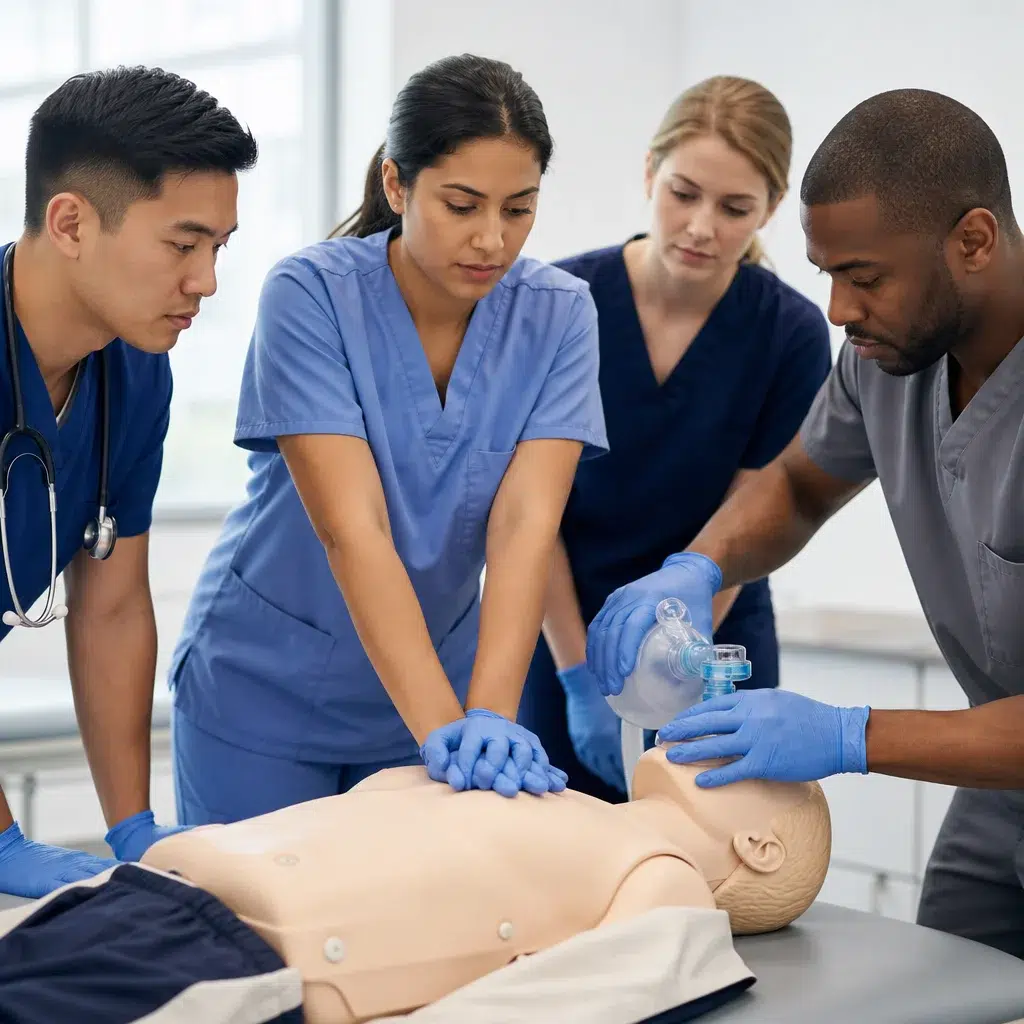
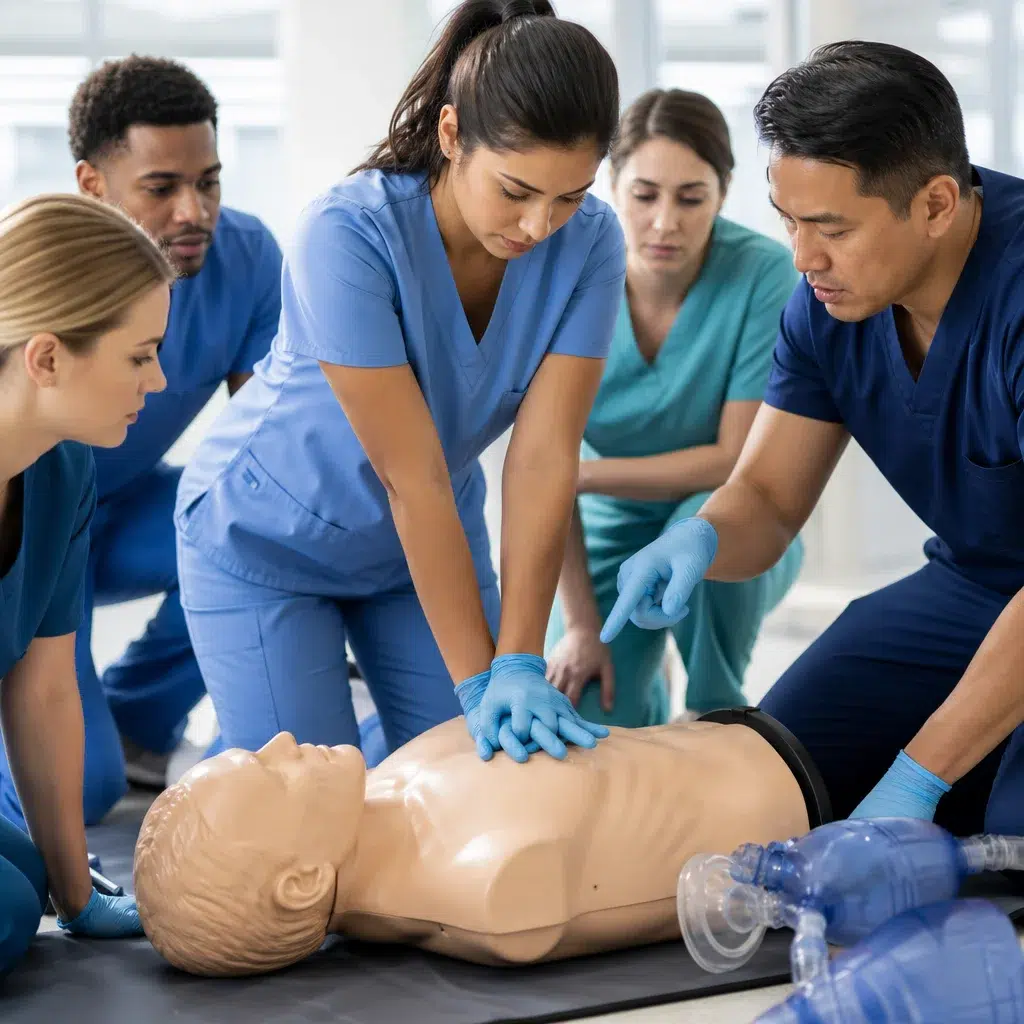
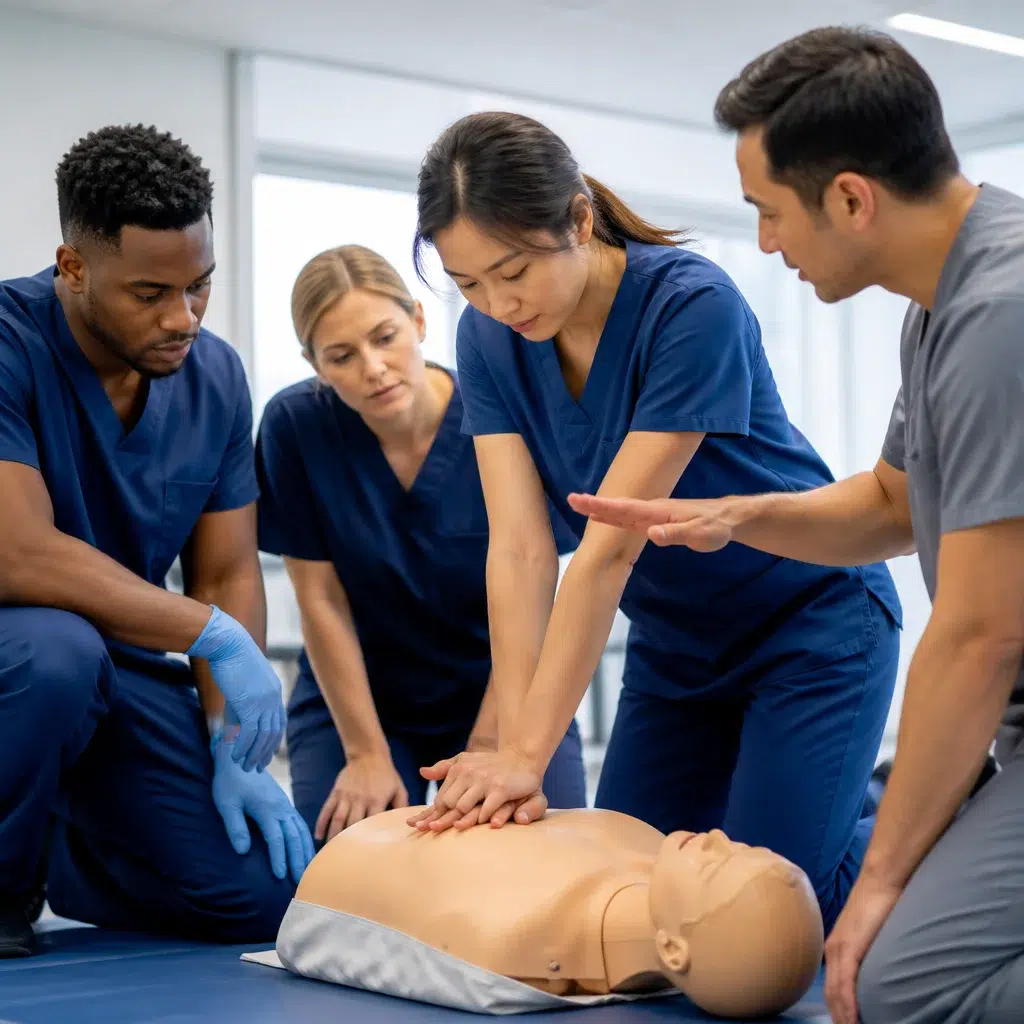
Then you schedule an in-person skills session at one of our 100+ training locations throughout California, from Alameda and Berkeley to Fresno and Bakersfield. These aren’t marathon days. You come for focused, hands-on practice with our experienced instructors. You perform real skills on manikins, receive immediate feedback, and build the muscle memory that matters when lives depend on your competence.
Our instructors bring genuine EMS and healthcare experience. They’re not just teaching certification requirements; they’re sharing clinical judgment and real-world application. You practice scenarios, troubleshoot your technique, and leave with confidence that extends beyond the test.
The entire process is designed for efficiency. Group CPR classes let agencies schedule multiple personnel together, making logistics simpler and costs lower. Whether you’re training a single paramedic or coordinating certification for your entire department, we adapt to your operational needs.
Flexibility That Fits Your Agency’s Operational Needs
Your EMS operation doesn’t fit a standard template, so neither should your training. We offer flexible scheduling that acknowledges the reality of emergency services. Personnel can begin online modules any day of the week and complete them in days or weeks, depending on their workload. Skills sessions are available daily at multiple locations, so someone heading to San Jose, Oakland, or Sacramento can find a convenient slot that doesn’t disrupt station coverage.
Some agencies prefer to batch training, scheduling multiple personnel for a single skills session. Others prefer staggered certification, cycling personnel through training as schedules allow. We support both approaches and everything between. Some stations in San Francisco, Concord, and Walnut Creek coordinate mid-week sessions during slower shift periods. Others in Modesto, Tracy, and Visalia run weekend trainings to preserve weekday coverage.
Group training becomes efficient at scale. When you coordinate 8-10 personnel from your department for a single in-person session, you reduce redundancy and build team cohesion around shared learning. We handle the logistics; you focus on compliance and readiness.
Actionable next step: Contact your regional coordinator to discuss your agency’s scheduling patterns and preferred training windows. We’ll design a training calendar that works with your operational rhythm, not against it.
Real Skills Practice with Virtual Foundation Learning
The virtual component removes friction. Personnel complete online modules on their own time, accessing content from home, the station, or anywhere they have internet. This asynchronous foundation means no one’s waiting for slow learners to catch up, and no one’s lost because the pace is too fast. You control your learning velocity.
Our online modules include video demonstrations, interactive case reviews, and knowledge checks. You don’t just watch passively. You engage with scenarios, answer questions, and verify understanding before moving forward. This active learning during the virtual phase produces better retention than passive lecture attendance ever could.
When you arrive for your in-person skills session, you’re prepared. Your instructor knows you’ve completed foundation work, so the session focuses entirely on doing. You practice CPR compression technique on manikins, place intravenous lines under realistic conditions, and run through scenarios that mirror the decisions you make in the field. Hours of hands-on repetition build the automaticity you need when adrenaline runs high and seconds matter.

This hybrid structure also accommodates different certification levels. A nurse requiring ACLS certification follows a different learning path than an EMS technician pursuing PALS. Our platform adapts content and skills practice to each role and certification goal. Whether you’re in Sacramento, San Jose, or San Francisco, you receive training tailored to your specific needs.
Fast-Track Certification Without Compromising Quality
Speed and quality don’t have to conflict. Blended learning actually accelerates your path to certification while deepening competence. Because virtual modules let personnel absorb theory efficiently, the in-person component focuses entirely on skills validation and confidence building. You’re not sitting through hours of lecture to reach the practice portion. You’re practicing from minute one.
Many of our students complete full certification in under two weeks from start to finish. They begin online modules Monday, complete them by Wednesday, and attend a skills session Friday. That same week, they’re certified. Traditional models demand consecutive days, derailing multiple people’s schedules. Our approach creates a fast track that works within your operational constraints.
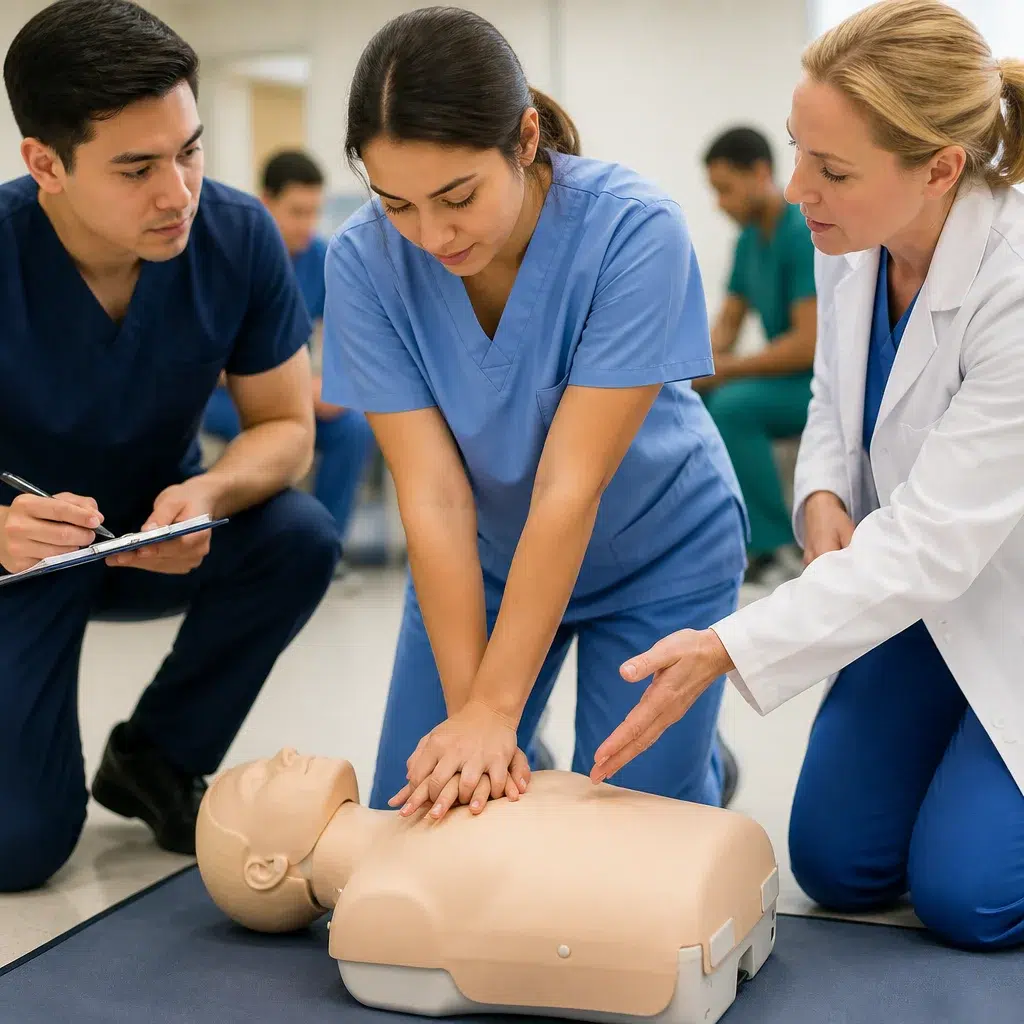
Speed isn’t reckless. Our instructors conduct thorough skills assessments during in-person sessions. They watch you perform, identify gaps, provide coaching, and verify competence before signing off. The certification you receive represents genuine mastery, not just seat time.
Scaling Training Across Your Entire EMS Agency
Large departments often struggle to train across multiple stations and shifts. Coordinating everyone’s schedule becomes a project unto itself. Our blended model scales seamlessly because it decouples learning from scheduling coordination.
Personnel from your Roseville, Rocklin, and Folsom stations can complete online modules on their local time, then travel to a central skills session together. Personnel working night shifts can engage with virtual content between calls, preserving natural learning breaks. You’re not trying to shoehorn everyone into the same two-day event. Training adapts to your departmental structure.
We support group trainings of any size. Five personnel from one station. Twenty from your entire agency. Fifty across multiple departments in the Bay Area. We’ve trained EMS personnel from agencies throughout California, in locations from Antioch and Pittsburg to Vallejo and Napa, all using the same flexible, scalable model.
Actionable step: If you’re coordinating training for multiple stations, identify which locations have proximity to our skills centers. We can schedule staggered group sessions that minimize travel and cover your entire department systematically.
Cost-Effective Solutions for Multi-Location Departments
Multi-location departments face cost pressures traditional training exacerbates. You pay per person, per course, per location. Multiply that across dozens of personnel, and training becomes a significant budget line. Our pricing structure reflects the efficiency blended learning creates.
Group discounts reduce per-person costs substantially. When you coordinate multiple personnel for a single skills session, we pass savings back to you. A department training 12 personnel pays significantly less per person than agencies sending individuals sporadically. We also offer low price guarantees, ensuring you’re never paying more than competitive market rates.
Virtual modules reduce overhead that would exist in traditional models. No classroom rental, no instructor travel, no catering for daylong sessions. These efficiencies translate to better pricing without sacrificing instructor quality or certification rigor.
For departments with stations across northern and central California, our 100+ training locations mean personnel train locally, reducing travel time and associated costs. Personnel in Davis, Woodland, and Tracy train at nearby centers rather than making costly trips to distant hubs.
Supporting Ongoing Recertification Requirements

Certification is not a one-time event. Your personnel must recertify regularly to maintain credentials. Traditional training creates recurring friction each recertification cycle. Our blended model handles ongoing requirements efficiently.
Recertification modules are streamlined for personnel who already hold current credentials. They review updates, new guidelines, and changed protocols without repeating foundational content. The virtual component for recertification is often faster than initial certification because you’re refreshing knowledge, not building it from scratch.
We schedule recertification sessions regularly at all our California locations. Instead of your personnel scrambling near expiration deadlines, you can plan recertification throughout the year. Personnel in Pleasant Hill, Hayward, and Newark can recertify on cycles that fit annual staffing planning. Staggered recertification prevents the dangerous moment when multiple team members expire simultaneously.
Our platform tracks certification status and expiration dates. You receive notifications well before deadlines, allowing planned scheduling rather than crisis management. This proactive support means your agency stays compliant effortlessly.
Partner With Us for EMS Training Excellence
Your EMS personnel deserve training that respects their time, honors their professional needs, and delivers genuine competence. We’ve built our blended learning approach specifically for emergency services, recognizing the unique operational constraints you manage daily.
We’re available at training centers from Citrus Heights and Carmichael to Santa Rosa, Petaluma, and Redwood City. Whether you’re training one paramedic or coordinating certification for your entire department, we adapt to your needs. Our instructors bring EMS experience. Our scheduling respects your operational rhythms. Our pricing reflects efficiency, not overhead.
Contact us today to discuss how blended learning can streamline certification for your agency. We’ll review your current compliance gaps, recommend the right certification pathway, and design a training schedule that works with your shifts, not against them. Your personnel will complete certification faster, retain knowledge more deeply, and gain confidence that extends directly to patient care. That’s the blended learning advantage.
Register for a class today.
Frequently Asked Questions (FAQ)
How does our blended learning format work for EMS personnel with demanding schedules?
We combine online theory modules that our students complete on their own time with in-person skills sessions scheduled at locations convenient to your agency. This approach lets your team master the foundational knowledge through our virtual platform, then come to us refreshed and ready to focus entirely on hands-on practice. We offer flexible scheduling across our 100+ California locations, so your personnel can train without disrupting critical coverage.
What certifications can our EMS teams obtain through your programs?
We provide BLS, ACLS, PALS, and NRP certifications that meet mandatory California licensing and employment requirements for emergency medical services professionals. Our courses are delivered through the same rigorous standards your agency expects, and we verify completion with official certification that’s recognized statewide. We also offer daily scheduling options to accommodate shift rotations and varying crew availability.
Can we arrange group training for our entire EMS agency at discounted rates?
Yes, we specialize in corporate group training with scaled pricing that decreases based on your agency size and enrollment volume. We work directly with department leadership to coordinate multiple sessions across our network of training locations, so we can accommodate large teams without overwhelming any single site. We’ll work with your operational calendar to find scheduling that minimizes impact on emergency response capacity.