
Table of Contents
- 1. Assess the Scene and Ensure Safety Before Responding
- 2. Recognize the Signs of Sprains Versus Fractures
- 3. Apply the RICE Protocol for Immediate Sprain Care
- 4. Immobilize Fractures to Prevent Further Injury
- 5. Control Bleeding and Manage Open Wounds
- 6. Know When to Call Emergency Services
- 7. Why First Aid Certification Matters for Healthcare Teams
- Frequently Asked Questions (FAQ)
1. Assess the Scene and Ensure Safety Before Responding
Falls, sprains, and fractures are among the most common injuries in healthcare settings, workplaces, and community environments. Whether you’re a nurse responding to a patient fall, an EMS professional on a call, or a dentist managing an unexpected injury in your practice, knowing how to deliver immediate first aid can prevent complications and reduce recovery time. The difference between proper technique and improvisation often determines whether an injury stays minor or becomes serious.
We understand that healthcare professionals like you face real pressure to respond correctly in these moments. Your training directly impacts patient outcomes, and gaps in knowledge can create liability concerns. That’s why we focus on teaching practical, evidence-based techniques that you can confidently apply in your workplace across California, from our training centers in Sacramento and San Francisco to locations throughout the state.
Before you touch the injured person, take 10 seconds to survey the environment. Is the area safe? Are there hazards like broken glass, electrical hazards, or moving traffic? Can you reach the person without putting yourself at risk?
Your first responsibility is protecting yourself and bystanders. Many responders become secondary victims by rushing into unsafe conditions. Check for environmental dangers, ensure adequate lighting, and position yourself where you won’t be struck or contaminated.
Next, look for responsiveness. Approach the person, speak loudly and clearly, and ask if they’re okay. Gently tap their shoulder. If they respond, keep them calm and still. If they don’t respond, check for normal breathing and a pulse within 10 seconds.
Scene safety doesn’t end once you’ve established initial safety. Throughout your response:
- Continue monitoring for hazards as the situation evolves
- Position the person away from further injury risk if the scene remains unsafe
- Keep bystanders at a distance to prevent distraction and additional injuries
- Wear appropriate personal protective equipment (gloves, mask if available)
Your confidence in this foundational step prevents panic responses and creates space for better decision-making. Many healthcare professionals skip this step because training emphasizes the “action” of care, but scene assessment is action.
Actionable takeaway: Before every response, complete a 10-second scene check. Ask yourself: “Is it safe for me? Is it safe for the patient? Are there hazards I need to manage?” This habit takes seconds but prevents costly mistakes.
2. Recognize the Signs of Sprains Versus Fractures
Distinguishing between a sprain and a fracture guides your treatment approach and urgency level. Both involve joints and surrounding tissues, but they require different responses.
A sprain occurs when ligaments (tissues connecting bones) stretch or tear. Signs include:
- Immediate sharp pain at the joint
- Rapid swelling within minutes
- Bruising developing over hours
- Maintained ability to bear some weight or move the joint
- Pain that decreases somewhat with rest and elevation
A fracture is a break or crack in the bone itself. Indicators include:
- Severe, persistent pain that doesn’t improve with rest
- Deformity (the limb looks “wrong” or bent at an odd angle)
- Inability to bear weight on the injured limb
- Significant swelling that develops quickly
- Visible bone protrusion through skin (open fracture, requiring immediate emergency care)
- Grinding sensations or sounds when the area is touched
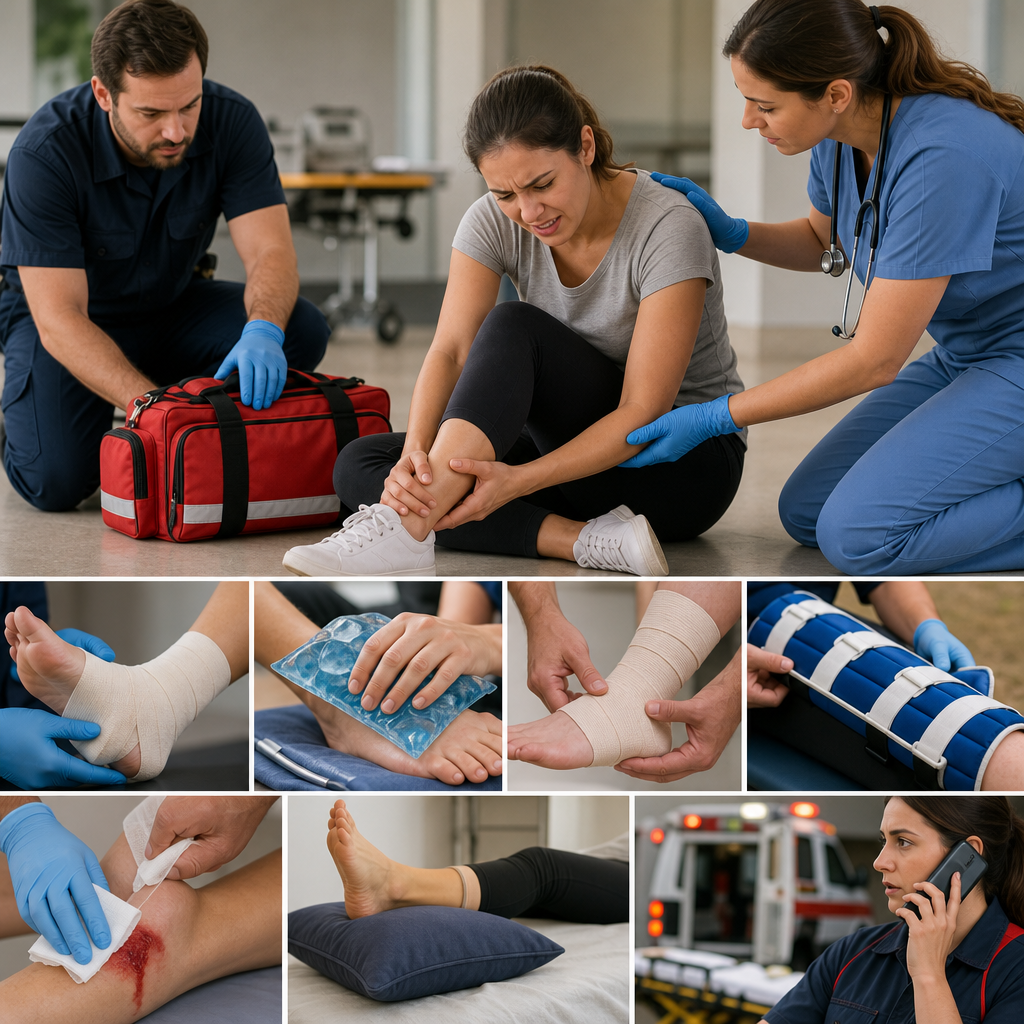
The overlap can be deceptive. Some sprains cause intense swelling and pain that mimics fractures. Some fractures present with less dramatic swelling if the break is clean. When in doubt, treat it as a fracture and immobilize the area.
One practical differentiator: ask the person if they heard or felt a “pop” or “crack” at the moment of injury. This often indicates a fracture or severe sprain, warranting imaging regardless of current appearance.
Actionable takeaway: If you cannot confidently rule out a fracture within 30 seconds, immobilize the area and call for emergency services. Guessing wrong by treating a fracture casually can cause permanent damage.
3. Apply the RICE Protocol for Immediate Sprain Care
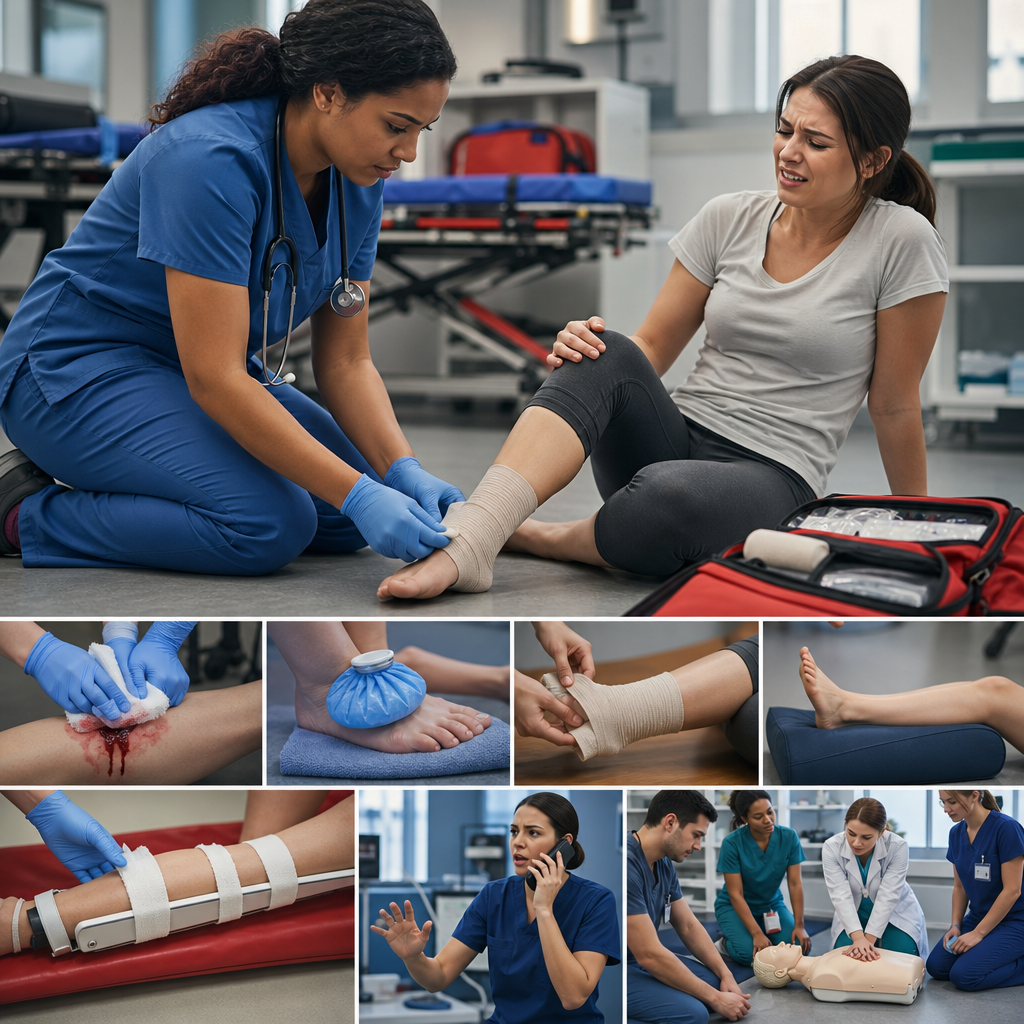
RICE stands for Rest, Ice, Compression, and Elevation. This protocol minimizes swelling and pain for confirmed or suspected sprains and is your immediate go-to approach in clinics, offices, and workplace settings.
Rest: Stop the activity immediately. Keep the injured area as still as possible for the first 24-48 hours. This prevents additional tissue damage and allows early healing. If the person must move, support the joint or provide crutches to avoid weight-bearing.
Ice: Apply cold therapy within the first 15 minutes of injury for maximum effectiveness. Use ice packs, frozen gel packs, or even a bag of frozen vegetables wrapped in a thin cloth. Never apply ice directly to skin; it causes cold burn. Apply for 15-20 minutes, then remove for 20 minutes, and repeat for the first 48 hours. Cold reduces inflammation and numbs pain.
Compression: Wrap the injured area with an elastic bandage or compression sleeve. The goal is snugness without cutting off circulation. A well-applied wrap prevents fluid accumulation in tissues, which reduces swelling. Check that the person can insert one finger under the wrap; if not, it’s too tight.
Elevation: Raise the injured limb above heart level when possible. Gravity helps fluid drain away from the injury site, reducing swelling. For an ankle sprain, prop the leg on pillows while sitting. For a wrist sprain, support the arm across the chest with the hand at shoulder height.
Many healthcare teams we train in Fresno, San Jose, and throughout California underestimate RICE’s impact. Responders often skip ice application because they believe the person will manage it at home. Applying ice immediately, before the person leaves your care, makes a measurable difference in their recovery timeline.
Actionable takeaway: Prepare a cold therapy station in your workplace. Keep ice packs readily accessible so you can apply RICE within 10 minutes of injury. The time window matters more than the technique’s sophistication.
4. Immobilize Fractures to Prevent Further Injury
Immobilization is your primary tool for fracture management. The goal is preventing any movement of the fractured bone, which stops additional tissue damage, reduces pain, and protects blood vessels and nerves.
Start by supporting the injured limb in the position you found it. Don’t attempt to straighten or realign the fracture. Straightening a fracture can cause severe vascular or nerve damage. The exception is if circulation is compromised (the limb is cold, blue, or numb), in which case gentle traction along the long axis may restore circulation while waiting for emergency services.
Use whatever materials are available:
- Slings for upper arm or shoulder fractures
- Pillows or rolled blankets for arm, leg, or foot fractures
- Splints made from cardboard, magazines, or foam
- Cravats or triangular bandages to secure the limb to the body
- Commercial splinting kits if available in your facility
Apply immobilization above and below the injury site. For a fractured tibia (shinbone), immobilize the knee and ankle. For a fractured humerus (upper arm), immobilize the shoulder and elbow. This prevents motion at the fracture site.
Never apply a tight tourniquet-style wrap. Immobilization provides support and stability, not constriction. The person should not experience increased numbness, tingling, or color changes after you immobilize the area.
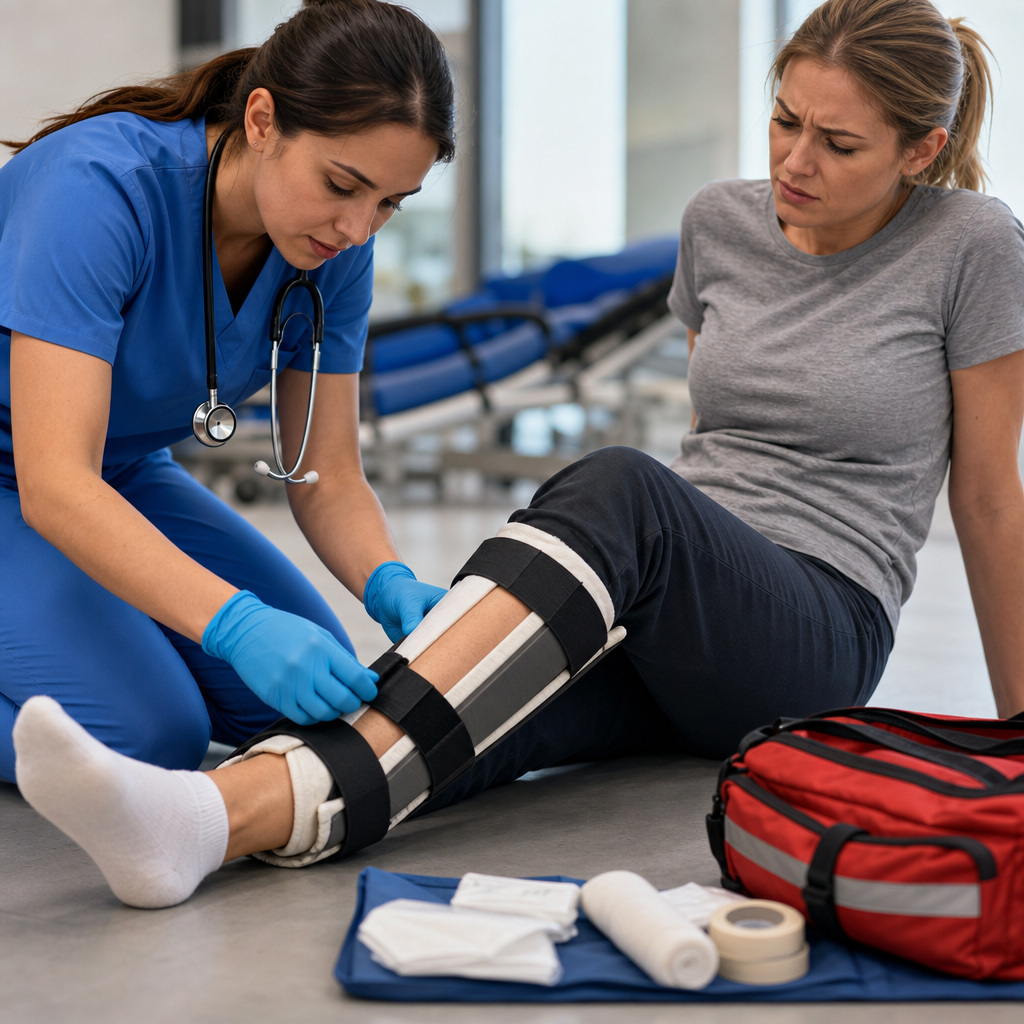
Healthcare professionals in Oakland, San Ramon, and across our training network often ask whether they should apply ice after immobilizing a fracture. Yes, ice is appropriate after fracture immobilization. Ice reduces swelling, which decreases pain and inflammation. Apply ice for 15-20 minutes at a time, over the wrap rather than directly on skin.
Actionable takeaway: Keep a basic splinting kit in your workplace. Include foam padding, elastic bandages, and cravats. Practice applying a sling or pillow splint on a colleague so muscle memory is established before an actual injury occurs.
5. Control Bleeding and Manage Open Wounds
Open wounds associated with falls and fractures require prompt bleeding control. Uncontrolled bleeding can be life-threatening, and improper techniques can introduce infection.
For any external bleeding, your first action is applying direct pressure. Use a clean cloth, gauze pad, or clean clothing. Apply firm, direct pressure to the wound. Don’t remove the cloth to check the bleeding; this restarts the clotting process. If blood soaks through the cloth, apply a second cloth on top rather than removing the first one.
Maintain pressure for 10-15 minutes without lifting the cloth. Most minor bleeding stops within this window. Raise the injured area above heart level if possible to reduce bleeding pressure.
If bleeding continues after 15 minutes of direct pressure, apply a pressure bandage. Wrap the area firmly (but not so tight as to cut off circulation) with an elastic bandage over the cloth. This maintains pressure while allowing you to use your hands for other tasks.
For severe arterial bleeding that doesn’t stop with direct pressure and elevation, a tourniquet may be necessary. If trained, apply the tourniquet 2-3 inches above the wound, over clothing when possible. Tourniquets are life-saving devices for uncontrollable limb bleeding, though they carry risks including tissue damage if left on too long. Document the time you applied the tourniquet so emergency personnel know how long it’s been in place.
Never probe into a deep wound or attempt to remove embedded objects. Cover the object, support it with bulky dressings, and let emergency personnel handle removal. Removing embedded objects can trigger catastrophic bleeding.
After controlling bleeding, apply antibiotic ointment if available and appropriate, then cover with a clean dressing. Monitor the wound for signs of infection (increasing redness, warmth, pus, or increasing pain over subsequent days) and recommend follow-up with their healthcare provider.
Actionable takeaway: Stock your first aid kit with multiple sizes of gauze pads, elastic bandages, and trauma shears. Practice applying direct pressure and pressure bandages during your certification training so you respond without hesitation.
6. Know When to Call Emergency Services
Deciding between managing an injury in-house and calling emergency services (911) is critical. The wrong call creates liability; uncertain calls should default to emergency services.
Call 911 immediately if any of these are present:
- Suspected fracture with deformity, inability to bear weight, or severe pain
- Open fractures with bone visible
- Severe uncontrolled bleeding
- Unconsciousness or altered responsiveness
- Shortness of breath or chest pain
- Severe head, neck, or spine injury
- Signs of shock (pale, clammy, rapid weak pulse, confusion)
- Suspected internal bleeding (pain out of proportion to visible injury, abdominal distension)
- Allergic reaction or anaphylaxis
- Suspected poisoning or overdose
For sprains, call 911 only if swelling is extreme, the person is unable to move or sensation is lost, or if you suspect compartment syndrome (severe swelling and pain that increases despite elevation and ice).
Consider emergency services for moderate to severe fractures, even if the person insists they’ll go to urgent care on their own. X-rays can reveal fracture severity that isn’t apparent on examination, and emergency departments have orthopedic expertise that urgent care clinics may not.
Healthcare teams in locations like Davis, Vacaville, and Modesto operate in varied environments. In clinics, call your facility’s emergency response team or activate your emergency action plan. In public settings, call 911 directly. Never send a person to the hospital on their own if their injury is significant; they may faint, become disoriented, or cause further damage.
Document what you observed, the treatment you provided, the time you called emergency services, and any vital signs or changes you noted. This documentation supports continuity of care and protects you legally.
Actionable takeaway: Post emergency contact numbers in your workplace. Know your facility’s emergency action plan and your role. If you’re unsure whether an injury warrants 911, make the call. Emergency responders can always advise that transport isn’t necessary; waiting to call creates far greater risk.
7. Why First Aid Certification Matters for Healthcare Teams
Knowing these techniques intellectually is different from executing them under pressure. First aid certification provides the hands-on practice, scenario-based training, and confidence-building that transforms knowledge into reliable action.
We offer comprehensive CPR and first aid certification training that includes practical skills for managing falls, sprains, and fractures. Our instructors, experienced in healthcare settings, teach realistic scenarios that mirror what you’ll face as a nurse, dentist, EMS professional, or other healthcare provider.
Certification matters beyond personal competence. Employers require current certification for liability protection. Patients expect that their care team is trained and current. Professional licensing bodies mandate that certain roles maintain active certifications. Our blended learning model combines virtual coursework with in-person skills sessions, so you maintain current knowledge without disrupting your schedule.
We maintain over 100 training locations throughout California, including dedicated centers in Stockton, Sacramento, San Francisco, San Jose, Oakland, and virtually every major city and region. Whether you’re based in Bakersfield, Santa Rosa, Fresno, or Walnut Creek, scheduling a course near you is straightforward. We offer daily BLS certification courses and specialized tracks like Stockton CPR BLS Classes, plus ACLS and PALS certifications for advanced healthcare providers.
Our low price guarantee means you access certification training at competitive rates across all locations. We verify your certifications directly, so your employer receives confirmation without additional paperwork. And our instructors prioritize hands-on practice: you’ll immobilize fractures, apply RICE protocol, and manage bleeding scenarios under guidance before you need to do it for real.
Many healthcare professionals delay certification because they assume they already know the material. Current evidence and guidelines change. Scenario-based practice reveals gaps in real-world application. Working with an instructor who can correct technique on the spot builds muscle memory and confidence that self-study cannot replicate.
Actionable takeaway: Schedule your certification renewal today. Don’t wait until your current certification expires. Current training keeps you sharp, meets regulatory requirements, and ensures your team has consistent competency across your facility.
Register for a class today.
Frequently Asked Questions (FAQ)
What’s the difference between how we teach sprain versus fracture care in our courses?
We cover both conditions extensively in our BLS and specialized training programs. Our instructors emphasize that sprains involve ligament damage and respond well to the RICE protocol (rest, ice, compression, elevation), while fractures require immediate immobilization to prevent further injury. We provide hands-on practice with splinting techniques and assessment methods so our graduates can confidently distinguish between these injuries in real situations.
Why do we emphasize scene safety before providing first aid?
We teach our students that assessing the environment first protects both the injured person and the responder from additional harm. In our certification courses, we stress checking for hazards like unstable surfaces, traffic, or electrical dangers before approaching a patient. This foundational approach prevents well-intentioned helpers from becoming victims themselves, which is critical for healthcare professionals working both in clinical and community settings.
Does our training cover when to call emergency services for fractures and sprains?
Yes, we dedicate significant time to this decision-making process in our courses. We teach our students that certain fractures involving joints, suspected spinal injuries, or open wounds require immediate 911 activation, while minor sprains may be safely managed with first aid and follow-up care. Our instructors use real-world scenarios across our 100+ California locations to help healthcare professionals develop the judgment needed for their specific work environments.