

Safety Training Seminars

Course: Adult Pediatric CPR AED First-aid
Price: $95 (includes online course, skills, & certification card)
Low Price Guarantee: Lowest prices – Price matching policy.
CPR Topics: Adult, Child, Infant CPR and AED use
First-aid topics: Bleeding, burns, seizures, epi-pen, etc.
Minimum Age: Students must be ten years or above.
Certification Card: American Red Cross (valid 2 years)
Childcare Providers: 100% accepted by EMSA for licensing
Who Should Take This Class: Everyone, see below
Where?: Over 75 offices in California. See link below

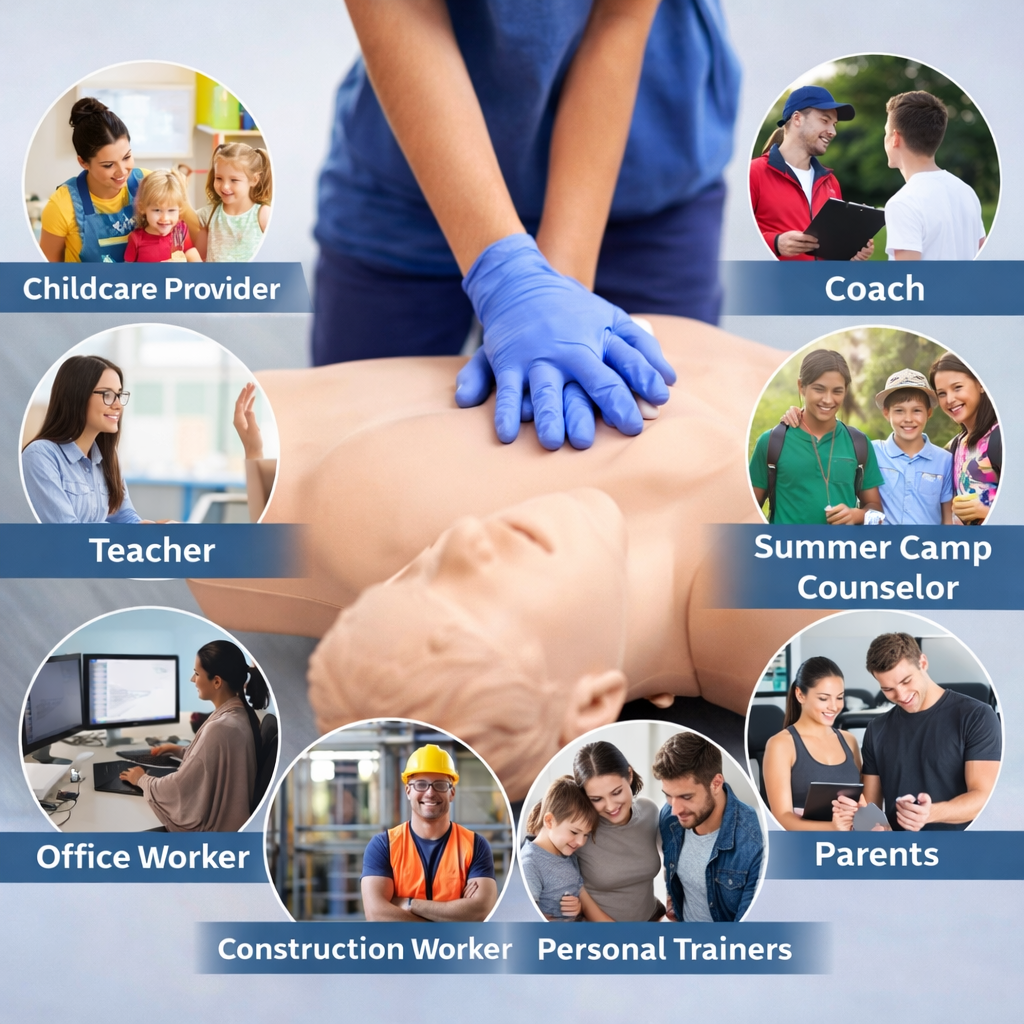
CPR and First-aid training is important for anyone who wants to be prepared in an emergency such as teachers, childcare providers (EMSA accepted), coaches, summer camp counselors, and school staff.
It’s also recommended for construction workers, electricians, security guards, office employees, restaurant staff, delivery drivers, and personal trainers.
Parents, grandparents, babysitters, lifeguards, and caregivers should also be certified to confidently respond to choking, cardiac arrest, bleeding, or sudden illness.
Medical and healthcare professionals (like nurses, nursing students, emts, paramedics, dentists, etc.), should not take this course. Instead, they should take the BLS, ACLS, PALS, or NRP Course.
BLS Course by American Heart Association
An American Red Cross First Aid/CPR/AED certification course is designed to teach everyday people and professionals how to respond quickly and confidently in medical emergencies. The goal is to help you recognize a crisis, take action immediately, and provide care until advanced medical help arrives.
These courses are commonly required for jobs and programs in childcare, education, fitness, healthcare, security, construction, and workplace safety. They’re also extremely valuable for parents, coaches, caregivers, and anyone who wants to be prepared for real-life emergencies at home or in public.
Many students love the convenience of a course that includes a virtual instructor-led experience. In this format, you may join a live session where an instructor walks you through critical topics, answers questions in real time, and demonstrates key techniques. Even though the instructor is virtual, the training still feels interactive and structured—especially compared to learning totally on your own.
The most important part of CPR training is still the hands-on portion. That’s why this course involves practice on CPR manikins. You’ll use training manikins to rehearse real skills like:
The First Aid portion covers how to respond to common injuries and illnesses that happen at home, at work, or in everyday life. You’ll learn how to assess a situation and provide care while staying safe yourself.
Key first aid topics often include:
Recognizing life-threatening emergencies, including severe bleeding and shock. You’ll learn when to call 911, how to stay calm under pressure, and what steps to take immediately.
Responding to bleeding, burns, and injuries. This can include using direct pressure, applying bandages, treating minor and serious burns, and caring for sprains or broken bones until help arrives.
Handling sudden illness. Students typically learn what to do for allergic reactions, asthma emergencies, seizures, choking, fainting, diabetic emergencies, and more.
Many courses also cover when to move a person (and when not to), how to monitor them for changes, and how to communicate clearly with emergency responders.
The CPR section is where your hands-on training becomes essential. CPR saves lives because it helps circulate oxygenated blood to the brain and vital organs until normal breathing and heartbeat can be restored.
During manikin practice, students learn how to:
Check responsiveness and breathing quickly. Time matters during sudden cardiac arrest, so you’ll practice moving through the first steps fast and safely.
Perform high-quality chest compressions. This includes the correct rate, depth, and allowing the chest to fully recoil between compressions. In a skills-focused class, instructors emphasize compressions because they are the foundation of effective CPR.
Provide care for adults, children, and infants (when included). Techniques can change slightly depending on the age group, so training often covers different approaches and practice sequences.
An AED, or Automated External Defibrillator, is a device that can restore a normal heart rhythm in certain cardiac emergencies. The great news is that AEDs are designed to be user-friendly, even for people without medical experience.
In your training, you’ll practice using an AED trainer to learn:
This certification course is ideal for anyone who wants a recognized credential and real skills, including:
Whether you need it for a job requirement or personal peace of mind, the skills you learn can be used anywhere.
The combination of a virtual instructor and hands-on CPR manikin practice gives students structure, accountability, and real experience. You get clear explanations and coaching while still building the physical skills that can’t be learned through videos alone.
At the end of the course, students will receive the official American Red Cross certification (based on course completion requirements). Most importantly, you walk away feeling confident that if an emergency happens, you won’t freeze—you’ll know what to do.
Because when seconds matter, training matters.
A: This comprehensive course covers emergency care techniques for adults, children, and infants, providing complete life-saving skills across all age groups for breathing emergencies, cardiac arrests, choking incidents, and first aid situations.
A: Absolutely. The Adult and Pediatric First Aid/CPR/AED course is ideal for parents, teachers, coaches, daycare providers, babysitters, camp counselors, and anyone responsible for the safety of both adults and children in various settings.
A: Pediatric CPR techniques differ from adult CPR in compression depth, compression rate, rescue breathing ratios, and hand positioning. This course teaches appropriate age-specific modifications ensuring proper technique for infants, children, and adults.
A: Yes, to receive a valid 2-year OSHA-compliant Red Cross digital certificate meeting workplace and regulatory requirements, you must complete both the online knowledge portion and an instructor-led skills session.
A: Yes. 100%. This American Red Cross Adult Pediatric CPR AED First-aid certification course is valid for California childcare providers.
Per EMSA Website
Can I take my pediatric first aid and CPR training from the American Red Cross or the American Heart Association? If so, do I need the EMSA stickers on their course completion cards?
A: We recommend that the student be 10 years old or older. If the student taking the course is under 18, they must have a parent or guardian attend the course with them.