
Table of Contents
- 1. Understanding California's Mandatory CPR Certification Standards
- 2. Healthcare Provider BLS Requirements Across California Locations
- 3. Renewal Timelines and Continuing Education Compliance
- 4. Why Blended Learning Models Meet State Licensing Demands
- 5. Same-Day Certification Cards for Immediate Professional Compliance
- 6. Choosing Training Centers That Guarantee Regulatory Alignment
- Frequently Asked Questions (FAQ)
1. Understanding California’s Mandatory CPR Certification Standards
California’s healthcare workforce operates under strict regulatory standards. Nurses, dentists, EMS personnel, and other medical professionals must maintain current CPR and Basic Life Support (BLS) certifications to satisfy state licensing boards and employer mandates. Navigating these requirements can feel overwhelming, but understanding what California demands is the first step toward maintaining your professional credentials and keeping your career on track.
We’ve helped thousands of healthcare providers across California meet their certification obligations through our specialized training programs. Whether you’re renewing your credential in San Francisco, Sacramento, San Jose, or any of our 100+ training locations statewide, our approach prioritizes clarity, compliance, and convenience. This guide breaks down California’s critical licensing requirements so you know exactly what you need and why it matters.
California’s Department of Consumer Affairs and state licensing boards require healthcare professionals to hold current CPR certification as a condition of licensure and employment. The state doesn’t mandate a single training provider, but it does require certifications to meet specific competency standards and come from approved instructors.
For nurses, CPR certification must demonstrate competency in adult, child, and infant resuscitation techniques. Dentists need CPR certification to comply with state dental board regulations. EMS personnel face the most stringent requirements, as their scope of practice demands advanced skills beyond basic CPR. The fundamental standard across all these professions is evidence-based instruction that covers current guidelines for chest compressions, rescue breathing, automated external defibrillator (AED) use, and choking relief.
California’s regulations also specify that your certification must come from an instructor with valid credentials and proper authorization. This is where many professionals make costly mistakes: a certificate printed from an unvetted online source won’t satisfy your employer’s credentialing department or your licensing board. We ensure every course we deliver aligns with state expectations, which is why our instructors maintain active certifications and our curricula stay updated with the latest evidence-based protocols.
What to do next: Verify your current certification source and expiration date. If you earned your CPR credential from an unrecognized provider or haven’t completed instruction in over two years, schedule a renewal course immediately.
2. Healthcare Provider BLS Requirements Across California Locations
BLS certification is distinct from CPR and carries deeper implications for healthcare professionals. While CPR focuses on immediate life-saving response, BLS (Basic Life Support) addresses the full scope of emergency cardiac care, including high-quality chest compressions, airway management, and team dynamics in clinical settings.
California’s nursing boards require nurses to maintain BLS certification throughout their licensure. Many healthcare facilities, especially acute-care hospitals and emergency departments, won’t credential nurses without valid BLS cards. Dentists in many settings must also carry BLS, particularly if they administer sedation or work in facilities where patients face higher acuity risk. For EMS personnel, BLS is a baseline requirement; most will pursue advanced certifications like ACLS (Advanced Cardiac Life Support) or PALS (Pediatric Advanced Life Support).
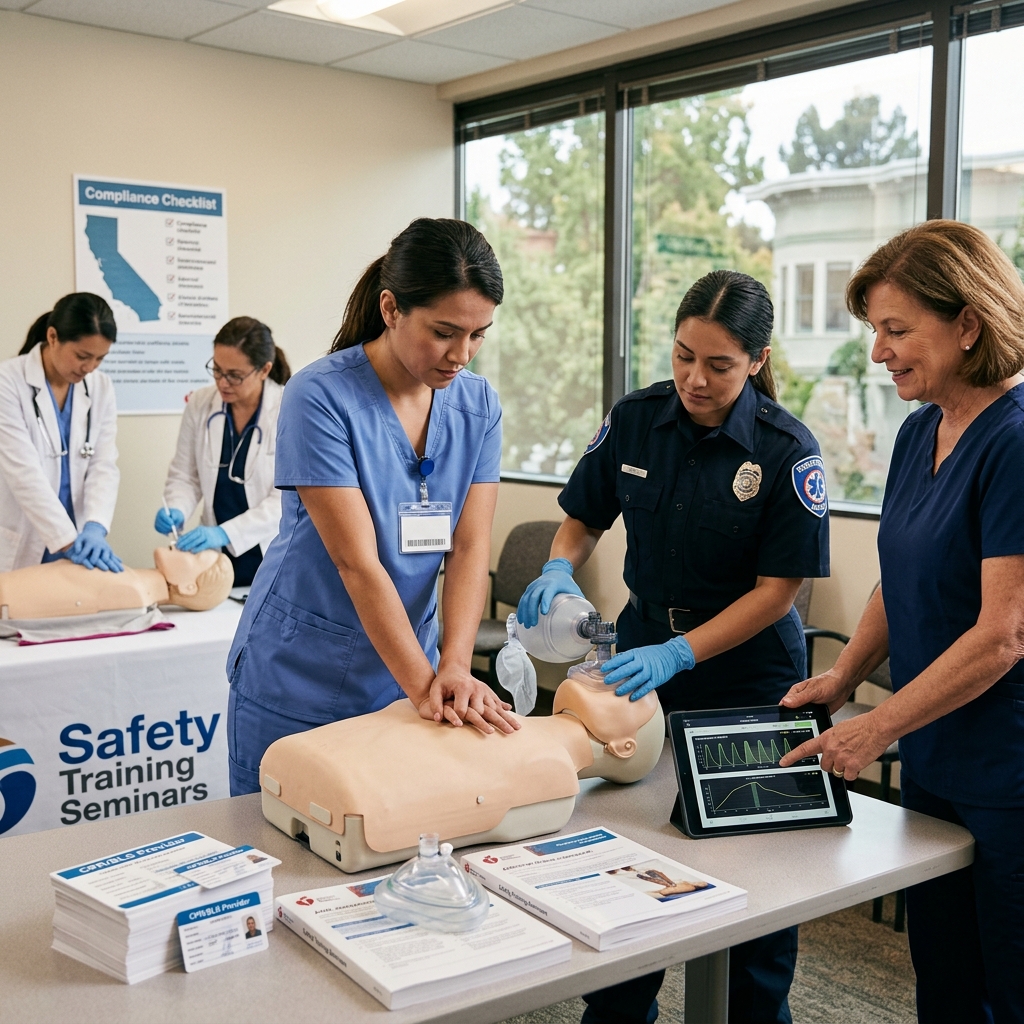
The distinction matters because BLS training includes practical skills validation that CPR-only courses may skip. We deliver BLS for nurses and other healthcare professionals across California, from Alameda to Visalia, with hands-on skills sessions where you practice on manikins, demonstrate competency to an instructor, and receive immediate feedback. This approach ensures you’re not just certified on paper but genuinely prepared for real-world emergencies.
Many professionals ask whether online courses satisfy California’s BLS requirements. The answer is conditional: blended learning models that combine online knowledge checks with in-person skills sessions meet state standards, but fully online courses without a skills component do not. We structure every program to include both components, so your certification reflects actual competency, not just course completion.
What to do next: Contact your employer’s credentialing office and ask which BLS certifications they require. Some facilities specify certifications from particular training pathways; knowing this in advance prevents scheduling conflicts and ensures your certificate meets internal standards.
3. Renewal Timelines and Continuing Education Compliance
CPR and BLS certifications in California typically expire after two years from the date of issuance. Many professionals lose their certifications unintentionally because they miss renewal deadlines or miscalculate expiration dates, which can result in temporary suspension of clinical privileges or license restrictions.
California’s regulations don’t require separate continuing education hours specifically for CPR renewal; maintaining your certification itself counts as professional development. However, some specialized roles demand additional education. Nurses pursuing certain specialty certifications or those credentialed at specific hospitals may face heightened renewal demands. Your licensing board or employer will specify these requirements during credentialing reviews.
The most common compliance mistake we see is waiting until the last week of your certification validity to schedule renewal. By that time, course capacity fills quickly, and you risk missing your deadline entirely. We offer BLS certification courses daily across our network, including locations in Fremont, Oakland, Palo Alto, and throughout the Bay Area and Central Valley. This frequency means you can schedule renewal courses weeks in advance and renew during your preferred time.
Another critical point: your renewal course must be completed before your current certification expires. A course started before expiration but completed after doesn’t satisfy California’s requirements. Plan your renewal to finish at least three to five business days before your expiration date, giving you time to verify your new certificate has been issued.
What to do next: Set a calendar reminder for two months before your certification expires. Contact our training team to reserve your renewal course immediately; this prevents last-minute scrambling and ensures your credentials remain uninterrupted.
4. Why Blended Learning Models Meet State Licensing Demands
California’s state licensing authorities recognize that blended learning (combining online instruction with in-person skills practice) produces better outcomes than single-modality training. Many professionals have limited time and prefer flexible scheduling, but the state still requires hands-on validation of your skills.
Our blended approach addresses both concerns. You complete online modules at your pace, reviewing adult, pediatric, and infant resuscitation techniques, AED operation, and team communication principles. Then you attend a brief in-person skills session, typically two to three hours, where you demonstrate competency on manikins under an instructor’s supervision. This model lets you control when you learn the knowledge component while ensuring the state’s requirement for supervised skills validation is met.
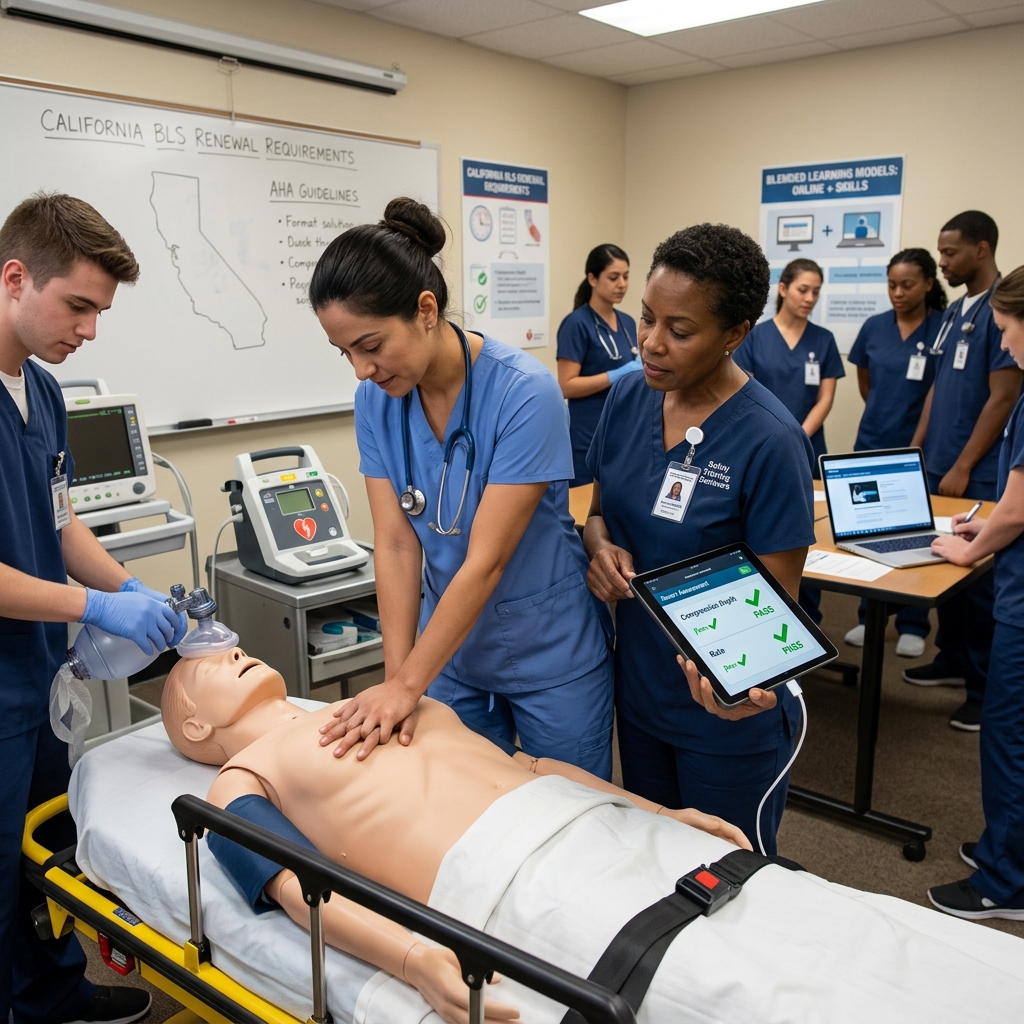
Why does California emphasize the blended model? Because research shows that knowledge retention is higher when professionals learn theory online and immediately apply skills in person. You’re not sitting through a full day of classroom instruction when you already understand the concepts; instead, you maximize your time on hands-on practice and instructor feedback. This efficiency is why we’ve structured every certification program this way.
Some training providers cut corners by offering online skills validation (where you video yourself doing chest compressions and submit it for review). California’s licensing boards don’t accept this approach for healthcare professionals. They require in-person observation by a qualified instructor. Our network of 100+ training locations ensures you have access to in-person sessions regardless of whether you’re in Bakersfield, Sacramento, or San Francisco.
What to do next: Ask any training provider whether they require in-person skills sessions. If the answer is unclear or conditional, move on. We guarantee in-person skills validation at every course across all our California locations.
5. Same-Day Certification Cards for Immediate Professional Compliance
Your certification card is your proof of compliance. California’s licensing boards, employers, and credentialing committees need to see a valid card with your name, course date, instructor credentials, and expiration date. Delays in receiving your card create problems: you may not be cleared to work until credentialing verifies your training, or you might miss shifts while awaiting documentation.
We issue certification cards on the same day you complete training. No waiting for mailed documents or online logins to verify credentials. When you finish your skills session, your instructor provides your signed, dated certificate immediately. This approach ensures you can submit proof of certification to your employer or licensing board the same day, keeping your professional status uninterrupted.
Some training providers issue digital-only certificates or require you to retrieve them from an online portal days or weeks after training. From a compliance standpoint, California’s boards accept both printed and digital documentation, but from a practical standpoint, having your card in hand immediately eliminates uncertainty. You walk out credentialed and ready.
This matters especially for professionals working across multiple employers or those transitioning between roles. If you’re changing jobs, volunteering at a new clinic, or picking up shifts at a different facility, same-day certification proof streamlines onboarding. We’ve helped healthcare professionals in Fresno, Stockton, San Jose, and throughout California maintain seamless credentialing throughout career transitions by providing immediate documentation.
What to do next: When you schedule your certification course, confirm that same-day cards are provided. If a provider can’t guarantee immediate certification, factor in several extra days before your certification needs to be submitted to your employer.
6. Choosing Training Centers That Guarantee Regulatory Alignment
Not all CPR and BLS training centers deliver the same quality or understanding of California’s regulatory landscape. Some operate nationally with generic curricula that don’t account for state-specific requirements. Others use outdated training methodologies or employ instructors without current credentials. Choosing the right center directly impacts whether your certification satisfies California’s standards.
We’ve built our network around California’s specific regulatory environment. Every instructor we employ holds current certifications and understands how state licensing boards, hospital credentialing departments, and employer policies intersect. Our curriculum reflects current evidence-based guidelines, and we update training materials regularly as best practices evolve.
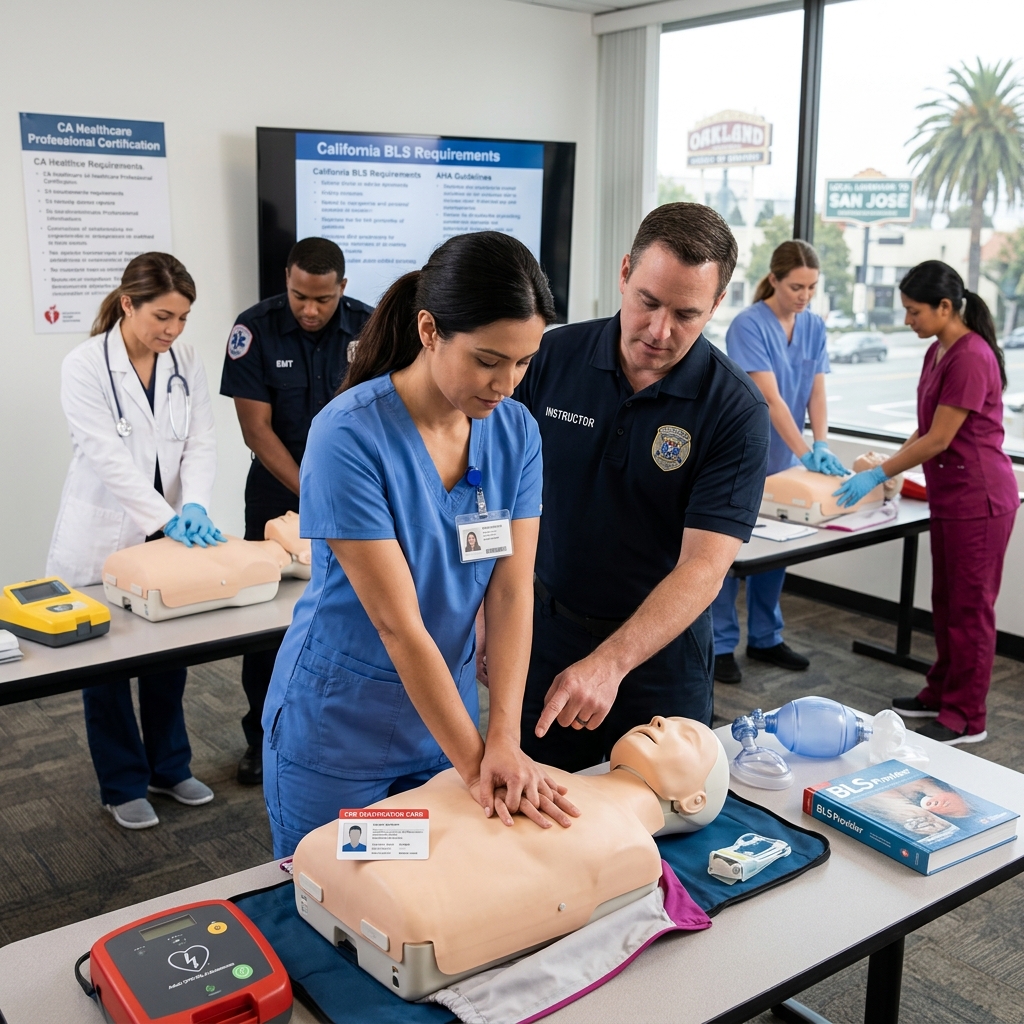
When evaluating training centers, verify these critical factors:
- Instructor credentials: Ask whether instructors hold current, active certifications from recognized training pathways. Don’t accept vague answers.
- In-person skills validation: Confirm that every course includes supervised, in-person skills sessions, not just online modules.
- Same-day documentation: Ensure certificates are issued immediately upon course completion.
- Cost transparency: Pricing shouldn’t include hidden fees or surprise charges. We offer a low price guarantee, meaning you won’t find lower rates elsewhere for the same quality training.
- Accessibility: Can you find a training location and schedule that fits your calendar? Our 100+ California locations and daily course offerings ensure convenience.
California healthcare professionals deserve training partners who understand their regulatory obligations and eliminate guesswork. We maintain training centers across the state, from rural areas like Visalia and Redding to major hubs like San Francisco, Los Angeles, and Sacramento. Whether you’re based in Concord, Davis, or Santa Rosa, you have access to our standards-aligned training.
What to do next: Before booking your next CPR or BLS course, request a brief call with our team to confirm how our training meets your specific employer’s and licensing board’s requirements. We can address any credentialing questions upfront and ensure your certification satisfies California’s standards without ambiguity.
Your professional credentials are too important to leave to chance. California’s licensing requirements exist to protect public safety and ensure you’re genuinely prepared for emergencies. We make compliance straightforward by delivering training that aligns with state standards, provides hands-on validation you can trust, and gets you certified immediately. Schedule your CPR or BLS course today across any of our California training locations, and keep your credentials current and your career secure.
Register for a class today.
Frequently Asked Questions (FAQ)
Do your CPR and BLS courses meet California’s mandatory licensing requirements?
Yes, we provide training that aligns with California’s licensing standards for healthcare professionals. Our courses are designed to help nurses, dentists, EMS personnel, and other medical professionals maintain compliance with their state licensing boards. We ensure our curriculum covers the critical competencies that California regulators require for professional credential renewal.
How quickly can we issue certification after completing training?
We issue same-day certification cards upon successful completion of our in-person skills sessions. This means you can meet immediate workplace compliance needs without waiting for documentation to arrive in the mail. Our verification stations across our 100+ California locations streamline this process so you’re certified and ready to return to your professional duties right away.
Why do we offer blended learning instead of traditional classroom-only training?
Our blended approach combines virtual instruction with hands-on in-person skills practice, which we’ve designed to fit your work schedule while still meeting California’s practical competency requirements. The virtual portion allows you to complete knowledge-based content at your own pace, and you come in for supervised skills validation at one of our nearby locations. This model keeps you compliant without disrupting your professional commitments.