Table of Contents
- 1. Understanding Why Certification Costs Vary Across Providers
- 2. Our Low Price Guarantee Ensures You Never Overpay
- 3. Blended Learning Reduces Training Costs While Maintaining Quality
- 4. Choose from Over 100 Convenient California Locations
- 5. Same-Day Certification Cards Save You Time and Money
- 6. Corporate Group Training with Transparent Discount Pricing
- 7. Flexible Scheduling Options That Fit Your Budget
- 8. AHA-Aligned Curriculum at a Fraction of Traditional Costs
- 9. No Hidden Fees or Surprise Charges
- Frequently Asked Questions (FAQ)
1. Understanding Why Certification Costs Vary Across Providers
CPR and life-saving certifications are non-negotiable for healthcare professionals. Whether you’re a nurse, dentist, EMS personnel, or clinical staff member, maintaining current American Heart Association (AHA) credentials isn’t optional—it’s a licensing requirement that directly impacts your career and your patients’ safety.
The challenge many professionals face isn’t deciding whether to get certified. It’s finding training that fits their budget, schedule, and work demands without sacrificing the quality instruction they need to perform confidently in emergencies.
We know the cost barrier is real. Training shouldn’t force you to choose between your wallet and your professional obligations. That’s why we’ve built our entire operation around one core principle: delivering certified, high-quality life-saving instruction at prices that respect your financial reality.
Here’s how we make affordable CPR certification possible throughout California—without cutting corners on curriculum, instructor expertise, or hands-on practice.
Certification pricing doesn’t follow a standard formula. Several factors explain why two seemingly identical CPR courses can cost dramatically different amounts.
Overhead drives much of the variation. Some providers maintain expensive real estate in premium locations. Others spend heavily on marketing, brand positioning, or corporate infrastructure. These costs get passed directly to learners. Instructor compensation, facility quality, equipment investment, and curriculum development also affect pricing.
Then there’s the delivery model itself. Classroom-only programs require scheduling space, managing rooms, and conducting every minute of instruction face-to-face. This creates fixed costs that increase the per-student price tag, especially for smaller class sizes.
Course length and structure matter too. Some training stretches across multiple days when it could be condensed. Others bundle unnecessary content or extend session times beyond what actual skill mastery requires. Longer courses mean higher facility and instructor costs, which reflect in your invoice.
The critical insight: more expensive doesn’t mean better. A $250 course with efficient scheduling, lean operations, and experienced instructors can deliver identical outcomes to a $400 course using outdated models.
Your takeaway: Before comparing prices, verify that providers use current AHA curriculum, employ certified instructors with real healthcare experience, and offer hands-on practice with proper equipment. Cost and quality are separate variables.
2. Our Low Price Guarantee Ensures You Never Overpay
We stand behind a simple commitment: we won’t let you find a lower price elsewhere for the same certification level.
Our low price guarantee removes the haggling and uncertainty from your decision. You get the peace of mind knowing you’re paying the absolute best rate available in California, plus the assurance that if you find a lower-quoted price from another accredited provider offering identical courses, we’ll match it.
How do we sustain this promise while staying profitable? We’ve eliminated unnecessary overhead. Our network of over 100 training locations throughout California—from Sacramento’s Midtown and Arden centers to San Francisco’s Mission District and Telegraph Hill—operates efficiently without the premium real estate costs that burden traditional providers.
We’ve also streamlined operations around what actually matters: getting you certified quickly with instructors who’ve lived the clinical environment. A nurse training other nurses. An EMS paramedic teaching BLS. These practitioners bring real credibility and relevant examples to every session.
Our blended model (discussed below) further reduces per-student costs without compromising the hands-on skills practice where it truly counts.
Your takeaway: Compare our posted rates against any accredited provider in your region. We’ve priced ourselves to win without requiring you to hunt for discounts or promotional codes. The rate you see is the rate you pay.
3. Blended Learning Reduces Training Costs While Maintaining Quality
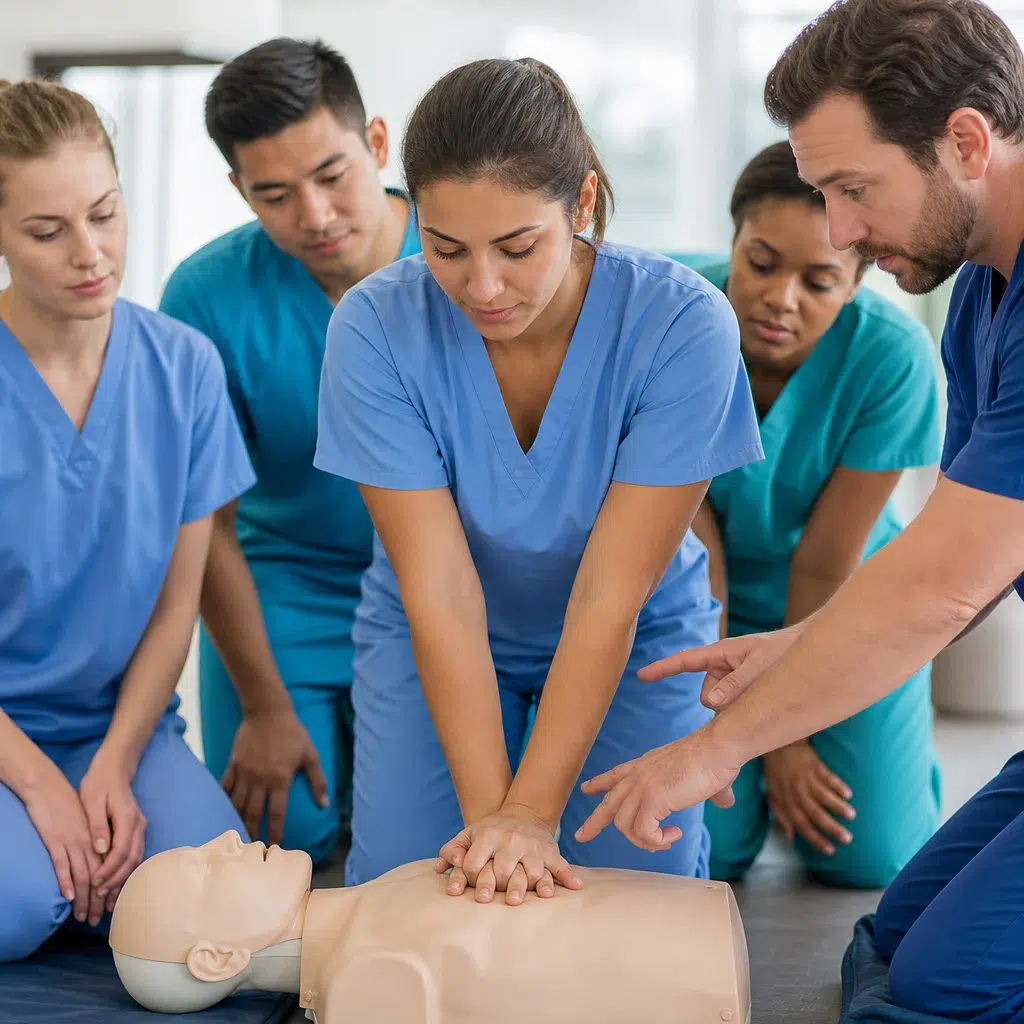
The blended approach transforms how we deliver affordable CPR certification without sacrificing outcomes.
Here’s the structure: online modules handle knowledge content. You progress through AHA-aligned curriculum at your own pace—understanding the science of compressions, learning recognition algorithms for different cardiac rhythms, and reviewing protocol sequences. This happens on your schedule, whether you study at 6 AM before a shift in Davis or 11 PM from home in Fremont.
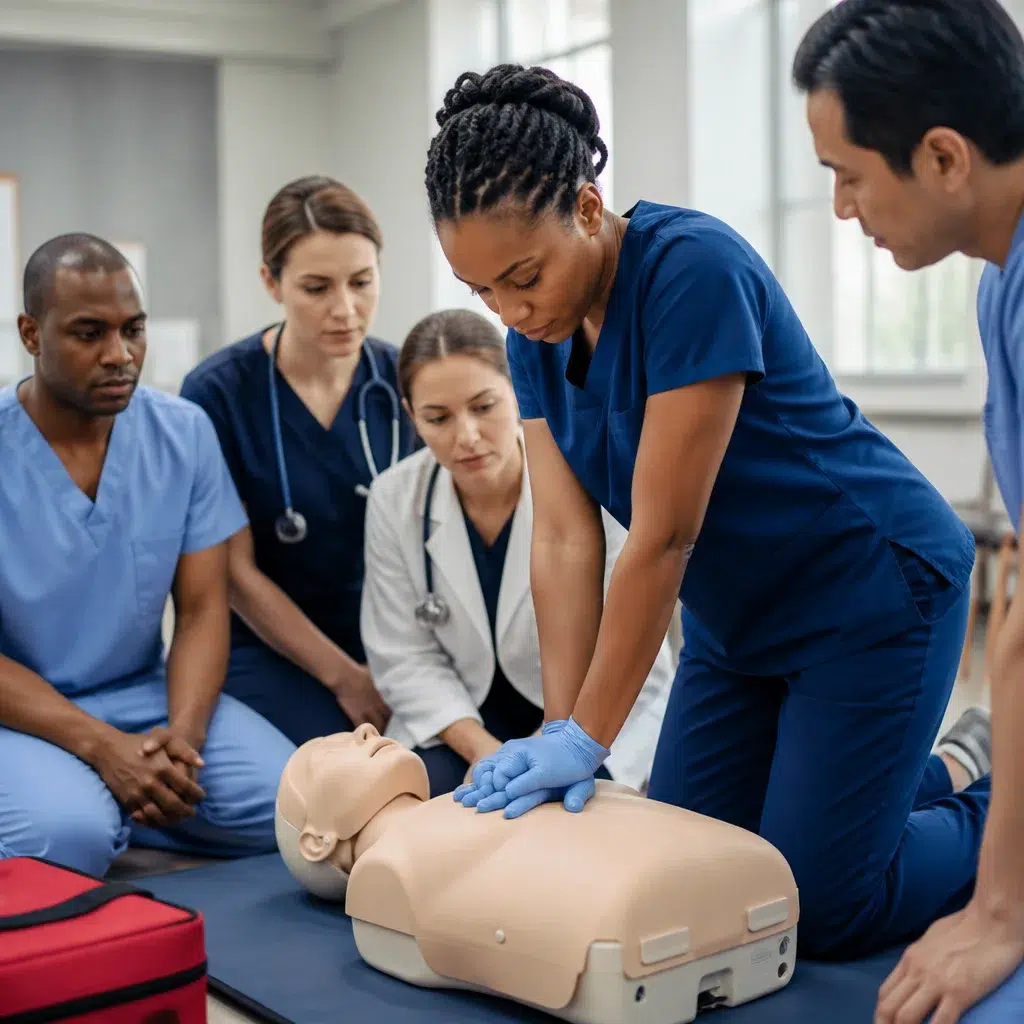
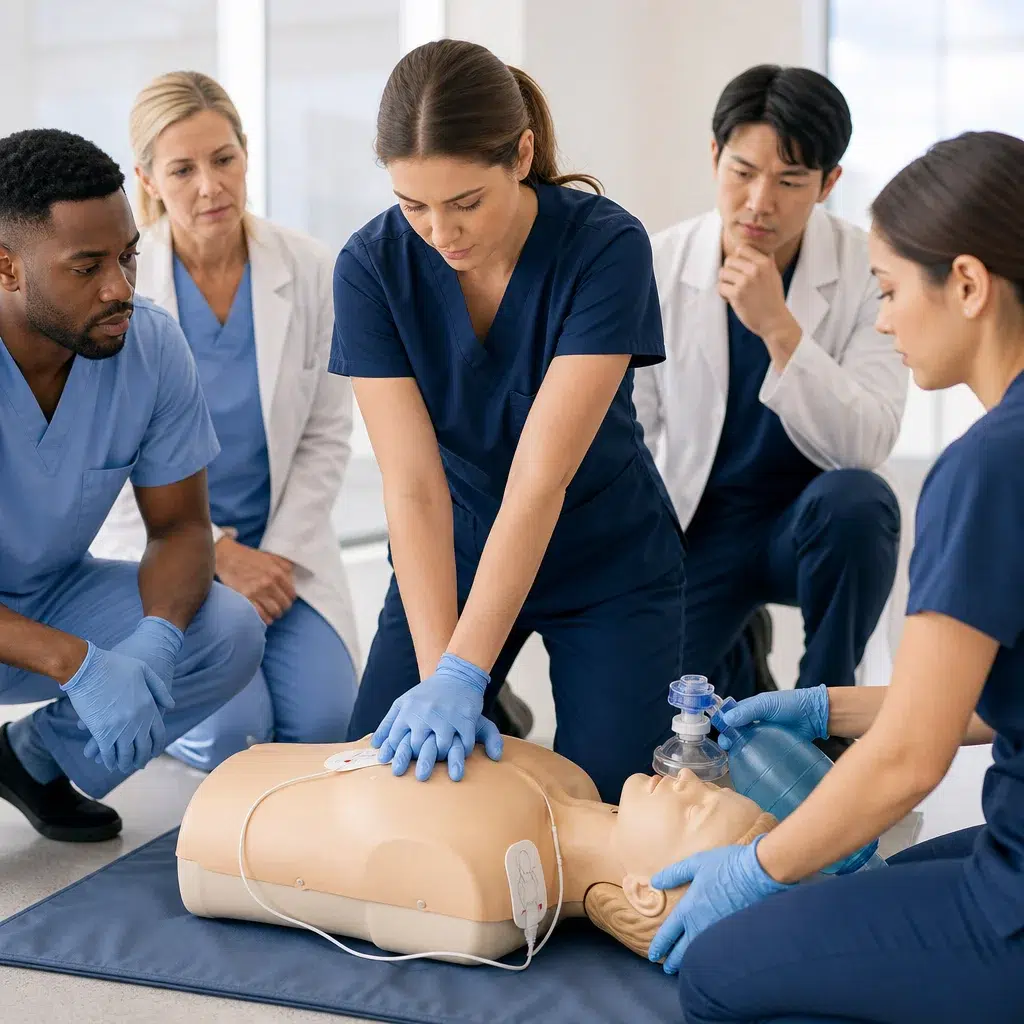
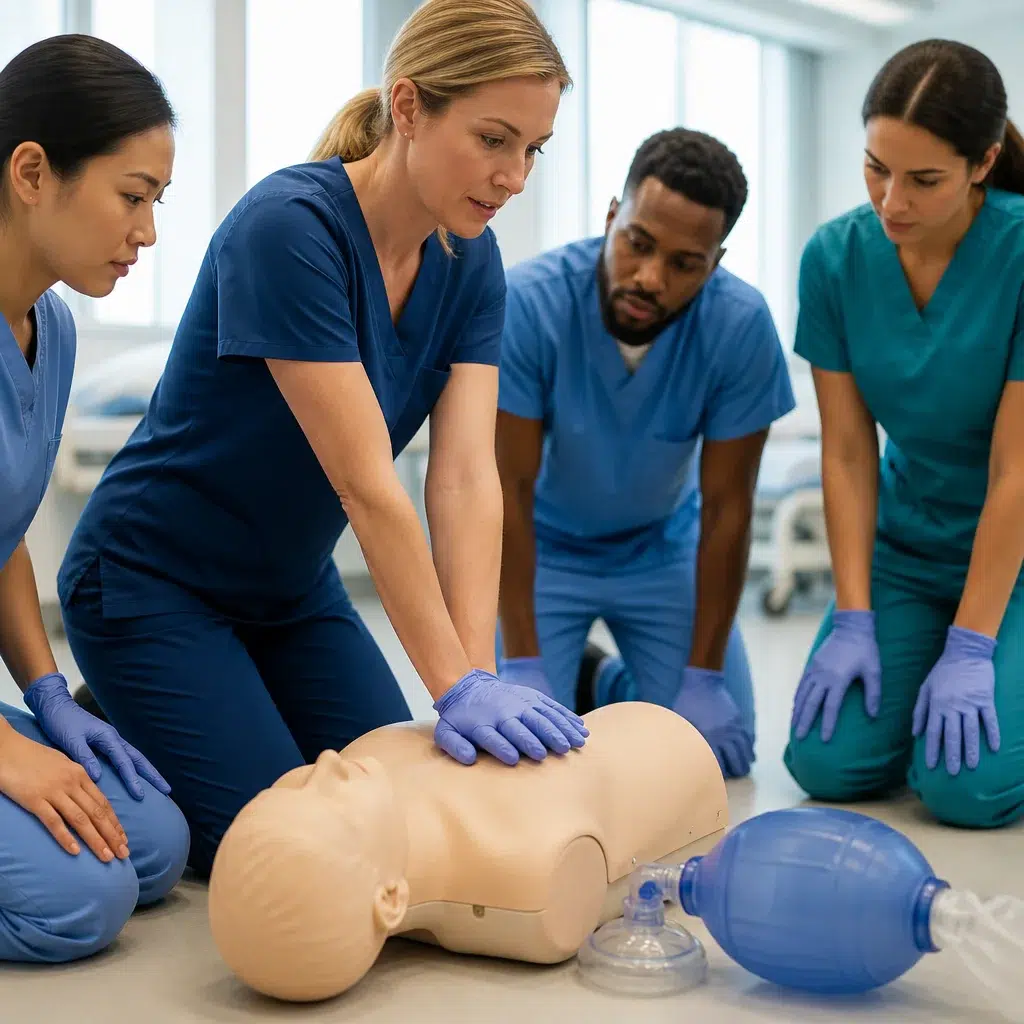
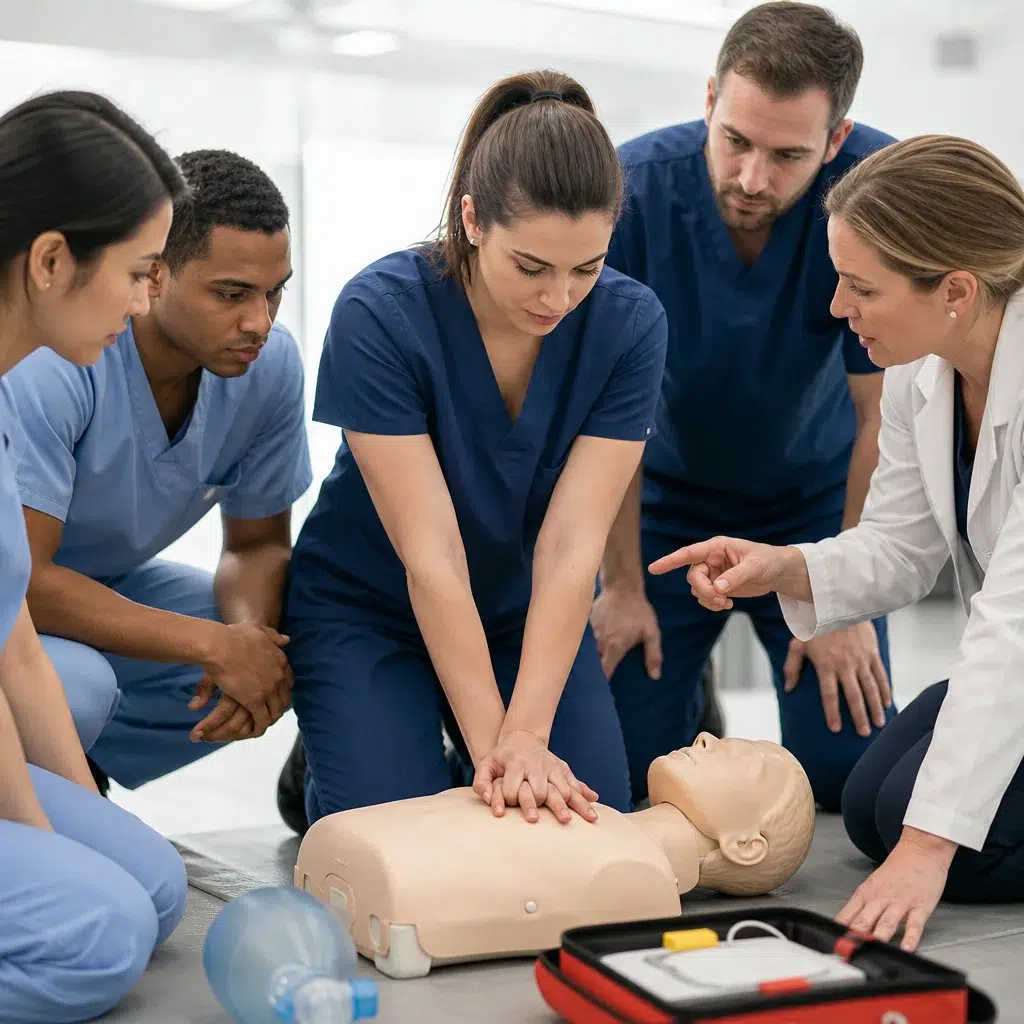
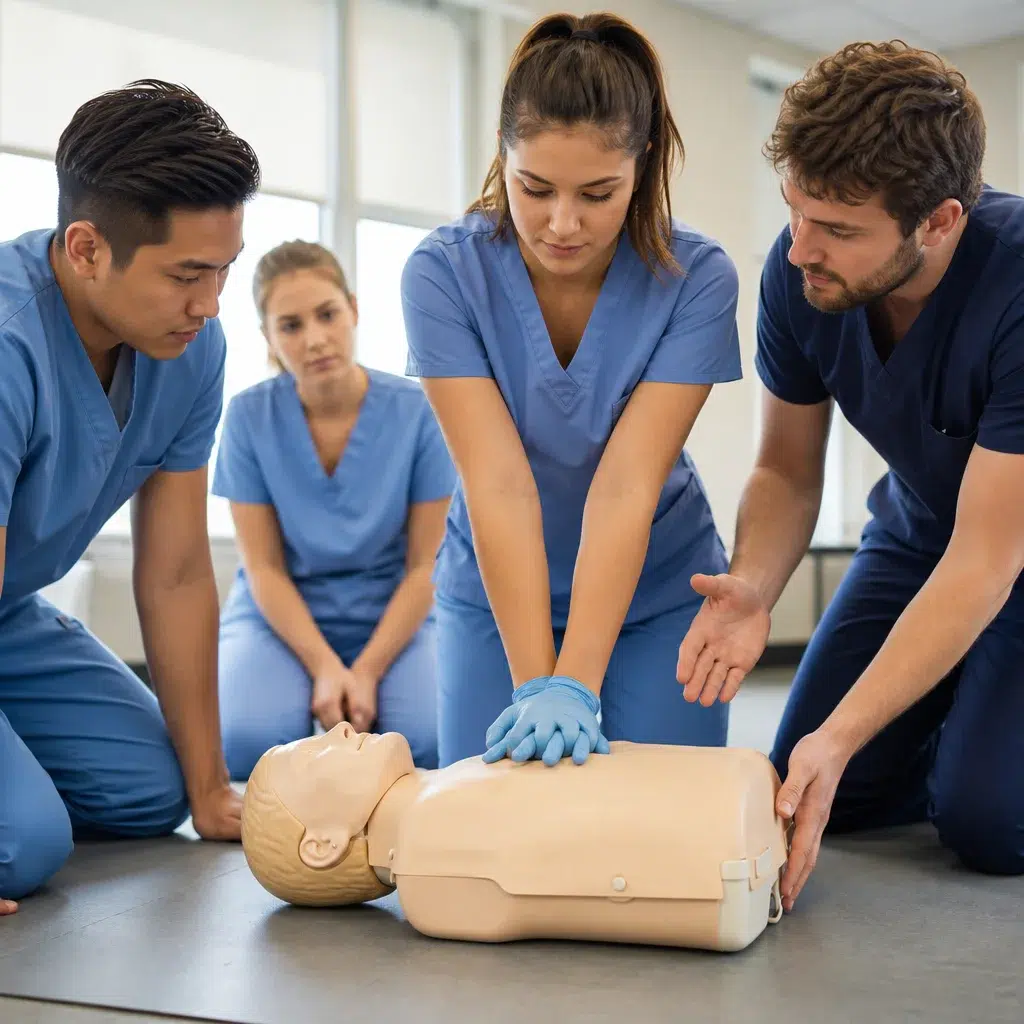
Then you attend an in-person session focused entirely on hands-on skills. This is where the real certification happens. You perform CPR on manikins. You practice defibrillator placement. You get corrective feedback from an instructor who observes your technique in real time. Your certification emerges from demonstrated competency, not passive content consumption.
This separation of knowledge from skills reduces total classroom time without reducing actual learning. A traditional eight-hour course might spend four hours lecturing information you could absorb online in ninety minutes. We eliminate that inefficiency.
Lower in-person hours means smaller instructor-to-student ratios become more sustainable and affordable. You get personalized feedback and adequate practice reps within a condensed skills session. No standing around. No filler.
The cost savings flow directly to you. You’re not paying for extended facility rental. Your instructor’s time focuses on what only humans can evaluate: your hands performing compressions at the right depth and rate.
Your takeaway: Request blended courses over classroom-only options. You’ll complete training faster, learn more effectively (research supports self-paced knowledge transfer), and pay less. Locations like Berkeley Downtown, Pleasanton, and Bakersfield all offer this model.
4. Choose from Over 100 Convenient California Locations
Geographic accessibility directly impacts your willingness to enroll. Travel time, parking hassles, and routing to unfamiliar venues add friction to an already time-constrained professional schedule.
We’ve addressed this by distributing training across California’s major healthcare and professional corridors. Whether you work near San Jose’s Japantown location, practice dentistry in Los Gatos, or staff an ER in Stockton, we’ve placed a training center within reasonable distance.
This distributed network also reduces our per-location costs compared to maintaining one or two flagship centers. We avoid the ultra-premium real estate premium and share administrative resources across multiple regional hubs. Lower overhead per site translates to lower per-student pricing.
Convenience matters beyond just proximity. When certification is genuinely accessible, more professionals actually stay current with renewals. You’re less likely to let your credential lapse if refresher training is a thirty-minute drive versus a two-hour commitment.
Our locations throughout the Bay Area—including Concord’s Treat and Willow Pass centers, Oakland’s Fruitvale, Lake Merritt, and Piedmont options, and Walnut Creek’s Downtown and Shadelands facilities—mean you can recertify without rescheduling your entire day.
Your takeaway: Find a location within your commute radius and schedule during operating hours that align with your clinical calendar. We update availability continuously at our 100+ locations, so check your preferred venue before assuming a time slot isn’t available.
5. Same-Day Certification Cards Save You Time and Money
Immediate credential issuance eliminates a hidden cost that most professionals overlook: the administrative disruption of waiting for mailed cards.
With same-day certification cards issued at the end of your skills session, you walk out with physical proof of current certification. No delay. No email followup. No “card will arrive in 7-10 business days” anxiety while you schedule upcoming shifts.
This matters when you’re a traveling nurse covering positions across multiple facilities in Palo Alto, San Mateo, and Livermore. Immediate proof means you start new assignments without credential verification holdups. You’re not losing billable hours while paperwork processes.
For EMS personnel in Fresno, Visalia, or Lodi rotating through different dispatch offices, instant cards mean you’re immediately eligible to respond to calls. You avoid gaps in deployment authorization.
Same-day issuance also reduces our administrative backend. We’re not storing, sorting, and shipping cards to dozens of addresses monthly. That operational efficiency again flows back as lower course costs.
Additionally, carrying your card the moment you’re certified reinforces the legitimacy of your training. You’ve completed rigorous, hands-on instruction and received immediate validation. The credential is tangible, not theoretical.
Your takeaway: Confirm that any provider offers same-day card issuance before enrolling. If you must wait weeks for mailed credentials, you’re paying for a less efficient system. We hand you your card when your skills session ends.
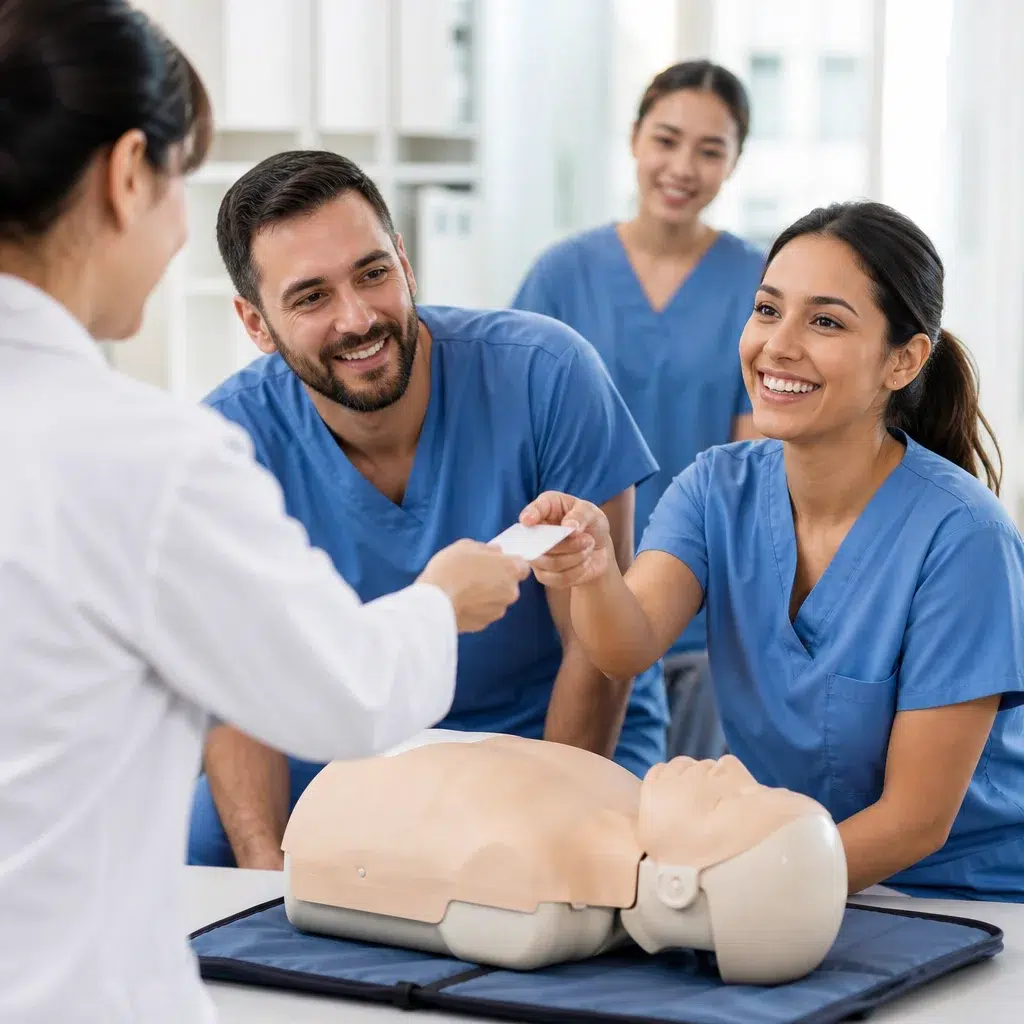
6. Corporate Group Training with Transparent Discount Pricing
Healthcare facilities, dental practices, and EMS agencies in California can leverage substantial savings through our corporate group programs.
When your employer trains multiple staff members together, per-person costs drop significantly. You’re consolidating instructor time, sharing facility rental, and eliminating duplicate administrative processing. A practice with eight dental assistants needing BLS renewal pays far less per person than individuals booking separately.
We’ve designed our corporate pricing to be completely transparent. No sliding scales that change based on how persistently you negotiate. No surprise per-person costs that land differently than quoted. You know the total investment and per-employee rate upfront.
Our corporate safety training in California programs handle logistics on our end: scheduling instructors to your facility in Sacramento’s Rosemont or Oak Park areas, coordinating skill stations to match your staff size, managing roster verification, and issuing cards to everyone simultaneously.
For larger organizations, we can customize curriculum to address facility-specific protocols. Your CPR training reflects your institution’s actual emergency response procedures, making the certification immediately applicable to your work environment.
Employers across California—from independent practices in Campbell and Morgan Hill to larger hospital networks in Modesto and Fresno—have reduced their collective training costs while improving team readiness through our group programs.
Your takeaway: If you manage a healthcare team, request a group quote. Costs drop per person when training cohorts of five or more, and you retain total schedule control. We bring the training to you, eliminating travel friction for your entire staff.
7. Flexible Scheduling Options That Fit Your Budget
Inflexible scheduling forces professionals to choose between their jobs and their certifications. Night shift nurses can’t attend daytime classes. Surgeons can’t take arbitrary afternoons off. Travel-based EMS personnel can’t commit to fixed-date programs months in advance.
We offer daily courses across multiple time slots. Morning sessions before shifts. Evening classes after clinical hours. Weekend options for those with irregular schedules. You’re not forced into a one-size-fits-all schedule that requires you to burn vacation time or lose income.
This scheduling flexibility also drives down costs. Instead of running expensive group courses on a fixed monthly calendar, we’re matching students with available instructors and facilities continuously. Better space utilization. More efficient instructor deployment. Fewer empty seats.
Locations throughout Northern California—Davis, Chico, Redding, and Woodland—offer early morning classes for professionals commuting from rural areas. San Francisco’s seven locations (Bayshore, Mission Bay, Mission District, Nob Hill, Parnassus/UCSF, Sunset, and Telegraph Hill) accommodate different working patterns across the city’s diverse healthcare sectors.
Monthly or yearly planning doesn’t add cost to us; we simply assign available resources. You get options. We get operational flexibility. Your reduced training friction means higher compliance rates across your organization.
Your takeaway: Check availability for early morning, evening, and weekend slots when budgeting your renewal. Schedule during off-peak times when we have abundant availability, and you’re training in less-crowded sessions with proportionally lower operational costs.
8. AHA-Aligned Curriculum at a Fraction of Traditional Costs
Our training aligns with American Heart Association guidelines while avoiding the AHA’s institutional overhead costs.
We’ve invested in curriculum development that meets every AHA competency requirement. Your instructors follow the same clinical protocols, practice algorithms, and evidence-based techniques that define quality CPR training nationwide. You’re learning material that’s directly transferable to clinical practice in any California facility.
The cost advantage emerges because we’re not subsidizing AHA membership programs, funding research initiatives, or maintaining institutional bureaucracies. We’re focused purely on delivering accredited, hands-on certification instruction.
Your credential carries full legitimacy across California healthcare settings. Hospitals in Merced, private practices in Danville and Pleasant Hill, and large clinics in Concord all accept our certifications without qualification. The training quality is identical to far more expensive alternatives.
We achieve this through experienced instructors—many with RN credentials, paramedic certifications, or advanced clinical experience—who understand not just the AHA curriculum but the actual emergency scenarios where CPR competency becomes critical.
This combination (AHA-aligned content plus experienced practitioners plus efficient delivery) creates training that’s simultaneously lower cost and higher perceived value. You’re not compromising on curriculum rigor; you’re eliminating superfluous institutional expenses.
Your takeaway: Verify that any low-cost provider you consider uses current AHA-aligned curriculum and employs clinically experienced instructors. Cheaper isn’t automatically better, but our pricing reflects operational efficiency, not curriculum shortcuts.
9. No Hidden Fees or Surprise Charges
Affordability loses all meaning if hidden costs emerge after you’ve enrolled.
Our pricing is genuinely transparent. The quoted rate includes instruction, certification card issuance, equipment use, and curriculum materials. No surprise fees for late enrollment. No additional charges for card replacement (if you genuinely lost the original). No surcharges for “verification” or “processing.”
You pay once. You receive everything advertised. Your certification is valid immediately and requires no further payments.
This transparency contrasts sharply with models where initial pricing seems competitive but additional mandatory fees emerge during enrollment checkout. Or where course fees don’t include the certification card, and you’re charged separately for that critical credential.
We’ve found that transparent pricing builds lasting relationships with professionals who recertify with us repeatedly. You recommend us to colleagues in San Rafael, Vallejo, and Tracy because you know exactly what you’re paying and what you’re getting.
For organizations managing recurring training for multiple staff rotations, transparent pricing means consistent budgeting year to year. You’re not facing surprise cost increases because we’ve changed fee structures mid-year.
Your takeaway: Ask any provider directly: what does your quoted price include, and what costs are separate? Get everything in writing. If a provider hesitates or lists items separately, their pricing likely isn’t as competitive as it initially appears.
—
Affordable CPR certification in California doesn’t require sacrificing quality, instructor expertise, or hands-on practice. It requires choosing a provider designed around efficiency rather than institutional overhead.
We’ve built Safety Training Seminars around making life-saving certification genuinely accessible to the healthcare professionals who need it most. Our combination of blended learning, distributed locations, transparent pricing, and experienced instructors removes every barrier between your job requirement and your completion.
Your next step is straightforward: visit our website, select your preferred location from our 100+ California centers, and schedule your certification session. Compare our pricing against any other accredited provider. We’ve already built affordability into our model—no negotiation, no codes, no gimmicks.
You deserve certification training that respects both your professional standards and your budget. Let’s get you current so you can focus on what matters: delivering excellent care to your patients.
Register for a class today.
Frequently Asked Questions (FAQ)
What makes our CPR certification affordable without cutting corners on quality?
We keep our prices low through our blended learning model, which combines online coursework with focused in-person skills sessions. Our extensive network of over 100 training locations across California also allows us to reduce overhead costs and pass those savings directly to you. We back this commitment with our low price guarantee, so you’ll never find better pricing elsewhere.
Can I get certified the same day I take a course with you?
Yes, we offer same-day certification options at most of our locations. After you complete both the online and in-person components, we issue your verification cards immediately so you can start your new position or meet licensing requirements right away. This means you don’t have to wait days or weeks for credentials to arrive by mail.
How much can we save with your corporate group training program?
We provide transparent discount pricing for teams based on your group size and specific training needs. Our corporate programs are designed to get all your staff certified efficiently while staying within budget constraints. We recommend contacting us directly with your team size and course requirements to receive an accurate quote tailored to your organization.