Table of Contents
- Why Nosebleeds Matter: Understanding the Risk in Your Healthcare Career
- Recognizing a Severe Nosebleed: Signs That Demand Immediate Action
- First Aid Steps We Teach for Managing Severe Nosebleeds
- Common Mistakes Healthcare Professionals Make During Nosebleed Emergencies
- When You Must Seek Emergency Medical Help
- How Our Training Prepares You for Real Bleeding Emergencies
- Staying Current with Certification Requirements
- Building Confidence Through Hands-On Practice Sessions
- Protecting Yourself and Your Patients with Proper Protocols
- Our Commitment to Your Professional Development
- Schedule Your First Aid Certification Today
- Frequently Asked Questions (FAQ)
Why Nosebleeds Matter: Understanding the Risk in Your Healthcare Career
Nosebleeds are far more common than most healthcare professionals realize. Whether you work in emergency departments, urgent care clinics, dental offices, or EMS services across California, you’ll encounter patients with epistaxis (the medical term for nosebleeds) regularly. What separates a minor inconvenience from a genuine medical emergency often comes down to your ability to recognize severity and respond appropriately.
For nurses, dentists, and EMS personnel, understanding nosebleed management isn’t just clinical knowledge. It’s a competency that protects your professional reputation and ensures patient safety. Dental procedures, for instance, can trigger unexpected bleeding. EMS teams may respond to trauma cases where facial injuries cause severe hemorrhage. Emergency nurses handle patients on anticoagulant medications where normal nosebleeds become complex situations.
Your certification requirements demand that you stay current with bleeding management protocols. This includes recognizing when first aid measures suffice and when emergency intervention becomes necessary. We’ve trained thousands of healthcare professionals across Sacramento, San Jose, and the broader Bay Area who rely on this knowledge in their daily work.
Recognizing a Severe Nosebleed: Signs That Demand Immediate Action
Most nosebleeds stop within 10 to 15 minutes with basic pressure. Severe nosebleeds, however, display distinct characteristics that signal the need for professional medical evaluation.
Watch for these warning signs:
- Bleeding that continues beyond 20 minutes despite direct pressure
- Blood flowing into the throat or down the back of the nose
- Dizziness, lightheadedness, or fainting
- Rapid or weak pulse
- Pale skin or signs of shock
- Bleeding from both nostrils simultaneously
- History of significant trauma to the face or head
Severe nosebleeds often originate from posterior nasal vessels, which are deeper and more difficult to access than anterior bleeds. Patients with uncontrolled hypertension, bleeding disorders, or those taking anticoagulants face elevated risk. We’ve seen cases in our San Francisco and Oakland locations where what appeared minor escalated quickly due to underlying medical conditions.
The volume of blood loss matters less than the rate of bleeding and whether the patient shows signs of hemodynamic compromise. A patient losing blood slowly may compensate well, while rapid bleeding can deplete blood volume dangerously fast. This distinction guides your next decision: can you manage this safely, or does the patient need emergency care?
First Aid Steps We Teach for Managing Severe Nosebleeds
Our training emphasizes a systematic approach that remains effective across emergency settings from Fresno to the Peninsula.
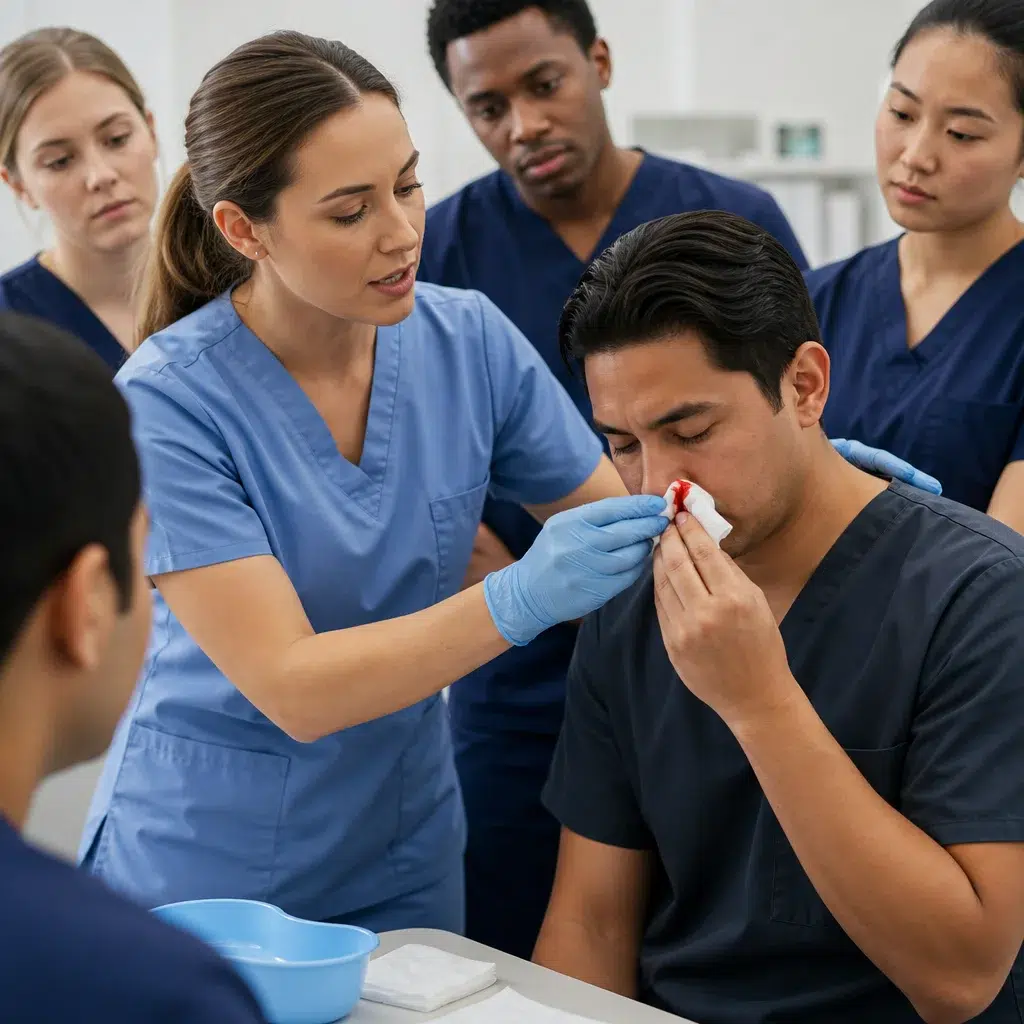
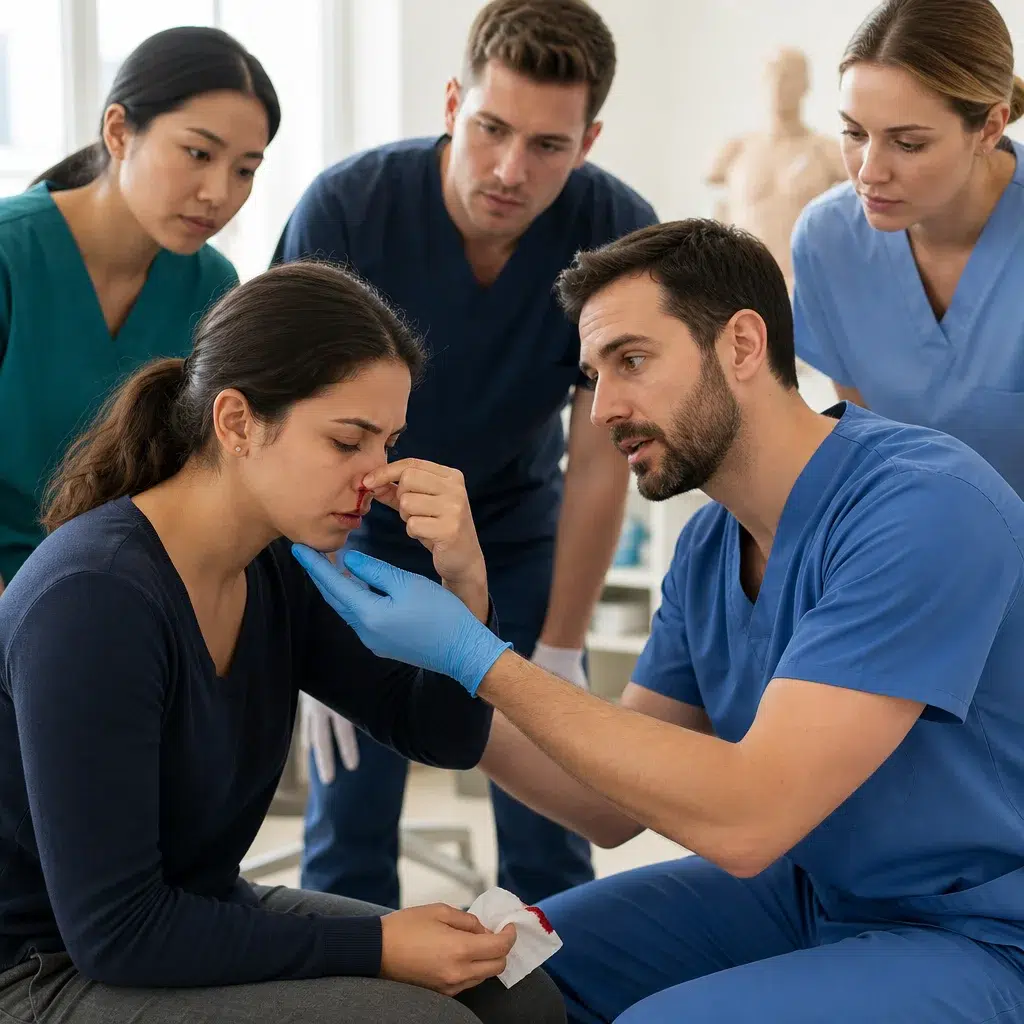
Position your patient properly. Have them sit upright and lean slightly forward. This prevents blood from flowing into the airway and helps you assess the bleeding rate. Avoid tilting the head backward, which causes blood to drain down the throat and obscures how much is actually bleeding.
Apply direct pressure correctly. Use thumb and forefinger to pinch the soft part of the nose (the fleshy area below the nasal bridge) firmly but not painfully. Maintain steady pressure for a full 10 minutes without releasing. Many people release too early, disrupting clot formation. This single mistake accounts for most failed first aid attempts.
Use appropriate materials. Gauze, clean cloth, or tissue works well. If available, use gauze soaked in a topical vasoconstrictor like epinephrine solution, which helps shrink blood vessels. In many clinical settings, you’ll have access to these agents; in public settings, plain gauze suffices.
Encourage ice application. Cold constricts blood vessels naturally. Have your patient suck on ice chips or apply an ice pack to the bridge of the nose. This simple adjunct significantly improves outcomes in anterior bleeds.
Monitor vital signs continuously. Watch for signs of shock or hemodynamic instability. Check pulse rate, blood pressure, and respiratory status. In healthcare settings from Walnut Creek to Visalia, this monitoring separates appropriate first aid from missed emergency diagnoses.
If bleeding stops after 10 to 15 minutes of pressure and the patient shows no warning signs, you’ve likely managed an anterior bleed successfully. Advise them to avoid blowing their nose, strenuous activity, and hot foods for several hours.
Common Mistakes Healthcare Professionals Make During Nosebleed Emergencies
Even experienced clinicians occasionally mishandle nosebleeds, usually due to habit rather than lack of knowledge.
Tilting the head backward remains the most persistent error. Patients and well-meaning bystanders default to this position, but it redirects blood down the throat, preventing accurate assessment of bleeding severity. You may think you’ve controlled the bleed when blood is simply flowing internally. Gently redirect your patient forward with patient education.
Releasing pressure too early undermines clot formation. Some professionals stop pressure after just two or three minutes, then repeat the cycle. This interrupted pressure never allows stable clotting. Commit to the full 10-minute duration before reassessing.
Overlooking medication history creates dangerous blind spots. Patients on warfarin, novel anticoagulants, or even daily aspirin have altered clotting. Their nosebleeds demand more aggressive initial evaluation and lower thresholds for emergency referral. Ask about medications before deciding your intervention is sufficient.
Failing to recognize posterior bleeds leads to underestimation of severity. Posterior bleeds feel different. Blood may appear minimal at the nostril but flow heavily down the throat. These require emergency care; they won’t respond to standard anterior pressure techniques.
Delaying transfer to emergency care when warning signs appear costs valuable time. We’ve observed cases in our Berkeley and Folsom locations where providers continued attempting first aid beyond the reasonable window, delaying definitive management. Trust your clinical instinct. If something feels wrong, it probably is.
When You Must Seek Emergency Medical Help
Certain situations mandate immediate emergency department evaluation. Knowing these triggers prevents dangerous delays.
Transfer to emergency care when:
- Bleeding persists beyond 30 minutes of continuous direct pressure
- You observe signs of shock (confusion, weak pulse, rapid breathing)
- The patient experiences difficulty breathing or swallowing blood
- Trauma preceded the nosebleed, suggesting possible fractures or deeper injuries
- The patient takes anticoagulant medications and the bleed is more than trivial
- Recurrent severe nosebleeds occur without clear cause
- You cannot assess posterior bleeding adequately
Patients with anticoagulation therapy deserve special attention. Even moderate bleeding warrants evaluation because you cannot reliably predict progression. Emergency physicians can check coagulation status and determine if reversal agents or transfusion support is needed.
Severe nosebleeds from trauma represent a different category entirely. Facial injuries causing epistaxis may indicate fractures, vascular injuries, or airway compromise. These patients need imaging and specialist evaluation, not continued home management.
How Our Training Prepares You for Real Bleeding Emergencies
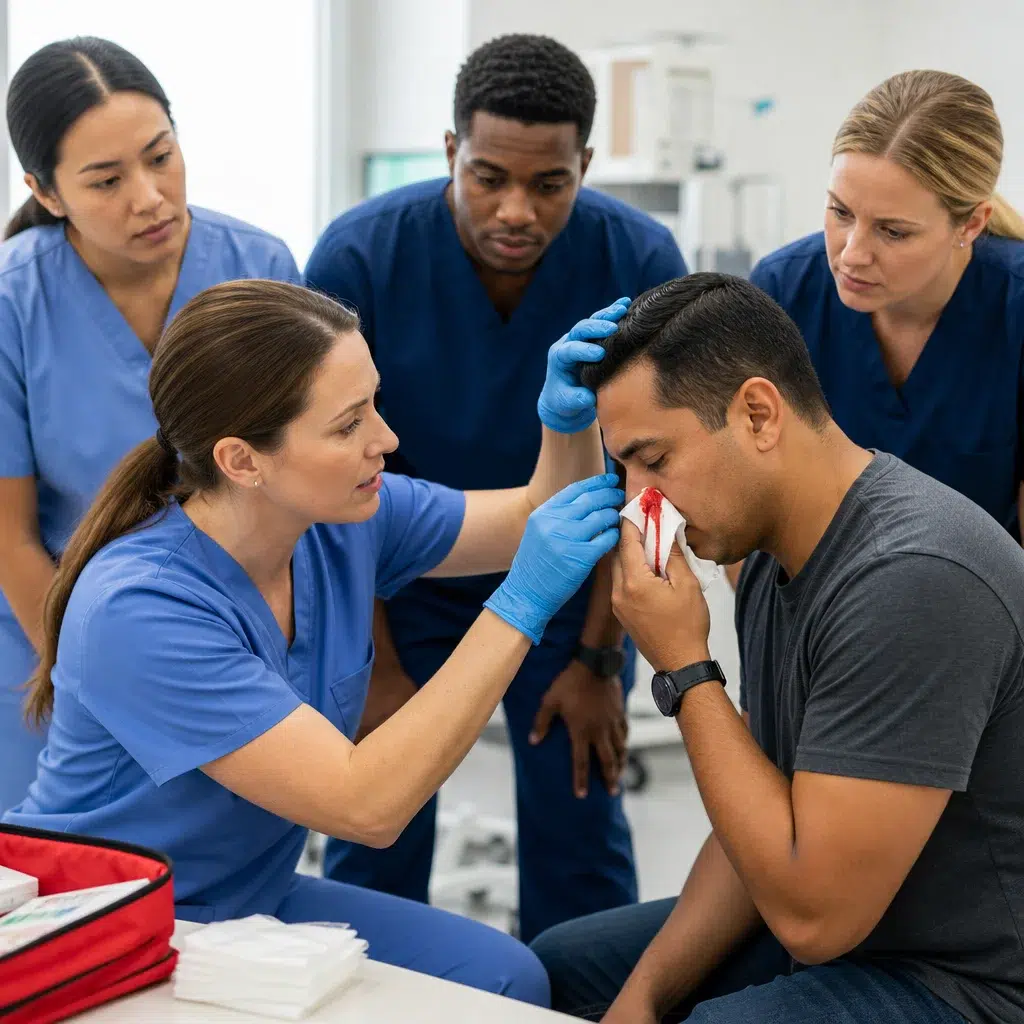
We design our first aid and BLS certification programs around exactly these scenarios. Our instructors, many of whom have emergency medicine experience, teach decision-making frameworks that transfer directly to your workplace.
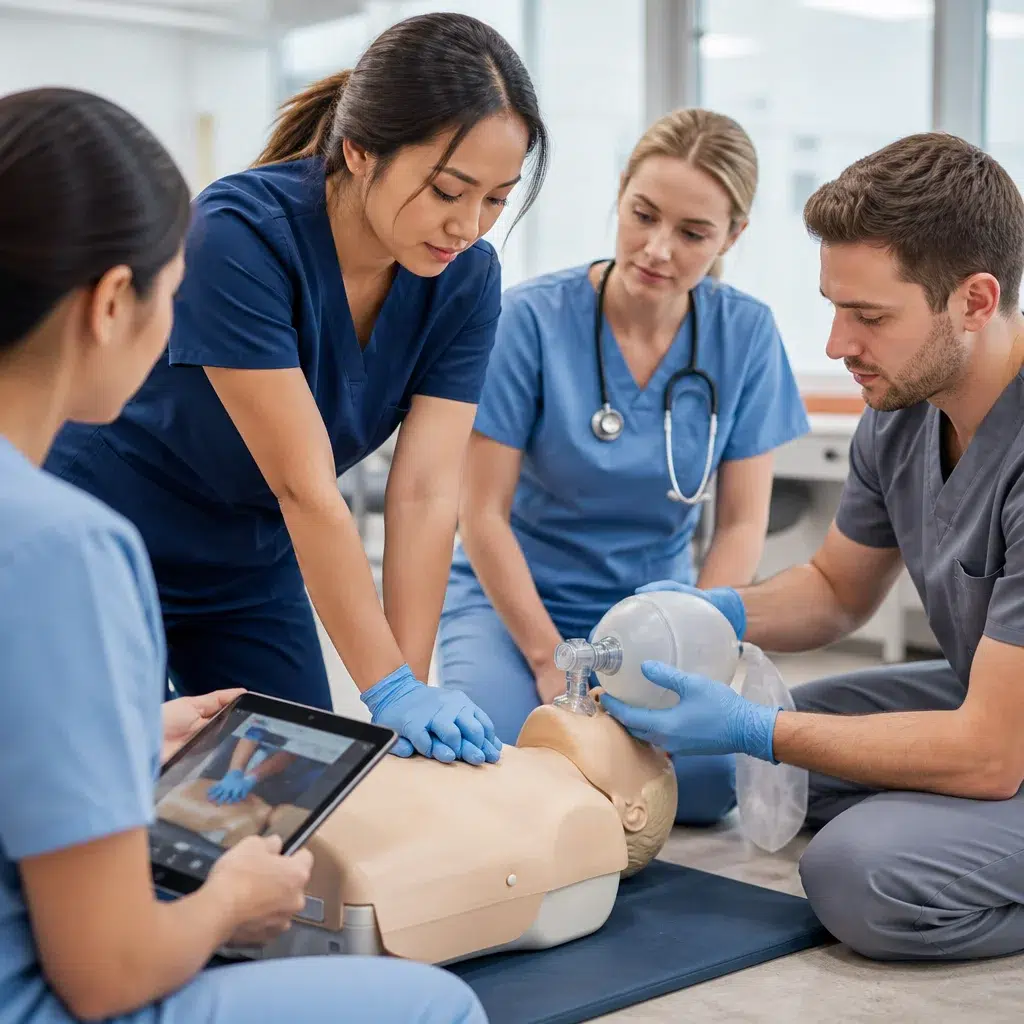
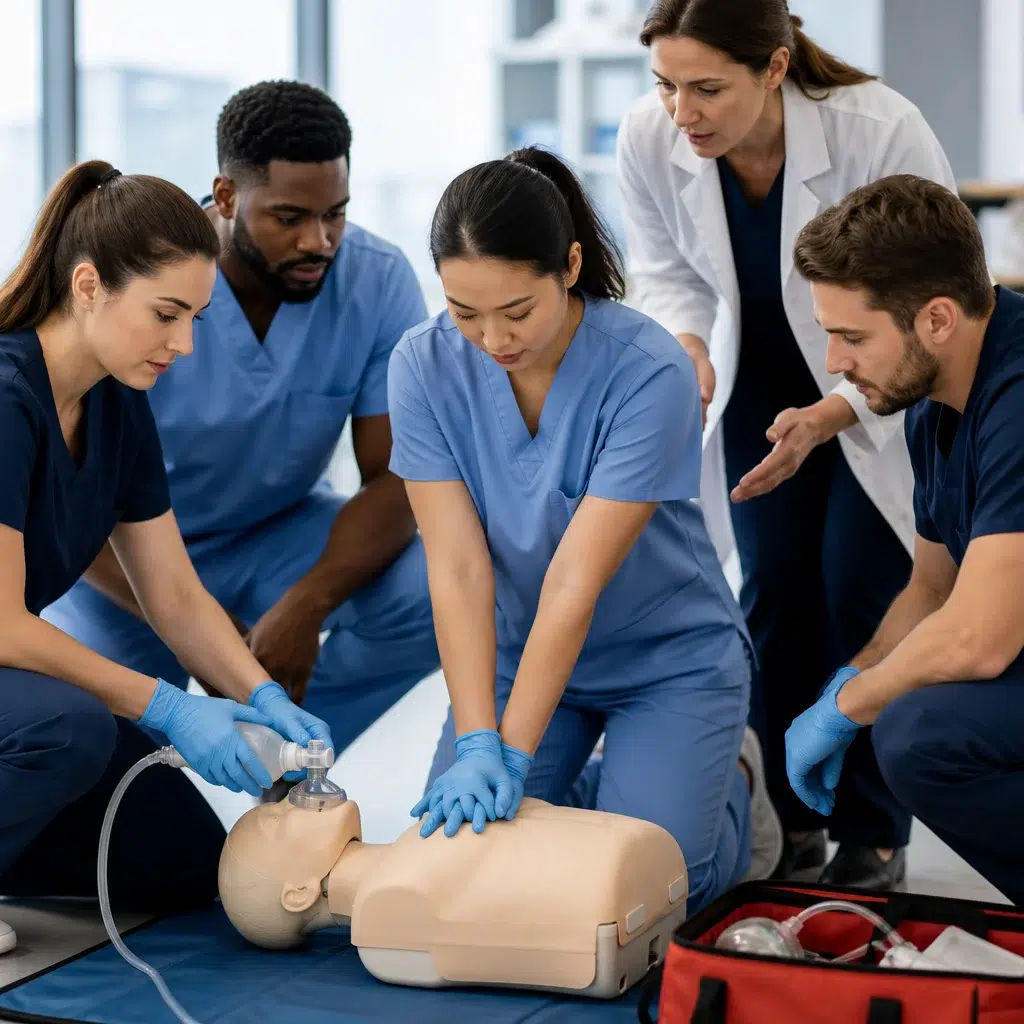
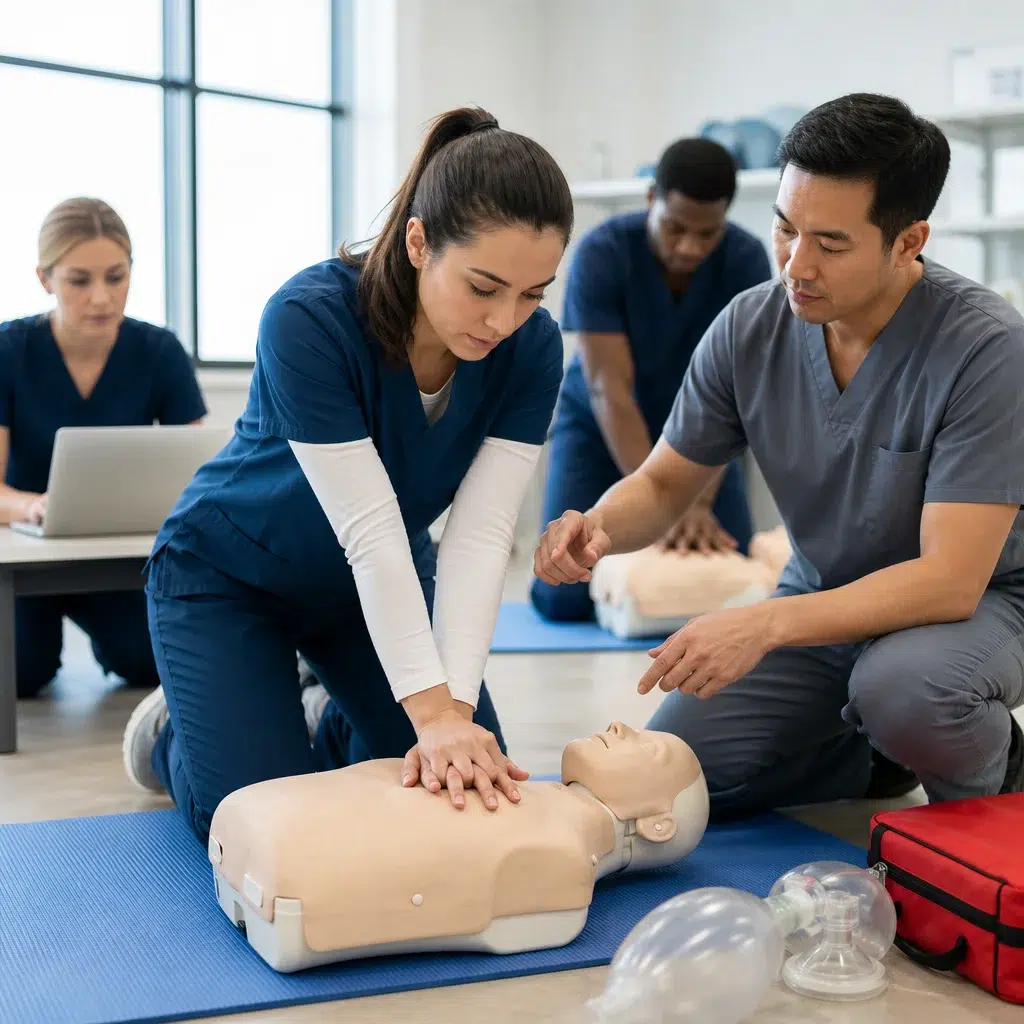
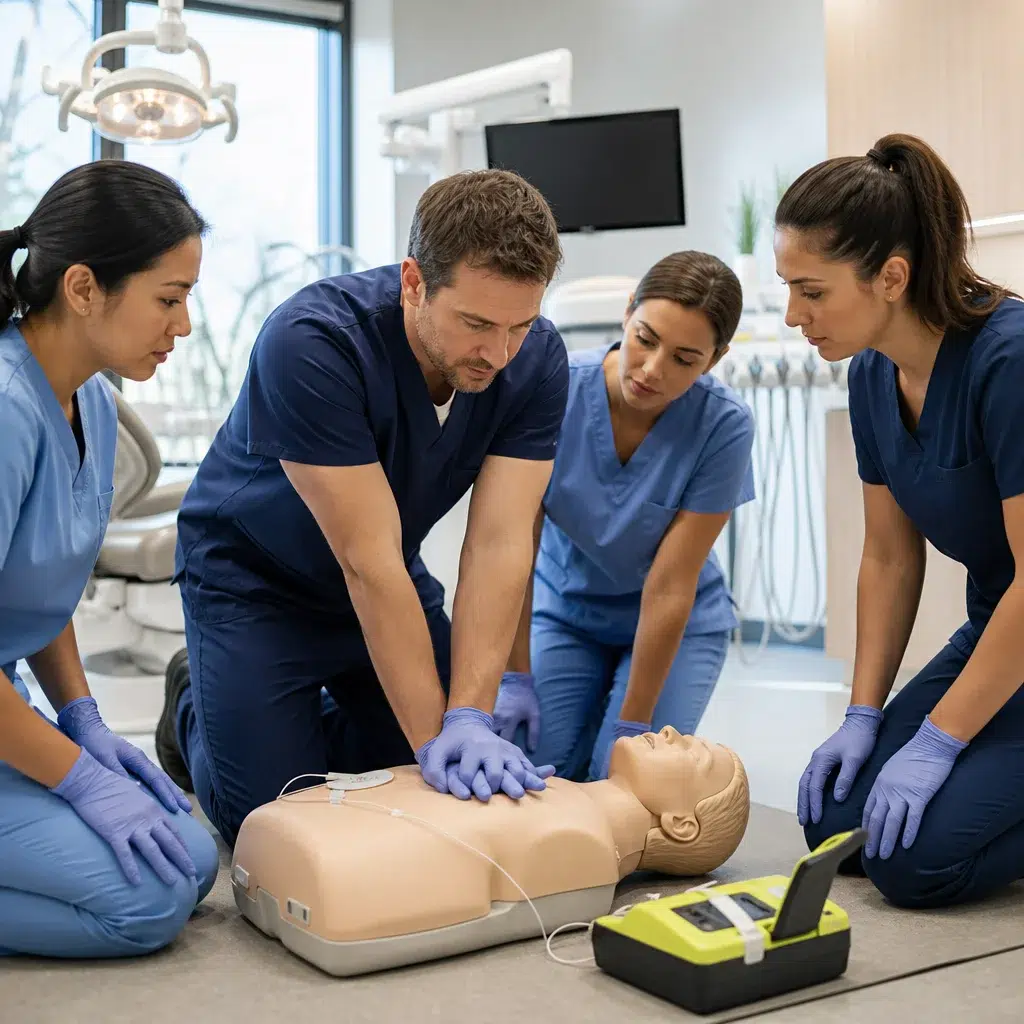
During hands-on practice sessions at our locations throughout California, you’ll manage simulated nosebleeds using realistic props. You’ll learn the feel of proper pressure application and practice the timing that actually works. We don’t just lecture about bleeding management; we walk you through the exact steps, correct your technique in real time, and build your confidence through repetition.
Our AHA certification classes integrate epistaxis management into broader first aid competency. You’ll understand not just nosebleeds but how to recognize shock, manage airways, and make appropriate referral decisions across multiple emergency scenarios. This integrated approach mirrors real-world practice where one emergency often accompanies others.
We maintain over 100 training locations across California, including Sacramento, San Jose, San Francisco, and Los Angeles metro areas. Our blended learning model combines online theory with in-person skills sessions, so you fit certification around your schedule while still getting the hands-on practice that changes behavior.
Staying Current with Certification Requirements
California healthcare professionals face specific continuing education demands. Your license renewal depends on staying current with recognized training standards, and employers increasingly require documented competency in bleeding management.
Our training meets state requirements for nurses, dentists, EMS personnel, and other regulated healthcare workers. We provide cards recognized by California licensing boards, and our low price guarantee ensures affordability across your career. Whether you’re in Redding or Santa Cruz, you can access current certification without traveling hours or paying premium rates.
Annual recertification keeps your knowledge fresh and your skills sharp. Even if you maintain current certifications, our courses help you stay informed about evolving protocols. Guidelines change, new evidence emerges, and your own experience accumulates. Regular training integrates these updates into your practice.
Check your specific California training requirements to ensure you’re meeting all obligations. Different healthcare settings impose different standards, and staying current protects both your career and your patients.
Building Confidence Through Hands-On Practice Sessions
Knowing first aid theory and actually performing under pressure are entirely different skills. Our hands-on practice sessions bridge that gap through repeated, coached repetition.
When you practice nosebleed management in our classroom, you’ll handle realistic scenarios. You’ll feel resistance as you apply pressure, make timing mistakes and correct them, and receive immediate feedback from experienced instructors. This deliberate practice builds muscle memory that activates automatically when real emergencies occur.
Confidence matters clinically. Hesitant providers second-guess their decisions and waste precious minutes. Confident providers execute clearly and reassess systematically. Our training builds the second type of clinician. By the time you complete your certification, you’ve practiced nosebleed management enough that you’ll respond automatically and appropriately when a real patient presents with epistaxis.
Our instructors rotate through locations including Modesto, Stockton, Pleasanton, and Morgan Hill, bringing consistent, high-quality instruction wherever you’re located. We invest in training equipment and current props because realistic practice changes behavior better than any lecture.
Protecting Yourself and Your Patients with Proper Protocols
Nosebleed management involves not just clinical skill but also infection control and safety protocols. Blood exposure creates transmission risks for bloodborne pathogens, and your protection matters alongside patient safety.
Use standard precautions consistently. Gloves, eye protection, and appropriate hand hygiene prevent transmission. Even routine nosebleeds warrant these protections because you cannot always identify patients with infectious diseases. This isn’t paranoia; it’s professional responsibility that protects both you and colleagues.
Document what occurred, what you did, and the patient outcome. In healthcare settings across the Bay Area and inland valleys, your documentation becomes part of the medical record and protects you legally. Note the duration of bleeding, techniques used, and whether the patient required referral.
Establish clear protocols with your workplace. If you work in a dental practice, know your emergency procedures before a patient begins bleeding unexpectedly. If you work in EMS, coordinate with receiving hospitals about your epistaxis management approach. If you work in nursing, understand your facility’s chain of command for escalating concerns.
Our Commitment to Your Professional Development
We’ve been training healthcare professionals throughout California for years because we believe competence saves lives. Every nurse, dentist, and EMS provider we certify gains skills that directly impact patient outcomes in their community.
Our commitment extends beyond a one-time class. We offer CPR verification stations where you can test your skills and refresh your knowledge between formal certifications. We maintain accessible pricing through our low price guarantee because cost shouldn’t prevent lifesaving training. We schedule classes daily at convenient times and locations, recognizing that healthcare professionals have demanding schedules.
We stay current with evolving guidelines and training evidence. Our instructors undergo regular updates to teach the most current practices. We listen to feedback from healthcare professionals about what they need in real-world practice and continuously refine our curriculum to address those needs.
Schedule Your First Aid Certification Today
Your patients depend on your competence during emergencies. Whether you need initial certification, annual recertification, or skill refresher training, we’re here to support your professional development.
Find an available class at a location convenient to you. We have training sites from Chico and Redding in the north to Visalia in the south, and everywhere in between. Choose the format that works best: in-person classes, blended learning combining online and hands-on sessions, or specialized programs for healthcare providers needing ACLS, BLS, or PALS certification.
Register today and join thousands of California healthcare professionals who trust us for their certification needs. Your next severe nosebleed emergency will find you ready.
Register for a class today.
Frequently Asked Questions (FAQ)
What techniques do we teach for managing severe nosebleeds in clinical settings?
We teach our students to position patients upright and tilted slightly forward to prevent blood from entering the airway. Our instructors demonstrate how to apply direct pressure to the soft part of the nose for sustained periods, and we emphasize the importance of remaining calm to help your patient stay composed. We also cover when topical treatments become necessary and how to recognize signs that emergency intervention is required.
How does our hands-on training prepare you to respond confidently during bleeding emergencies?
We combine virtual learning modules with in-person skills sessions where you practice real-world scenarios under the guidance of certified instructors. During our practice sessions, you work directly with our trainers to develop muscle memory and decision-making skills that transfer directly to your workplace. We believe this blended approach builds the confidence you need to act decisively when severe bleeding occurs.
Why is it important to maintain current certifications when managing medical emergencies like severe nosebleeds?
We require regular recertification because emergency protocols and best practices evolve, and staying current ensures you’re applying the most effective techniques available. Your certification demonstrates to employers that you meet professional standards for patient safety, which is critical for healthcare careers. We make it convenient to renew by offering daily certification courses across over 100 California locations.