Table of Contents
- Why Healthcare Professionals Need Flexible ACLS Training Options
- The Limitations of Traditional Full-Day ACLS Classes
- How Our Blended ACLS Model Works
- Virtual Learning Components and Online Preparation
- In-Person Skills Sessions at Our 100+ California Locations
- Same-Day Certification Cards and Immediate Compliance
- Affordable Pricing and Our Low-Price Guarantee
- Specialized ACLS Programs for Nurses, Dentists, and EMS Personnel
- Scheduling Flexibility for Busy Healthcare Providers
- Why Our Simulation Technology Matters for Your Competency
- Getting Started with Your ACLS Certification Today
- Frequently Asked Questions (FAQ)
Why Healthcare Professionals Need Flexible ACLS Training Options
Your clinical schedule doesn’t operate on a nine-to-five calendar. Neither should your ACLS (Advanced Cardiovascular Life Support) certification. We designed our blended learning model because nurses, dentists, paramedics, and emergency responders across California told us the same thing: they needed training that fits into their lives, not the other way around.
When you’re managing patient rotations, on-call shifts, or weekend clinic hours, blocking out an entire day for training creates real scheduling friction. A blended approach splits the load, letting you complete online theory work whenever you have 30 minutes between cases or during a quiet shift. Then you show up for one focused, hands-on skills session where you practice on actual equipment with instructors who understand your clinical reality.
This flexibility doesn’t mean lower standards. Our instructors maintain rigorous skill assessment and clinical accuracy. What changes is the delivery structure, making certification achievable without sacrificing your work schedule or the quality of instruction you receive.
The Limitations of Traditional Full-Day ACLS Classes
Full-day classroom training locks you into a specific date and location for 6-8 continuous hours. That model made sense decades ago, but modern healthcare professionals face genuine scheduling constraints that traditional instruction wasn’t designed to handle.
Several practical problems emerge with all-in-one-day classes:
- Scheduling conflicts become deal-breakers. One patient emergency or unexpected shift swap cancels your entire certification attempt, forcing you to reschedule weeks out.
- Information retention suffers. Cramming dense clinical protocols into a single sitting leaves limited time for real skill repetition and troubleshooting your technique.
- Travel friction compounds stress. Driving across the Bay Area or Central Valley to reach a classroom, then sitting for hours, adds burden you don’t need.
- Limited hands-on repetition. Time constraints mean fewer practice runs on the mannequin, leaving you uncertain about chest compression depth or medication administration timing.
We saw these friction points repeatedly from healthcare professionals in Fremont, Sacramento, San Jose, and dozens of other California communities. That feedback shaped how we built our certification pathway.
How Our Blended ACLS Model Works
Our approach separates knowledge acquisition from skills mastery, optimizing each component independently. You begin with online coursework covering cardiac physiology, arrhythmia recognition, medication protocols, and decision-tree scenarios. This foundation work happens on your schedule, whether that’s Tuesday morning or Saturday night.
Once you complete the online modules (typically 3-4 hours spread across several days), you book a in-person skills session at a location convenient to you. During that focused 2-3 hour session, you practice chest compressions, defibrillator operation, medication administration, and team communication scenarios with our instructors providing real-time feedback.
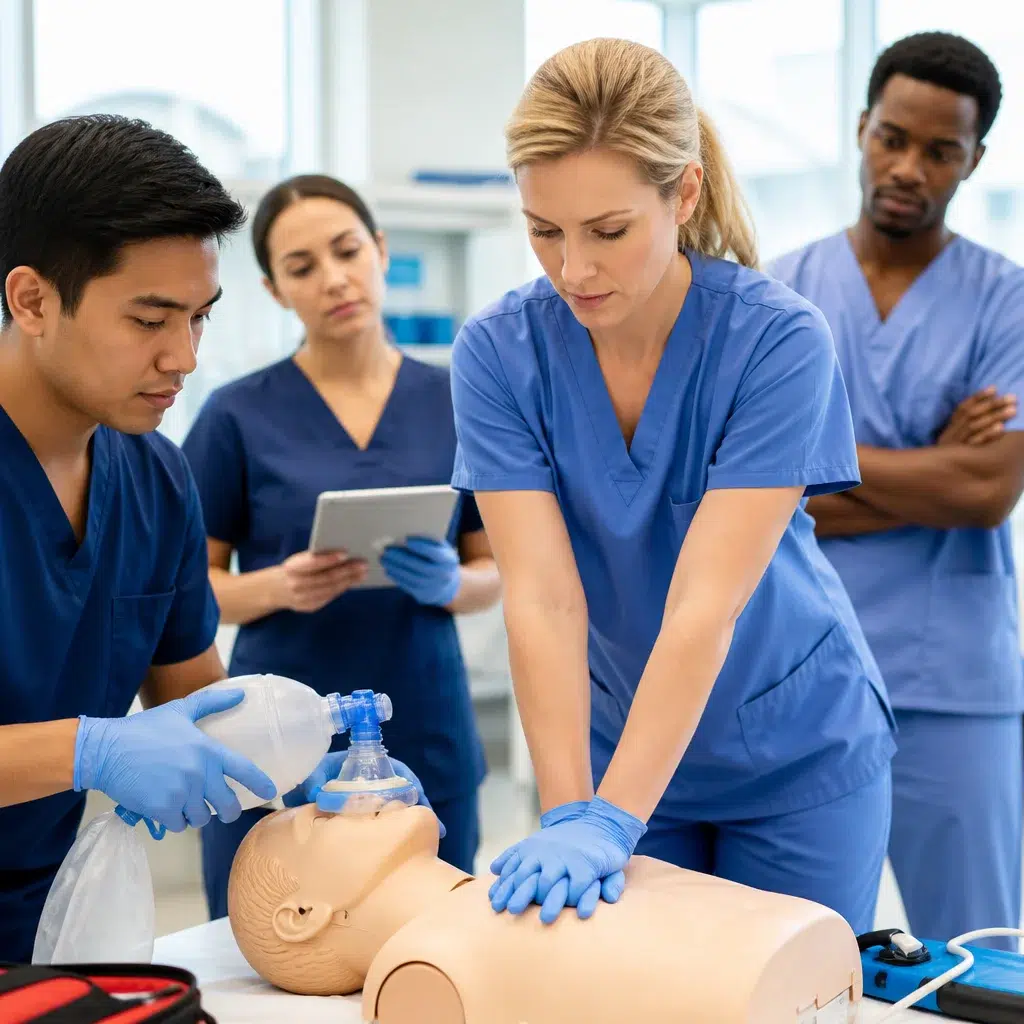
The separation matters because it removes the pressure of learning complex drug interactions while simultaneously performing CPR on a mannequin. You arrive already grounded in the theory, ready to translate that knowledge into clinical muscle memory.
Virtual Learning Components and Online Preparation
Your online coursework covers everything beyond hands-on skills. We use interactive modules that don’t feel like reading a textbook. You work through case studies, watch video demonstrations of technique, and answer scenario-based questions that mirror actual cardiac emergencies you might encounter in your department or clinic.
The platform works on any device. Take a module on your tablet between patients, or complete a section on your laptop at home. You can bookmark content, revisit confusing concepts, and move at your own pace. Our instructors aren’t replaced by screens; rather, they’re freed up to focus entirely on skill assessment and correction during your in-person session.
One nurse in Walnut Creek told us she appreciated reviewing the medication section twice before her skills session. Another paramedic in Modesto completed modules over two weeks, fitting them around his rotating schedule. That flexibility reveals itself in how confident people feel when they walk into the skills lab.
Progress tracking shows you exactly what you’ve completed and flags any remaining modules before you can schedule your in-person appointment. You don’t show up unprepared; we ensure readiness before that critical hands-on evaluation.
In-Person Skills Sessions at Our 100+ California Locations
We operate skills centers across California, from San Francisco and the East Bay through Sacramento, the Central Valley, and down to Fresno and Visalia. This network means you’re never more than 20-30 minutes from a location where you can complete your certification.
Our California ACLS locations include established training facilities in metropolitan areas and regional centers that serve rural and underserved communities. Each location stocks identical equipment and follows identical protocols, so you receive consistent instruction whether you train in Palo Alto, Stockton, or Santa Rosa.
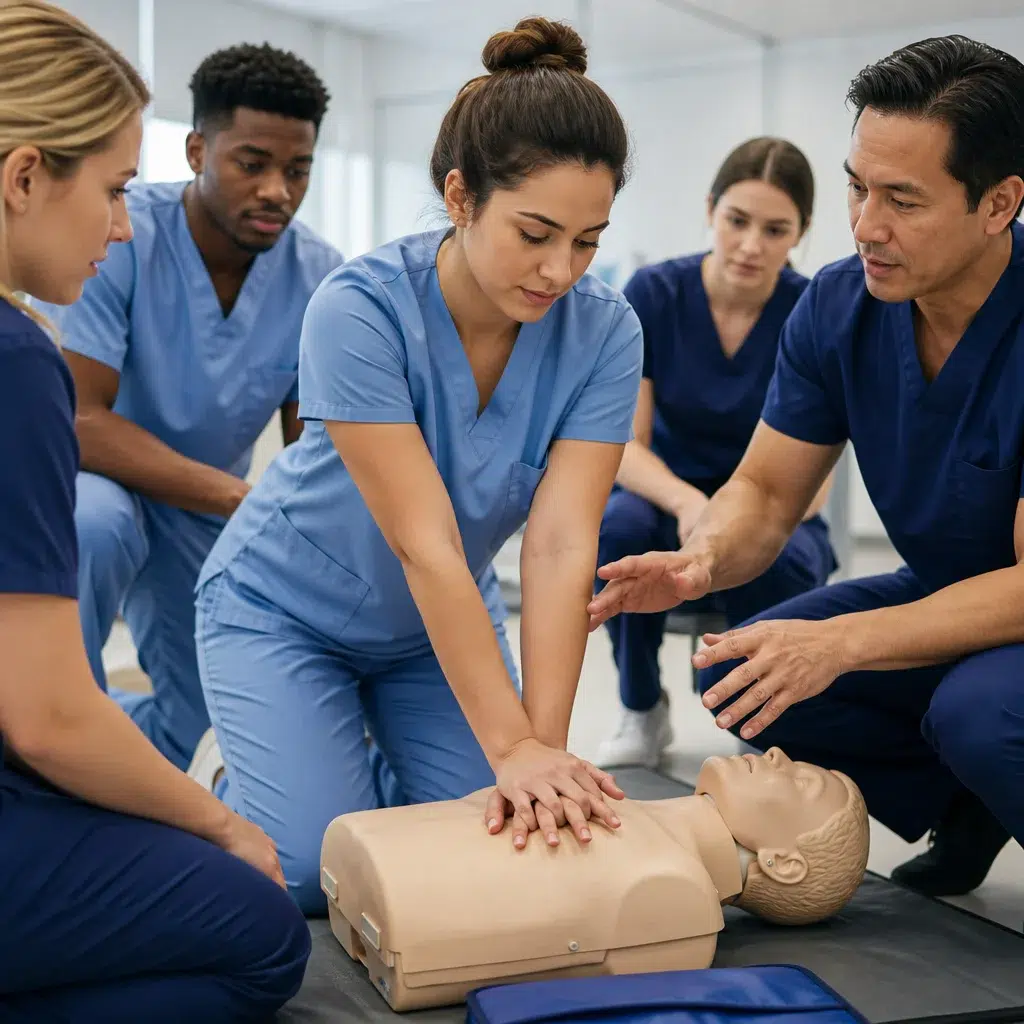
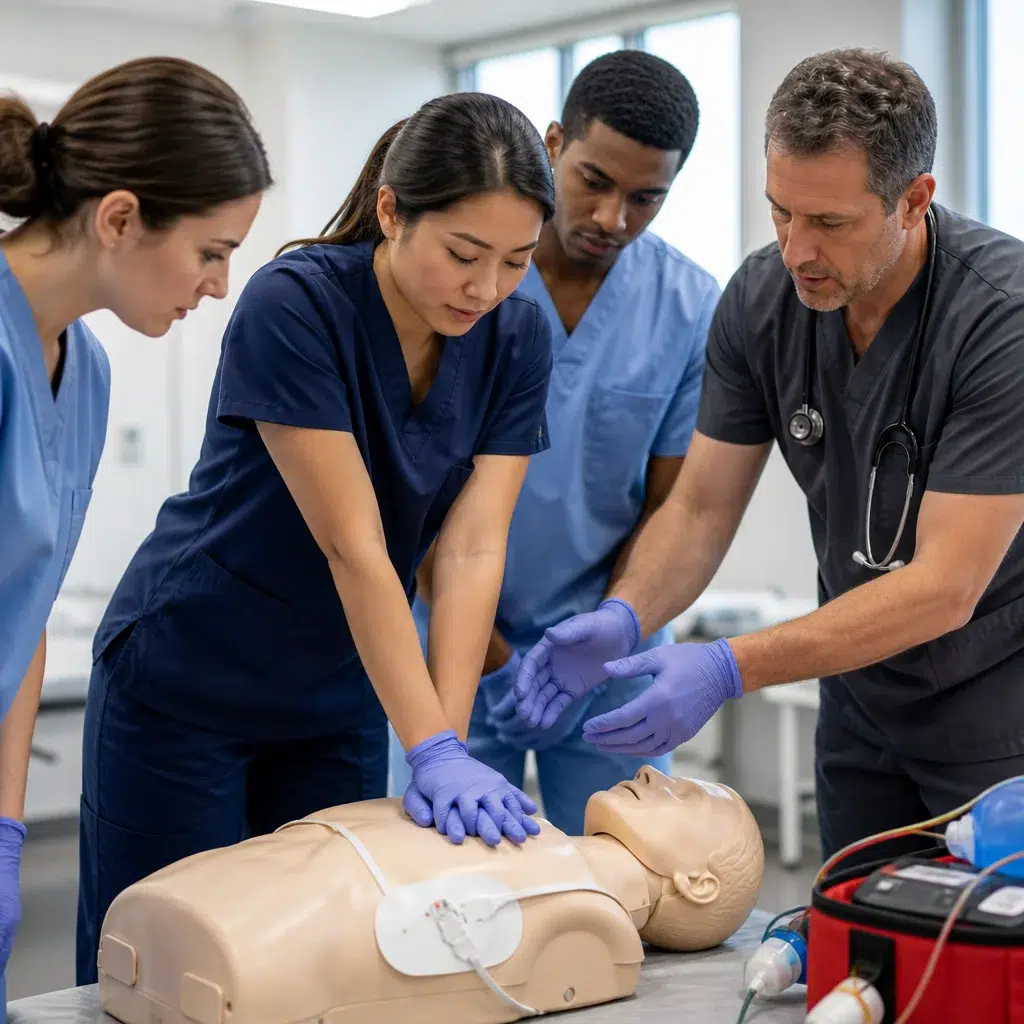
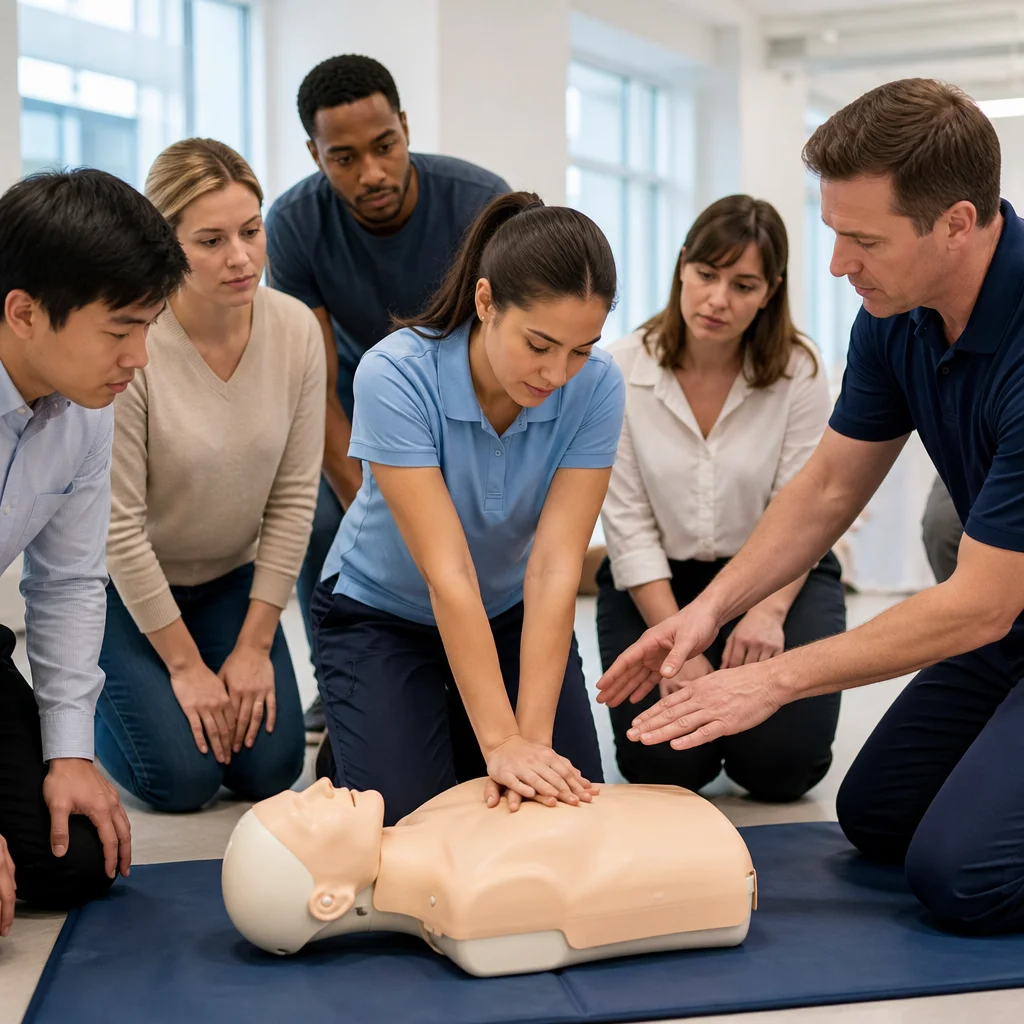
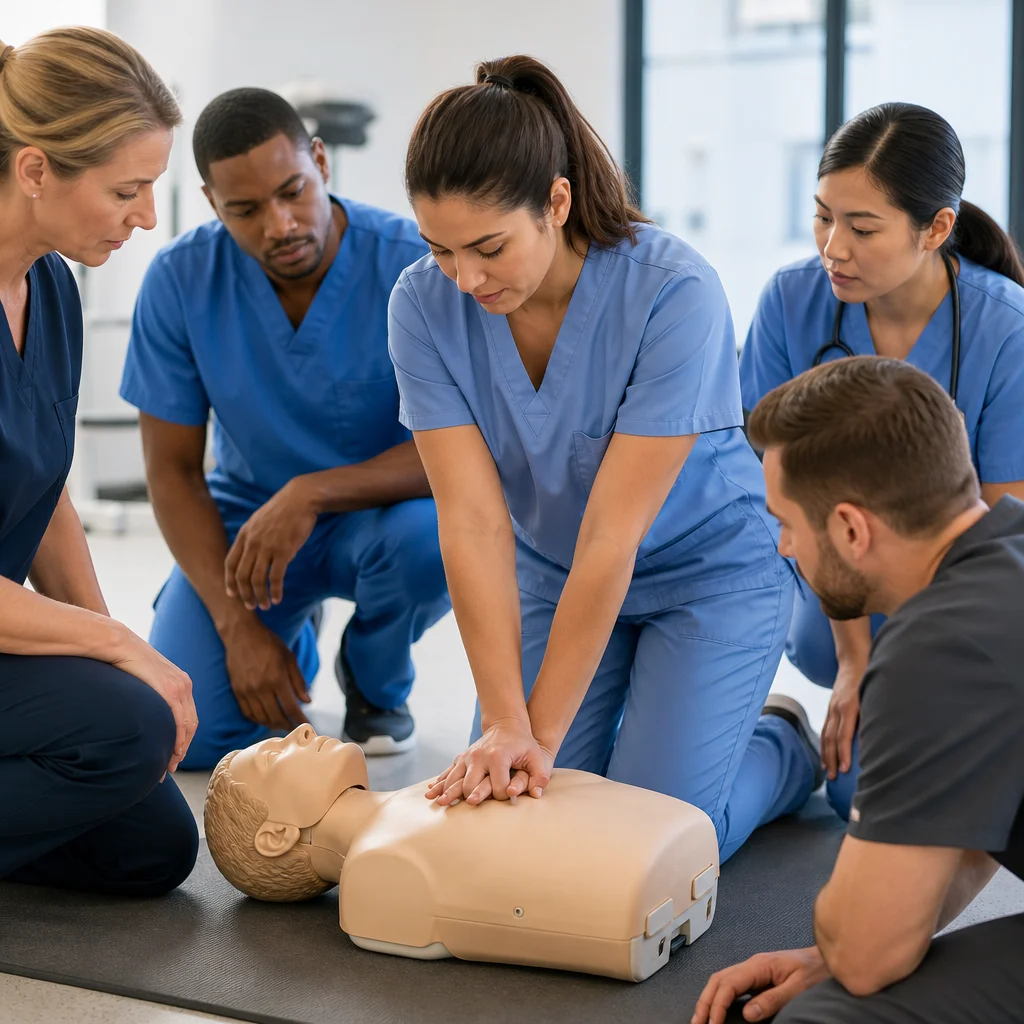
During your 2-3 hour skills session, you practice code scenarios with an instructor observing your technique. You’ll perform CPR, operate the defibrillator, administer medications, and lead a mock code team. The instructor watches for correct hand positioning, adequate compression depth, proper medication dosing, and communication clarity. If something needs adjustment, you practice it again until you’re confident.
Small group sizes mean instructors give you meaningful feedback, not a checkbox evaluation. You leave knowing exactly what you did well and where you improved.
Same-Day Certification Cards and Immediate Compliance
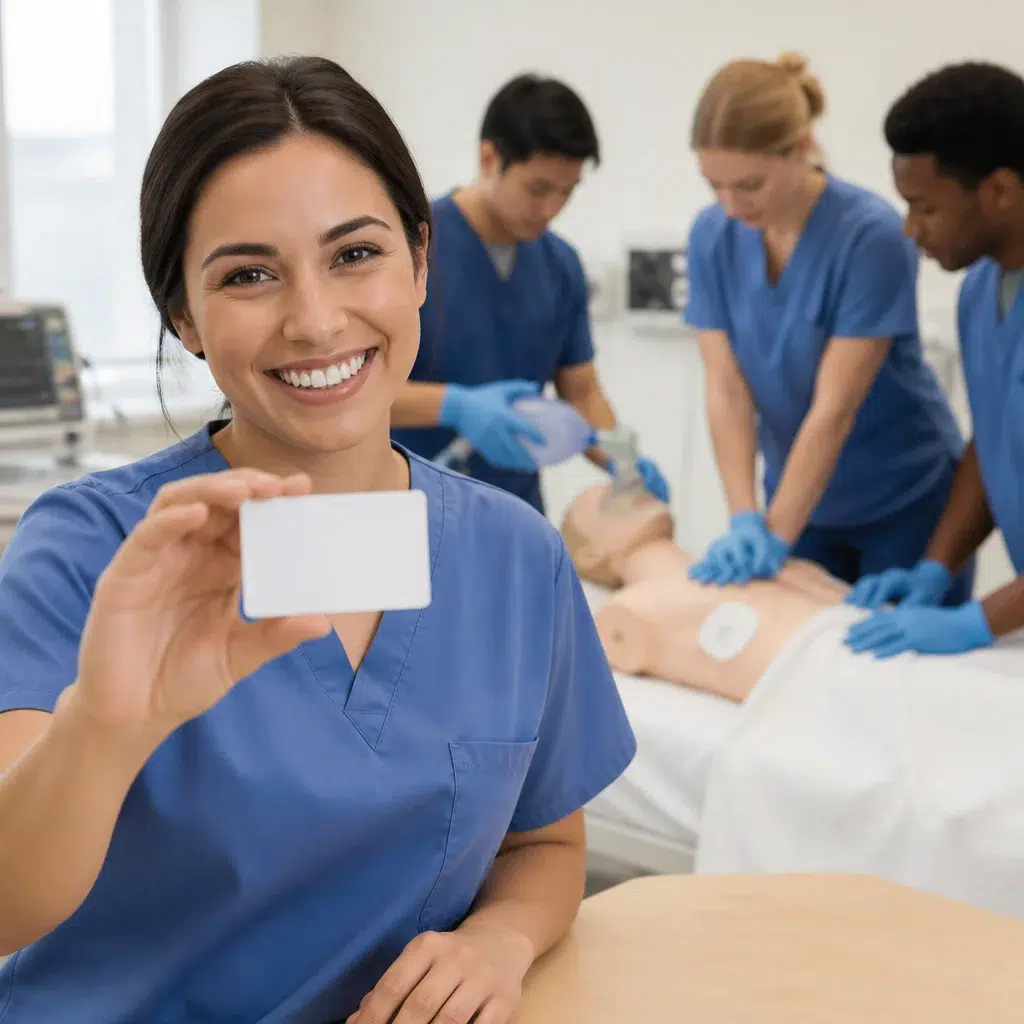
Once you successfully complete your skills session, you receive your certification card the same day. No waiting for processing, no mailed certificates weeks later. You walk out credential-ready, able to list your new ACLS certification on your resume or clinic credentials immediately.
This rapid turnaround matters when you need documentation for a new position, updated credentials for hospital privileging, or state licensure requirements with approaching deadlines. We’ve trained healthcare professionals in Campbell, Fresno, and Redding who needed certification within days, not weeks. Our same-day card delivery removes that uncertainty.
Your certification appears in our verification system immediately, so your employer or credentialing body can confirm your status without delay. That’s real compliance support, not just training.
Affordable Pricing and Our Low-Price Guarantee
We guarantee our pricing matches the market. If you find lower rates elsewhere for equivalent certification, we’ll match it. Our costs reflect our operational efficiency: we’ve optimized how we deliver online content and scheduled skills sessions to reduce overhead without cutting instructor quality or location accessibility.
You’re not paying for corporate overhead or marketing sprawl. You’re paying for experienced instructors, properly maintained equipment, and convenient scheduling. That efficiency means competitive rates across all our California centers, whether you’re training in Berkeley, Morgan Hill, or Vacaville.
Group discounts apply when you’re certifying multiple clinicians from the same clinic, hospital, or EMS service. Dentist offices coordinating staff certifications, emergency departments training new nurses, and paramedic squads testing their teams all benefit from our corporate training pricing.
Specialized ACLS Programs for Nurses, Dentists, and EMS Personnel
While ACLS protocols are standardized, the context matters. A nurse in an intensive care unit faces different code scenarios than a dentist managing an emergency in a private practice, and both operate differently from paramedics responding in the field.
We offer specialized versions of our ACLS program that maintain certification validity while emphasizing the clinical scenarios you’ll actually encounter. Our nurse-focused curriculum includes ICU rhythms, medication infusion protocols, and team communication in a hospital code. Our dentist-specific track addresses office-based emergencies, equipment limitations in a practice setting, and how to manage a code until paramedics arrive.
EMS personnel work through field-specific scenarios, including advanced interventions like intubation considerations and medication routes available in a prehospital environment. Each specialization retains full certification value; we’re simply tailoring examples and case studies to your clinical context.
Scheduling Flexibility for Busy Healthcare Providers
You pick your online completion window. Some people finish modules in three days; others spread them across two weeks. The system doesn’t impose deadlines beyond ensuring you complete preparation before your skills session.
Your skills session can be scheduled at your convenience. We offer sessions throughout the week and on weekends at multiple locations. If the Saturday session near you fills up, you can book Thursday evening across town, or wait for the following Tuesday. Our scheduling tool shows real-time availability so you’re not playing phone tag.
Many healthcare professionals in San Jose, Napa, and Rocklin use this flexibility to coordinate with colleagues, scheduling skills sessions when coworkers can also train. Some prefer solo sessions; others want the peer energy of training alongside familiar faces. Both options work within our model.
Why Our Simulation Technology Matters for Your Competency
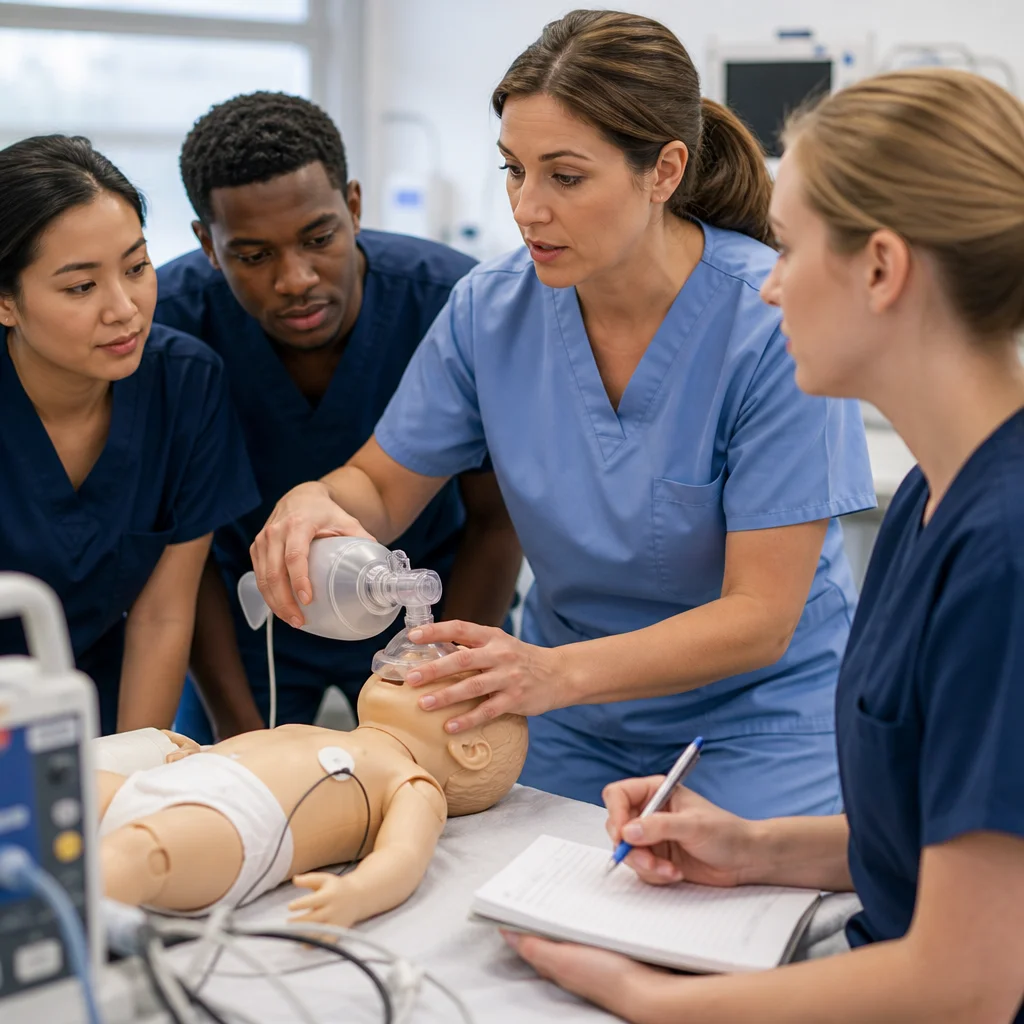
Our training mannequins provide realistic resistance during chest compressions and respond to defibrillation in ways that genuine practice requires. Some facilities use basic plastic torsos; we invest in equipment that gives you authentic tactile feedback, so your muscle memory translates to real cardiac arrest scenarios.
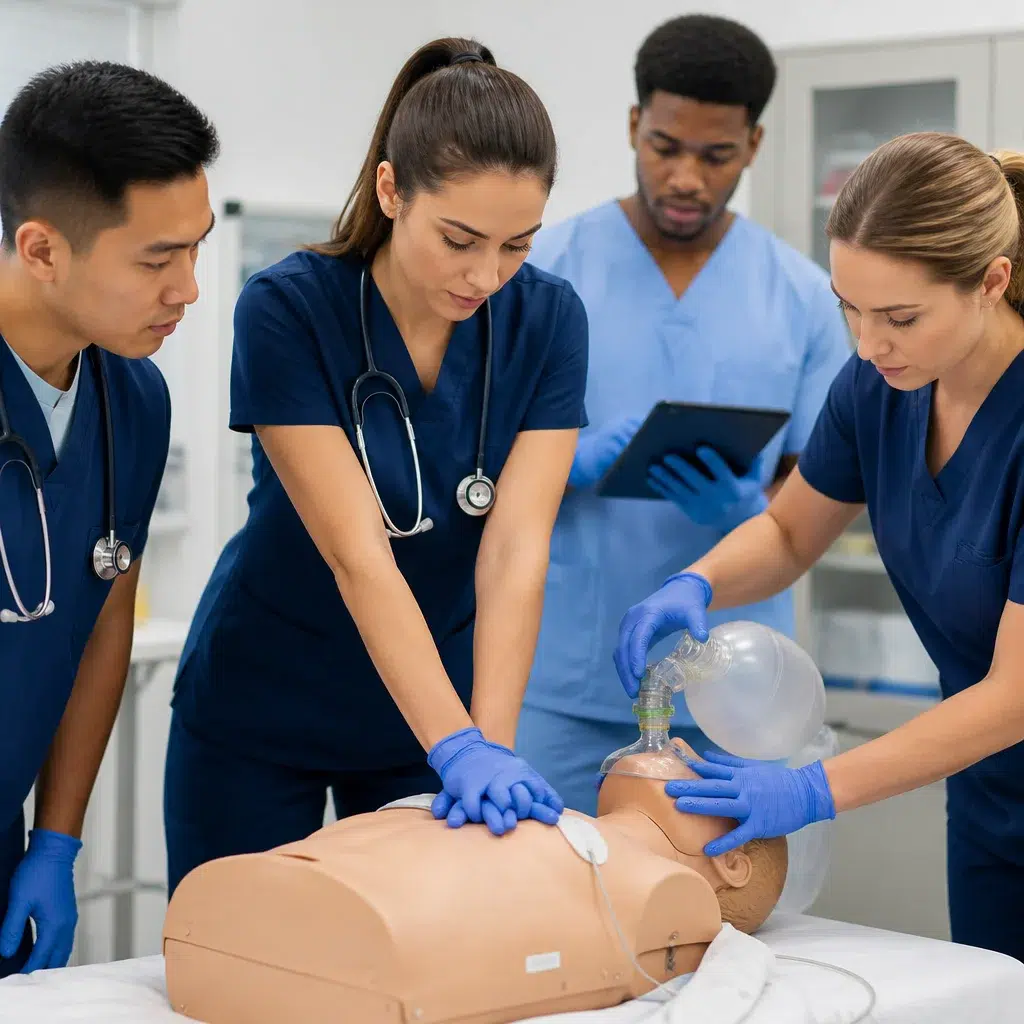
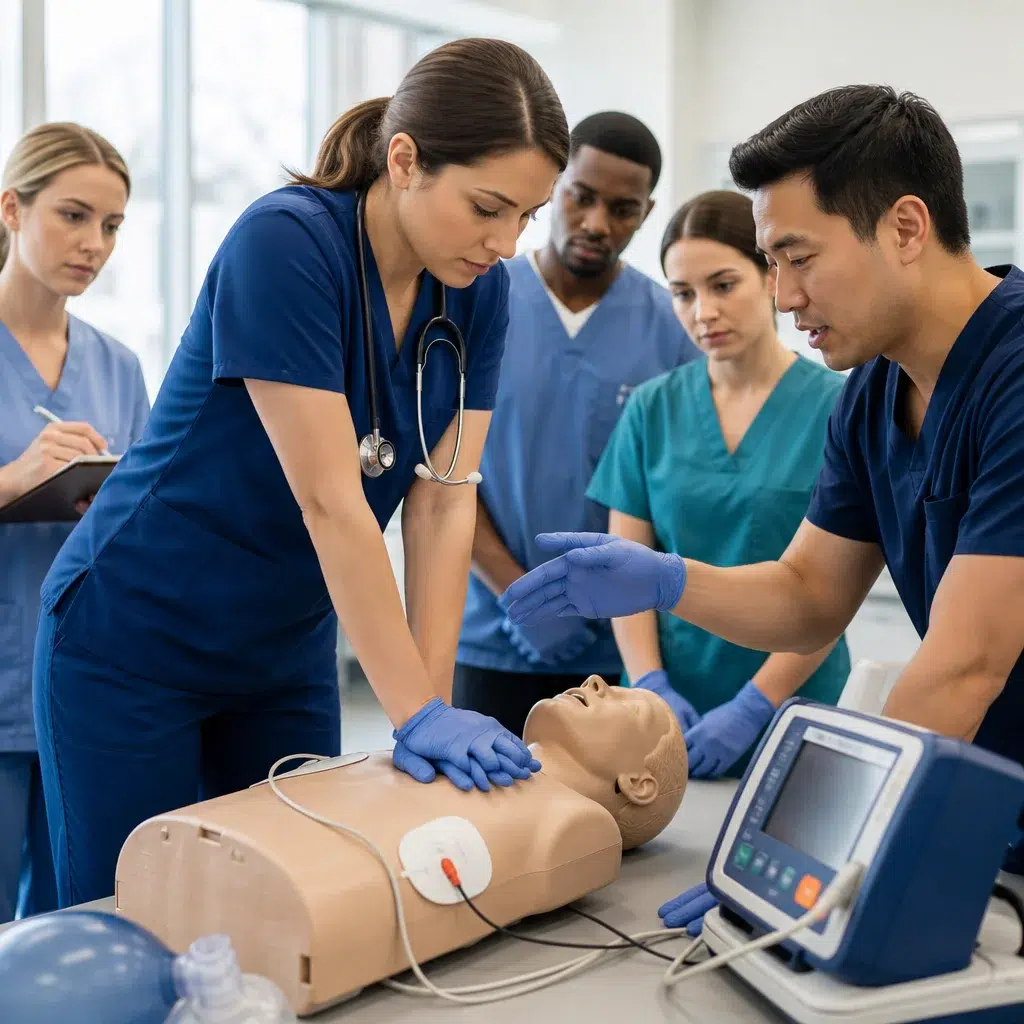
Our instructors monitor compression depth and rate in real time using feedback technology. You see metrics on the mannequin itself, so you understand immediately whether you’re compressing hard enough or too fast. That immediate correction embedded in the learning moment accelerates skill development far more effectively than verbal feedback alone.
We rotate scenarios too. Your first code might be an elderly woman with ventricular fibrillation. Your second might be a young man with pulseless electrical activity. That variety prevents you from memorizing a single response pattern and builds true adaptability.
Getting Started with Your ACLS Certification Today
The next step is straightforward. Visit our website and select your preferred start date for the online modules. You’ll get immediate access, and the platform will guide you through each section at your pace. Expect 3-4 hours total online; most people complete modules within a week.
Once your final module is done, you’ll schedule your skills session at a location and time that works for you. Bring photo identification, wear comfortable clothes you can move freely in, and plan for 2-3 hours at our training facility.
We have openings this month across the Bay Area, Sacramento region, Central Valley, and Southern California locations. Whether you’re in Davis, Napa, or South San Francisco, you’ll find a convenient path to certification.
Start your flexible blended ACLS training today and earn your same-day certification card without sacrificing your clinical schedule.
Register for a class today.
Frequently Asked Questions (FAQ)
How does our blended ACLS format help me complete certification faster than traditional all-day classes?
We split your training into online preparation and a focused in-person skills session, so you spend less total time in the classroom. Our virtual component covers all the knowledge content at your own pace, then we bring you in for hands-on practice with our simulation technology and final assessment. This approach gets you certified the same day without the lengthy lecture portions that traditional formats require.
Can I complete my ACLS certification at a location near me in California?
We operate over 100 training locations throughout California, so we’re likely within reach wherever you work or live. Our scheduling system lets you find sessions at the most convenient location for you, and we offer daily course options to fit your availability. Check our location finder to see which of our centers work best for your schedule.
What makes your simulation labs different, and why does it matter for my certification?
Our simulation technology creates realistic emergency scenarios that prepare you for actual clinical situations you’ll encounter. We use this hands-on approach to ensure you can confidently apply what you learned online when you’re actually treating patients. This practical competency focus is what sets apart our training from purely knowledge-based certification programs.