
Table of Contents
- 1. Understanding CPR and BLS Requirements for Dental Practices
- 2. Blended Learning Approaches That Fit Your Busy Schedule
- 3. Same-Day Certification Cards for Immediate Compliance
- 4. Specialized Training for Your Entire Dental Team
- 5. RQI Simulation Stations with Advanced Practice Technology
- 6. Low-Price Guarantees Without Compromising Quality
- 7. Convenient Training Locations Throughout California
- 8. On-Site Group Training for Your Dental Office
- Frequently Asked Questions (FAQ)
1. Understanding CPR and BLS Requirements for Dental Practices
Dental offices operate in a unique space where medical emergencies can occur during routine procedures. Sedation complications, cardiac events, and respiratory distress don’t announce themselves, and your team needs to respond decisively. California law and professional licensing boards require dentists to maintain current Basic Life Support (BLS) certification, and many states mandate it for dental hygienists and assistants as well.
The distinction between CPR and BLS matters for your practice. Cardiopulmonary Resuscitation (CPR) is the hands-on chest compression and rescue breathing technique. Basic Life Support encompasses CPR plus automated external defibrillator (AED) operation, team coordination, and recognition of cardiac arrest. For dental professionals, BLS certification demonstrates competency in emergency response and protects your license and liability standing.
Your entire team benefits from understanding these requirements upfront. Dentists need BLS certification for licensure renewal. Dental hygienists, expanded-function dental auxiliaries, and front-office staff handling emergency protocols should carry current certification too. Compliance isn’t just a checkbox; it’s your safety net when seconds matter.
Action item: Audit your team’s current certification status and expiration dates. Track renewal deadlines now to prevent gaps in coverage.
2. Blended Learning Approaches That Fit Your Busy Schedule
Running a dental practice means your schedule is packed. Between patient appointments, consultations, and administrative responsibilities, finding time for full-day in-person training feels impossible. We designed our blended learning model specifically for healthcare professionals like you who can’t afford downtime.
Blended training combines self-paced online modules with a focused in-person skills session. You complete the knowledge component on your own timeline, reviewing CPR physiology, AED protocols, and emergency scenarios at your own pace. Then you attend a brief, instructor-led skills verification session where you demonstrate chest compressions, rescue breathing, and team communication in real scenarios.
This approach cuts total training time significantly. Instead of blocking an entire workday, many professionals complete online coursework in two to three evening sessions, then attend a two-hour in-person skills check. You retain knowledge better because you’re not absorbing everything in one marathon session, and you leave with hands-on confidence.
We offer daily skills sessions across California locations including Sacramento, San Francisco, San Jose, and Oakland, so you can find a time that works. Your team members can schedule independently, meaning not everyone needs to be off simultaneously.
Action item: Identify which team members need certification renewal in the next 90 days and reserve a blended learning slot now rather than waiting until deadlines pressure you.
3. Same-Day Certification Cards for Immediate Compliance
One of the most frustrating obstacles to compliance is the waiting game. You complete your training, but then spend weeks waiting for credentials to arrive by mail. If you have a licensing renewal deadline approaching or need documentation for a new position, that lag creates unnecessary stress.
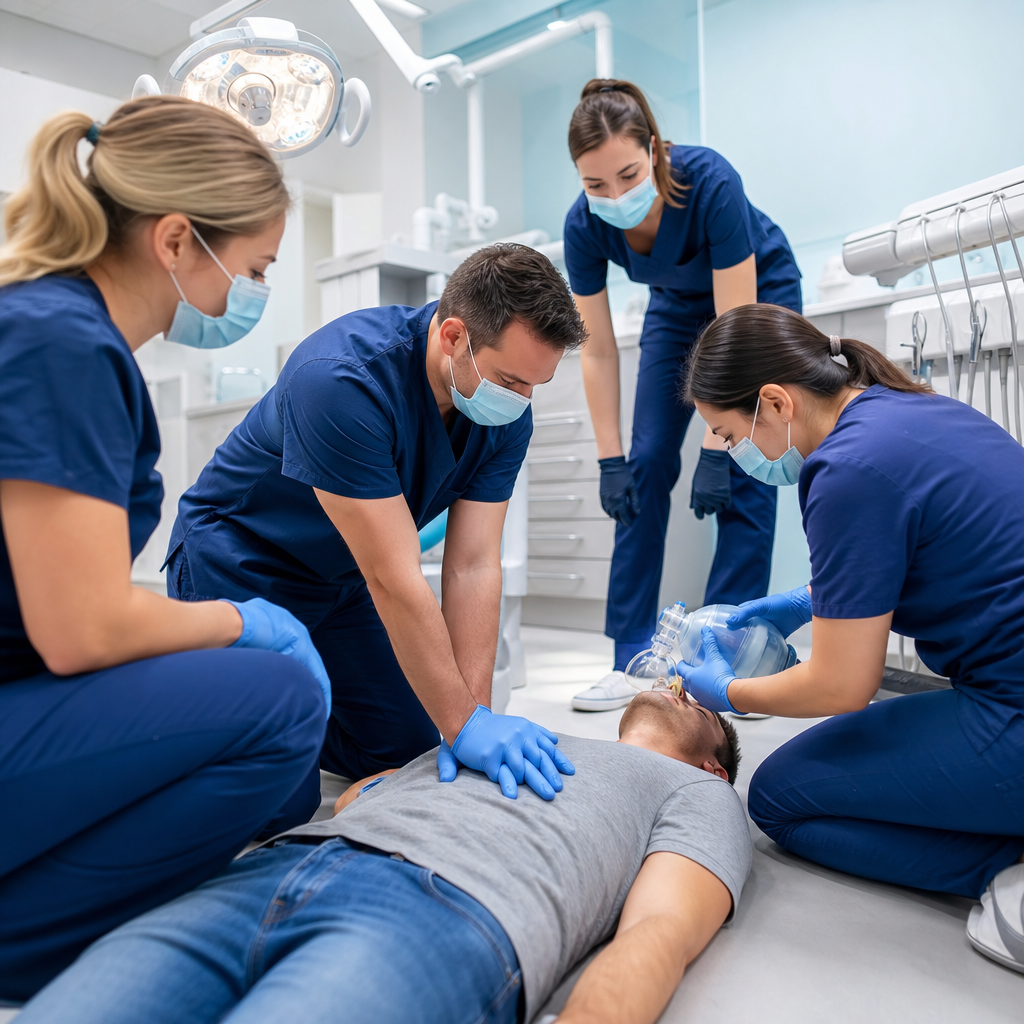
We issue certification cards immediately upon successful skills verification. You walk out of your training session with your completed credential in hand. This instant verification means you can submit compliance documentation to licensing boards right away, meet job requirements without delays, and eliminate the anxiety of wondering whether your certification covers an upcoming deadline.
Your team can also claim your eCard for digital backup, giving you instant access to proof of certification from any device. Many employers and licensing portals now accept eCards as official verification, making compliance management even simpler.
This matters most when you’re bringing on new staff or renewing licenses with tight windows. Same-day credentials mean onboarding happens smoothly and compliance never becomes a bottleneck.
Action item: Before scheduling training, confirm your eCard and physical card will satisfy your specific licensing board’s requirements. One quick call prevents surprises later.
4. Specialized Training for Your Entire Dental Team
Dental emergencies don’t wait for the dentist to respond alone. Your hygienist might be the first to recognize early signs of anaphylaxis. Your assistant may need to position a patient for rescue breathing. Your front desk staff should know how to activate emergency services and direct paramedics to your treatment area. Specialized training for each role ensures your entire team responds confidently.
We offer BLS certification tailored to dental professionals, not just generic CPR training. Our curriculum addresses scenarios specific to dental settings: managing patients under sedation, recognizing oversedation complications, responding to aspiration risks, and coordinating care in a confined operatory space. Your dentist learns different decision points than your dental assistant, but everyone leaves understanding their role in the emergency response chain.
Advanced certifications like ACLS (Advanced Cardiac Life Support) benefit dentists and experienced auxiliaries who manage sedation or handle complex patients. ACLS builds on BLS fundamentals, adding pharmacology, rhythm interpretation, and post-resuscitation care. Practices in larger markets like the San Francisco Bay Area, Sacramento metro, and San Jose often have team members pursuing ACLS to elevate overall emergency preparedness.
Customized group training sessions keep everyone aligned on your specific protocols. Your team trains together, practices your office’s emergency action plan, and knows exactly where equipment is positioned.
Action item: Schedule a group training consultation to discuss your team’s specific needs and which certification levels make sense for each role.
5. RQI Simulation Stations with Advanced Practice Technology
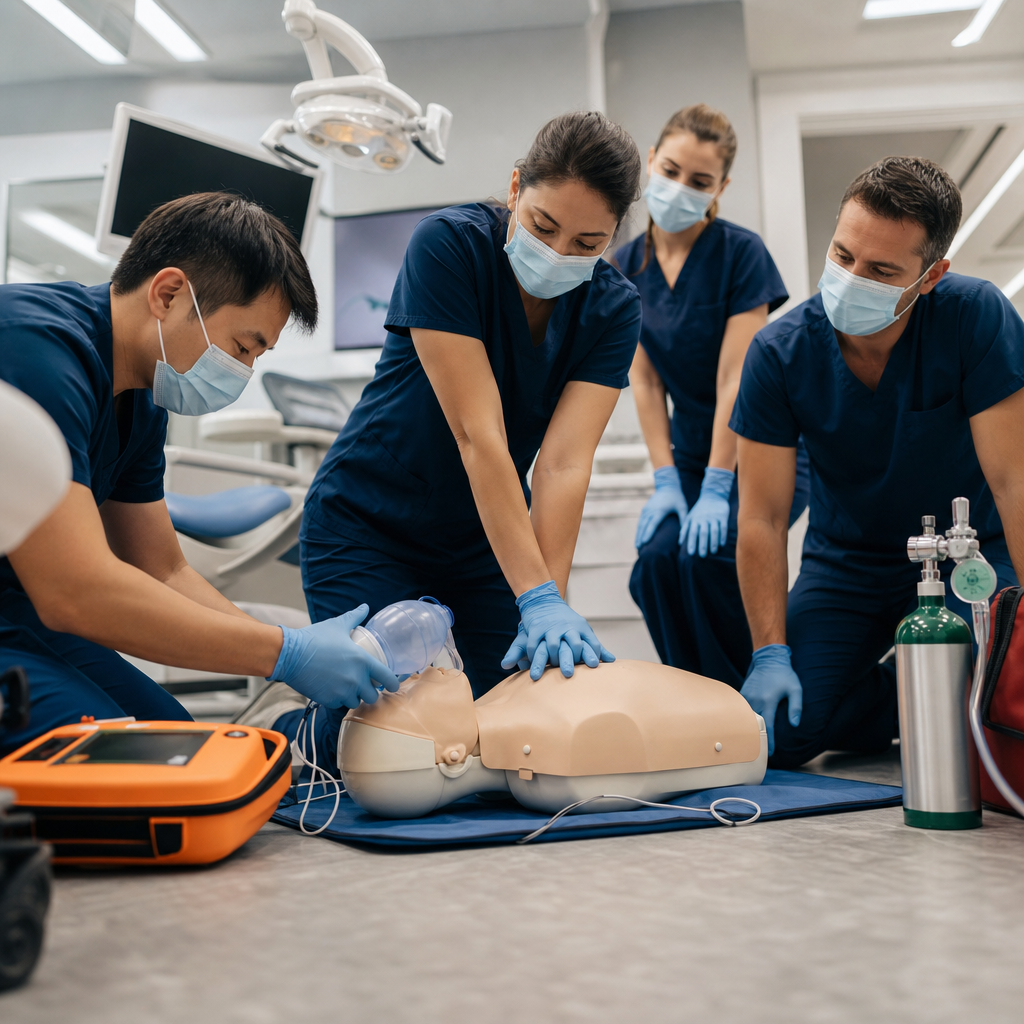
Practicing CPR on a manikin in a classroom feels detached from real pressure. We use RQI simulation stations that provide real-time feedback on compression depth, rate, and hand positioning. These advanced practice tools bridge the gap between training and actual performance during an emergency.
RQI (RQI Reflex Indicator) technology gives immediate tactile and visual feedback through LED indicators on the manikin. If your compression depth is shallow, the light tells you instantly. If your rate drifts above 120 compressions per minute, you feel the adjustment needed. This sensory feedback accelerates your learning and builds muscle memory that transfers to real situations.
Our skills verification sessions use these stations, not simplified manikins, so you practice with equipment reflecting actual AED-integrated systems you’ll encounter. Your confidence grows because you’ve already solved problems during training that might otherwise catch you off guard.
Dental professionals in Fremont, Pleasanton, Davis, and across the Central Valley appreciate this hands-on approach. Quality practice time reduces anxiety and increases the likelihood you’ll perform competently if an emergency occurs.
Action item: Ask about hands-on practice time when you schedule. Sessions with more skill station time produce better long-term retention than lecture-heavy formats.
6. Low-Price Guarantees Without Compromising Quality
Certification costs add up, especially when you’re training an entire team. We maintain a low-price guarantee across all our courses because we believe cost shouldn’t delay your compliance or force budget cuts on quality instruction.
Our pricing consistently undercuts market rates without reducing instructor experience or course content. We achieve this through efficient operations, high-volume scheduling, and direct relationships with training facilities across California. Whether you’re training in Alameda, Bakersfield, Chico, or Visalia, you get the same competitive pricing.
Group training discounts amplify savings. A dental office bringing five team members typically qualifies for group rates that reduce per-person costs 15-25%. When you factor in blended learning efficiency (shorter time investment) plus same-day cards (no administrative delays), the total cost of compliance drops significantly.
We stand behind pricing transparency. No hidden fees, no surprise charges for eCard processing or makeup sessions. You know your total cost upfront.
Action item: Request a group rate quote including all team members who need certification. Compare it to what you’ve paid previously and reinvest the savings into continuing education elsewhere.
7. Convenient Training Locations Throughout California
Finding training close to your office removes scheduling friction. We maintain over 100 training locations across California, from the Bay Area (including Oakland, San Francisco, Berkeley, and the Peninsula) through Sacramento, down to Fresno, Visalia, and the Central Coast.
Your team members can attend nearby sessions rather than driving across the region. A hygienist in Walnut Creek attends Walnut Creek training. A new assistant in Santa Rosa schedules a Santa Rosa session. This local accessibility means people are more likely to complete training promptly rather than postponing due to distance.
We regularly add new locations and expand scheduling in high-demand areas. Check our California training locations to find the session nearest your practice.
Daily scheduling flexibility across multiple locations gives you options even when one location fills up. You’re never told “come back in three months.”
Action item: Identify the three nearest training locations to your office and bookmark them. This makes scheduling for team members and future renewals much faster.
8. On-Site Group Training for Your Dental Office
For larger practices with multiple team members or multiple offices, on-site training eliminates scheduling conflicts entirely. We bring instruction directly to your facility, train your entire team simultaneously, and align content with your specific protocols.
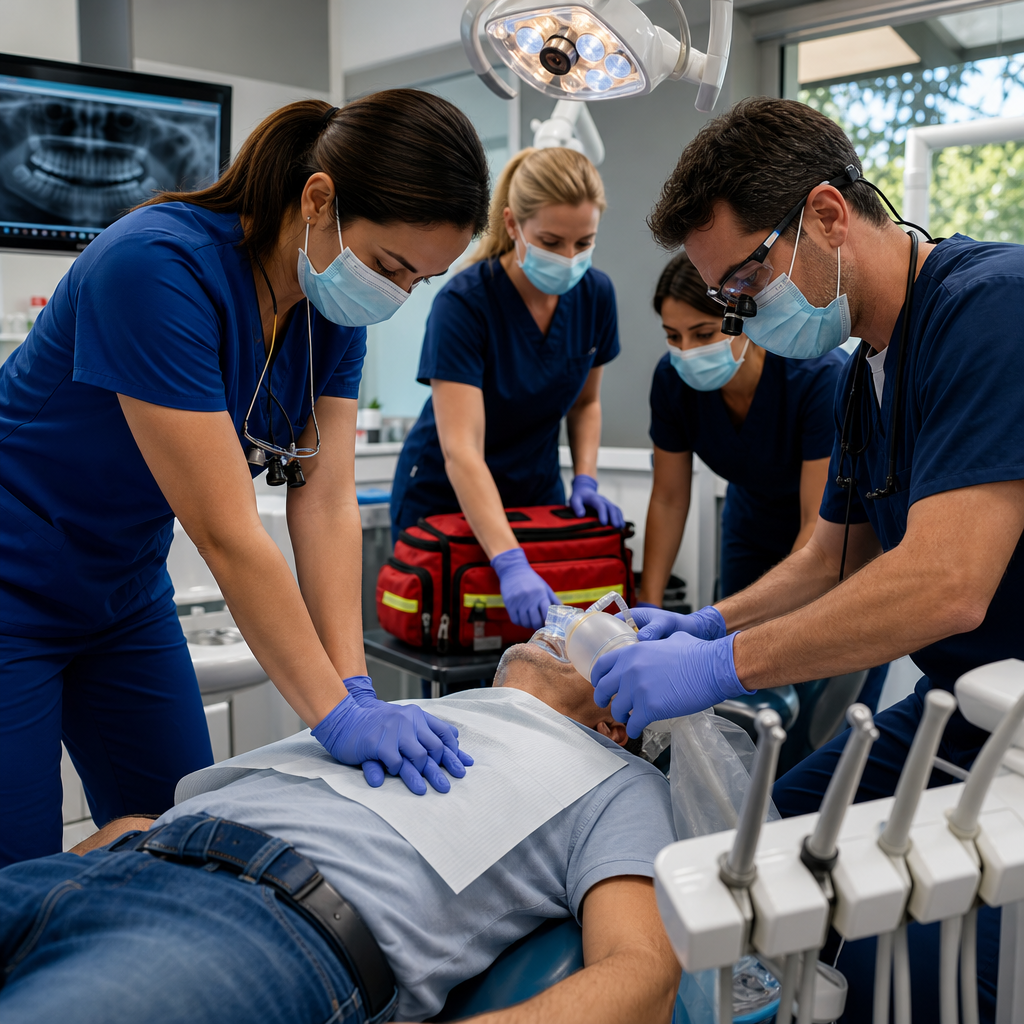
On-site sessions work around your operatory schedule. Early morning before patients arrive, lunch hours, or after-hours training keeps your practice running smoothly. Your team doesn’t scatter to different locations or sessions, so everyone learns the same emergency response procedures and practices your actual equipment.
This approach particularly benefits multi-location practices in areas like the San Jose region (with our Downtown, Japantown, South, and Willow Glen locations) or the Sacramento area (Arden, Midtown, Oak Park, Rosemont). Rather than coordinating travel across several offices, one instructor session at each location ensures consistent training quality.
Group training also reduces total cost per person and creates team cohesion around safety protocols. Your staff recognizes this investment signals that emergency preparedness matters to your practice.
Action item: Contact us for an on-site training consultation if your practice has 8 or more team members needing certification. We’ll customize scheduling, content, and pricing for your specific situation.
—
Your dental practice’s ability to respond effectively to emergencies depends on thorough, current certification training for every team member. We provide the blended learning flexibility, hands-on practice, local accessibility, and competitive pricing that California dental offices need. Our same-day cards eliminate compliance delays, our specialized curriculum addresses dental-specific scenarios, and our convenient locations across Sacramento, San Francisco, the Bay Area, and beyond make training seamless.
Don’t let certification remain a compliance burden. Schedule your team’s training with us today and transform emergency preparedness from anxiety into confidence.
Register for a class today.
Frequently Asked Questions (FAQ)
Do we offer CPR and BLS training specifically designed for dental practices?
Yes, we provide specialized CPR and BLS certifications tailored for dental professionals and entire dental teams. Our courses cover the specific emergency scenarios and protocols relevant to dental office settings, ensuring your team can respond effectively to patient emergencies during procedures or in the waiting area.
How quickly can our dental office get certified?
We offer same-day certification options at our over 100 California training locations, with many sites offering daily classes. Our blended learning format allows us to streamline the process without sacrificing the hands-on skills practice your team needs, so you can achieve compliance rapidly while minimizing office disruption.
Can we arrange training for our entire dental staff at our office?
We absolutely can. We provide on-site group training for dental offices throughout California with discount pricing for team certifications. This approach lets your dentists, hygienists, assistants, and administrative staff train together on your schedule without traveling between locations.