
Table of Contents
- Why Healthcare Professionals Need Reliable CPR Verification Systems
- The Challenge of Maintaining Current Certifications Across Your Team
- How Our CPR Verification Stations Work
- Real-World Application: VAM Technology in Action
- Blended Learning Integration for Maximum Flexibility
- On-Site Group Training for Your Healthcare Organization
- Scheduling Convenience Across 100+ California Locations
- Fast-Track Certification with Same-Day Cards
- Compliance-First Instruction Standards
- Investment in Your Team's Readiness
- Getting Started with Our Verification Station Program
- Frequently Asked Questions (FAQ)
Why Healthcare Professionals Need Reliable CPR Verification Systems
Healthcare professionals face a constant pressure: maintaining current certifications isn’t optional, it’s a job requirement. Whether you’re a nurse in Oakland, an EMT in Sacramento, or a dental hygienist in San Francisco, your employer expects proof that you can perform life-saving techniques under pressure. A CPR verification system ensures that your team doesn’t just hold cards on file, but can demonstrate real competency when it matters.
We recognize that certification alone doesn’t guarantee readiness. Hands-on verification stations bridge that gap by letting your staff practice skills in a controlled environment, receive direct feedback from instructors, and build confidence before emergency situations demand their expertise. This approach protects both your patients and your organization’s liability profile.
Verification stations also create accountability. When team members know they’ll be tested on actual performance, not just knowledge, they take refresher training seriously. This cultural shift translates directly into better patient outcomes and fewer workplace incidents.
The Challenge of Maintaining Current Certifications Across Your Team
Managing certification compliance for a healthcare team is complex. Different roles require different certifications: nurses need Basic Life Support (BLS) and possibly Advanced Cardiovascular Life Support (ACLS), while pediatric staff may require Pediatric Advanced Life Support (PALS). Add rotating schedules, shift work, and varying renewal dates, and you have a scheduling nightmare.
Many organizations struggle with tracking expiration dates. A staff member lets their credential lapse, and you discover it during an audit or worse, when they’re the only available provider during an emergency. This creates compliance violations and puts your facility at risk.
We’ve worked with healthcare teams across California, from Fresno to Hayward, and the problem is always the same: finding a training partner who understands your team’s real constraints. You need flexible scheduling, minimal disruption to clinical operations, and certainty that your staff actually retains the skills they’re certified to perform.
How Our CPR Verification Stations Work
Our CPR Verification Stations combine hands-on skills assessment with the flexibility your team needs. Rather than classroom-only instruction, we use a blended model where participants complete knowledge review online, then attend focused skills sessions to demonstrate competency.
Here’s what the process looks like:
- Participants log into our online platform and review CPR protocols, compression techniques, and scenario-based content at their own pace
- They schedule an in-person skills session at a location convenient to them
- During the session, a certified instructor observes them perform CPR on manikins, provide rescue breathing, and manage AED operation
- The instructor provides real-time feedback, corrects technique, and documents performance
- Upon successful completion, same-day certification cards are issued
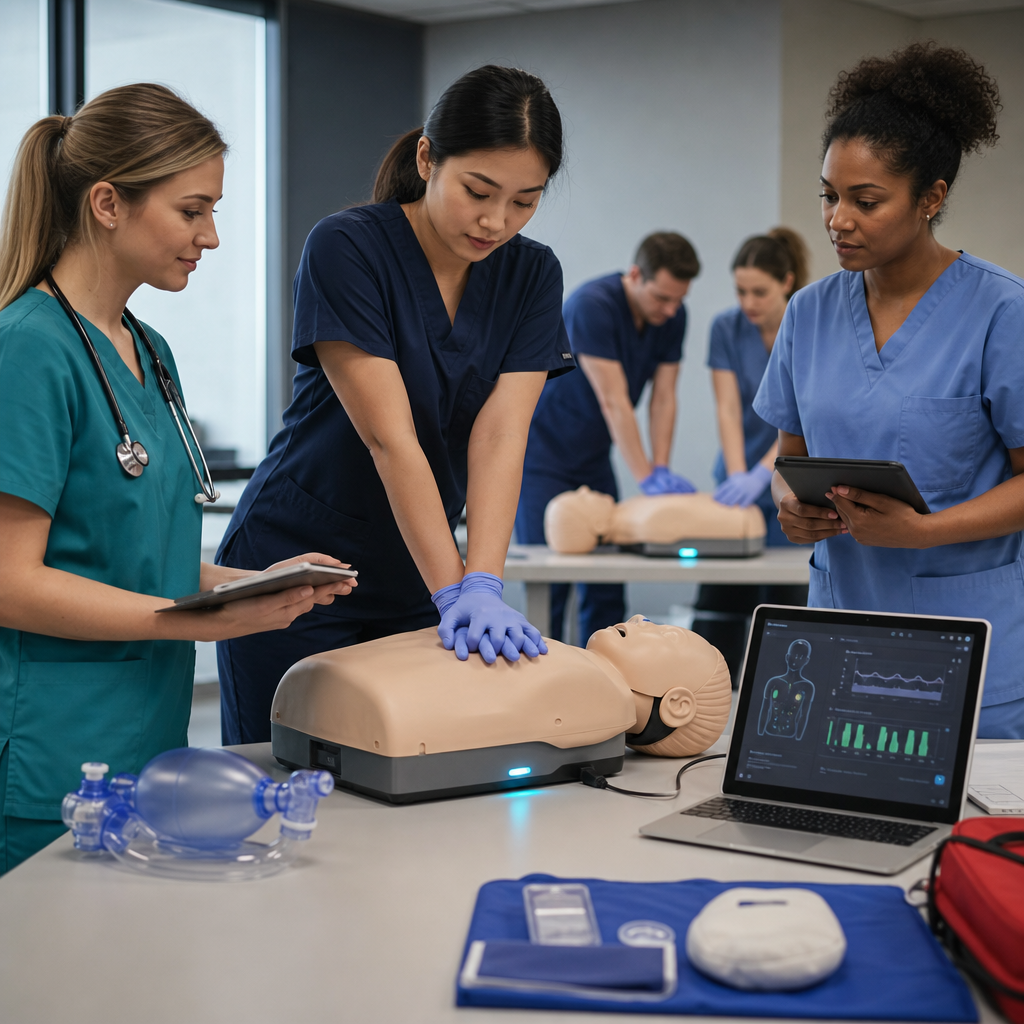
This verification approach is different from a standard certification course. You’re not teaching CPR from scratch; you’re validating that certified professionals retain their skills and can execute techniques correctly. It’s faster, more cost-effective, and directly addresses the core compliance need.
Real-World Application: VAM Technology in Action
We use VAM (Voice Activated Manikin) technology in our verification stations to standardize assessments. VAM devices provide consistent feedback and track compression depth, rate, and hand placement in real time. This removes instructor bias and ensures every participant meets the same performance standard.
Imagine a nurse in Walnut Creek performing chest compressions on a VAM manikin. The device immediately tells her if her compressions are too shallow or too fast. She adjusts and tries again. This immediate feedback loop is far more valuable than a verbal correction alone. She leaves the session knowing exactly what she did right and where she needs to focus during her next refresher.
For organizations running group verification sessions, VAM technology ensures consistency across all participants. Everyone gets the same assessment criteria and the same objective data. This transparency also supports any future credentialing inquiries or accreditation reviews.
Blended Learning Integration for Maximum Flexibility
Our blended model works because it respects how healthcare professionals actually work. Nurses in San Jose, paramedics in Stockton, and clinicians in Santa Rosa can’t all attend a full-day classroom session. Blended learning splits the load: online content happens on their schedule, hands-on skills happen during a short, focused visit.
The online component typically takes 1-2 hours. Staff review CPR algorithms, medication dosing, and scenario responses from home or during a break. They can pause, review, and reference materials. There’s no pressure to keep pace with a live instructor.
The in-person session lasts 2-3 hours per person or small group, depending on how many certifications need verification. This concentrated time allows our instructors to focus entirely on skills demonstration and correction.
This split reduces time away from clinical duties and increases completion rates. We’ve seen organizations in Modesto, Merced, and Fresno report that staff actually schedule their sessions because the format is manageable.
On-Site Group Training for Your Healthcare Organization
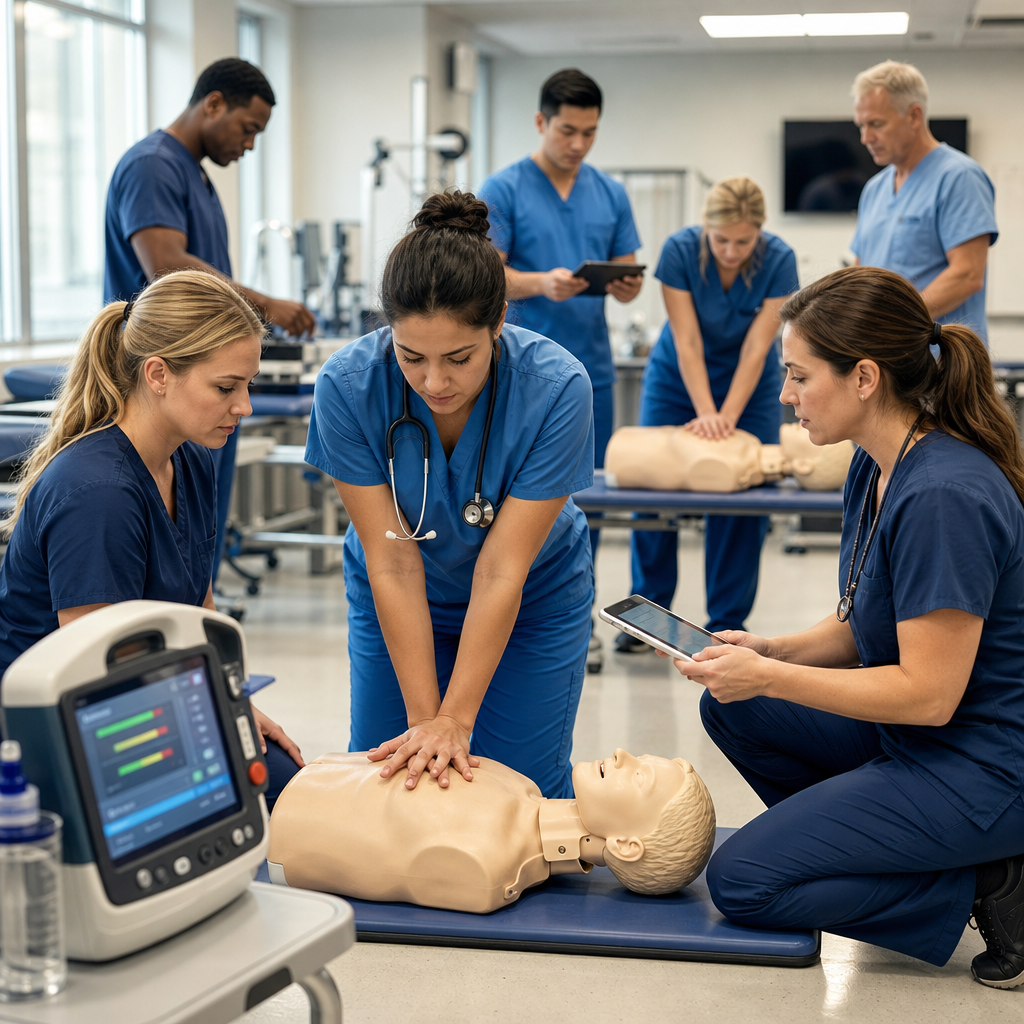
If you manage a larger team, we offer on-site group verification stations. We bring instructors and equipment to your facility, so your staff never leaves the building. This is ideal for hospitals, urgent care centers, and clinics where scheduling everyone off-site isn’t practical.
On-site sessions also create a team culture around safety. When CPR verification happens in-house, it becomes part of your organizational routine, not an external requirement. Staff see each other practice, support one another, and collectively commit to readiness.
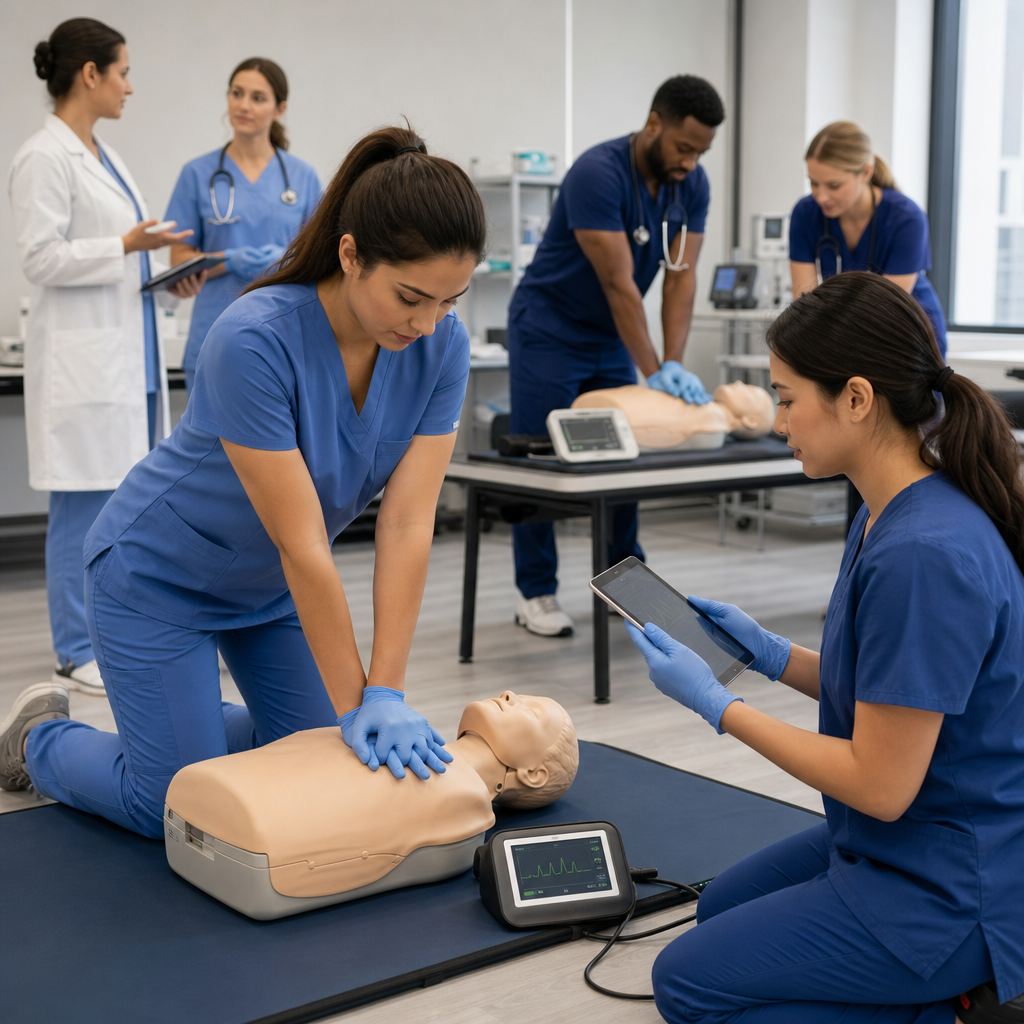
We’ve conducted group verifications across California, from Campbell to Bakersfield, and the feedback is consistent: teams appreciate the convenience, and participation rates jump significantly. Cost-per-person also drops when you’re training 10 or 20 staff members at once rather than scheduling individuals.
Your organization pays one flat fee for the group session, and all participants receive certification cards on the same day. No per-person registration fees, no hidden costs.
Scheduling Convenience Across 100+ California Locations
We operate over 100 training locations throughout California, so geographic convenience isn’t an obstacle. Whether your staff works in Davis, Dublin, or Danville, there’s likely a verification station nearby.
Our scheduling system is mobile-friendly, so staff can book sessions around their shifts. Most locations offer evening and weekend sessions specifically because we know clinicians don’t work 9-to-5. A paramedic in Vallejo might schedule a Saturday morning; a dentist in Palo Alto might choose a Thursday evening. The flexibility is intentional.
If a specific location isn’t ideal for your team, we also offer training in Citrus Heights, Concord, and dozens of other communities across Northern California. You can also request a group session at your facility.
Fast-Track Certification with Same-Day Cards
Compliance deadlines loom. When someone’s certification expires next month, you need a solution that works quickly. We issue certification cards the same day upon successful verification completion, so your staff walk out ready to document compliance.
No waiting for digital credentials, no mailing delays, no administrative overhead. If your team completes verification on a Thursday morning, they have physical cards in hand by Thursday afternoon.
This speed is especially critical for new hires or staff returning from leave. You get them verified and compliant within days, not weeks.
Compliance-First Instruction Standards
Our instructors are certified, experienced, and specifically trained to assess rather than just teach. They understand healthcare compliance requirements, licensing board expectations, and what accreditors look for. Every instructor meets AHA (American Heart Association) standards and regularly updates their own certifications.
This expertise matters. An instructor who’s also worked in clinical settings understands why technique matters and can speak to real-world scenarios. A nurse in Alameda learns CPR verification from someone who’s managed cardiac arrests. That credibility builds confidence in the certification itself.
We also document all verifications thoroughly. Your organization receives detailed records showing who participated, when, and what they demonstrated. This documentation protects you during audits and credentialing reviews.
Investment in Your Team’s Readiness
Certification compliance is an investment, not an expense. The cost of one preventable adverse event far exceeds the cost of ensuring your team stays current and confident. Verification stations aren’t a luxury; they’re a practical risk management tool.
We offer corporate group discounts and maintain the lowest price guarantee for all classes. Whether you need individual verifications or organize 50 staff members across multiple sessions, our pricing remains transparent and competitive. You’ll see the cost-per-person drop substantially with group arrangements.
This affordability means you can verify your entire team annually without budget struggles. Some organizations we work with in Sunnyvale, Tracy, and Vacaville build CPR verification into annual continuing education budgets because the cost is predictable.
Getting Started with Our Verification Station Program
Starting is straightforward. Contact our team and describe your needs: How many staff members need verification? What certifications are required? Do you prefer on-site training or would your team visit a location? What’s your timeline?
We’ll provide a customized proposal with pricing, available dates, and location options. Most organizations schedule their first group verification within 2-3 weeks.
For individual staff members, scheduling is even simpler. Visit our BLS CPR Verification Station page, select a nearby location from our network across California, pick an available time slot, and register. You’ll receive pre-session instructions via email, attend the blended learning components online, then complete your in-person skills session.
Your certification card arrives the same day. Your compliance requirement is met. Your team is ready.
We’re here to support your organization’s commitment to continuous competency and patient safety. Let’s ensure your staff isn’t just certified on paper, but genuinely prepared to save lives.
Register for a class today.
Frequently Asked Questions (FAQ)
What makes our CPR verification stations different from traditional recertification?
Our verification stations use hands-on skills validation to ensure your team maintains current competency between full certifications. We integrate this technology into our blended learning model, combining virtual instruction with in-person skills practice so your staff stays ready without extensive time away from patient care. This approach addresses the real gap most healthcare organizations face: staff who hold certifications on paper but haven’t practiced their skills recently.
How quickly can we get our entire team certified across multiple locations?
We offer same-day certification cards at all our 100+ California locations, and we can coordinate group training sessions tailored to your organization’s schedule. Our distributed network means we can often accommodate your team without requiring travel to a single central location. We also provide corporate discount pricing for group bookings, making it cost-effective to train larger departments or entire facilities.
Can we combine virtual learning with hands-on practice for our staff?
Yes, our blended learning approach lets your team complete knowledge portions online at their own pace, then come in for focused skills validation at one of our stations. We schedule these components to fit your workplace needs, whether that’s weekend sessions, early morning slots, or staggered throughout the month. This flexibility helps us work around patient care demands rather than against them.