
Table of Contents
- 1. Choose Blended Learning for Flexible Scheduling
- 2. Schedule Group Training Sessions On-Site
- 3. Utilize Same-Day Certification Card Delivery
- 4. Select Centers with Multiple Convenient Locations
- 5. Prioritize Providers Offering Daily Class Options
- 6. Implement RQI Simulation Stations with Advanced Technology
- 7. Take Advantage of Corporate Discount Pricing for Teams
- Frequently Asked Questions (FAQ)
1. Choose Blended Learning for Flexible Scheduling
Staff downtime during recertification hits your clinic’s operations hard. Every nurse or EMS professional pulled from the schedule for mandatory training creates coverage gaps, delayed patient care, and stressed team members picking up extra shifts. We understand this pressure because healthcare facilities across California face the same challenge every renewal cycle.
The good news: your recertification timeline doesn’t have to disrupt daily operations. Strategic choices about how and where your team gets certified can slash downtime to just hours instead of days. We’ve designed our ACLS and PALS programs specifically to fit healthcare professionals’ demanding schedules while maintaining rigorous hands-on training standards.
Below are seven proven approaches to keep your team current without breaking your clinic’s workflow.
Blended learning splits training into self-paced online modules plus focused in-person skills sessions. Your staff completes theory work on their schedule, then attends abbreviated practice time with an instructor.
This approach cuts traditional classroom time nearly in half. Instead of a full 8-hour day away from the clinic, your team member might spend 3-4 hours in-person practicing compressions, airway management, and scenario drills. They finish the knowledge component at home before 6 AM or after their shift ends, then come in for a concentrated skills block.
We offer blended ACLS and PALS options that compress in-person attendance while preserving critical hands-on practice. Your staff gains real muscle memory with a manikin under instructor eyes, not just online videos. This hybrid model works especially well for staggered scheduling across multiple clinical units.
Action step: Ask your training provider whether they separate theory from skills practice. The best programs let you schedule the in-person portion around your busiest clinic days.
2. Schedule Group Training Sessions On-Site
Bringing training to your facility eliminates commute time and keeps staff on-campus. Rather than individuals traveling across town to a training center, your entire team attends in one block at your location.
On-site group sessions consolidate downtime into a single day instead of spreading it across multiple weeks. Your emergency department, surgical team, or clinic staff all certify together, then return to normal operations immediately after. We coordinate setup, bring all equipment and manikins, and manage the entire session so your administrators focus on operations.
Group training also builds team cohesion. Your staff practices resuscitation scenarios together, which strengthens communication patterns they’ll use during actual emergencies. They learn how their colleagues respond under pressure rather than practicing with strangers.
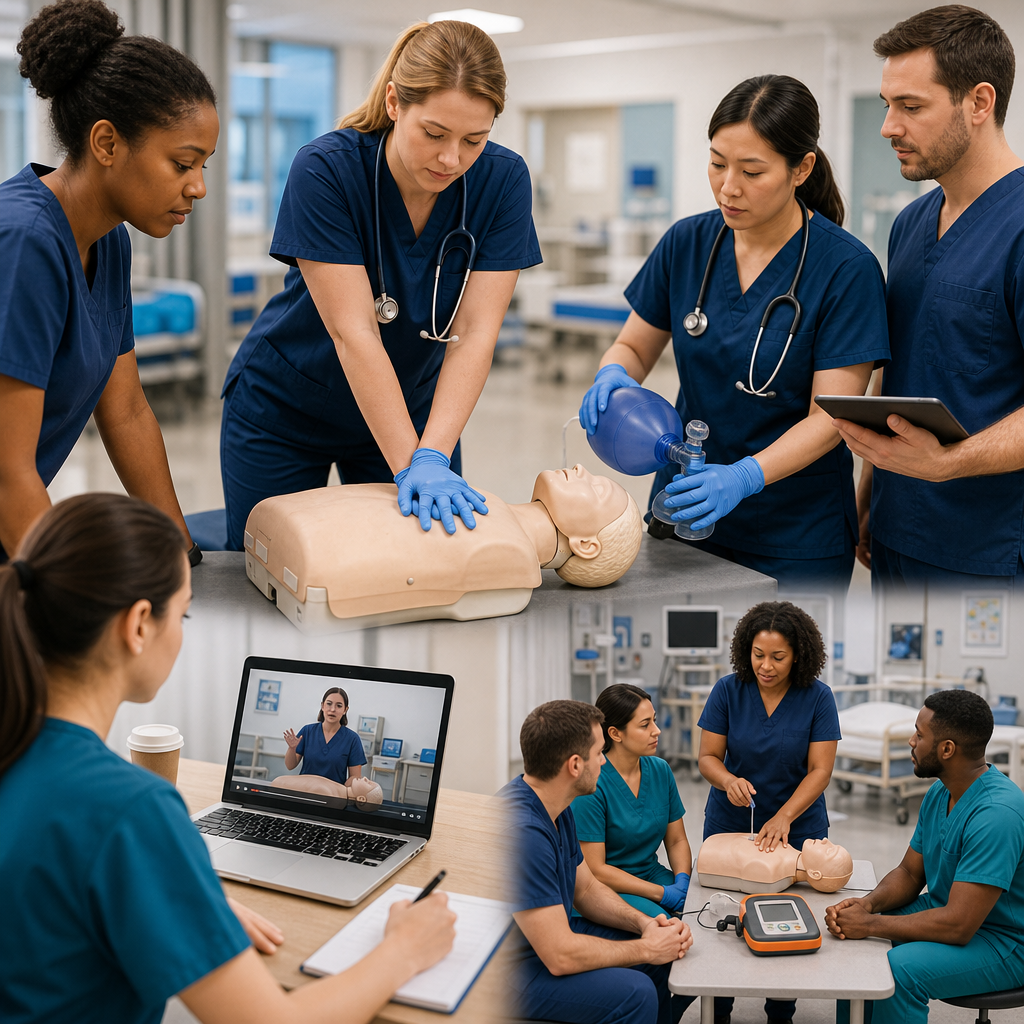
Our Group CPR Certification Classes program handles everything from scheduling to certification cards on-site. We’ve delivered group sessions at clinics across the Bay Area, from Oakland to Pleasanton, and inland to Sacramento and Fresno.
Action step: Calculate whether one consolidated session costs less and reduces downtime better than staggered individual classes. Group pricing typically saves 30-40% per person plus eliminates scheduling fragmentation.
3. Utilize Same-Day Certification Card Delivery
Waiting weeks for a physical certification card to arrive creates administrative headaches. Your staff needs proof of current certification for their employment files immediately, not two weeks later.
We issue certification cards during class or within hours after successful completion. Your team leaves with credentials in hand, ready to update their personnel records and facility databases the same day. This eliminates the gap period where compliance status looks uncertain on paper.
Digital cards also available immediately through your online account portal. Staff can access and download proof of certification within minutes of passing the final assessment. Payroll, HR, and licensing boards accept digital credentials while physical cards transit the mail.
This same-day approach prevents the common scenario where staff remain “uncertified on paper” for weeks despite actually holding current skills. Your compliance records stay clean and current from day one.
Action step: Confirm your training provider delivers cards same-day or provides digital access immediately. This small detail eliminates administrative friction and keeps your facility’s certification timeline bulletproof.
4. Select Centers with Multiple Convenient Locations
Geographic accessibility cuts travel time dramatically. If your facility employs staff across multiple cities, having nearby training centers means shorter commutes and less time away from departments.
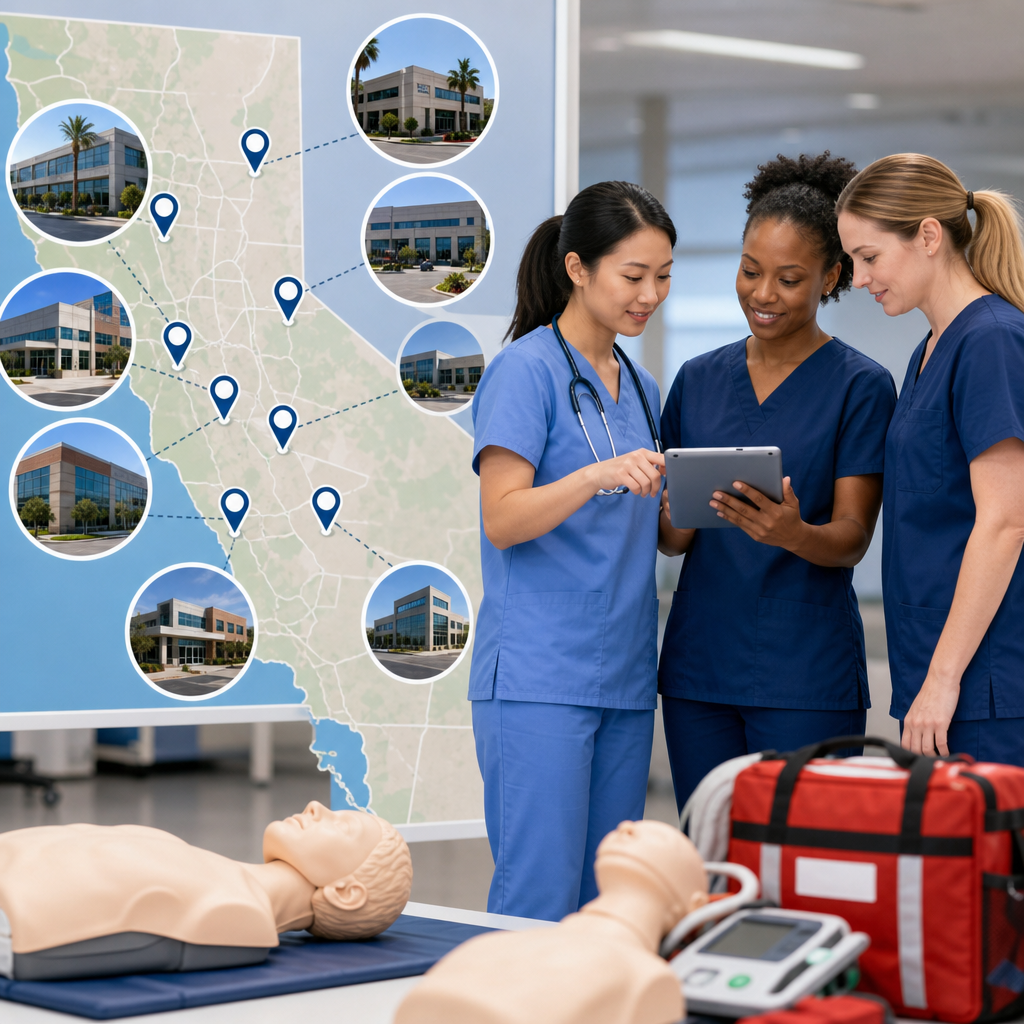
We operate over 100 training locations throughout California. Whether your team works in San Francisco, San Jose, Sacramento, or Fresno, convenient centers exist nearby. Staff in Oakland can train at Fruitvale, Lake Merritt, or Piedmont locations. Those in Walnut Creek choose Downtown or Shadelands. San Francisco locations span from the Mission District to Telegraph Hill, Sunset, and UCSF.
This geographic density matters for real-world scheduling. A nurse in Santa Rosa can attend class at our Downtown or Larkfield-Wikiup centers rather than driving an hour. A paramedic team in the inland region chooses Stockton, Modesto, or Fresno instead of traveling to coastal clinics.
More locations also mean more class times available. Higher scheduling flexibility reduces the waiting list for certifications and lets you spread training across the calendar naturally.
Action step: Map which training center lies closest to your staff’s primary location. Shortest commute directly translates to less paid downtime per person.
5. Prioritize Providers Offering Daily Class Options
Daily class availability gives you flexibility most other providers can’t match. Rather than waiting for the next scheduled session two weeks out, your staff books next-day or same-week classes.
This matters when someone’s certification expires unexpectedly or a new hire needs rapid onboarding. Instead of scrambling for slots or emergency exceptions, you simply enroll them in tomorrow’s class. We offer ACLS and PALS classes daily across our California network, including weekend options.
Daily scheduling also prevents the bottleneck effect. Large facilities can’t certify their entire nursing or respiratory team in one weekend session, so they stagger across weeks. Daily offerings let you space certifications without creating three-month wait lists.
High-frequency classes also reduce your staff’s scheduling conflicts. More options mean fewer schedule changes, fewer shift swaps, and less operational juggling needed.
Action step: Choose a provider with documented daily class schedules across your region. Check their website to confirm options in at least 2-3 nearby centers for true backup flexibility.
6. Implement RQI Simulation Stations with Advanced Technology
RQI (Rapid Quality Improvement) simulation stations use real-time feedback technology that accelerates learning. Unlike traditional manikin practice, these devices give instant visual and audio feedback on compression depth, rate, and hand placement during CPR.
Your staff immediately sees their performance gaps and corrects them within the same training session. Compression quality improves faster than conventional practice because learners respond to live data rather than waiting for instructor feedback. This efficiency means focused skills practice in shorter timeframes while maintaining mastery.
Advanced simulation technology also increases confidence. Healthcare professionals practice high-stakes scenarios with realistic equipment and decision-making challenges. When they return to actual emergencies, they’ve already mentally rehearsed the sequence.
We integrate RQI stations into our ACLS and PALS programs to maximize learning density per hour. Your team practices more skills in less classroom time while achieving higher competency levels.
Action step: Ask whether your provider uses real-time feedback technology during hands-on skills sessions. This single feature accelerates competency and justifies shorter classroom time.
7. Take Advantage of Corporate Discount Pricing for Teams
Corporate group pricing reduces per-person costs significantly compared to individual enrollment. Facilities certifying 10 or more staff typically save 30-40% per person, which compounds across your entire team’s renewal cycle.
The financial savings matter, but the administrative consolidation matters more. One group contract means one enrollment process, one billing cycle, and one completion report instead of tracking 15 individual registrations. Your training coordinator manages one purchase order instead of fifteen, and your budget stays predictable.
Team discounts also make recertification timing more flexible. Lower per-person costs mean you can certify backup staff or cross-train additional personnel without budget overruns. You build redundancy without breaking the training budget.

Our ACLS Certification Classes include tiered corporate discounts based on group size. We’ve worked with medical centers, dental practices, EMS agencies, and multi-location clinics across the entire state, from Alameda to Visalia and Redding to Santa Cruz.
Action step: Request a group pricing quote for your entire team’s annual recertification needs. Compare the total annual cost including on-site training, daily classes, and blended options to see which combination gives maximum savings plus minimum downtime.
—
Staff downtime during ACLS and PALS recertification cuts deeper than the hours spent in class. It disrupts patient schedules, forces colleagues into coverage gaps, and creates scheduling pressure that burns out your team. Strategic choices about training delivery eliminate this unnecessary friction.
We’ve built our programs specifically around healthcare professionals’ reality: mandatory certifications that fit real clinic operations. Blended learning compresses classroom hours. Group training consolidates downtime. Same-day cards eliminate compliance limbo. Geographic density and daily classes provide scheduling flexibility that actually works. Advanced simulation technology makes every hour count. Corporate pricing removes budget barriers.
The facilities that minimize recertification downtime don’t sacrifice training quality. They choose providers that respect their operational constraints and deliver rigorous, hands-on instruction within realistic scheduling windows. That’s exactly what we do across over 100 California locations.
Ready to cut your recertification downtime? Contact us to discuss group training options for your team.
Register for a class today.
Frequently Asked Questions (FAQ)
How can we minimize staff downtime during ACLS and PALS recertification?
We offer blended learning that combines online coursework with in-person skills sessions, so your team completes theory at their own pace and only comes in for hands-on practice. Our same-day certification card delivery means staff can return to clinical duties immediately after their session rather than waiting for credentials. We also provide on-site group training at your facility, eliminating travel time and scheduling conflicts across your organization.
Why should we choose your centers for our team’s recertification needs?
We operate over 100 training locations throughout California, so your staff can access the most convenient location near their workplace or home. Our daily class options mean we can accommodate your team’s schedule without long waiting periods, and our corporate discount pricing reduces costs significantly when you train multiple employees together. We guarantee the lowest prices on all our certifications, ensuring you get the best value without compromising quality instruction.
What makes your blended learning approach different for busy healthcare professionals?
Our blended model allows nurses, dentists, and EMS personnel to complete online modules on their own schedule, then attend only the required in-person skills assessment. This reduces total time away from clinical duties compared to traditional full-day classroom formats. We issue same-day certification cards upon successful completion, so your staff maintains uninterrupted licensure and compliance with their position requirements.