
Table of Contents
- 1. Why Hands-On NRP Skills Practice Matters for Your Nursing Career
- 2. Simulation-Based Learning with Realistic Equipment and Scenarios
- 3. One-Day Certification Programs That Fit Your Schedule
- 4. Expert Instructors Who Understand Neonatal Emergency Protocols
- 5. Same-Day Certification Cards for Immediate Compliance
- 6. Blended Learning Combining Virtual Preparation with In-Person Skills
- 7. Multiple Bay Area Locations for Convenient Access to Training
- Frequently Asked Questions (FAQ)
1. Why Hands-On NRP Skills Practice Matters for Your Nursing Career
Neonatal resuscitation is high-stakes work. When a newborn isn’t breathing or has a weak heartbeat, every second counts, and your confidence in those first critical moments determines outcomes. Yet many neonatal nurses in the Bay Area struggle to find quality hands-on practice that fits their demanding schedules while delivering the depth of preparation they truly need.
We’ve spent years designing NRP certification classes that address this exact gap. Our approach combines realistic simulation, expert instruction, and flexible scheduling across more than 100 California locations. Here’s what sets our neonatal resuscitation training apart and why it’s the right choice for your professional growth.
Your state licensure and hospital credentialing both demand current neonatal resuscitation credentials. Beyond compliance, hands-on practice is what actually prepares you to manage an emergency delivery, recognize meconium aspiration, or stabilize a compromised infant in real time.
The challenge is clear: online modules alone don’t build muscle memory. You need to practice chest compressions on a realistic infant manikin, work through airway management with actual equipment, and run through full resuscitation scenarios while an experienced instructor observes and corrects your technique. This combination of repetition and feedback is what transforms knowledge into instinct.
We’ve designed our sessions to prioritize this experiential learning. You’ll spend most of your time with hands on a manikin, not watching videos or listening to lectures. Our instructors watch each candidate perform multiple resuscitation cycles, ensuring you leave confident in your ability to lead in a neonatal emergency.
What to do next: Schedule your session soon. Instructors fill quickly, especially at our San Francisco Mission District and Oakland Lake Merritt locations, so booking early gives you more date options and the chance to train alongside colleagues from your unit.
2. Simulation-Based Learning with Realistic Equipment and Scenarios
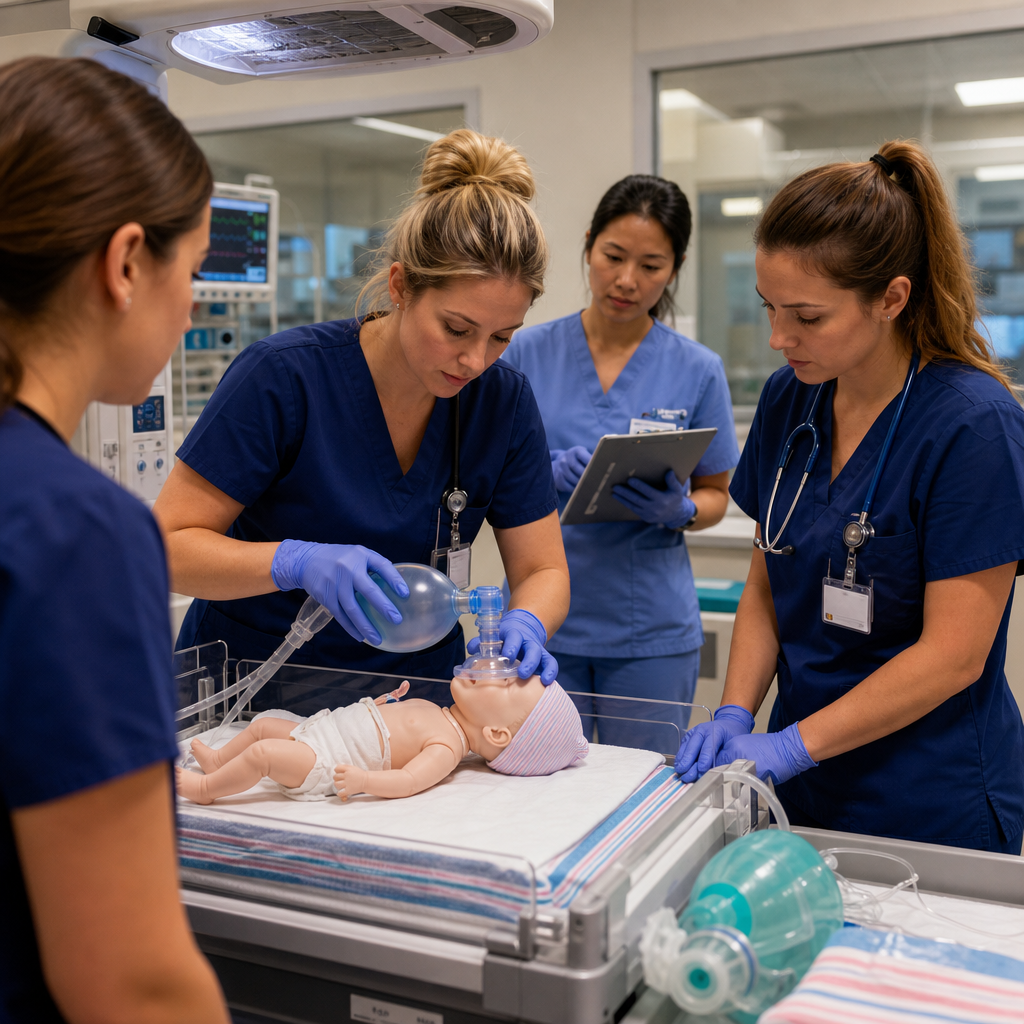
Simulation bridges the gap between classroom and bedside. Our training bays use full-sized neonatal manikins, actual resuscitation carts with warmed surfaces, and equipment mirrors exactly what you’ll find in your delivery room. This familiarity removes a major source of stress when real emergencies happen.
During your session, you’ll encounter realistic scenarios: a full-term infant born pale and limp; a preterm delivery with thick meconium; a situation requiring escalated chest compressions. Your instructor presents each scenario, you respond using the equipment in front of you, and feedback comes immediately so you can adjust your approach and try again.
We rotate through multiple scenarios in every class because variety builds adaptability. You won’t just memorize one correct path. Instead, you’ll learn decision trees: how compression depth changes for different infant weights, when to move from initial steps to medications, how to communicate clearly with your delivery team while managing the infant.
Our training facilities in Fremont, Walnut Creek, and Sacramento (Arden and Midtown locations) all feature identical equipment setups so your learning transfers seamlessly wherever you work. The manikins are maintained to precise standards and reset between candidates so every person gets the same authentic experience.
What to do next: Confirm your comfort level with specific neonatal resuscitation scenarios when you register. We tailor scenario emphasis based on your experience level, so first-time providers and experienced nurses both get targeted practice where they need it most.
3. One-Day Certification Programs That Fit Your Schedule
A full day away from your unit feels like a luxury you can’t afford. We get it. That’s why our program compresses everything into one focused, intensive session.
You arrive, complete your knowledge check, move directly into hands-on skills stations, and leave with your certification card. No multiweek courses, no mandatory online prerequisites that drag out the process. Just eight focused hours where you practice the skills that matter.
We offer daily start times across our Bay Area network, including early morning, midday, and evening options. Whether you’re based in San Jose (Downtown or Willow Glen), Berkeley, or Hayward, you’ll find a nearby location with dates that align with your schedule. Several of our facilities, including those in Pleasanton and Dublin, specifically reserve evening and weekend slots for working nurses.
Our one-day format doesn’t mean rushed. We limit class size to eight participants per session so instructors spend genuine time with each person. That small-group model is why our pass rate consistently exceeds industry standards.
What to do next: Check our calendar for a date within the next month. Once you book, you’ll receive a digital study guide so you can review key algorithms beforehand, making your in-person time even more productive.
4. Expert Instructors Who Understand Neonatal Emergency Protocols
Your instructor isn’t a general CPR teacher who happens to teach NRP. Every instructor on our team has significant neonatal experience: many are active delivery room nurses, respiratory therapists, or neonatologists. They’ve lived the scenarios you’ll practice. They know the equipment, the timing challenges, and the real-world complications.
This expertise changes everything. When you perform chest compressions and your instructor says “lighter pressure, watch the chest rise,” you understand why because they’ve seen what happens when compression depth is wrong in a real infant. When they correct your communication style during a complex scenario, it’s based on thousands of hours in actual delivery rooms.
Our instructors across Sacramento (Oak Park and Rosemont), San Francisco (Bayshore and Parnassus/UCSF), and Stockton all maintain current credentials and teach regularly. They attend continuing education and stay current on guideline updates. You’re learning from peers, not from people reading from scripts.
Beyond the basics, experienced instructors anticipate common misconceptions and address them directly. They help you understand not just what to do, but why you’re doing it at each step of the resuscitation algorithm.
What to do next: When choosing your class, note your instructor’s background. Our class listings show each instructor’s experience and credentials, helping you select someone whose neonatal focus aligns with your interests (delivery room versus NICU, for example).
5. Same-Day Certification Cards for Immediate Compliance
Some training programs require you to pass skills, wait for paperwork, and receive credentials days or weeks later. That’s not how we work.
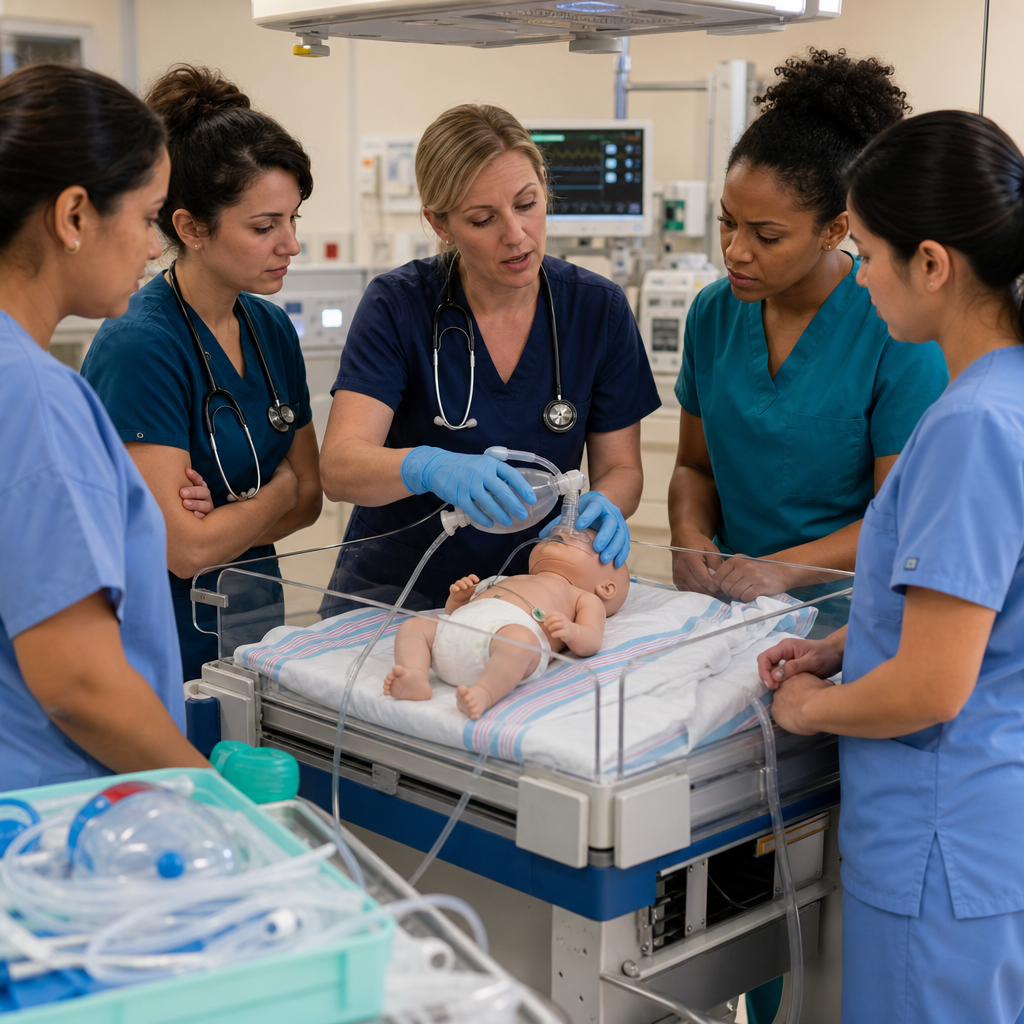
You successfully demonstrate your skills, pass your knowledge check, and receive your printed certification card the same day. This means you’re immediately compliant with your hospital’s credentialing requirements. No gap between when you train and when you can document compliance. No waiting for emails or mailed certificates.
Our same-day card policy has eliminated a major hassle for nurses across Concord (Treat and Willow Pass), Livermore, and Redwood City. You walk out certification-ready, ready to update your unit’s records immediately.
This matters because compliance deadlines are real. If your certification expires mid-month, our same-day approach means you train, complete, and stay current without managing a bureaucratic delay. Hospital credentialing departments appreciate the immediate documentation too.
What to do next: Bring valid photo identification to your session. This is all we need to print your card on site. If you need it sent to your employer, we can arrange that as well, but having it in hand the same day gives you peace of mind.
6. Blended Learning Combining Virtual Preparation with In-Person Skills
We’ve learned that the best candidates arrive prepared, meaning they move faster through core concepts and spend more time refining technique. Our blended approach gives you study materials before class so you arrive ready to practice.
You’ll receive access to our online platform, which covers neonatal resuscitation algorithms, equipment identification, and scenario walkthroughs. This virtual component takes roughly two to three hours and can be completed whenever fits your schedule. Some nurses finish it over a single evening; others spread it across a few days.
When you arrive for your in-person skills session, the instructor skips the lecture portion entirely. Instead, you move straight to hands-on stations: airway management, chest compressions, medication delivery, and full scenarios. Your virtual prep means that when the instructor demonstrates proper chest compression technique, you already understand the theory behind it.
This combination accelerates learning dramatically. Studies consistently show that blended models produce stronger retention because the hands-on practice reinforces what you’ve already conceptualized. You’re not learning resuscitation for the first time during class; you’re practicing it.
Our virtual platform is accessible from anywhere, whether you’re in Modesto, San Rafael, or Santa Rosa. You can pause, rewind, and review as many times as needed before your in-person session.
What to do next: Log into our platform as soon as you register and complete the virtual component at least three days before your session. This gives you time to identify any concepts you want to discuss with your instructor in person.
7. Multiple Bay Area Locations for Convenient Access to Training
We maintain over 100 training locations across California because geography shouldn’t dictate whether you can access quality preparation. In the Bay Area alone, we operate facilities in San Jose (Downtown, Japantown, South, and Willow Glen), San Francisco (Mission Bay, Mission District, Nob Hill, and Telegraph Hill), Oakland (Fruitvale and Piedmont), Palo Alto, and numerous East Bay and Peninsula communities.
This location density means your commute is typically under 20 minutes. Whether you work in Tracy, Vacaville, or Santa Cruz, you’ll find a training facility that fits your geography and schedule.
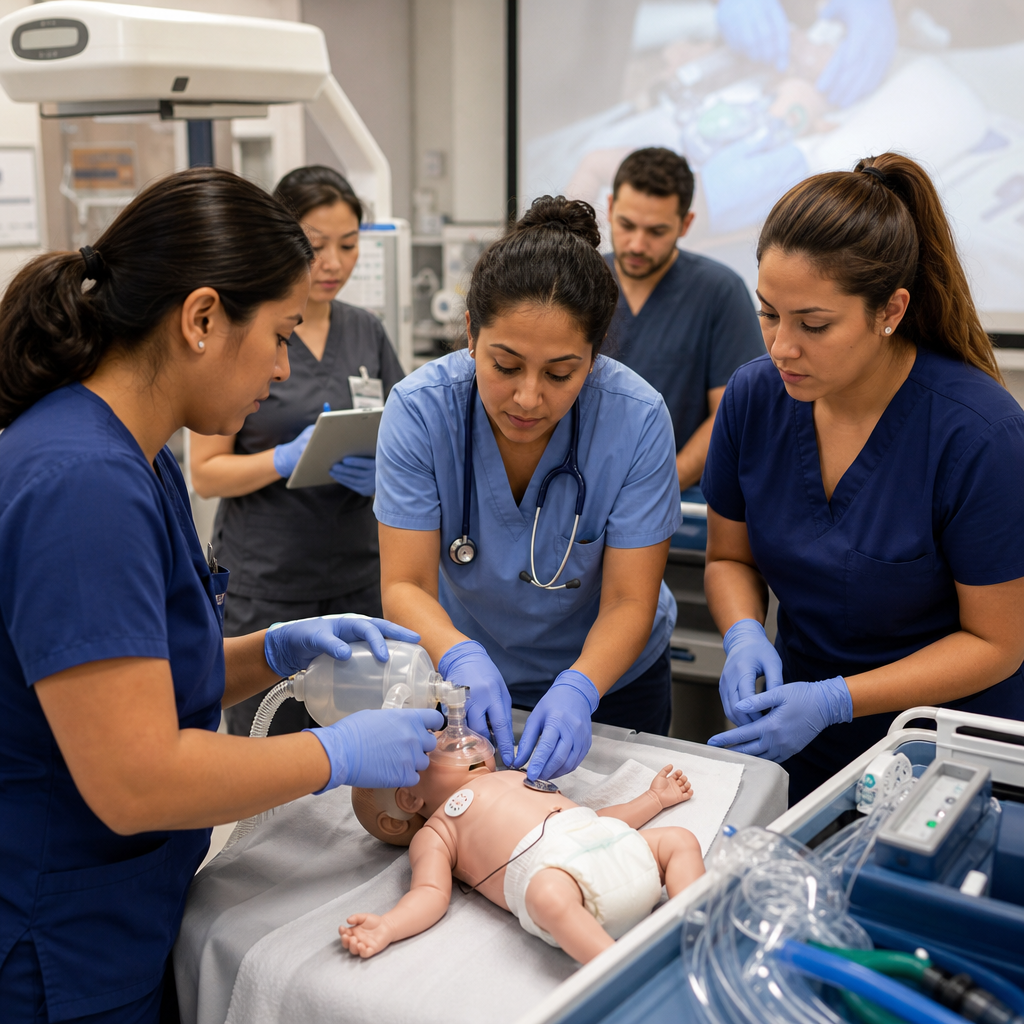
We’ve designed each location with neonatal training in mind. Every facility includes properly equipped simulation bays, climate-controlled practice areas, and facilities suitable for intense hands-on work. Whether you train in Alameda, Folsom, or Visalia, you’ll encounter the same high-quality equipment and instruction standards.
Our commitment to accessibility extends beyond location. We’ve intentionally distributed our schedule across early morning, daytime, and evening slots specifically because nurses work irregular shifts. If you’re on night shift in Bakersfield or working weekends in Vallejo, we have options that don’t force you to choose between work and professional development.
What to do next: Visit our location finder and filter by your preferred time window. Book your nearest location or choose one you pass during your commute. Many candidates appreciate training at a location adjacent to their workplace, making it a seamless part of their professional schedule.
—
Your competence in neonatal resuscitation directly protects vulnerable newborns at their most critical moment. That responsibility demands training that actually prepares you, not just paperwork that satisfies compliance requirements.
Our NRP certification classes deliver exactly that: realistic simulation, expert instruction from practicing neonatal professionals, flexible scheduling, and same-day credentials. We’ve eliminated common barriers that prevent quality training, giving you intensive hands-on practice in a single day across convenient Bay Area locations.
Schedule your session today. Choose a location and date that fits your life, arrive prepared through our blended approach, and leave with the confidence and credential you need to lead neonatal emergencies with skill and calm.
Register for a class today.
Frequently Asked Questions (FAQ)
What makes our NRP skills sessions different from other training programs?
We combine realistic simulation-based scenarios with expert instructors who specialize in neonatal emergency protocols. Our blended approach lets you complete virtual preparation at your own pace, then join us for focused in-person skills practice with the exact equipment you’ll use in your facility. We’ve designed our curriculum specifically for the fast-paced demands neonatal nurses face.
How quickly can I get certified after completing my NRP training?
We issue same-day certification cards upon successful completion of our skills session, so you’re immediately compliant with your employer’s requirements. You won’t need to wait for mail delivery or process delays. Our one-day programs are structured to get you trained and certified without disrupting your work schedule.
Do you offer NRP training at locations convenient to me in the Bay Area?
We operate multiple training centers throughout the Bay Area, including locations in Oakland, San Francisco, San Jose, and surrounding communities. You can find a convenient location near your workplace or home, and we offer daily class schedules to fit your availability. Visit our website to browse all our Bay Area NRP training times and reserve your spot.