Table of Contents
- Why Seizure First Aid Training Matters for Healthcare Professionals
- Understanding Seizure Types and Recognition Signs
- Immediate Actions During a Seizure Episode
- Protecting the Person: Safety Positioning and Environmental Control
- Common Mistakes to Avoid During Seizure Response
- Post-Seizure Care and Recovery Positioning
- Why Certified Training Enhances Your Emergency Readiness
- How We Prepare You for Real-World Seizure Situations
- Get Your Seizure First Aid Certification Today
- Frequently Asked Questions (FAQ)
Why Seizure First Aid Training Matters for Healthcare Professionals
As healthcare professionals, you already understand that emergencies don’t follow a schedule. Seizures can happen anywhere—in a clinic waiting room, an urgent care facility, or a patient’s home during a house call. Knowing how to respond effectively protects not only your patients but also your professional standing and your ability to act confidently under pressure.
Seizure response is a core competency that demonstrates your commitment to patient safety and clinical excellence. Whether you’re a nurse, dentist, or EMS provider in California, proper seizure first aid training elevates your skill set beyond basic life support. It fills a critical gap: understanding exactly what to do when a patient or bystander experiences a seizure event.
We’ve found that healthcare professionals who complete dedicated seizure first aid training report greater confidence in emergency situations and faster recognition of seizure episodes. This training becomes especially valuable if you work in settings where seizure risk is elevated, such as neurology departments, pediatric facilities, or community health centers across locations like Fresno, Oakland, and San Francisco.
Your training ensures you can differentiate between seizure types, respond appropriately, and prevent secondary injury. This knowledge directly supports your professional licensing requirements and workplace compliance mandates.
Action step: Assess your current team’s seizure response preparedness. If you cannot confidently describe what to do in the first 30 seconds of a generalized seizure, scheduling training should be your priority.
Understanding Seizure Types and Recognition Signs
Seizures vary significantly in presentation, and recognizing them quickly is the foundation of effective response. Not all seizures look the same, and misidentification can delay appropriate care.
The most dramatic seizure type is a generalized tonic-clonic seizure, characterized by loss of consciousness, rigid muscle contraction (tonic phase), followed by rhythmic jerking (clonic phase). These typically last 30 seconds to two minutes. However, focal seizures affect only one part of the brain and may involve twitching in a single limb or unusual sensations without loss of consciousness. Absence seizures are brief, lasting only seconds, and may appear as momentary staring or unresponsiveness.
Recognizing the pre-seizure phase, called the aura, gives you critical warning time. Some people experience warning signs such as unusual smells, visual changes, emotional shifts, or a tingling sensation minutes before a seizure begins. If a patient reports these signs, you can help them move to a safe location and alert others.
During active seizure activity, watch for:
- Loss of consciousness or altered awareness
- Muscle rigidity followed by jerking movements
- Irregular breathing or temporary breath-holding
- Drooling or foaming at the mouth
- Loss of bladder or bowel control
- Eye rolling or fixed gaze
Post-seizure confusion, fatigue, and memory loss are common and normal. A patient may not remember the event itself or the moments immediately before and after.
Understanding these variations allows you to respond systematically rather than reactively. At our training locations throughout California—from Bakersfield to Berkeley to San Jose—we teach you to identify these patterns and respond with appropriate first aid measures.
Immediate Actions During a Seizure Episode
Your response during a seizure must be swift, calm, and purposeful. The goal is simple: protect the person from injury while allowing the seizure to run its natural course.
First, stay with the person. Do not leave them unattended, and do not attempt to restrain their movements or hold them down. Their muscles are contracting involuntarily, and fighting this will not help and may cause injury. Instead, focus on immediate safety.
Clear the immediate area of hazards. Move furniture, equipment, or other objects that could strike the person during convulsions. If they are standing, gently guide them to the ground if possible to prevent falls. If they are already on the ground, this is often the safest position.
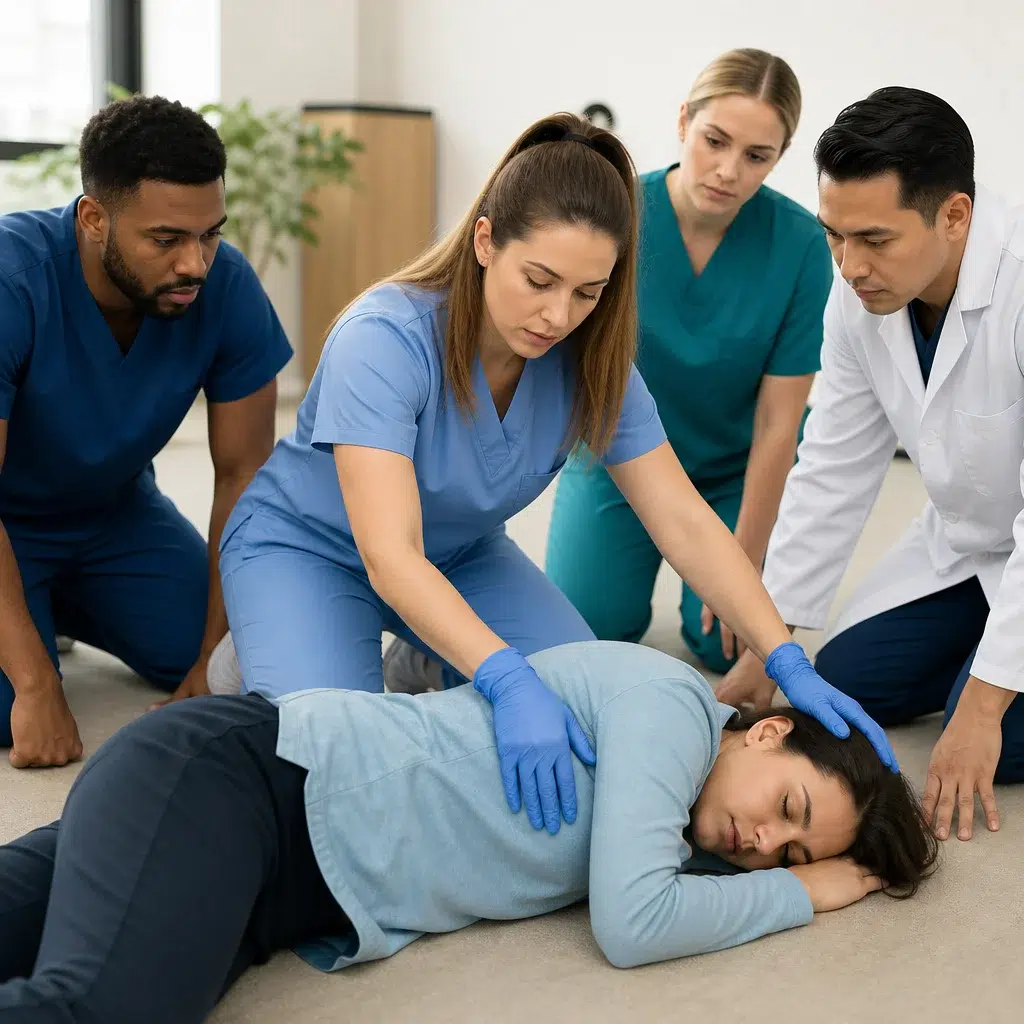
Next, position their head to one side. This allows saliva and any secretions to drain from the mouth, reducing the risk of aspiration. Support their head gently with your hand or a small cushion, but avoid aggressive manipulation of their neck or spine unless spinal injury is suspected.
Do not place anything in the person’s mouth. This is a critical point: contrary to older beliefs, you should never insert a tongue depressor, fingers, or any object between their teeth. The tongue cannot be swallowed during a seizure, and attempting to place objects in the mouth risks broken teeth, damaged lips, and potential airway obstruction.
Monitor their breathing and mental status. Most seizures resolve spontaneously within a few minutes. Once the jerking stops, the person typically enters a post-ictal state with shallow, irregular breathing that gradually normalizes.
Call for emergency medical services if the seizure lasts longer than five minutes, if multiple seizures occur without full recovery between them, or if this is the person’s first known seizure. In community settings across cities like Sacramento and Stockton, having this decision-making framework prevents both unnecessary delays and inadequate response.
Action step: Practice these steps mentally today. Ask yourself: where are the hazards in your workplace that could harm a seizing person? Mentally clear that space.
Protecting the Person: Safety Positioning and Environmental Control
Environmental safety during a seizure often determines whether the episode results in minor discomfort or serious secondary injury. Your role includes both the person’s physical positioning and managing their surroundings.
The recovery position, also called the lateral recovery position, is optimal. Once the convulsions stop, position the person on their side with one arm supporting the head and one leg slightly bent. This position keeps the airway open, allows fluids to drain from the mouth, and prevents aspiration. If spinal injury is possible (for example, if they fell from height), maintain spine precautions and avoid moving them unnecessarily.
Cushioning is your next priority. Use available materials—jackets, pillows, towels—to pad nearby hard edges. Place cushioning under the person’s head to prevent repeated head strikes if minor jerking continues during the post-ictal phase.
Control the scene. If you’re in a healthcare facility in Hayward, Sacramento, or Livermore, alert staff and ensure other patients are not crowded around the area. A chaotic environment creates additional stress and safety risks. Close curtains or doors if appropriate to maintain the person’s privacy and dignity.
Keep the person warm. Cover them with a blanket if available, as they often feel cold immediately after a seizure. Maintain a calm, reassuring presence. Your composed demeanor will help everyone in the vicinity remain calm.
Remove potential airway obstructions like dentures, gum, or oral medication if safe and easily accessible after the seizure stops. Do not search the mouth aggressively.
Once the person is stabilized and breathing normally, stay with them until they regain full consciousness and orientation. Continue monitoring their vital signs and mental status, watching for signs of complications.
Action step: Walk through your facility today and identify potential hazards—sharp furniture corners, equipment with hard edges, obstacles on the floor. Plan specific modifications that could protect a seizing person.
Common Mistakes to Avoid During Seizure Response
Even well-intentioned responders sometimes make errors that complicate care or increase injury risk. Knowing these pitfalls helps you respond more effectively.
The most dangerous mistake is attempting to hold the person down or restrain their movements. This creates unnecessary risk of muscle injury, broken bones, and increased stress on the cardiovascular system. Your role is to protect them from external harm, not to control their muscles.
Another frequent error is inserting objects into the mouth. This outdated approach can cause broken teeth, damaged gums, tongue injury, and airway obstruction. Modern seizure first aid explicitly advises against this.
Failing to turn the person onto their side is also problematic. If they remain face-up and vomit or produce secretions, aspiration risk increases significantly. Side positioning is simple, critical, and often overlooked in real emergencies.
Some responders panic and call emergency services immediately for a first seizure that lasts only 30 seconds. While professional assessment is appropriate, you should wait to see if the person recovers naturally. However, calling 911 is absolutely correct if the seizure continues past five minutes (status epilepticus), if they have repeated seizures without full recovery, or if this is their first known seizure.
Leaving the person alone is a serious mistake. They may be confused, injured, or at risk for additional seizures. Your presence provides safety monitoring and reassurance during the vulnerable post-seizure period.
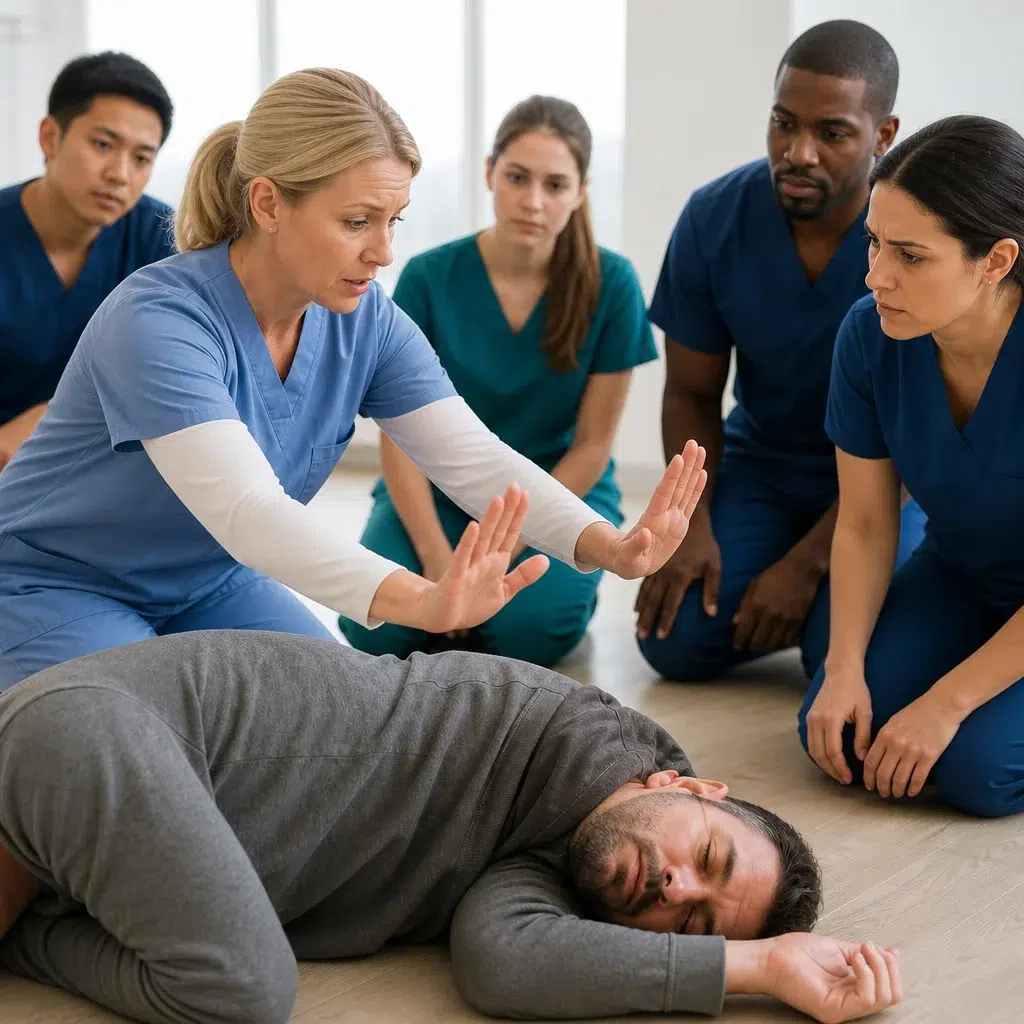
Applying heat, ice, or stimulation to try to “wake them up” wastes time and can cause additional injury. Let the post-seizure confusion resolve naturally.
Action step: Review your facility’s seizure response protocol this week. Ask yourself if it includes the common mistakes listed above—and remove them.
Post-Seizure Care and Recovery Positioning
The post-seizure phase, called the post-ictal state, is when most people need your attention and presence. Recovery takes time, and your role now shifts from immediate emergency response to supportive care and observation.
Most people remain confused, disoriented, or drowsy for 5 to 30 minutes after a seizure. Do not be alarmed if they cannot answer simple questions or seem to be in a daze. This is completely normal. Speak calmly and reassuringly, identifying yourself and explaining where they are.
Maintain the recovery position on their side. Continue monitoring their breathing, which should gradually become regular and deeper as they recover. Check for any signs of injury sustained during the seizure—bleeding, broken bones, or head trauma.
Allow them to rest. Do not rush them to sit up or stand. Their muscles will feel tired, similar to extreme exertion. Some people experience muscle soreness for hours or even days afterward.
Watch for post-seizure complications. Irregular breathing, continued loss of consciousness beyond 30 minutes, or difficulty breathing warrants emergency medical evaluation.
Once they regain full consciousness and orientation, assess if they need medical attention. Even if the seizure was brief and they appear to recover completely, evaluation by their physician or emergency department is often appropriate, particularly if this was their first seizure or if they injured themselves during the event.
Offer water once they are fully alert and able to swallow safely. They often feel thirsty and disoriented afterward.
Document what you observed: when the seizure started, how long it lasted, which body parts were involved, and any injuries sustained. This information is valuable for their healthcare team and helps establish a pattern if future seizures occur.
Action step: Create a simple seizure observation form for your workplace. Include timing, body part involvement, duration, and any injuries. Make copies and post them near first aid supplies.
Why Certified Training Enhances Your Emergency Readiness
Certification in seizure first aid goes beyond memorizing steps. It transforms your ability to think clearly under pressure, recognize subtle signs, and make decisions confidently in real emergencies.
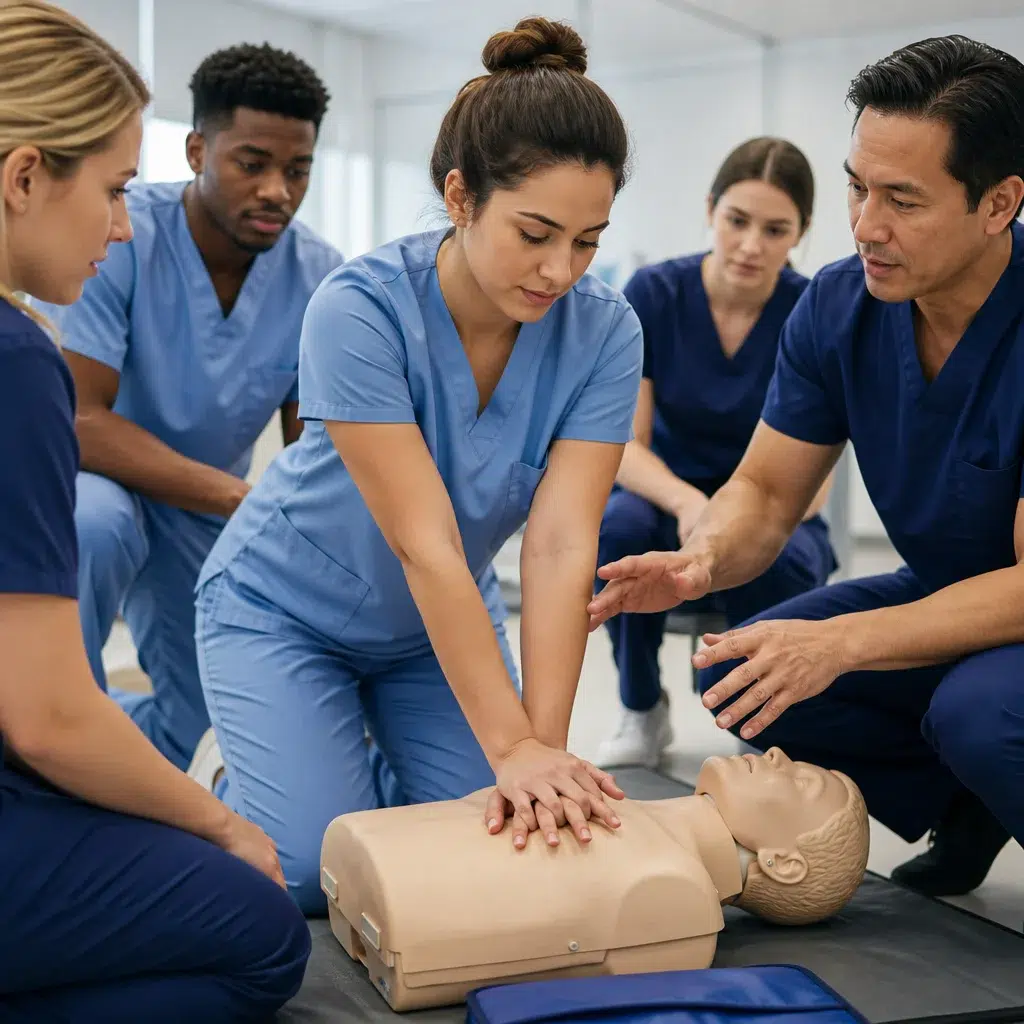
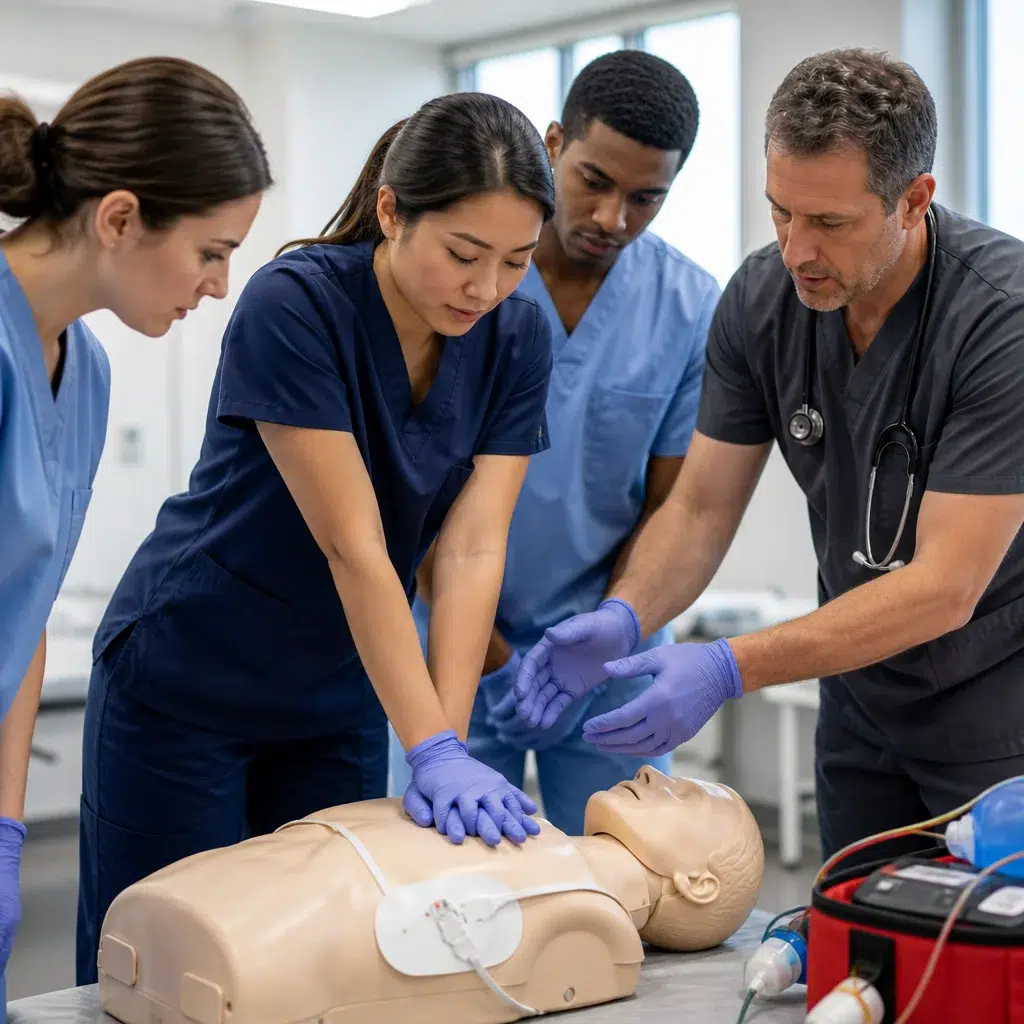
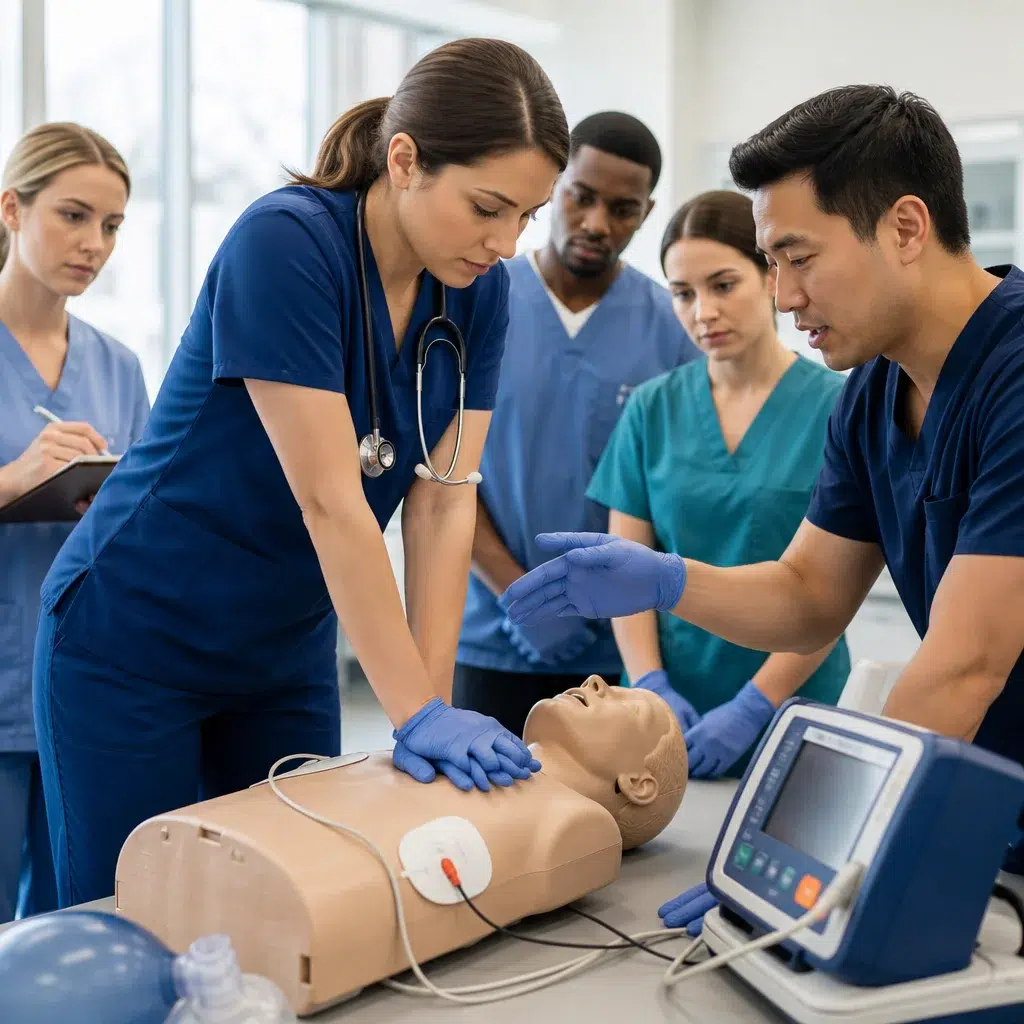
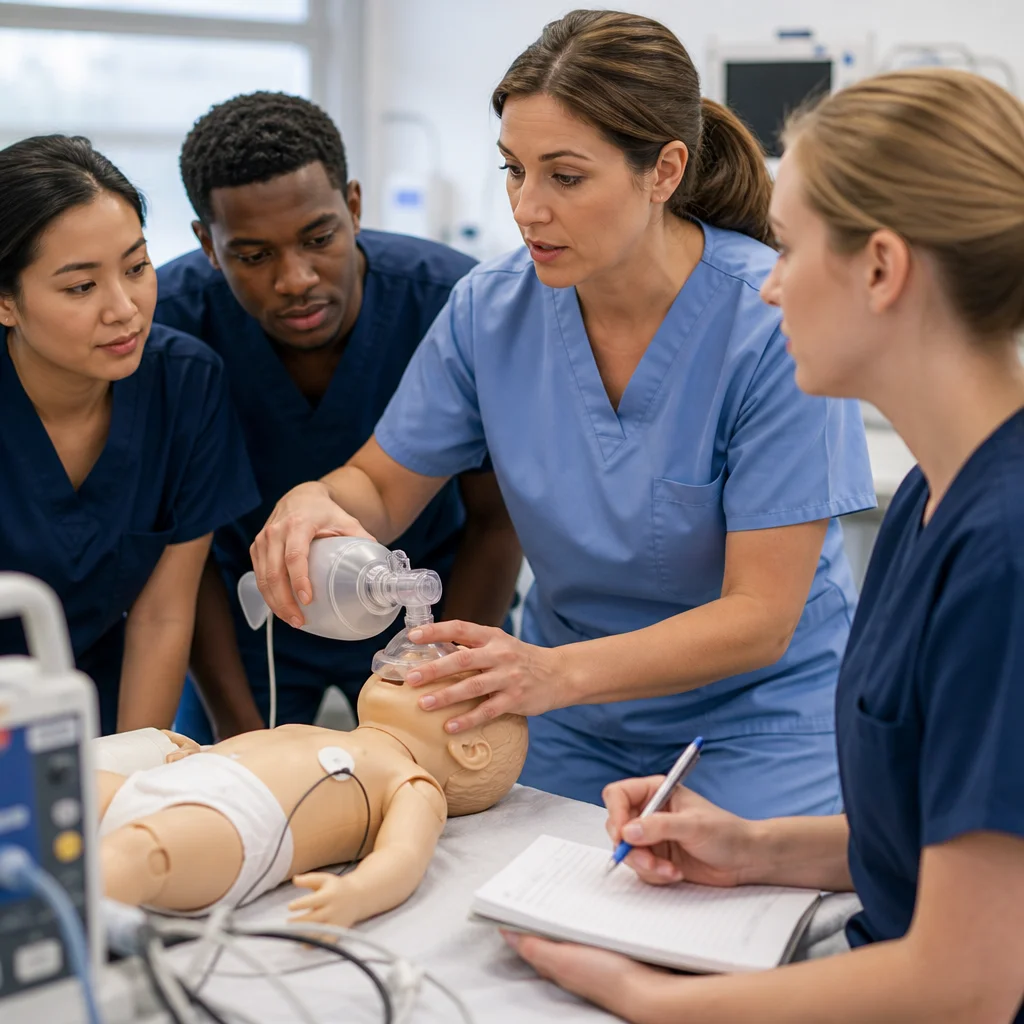
Our training programs are built on real-world scenarios that healthcare professionals actually face. We don’t just tell you what to do—we show you, walk you through it, and give you hands-on practice in controlled environments. This repetition creates muscle memory and decision-making pathways that function even when adrenaline is high.
Certified responders benefit from instructor expertise. Our educators have extensive healthcare backgrounds and bring clinical perspective to every training session. They answer the questions that textbooks don’t address and help you understand not just the “what” but the “why” behind each recommendation.
Certification also provides legal protection and professional credibility. When you respond to a medical emergency, acting within your scope of training and certification demonstrates reasonable care. This protects both you and the people you help.
We offer flexible training across over 100 locations throughout California—from Petaluma and Napa in the north to Visalia in the south, and everywhere in between. Whether you’re in downtown San Francisco, San Jose, Sacramento, or smaller communities like Larkfield-Wikiup near Santa Rosa, you can access training that fits your schedule.
Our low-price guarantee means certification remains affordable. You won’t compromise financial resources to maintain professional skills. We also offer group pricing for healthcare teams and corporate training, making it practical for entire departments to stay current together.
Action step: Check our California certification locations to find the nearest class. Block time on your calendar this month.
How We Prepare You for Real-World Seizure Situations
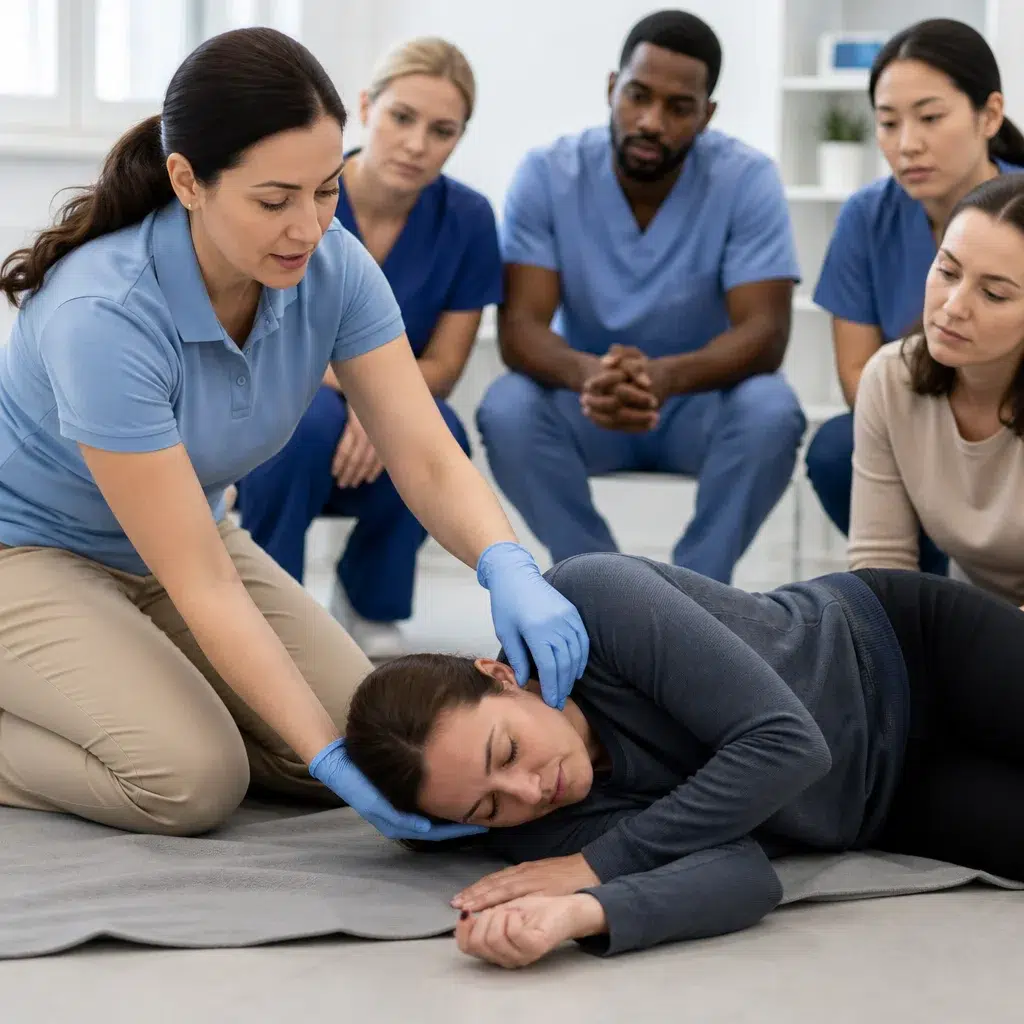
Real-world seizure emergencies are unpredictable, chaotic, and often confusing. We design our training to move you from knowledge to applied competence. This is where the difference between reading about seizure response and actually being trained becomes crystal clear.
During our sessions, we use scenario-based learning. You might practice responding to a seizure in a simulated clinic environment, complete with furniture, equipment, and realistic obstacles. You’ll learn to think through the scene—what hazards exist, what you need to do first, how to call for help while staying with the person.
We emphasize the decision-making timeline. You’ll practice recognizing when a seizure is ending, when to position the person on their side, when to call emergency services, and how to communicate with other responders or staff members. These decisions happen in real time, and practice lets you make them more smoothly.
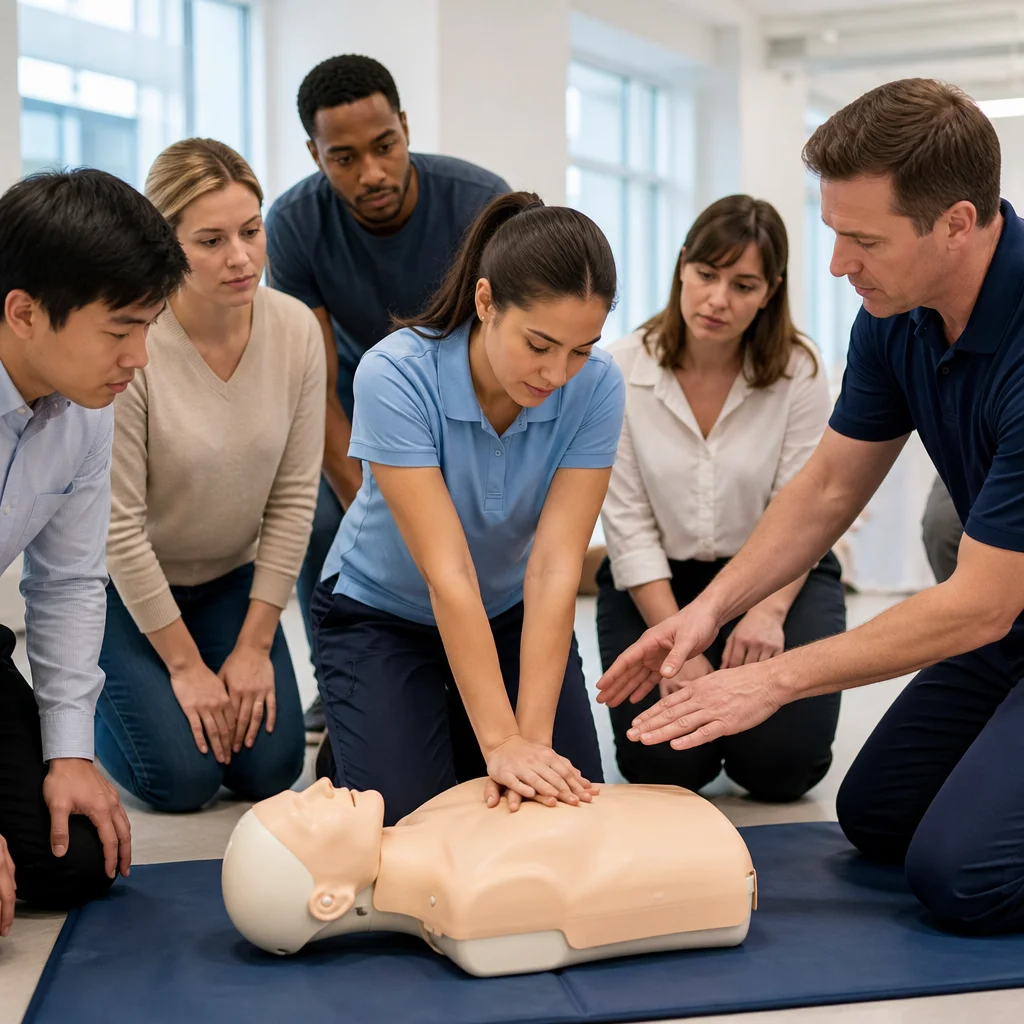
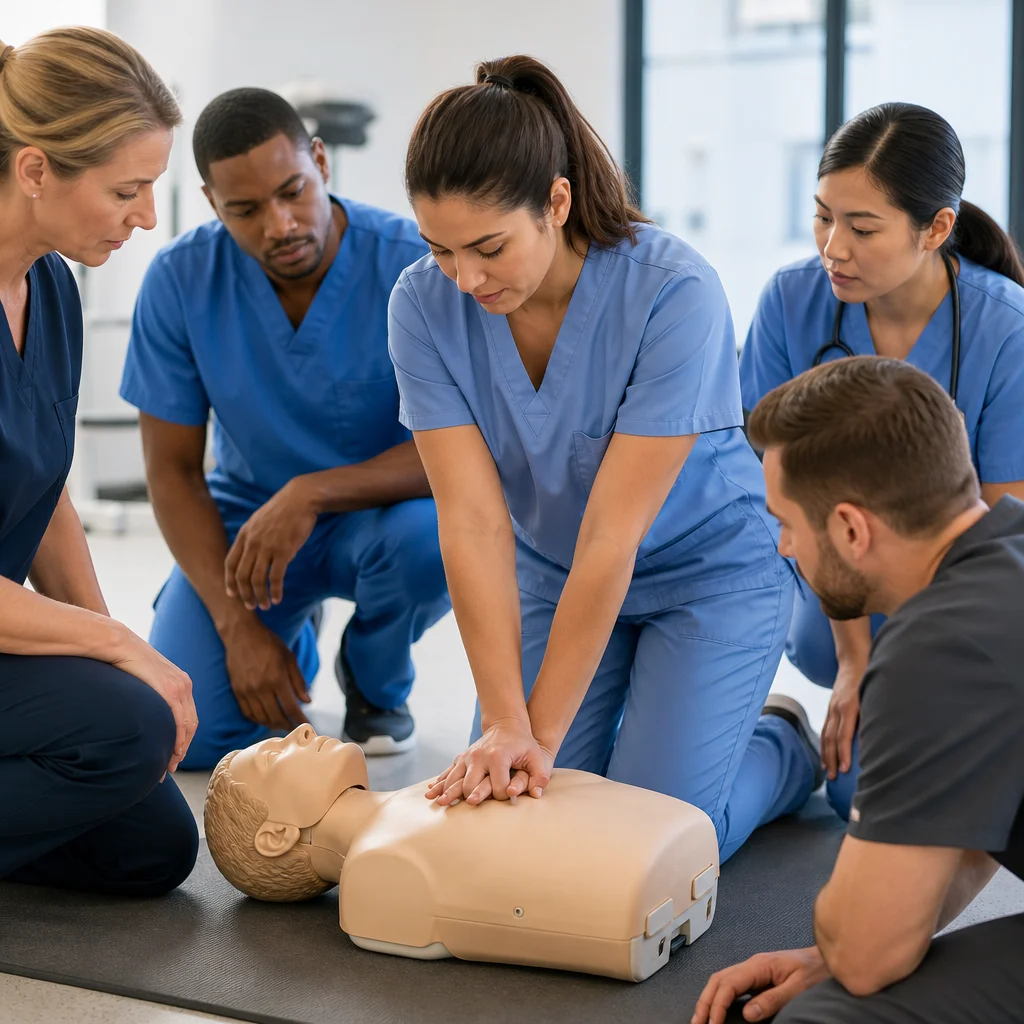
Hands-on practice allows you to develop proper positioning techniques. You’ll position a training mannequin into the recovery position multiple times, building the motor skills so the action becomes automatic if you ever need it in an actual emergency.
We also address the emotional and communication aspects of seizure response. You’ll learn how to reassure a confused post-seizure patient, how to explain what happened to family members who may be frightened, and how to document the event clearly.
Our blended learning approach combines virtual learning with in-person skills sessions. Online modules build foundational knowledge at your own pace, while in-person sessions with our instructors provide hands-on practice, real-time feedback, and the chance to ask questions about your specific workplace environment.
Action step: Ask whether your employer offers group training. Bringing your team through training together means everyone uses the same protocols and language during actual emergencies.
Get Your Seizure First Aid Certification Today
Seizure first aid certification is one of the highest-value professional development investments you can make. It’s relatively quick to complete, immediately applicable to your role, and can genuinely save lives and prevent injury.
We make scheduling simple. Visit our website to browse available courses at times and locations convenient to you. With training available daily and locations across California, finding a session that works for your schedule isn’t a challenge.
Our instructors bring real healthcare experience and genuine commitment to your learning. They understand the pressures you face as a healthcare professional and design training that respects your time while delivering genuine competence.
Low cost, flexible scheduling, and practical, immediately usable skills combine to make this training accessible to every healthcare professional in California. Whether you’re based in Concord, Redwood City, Tracy, or any of our other training communities, you’ll find convenient access to certification.
The next step is simple: schedule your training this month. Your patients, your colleagues, and your own professional confidence will benefit. Seizure response readiness isn’t something you plan to have someday—it’s something you should have now.
Register for a class today.
Frequently Asked Questions (FAQ)
What seizure first aid skills does our training cover?
We teach you how to recognize different seizure types, respond safely during an episode, and provide appropriate post-seizure care. Our instructors guide you through positioning techniques, environmental safety measures, and when to call emergency services. You’ll practice real-world scenarios so you can respond with confidence when it matters most.
Why should healthcare professionals get certified seizure first aid training from us?
We provide hands-on instruction that goes beyond basic information, combining our blended learning approach with in-person skills sessions at over 100 California locations. Our training prepares you for the specific situations you’ll encounter in your workplace, whether you’re a nurse, dentist, or EMS professional. We guarantee competitive pricing while delivering the practical expertise your job compliance and professional licensing require.
How quickly can I get certified in seizure first aid?
We offer flexible scheduling with daily class options across California, and many of our students complete their certification within days of signing up. Our blended format lets you complete foundational learning online before attending an in-person skills session near you. Check our website to find the nearest location and available dates that fit your schedule.