Table of Contents
- Why PALS Certification Matters for Your Nursing Career
- Understanding PALS Requirements Across California Healthcare Settings
- How We Deliver PALS Training That Fits Your Schedule
- Blended Learning: Virtual Preparation Meets Hands-On Skills Practice
- Same-Day Certification and Immediate Compliance
- Affordable PALS Training with Our Low Price Guarantee
- What to Expect During Your PALS Skills Session
- RQI Simulation Stations: Advanced Practice Technology
- Maintaining Your Certification: Recertification Made Simple
- Access PALS Training at Over 100 California Locations
- Get Your PALS Certification Today
- Frequently Asked Questions (FAQ)
Why PALS Certification Matters for Your Nursing Career
Pediatric Advanced Life Support (PALS) certification is no longer optional in most California healthcare settings. Whether you work in an emergency department, intensive care unit, or pediatric specialty clinic, your employer likely requires current PALS certification to maintain your position and meet licensing standards.
Beyond compliance, PALS certification deepens your clinical decision-making skills when treating critically ill children. You’ll learn how to recognize early signs of deterioration, deliver appropriate interventions, and lead resuscitation teams with confidence. This knowledge directly translates to better patient outcomes and positions you as a trusted, qualified clinician in your facility.
The certification also demonstrates your commitment to continuing education and professional excellence. Many healthcare facilities give preference to nurses with current PALS credentials when assigning charge nurse roles or advancement opportunities. Your certification signals to employers and colleagues that you stay current with pediatric emergency protocols.
Next step: Verify your current certification status and renewal timeline so you can plan ahead. Most facilities send reminders, but tracking it yourself prevents lapses that could affect your schedule or licensure.
Understanding PALS Requirements Across California Healthcare Settings
PALS requirements vary slightly across different workplace settings and employer policies throughout California. Hospital systems typically mandate annual recertification, while some urgent care facilities or specialty practices may require certification every two years. Your hiring paperwork and employee handbook will specify your facility’s exact requirements.
State licensing boards and professional nursing organizations don’t universally dictate PALS requirements, but accreditation bodies do. The Joint Commission, which accredits most major hospitals, strongly emphasizes advanced cardiac life support training for nurses in critical care areas. If your facility pursues or maintains Joint Commission accreditation, PALS becomes a documented requirement.
Pediatric-focused settings like children’s hospitals and pediatric emergency departments treat PALS as non-negotiable. Even nurses in general medical-surgical units should verify whether your employer requires PALS or basic life support (BLS) certification specifically. Some facilities accept BLS alone for certain floor assignments.
Insurance and liability considerations also play a role. Healthcare employers carry malpractice insurance tied to staff competency standards. Certified nurses demonstrate competency through recognized credentials, which reduces liability exposure. This institutional pressure means that even if your state doesn’t legally mandate PALS, your employer almost certainly does.
What to do now: Contact your human resources or nursing education department to confirm your facility’s specific PALS timeline and any recertification deadlines you may be approaching.
How We Deliver PALS Training That Fits Your Schedule
We understand that nurses juggle shift work, on-call responsibilities, and limited time off. Our flexible scheduling model accommodates nurses working night shifts, rotating schedules, and irregular hours. We offer PALS courses throughout California at over 100 training locations, from Alameda to Visalia, with multiple sessions available each week.
Our blended learning approach means you can complete the knowledge portion on your own timeline using our online platform. You attend the skills session only when it fits your calendar, whether that’s a weekend morning in Sacramento, a weekday afternoon in San Francisco, or an evening slot in San Jose. This separation of online and in-person components eliminates the need to block off an entire day.
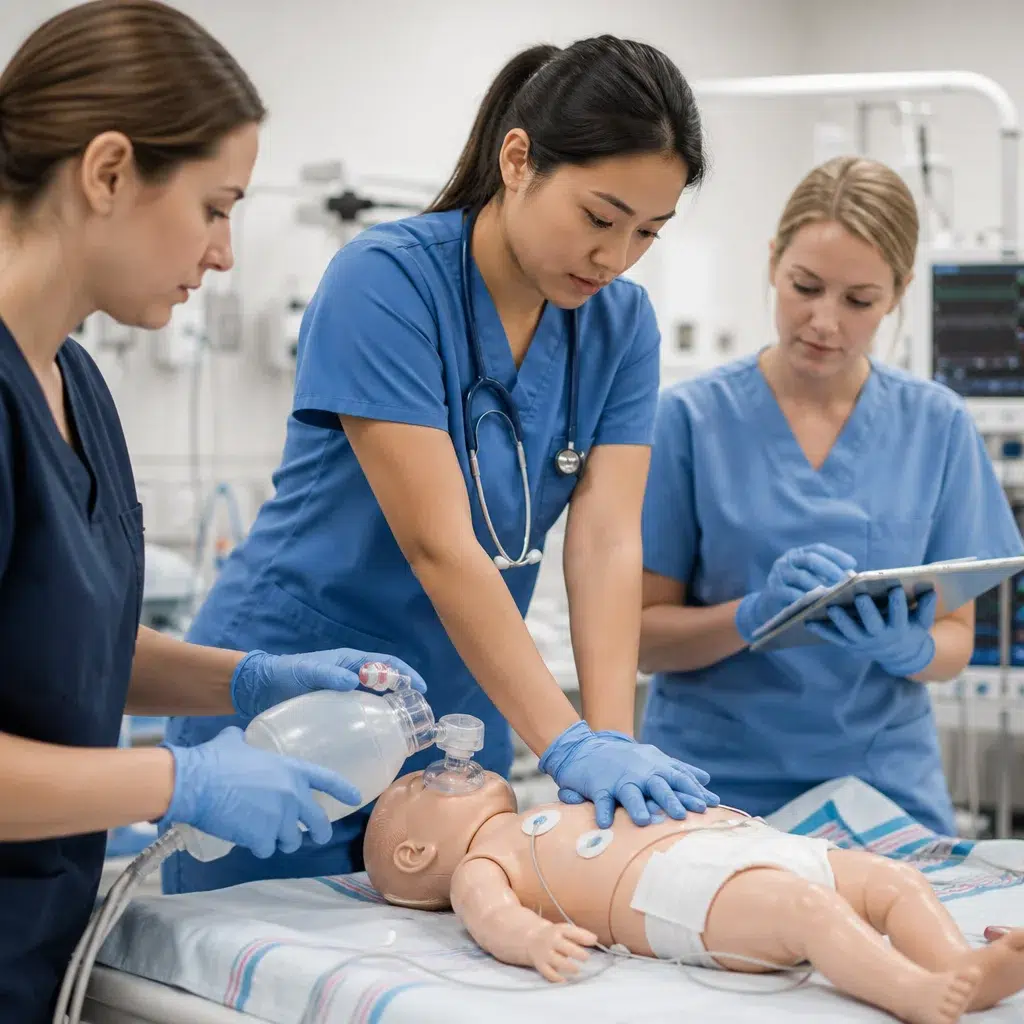
We also offer [onsite ACLS and PALS sessions] for healthcare teams and facilities. If your hospital, clinic, or medical group prefers to train staff together, we bring instruction directly to your location. This option works especially well for large facilities and shifts scheduling logistics to us rather than individual nurses.
Action item: Check our training calendar for your preferred location and identify 2-3 session times that align with your work schedule. Booking early secures your spot and prevents last-minute scrambling.
Blended Learning: Virtual Preparation Meets Hands-On Skills Practice
Our blended learning model separates knowledge acquisition from skills demonstration. You’ll complete the online module at your own pace, reviewing pediatric assessment, recognition of shock and respiratory failure, medication calculations, and rhythm interpretation. The virtual component includes interactive scenarios so you apply knowledge to realistic patient situations before arriving for your skills session.
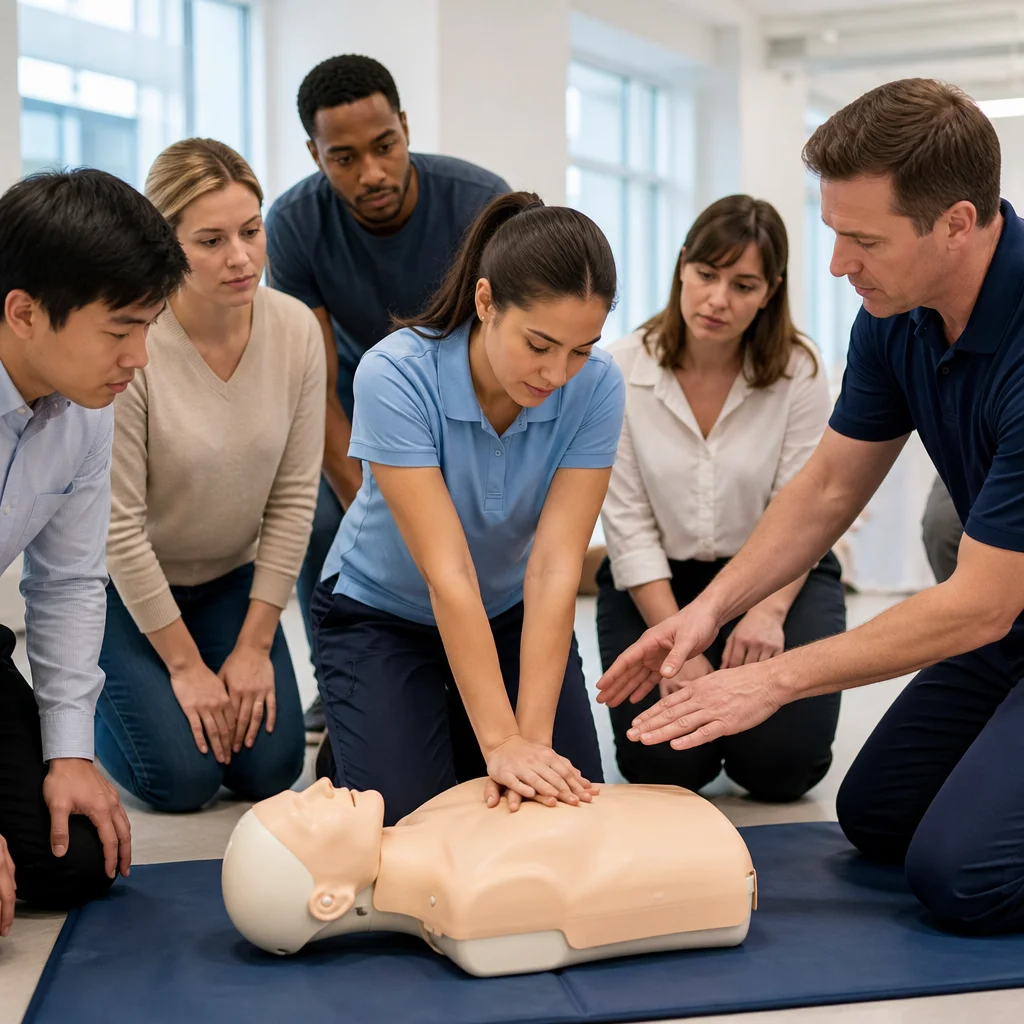
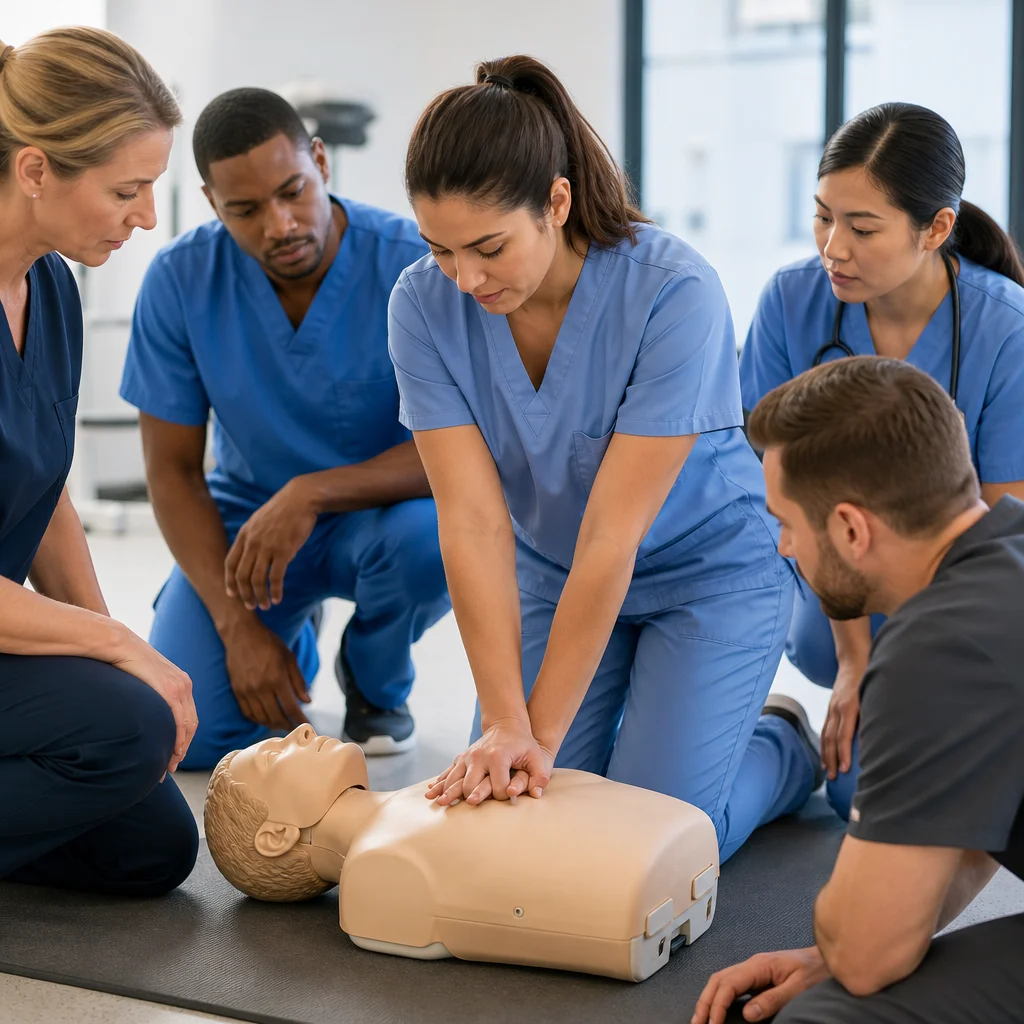
When you arrive for the in-person skills session, you’re already familiar with the core concepts. Our instructors focus entirely on hands-on practice: performing high-quality chest compressions on pediatric mannequins, managing pediatric airways, administering medications, and leading team scenarios. This design maximizes your active practice time and builds muscle memory for critical interventions.
The online portion takes 2-3 hours depending on your learning pace. The in-person skills session typically runs 4-6 hours and includes multiple practice rounds, instructor feedback, and scenario-based team simulations. You leave with practical confidence, not just theoretical knowledge.
Next step: Register for a course and review the online module immediately so you can schedule your skills session within a few days while the material is fresh.
Same-Day Certification and Immediate Compliance
Many nurses delay recertification because they assume the process takes weeks. We issue your PALS card the moment you successfully complete your skills session. No waiting for mail, no processing delays, no temporary certificates that expire in 30 days. Your certification is valid immediately upon completion.
This same-day credential approach works especially well if you’re changing jobs, coming off extended leave, or need to close a certification gap quickly. You can attend your skills session on a Saturday in Fresno and report to your new facility Monday with active PALS certification in hand.
We also provide digital verification that you can share with your employer’s credentialing office. Human resources can confirm your certification status in real time, speeding up onboarding or recertification documentation.
Actionable benefit: Schedule your recertification session before your current card expires rather than waiting until the last month. This eliminates the risk of lapsed certification affecting your schedule or employment status.
Affordable PALS Training with Our Low Price Guarantee
We maintain a low price guarantee across all our PALS courses throughout California, from Berkeley to Bakersfield. Our pricing is transparent with no hidden fees or surprise charges added at checkout. What you see is what you pay.
We also offer corporate group discounts for healthcare facilities training multiple staff members. If your hospital, clinic, or medical group needs to certify 5 or more nurses, our group rates reduce the per-person cost significantly. This option works well for annual recertification cycles when entire departments renew together.
Many employers provide tuition reimbursement or educational funding for professional certification. Check your employee handbook or speak with your HR department about whether PALS certification qualifies. Some facilities even cover the full cost for mandatory certifications.
Money-saving step: Compare our transparent pricing against other local options. Our low price guarantee means you won’t find lower rates elsewhere. If you’re paying out-of-pocket, ask about group discounts even if your facility doesn’t officially sponsor the training.
What to Expect During Your PALS Skills Session
Your skills session begins with a brief orientation and review of the online material you completed. Instructors recap key pediatric assessment triggers and medication protocols, answering any questions that arose during your self-study.
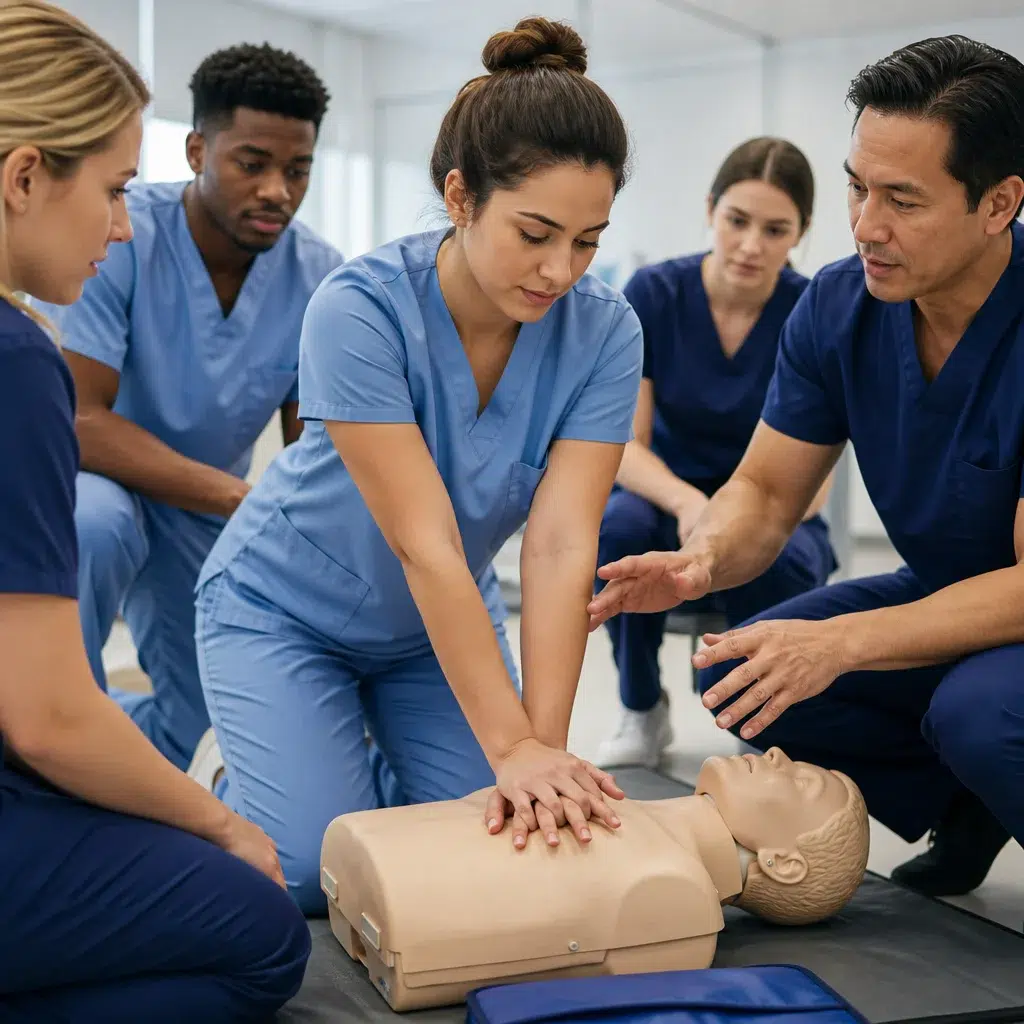
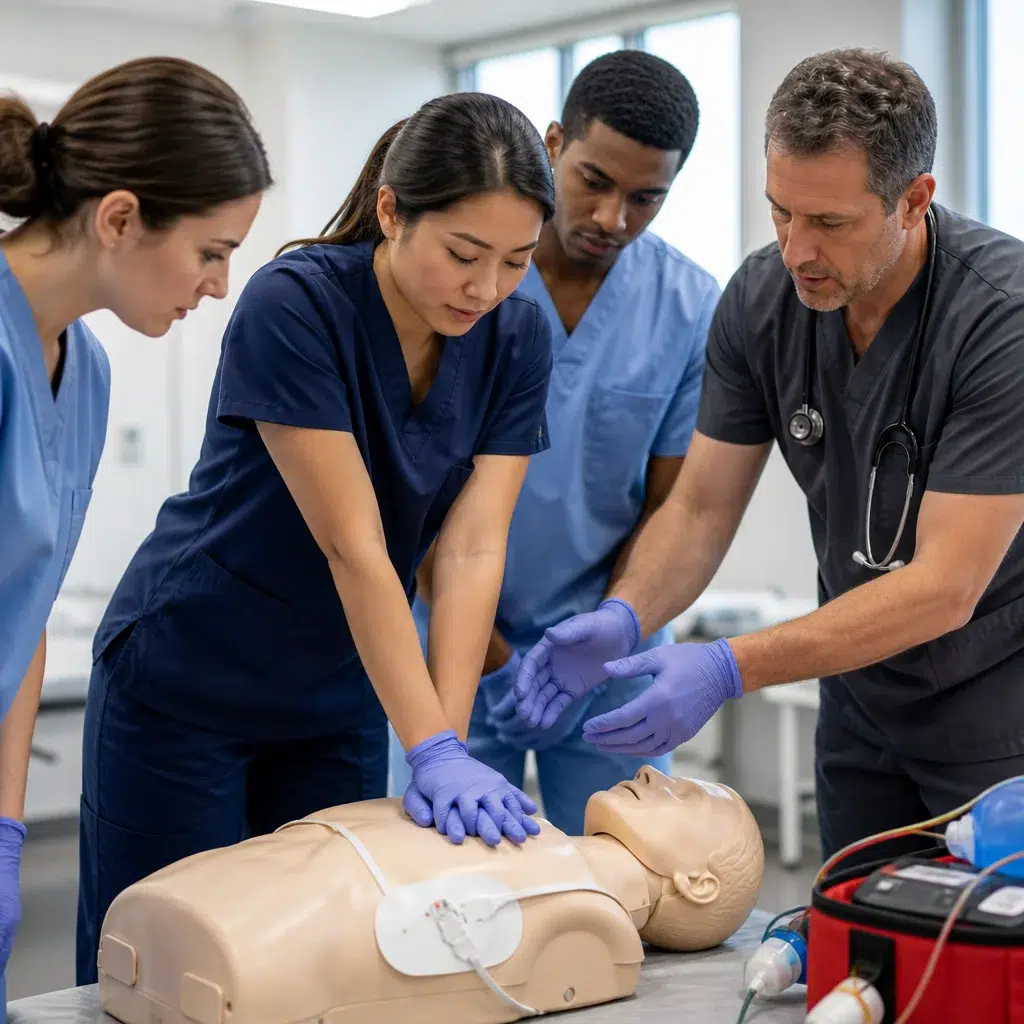
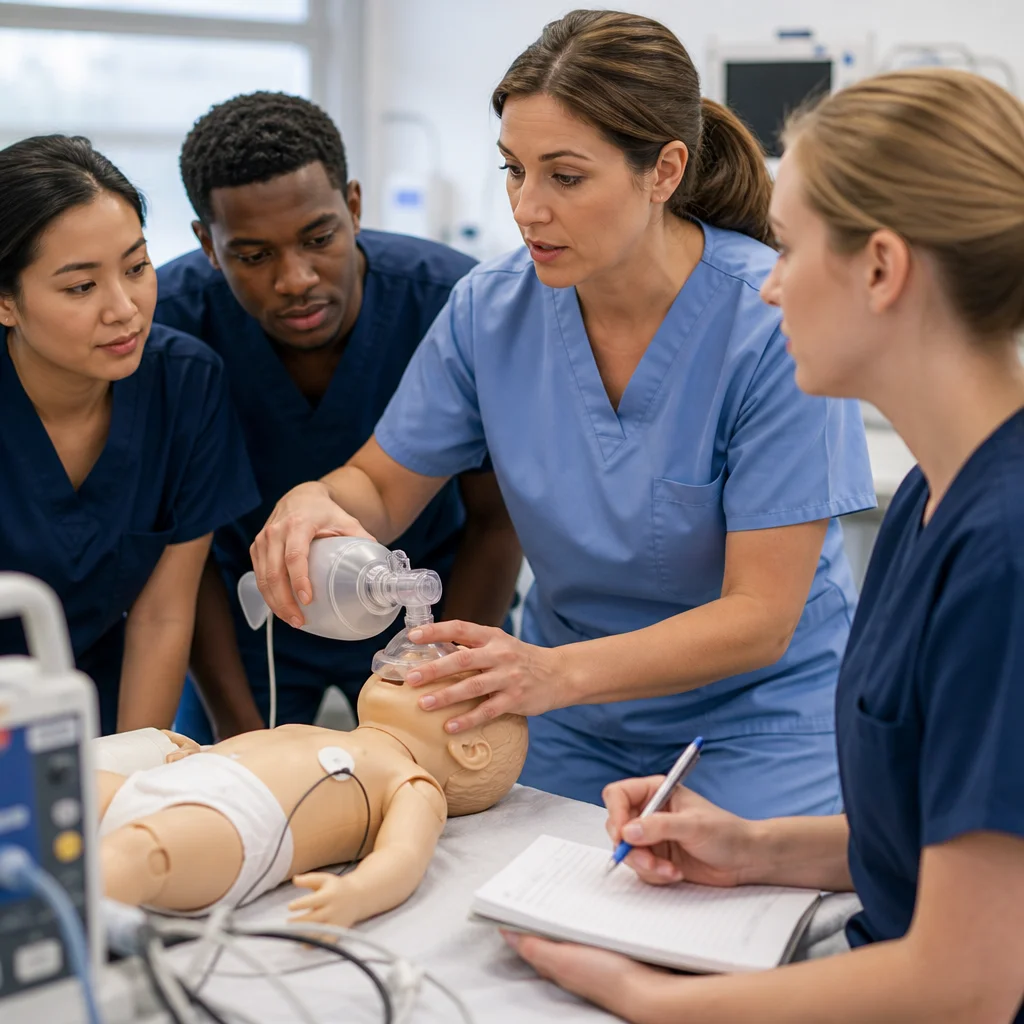
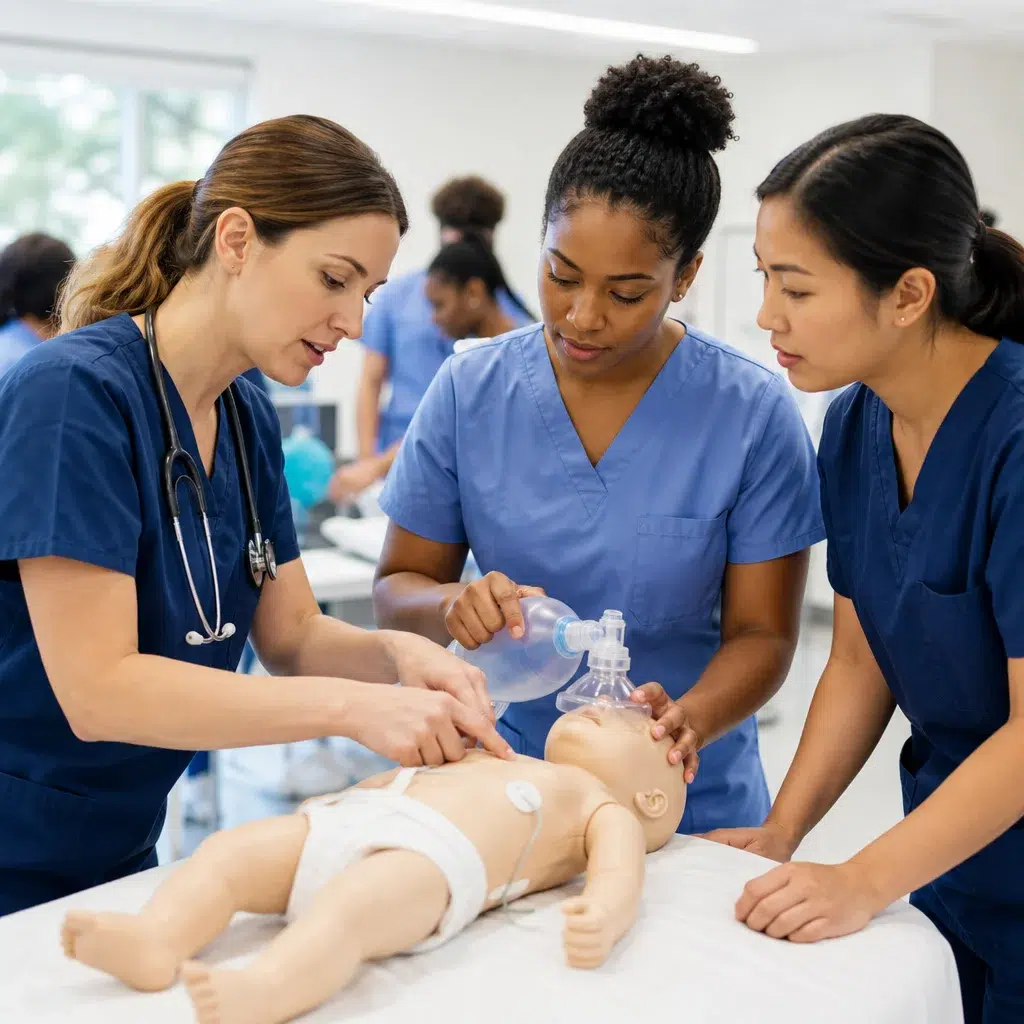
You’ll then rotate through several practice stations. Pediatric chest compression practice uses age-appropriate mannequins so you develop correct hand placement and compression depth for infants, toddlers, and school-age children. Airway management stations cover bag-valve-mask ventilation, positioning, and airway adjuncts. IV medication preparation stations ensure you’re comfortable with pediatric dosing calculations and administration sequences.
The bulk of your time involves team-based scenarios where instructors present clinical situations and your group responds. One nurse leads the resuscitation, others perform compressions and medication administration, and additional team members manage communication and documentation. Instructors pause scenarios to provide real-time feedback on decision-making, communication clarity, and clinical accuracy.
Preparation tip: Bring a calculator and notepad to your session. While you won’t need either during actual scenarios, they help you take notes during instructor feedback so you retain the teaching points.
RQI Simulation Stations: Advanced Practice Technology
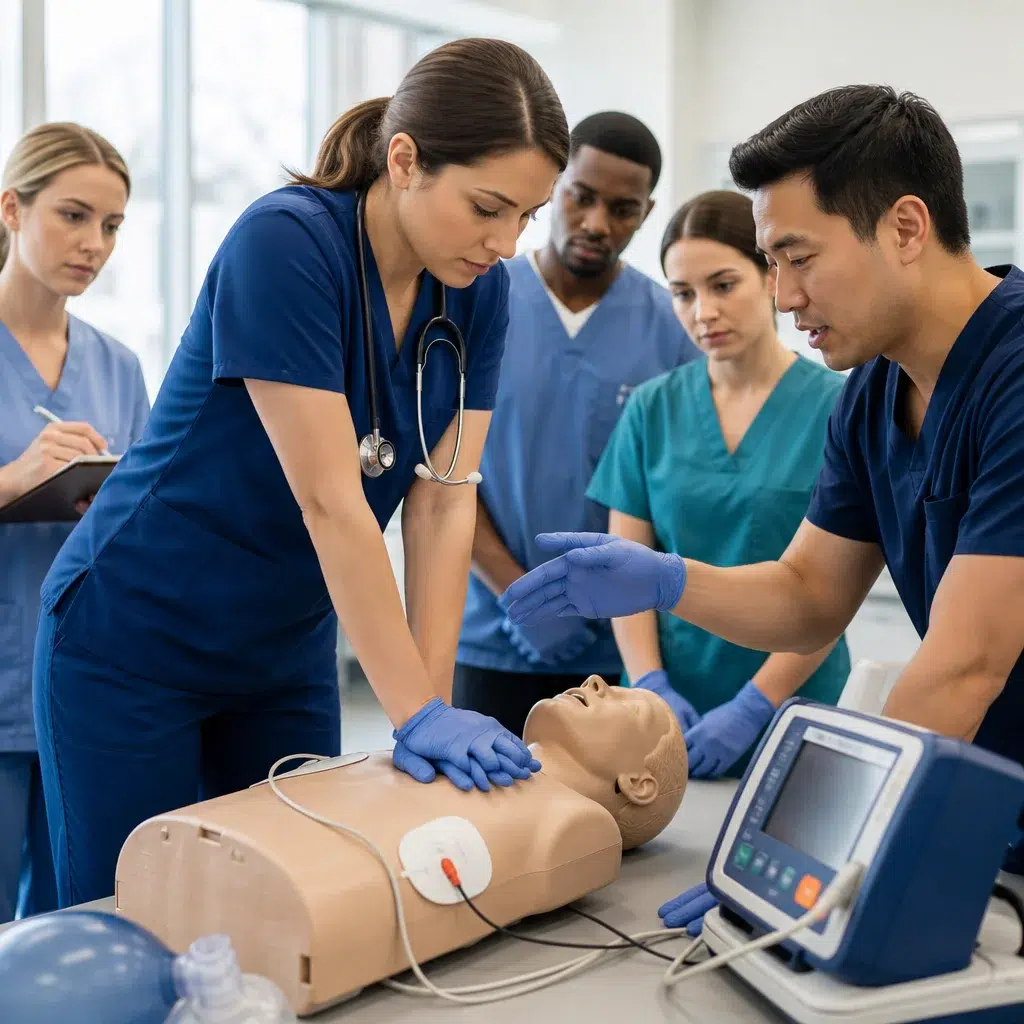
We use advanced simulation technology at many of our training locations throughout California. Our RQI (Resuscitation Quality Improvement) stations provide real-time feedback on your chest compression quality, including depth, rate, and hand placement. You can see your performance data instantly and adjust your technique mid-practice.
This immediate biofeedback accelerates your learning compared to traditional practice. Instead of wondering whether your compressions meet quality standards, the system confirms proper technique or highlights specific areas needing adjustment. Pediatric care requires slight hand placement and pressure variations from adult CPR, making this feedback particularly valuable.
Simulation stations also record your performance metrics over multiple practice rounds, letting you track improvement during your session. This tangible progress reinforcement boosts confidence heading into your certification scenario.
Why it matters: Studies show that nurses practicing with real-time feedback achieve higher certification pass rates and retain skills longer. The immediate correction during practice translates to better muscle memory and sustained competency.
Maintaining Your Certification: Recertification Made Simple
PALS certification typically lasts two years from your completion date. We recommend scheduling your recertification course within 30 days before your card expires, giving you a comfortable buffer without rushing.
Recertification differs slightly from initial certification. If you’ve maintained your nursing practice and clinical skills, your recertification focuses on recent guideline updates and scenario-based practice rather than starting from scratch. Our recertification sessions run slightly shorter than initial courses and typically cost less.
We make recertification convenient by offering sessions year-round at all our California locations. Whether you’re in Walnut Creek, Santa Rosa, or San Leandro, you’ll find recertification courses within your area. Regular practice prevents the anxiety that sometimes accompanies skills testing after long gaps since your initial certification.
Planning ahead: Mark your calendar now with your current expiration date. Set a reminder for 90 days before expiration to review available recertification sessions near you. This proactive approach prevents the stress of last-minute scheduling.
Access PALS Training at Over 100 California Locations
We operate training centers throughout California’s major metropolitan areas and many smaller communities. Our network includes locations in the San Francisco Bay Area (including San Francisco, Oakland, San Jose, Berkeley, and surrounding areas), Sacramento region, Los Angeles area, and throughout the Central Valley from Redding to Visalia.
Wherever you work in California, we likely have a training location within 20-30 minutes of your facility or home. This extensive network means you spend minimal travel time and can attend sessions before or after your work shift when convenient. Many nurses choose locations near their workplace for maximum scheduling flexibility.
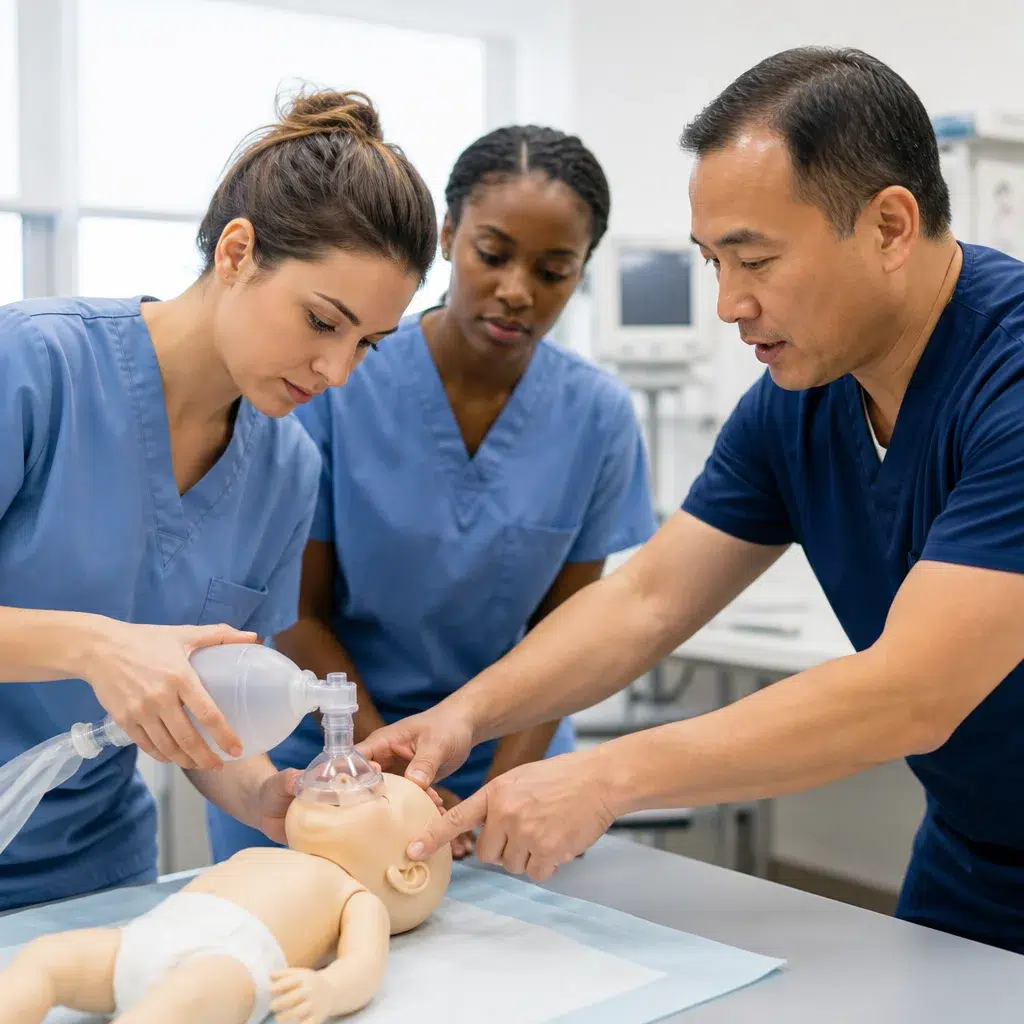
[California training locations near you] include dedicated training centers and partner facilities equipped with our simulation stations and instruction resources. Each location maintains consistent quality, instructor expertise, and certification standards.
Location advantage: Visit our training locations page to find the center closest to you and bookmark it for future reference. Many nurses schedule their next recertification during their current session when they know their renewal date.
Get Your PALS Certification Today
Your PALS certification demonstrates professional commitment and ensures you meet California healthcare compliance standards. Whether you’re pursuing initial certification or renewing credentials, we make the process efficient, affordable, and convenient.
Visit our website to review available PALS sessions at your preferred location and register for your skills session. Our online module is accessible immediately upon registration, so you can begin your self-study right away. Within days, you’ll complete both components and receive your same-day certification card.
Don’t let certification lapse or rush through the process. Invest in your professional development now and maintain the advanced life support skills that keep pediatric patients safe.
For further reading: Onsite ACLS and PALS sessions.
Register for a class today.
Frequently Asked Questions (FAQ)
How does our blended learning approach help me complete PALS certification faster?
We combine virtual coursework with in-person skills practice so you can study at your own pace before coming to us for hands-on training. This means you spend less time in the classroom while still getting the comprehensive instruction you need. Our RQI simulation stations let you practice pediatric scenarios with real equipment during your skills session, and many nurses complete their full certification in a single day.
What if I need to renew my PALS certification while working full-time?
We offer PALS recertification courses at over 100 locations throughout California, with training sessions scheduled daily to fit healthcare schedules. Our blended format means you can complete refresher coursework online before coming in for a brief skills verification, making recertification more convenient than your initial certification. Once you finish your session with us, you receive same-day certification so you can meet your compliance requirements immediately.
Are your PALS courses really more affordable than other training providers?
We stand behind our low price guarantee on all our courses, which means we’re committed to offering competitive rates throughout California. You’ll also find our pricing transparent with no hidden fees, and we offer corporate group discounts if your healthcare facility wants to train multiple staff members at once.