Table of Contents
- Why Hospital Staff Need Competency-Based PALS Training
- The Challenge of Traditional PALS Certification Programs
- How Our Blended Learning Model Transforms PALS Competency
- Virtual Coursework Paired with Real-World Skills Stations
- Same-Day Certification Cards and Immediate Compliance
- Our Specialized Hospital Group Training Solutions
- RQI Simulation Stations with Advanced Technology
- Flexible Scheduling for Busy Healthcare Teams
- Multi-Location Convenience Across California
- Our Low-Price Guarantee for PALS Certification
- How to Enroll Your Hospital Team Today
- Frequently Asked Questions (FAQ)
Why Hospital Staff Need Competency-Based PALS Training
Pediatric Advanced Life Support (PALS) certification isn’t just a checkbox for your resume. It’s the foundation of how your team responds when a child’s life depends on your actions in the critical first minutes. Hospital staff—nurses, respiratory therapists, emergency department personnel—regularly encounter pediatric patients in cardiac arrest, respiratory failure, or shock, and the decisions you make in those moments must be precise and confident.
PALS training teaches you evidence-based algorithms specific to children, from recognizing rhythm disturbances to administering medications and managing advanced airway interventions. Unlike adult protocols, pediatric care requires you to adjust dosages, equipment sizes, and interventions based on the child’s age and weight. Your facility’s compliance depends on staff maintaining current, competency-based certification, and your patients depend on your ability to execute those skills under pressure.
The challenge isn’t understanding the concepts; it’s maintaining and demonstrating competency in a way that translates to real-world performance. That’s where structured, hands-on training becomes essential.
The Challenge of Traditional PALS Certification Programs
Many hospitals struggle with conventional PALS certification approaches. Participants often sit through lengthy didactic sessions, absorb information passively, and then face a brief hands-on component that doesn’t allow enough repetition to build muscle memory and decision-making confidence. By the time they return to their unit, they’ve forgotten half of what they learned, and their hands-on skills feel rusty.
Additionally, scheduling full-day, in-person classes disrupts hospital operations. Coordinating multiple staff members to attend on the same date creates staffing gaps, and rescheduling conflicts become inevitable. Many programs also fail to account for the different learning paces across your team—some nurses need more time on medication calculations, while others need extra repetitions on compression techniques.
These gaps leave your facility vulnerable and your staff uncertain when a real pediatric emergency occurs.
How Our Blended Learning Model Transforms PALS Competency
We’ve redesigned PALS training specifically for how hospital teams actually work. Our blended learning approach splits your coursework into online modules and hands-on skills sessions, allowing you to master theory at your own pace and then focus entirely on real-world practice when you’re in the room with an instructor.
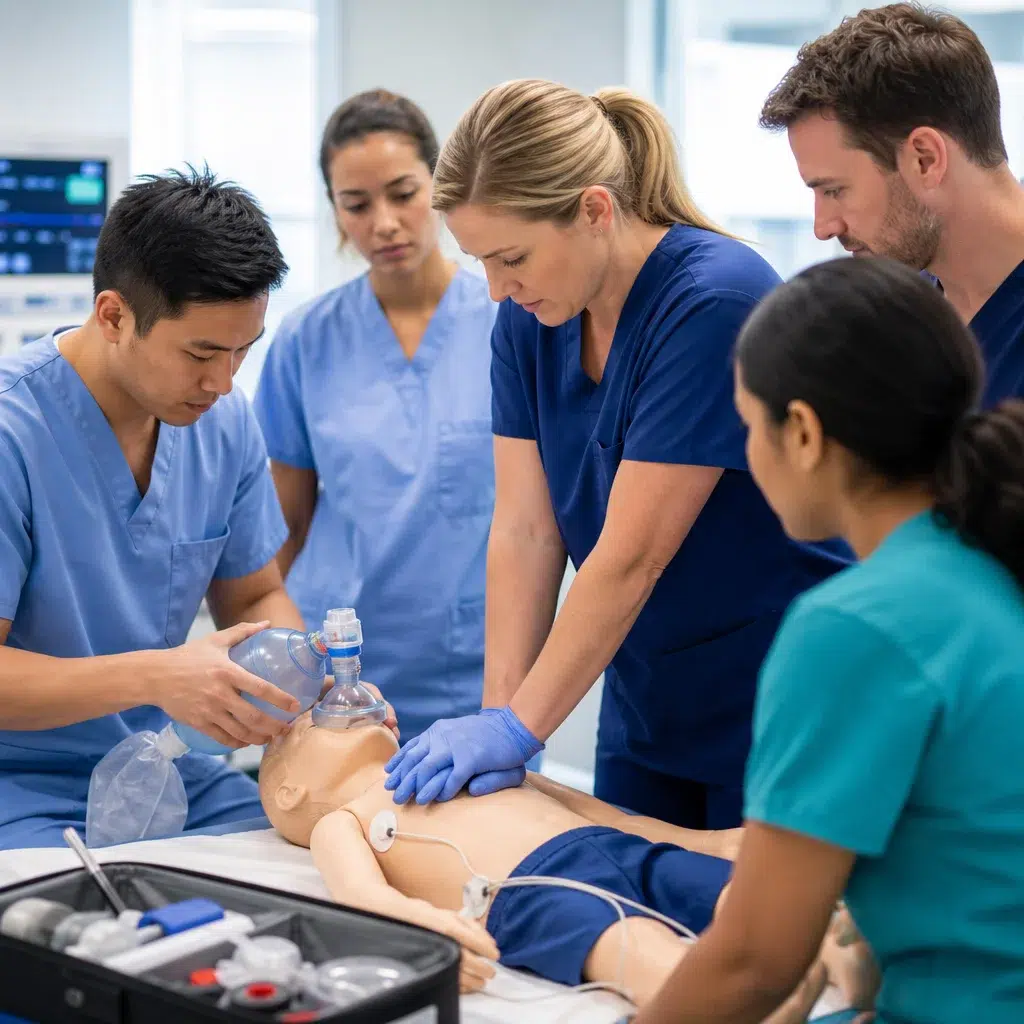
Your team completes the virtual coursework independently, reviewing algorithms, medication protocols, and scenario-based decision trees whenever your schedule allows. Then you attend a dedicated skills session where an experienced instructor guides you through live scenarios, corrects your technique in real time, and ensures you can execute under realistic conditions. This method produces measurable improvements in competency retention and confidence compared to traditional all-in-one programs.
We’ve implemented this model across our network, and the results speak clearly: participants retain skills longer, demonstrate higher proficiency scores, and report greater confidence responding to pediatric emergencies. Your staff also completes certification faster, returning to clinical duties sooner.
Virtual Coursework Paired with Real-World Skills Stations
The online modules we’ve created cover all PALS essentials: systematic approach to the pediatric patient, shock recognition and management, cardiac dysrhythmia recognition, and pharmacology specific to pediatric dosing. You’ll work through interactive case studies, practice rhythm interpretation, and review megacode scenarios. This foundation ensures that when you arrive for your skills session, your focus is entirely on hands-on execution, not absorbing new concepts.
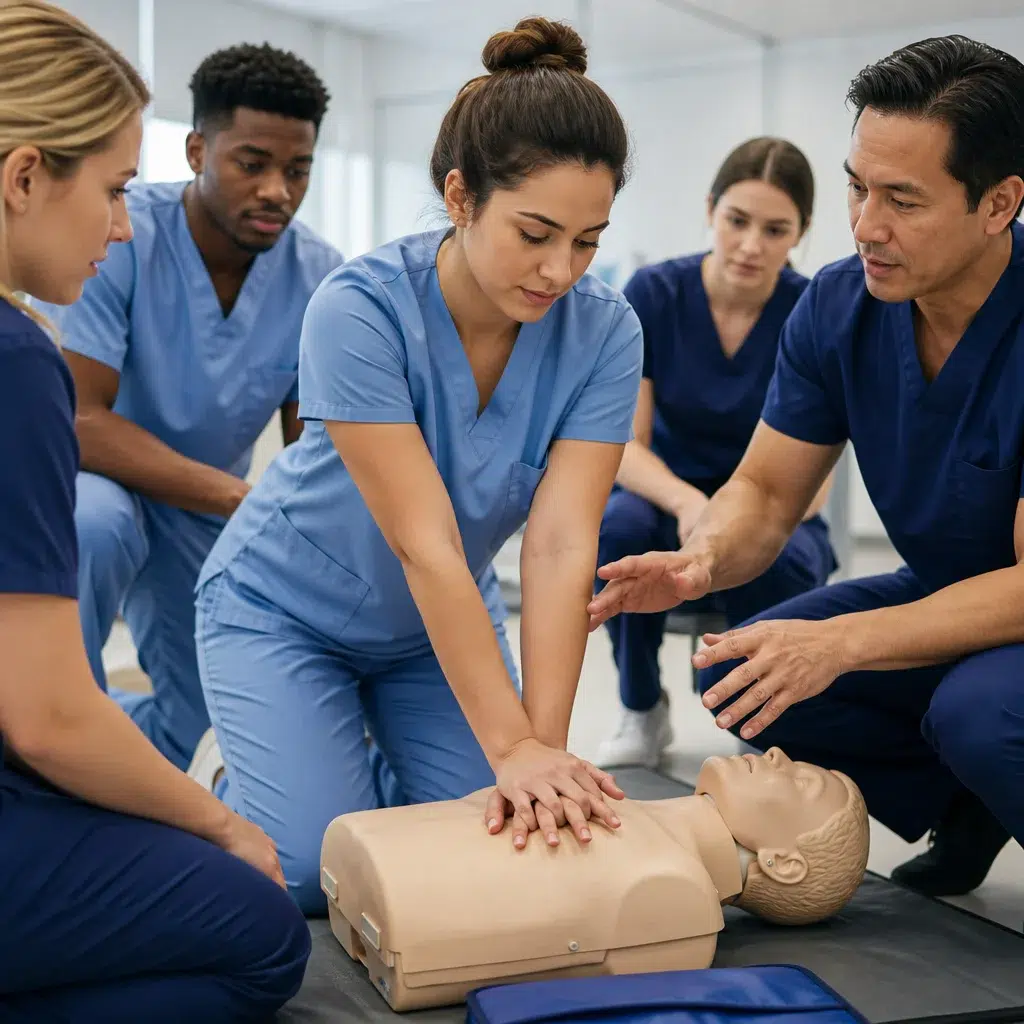
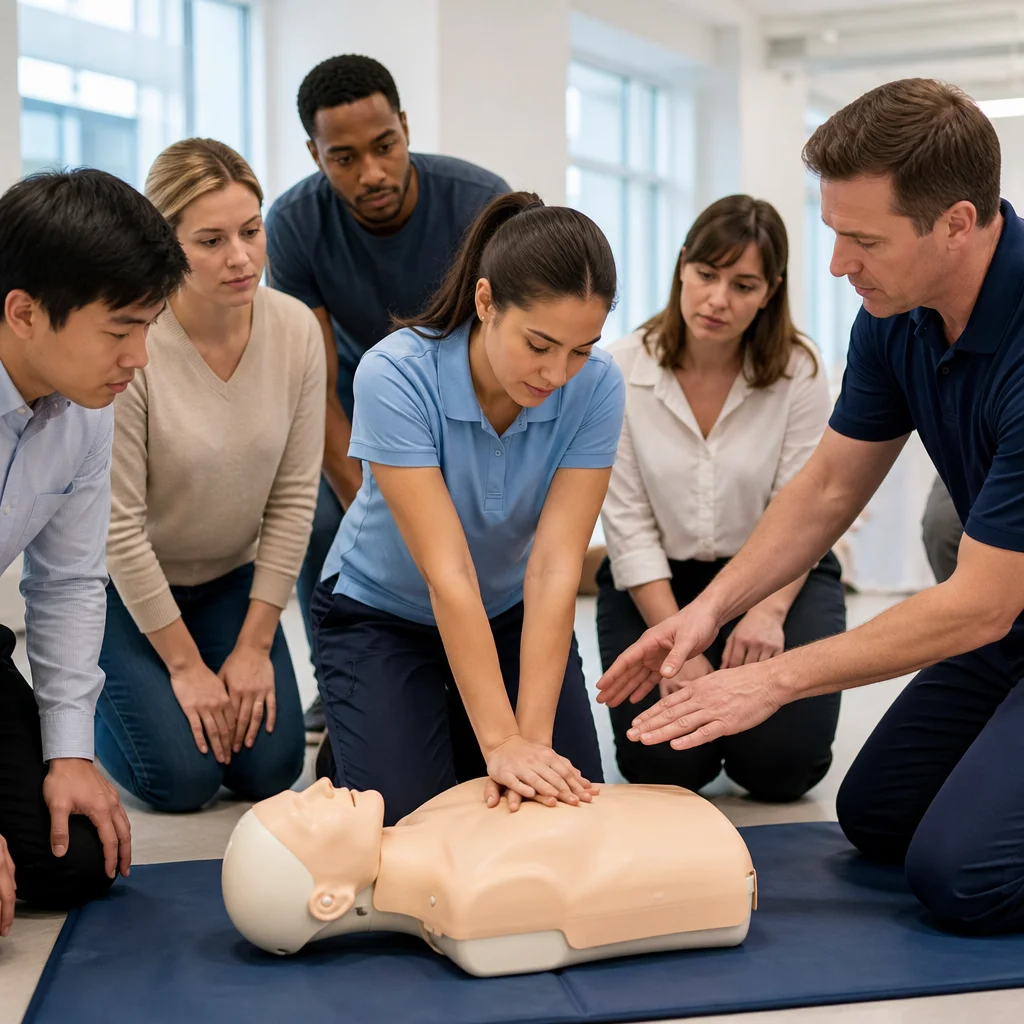
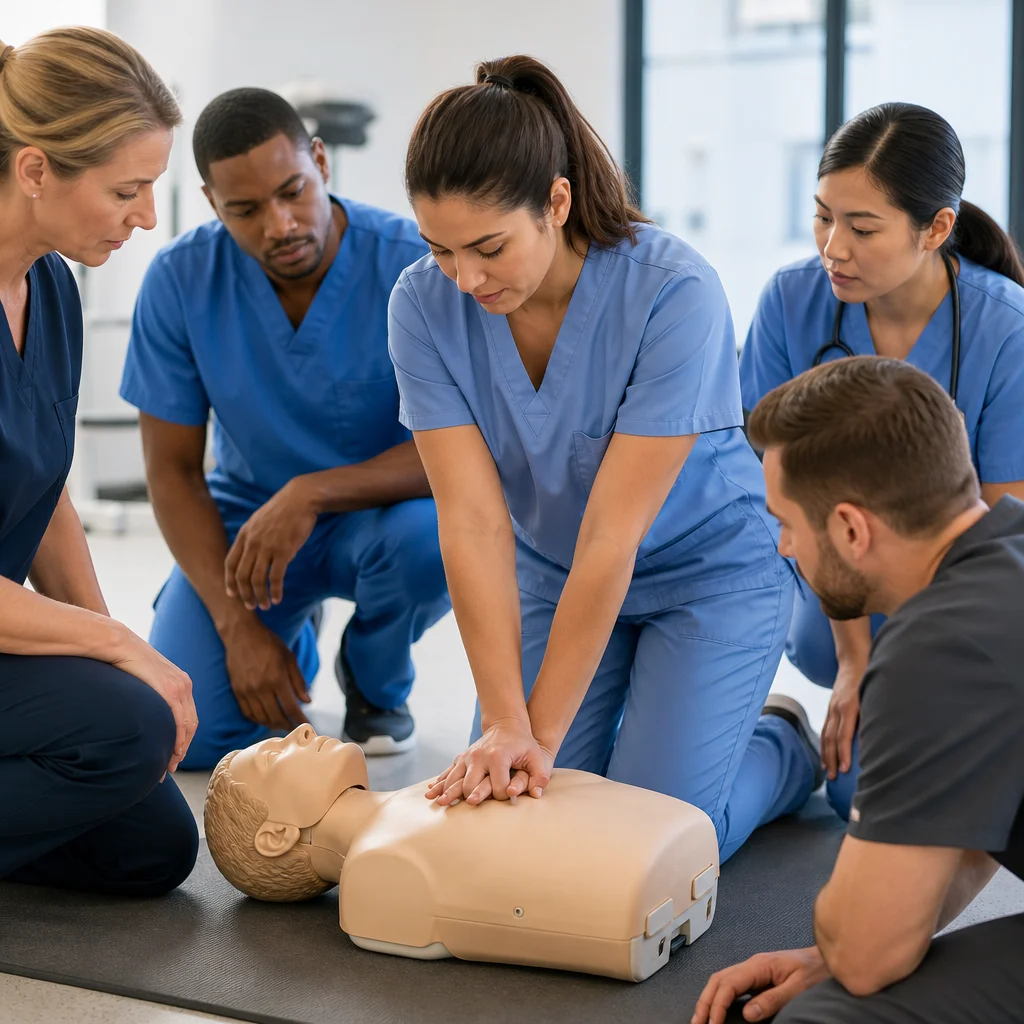
Our skills stations simulate real hospital environments with pediatric mannequins, defibrillators, and medication administration equipment you actually use. Instructors observe your team performing compressions, managing airways, administering drugs, and leading team-based resuscitation. They provide immediate feedback, allowing you to adjust technique and build confidence before any real emergency occurs.
This paired approach works especially well for geographically distributed teams. If your hospital has staff across multiple locations in the Bay Area or Central Valley, participants can complete modules from home or between shifts and attend a single skills session at a convenient facility.
Same-Day Certification Cards and Immediate Compliance
Your hospital needs staff to be immediately compliant and ready. We issue certification cards on the day you complete your skills assessment, meaning your team walks out certified and able to perform PALS duties without delay. No waiting for digital documents to arrive by mail or for your credentialing office to process paperwork.
This rapid turnaround is especially valuable when you’re bringing multiple nurses, paramedics, or respiratory therapists through training. Your compliance status updates in real time, and your credentialing department receives documentation immediately. Many hospitals in the Sacramento, San Francisco, and Oakland areas appreciate this efficiency because it eliminates gaps in staffing certifications.
Our Specialized Hospital Group Training Solutions
We work with hospitals to customize group training schedules that minimize disruption to operations. Whether your facility needs to train a single unit or your entire emergency department, we can organize sessions that align with your staffing patterns and operational needs.
Group pricing reflects economies of scale, and we offer volume discounts for teams of 10 or more. Our coordinators work directly with your chief nursing officer or education department to schedule sessions at times that make sense for your unit. We’ve trained teams at facilities in Fremont, Sunnyvale, Campbell, and throughout the Central Valley, adapting our approach to each hospital’s unique workflow.
Your group also benefits from cohesion and shared learning. When team members train together, they develop common language around algorithms and decision-making, which strengthens communication during actual emergencies.
RQI Simulation Stations with Advanced Technology
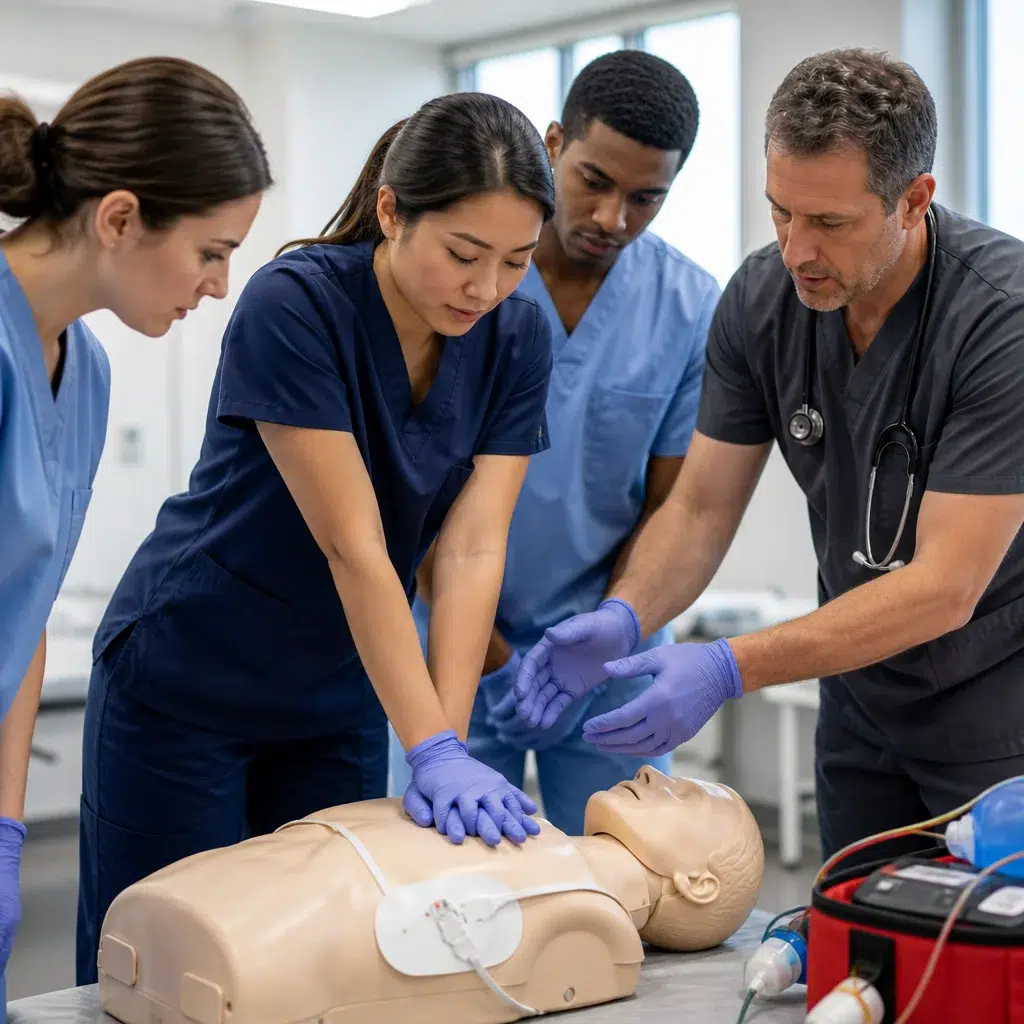
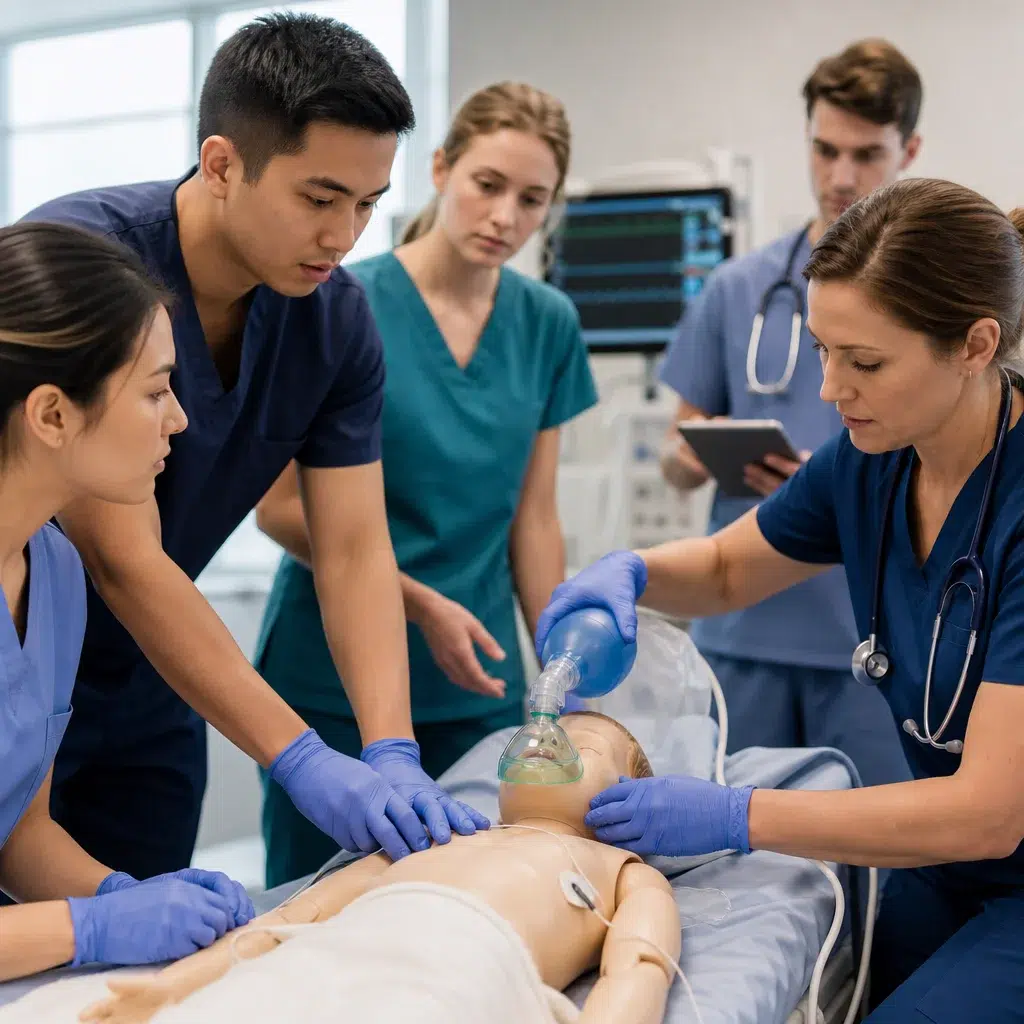
Our simulation stations use equipment that mirrors your hospital environment. We maintain manikins equipped with feedback technology that captures compression depth, rate, and hand position, allowing instructors to coach you toward AHA-aligned standards in real time.
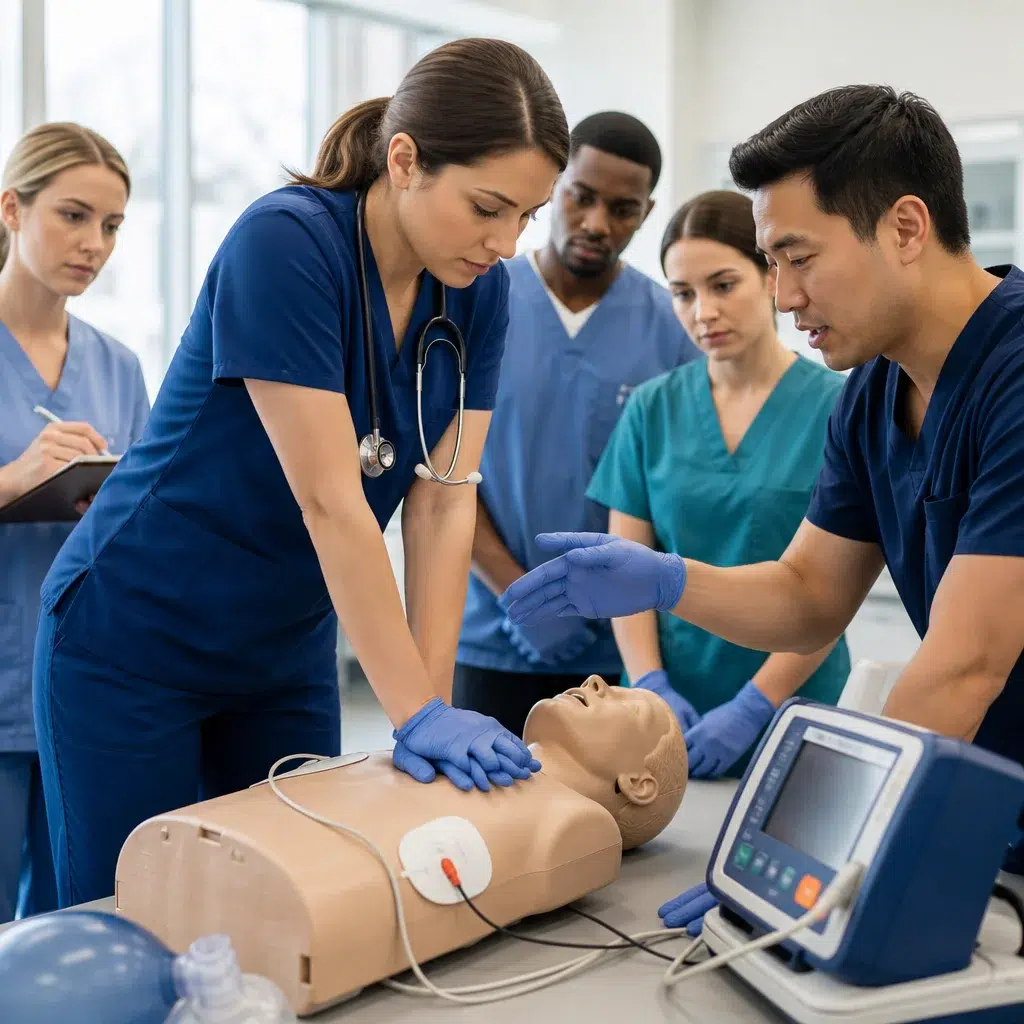
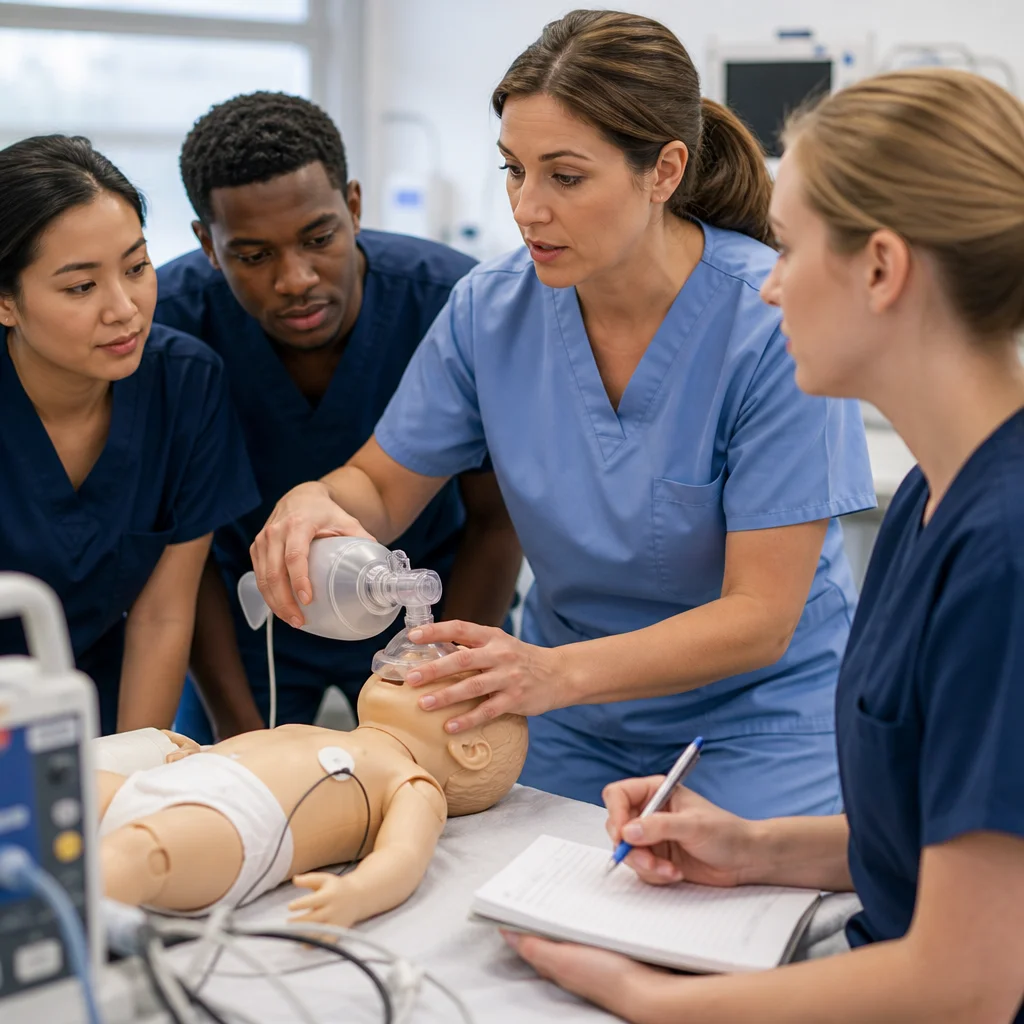
Each station is equipped with defibrillators, airway management tools, and medication administration setups matching current hospital protocols. Our instructors have extensive clinical experience and can walk you through pediatric scenarios that resemble cases you’ll encounter in your unit: a choking child requiring airway intervention, an infant in pulseless electrical activity, a school-age child in septic shock.
This high-fidelity preparation means you’re not learning in isolation; you’re rehearsing actual responses you’ll need to deliver.
Flexible Scheduling for Busy Healthcare Teams
Hospital schedules don’t fit standard business hours. We offer sessions early morning, evening, and weekend options to accommodate shifts. If your team includes night-shift nurses, emergency department staff, or paramedics with variable schedules, you can find a session that works.
We also offer make-up sessions with minimal notice, recognizing that emergencies, call-outs, and operational demands can prevent attendance. Your staff won’t fall behind on recertification simply because an unexpected shift change occurred.
Multi-Location Convenience Across California
With over 100 training locations across California, convenient access isn’t a luxury; it’s built into our model. Whether your hospital is in Modesto, Davis, Concord, Hayward, San Mateo, or Visalia, you have nearby facilities where your staff can attend hands-on sessions without lengthy commutes.
This geographic spread also means your team can space out training across multiple sessions without traveling far, reducing time away from clinical duties and making participation easier for staff with family or transportation constraints. We maintain locations in major population centers and smaller communities, ensuring no California hospital is distant from certified instruction.
Our Low-Price Guarantee for PALS Certification
We’re committed to keeping PALS training affordable. Our low-price guarantee means you won’t find a lower rate elsewhere for equivalent instruction and certification quality. We pass savings directly to hospitals and healthcare organizations by streamlining operations and focusing on high-volume, efficient training delivery.
Group rates for hospital teams are significantly discounted, and when you’re training multiple staff members, the savings add up quickly. We also offer corporate partnership rates for health systems and large practices, reducing per-person costs further.
How to Enroll Your Hospital Team Today
Enrolling is straightforward. Contact our team to discuss your hospital’s PALS training needs, expected class size, and preferred schedule. We’ll provide a customized quote, recommend nearby training locations, and coordinate scheduling directly with your education department.
Your staff can begin virtual coursework immediately after enrollment, and we’ll schedule their hands-on skills session within weeks. Once they complete the in-person component, they walk out certified and compliant.
To get started, visit our website or call to speak with a training coordinator who specializes in hospital group programs. We’ll handle the logistics so your team can focus on what matters: delivering excellent pediatric emergency care.
For further reading: Scalable blended learning model.
Register for a class today.
Frequently Asked Questions (FAQ)
What makes our blended PALS training different from traditional certification programs?
We combine virtual coursework with hands-on skills stations to give you flexibility without compromising competency. Our approach lets your staff complete online modules on their own schedule, then attend focused in-person sessions where we verify your actual resuscitation techniques using simulation equipment. You get the convenience of flexible learning plus the confidence that comes from real-world practice before you’re certified.
How quickly can our hospital team get certified and compliant?
We offer same-day certification cards upon successful completion of both our virtual and skills components, so your staff can return to the floor with current credentials immediately. We schedule skills sessions at over 100 California locations, which means we can often accommodate your team’s preferred dates and times without long wait periods. Many hospitals use our group training rates to certify multiple staff members efficiently while maintaining our low-price guarantee.
Can we customize PALS training for our specific hospital department or specialty?
We specialize in hospital group training solutions tailored to your department’s needs, whether that’s pediatric emergency, critical care, or general nursing staff. Our instructors work with you to align timing and focus areas with your compliance requirements, and we can schedule sessions at the location most convenient for your team across our California network.