Table of Contents
- Why Clinics Need Coordinated ACLS Certification Programs
- The Challenges of Individual Certification Scheduling
- Our Blended Learning Approach for Team Training
- On-Site ACLS Sessions for Your Clinic Staff
- Flexible Scheduling Across 100+ California Training Locations
- AHA-Aligned Curriculum with Same-Day Certification
- Cost-Effective Group Pricing and Low Price Guarantee
- Streamlined Compliance for Healthcare Organizations
- How Our RQI Simulation Stations Enhance Skill Retention
- Getting Your Clinic Team Certified Today
- Frequently Asked Questions (FAQ)
Why Clinics Need Coordinated ACLS Certification Programs
Your clinic’s effectiveness depends on every team member being ready to respond to cardiac emergencies. When your nurses, physicians, and support staff hold current ACLS (Advanced Cardiovascular Life Support) certifications, you’re not just meeting regulatory requirements—you’re building a culture of preparedness that saves lives.
We understand that coordinating certifications across an entire clinic team creates operational complexity. Staggered expiration dates, individual scheduling conflicts, and the logistics of getting everyone trained at the right time add up fast. A coordinated group certification program eliminates these friction points. Instead of managing dozens of separate enrollment windows and training dates, your entire team trains together, stays synchronized, and renews certifications as one cohesive unit.
This unified approach strengthens your clinic’s cardiac response protocols. When your team practices scenarios together under the same instructor, you develop shared muscle memory and communication patterns that translate directly to the clinical floor. You’re not just checking a box on a licensure requirement—you’re investing in genuine clinical competency and team cohesion.
Next step: Assess your current team’s certification status. Identify which staff members need renewal or initial certification in the coming months.
The Challenges of Individual Certification Scheduling
Many clinics face the same frustration: coordinating individual ACLS certifications feels like herding cats. Staff members train at different facilities, on different schedules, with varying instructors and curricula. Some complete certifications during off-hours, others take time during clinical shifts. The administrative burden falls on your compliance or HR team, who must track expiration dates, manage registrations, and handle makeup sessions.
Without a structured group approach, you often lose training efficiency. A nurse in Folsom might complete their course on Monday while a colleague in Walnut Creek waits three weeks for their opening. Communication gaps emerge, documentation gets scattered across multiple vendors, and your organization lacks a single source of truth for compliance status. When licensing audits come around, pulling together proof of certification from various sources becomes a compliance headache.
Individual scheduling also inflates your total training costs. Your team members attend courses at different price points, with little negotiating power as individual learners. There’s no bulk discount, no unified curriculum, and no consistency in how your team’s competencies are assessed.
Next step: Audit your current certification tracking system. Note which team members have certifications expiring in the next 12 months and identify any gaps in your compliance documentation.
Our Blended Learning Approach for Team Training
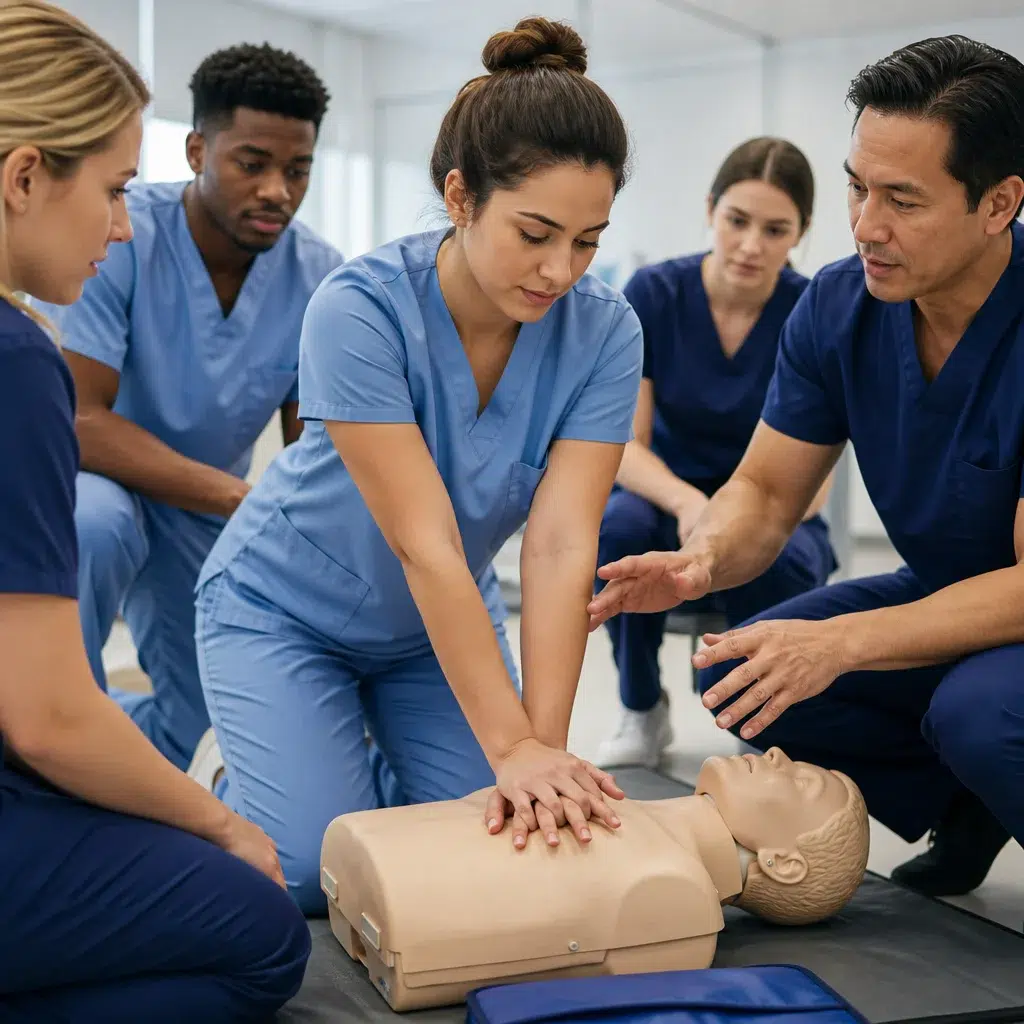
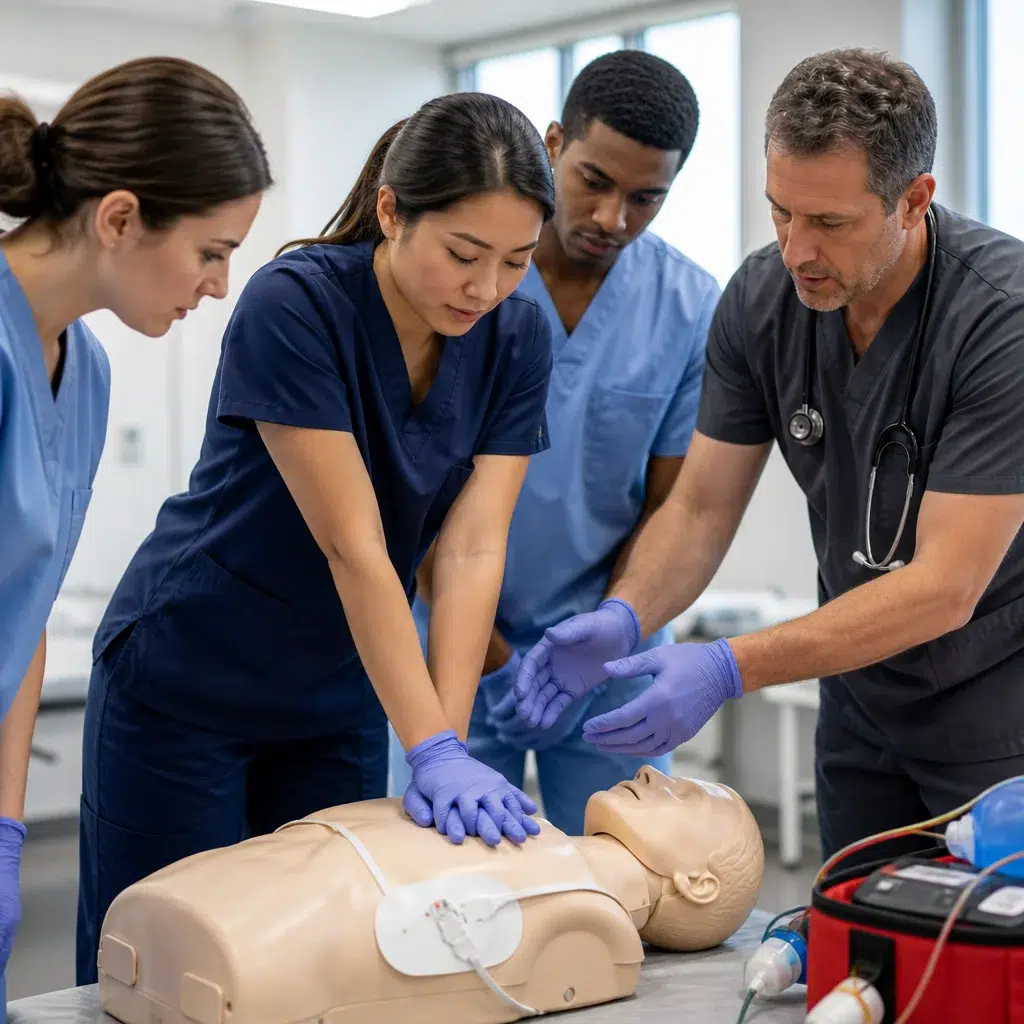
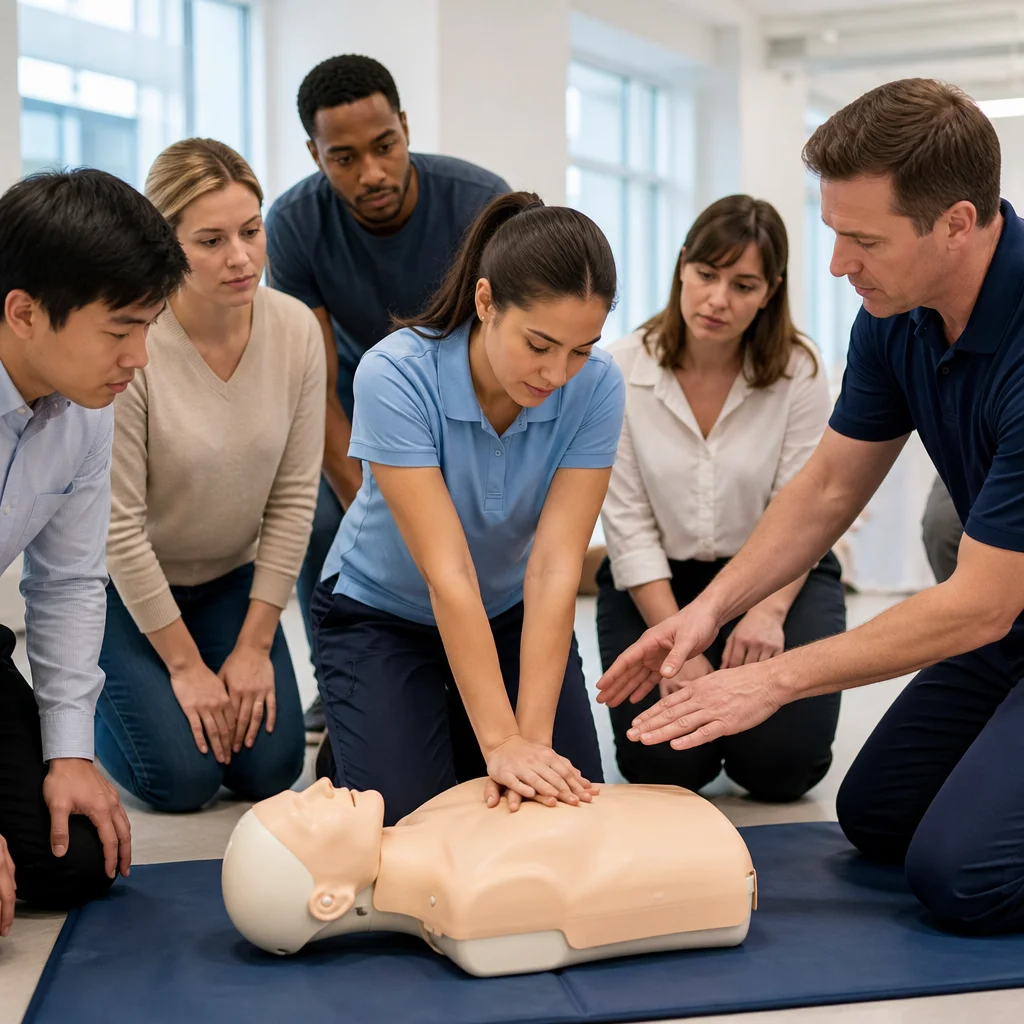
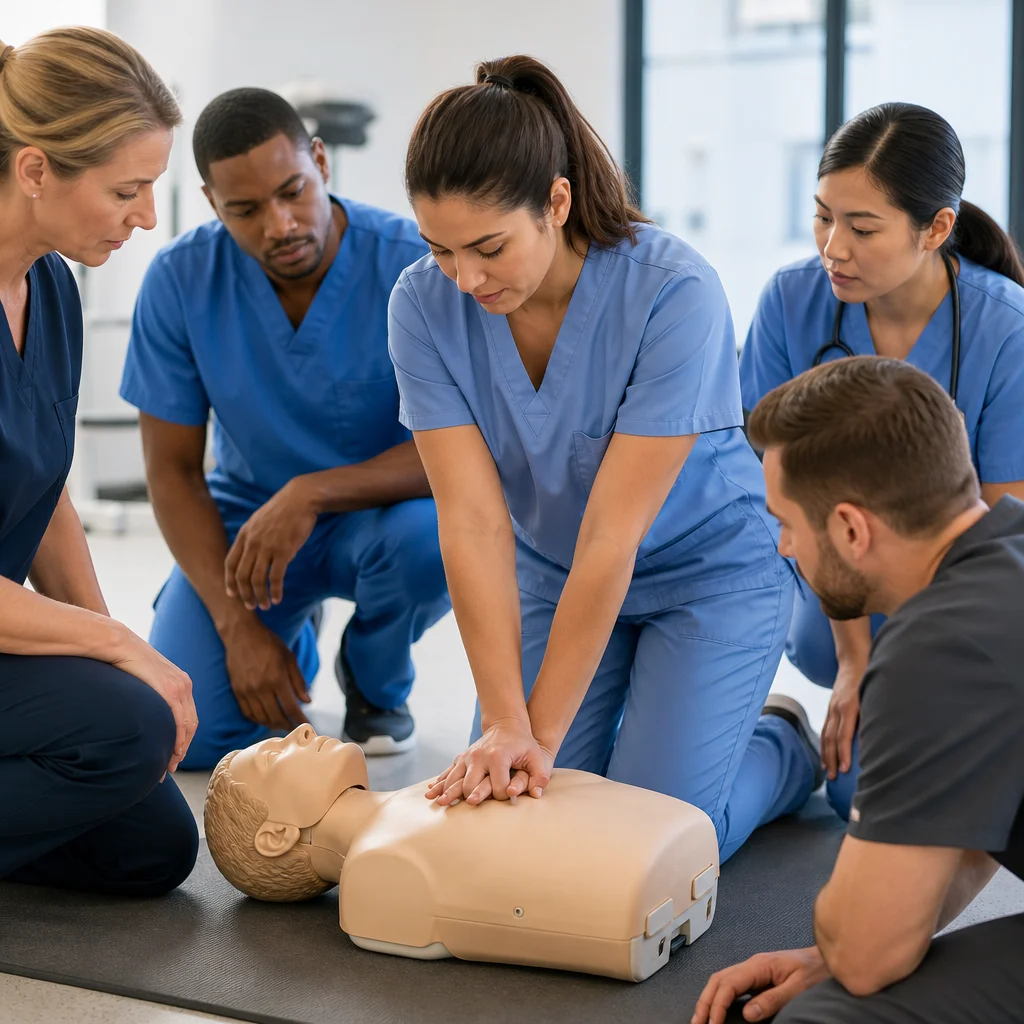
We’ve designed our team training model to fit seamlessly into clinical operations. Our blended learning approach combines online coursework with hands-on, in-person skills sessions. Your team completes foundational knowledge modules remotely at their own pace, then gathers for focused practical training where they practice chest compressions, defibrillator use, medication administration, and team communication in realistic scenarios.
This hybrid model respects your staff’s busy schedules while ensuring rigorous, validated skill development. The online portion can be completed during downtime, between shifts, or at home. The in-person component is purposefully brief and intensive, typically four to six hours for ACLS certification, giving your team concentrated time with our experienced instructors.
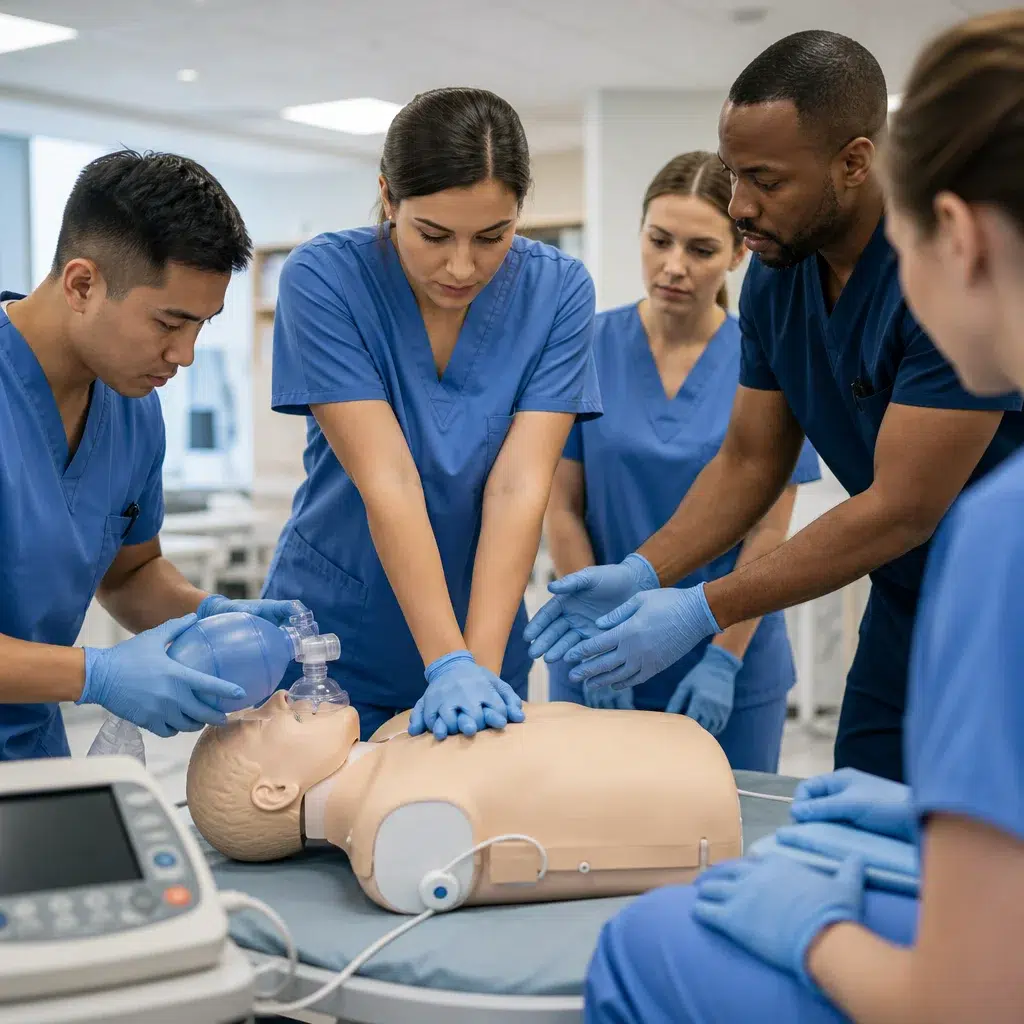
We’ve refined this approach across clinics from Sacramento to San Jose, and it consistently improves retention and engagement. Clinicians report feeling more confident during actual resuscitations because they’ve practiced with their colleagues under realistic conditions, not in isolation at a generic testing center.
Next step: Determine how many of your team members need ACLS certification and what timeline works best for your clinic’s operations.
On-Site ACLS Sessions for Your Clinic Staff
We bring our training directly to your clinic whenever possible. Our on-site ACLS skills sessions eliminate travel time and keep your team connected to their work environment during the practical component.
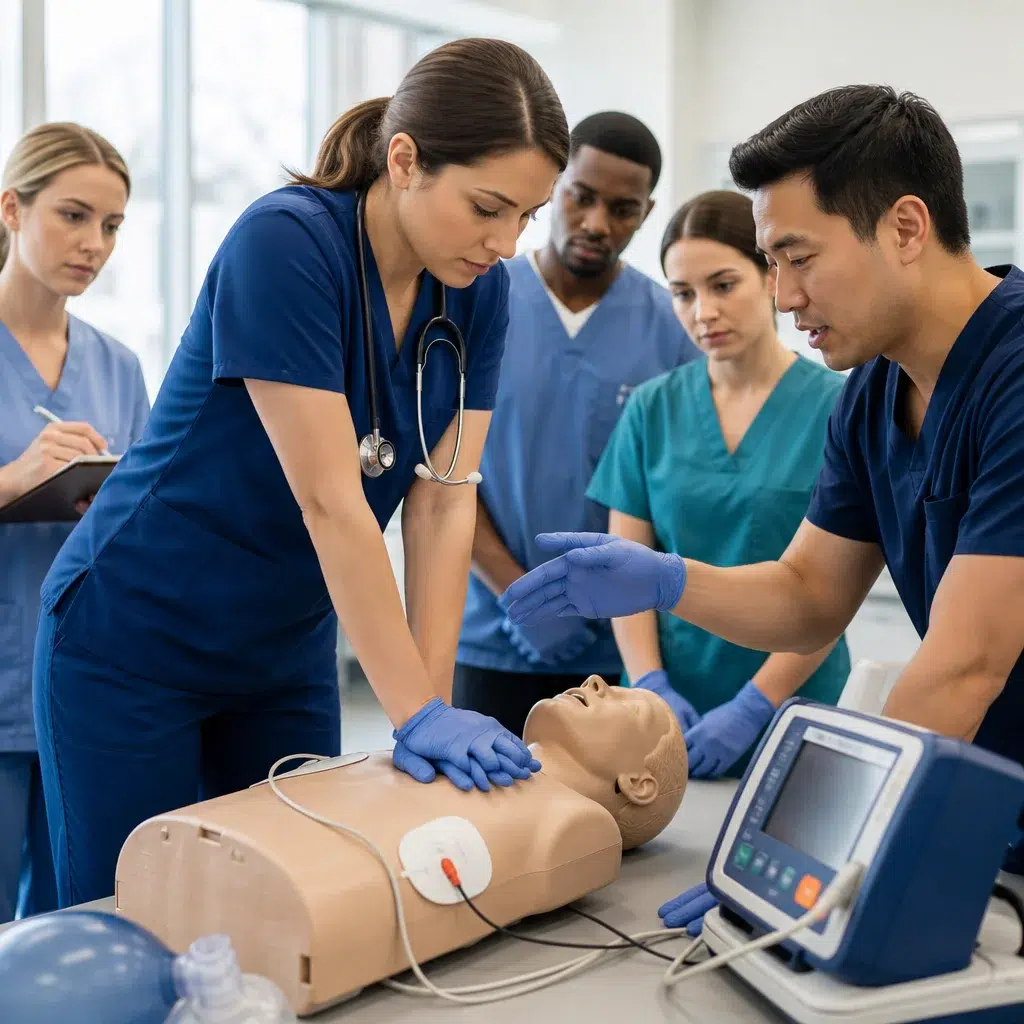
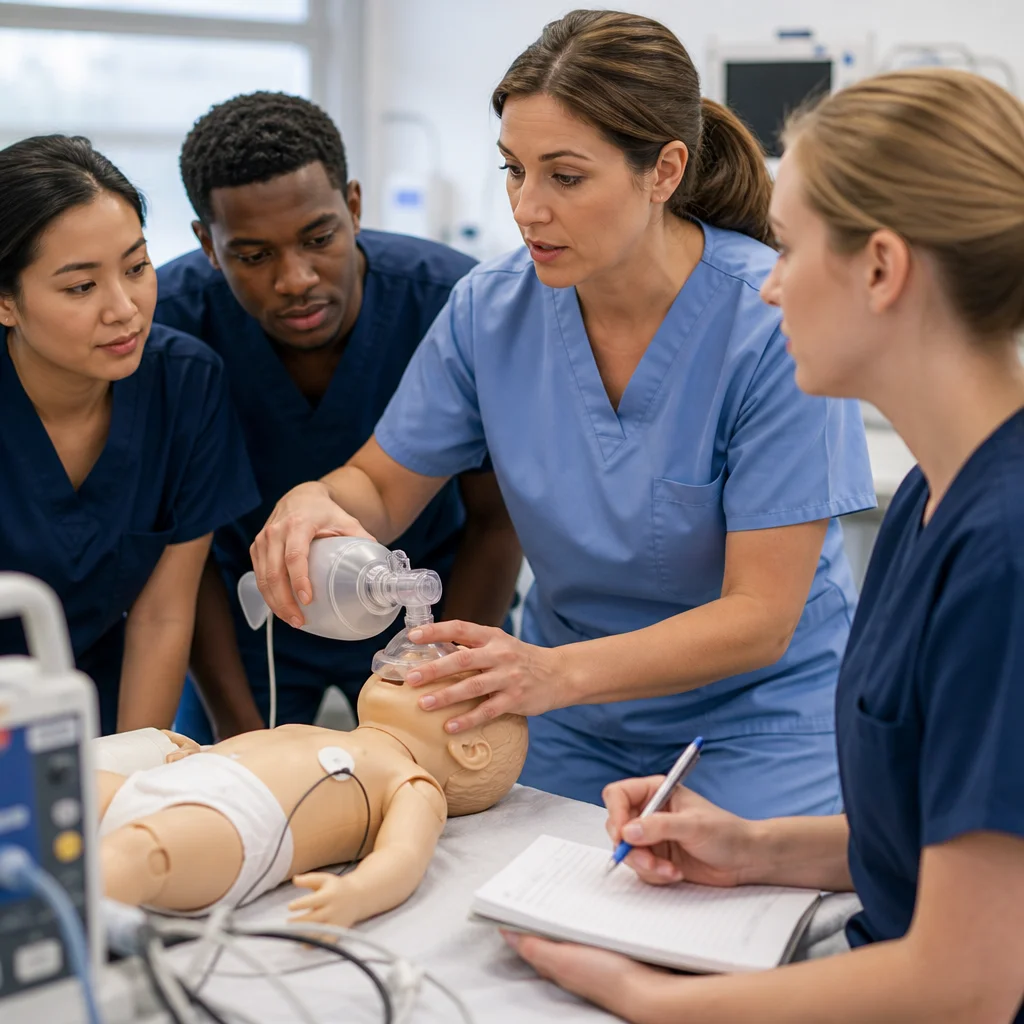
During an on-site session, we arrive with everything needed: mannequins for compression practice, defibrillators, medications, and airway equipment. Your team trains in a familiar setting, often in a conference room or unused patient area, using the same equipment they’ll encounter in real resuscitations. This environmental consistency deepens learning and reduces the cognitive gap between training and clinical application.
Our instructors have extensive healthcare backgrounds. Many are experienced paramedics, nurses, or physicians who understand the pressure of real emergencies. They structure scenarios around situations your clinic actually faces, whether you’re in a primary care office, urgent care, dental practice, or specialty clinic. This targeted approach makes every minute of training relevant to your team’s actual job.
On-site training also strengthens team dynamics. Your staff sees each other perform under pressure, learns each other’s strengths, and practices the communication patterns that real resuscitations demand. Teams that train together respond together more effectively.
Next step: Contact us with your team size and preferred training window. We’ll confirm availability at your clinic location and coordinate scheduling around your patient care schedule.
Flexible Scheduling Across 100+ California Training Locations
We operate over 100 training locations throughout California, from Redding in the north to Visalia in the south. Whether your clinic is in downtown San Francisco, Palo Alto, or a smaller community like Lathrop or Petaluma, we likely have a training site near you or can arrange on-site instruction.
Our calendar accommodates evening and weekend sessions for teams that need them. Clinics in Hayward, Fremont, San Ramon, and the East Bay often prefer after-hours sessions to minimize clinical disruption. Northern California teams in Chico or Redding might benefit from our weekend options. We understand that clinic schedules don’t follow a nine-to-five pattern.
If your preferred location isn’t ideal, our virtual pre-course modules mean your team can complete knowledge work remotely, then join an in-person session at any of our nearby training centers. Flexibility is built into every stage of the process.
Next step: Check our location map or contact us to identify the training venue that best serves your clinic’s geographic convenience.
AHA-Aligned Curriculum with Same-Day Certification
Our ACLS curriculum aligns with American Heart Association guidelines, ensuring your team learns evidence-based protocols recognized nationally. We don’t cut corners on content depth or competency validation. Your staff will master current chest compression techniques, appropriate defibrillator use, post-resuscitation care, and the decision-making algorithms that real emergencies demand.
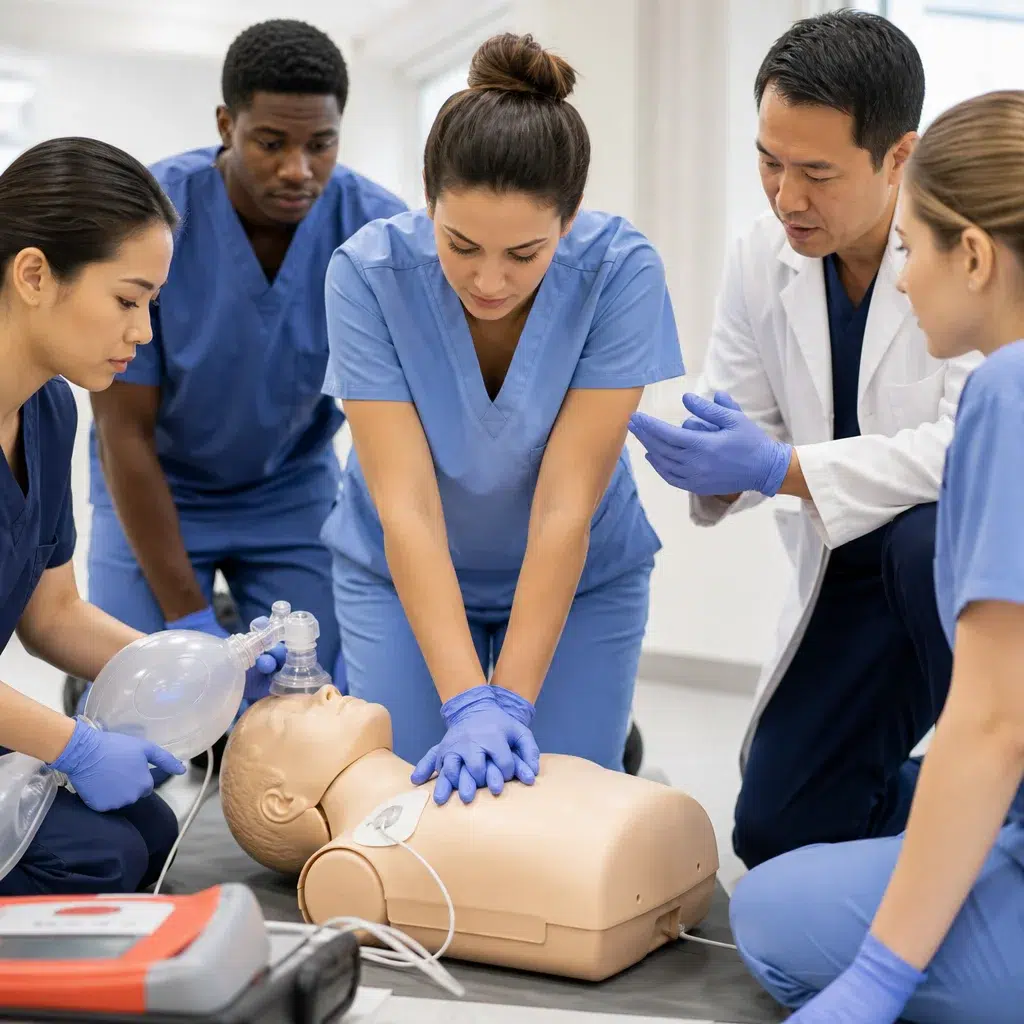
Every participant who successfully completes both the online coursework and in-person skills session receives certification on the same day their practical component concludes. There’s no waiting period, no separate exam window. You leave our training ready to list your team members as ACLS-certified on your clinic’s credential records immediately.
Our certification cards are recognized statewide and honored by California licensing boards. Whether your team members work in different counties or facilities, their credentials transfer seamlessly. This portability matters if your clinic has multiple locations or if staff members move between practices.
Next step: Confirm your team’s preferred certification timeline so we can schedule your group’s skills session with appropriate certification issuance timing.
Cost-Effective Group Pricing and Low Price Guarantee
We’ve built our group training program specifically to reduce the per-person cost of certification. When your entire clinic trains together, we offer substantially lower per-person rates compared to individual registrations. A clinic with eight nurses, two physicians, and support staff pays significantly less per person than if each individual enrolled in a standard public course.
We stand behind our low price guarantee. If you find a comparable ACLS certification program with a lower rate and equivalent curriculum, we’ll match it. This commitment means your clinic always gets the best value without sacrificing quality or instructor experience.
Group pricing extends beyond the certification itself. Clinic teams save on the cumulative cost of travel time, childcare arrangements, and workplace disruption. One half-day on-site session replaces multiple individual trips across the Bay Area or Central Valley. That operational efficiency translates to real savings.
Next step: Request a customized group pricing quote for your clinic. Provide your team size and preferred training date, and we’ll prepare a clear cost breakdown.
Streamlined Compliance for Healthcare Organizations
Every clinic faces regulatory requirements for staff certification. California licensing boards, Medicare Conditions of Participation, Joint Commission standards, and your own clinic protocols all require current ACLS credentials for certain roles. Managing compliance across a growing team is a legitimate administrative burden.
We streamline this process by providing centralized documentation for your entire group. You receive a single compliance report detailing every team member who trained, their skills assessment results, certification expiration dates, and credential verification details. This consolidated record satisfies auditors and simplifies your internal tracking.
We also handle renewal reminders well before expiration. If your team trained with us in 2025, we notify you in 2027 when renewals are due. This proactive approach helps you avoid lapses that could affect your clinic’s regulatory standing or staff scheduling.
Next step: Designate one person in your clinic as the compliance point person. They’ll coordinate with us on all scheduling, documentation, and renewal communications.
How Our RQI Simulation Stations Enhance Skill Retention
Beyond standard ACLS training, we offer access to our RQI (Resuscitation Quality Improvement) simulation stations at various California locations. These stations enable your team to practice high-quality CPR and resuscitation skills in a structured, low-pressure environment. Refresher sessions at RQI stations maintain competency between formal recertifications.
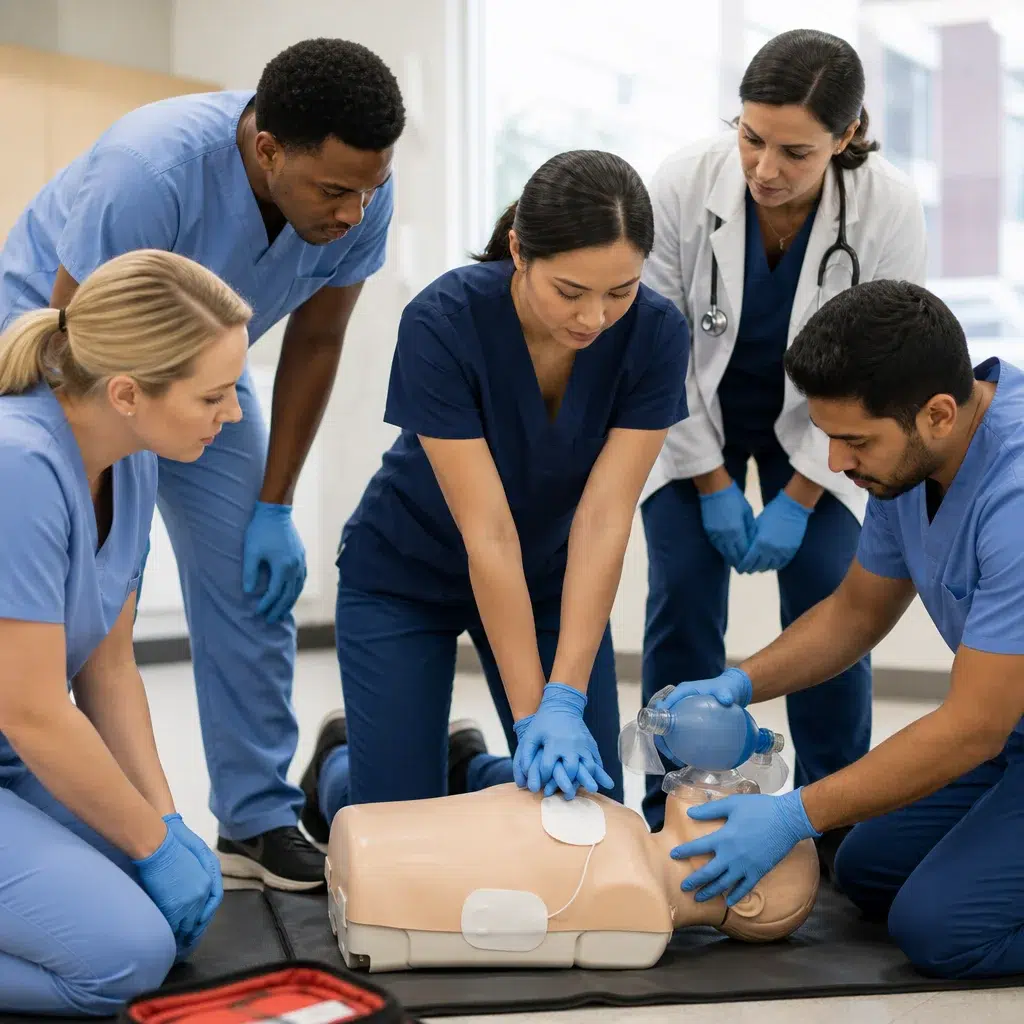
RQI stations use mannequins with real-time feedback technology. Your staff performs compressions and receives immediate data on depth, rate, and hand position. This instant feedback loop creates the kind of deliberate practice that truly strengthens muscle memory. A nurse in Sacramento or a physician in Santa Rosa can visit a station quarterly for brief skill drills that meaningfully improve their readiness.
Many clinics integrate quarterly RQI visits into professional development schedules. It’s a low-cost way to maintain proficiency and keep cardiac response protocols top-of-mind year-round. Your team doesn’t wait until recertification to practice.
Next step: Ask us about RQI station locations closest to your clinic and how often your team should practice between formal certifications.
Getting Your Clinic Team Certified Today
Starting your clinic’s group ACLS certification process is straightforward. Contact us with your team roster size, preferred training dates, and any on-site or location preferences. We’ll provide a customized proposal, confirm availability, and coordinate the logistics.
Your team will complete the online knowledge modules at their own pace, then gather for a focused, intensive skills session. Within hours, they’ll hold active ACLS certifications that satisfy your regulatory requirements and genuinely prepare them for cardiac emergencies.
We serve clinics throughout California, from Alameda to Woodland, in communities large and small. Whether your team is two people or two hundred, we have the infrastructure, instructors, and locations to make group ACLS certification convenient, affordable, and effective.
Reach out today. Let’s synchronize your clinic’s cardiac response readiness and ensure every team member has the skills and confidence that real emergencies demand.
Register for a class today.
Frequently Asked Questions (FAQ)
How does our group ACLS training work for clinic teams?
We combine virtual coursework with hands-on skills practice at one of our 100+ California locations, making it easy for your entire team to train together. Your clinic can schedule an on-site session where we bring our RQI simulation stations directly to you, or your staff can attend at a location near your facility. We handle the coordination so your team gets certified efficiently without disrupting daily operations.
What makes our group pricing different from individual course costs?
We offer substantial discounts when your clinic enrolls multiple staff members, and we back this with our low price guarantee across all group sizes. You won’t find better rates for ACLS certification in California, and our pricing structure rewards clinics that train their entire teams at once rather than staggering individual registrations.
Can we get same-day ACLS certification for our clinic staff?
Yes, we issue certification immediately after your team completes both the written exam and skills demonstration at our session. Your staff walks out with valid credentials the same day, so you can meet compliance requirements right away without waiting for mailed certificates.