Table of Contents
- Why Dog Bites Require Immediate First Aid Response
- Initial Assessment and Safety Considerations
- Cleaning and Washing the Wound Properly
- When to Seek Professional Medical Attention
- Infection Prevention and Aftercare Management
- Recognizing Signs of Serious Complications
- How Proper Training Prepares You for Emergency Response
- Our Comprehensive First Aid Certification Programs
- Getting Certified and Ready for Any Emergency
- Frequently Asked Questions (FAQ)
Why Dog Bites Require Immediate First Aid Response
Dog bites happen more often than we’d like to think. Every year, millions of people seek medical attention for animal bite wounds, and many of those injuries could be managed more effectively with quick, proper first aid. Whether you’re a nurse, paramedic, dentist, or simply someone who wants to be prepared for an emergency, knowing how to respond to a dog bite can make the difference between a minor injury and a serious complication. This guide walks you through the essential steps for dog bite first aid and explains why infection prevention matters so much.
Dog bites are not just surface wounds. A dog’s teeth create puncture wounds that drive bacteria deep into the skin and tissue layers, often creating pockets where infection can take hold. Unlike cuts from sharp objects, bite wounds have irregular edges and multiple penetration points, making them significantly more prone to bacterial contamination.
The risk of infection increases dramatically when a bite is ignored or treated casually. Bacteria from the dog’s mouth (and the victim’s own skin) multiply rapidly in these deep puncture wounds. Within hours, you might see signs of cellulitis, abscess formation, or worse. For healthcare professionals in places like Oakland, San Francisco, and Sacramento, understanding this urgency isn’t just helpful knowledge; it’s part of staying sharp in your field.
The second critical reason to act fast is that some dog bite injuries require tetanus prophylaxis or prophylactic antibiotics, which are most effective when given early. Delaying care can narrow your window for prevention.
What to do next: If a dog bite breaks the skin or creates significant puncture marks, begin first aid immediately and plan to seek medical evaluation within the first few hours.
Initial Assessment and Safety Considerations
Before you can help anyone with a dog bite, you need to ensure the scene is safe. If the dog is still present and aggressive, do not approach the victim. Call animal control or emergency services first. Your safety comes before the injured person’s immediate care if there’s active danger.
Once the scene is secure, assess the victim. Check for signs of severe bleeding, shock, or injuries beyond the bite itself. Many dog bite incidents involve multiple injuries, head trauma, or falls that occurred as a person tried to escape. Take a moment to do a quick full-body scan, especially if the victim was knocked down or dragged.
Look at the bite wound itself. Note the location, number of puncture marks, the depth of penetration, and whether any tissue is crushed or missing. Dog bites to the face, hands, joints, or genitals tend to be more serious and carry higher infection risk due to limited blood supply or frequent movement. Bites to areas like the legs or arms may be less severe but still require careful attention.
Ask the victim about the dog: Was it a stray or someone’s pet? Has it been vaccinated? This information matters for rabies risk assessment, though we’ll address that separately. If the dog’s owner is present, try to get their contact information and vaccination records.
What to do next: Document the scene, get witness contact information if available, and photograph the wounds if possible for medical records.
Cleaning and Washing the Wound Properly
Aggressive wound cleaning is the cornerstone of dog bite first aid. This single step significantly reduces infection risk. Here’s how to do it right:
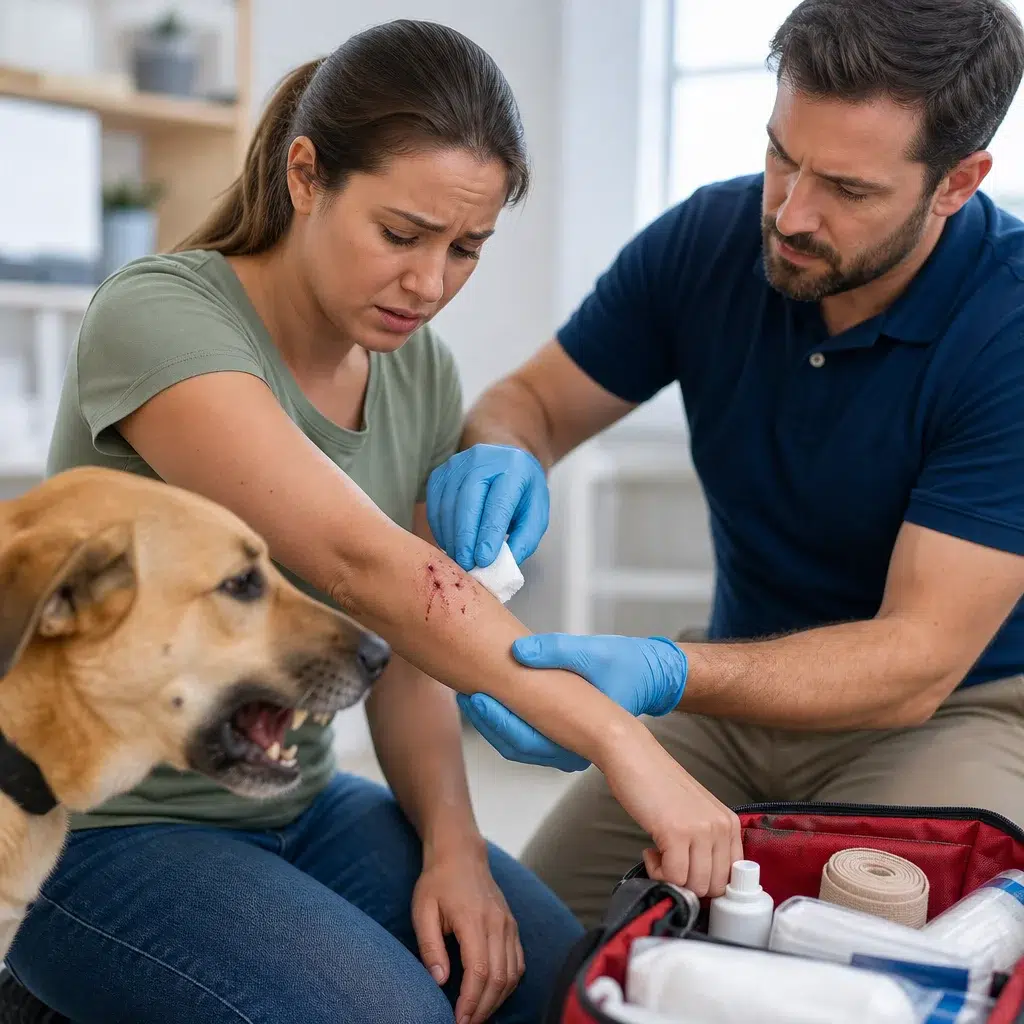
Start by washing your hands thoroughly and putting on gloves if available. This protects both you and the victim. Use clean running water and soap to flush the wound for at least five minutes. The goal is to remove debris, loose tissue, bacteria, and any saliva or contaminants. Don’t be gentle; the wound needs thorough irrigation.
If the bite is on a limb, you can hold the wound under running tap water and let the water flow through the puncture sites. Use a clean cloth to gently wipe away any visible dirt or debris. For deeper wounds or multiple punctures, consider using a syringe filled with saline solution if available; this allows you to flush the wound with more pressure, which is more effective than passive water flow.
After washing with soap and water, rinse the area thoroughly one more time with clean water to remove all soap residue. Pat the wound dry with a clean cloth or sterile gauze if you have it.
For minor surface wounds, you can stop here and monitor closely. For puncture wounds or deeper lacerations, the next step is professional medical evaluation. Don’t skip this; even if the wound looks clean after washing, the deep tissue damage requires professional assessment.
What to do next: After cleaning, cover the wound loosely with a clean bandage and prepare to transport the victim to urgent care or an emergency department.
When to Seek Professional Medical Attention
Not all dog bites need emergency department care, but many do. Here’s how to decide quickly.
Seek immediate emergency care (call 911 or go to the nearest ER) if the victim shows signs of severe bleeding, loss of consciousness, signs of shock, severe facial injuries, or bites to the hands or genitals. These situations require surgical evaluation and possibly tissue repair that only a hospital can provide.
Go to urgent care or call your primary care doctor the same day if the bite has moderate puncture wounds, is located on the arm or leg, broke the skin but isn’t actively bleeding heavily, and happened within the past few hours. Healthcare providers in communities like San Jose, Fresno, and Modesto can evaluate whether antibiotics or tetanus shots are needed.
Call your doctor for advice even for minor bites if you have any concerns. If you’re immunocompromised, diabetic, or have circulatory problems, the threshold for seeking care should be lower because your infection risk is higher.
The timing matters: ideally, get professional evaluation within 8-12 hours of the bite. This window gives doctors the best opportunity to prescribe preventive antibiotics or assess for rabies exposure.
What to do next: Don’t wait to see if the wound gets infected; seek evaluation early when prevention is most effective.
Infection Prevention and Aftercare Management
Once you’ve had the wound evaluated by a healthcare provider, your job shifts to careful aftercare. Keep the wound clean and dry. Wash it gently with soap and water daily, pat it dry, and apply any prescribed topical antibiotics.
If you’ve been prescribed oral antibiotics, take them exactly as directed, even if the wound looks better. Completing the full course prevents resistant bacteria from developing. Many dog bites involve organisms like Pasteurella multocida or Staphylococcus species; antibiotics target these specifically.
Watch for signs of infection during the healing period. Some mild inflammation is normal, but increasing redness, swelling, warmth, pus, or red streaks extending from the wound are warning signs that require immediate medical attention.
Keep the wound covered with a clean bandage to prevent recontamination, especially if the victim is in a dirty environment or involved in activities where contamination is likely. Change bandages daily or whenever they become wet or soiled.
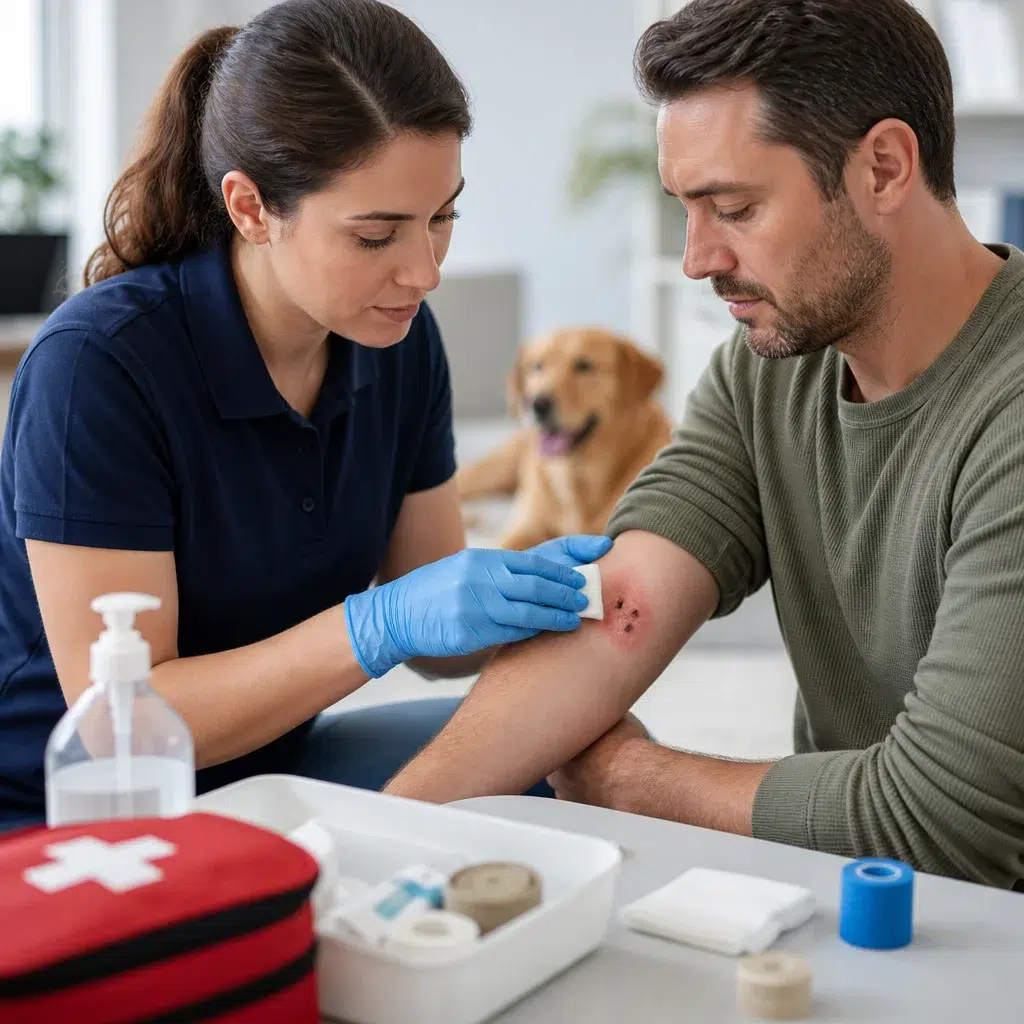
Elevate the affected limb if possible to reduce swelling. This is particularly important for hand bites, which have high infection rates due to poor blood supply. For healthcare professionals in places like Palo Alto, Berkeley, and San Rafael, these principles apply universally.
What to do next: Set reminders to check the wound daily and keep your follow-up appointment with your healthcare provider if one was scheduled.
Recognizing Signs of Serious Complications
Even with proper first aid and early medical care, complications can still develop. Know what to watch for. Cellulitis, an infection of the skin and underlying tissue, causes spreading redness, warmth, swelling, and tenderness. If you notice these signs, contact your doctor immediately; cellulitis requires aggressive antibiotic treatment.
Abscess formation (a pocket of pus) may appear as a localized bump, swelling, or area of fluctuance (soft, moving liquid). This often requires drainage by a healthcare provider and antibiotics.
Tendon or joint involvement is serious. If the bite is on a hand or joint and you notice severe pain with movement, stiffness, or swelling that doesn’t improve with rest and elevation, seek care immediately. Bites to hand joints can lead to permanent loss of function if not treated promptly.
Rabies exposure is the most serious potential complication. If the dog’s vaccination status is unknown or the dog has not been observed for signs of illness, post-exposure rabies prophylaxis may be needed. This must be started immediately and cannot wait. Contact your health department or emergency department for guidance on rabies risk in your specific situation.
Tetanus is another preventable complication. If your tetanus vaccination is not current (within the past 10 years), get a booster after a dog bite.
What to do next: If you develop fever, spreading infection signs, severe pain, or any systemic symptoms, seek emergency care without delay.
How Proper Training Prepares You for Emergency Response
First aid training does more than teach you steps; it builds the confidence and muscle memory to act quickly when an emergency happens. When you’ve practiced wound assessment, cleaning, and decision-making in a classroom setting, you’re far more likely to respond effectively in a real situation.
Healthcare professionals know this particularly well. Your licensing requirements often include current first aid and CPR certification for good reason: these credentials validate that you can recognize emergencies, prioritize care, and take appropriate action. That foundation extends beyond CPR to everything from wound management to infection control.
Proper training also teaches you the “why” behind each step. You understand that thorough wound irrigation reduces bacterial load, not just that you should rinse it. You know why certain bites carry higher infection risk. You recognize which signs demand immediate professional evaluation. This understanding allows you to make sound judgment calls in real situations where textbook scenarios don’t always apply.
Whether you work in emergency medicine, nursing, dentistry, or EMS, your training directly impacts patient outcomes. The same principles that guide CPR performance guide your response to a dog bite: assess, act, and advocate for professional care when needed.
What to do next: Refresh your first aid knowledge annually, even if you already have certification. Medical understanding evolves, and regular review keeps your skills sharp.
Our Comprehensive First Aid Certification Programs
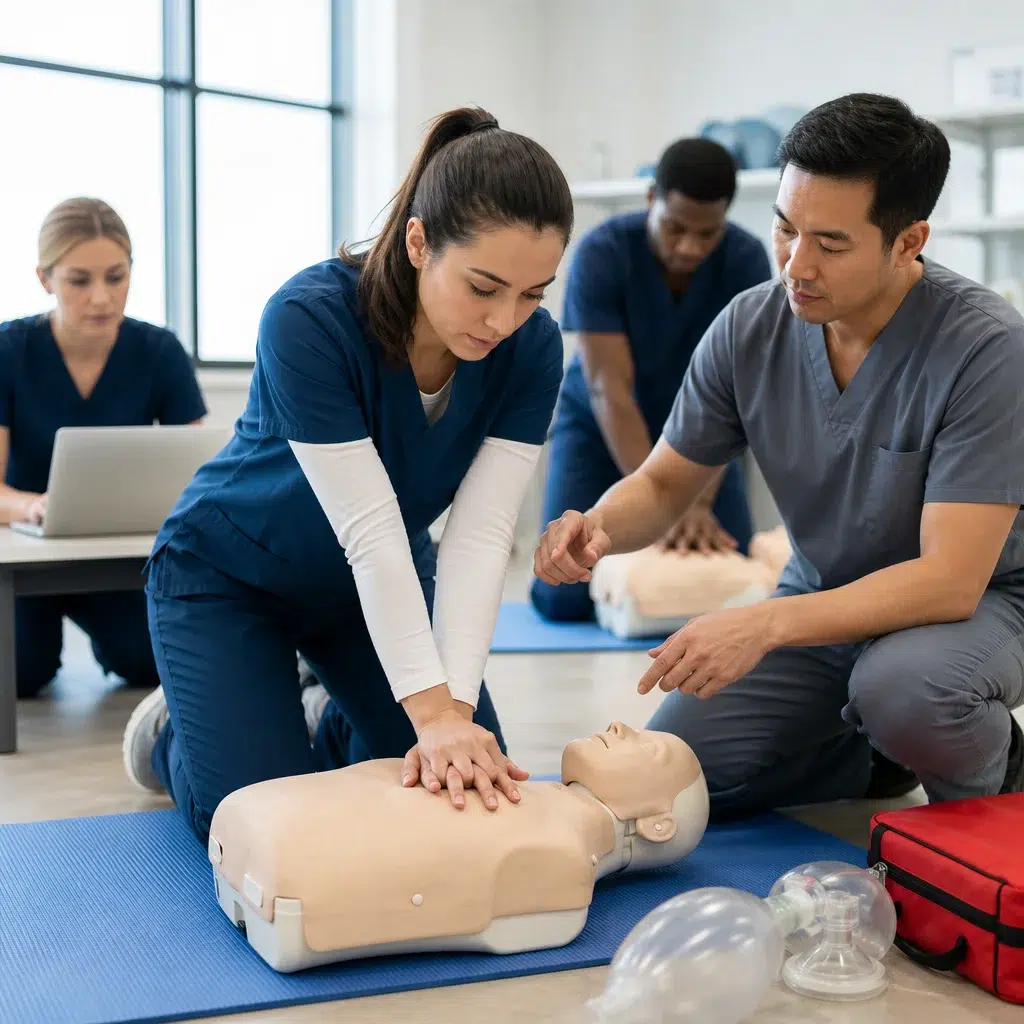
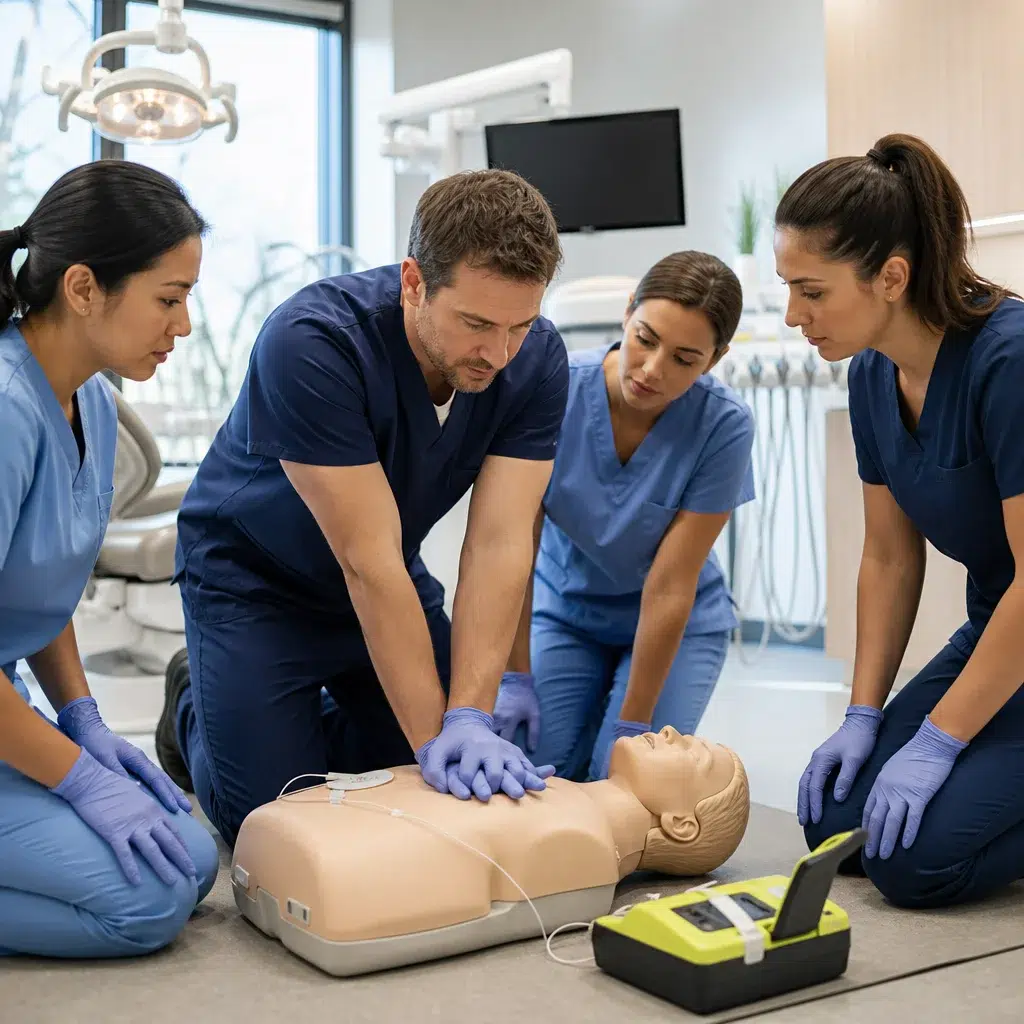
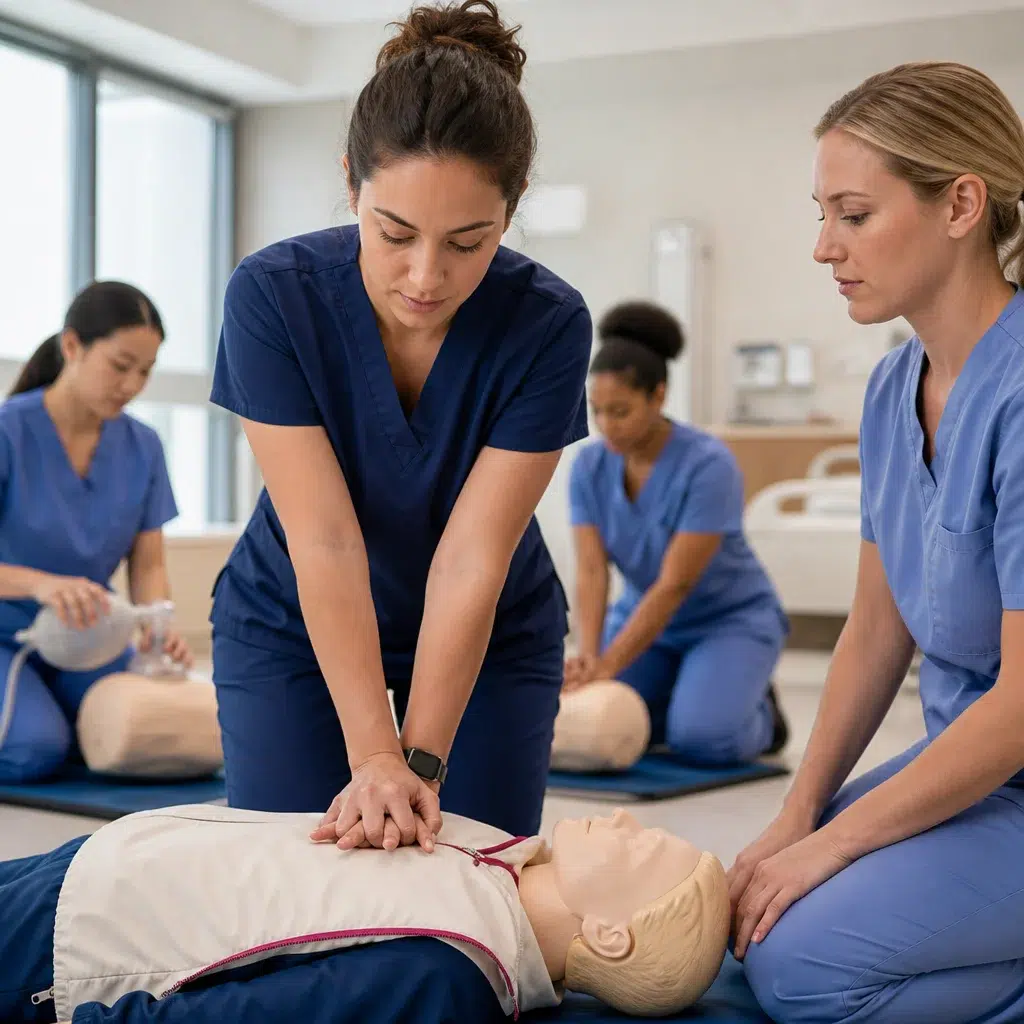
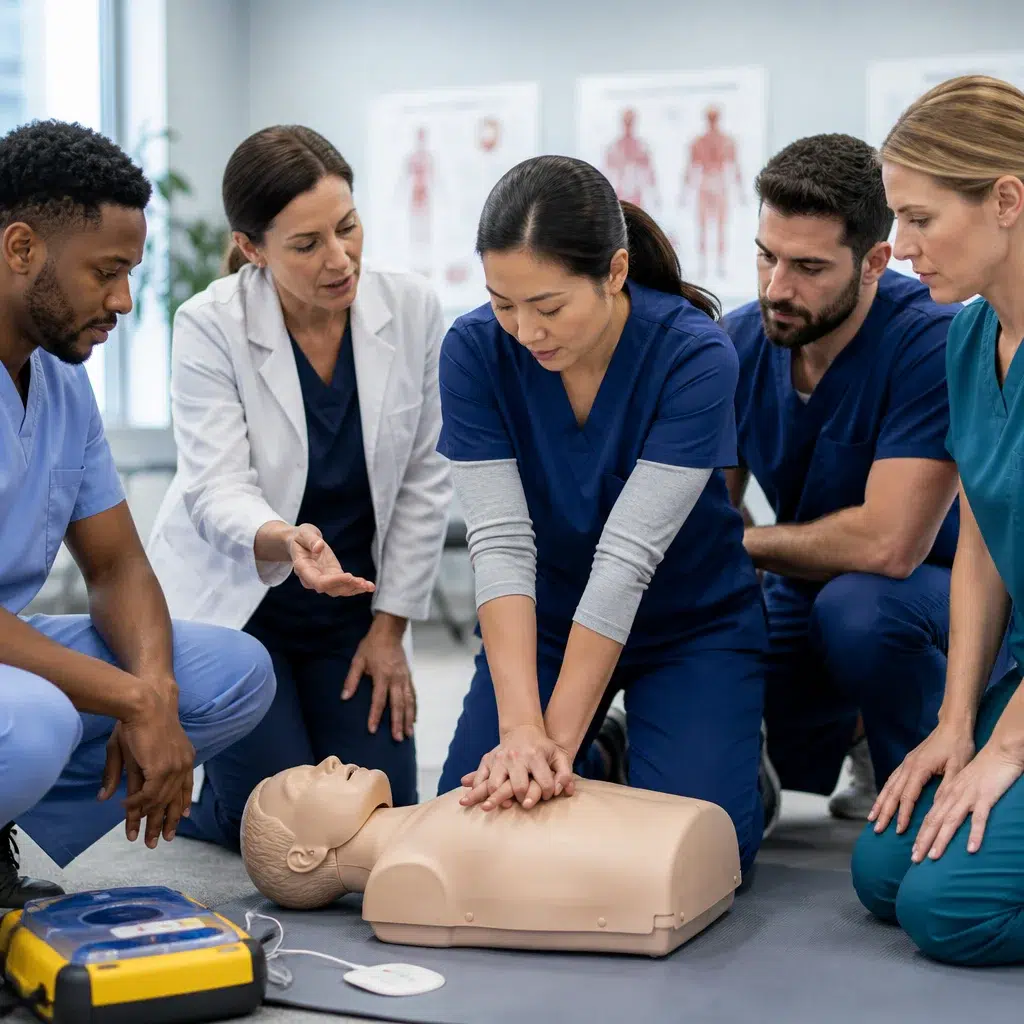
We offer practical, hands-on first aid training designed specifically for healthcare professionals across California. Our courses combine online learning modules with in-person skills practice, so you can study at your own pace and then practice on real-world scenarios with our instructors.
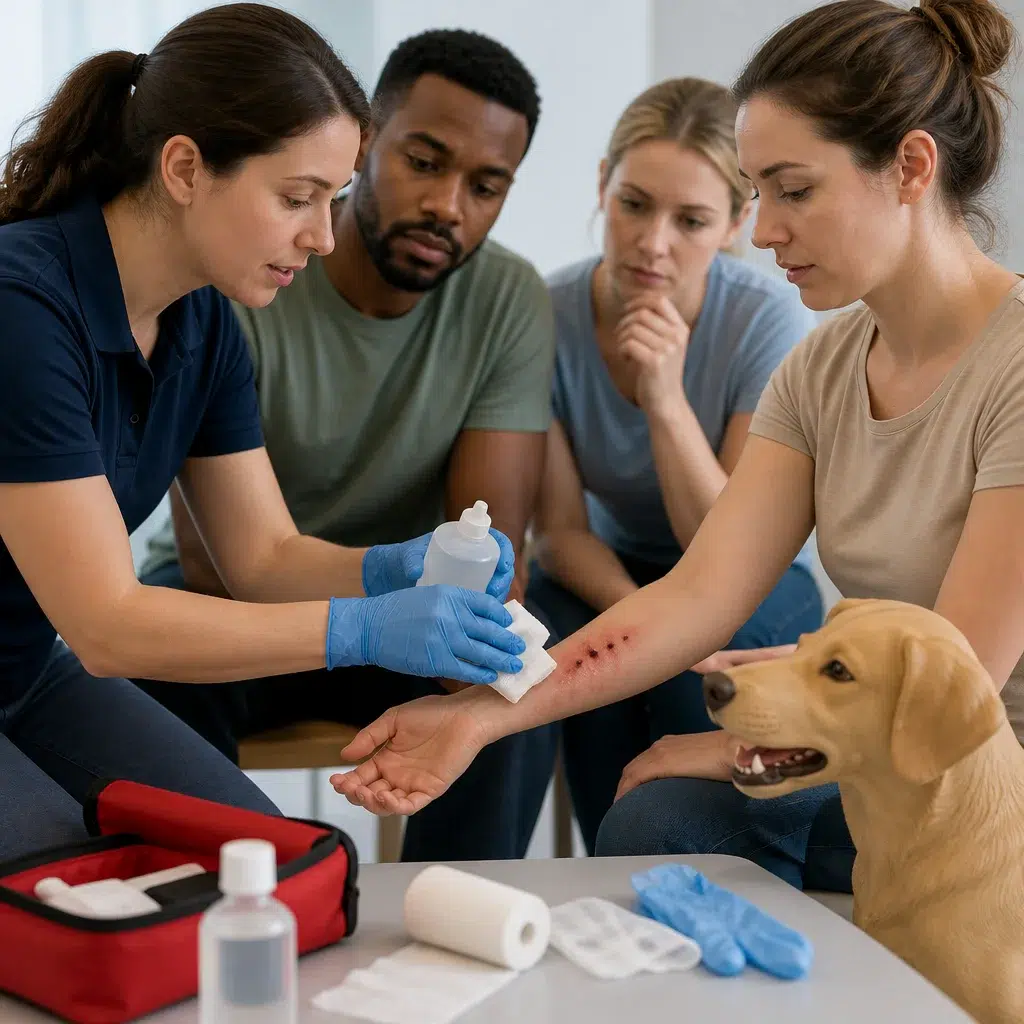
Our training covers everything from dog bite response to severe allergic reactions, burns, shock management, and more. We emphasize the decision-making process, not just the technical steps. You’ll learn when to call 911, when to manage at home, and how to advocate for your patients or loved ones.
We have over 100 training locations throughout California, including Alameda, Antioch, Bakersfield, Berkeley, Campbell, Chico, Davis, Dublin, Fremont, Fresno, Hayward, Los Gatos, Modesto, Napa, Oakland, Palo Alto, Pleasanton, Redwood City, Sacramento, San Francisco, San Jose, San Mateo, Santa Cruz, Santa Rosa, Stockton, Sunnyvale, Vacaville, Vallejo, and many more communities. Whether you’re in Downtown San Jose, the Mission District in San Francisco, or Midtown Sacramento, we have a convenient location near you.
Our instructors are experienced healthcare professionals who understand your licensing requirements and workplace demands. They teach you practical techniques you can use immediately, not theoretical concepts from a textbook.
Getting Certified and Ready for Any Emergency
Certification through our programs gives you the credential your employer requires while building real competence in emergency response. Our courses are designed to be accessible: we offer multiple class times, including evenings and weekends, so you can schedule training around your shifts.
Our AHA training classes align with industry standards and prepare you for the scenarios you’ll actually encounter. You’ll practice patient assessment, decision-making under pressure, and proper technique with constructive feedback from our instructors.
We also maintain a low price guarantee on all our classes because we believe cost shouldn’t prevent you from staying current with your certifications. Our blended learning approach means you can complete online components on your schedule and come in for skills practice when it works for you.
Getting certified is straightforward: find a class near you, complete the online component if applicable, attend your hands-on session, demonstrate competency, and walk out with your certification card the same day.
What to do next: Visit our website to find a first aid class near you in your California location. Schedule your training today so you’re ready for any emergency that comes your way. Your patients, your family, and your community depend on professionals like you who take the time to stay prepared.
Register for a class today.
Frequently Asked Questions (FAQ)
What first aid training do we offer for animal bite emergencies?
We provide comprehensive first aid certification programs that cover wound care, infection prevention, and emergency response protocols for various injuries including animal bites. Our courses combine virtual learning with hands-on skills sessions at over 100 California locations, ensuring you can respond confidently when someone is injured. We offer daily BLS certification classes and specialized courses for healthcare professionals who need current certifications for their roles.
Why should healthcare professionals get certified first aid training with us?
We understand that nurses, dentists, and EMS personnel need reliable, accessible training that fits their schedules and complies with professional licensing requirements. Our blended learning approach lets you complete coursework online while practicing critical skills in-person, and we guarantee the lowest prices for all our classes. With locations throughout California and daily class availability, we make it convenient for you to maintain the certifications your career demands.
How does our training prepare me to handle complications from dog bites?
We teach you to recognize serious warning signs like spreading redness, increasing warmth, fever, and signs of infection that require immediate medical attention. Our instructors train you on proper wound assessment, cleaning techniques, and aftercare management so you understand when professional medical care is necessary. Through our hands-on skills sessions, we help you develop the confidence and competence to respond effectively in real emergency situations.