
Table of Contents
- 1. Blended Learning Approach for Flexible Scheduling
- 2. AHA-Aligned Curriculum with Proven Effectiveness
- 3. Same-Day Certification Cards and Instant Verification
- 4. Over 100 Training Locations Across California
- 5. Specialized Healthcare Provider Certifications (ACLS and PALS)
- 6. Low Price Guarantee with Corporate Discounts
- 7. RQI Simulation Stations with Advanced VAM Technology
- Frequently Asked Questions (FAQ)
1. Blended Learning Approach for Flexible Scheduling
The traditional all-day classroom model doesn’t work for busy healthcare professionals. You’re managing shifts, patient care, and continuing education simultaneously. We recognized this pain point and built a blended learning system that separates self-paced theory from hands-on skills practice.
Here’s how it works: you complete online modules at your own pace, covering the critical knowledge components in digestible segments. You can study during a quiet shift, between patients, or early morning before work. Once you’ve finished the theory portion, you book a focused in-person skills session at one of our nearby locations. These sessions typically last 1-2 hours and concentrate entirely on practical demonstration, hands-on practice, and assessment.
This structure eliminates wasted time sitting through lectures you already understand. You focus on what matters most: actually performing CPR, using defibrillators, and practicing scenarios that mirror real emergency situations. Many healthcare professionals tell us this approach lets them maintain certification without sacrificing their schedule or income.
What to do next: Check your course calendar and identify a location convenient to your workplace or home. We have training centers in Alameda, Antioch, Bakersfield, Berkeley, Brentwood, Campbell, and dozens of other California communities.
2. AHA-Aligned Curriculum with Proven Effectiveness
Healthcare professionals need certifications that employers and licensing boards recognize unquestionably. Our curriculum aligns with current American Heart Association guidelines, ensuring your training reflects the most current resuscitation science and best practices.
Your instructors bring practical healthcare experience. They’re not just certified trainers; many work as nurses, paramedics, or emergency room professionals themselves. This means they teach from real scenarios, not textbooks alone. When you practice chest compression techniques or learn the latest ACLS protocols, your instructor can explain how these skills actually play out in a trauma bay or ambulance.
The curriculum covers essential competencies: proper hand placement and compression depth for CPR, appropriate medication administration during cardiac events, rhythm interpretation for ACLS candidates, and pediatric-specific protocols for PALS training. Every section emphasizes evidence-based techniques that improve patient survival rates.
We update our materials regularly to reflect the latest research. Your certification carries the weight and credibility that employers expect and licensing boards require.
Actionable step: Verify your course type matches your professional license requirements. ACLS and PALS certifications are often mandatory for critical care nurses, emergency medicine physicians, and paramedics, while standard CPR/BLS covers most healthcare support roles.
3. Same-Day Certification Cards and Instant Verification
Nothing frustrates healthcare professionals more than waiting weeks for a certification card after passing a course. You need proof of certification immediately, especially if you’re starting a new position or your previous certification is about to expire.
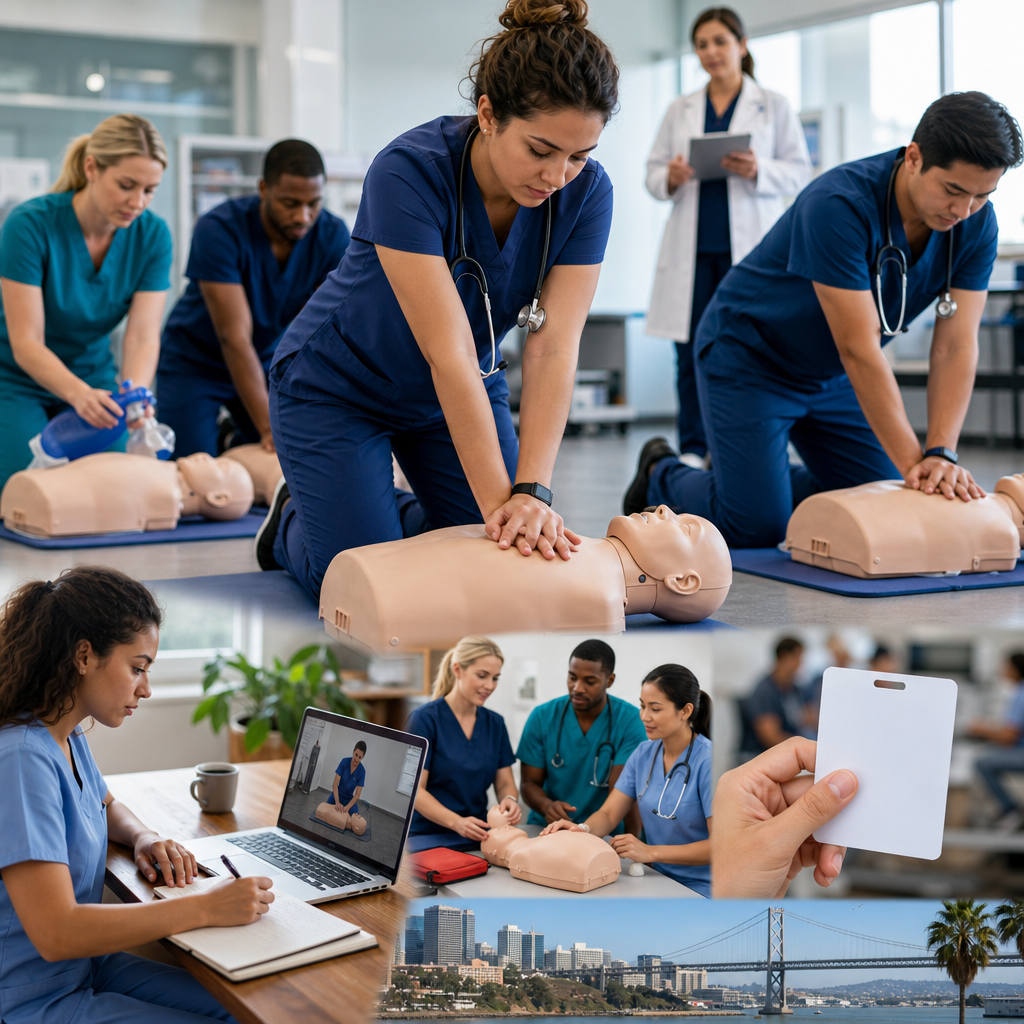
We issue certification cards on the same day you complete your skills assessment. You walk out of our training session with your credential in hand. No delays. No waiting for processing or shipping.
Beyond the physical card, we offer instant digital verification. Your employer or licensing board can confirm your certification status through our verification stations in real time. This matters when you’re onboarding to a new department or responding to credential audits.
The verification system works seamlessly: your instructor documents your completion, the data enters our secure database, and your employer gains immediate access. No paperwork delays, no missing documentation when you need it most.
Next action: When you register, note your employment verification contact information. This ensures your new employer can confirm your certification status without back-and-forth communication.
4. Over 100 Training Locations Across California
Geographic accessibility is non-negotiable for healthcare professionals. You shouldn’t drive 45 minutes across town to get certified when a training center should be nearby.
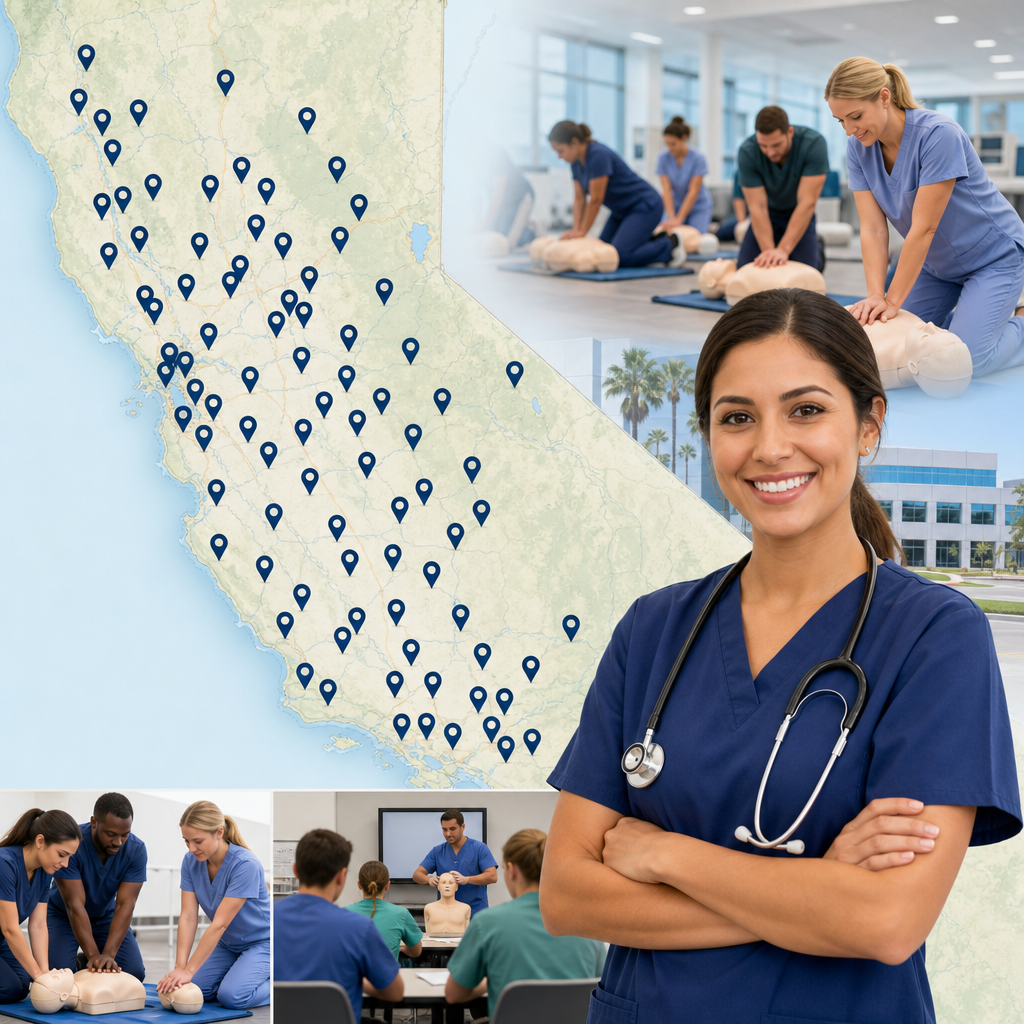
We operate over 100 training locations throughout California. That’s coverage in San Jose, San Francisco, Oakland, Sacramento, Fresno, and smaller communities like Concord, Pleasanton, Santa Rosa, and Walnut Creek. From Redding in the north to Visalia in the south, from coastal centers like Santa Cruz to inland locations like Modesto, you’ll find a convenient classroom.
Each location is equipped identically. Whether you train in Danville, Davis, or San Leandro, you receive the same high-quality instruction, equipment, and certification standards. We’ve invested in this geographic footprint because we understand that convenience directly impacts whether healthcare professionals can maintain their certifications on schedule.
Our locations operate extended hours, including early morning and evening sessions, because we know your shifts don’t follow a 9-to-5 calendar.
Practical next step: Visit our location finder and identify the three closest training centers to your home and workplace. Having options means you can book around your schedule, not the other way around.
5. Specialized Healthcare Provider Certifications (ACLS and PALS)
Standard CPR and BLS certification covers basic life-saving techniques. But many healthcare professionals need more advanced training. ACLS certification is essential for nurses, respiratory therapists, and physicians working in acute care settings. PALS certification is mandatory for pediatric specialists, emergency medicine providers, and neonatal professionals.
Our ACLS courses go deeper into cardiac care. You learn rhythm interpretation, medication administration protocols, and decision-making during complex cardiac emergencies. The hands-on portion includes practice with defibrillators and mock scenarios that simulate real code situations.
PALS training applies these principles to pediatric and neonatal patients. The physiology differs significantly from adults; medications are dosed by weight, equipment sizes vary, and communication approaches change. Our specialized PALS instructors make these distinctions clear and ensure you practice effectively with pediatric-specific mannequins and scenarios.
Both certifications involve skills testing and written assessments. You’re not just learning; you’re demonstrating competency in a way that employers recognize and licensing boards trust. Consider exploring our ACLS and PALS courses in Oakland or your nearest location if advanced certifications align with your role.
What to consider: Review your job description and state licensure requirements. Many healthcare positions list ACLS or PALS as mandatory; others recommend them. Getting ahead of these requirements protects your career flexibility.
6. Low Price Guarantee with Corporate Discounts
Certification costs shouldn’t strain your personal or organizational budget. We’ve committed to the lowest pricing available anywhere in California. That’s not promotional language; it’s a guarantee backed by our pricing structure.
Individual healthcare professionals save when they train with us compared to other providers. But the real value emerges for healthcare organizations and large groups. We offer substantial corporate discounts for hospitals, clinics, dental practices, EMS agencies, and other medical employers.
If your organization needs to certify 10, 20, or 50 team members, we’ll customize a training schedule and pricing that fits your budget. We’ve worked with facilities in Fremont, Sacramento, and San Francisco to create streamlined certification programs that minimize operational disruption while maintaining quality.
Group training also creates scheduling efficiency. Instead of staff members training individually on different days, we coordinate cohort-based sessions that reduce time away from patient care. This logistics advantage translates to cost savings you can reinvest in your organization.
Action item: If you’re part of a healthcare organization, contact us directly about group pricing. We can often reduce per-person costs by 20-40% compared to individual enrollment.
7. RQI Simulation Stations with Advanced VAM Technology
Realistic practice transforms certification from theoretical knowledge into muscle memory and genuine competency. We’ve invested in RQI (Resuscitation Quality Improvement) simulation stations equipped with Advanced VAM (Voice Assisted Manikin) technology.
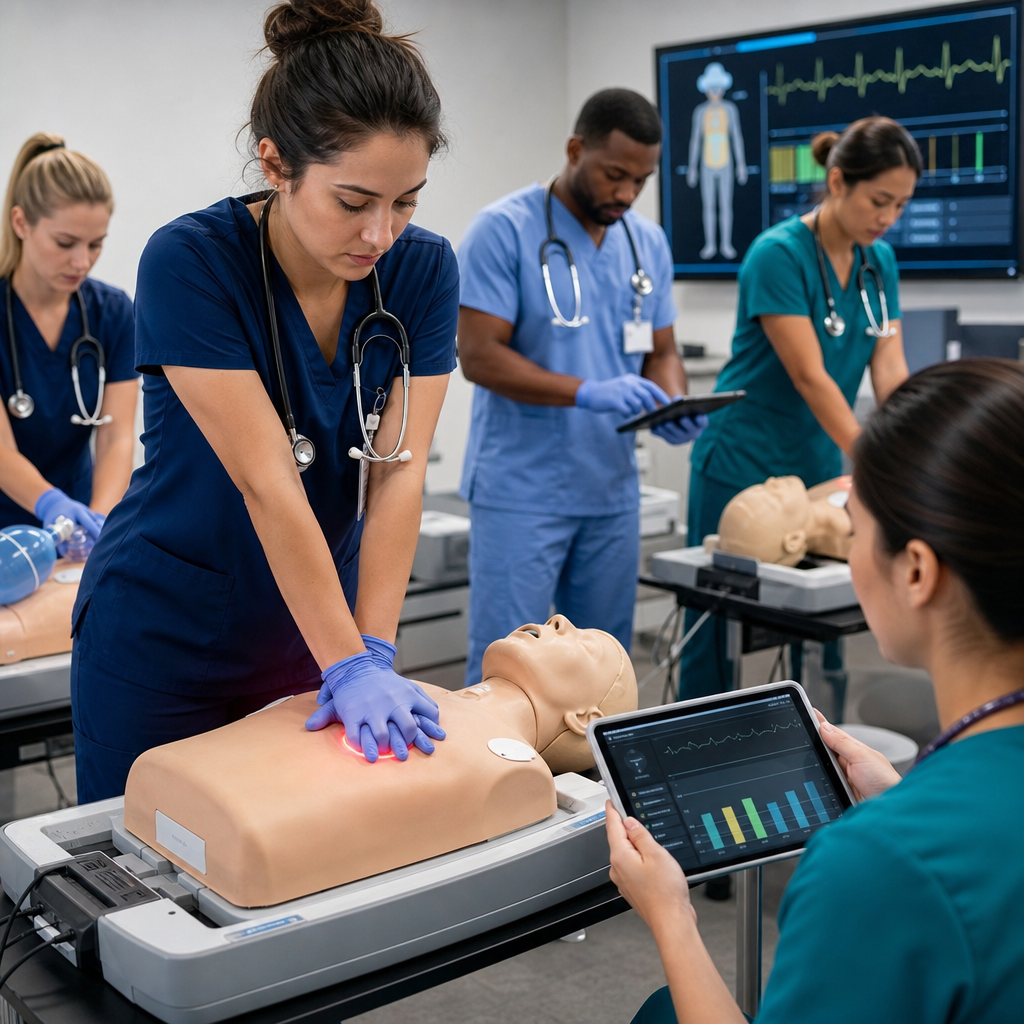
Here’s what this means in practice: when you perform CPR on one of our mannequins, the device provides real-time feedback. A synthesized voice guides your compression rate, depth, and hand placement. Sensors detect whether you’re pushing hard enough, releasing fully between compressions, and maintaining rhythm. This immediate feedback accelerates your learning far beyond traditional silent mannequins.
VAM technology personalizes the training experience. Experienced healthcare providers get different feedback than those practicing for the first time. The manikin adjusts its guidance based on performance, helping you refine technique and build confidence.
The simulation approach extends beyond basic CPR. ACLS candidates practice medication administration and defibrillator use on full-body mannequins. PALS trainees work with pediatric-sized equipment that mirrors real clinical conditions. When you encounter an actual emergency after certification, your hands and muscle memory have already “lived” through similar scenarios.
Our AHA Skills Testing stations are staffed with experienced instructors who monitor your practice, provide coaching, and ultimately assess your competency.
Key takeaway: The quality of your practice directly determines your competency in actual emergencies. Invest time in hands-on sessions at locations equipped for realistic simulation.
For further reading: ACLS and PALS in Oakland.
Register for a class today.
Frequently Asked Questions (FAQ)
How do we help healthcare professionals maintain their certifications while managing demanding schedules?
We offer blended learning options that combine virtual coursework with in-person skills sessions, so you can complete theory on your own time and come in only for hands-on practice. Our classes are available daily across more than 100 California locations, and we issue same-day certification cards so you can meet your licensing requirements without delay. This flexible approach lets nurses, dentists, and EMS personnel stay current without disrupting their work schedules.
What specialized certifications do we provide beyond basic CPR training?
We offer ACLS, PALS, and NRP certifications specifically designed for healthcare providers who need advanced life support training. Our curriculum aligns with current clinical guidelines and includes advanced simulation stations with VAM technology, ensuring you gain the practical skills needed for high-acuity patient care. Each course is taught by experienced instructors who understand the real-world demands of medical practice.
Why should healthcare professionals choose us over other training options?
We guarantee the lowest prices on all our classes while maintaining the highest instructional quality. We maintain CPR verification stations at our locations for convenient credential confirmation, and our corporate group training program offers significant discounts for healthcare facilities and teams. With same-day certification cards and instant verification available, we make compliance straightforward.