
Table of Contents
- The Challenge of Keeping Large Medical Teams Certified
- Why Traditional Compliance Methods Fall Short
- Building a Scalable Certification System That Works
- Leveraging Blended Learning for Your Entire Staff
- Our Multi-Location Advantage Across California
- Streamlining Group Training and Scheduling
- Maintaining Compliance Records and Verification
- Cost Control Without Sacrificing Quality
- Implementing Same-Day Certification for Efficiency
- Supporting Healthcare Professionals at Every Career Stage
- Getting Your Team Started Today
- Frequently Asked Questions (FAQ)
The Challenge of Keeping Large Medical Teams Certified
Running a large medical facility means coordinating dozens, hundreds, or even thousands of staff members through recurring certification requirements. Whether your team includes nurses, dentists, EMS personnel, or allied health professionals, maintaining current certifications across the board is complex. Each team member has different schedules, varying certification expiration dates, and distinct training needs based on their role.
The administrative burden multiplies quickly. You’re tracking expiration dates, scheduling training sessions, managing cancellations, ensuring attendance records, and generating compliance reports for audits and licensing boards. When staff members work different shifts or split time across multiple locations, the logistics become even more challenging. One missed renewal can create licensing violations or jeopardize patient safety protocols.
We’ve seen healthcare leaders struggle with spreadsheets that grow outdated within weeks and communication breakdowns between departments. The cost of failed compliance extends beyond simple fines, too. It affects hiring reputation, staff morale, and operational readiness when key personnel suddenly become ineligible to perform essential duties.
Why Traditional Compliance Methods Fall Short
Managing certification compliance through manual processes, outdated tracking systems, or decentralized scheduling creates predictable friction points. When different departments handle their own training arrangements, you lose visibility into the bigger picture. Some staff members end up recertifying multiple times in one year while others slip through the cracks.
In-person-only training models also strain your flexibility. If your facility spans multiple locations across California, requiring all staff to gather at one training center wastes travel time and takes people away from patient care longer than necessary. Scheduling becomes a bottleneck, especially when you’re trying to accommodate the availability of hundreds of professionals.
Outdated compliance tracking systems fail to integrate with modern workflows. Spreadsheets require constant manual updates and generate reports that are time-consuming to verify. You can’t easily flag upcoming expirations, track completion rates by department, or generate audit-ready documentation at a moment’s notice.
Cost also becomes an obstacle when you’re working with a limited training budget. Traditional approaches often force you to choose between affordability and convenience, or between timeliness and quality instruction.
Building a Scalable Certification System That Works
A modern compliance system must balance flexibility, accuracy, and cost efficiency. We recommend starting with a centralized tracking foundation that connects your entire staff roster, regardless of location or department. This single source of truth prevents duplicate training and ensures no one falls through the cracks.
Your system should integrate both virtual and in-person components. This hybrid approach, sometimes called blended learning, allows staff to complete some preparatory work remotely while maintaining hands-on skills practice in person. The result is shorter time commitments per person and better scheduling flexibility.
Look for a training partner that offers multiple California locations. We maintain over 100 training sites throughout the state, including facilities in Sacramento, San Francisco, Oakland, San Jose, Fresno, and beyond. This geographic reach means your team members can complete training near their workplace or home, minimizing travel time.
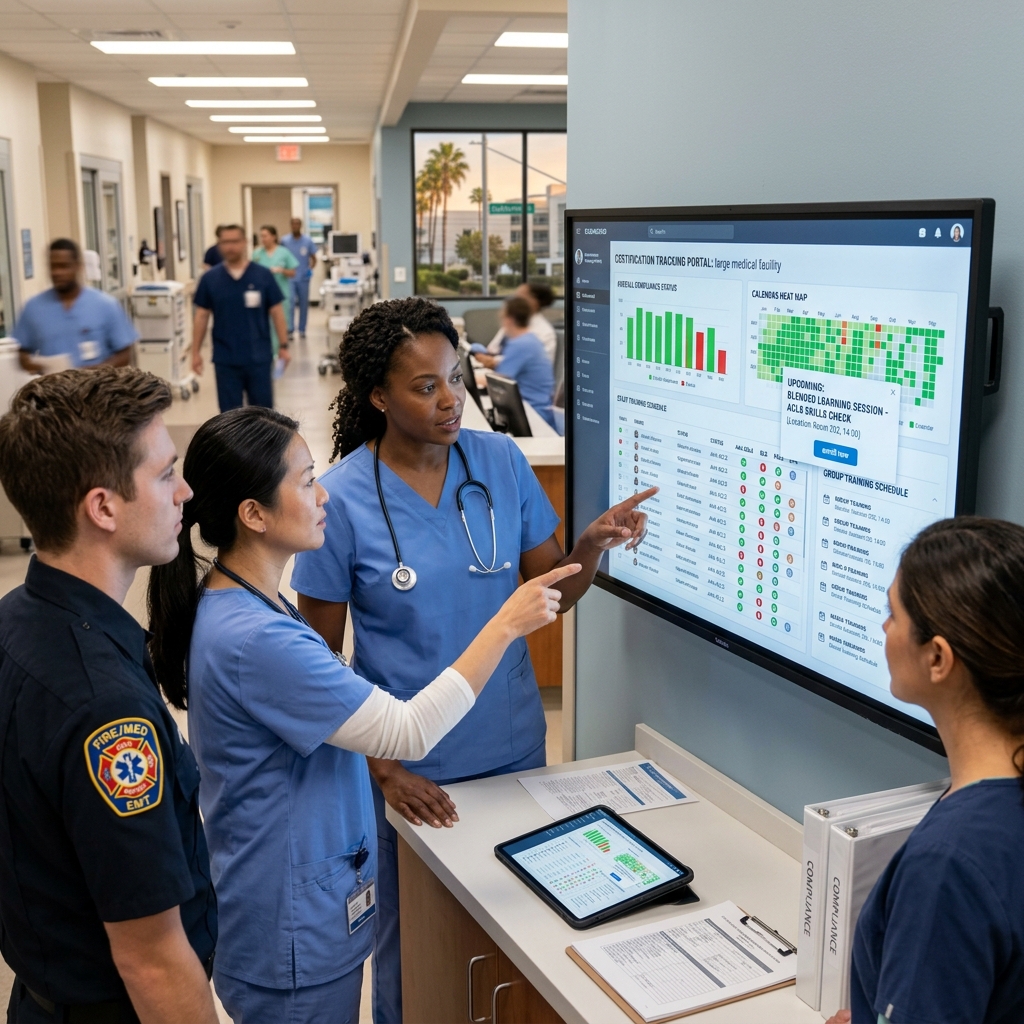
Your compliance system should also provide real-time reporting capabilities. You need dashboards that show expiration timelines by department, completion rates, and audit-ready documentation. When a licensing board requests proof of staff certifications, you should be able to generate that report in minutes, not days.
Leveraging Blended Learning for Your Entire Staff
Blended learning transforms how large teams manage certification training. Staff members complete online modules on their own schedule, then attend brief, focused in-person sessions where they practice skills with qualified instructors. This approach delivers the knowledge depth of traditional training with the scheduling flexibility your team needs.
The virtual component covers foundational knowledge: anatomy, recognition of cardiac events, and protocol walkthroughs. Your staff can complete this work during quieter shifts, during breaks, or from home. The in-person skills sessions then concentrate on hands-on practice, scenario drills, and performance verification. Because the knowledge portion is already covered, these sessions are shorter and more focused.
For large teams, blended learning reduces the total time away from patient care. A nurse in Berkeley doesn’t need to block out an entire day. Instead, they might spend two hours online and one focused hour with an instructor. When you multiply this across hundreds of staff members, the operational benefit becomes substantial.
Your instructors remain the critical component. We employ experienced healthcare professionals who understand the realities of clinical practice. They design scenarios that reflect actual workplace situations, making training immediately applicable to daily work.
Our Multi-Location Advantage Across California
We operate over 100 training locations across California, strategically positioned to serve healthcare professionals wherever they work. From Redding in the north to Visalia in the south, from coastal cities like Santa Cruz to inland communities like Modesto, we maintain convenient access points throughout the state.
This geographic spread means your staff rarely faces significant travel time. A physician in Pleasanton can train locally. An EMS technician in Stockton doesn’t need to drive to Sacramento. A dental hygienist in San Francisco can choose from multiple locations across the city, including our facilities in the Mission District, Sunset, Telegraph Hill, and near UCSF on Parnassus.
Our distributed model also enables faster scheduling. With capacity spread across many locations, we maintain consistent availability rather than forcing teams to wait for slots at a single facility. For large group training, this means your entire staff can complete certifications within a narrow timeframe rather than stretching the process across months.
Each location is equipped with current training materials and maintains the same quality standards. Whether your team member is training in Campbell or Carmichael, they receive identical instruction, hands-on practice, and verification.
Streamlining Group Training and Scheduling
When you’re certifying dozens of staff members, Group CPR Certification Classes become cost-effective and operationally efficient. Group training sessions allow multiple staff members to train simultaneously, reducing per-person costs while maintaining individual performance verification.
We work with your facility to develop a schedule that minimizes disruption. Rather than pulling random individuals out throughout the year, we can schedule cohorts by department or shift. Your nursing staff might train one week, while your administrative team and support staff train the next. This approach maintains operational continuity while ensuring everyone progresses through certification on a predictable timeline.
Group training also builds team cohesion. Staff members train together, support each other during practice scenarios, and return to work with a shared understanding of protocols and procedures. This collective training reinforces your facility’s safety culture.
For scheduling, communicate your preferred timeframe and constraints early. We’ll work around your patient volumes, shift rotations, and operational requirements. If you have 200 staff members across multiple locations in the Bay Area, we coordinate training across relevant facilities in Oakland, San Leandro, Fremont, and surrounding communities.
Maintaining Compliance Records and Verification
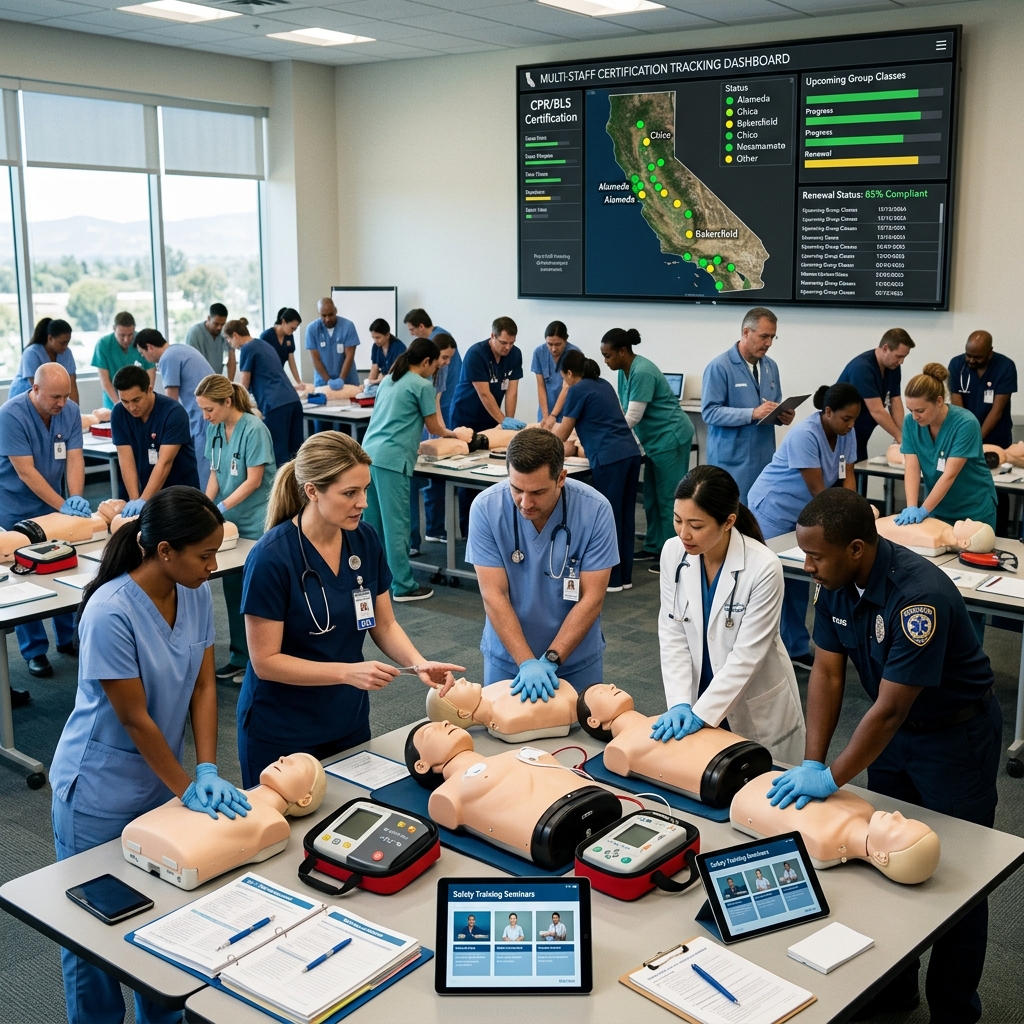
Accurate record-keeping separates compliant organizations from those facing audit challenges. Every certification issued must be documented with the participant’s name, completion date, expiration date, and instructor name. We maintain digital records accessible to your compliance team at any time.
Our CPR verification station technology enables real-time verification of staff certifications. Rather than relying on physical certificates that get lost or damaged, your team can verify active certifications instantly. This is particularly valuable during joint commission inspections or state licensing reviews.
We generate comprehensive compliance reports tailored to your needs. Want to see all expirations happening in the next 90 days by department? We provide that breakdown. Need documentation of who completed training last month for payroll or HR records? That’s available immediately. When an auditor requests proof of staff certifications, we deliver audit-ready documentation.
Your compliance team should also establish reminder protocols. We can send notifications to your staff members 60 and 30 days before expiration, reducing the risk of missed deadlines. For your administrative team, we provide expiration reports that flag individuals or departments requiring immediate attention.
Cost Control Without Sacrificing Quality
Large organizations often assume that quality training comes at premium prices. We maintain a low price guarantee, meaning you won’t find lower rates elsewhere for equivalent instruction. This commitment stems from our high training volume and efficient operations across multiple California locations.
Group training discounts further reduce per-person costs. When you commit your entire staff to training in a defined period, costs decrease significantly compared to staggered, individual enrollments. A facility certifying 100 staff members benefits from substantial savings without any reduction in instructor quality or hands-on practice time.
Blended learning also optimizes costs. Virtual modules reduce the number of instructor hours required per staff member compared to traditional full-day in-person courses. Your facility saves money on participant time away from work while your staff members spend less total time in training.
We’re transparent about pricing and include all components in quoted rates. No hidden fees for verification, documentation, or online platform access. When you budget for staff certification, you know exactly what you’re paying and what you’re getting in return.
Implementing Same-Day Certification for Efficiency
In healthcare, timing matters. When you have new hires starting, staff returning from leave, or personnel needing urgent recertification, same-day certification options keep operations moving. We offer BLS Certification Courses daily at multiple locations, ensuring rapid access to training slots.
Same-day certification follows the same rigorous standards as any other program. Participants complete online knowledge modules beforehand, then arrive for a focused in-person skills verification. Instructors assess competency through hands-on practice and scenario work, issuing certifications immediately upon successful completion.
This approach works well for new hires preparing for their first shift, staff members whose certifications lapsed unexpectedly, or facilities adding staffing quickly to meet seasonal demand. Rather than facing delayed onboarding because training slots are weeks away, new employees can train and begin work within days.
For large facilities planning ahead, same-day capacity also serves as a safety valve. If normal training schedules experience delays or unexpected absences, same-day options prevent compliance gaps from cascading through your organization.
Supporting Healthcare Professionals at Every Career Stage
We recognize that certification needs vary across your organization. Entry-level nursing assistants require different preparation than experienced ICU nurses. EMS personnel, dentists, and allied health specialists each have distinct training pathways and professional requirements.
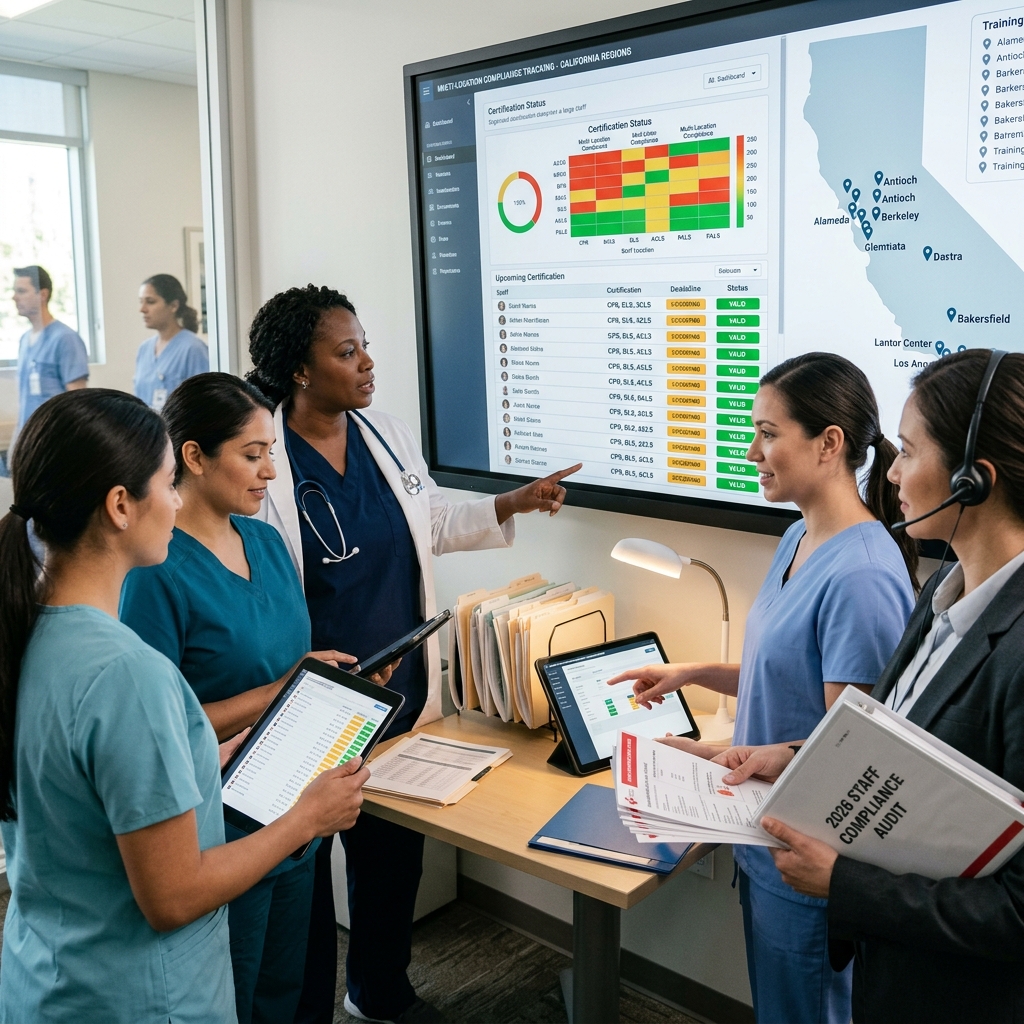
Our course offerings span CPR for general healthcare providers, BLS for nurses and support staff, ACLS for physicians and advanced providers, PALS for pediatric specialists, and NRP for delivery room teams. This comprehensive range means your entire facility can access training appropriate to their role and experience level without juggling multiple training providers.
Experienced professionals often benefit from refresher-focused curricula that respect their existing knowledge while sharpening specific skills. New professionals need more foundational preparation and confidence-building practice. We tailor instructional approaches to match participant backgrounds, making training efficient and relevant for everyone.
For career advancement, we support professionals pursuing new certifications. Nurses transitioning to ACLS roles, paramedics becoming flight medics, or dentists expanding into sedation procedures all find specialized preparation through our courses. Your staff members can advance their careers without disrupting their work schedules.
Getting Your Team Started Today
Begin by auditing your current compliance status. Identify how many staff members require certification, which credentials they need, when their current certifications expire, and where they work across California. This baseline assessment shows you the full scope of what needs to happen.
Reach out to discuss your facility’s specific needs, timeline, and budget. We’ll review your staff composition, geographic spread, and scheduling constraints, then recommend an approach that works for your organization. Whether you need to certify 50 people in the next two months or 300 people across the year, we have strategies and capacity.
For group training, provide us with your preferred start date and the number of participants per cohort. We’ll coordinate schedules across your relevant California locations, ensuring seamless logistics. Our team handles reminders to staff members, tracks completions, and delivers compliance reports directly to your administrative team.
Start with one cohort or department to establish the process, then scale across your organization. Each training session informs our scheduling for the next group, creating increasingly efficient operations as we serve your entire staff.
Your certification compliance can shift from a burdensome administrative task to a streamlined operational process. We’re here to support your healthcare team in staying current, meeting all regulatory requirements, and maintaining the expertise that keeps your patients safe.
Register for a class today.
Frequently Asked Questions (FAQ)
How do we help large medical facilities manage certification compliance across multiple locations?
We operate over 100 training locations throughout California, which means your staff can access our courses near their worksite rather than traveling long distances. Our blended learning model combines virtual instruction with in-person skills sessions, allowing your team to complete requirements on a flexible schedule that works around clinical shifts. We also maintain centralized verification and record-keeping systems so you have a single source of truth for your entire staff’s certification status.
What makes our group training program different for managing bulk employee certifications?
We offer specialized corporate group training with discount pricing designed specifically for healthcare organizations managing large teams. Our scheduling system accommodates multiple instructors and class times, so whether you have 20 or 200 staff members needing certification, we can coordinate a plan that fits your facility’s calendar. We handle the administrative burden of tracking enrollments, sending reminders, and providing completion documentation that satisfies your compliance requirements.
Can we verify certifications at your locations without taking a full course?
Yes, we operate CPR verification stations at our facilities where your staff can demonstrate current skills and update credentials without repeating classroom instruction. This is particularly useful for staff members who hold valid certifications from other training but need quick verification for your internal compliance records.