Table of Contents
- Why Healthcare Teams Need Coordinated Advanced Cardiac Training
- The Challenge of Scheduling Certifications for Multiple Staff Members
- How Our Group Training Clinics Solve Coordination Problems
- Specialized ACLS and PALS Curriculum Built for Healthcare Professionals
- Flexible Scheduling and Same-Day Certification for Your Team
- Cost-Effective Group Pricing and Low-Price Guarantee
- Our Blended Learning Approach with In-Person Skills Sessions
- Nationwide Network of Training Locations Across California
- Real-World Success Stories from Healthcare Organizations
- Getting Started with Your Team's Group Training Clinic
- Frequently Asked Questions (FAQ)
Why Healthcare Teams Need Coordinated Advanced Cardiac Training
Advanced Cardiac Life Support (ACLS) and Pediatric Advanced Life Support (PALS) certifications aren’t optional in healthcare. Nurses, emergency medical technicians, respiratory therapists, and other clinical staff depend on current, hands-on training to respond effectively when patients experience cardiac events or respiratory emergencies. When your team members possess current ACLS and PALS credentials, patient outcomes improve and your organization meets regulatory compliance requirements.
The reality of modern healthcare is that individual certification schedules rarely align. Your nurses work rotating shifts. Your EMS personnel operate on unpredictable call schedules. Your dentists juggle patient appointments. Yet all of them need certifications that expire annually or biannually, depending on their role and employer requirements. Coordinating individual training sessions across multiple staff members creates logistical friction and pulls qualified professionals away from patient care at different times throughout the year.
When your entire team trains together, you build a shared foundation of protocols and emergency response procedures. Team members practice together, learn each other’s communication styles, and develop the muscle memory that matters when seconds count. Group training creates alignment on how your organization responds to cardiac events, which translates directly into better team coordination during real emergencies.
The Challenge of Scheduling Certifications for Multiple Staff Members
Managing certification deadlines for a healthcare team feels like herding cats. One nurse completes her ACLS in January; another doesn’t finish until May. Your EMS team members let certifications lapse because they couldn’t find available seats at convenient times. Some staff members drive across the Bay Area to find courses, burning hours on commuting that could go to patient care. This scattered approach wastes administrative resources and creates gaps in team readiness.
The administrative burden falls heavily on your compliance and HR teams. They track expiration dates, send reminder emails, field scheduling conflicts, and chase down staff members who missed deadlines. When courses are booked months in advance at distant locations, you’re forced to choose between suboptimal scheduling or accepting extended gaps in team certification.
Scheduling individual courses also inflates your training budget through inefficiency. Each staff member pays individual course fees. Travel time and logistical coordination consume hours that your administrative team could direct elsewhere. If one employee needs makeup training, you’re back to square one, hunting for another available course.
How Our Group Training Clinics Solve Coordination Problems
We designed group training clinics specifically to eliminate these scheduling headaches. Instead of asking your team to find individual courses scattered across months, we bring coordinated ACLS and PALS training directly to your organization or bring your team to one of our dedicated training centers conveniently located throughout California.
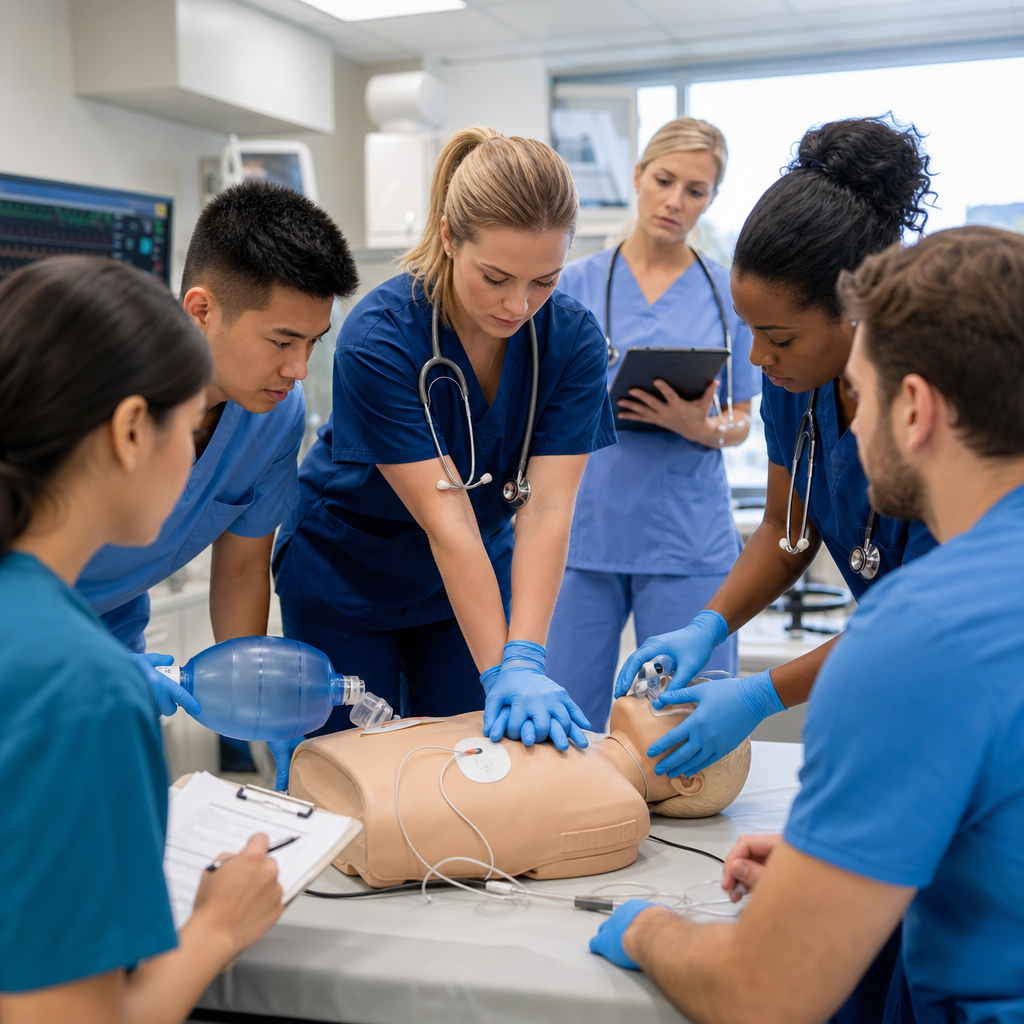
Group clinics work like this: you identify your training window and team size, we confirm available dates and a dedicated instructor, and we conduct all your certifications in a compressed timeframe. Your entire team completes training together, reducing the administrative follow-up and ensuring your organization maintains continuous compliance across all cardiac-certified personnel.
We accommodate various scheduling preferences. If your organization prefers onsite training at your facility, we bring instructors and skills equipment to your location. If you’d rather use one of our California training locations, we have clinics operating in major cities including Sacramento, San Francisco, Oakland, San Jose, Fresno, and dozens of smaller communities across the state. Whether you’re training a team in Walnut Creek, Palo Alto, or Santa Rosa, we have locations near you.
Specialized ACLS and PALS Curriculum Built for Healthcare Professionals
Our ACLS and PALS courses follow current guidelines and are tailored for healthcare providers working in hospitals, clinics, and emergency services. Unlike generic cardiac training, our curriculum emphasizes the decision-making and clinical reasoning that distinguishes professional-level response from basic first aid.
ACLS certification covers cardiac arrest recognition, high-quality chest compressions, defibrillation, advanced airway management, and pharmacological interventions. You’ll practice scenarios involving adults experiencing sudden cardiac events, acute coronary syndrome, and stroke. PALS training builds on similar foundations but focuses on pediatric and neonatal patients, covering rhythm recognition, medication dosing based on weight, and special considerations for infants and children.
Our instructors are experienced healthcare professionals themselves. They understand the clinical environment, the pressures of emergency response, and the nuances of working as a coordinated team during high-stress situations. They teach using real-world case studies and scenario-based practice that resonate with nurses in critical care, paramedics managing field emergencies, and dentists responding to medical events in their practices.
Flexible Scheduling and Same-Day Certification for Your Team
One of our key advantages is scheduling flexibility. We offer early morning, midday, and evening training windows to accommodate different shift schedules. If your team includes night-shift workers, we schedule clinics around their availability. If you prefer a full-day intensive session, we deliver that. If you need a two-day program that spreads content across consecutive sessions, we arrange it.
Most of our group clinics deliver same-day certification upon successful completion. Your team walks in, completes the training, passes the skills assessment, and leaves with valid credentials. No waiting for mailed certificates. No additional verification steps. You know immediately that your team meets regulatory requirements and is ready to respond to emergencies.
For teams with members scattered across different shifts or locations, we can schedule multiple shorter sessions that run on consecutive days. A team of 15 might split into two groups of eight, with each group training on different days at the same location. This approach works particularly well for organizations where everyone can’t be away from clinical duties simultaneously.
Cost-Effective Group Pricing and Low-Price Guarantee
Group training reduces per-person costs significantly compared to individual course fees. When you train five nurses instead of scheduling each separately, the per-person fee drops. When you train fifteen EMS personnel in one clinic instead of three different sessions, your training budget stretches further.
We maintain our Low price guarantee across all training formats, including group clinics. If you find lower pricing elsewhere for equivalent certifications, we’ll match or beat that rate. This commitment means you’re not paying a premium for convenience and coordination; you’re actually saving money while gaining the logistical advantages of group training.
Volume discounts apply based on group size. Smaller teams of 5-10 people receive one tier of savings. Larger groups of 20 or more receive enhanced discounts. We can provide customized quotes based on your team composition, preferred training format, and scheduling needs. Contact us with your requirements and we’ll show you the exact per-person cost for your group clinic.
Our Blended Learning Approach with In-Person Skills Sessions
We combine online learning with hands-on practice to maximize your team’s time and retention. The online component covers knowledge-based content including rhythm recognition, medication administration, and clinical decision-making algorithms. Your team members complete this at their own pace before attending the in-person skills session.
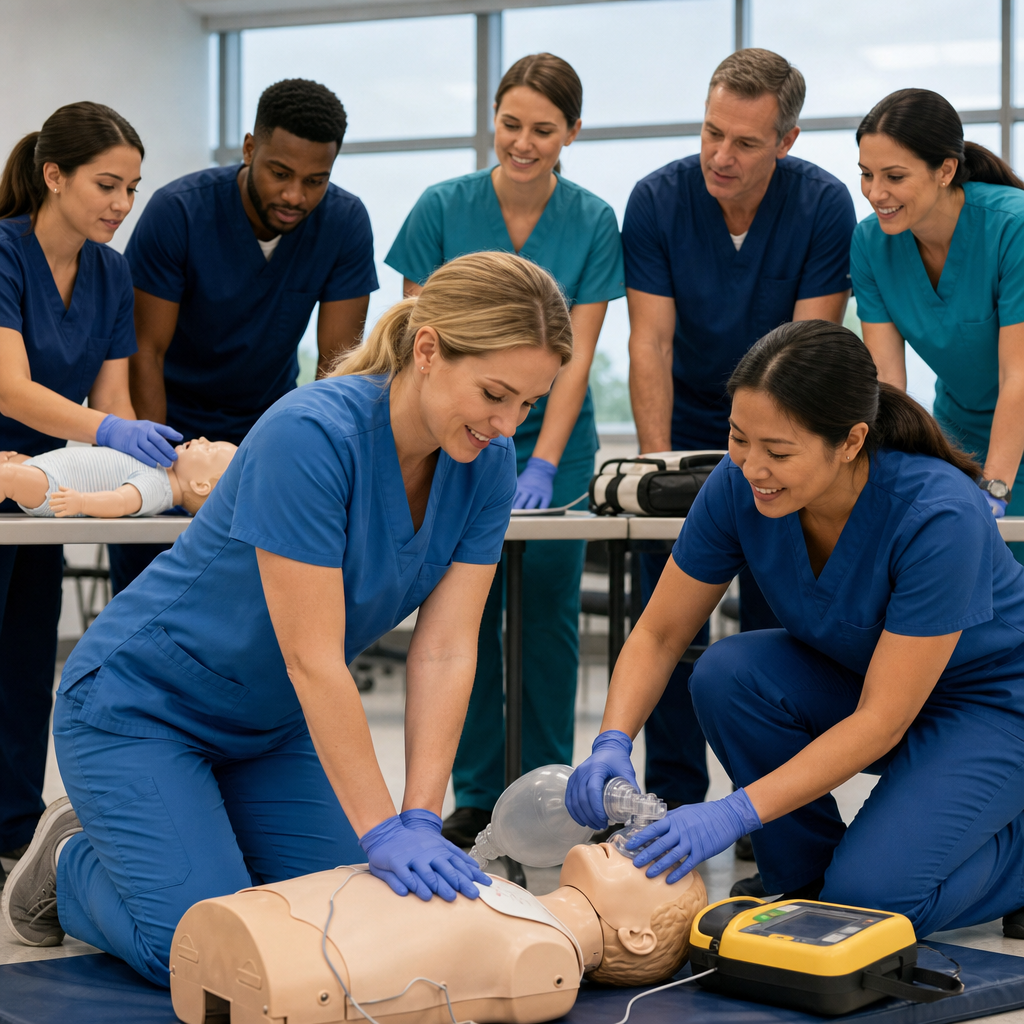
The in-person session focuses entirely on practical application. Your team practices chest compressions on manikins, operates defibrillation equipment, manages airways, administers medications, and works through complex team scenarios. This hands-on practice is where real learning happens. Your instructors watch each team member perform skills, provide corrective feedback, and ensure everyone demonstrates competency before certification.
This blended approach respects your team’s schedules while ensuring high-quality instruction. Your nurses don’t waste time sitting through PowerPoint presentations when they could be on a unit. Instead, they engage with critical content flexibly, then arrive at the in-person session ready to practice and demonstrate mastery.
Nationwide Network of Training Locations Across California
We operate over 100 training locations throughout California, from major urban centers to smaller communities. In the San Francisco Bay Area, we have clinics in San Francisco (including Mission District, Nob Hill, and Telegraph Hill), Oakland (Fruitvale, Lake Merritt, and Piedmont), Berkeley (Downtown and Solano), San Jose (Downtown, Japantown, South, and Willow Glen), and surrounding communities like Fremont, Hayward, and Pleasanton.
Our Sacramento locations include Arden, Midtown, Oak Park, and Rosemont. We also serve healthcare teams across inland California with clinics in Fresno, Modesto, Stockton, and smaller communities including Chico, Redding, and Visalia. For teams in coastal regions, we offer training in Santa Cruz, Salinas, and Santa Rosa (with locations in both Downtown and Larkfield-Wikiup).
If your team prefers onsite training at your facility, we can bring instructors and equipment to your location if you’re based in an area we service. This approach eliminates commute time for your staff and keeps your team in a familiar environment while they train.
Real-World Success Stories from Healthcare Organizations
A critical care nursing team at a major Sacramento hospital struggled with certification scheduling across their three-shift rotation. New nurses were constantly rotating through makeup training, and the unit manager spent hours managing certification compliance. They moved to our group clinic model, scheduling ACLS training twice annually during scheduled unit education days. Within one year, 100% of the team maintained current certifications, and the manager cut administrative time by 60%.
An independent dental practice in the San Francisco Bay Area had three dentists and two hygienists with staggered certification dates scattered across the year. They consolidated their training into two annual group PALS clinics we conduct at our nearby San Francisco location. Now they coordinate their certification schedule, reduce travel time, and save approximately 40% on training costs compared to individual course fees.
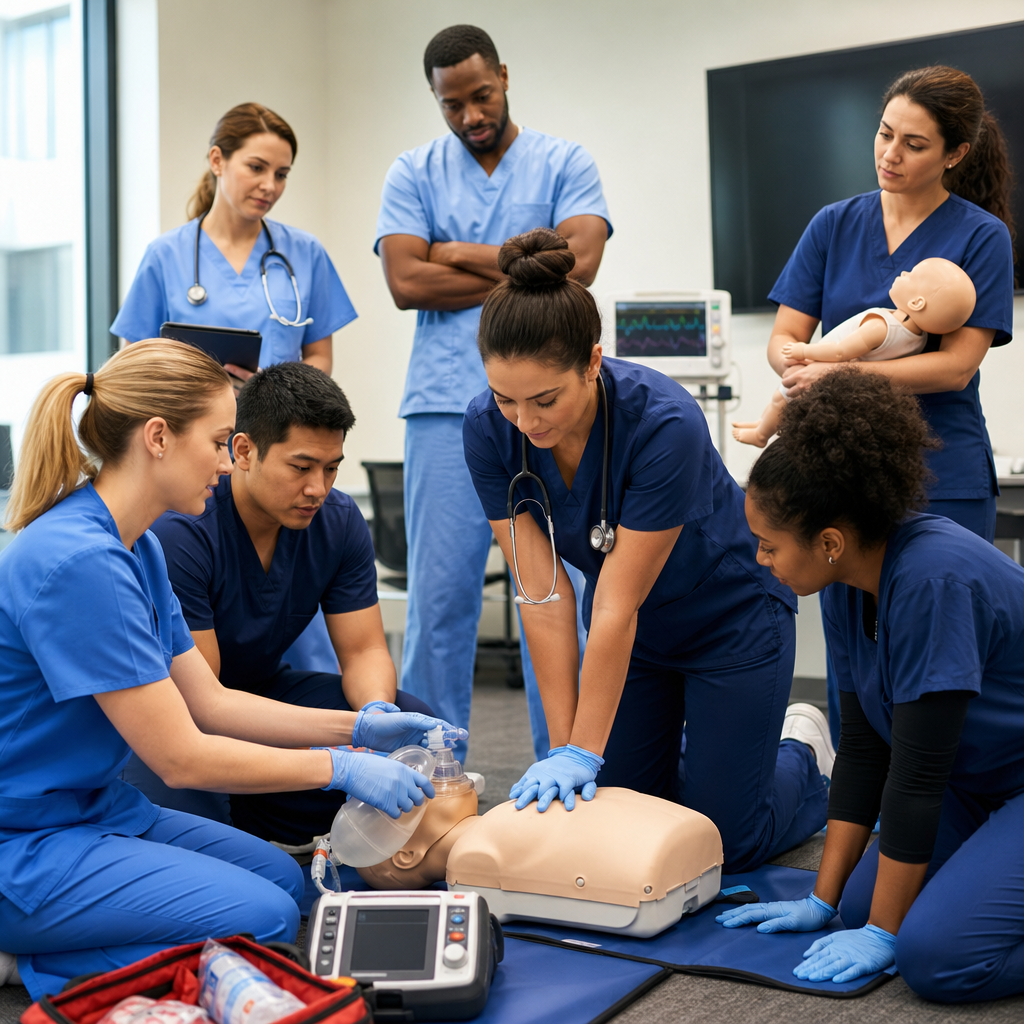
An EMS service covering several Northern California communities needed rapid certification for new paramedics. Rather than waiting for seats in standard courses, they contracted us to deliver dedicated ACLS and PALS clinics for their new hire cohorts. We now run two clinics annually specifically for their organization, scheduling around academy graduation dates and ensuring new paramedics are certified before operational deployment.
Getting Started with Your Team’s Group Training Clinic
Begin by assessing your team’s current certification status. Which staff members need ACLS versus PALS certifications? When do those certifications expire? Are any team members already due for renewal? Understanding your certification landscape helps us recommend optimal scheduling.
Next, identify your preferred training window. Do you want to schedule training quarterly, semiannually, or annually? Will you train your entire team simultaneously or divide into smaller cohorts? Would you prefer onsite training at your facility or using one of our regional locations?
Contact us with your team size, certification needs, and preferred dates. We’ll propose available clinic schedules, provide group pricing, and answer questions about curriculum, format, and logistics. Most organizations find that coordinating group training reduces administrative burden, lowers costs, and creates stronger team readiness than scattered individual certifications. We’re ready to help your healthcare team maintain current, high-quality advanced cardiac training.
Register for a class today.
Frequently Asked Questions (FAQ)
How quickly can we schedule group ACLS and PALS training for our healthcare team?
We offer flexible scheduling across our 100+ California locations, with sessions available daily at most facilities. Many of our healthcare partners schedule their teams within 1-2 weeks of contacting us, and we can often accommodate larger groups with expedited bookings. Once you reach out, our team works directly with you to find dates that minimize disruption to your clinical operations.
What makes your group training different from having staff complete certifications individually?
We design our group clinics specifically for healthcare teams, meaning your staff learns together in a coordinated environment that reflects how you actually work. Our blended approach combines virtual instruction with hands-on skills sessions, allowing us to move through material efficiently without pulling people from the floor for extended periods. We also provide same-day certification, so your entire team can maintain current credentials simultaneously rather than staggered throughout the year.
Do you offer onsite training at our facility, or do we need to come to one of your locations?
We primarily conduct training at our established locations throughout California, which allows us to maintain consistent quality standards and ensure proper equipment setup for skills practice. With over 100 training sites across the state, we typically have convenient options near your facility. Our team can discuss which location works best for your team’s schedule and location when you contact us about your group training needs.