
Table of Contents
- Why Dog Bite Injuries Require Immediate First Aid Response
- Assess the Severity of the Dog Bite Wound
- Initial Steps to Stop Bleeding and Clean the Wound
- When to Seek Emergency Medical Care for Dog Bites
- Infection Prevention and Rabies Risk Assessment
- Professional First Aid Training Prepares You for Animal Emergencies
- Our Comprehensive First Aid Certification Program
- Blended Learning for Real-World Emergency Preparedness
- Flexible Scheduling Across 100+ California Locations
- Get Your First Aid Certification Today
- Frequently Asked Questions (FAQ)
Why Dog Bite Injuries Require Immediate First Aid Response
Dog bites happen quickly, but your response in the first few minutes can prevent serious infection and reduce injury severity. Whether you’re a healthcare professional, parent, or community member in California, understanding how to provide immediate first aid for dog bite wounds could make a meaningful difference. This guide walks you through assessment, wound care, infection prevention, and when professional medical evaluation becomes essential.
Over 4.7 million dog bites occur annually in the United States, with roughly 800,000 requiring medical attention. California sees its share of incidents across urban and suburban areas, from Sacramento to San Diego. Most dog bite injuries carry risk of infection, tissue damage, and in some cases, rabies exposure. The first moments after a bite are critical because rapid intervention reduces bacterial contamination and helps preserve tissue function.
Dog bite wounds differ from other injuries because teeth create deep puncture channels that close quickly on the surface while containing bacteria underneath. This creates an ideal environment for infection to develop within hours. Additionally, saliva from dogs contains numerous bacteria, including Pasteurella multocida and Staphylococcus species, which readily colonize puncture wounds. Your immediate first aid response interrupts this process and establishes a safer wound environment.
Key takeaway: Begin first aid within the first 15 minutes of a bite. Early intervention reduces infection risk by up to 50 percent compared to delayed treatment.
Assess the Severity of the Dog Bite Wound
Before treating any dog bite, determine whether the injury requires emergency care or can be managed with basic first aid at home. Severity depends on bite depth, location, tissue involvement, and the victim’s overall health status.
Minor bites show superficial skin damage with minimal bleeding and no puncture wounds. The skin may have tooth marks or shallow scratches but remains largely intact. These bites present lower infection risk and can typically be treated with thorough cleaning and home monitoring.
Moderate bites involve deeper puncture wounds that may bleed steadily and show visible tissue damage. The bite might be on the arm, leg, or hand, with clear separation between teeth marks. These wounds require professional medical evaluation to assess for muscle or nerve damage.
Severe bites penetrate deeply, involve the face or hand, show significant bleeding, or affect areas near major blood vessels or joints. Bites that create large flaps of torn skin, expose underlying tissue, or occur on the hand demand immediate emergency care. If the bite involves an immunocompromised person, child under five, or elderly individual, treat it as more serious regardless of visible damage.
Ask these assessment questions:
- Does bleeding continue after 10 minutes of direct pressure?
- Are teeth marks deep enough to suggest puncture wounds?
- Is the bite on the face, hand, or joint area?
- Did the dog appear sick, aggressive, or unvaccinated?
Answering “yes” to any of these warrants professional evaluation.
Initial Steps to Stop Bleeding and Clean the Wound
Once you’ve determined the bite can be initially managed at home, control bleeding first, then cleanse thoroughly.
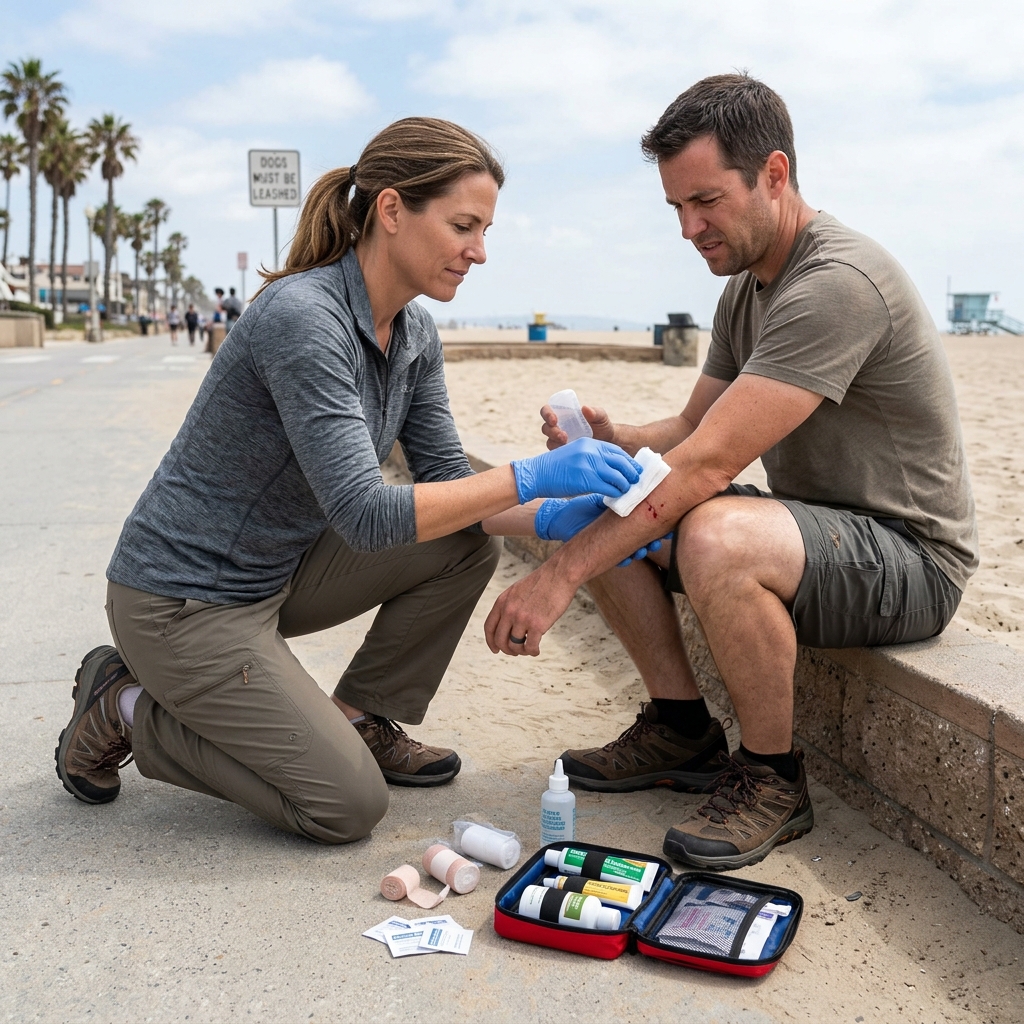
Stop the bleeding: Apply direct pressure to the wound using clean gauze or cloth for 10 to 15 minutes. Resist the urge to repeatedly check if bleeding has stopped, as this disrupts clot formation. If the wound continues bleeding heavily after 15 minutes, this indicates a need for professional medical evaluation. Elevate the bitten area above heart level if it’s on a limb.
Cleanse the wound: Wash the bite area with soap and cool running water for at least five minutes. Use your fingers or a soft brush to gently scrub inside puncture wounds, as this removes bacteria and foreign debris. Do not scrub so hard that you damage healthy tissue. If available, use hydrogen peroxide or saline solution to flush punctures after initial soap washing.
Pat dry and assess: Once clean, gently pat the area with clean gauze. Avoid using tight bandaging that seals the wound completely, as puncture wounds benefit from remaining open to air and draining naturally for the first 24 hours.
For mild bites, apply antibiotic ointment and cover with a clean bandage. Change the bandage daily and monitor for increasing redness, warmth, swelling, or discharge. These signs suggest developing infection requiring medical attention.
When to Seek Emergency Medical Care for Dog Bites
Certain situations demand immediate professional medical evaluation, even if the wound appears manageable. Seek emergency care if any of these apply:
- Heavy bleeding that doesn’t stop after 15 minutes of direct pressure
- Puncture wounds from a large dog, as deeper tissue may be involved
- Bites on the face, hand, foot, or genitals, which have higher infection rates and cosmetic concerns
- Bites from a dog of unknown vaccination status or that appeared sick or aggressive
- Signs of rabies in the dog (excessive drooling, paralysis, unusual aggression, or disorientation)
- The victim is pregnant, immunocompromised, or taking immunosuppressant medications
- Puncture wounds showing signs of infection within 24 to 48 hours (increasing pain, red streaking, pus, fever)
- Any bite on a child under five or elderly person
Professional medical providers can assess damage to underlying tissues, prescribe appropriate antibiotics, and administer rabies prophylaxis if needed. They’ll also evaluate whether wound closure is appropriate or if leaving it open serves the patient better.
Infection Prevention and Rabies Risk Assessment
Dog bite infection develops in 5 to 20 percent of cases, depending on wound depth and cleanliness. Pasteurella infections typically appear within 24 to 48 hours, causing increased pain, swelling, and discharge. Staph and Streptococcus infections may develop more slowly. Severe infections can progress to cellulitis, abscess formation, or systemic infection requiring hospitalization.
Rabies represents the most serious potential complication of any dog bite, though it remains rare in California due to widespread animal vaccination programs. However, rabies is almost always fatal once symptoms appear, making prevention through post-exposure prophylaxis absolutely critical if exposure is suspected.
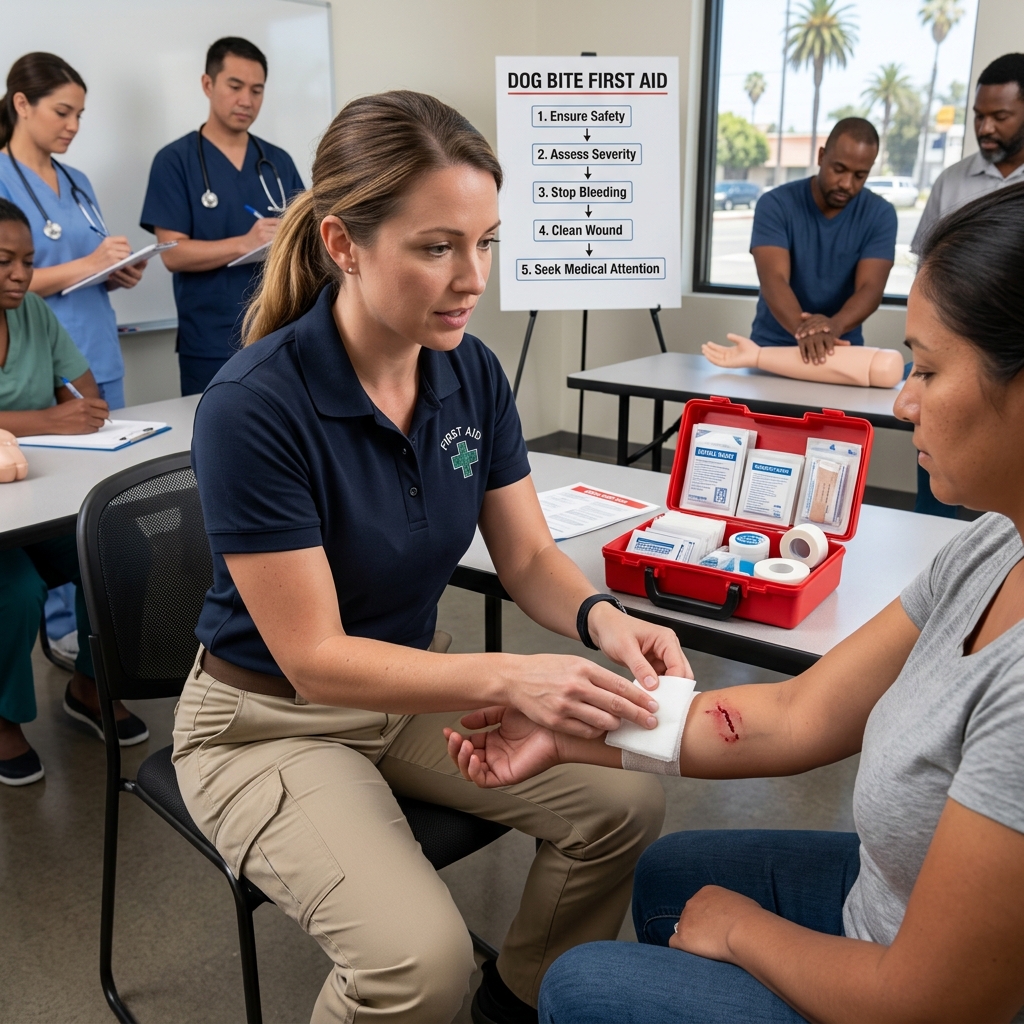
Key infection prevention steps include:
- Cleaning the wound thoroughly within the first hour
- Avoiding sealed bandaging on puncture wounds for 24 hours
- Monitoring daily for infection signs (increasing redness, warmth, drainage, red streaking)
- Taking prescribed antibiotics exactly as directed if the doctor recommends them
- Keeping the wound clean and dry
- Seeking immediate care if infection signs develop
For rabies assessment, gather information about the dog: Was it owned and vaccinated? Did it appear healthy? How did the contact occur? Dogs showing signs of illness, disorientation, excessive drooling, or unprovoked aggression suggest possible rabies. If you cannot confirm the dog’s vaccination status, rabies post-exposure prophylaxis becomes necessary as a precaution. This treatment is highly effective when started promptly.
Professional First Aid Training Prepares You for Animal Emergencies
Knowing how to respond to emergencies like dog bites represents just one component of comprehensive first aid readiness. Healthcare professionals, parents, and community members benefit from formal first aid training that covers wound assessment, infection control, bleeding management, and emergency decision-making. Professional training provides hands-on practice with realistic scenarios, helping you respond confidently when stress and time pressure challenge clear thinking.
Our instructors emphasize practical skills over memorization. When you complete formal first aid training, you learn not just what to do, but why each step matters and when situations exceed home care boundaries. You practice on realistic wound models, learn to recognize infection signs, and develop decision trees for determining urgency levels. This preparation reduces response time and improves outcome quality.
For healthcare professionals in California, first aid certification demonstrates competency to employers and licensing boards. For parents and community members, it provides peace of mind and the ability to help during critical moments before professional responders arrive.
Our Comprehensive First Aid Certification Program
We design our first aid courses for California residents seeking practical, applicable emergency response training. Our program covers wound care, bleeding control, shock management, and infection prevention alongside CPR and basic life support skills. We combine blended learning with hands-on practice to ensure you master both knowledge and technique.
Our instructors bring real-world healthcare and emergency response experience. They understand the specific challenges California residents face and tailor instruction accordingly. Whether you’re in Berkeley or working across multiple California locations, our courses provide consistent, high-quality instruction focused on skills you’ll actually use.
We maintain a low price guarantee across all our classes, ensuring affordability doesn’t compromise your access to quality training. Group discounts support workplace training initiatives, making certification accessible for healthcare teams and corporate settings. Daily course offerings mean you can find scheduling that works with your professional obligations.
Blended Learning for Real-World Emergency Preparedness
We recognize that busy professionals need flexible learning options. Our blended approach combines online theory modules with in-person skills practice sessions. Online components cover anatomy, infection prevention, legal aspects, and decision-making frameworks at your own pace. In-person sessions focus on hands-on practice with wound care mannequins, bleeding simulation equipment, and realistic scenarios that mirror actual emergencies.
This combination maximizes learning efficiency. You master foundational knowledge during online modules, then spend in-person time actually practicing skills under instructor guidance. Our instructors provide immediate feedback and correction, helping you develop muscle memory and confidence. You leave certification ready to respond, not just knowledgeable about theory.
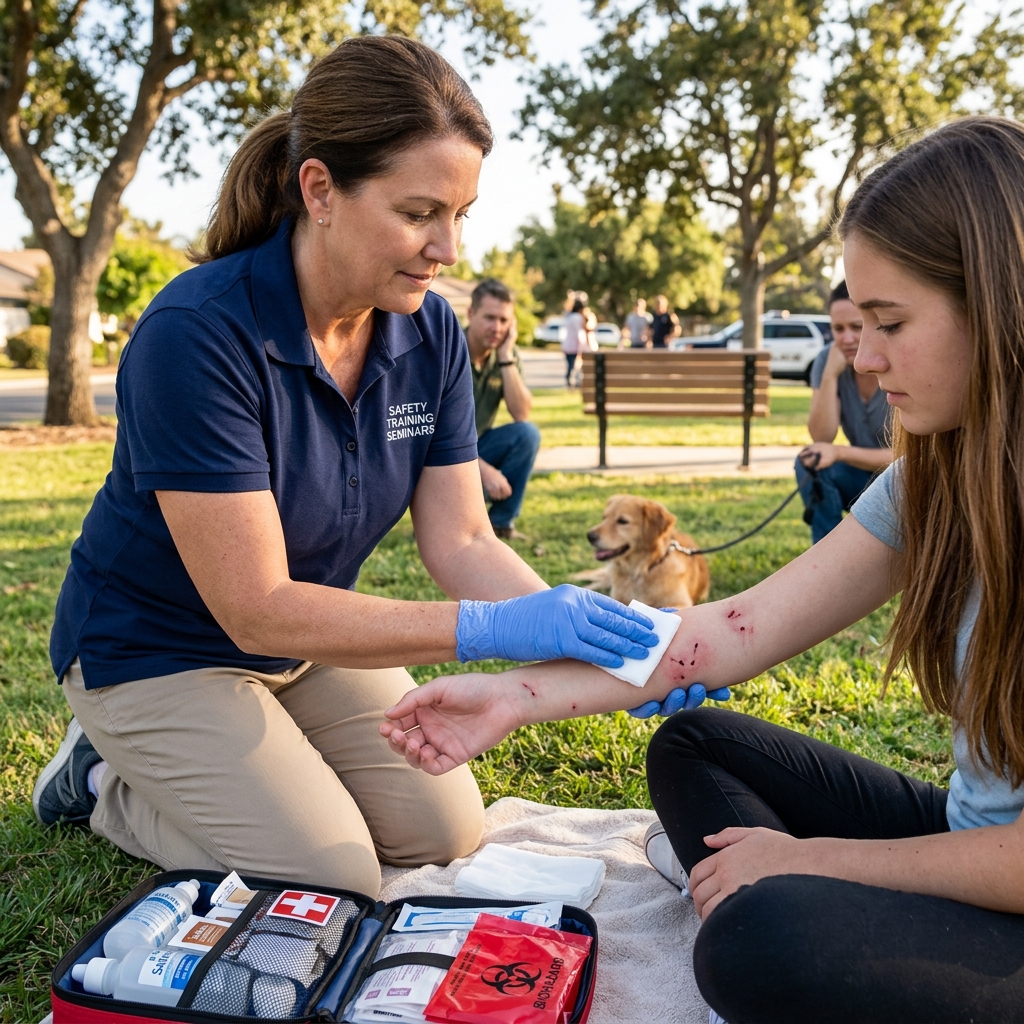
The blended model also accommodates varying learning styles. Visual learners benefit from detailed online modules with diagrams and videos. Kinesthetic learners excel during hands-on practice with our realistic training equipment. This flexibility helps ensure you genuinely master skills rather than passively receiving information.
Flexible Scheduling Across 100+ California Locations
We operate over 100 training locations throughout California, from Alameda and Antioch to Visalia and Woodland. With multiple sites across the San Francisco Bay Area including San Francisco, Oakland, and San Jose, plus coverage in Sacramento, Fresno, and Southern California regions, you’ll find convenient training near your home or workplace. Our locations in Fresno, Modesto, and Stockton serve Central Valley professionals, while Bay Area sites support the large healthcare population in Concord, Pleasanton, and surrounding communities.
We offer daily course sessions across these locations, giving you flexibility to schedule training around work shifts and professional demands. Weekend and evening sessions accommodate healthcare workers with varying schedules. Whether you work in downtown San Francisco, suburban Danville, or rural Redding, we have local training options.
This extensive network ensures certification remains accessible regardless of where you practice in California. You can complete training at the location most convenient to your schedule, knowing you’re receiving the same quality instruction and certification standards across all our sites.
Get Your First Aid Certification Today
Your readiness to respond effectively during emergencies begins with proper training. Whether you’re responding to a dog bite, cardiac emergency, or other medical crisis, our first aid certification provides the knowledge and confidence you need. Schedule your blended first aid course today at any of our 100+ California locations, including sites throughout the Bay Area, Sacramento, Central Valley, and beyond. We maintain our low price guarantee and offer group discounts for workplace training. Start your certification journey now and join thousands of California healthcare professionals and community members who trust our practical, comprehensive approach to emergency preparedness.
Register for a class today.
Frequently Asked Questions (FAQ)
What first aid certification courses do we offer for handling animal injuries like dog bites?
We provide comprehensive First Aid certification training that equips you with the knowledge to respond confidently to animal bite emergencies and other injuries. Our courses combine virtual instruction with hands-on skills practice, so you can learn bite assessment, wound cleaning techniques, infection prevention, and when to escalate to emergency care. We offer flexible scheduling across more than 100 locations throughout California, making it convenient for you to get certified on your timeline.
How can our blended learning approach prepare me for real animal bite emergencies?
Our blended model lets you study critical first aid principles online at your own pace, then attend in-person sessions where you practice actual wound care techniques and emergency response skills with our instructors. This combination ensures you’re not just reading about dog bite treatment, but actually developing the muscle memory and confidence needed when a real emergency occurs. We’ve designed our program specifically to bridge the gap between knowledge and real-world application.
Where can I access our first aid training in California?
We operate over 100 training locations throughout California, from the Bay Area to Southern California and inland regions like Sacramento and Fresno. You can find a class time and location that works for your schedule, and we maintain our low price guarantee across all our facilities. Visit our website at https://safetytrainingseminars.com to browse available courses near you.