
Table of Contents
- Why AHA Certifications Matter for Your California Healthcare Career
- Understanding California Nursing Board Certification Requirements
- How California Medical Boards Recognize AHA Credentials
- AHA vs Non-AHA Certifications: What California Actually Requires
- Our Approach to AHA-Aligned Training and Compliance
- BLS and ACLS Certification Standards in California
- PALS and NRP Certifications for California Healthcare Providers
- How We Help You Meet California Board Requirements
- Fast-Track Certification with Same-Day Cards
- Staying Current with California Board Changes
- We Make California AHA Certification Accessible and Affordable
- Frequently Asked Questions (FAQ)
Why AHA Certifications Matter for Your California Healthcare Career
American Heart Association (AHA) certifications are the gold standard for life-saving skills in California’s healthcare system. Whether you’re a nurse, dentist, paramedic, or other medical professional, AHA credentials directly impact your employability, licensure renewal, and ability to practice in patient care settings.
California’s regulatory boards—including the Medical Board of California (MBC) and the California Board of Registered Nursing (BRN)—recognize and often mandate AHA certifications as proof of competency in emergency response. These credentials aren’t just nice-to-have additions to your resume. They’re requirements that protect patients and ensure you can respond confidently when lives depend on your actions.
We understand that navigating certification requirements across California’s diverse healthcare landscape can feel overwhelming, especially when you’re balancing clinical duties with continuing education. That’s why we’ve built our training programs around the exact standards California’s regulatory bodies enforce. Our courses are taught by experienced instructors across more than 100 locations statewide, from San Francisco to Fresno, making compliance accessible wherever you practice.
Understanding California Nursing Board Certification Requirements
The California Board of Registered Nursing (BRN) doesn’t mandate a single AHA certification for all nurses, but certain specialties and practice settings absolutely require them. Critical care nurses, emergency department staff, and nurses working in surgical settings must hold current Basic Life Support (BLS) certification at minimum.
Many employers also require ACLS (Advanced Cardiovascular Life Support) or PALS (Pediatric Advanced Life Support) depending on the patient population you serve. These aren’t optional extras—they’re tied directly to job descriptions, shift eligibility, and performance evaluations at hospitals throughout California.
When you renew your nursing license with the BRN, you’ll need documented proof of current certifications. AHA cards serve as that proof. We make this straightforward by issuing same-day digital and physical cards upon course completion, so you can update your license information immediately. Our locations in Berkeley, Sacramento, and San Jose handle high volumes of nursing professionals specifically because we understand the renewal timeline pressures you face.
How California Medical Boards Recognize AHA Credentials
The Medical Board of California requires physicians, physician assistants, and other licensed medical professionals to maintain current BLS certification as a condition of their active license. This isn’t a suggestion—it’s codified in California Code of Regulations.
For specialists like emergency medicine doctors, cardiologists, and pediatricians, ACLS and PALS certifications often become employment requirements rather than board requirements. However, your employer’s credentialing committee will reference California’s regulatory stance when setting your facility’s standards, meaning AHA recognition at the state level directly influences what your hospital requires of you.
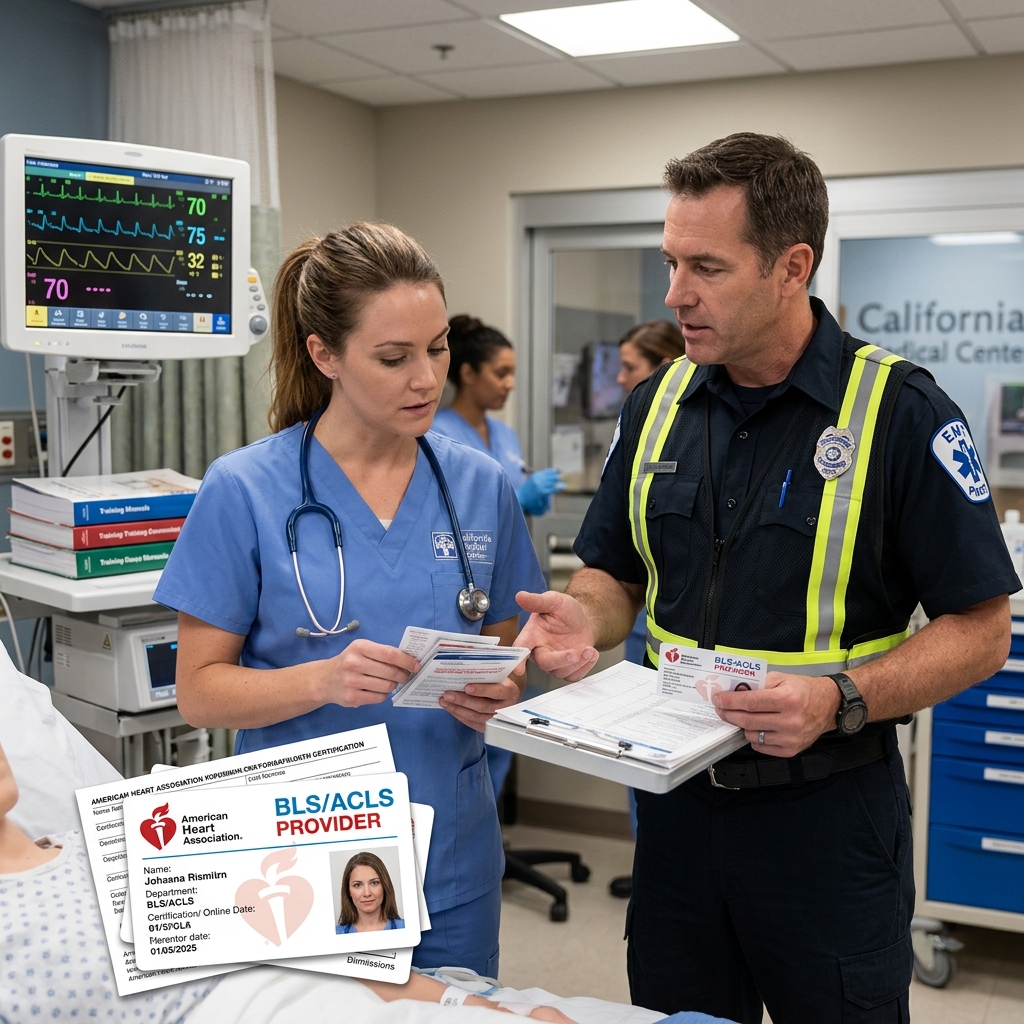
We’ve worked with medical staff offices across California who verify AHA credentials during privileging and renewal processes. This means your certification needs to be from a recognized AHA provider, properly documented, and renewals need to happen on schedule. Our tracking system helps you avoid the compliance gaps that can delay license renewals or credentialing updates.
AHA vs Non-AHA Certifications: What California Actually Requires
Here’s the direct answer: California’s nursing and medical boards specifically recognize AHA certifications. While other organizations offer BLS and similar courses, California’s regulatory framework has built its requirements around AHA standards.
Some employers might accept non-AHA credentials, but doing so creates administrative friction. When you transfer between facilities, apply for new privileges, or renew your license, having an AHA card eliminates questions and delays. You won’t need to explain your certification’s origin or prove equivalency.
This doesn’t mean non-AHA providers are inferior—it means California’s boards have established AHA as the regulatory standard. Working with a certified AHA training center like ours ensures your credential counts everywhere in California without exception. We’re authorized training partners, which means our instructors follow exact AHA curricula and our cards carry the weight California’s systems recognize.
Our Approach to AHA-Aligned Training and Compliance
We’ve designed our training model around California’s specific regulatory environment. Our blended learning approach combines online knowledge review with in-person skills practice, allowing you to study on your schedule while ensuring you get hands-on instruction from experienced educators.
Our courses follow AHA guidelines precisely, covering the clinical scenarios and decision-making frameworks that California employers expect. We don’t cut corners or modify content to move people through faster—patient safety outcomes depend on thorough, properly executed training.
Across our locations in Oakland, San Jose, and elsewhere throughout California, our instructors bring real clinical experience. Many have worked in emergency departments, critical care units, or field settings, so they can connect course material to situations you’ll actually encounter in your practice. This practical approach helps the training stick and makes you genuinely more confident when responding to emergencies.
BLS and ACLS Certification Standards in California
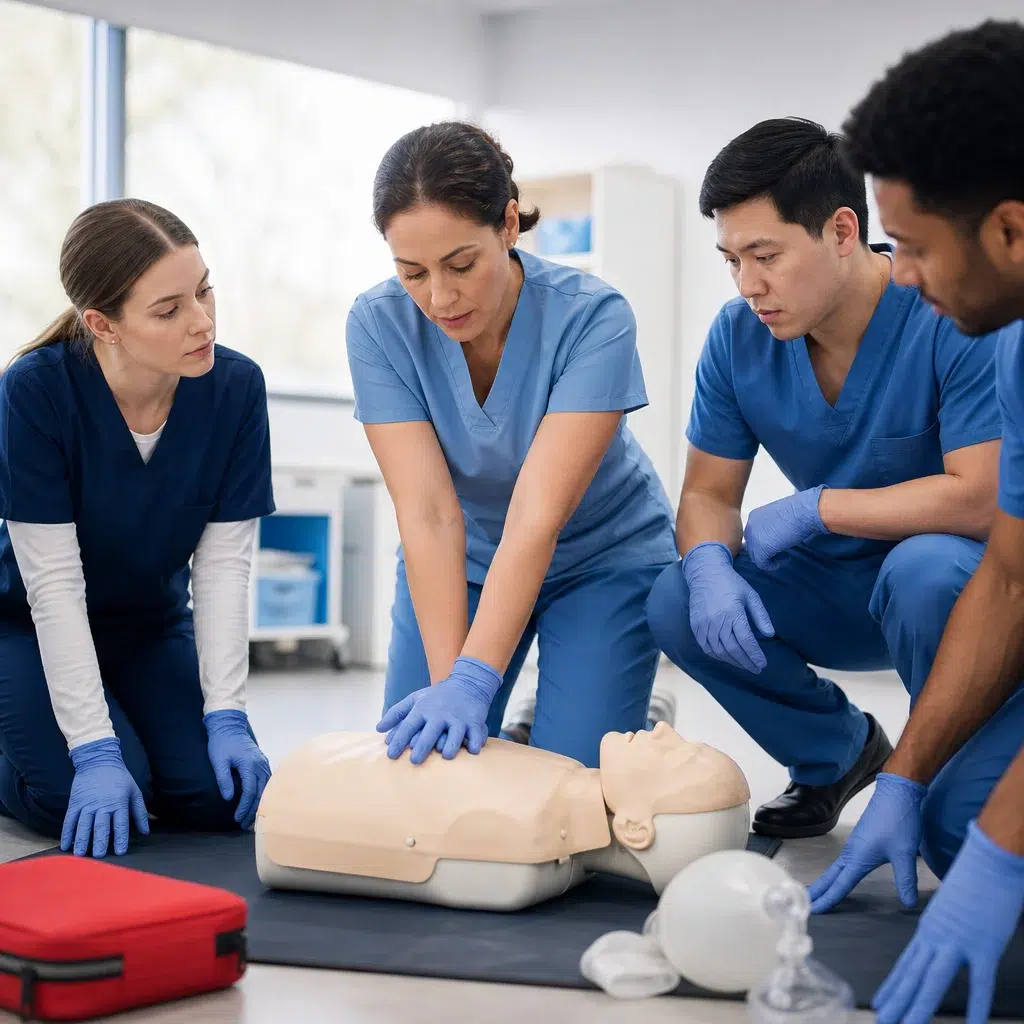
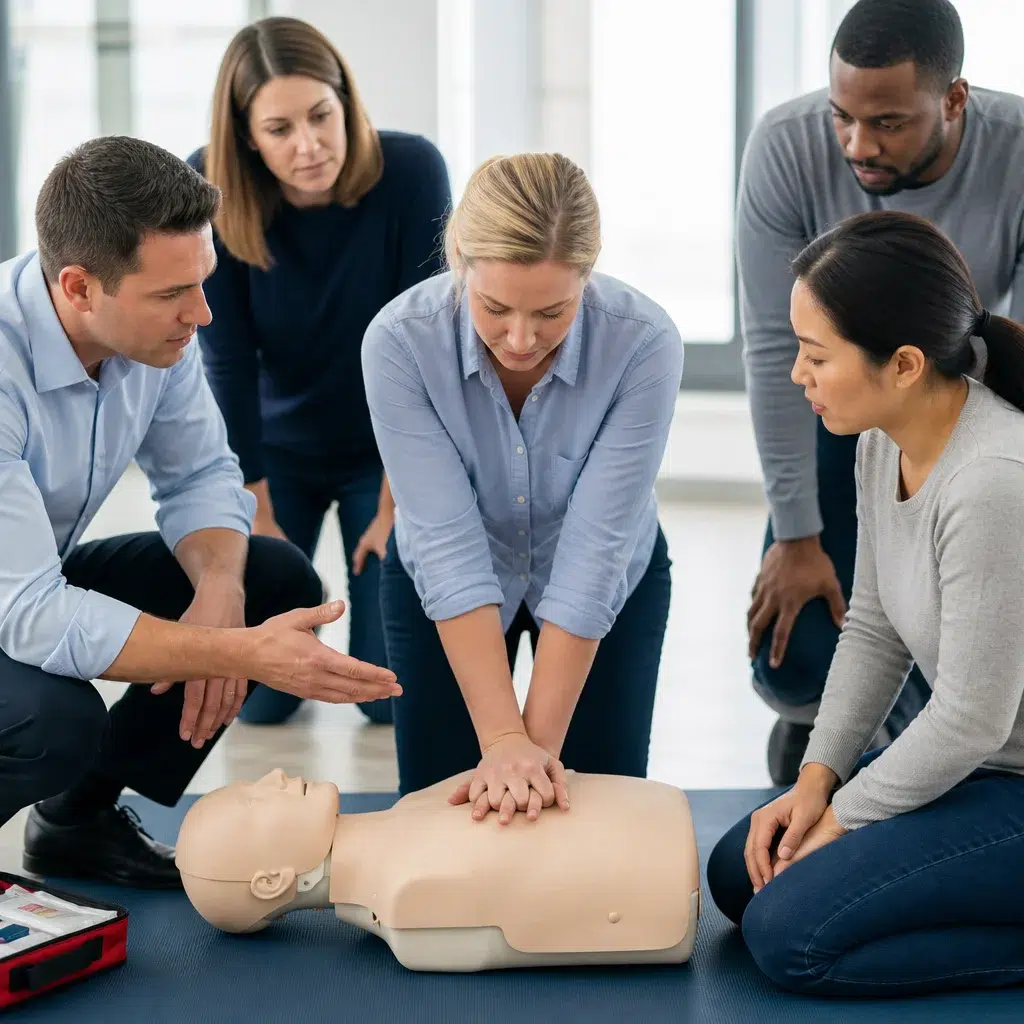
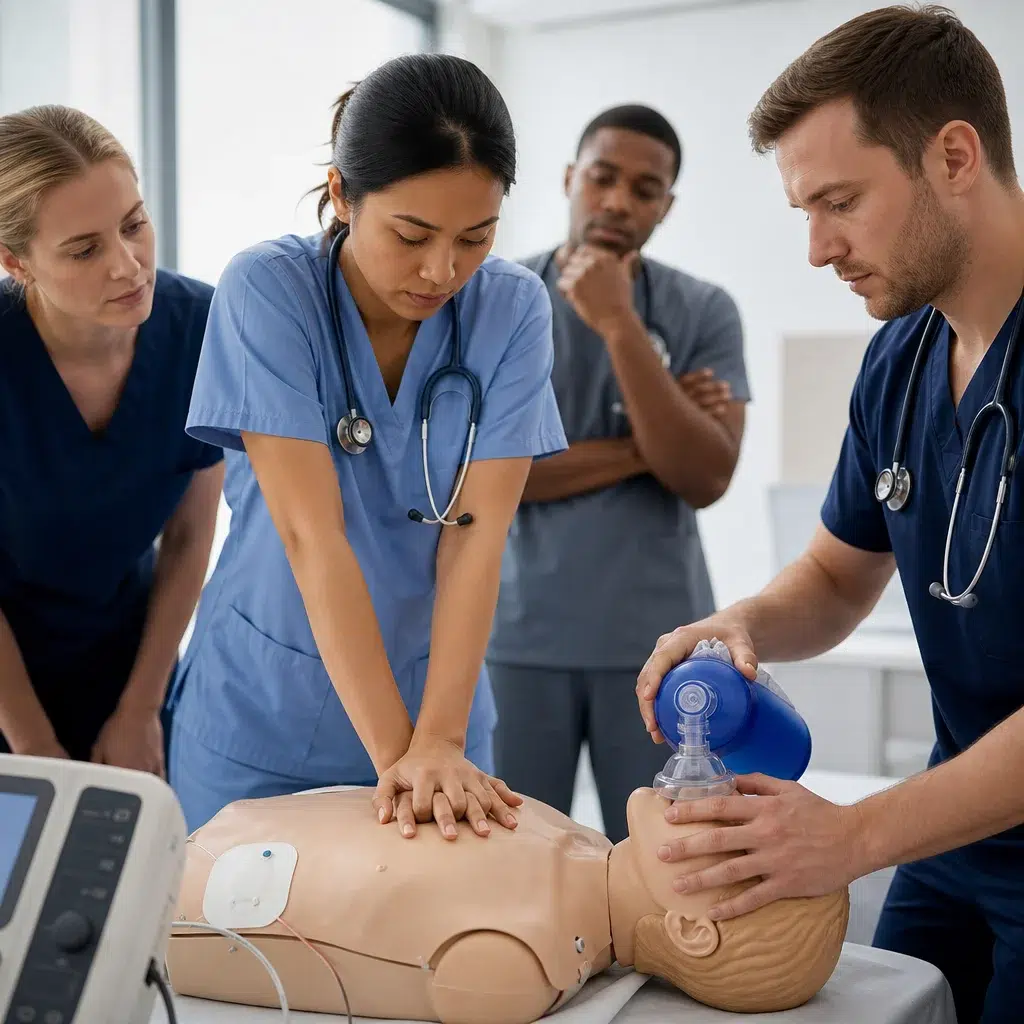
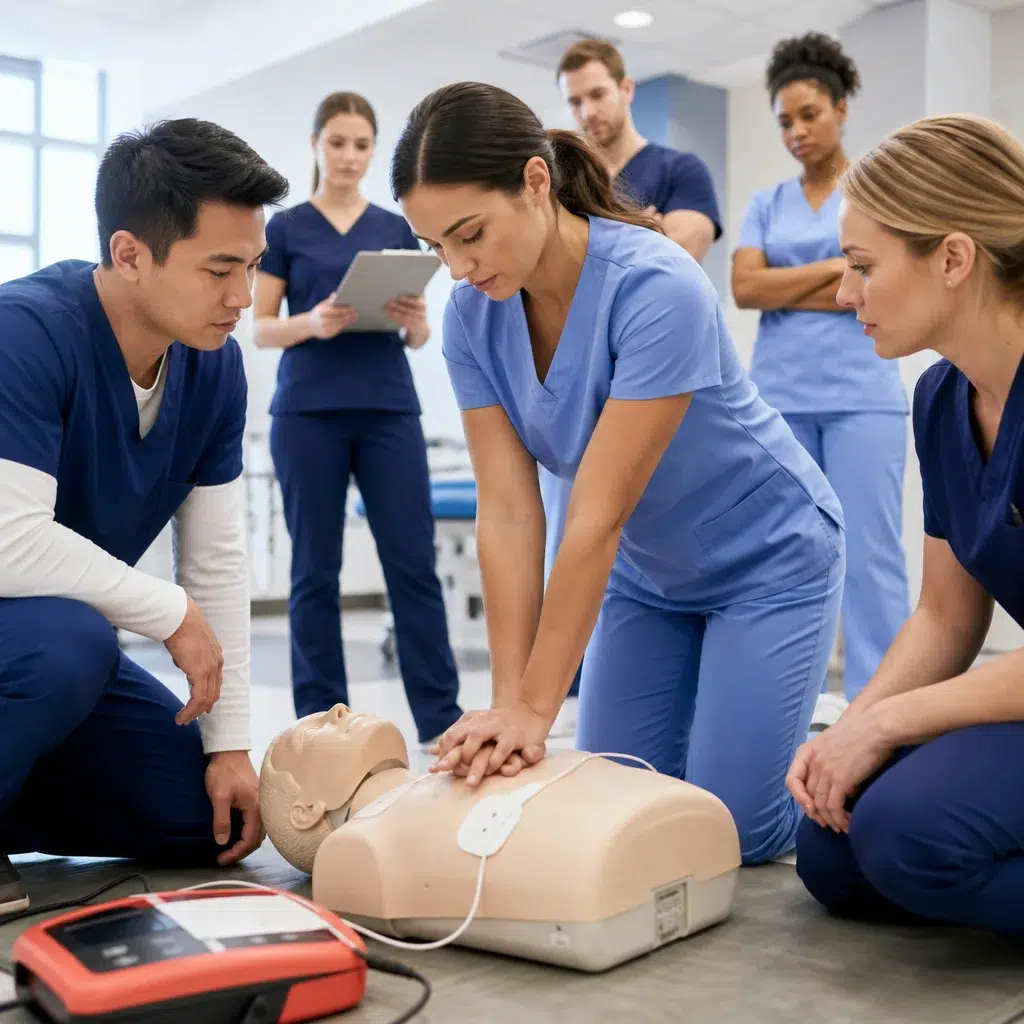
Basic Life Support (BLS) certification is where most California healthcare professionals start. This foundational credential covers CPR techniques, defibrillator use, and airway management for adults and children. BLS is required or strongly preferred for nearly every clinical role in California.
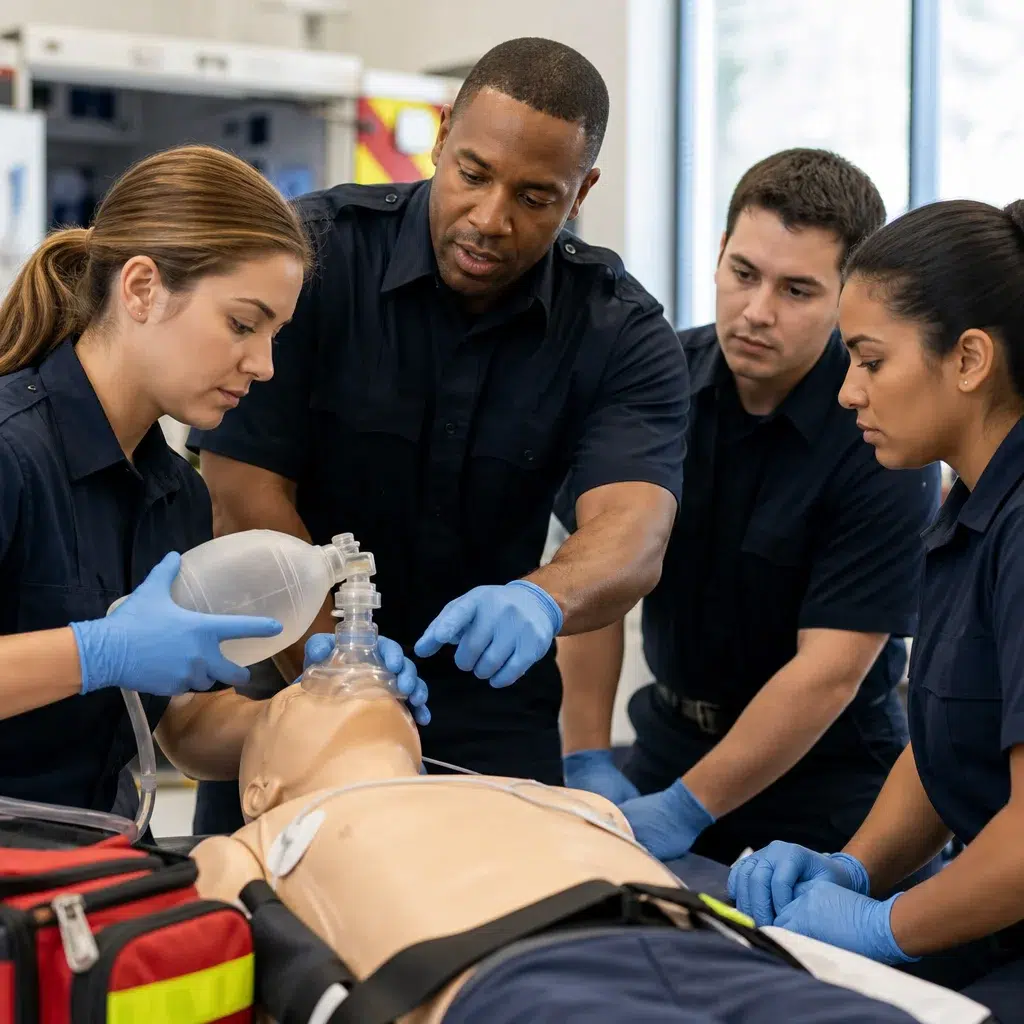
Advanced Cardiovascular Life Support (ACLS) builds on BLS by addressing complex cardiac arrest scenarios. If you work in areas where you might manage medications, interpret cardiac rhythms, or lead resuscitation teams, California employers expect ACLS. Emergency departments, intensive care units, and operating rooms across California require this credential for nursing and medical staff.
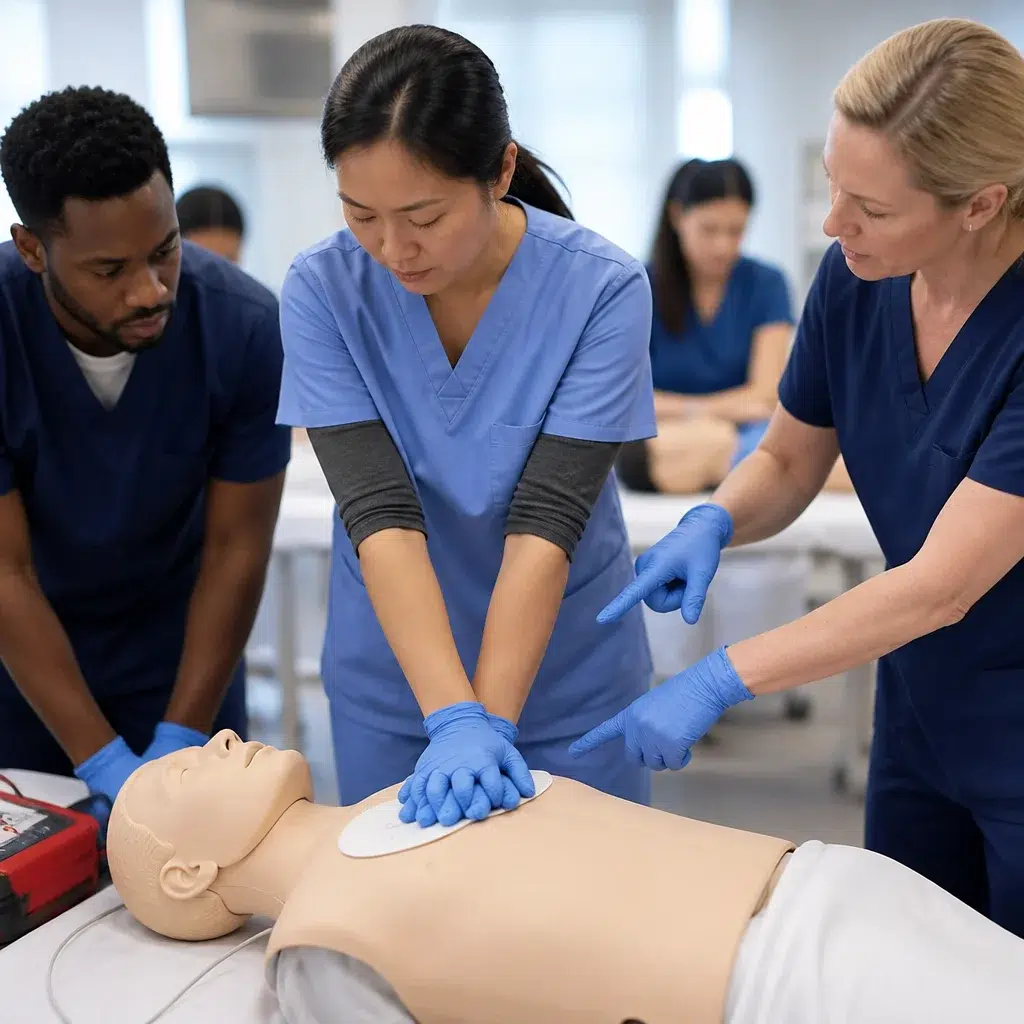
Both certifications require hands-on skills testing where you demonstrate competency to our instructors. We offer daily BLS classes and regular ACLS sessions at convenient locations. Our same-day card program means you can complete training in the morning and have documentation ready for your employer by afternoon—critical if you’re starting a new position or have an upcoming credentialing deadline.
PALS and NRP Certifications for California Healthcare Providers
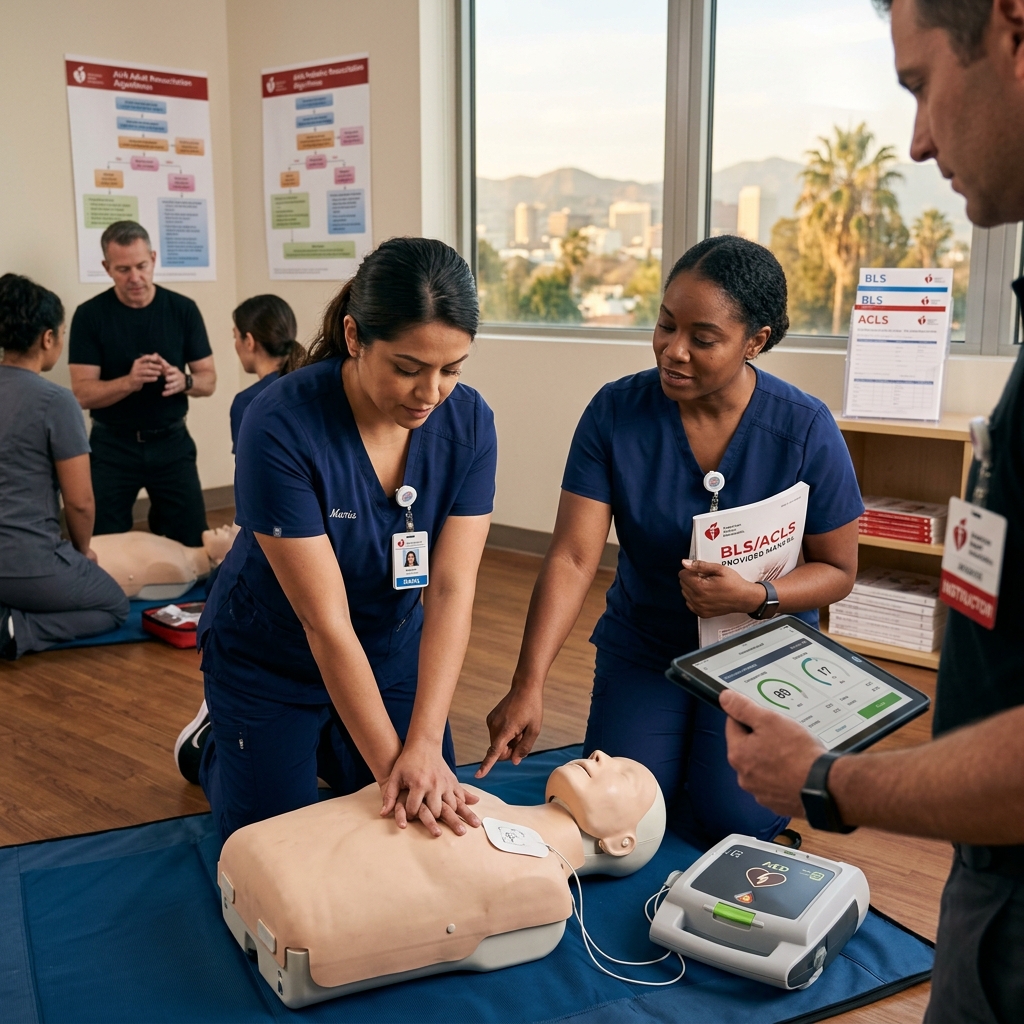
Pediatric Advanced Life Support (PALS) is essential if you work with children in any capacity. Pediatricians, emergency nurses, anesthesiologists, and pediatric specialists throughout California maintain PALS as a core requirement. The curriculum addresses age-specific cardiac rhythms, medication dosing, and pediatric resuscitation scenarios that differ significantly from adult protocols.
Neonatal Resuscitation Program (NRP) certification is mandatory for healthcare providers in labor and delivery, neonatal intensive care, and obstetric settings. California hospitals delivering babies require at least some staff to maintain current NRP credentials, and many require it for all birthing suite personnel.
We offer PALS certification courses at multiple locations including Pleasanton, Walnut Creek, and Petaluma, with instructors trained specifically in pediatric and neonatal scenarios. These specializations require different skill stations and clinical reasoning than adult-focused courses, so choosing a provider experienced in pediatric training matters significantly.
How We Help You Meet California Board Requirements
Meeting California’s regulatory requirements doesn’t mean sacrificing convenience or spending excessive time away from clinical practice. We’ve built our scheduling, locations, and delivery model specifically to serve healthcare professionals’ constraints.
Our online components let you complete didactic material at 11 p.m. after your shift ends or during a weekend when your schedule allows. Then you schedule your skills session at a location near your home or workplace—we have 100+ locations across California, including Alameda, Antioch, Bakersfield, and dozens more, so you can often find something within 15 minutes of where you work.
When you complete your course with us, we handle the administrative side. Your AHA card is issued immediately, either digital or printed. We can email it directly to your employer’s credentialing department or licensing board. This reduces the documentation burden you’d otherwise carry between institutions.
Fast-Track Certification with Same-Day Cards
California’s healthcare environment moves quickly. You might accept a new position and need ACLS certification before your start date, or your facility’s compliance audit might flag an expiring credential. We offer same-day card issuance so you’re never stuck waiting for credentials to arrive.
When you complete your course and pass your skills assessment, we generate your AHA card immediately. You leave with documentation in hand, eliminating the uncertainty of mail delays or processing queues. This speed matters when you’re updating your license application, credential file, or starting a new role.
Our instructors also understand that healthcare professionals juggle multiple responsibilities. We keep skills sessions efficient—you spend your time actually learning and demonstrating competency, not sitting through unnecessary lectures. Our locations in Tracy, Visalia, and Lathrop serve healthcare professionals across Central Valley healthcare systems, and we schedule classes that fit working schedules.
Staying Current with California Board Changes
California’s regulatory landscape shifts periodically. The BRN and MBC update their guidance, AHA releases new guidelines every few years, and employers adjust their credentialing requirements based on changes in patient care standards.
We monitor these changes actively and adjust our curriculum accordingly. When AHA updates its protocols, we update our courses. When California’s boards issue new guidance about certification frequency or scope, we communicate changes to our students. This means you’re not learning material that’s drifting away from what regulators actually expect.
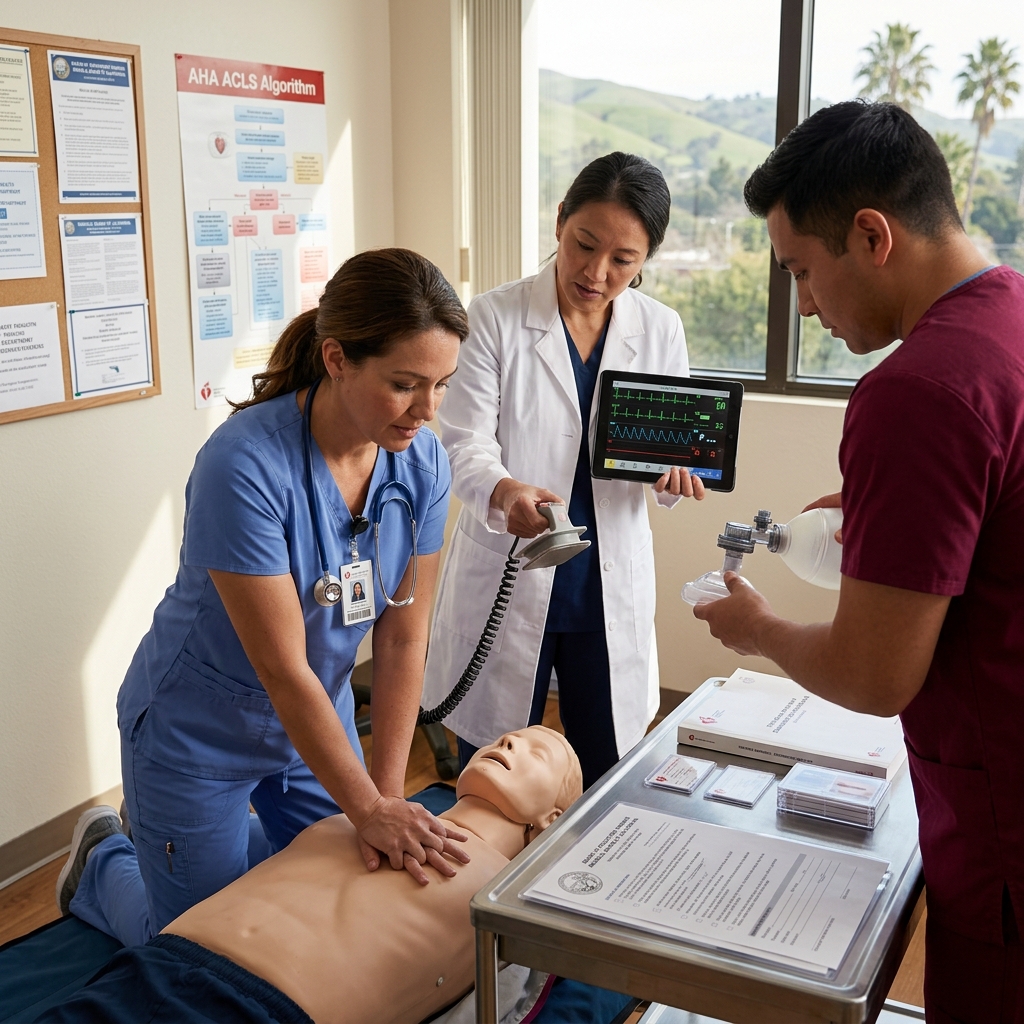
We also maintain current information about reciprocity and recognition across California’s diverse healthcare systems. A credential valid at a San Francisco hospital remains valid at a Modesto facility, but understanding the nuances of different employer requirements across the state helps you make smart continuing education choices.
We Make California AHA Certification Accessible and Affordable
Pursuing ongoing certification shouldn’t drain your finances or require extensive time off work. We’ve built our pricing around a low-cost guarantee, so you know you’re getting fair rates whether you’re training in Sacramento or San Rafael.
Our blended learning model reduces costs further by minimizing instructor time for material that works well in self-paced format, keeping skills practice focused and efficient. We also offer corporate group training with discount pricing, so if your facility needs multiple staff members certified simultaneously, we can help you manage that at better rates than individual enrollment.
Across our 100+ California locations, from Berkeley to Bakersfield and everywhere in between, we’ve removed the barriers that kept healthcare professionals from maintaining compliance. You can find a class that fits your schedule, complete it quickly, and move forward with your career and patient care responsibilities.
If you’re ready to get your AHA certification or renew an expiring credential, find a location near you and schedule your course today. Our experienced instructors and convenient scheduling mean you’ll be certified and documented within days, keeping your career on track while serving California patients safely.
Register for a class today.
Frequently Asked Questions (FAQ)
Does California require AHA certifications for healthcare professionals?
Yes, the California Nursing Board and Medical Board recognize and often mandate AHA certifications for nurses, physicians, dentists, and EMS personnel. We help you meet these specific requirements with our BLS, ACLS, PALS, and NRP courses that align directly with California board standards. Our training ensures you maintain the credentials your license requires for employment and professional standing.
Can I get certified the same day I take a class with you?
We offer same-day certification cards for most of our CPR, BLS, and ACLS courses at our 100+ California locations. After you complete both the virtual coursework and in-person skills session, we verify your performance and issue your card immediately. This means you can often be certified and ready to work within 24 hours of enrollment.
How do your certifications compare to other training providers in California?
We provide AHA-aligned instruction that meets California board requirements, and we guarantee the lowest prices on all our classes. Our blended learning approach combines online modules with hands-on skills practice at convenient locations throughout the state. Whether you need BLS for general compliance or specialized certifications like ACLS or PALS for your healthcare role, we deliver the same credential recognition as any other provider at better value.