Table of Contents
- Why EMS Professionals Need Specialized ACLS and PALS Training
- The Critical Difference Between Online Learning and Hands-On Skills Sessions
- What You'll Master in Our Advanced ACLS Skills Sessions
- Real-World Scenarios: How We Simulate Emergency Situations
- PALS Training Designed Specifically for Pre-Hospital Providers
- Our Blended Learning Approach Saves You Time and Money
- Skills Verification Stations with Advanced Simulation Technology
- Flexible Scheduling That Works With Your EMS Schedule
- Same-Day Certification Cards for Immediate Compliance
- Our Trusted Training Center: Woman-Owned Since 1989
- Get Certified at Over 100 California Training Locations
- Frequently Asked Questions (FAQ)
Why EMS Professionals Need Specialized ACLS and PALS Training
As an EMS professional, your role demands split-second decision-making in the field. Advanced Cardiac Life Support (ACLS) and Pediatric Advanced Life Support (PALS) certifications aren’t just resume checkboxes—they’re your foundation for delivering evidence-based emergency care when lives depend on it.
Your scope of practice requires current, validated training in cardiac rhythms, drug administration, and team dynamics under extreme pressure. Standard courses often don’t account for the unique challenges you face: limited resources, transport considerations, and the need to manage both adults and pediatric patients with confidence. Our specialized ACLS and PALS skills sessions bridge that gap by addressing pre-hospital decision-making directly.
Regulatory compliance matters too. Your employer likely mandates current certification, and your standing with dispatch centers and receiving hospitals reflects your credentials. We’ve designed our advanced sessions to keep you ahead of protocol updates and ensure your skills remain sharp between recertification cycles.
The investment in quality training protects your license, improves patient outcomes, and builds the muscle memory you need when adrenaline is running high.
The Critical Difference Between Online Learning and Hands-On Skills Sessions
Online modules teach you the theory. They explain rhythms, medications, and protocols in a controlled, low-pressure environment. That foundation matters, but it’s incomplete without physical practice.
Real emergencies demand more than knowledge. You need to feel the compression depth during chest compressions, hear the defibrillator tone, manage airway equipment under time pressure, and coordinate with a team member responding to your orders. These tactile and cognitive skills transfer only through hands-on repetition.
Our blended approach separates the two elements strategically. You complete online content at your own pace, absorbing core concepts and protocol updates. Then you arrive at your skills session focused and ready to practice. Your instructor guides you through high-fidelity scenarios, corrects technique in real time, and challenges you with decision points you’ll actually encounter.
This combination cuts wasted study time and maximizes your practical confidence. You’re not sitting through lecture hours that could have been reading; instead, you’re investing instructor time directly into your performance.
What You’ll Master in Our Advanced ACLS Skills Sessions
Our ACLS skills sessions go beyond single-provider techniques. You’ll develop competency across the full scope of advanced life support.
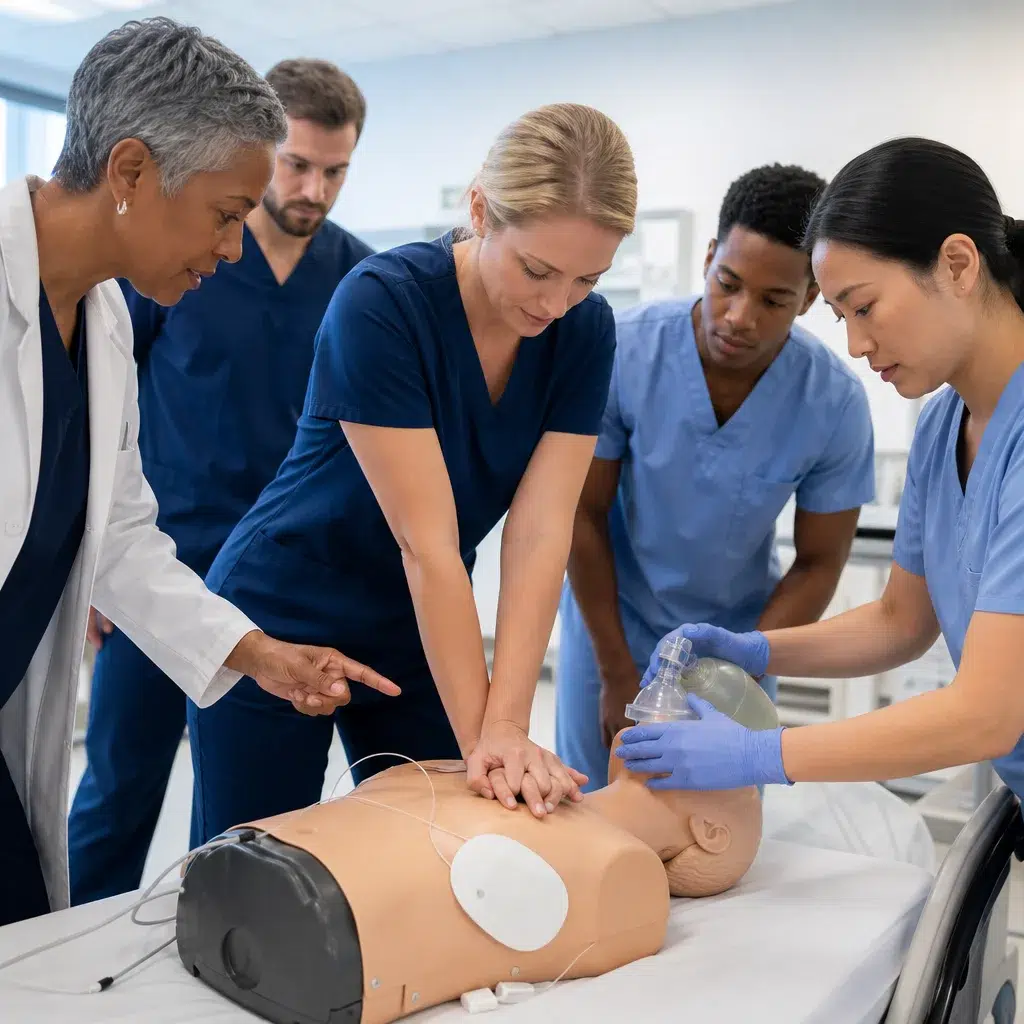
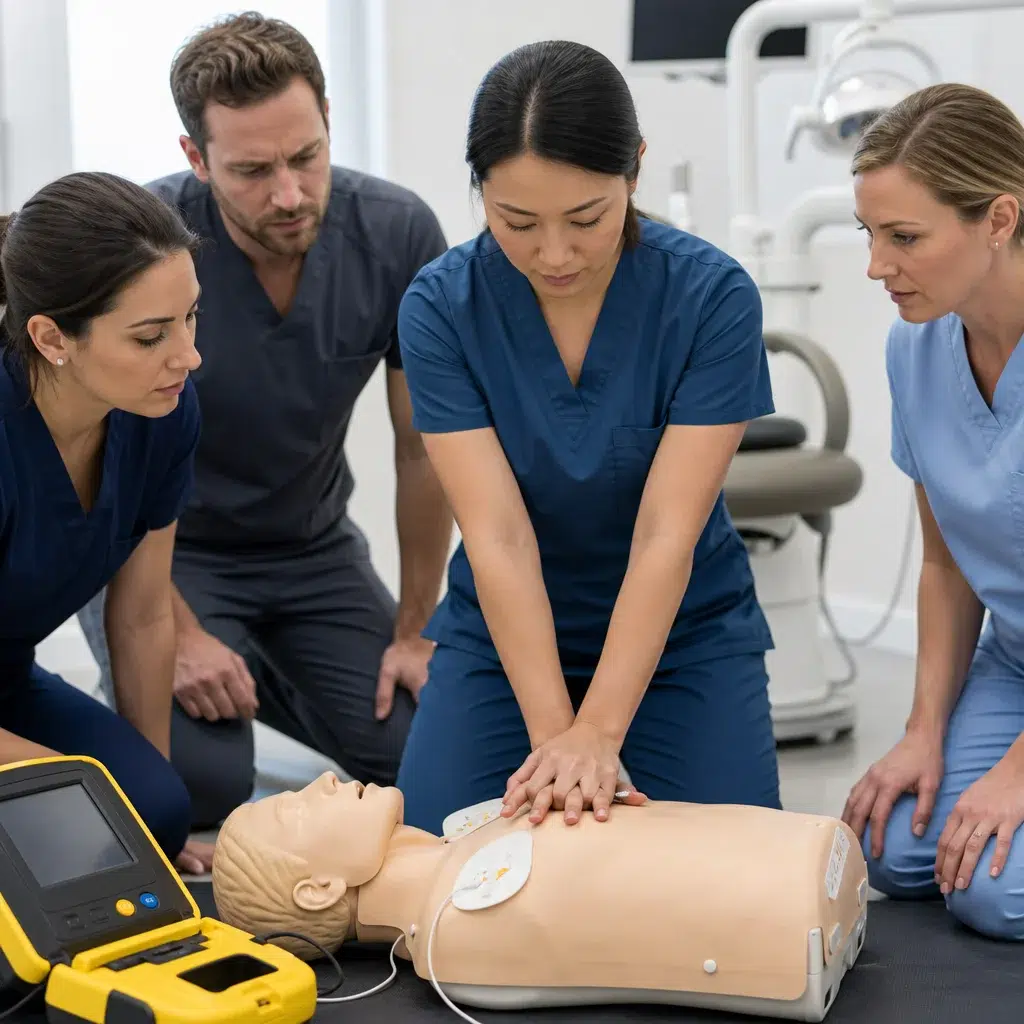
Core competencies include rhythm recognition and response—identifying shockable and non-shockable rhythms, understanding when to intervene, and executing appropriate interventions. You’ll practice with actual defibrillators and perform compressions at correct depths and rates on high-fidelity manikins that provide real-time feedback.
Medication administration and dosing receive hands-on attention too. You’ll draw up medications, understand timing, and practice the communication protocols that prevent errors under stress. Your instructor covers emergency drugs relevant to cardiac arrest, post-resuscitation care, and stroke protocols.
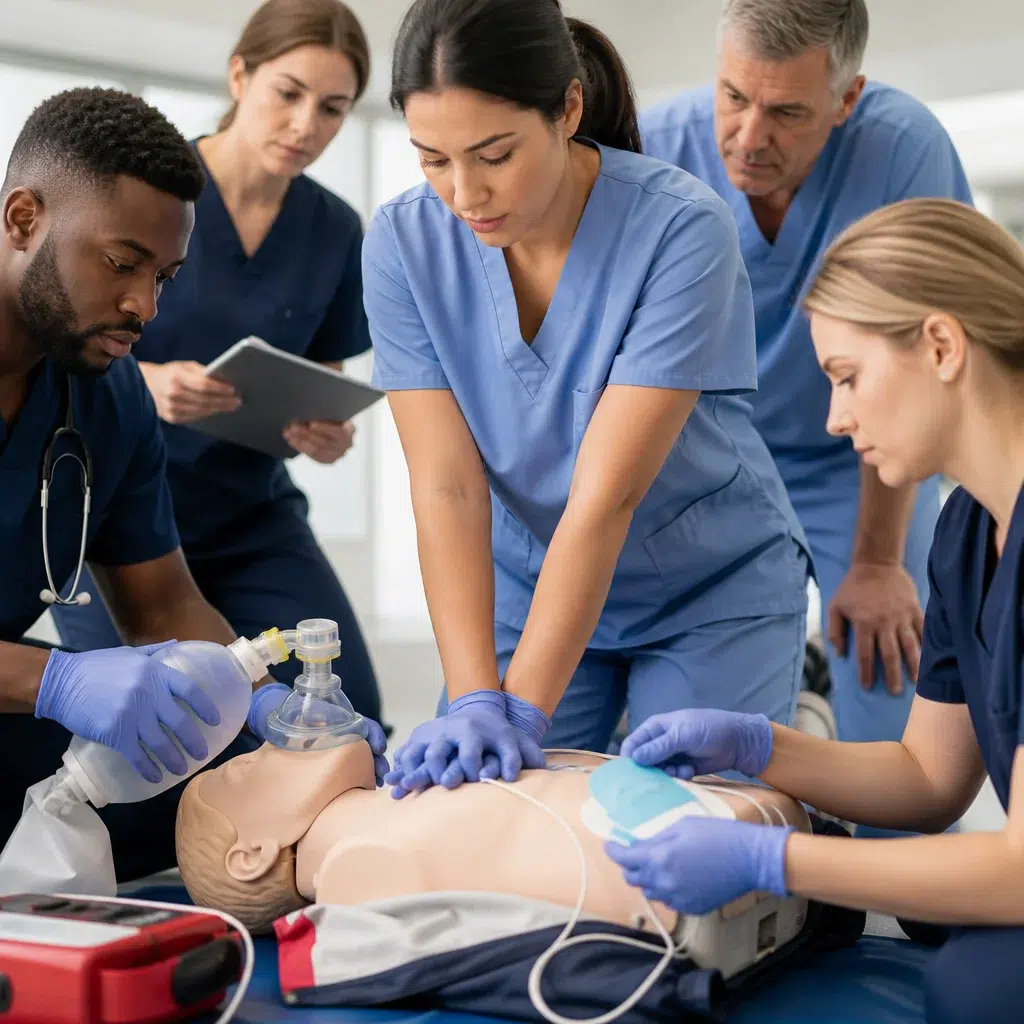
Team dynamics and communication form the final pillar. You’ll rotate through roles during scenarios—team leader, compressor, medication provider, recorder—building the situational awareness needed to run an effective code. Clear communication prevents errors and improves outcomes.
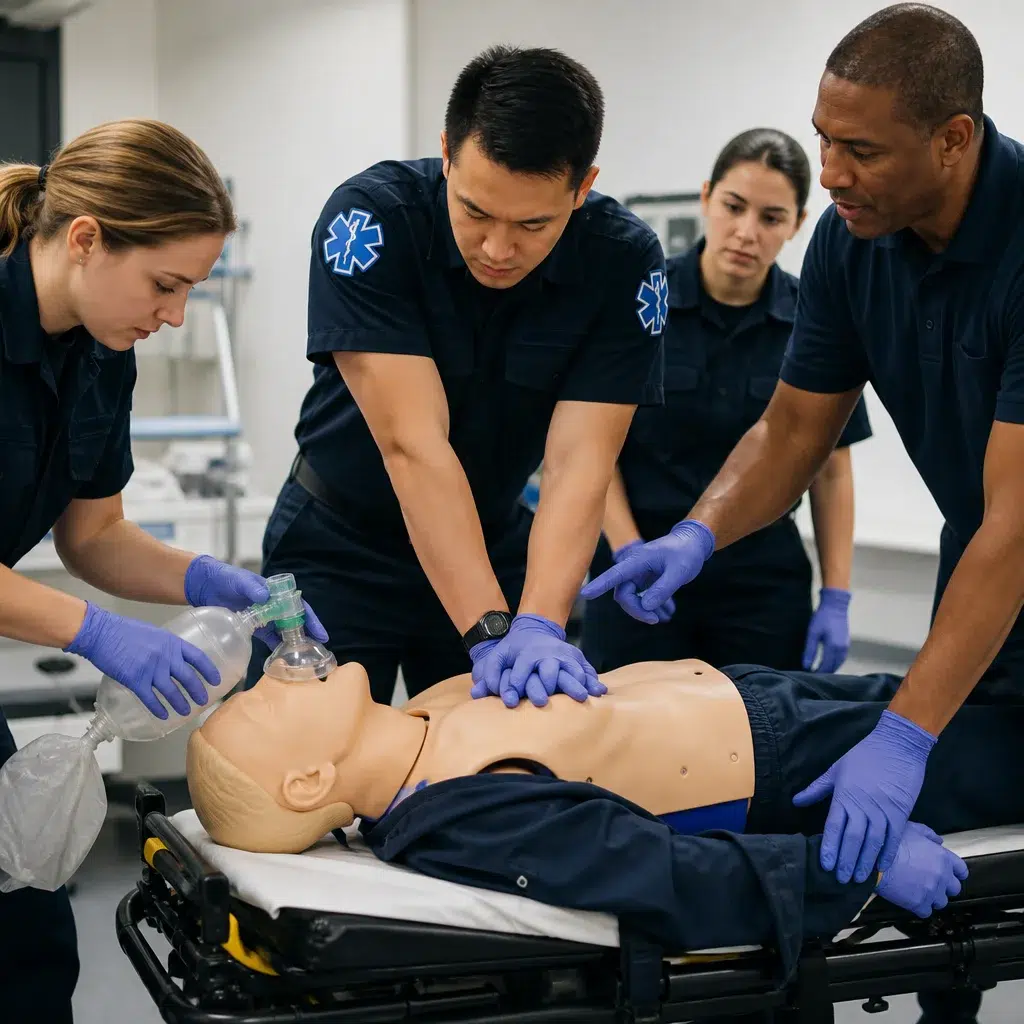
Our instructors bring field experience. They understand what works in the ambulance and what fails when real calls come in. That perspective shapes every scenario we run.
Real-World Scenarios: How We Simulate Emergency Situations
Scenario-based training is where learning becomes automatic. We don’t ask you to perform skills in isolation; instead, we place them within realistic patient situations that demand judgment.
A typical scenario might start like this: you’re called to an unresponsive adult male at a shopping mall in Fremont. Bystanders are present. Initial vitals and rhythm check unfold as they would in the field. Your team must recognize the rhythm, initiate compressions, deploy the defibrillator, establish vascular access, and prepare for transport—all while your instructor adds complications. A family member becomes anxious. Equipment malfunctions. A second patient appears.
These layered scenarios build resilience. You practice prioritization, resource management, and the mental agility needed when circumstances shift mid-call. Each scenario debriefs with your instructor, who highlights what worked, what you’d do differently, and why.
We rotate scenarios across different patient presentations and settings. Pediatric arrests demand different drug dosing and compression technique; you’ll practice both. Stroke protocols, post-resuscitation care, and mega-code runs all appear during your session, ensuring broad competency.
PALS Training Designed Specifically for Pre-Hospital Providers
PALS certification carries different weight for EMS providers than for hospital staff. Your pediatric calls demand rapid assessment, precise drug dosing, and recognition that children aren’t small adults.
Our PALS skills sessions emphasize pre-hospital decision trees. You’ll learn the single vs. dual-rescuer approach, weight-based drug calculations specific to field practice, and the equipment constraints you actually face. Hospital PALS training sometimes assumes access to monitors, drips, and lab data you won’t have on scene.
Pediatric rhythm recognition receives focused attention. You’ll identify bradycardia patterns, recognize when defibrillation is appropriate, and understand the post-resuscitation care that begins in the field. Your instructor walks you through scenarios involving infants, toddlers, school-age children, and adolescents, since treatment algorithms vary.
The emotional weight of pediatric calls is real. Our training acknowledges that alongside the clinical competency. You’ll practice under conditions that mirror the stress of these calls, so your performance on a real pediatric emergency draws from genuine muscle memory rather than textbook theory.
Our Blended Learning Approach Saves You Time and Money
Compressed schedules are central to EMS work. You can’t spend a full week off-duty for training, and expensive courses cost money your department might not budget comfortably.
We’ve structured our ACLS and PALS sessions to fit your reality. You complete online modules before arriving at your skills session, meaning we can pack all practical components into a focused, one-day or half-day format. No redundant lecture time. No waiting while instructors repeat content for late arrivals.
Cost stays low through our low price guarantee. We don’t inflate pricing during peak seasons or lock you into premium-tier options. Your investment covers quality instruction, high-fidelity simulation equipment, and hands-on practice time—nothing less, nothing more.
Group discounts further reduce per-person costs if your department coordinates training together. You maintain consistent protocols and build team cohesion while saving agency budget dollars.
Many EMS professionals complete recertification annually or biennially; our streamlined format makes that recurring investment manageable.
Skills Verification Stations with Advanced Simulation Technology
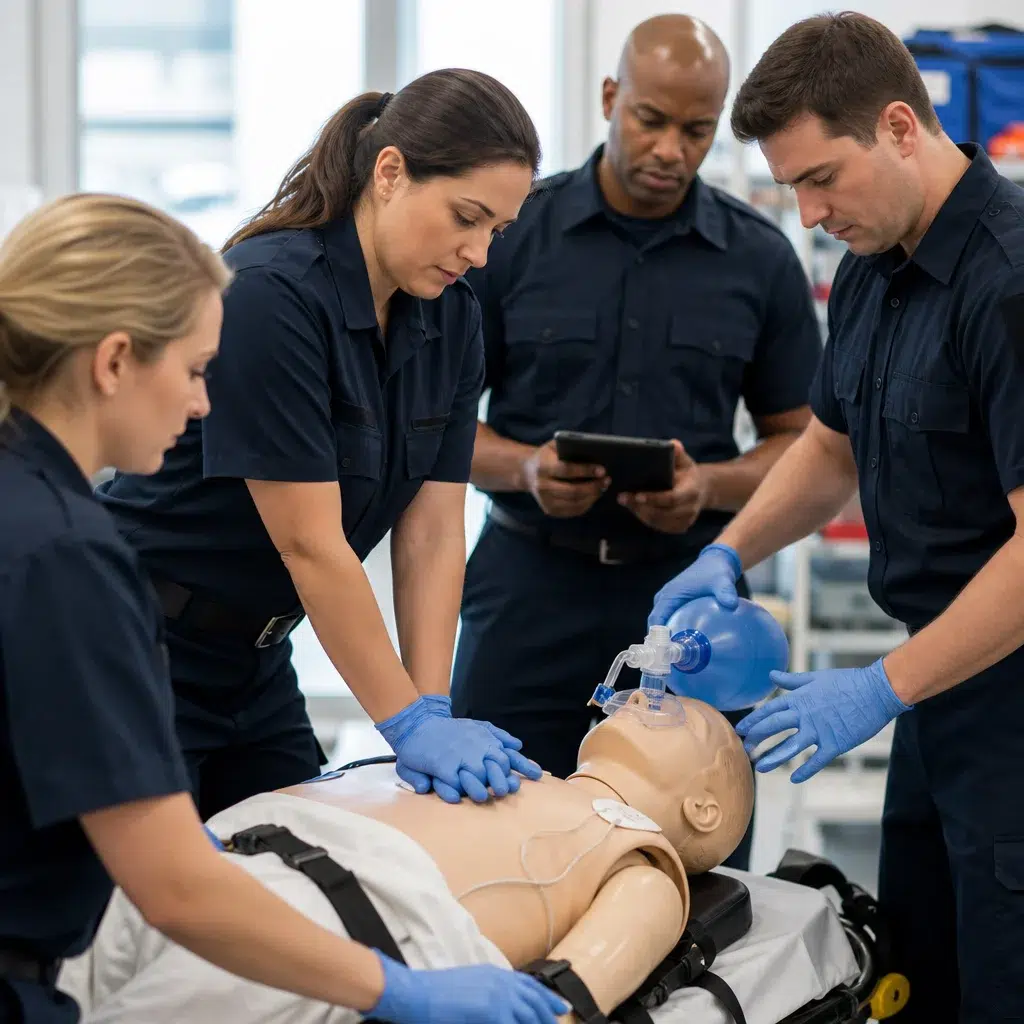
We don’t just teach skills; we verify them with equipment that matches what you use in the field.
Our skills verification stations feature high-fidelity manikins with real-time feedback systems. When you perform compressions, the mannequin measures depth, rate, and hand position—you see your numbers instantly. That immediate feedback trains your body to self-correct without relying on external cues.
Defibrillator training uses actual equipment models you’ll encounter in ambulances and public spaces. You’ll practice pad placement, recognize the device’s feedback, and understand alarm states. When you encounter a real defibrillator in an emergency, there are no surprises.
Medication administration is practiced with realistic vials, syringes, and IV simulation. You’ll draw medications at correct volumes and understand the logistics of administration during active resuscitation.
Your instructor circulates throughout verification stations, observing technique and providing correction. They document your competency, generating records that satisfy your employer and licensing requirements.
Flexible Scheduling That Works With Your EMS Schedule
Your shifts don’t follow a nine-to-five calendar. Nights, weekends, and irregular patterns are your norm, making it nearly impossible to attend training that runs traditional business hours.
We offer ACLS and PALS sessions throughout the week, including evenings and weekends. Whether you’re based in Sacramento, San Jose, San Francisco, or anywhere across California, we’ve scheduled sessions that fit your availability.
Our 100-plus training locations throughout California mean you can often find a convenient site. That might be in Alameda or Palo Alto on the Peninsula, in Bakersfield or Fresno in the Central Valley, or throughout the Bay Area’s dozens of sites. Less travel time means more flexibility.
Online module completion happens entirely on your timeline. You can log in at two in the morning if that’s when your schedule allows, move through content at your pace, and arrive at your skills session fully prepared.
Scheduling is transparent. You book your session in advance, receive confirmation, and receive reminders to complete your online work beforehand. No guesswork, no last-minute surprises.
Same-Day Certification Cards for Immediate Compliance
Field delays kill productivity. If your recertification lapses while you wait for credentials, your employer’s compliance timeline fractures.
We issue certification cards on the same day you complete your skills session. No mail delays. No weeks of provisional status. You leave with documentation in hand, immediately compliant and ready to work.
Digital records also generate simultaneously for your employment file and licensing records. Employers can verify your status instantly, and your agency’s compliance officer rests easy knowing gaps are closed.
This immediate issuance matters especially during high-volume renewal seasons when providers across California are recertifying simultaneously. You don’t compete in processing queues; you walk out certified.
Our Trusted Training Center: Woman-Owned Since 1989
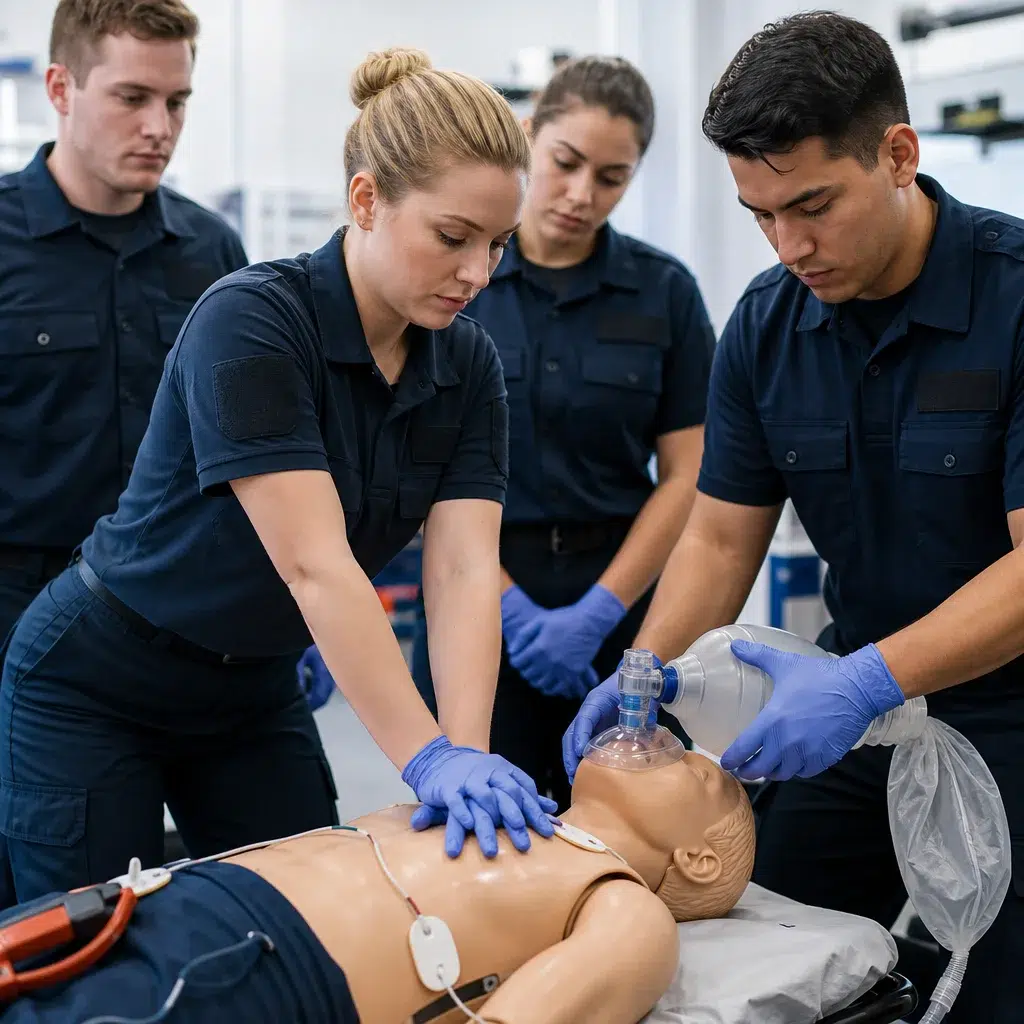
Safety Training Seminars has served California’s healthcare and EMS community for over three decades. We began with a mission to make quality, accessible life-saving training available across the state—and that foundation hasn’t shifted.
Our woman-owned status reflects our commitment to equitable, inclusive training environments. Your experience with us centers on respect, clear instruction, and real expertise. Our instructors hold extensive field experience alongside their teaching credentials. They bring the credibility that comes from actually performing these skills under pressure.
That longevity means institutional knowledge. We’ve watched protocols evolve, seen which training approaches actually change performance in the field, and built our curriculum on what works.
Our reputation extends across EMS agencies, hospitals, and healthcare networks throughout California. Providers return to us for recertification year after year because the training quality justifies the trust.
Get Certified at Over 100 California Training Locations
Whether you’re in Chico in the north, Visalia in the south, or anywhere between, we’ve positioned training centers strategically across the state.
Major hubs include multiple locations in Sacramento, San Francisco, San Jose, and Oakland, serving dense provider populations in urban areas. Regional centers in Fresno, Stockton, Santa Rosa, and other midsize cities reduce travel for providers outside metropolitan zones.
You’ll also find us in smaller communities like Davis, Vallejo, Concord, and San Rafael—rural and semi-rural areas where provider access to quality training can be challenging. We’ve intentionally filled those gaps.
Each location meets the same standards for instructor quality, equipment, and curriculum delivery. You receive identical training whether you’re in California training locations throughout the Bay Area, Central Valley, or beyond.
Find your nearest session, book with confidence, and arrive ready to practice. Your EMS certification training starts with choosing convenience and quality together.
Register for a class today.
Frequently Asked Questions (FAQ)
What’s included in our ACLS and PALS skills sessions?
Our advanced sessions combine hands-on practice with real-world cardiac emergency scenarios using our simulation technology. You’ll work through critical interventions like medication administration, defibrillation, and team communication in settings that mirror actual EMS calls. We structure each skills session to ensure you gain confidence with the equipment and protocols you’ll use in the field, then provide your certification card the same day you complete the course.
How does our blended learning approach work for my schedule?
We’ve designed our format so you can complete the knowledge portion online at your own pace, then attend an in-person skills session at one of our 100+ California locations that fits your availability. This method cuts down on total class time while keeping the hands-on training intact, which means you’re not sitting through unnecessary lecture material. We offer daily class options across the state, so finding a time that works with your shift rotation is straightforward.
Do you offer group training rates for our EMS department?
Yes, we provide specialized corporate group pricing and training programs tailored to EMS teams and departments. Our team can work directly with your agency to schedule sessions at times that minimize operational disruption while ensuring all staff meet their recertification requirements. Contact us to discuss how we can customize a training package that fits your department’s needs and budget.