Table of Contents
- Why Immediate Bleeding Control Matters in Medical Emergencies
- Understanding the Physiology of Severe Hemorrhage
- Core First Aid Techniques for Controlling Bleeding
- When and How to Apply Pressure and Bandaging
- Advanced Methods: Tourniquets and Hemorrhage Control Devices
- Our Blended Learning Approach to Bleeding Control Training
- Same-Day Certification for Healthcare Professionals
- CPR and First Aid Training at Over 100 California Locations
- Group Training Solutions for Medical Teams and Facilities
- Maintaining Your Certification with Our Flexible Scheduling
- Why Healthcare Professionals Choose Our Training Programs
- Frequently Asked Questions (FAQ)
Why Immediate Bleeding Control Matters in Medical Emergencies
The first minutes after a severe bleeding incident determine survival outcomes. Uncontrolled hemorrhage is one of the leading preventable causes of death in trauma situations, whether in hospital settings, clinics, or community environments. When blood loss becomes critical, the body cannot maintain adequate oxygen delivery to vital organs, triggering a cascade of physiological failure that can be irreversible within minutes.
You understand this reality as a healthcare professional. Your patients depend on your ability to respond decisively when bleeding occurs. Quick, correct intervention prevents shock, organ damage, and death. The difference between applying pressure immediately versus delaying action often means the difference between a patient who survives and one who does not.
We train healthcare professionals across California in evidence-based hemorrhage control because we know these skills directly impact patient outcomes. Our instruction emphasizes practical application over theory, ensuring you can execute these techniques under pressure when seconds matter most.
Understanding the Physiology of Severe Hemorrhage
Severe bleeding triggers a predictable sequence of physiological responses that you need to recognize quickly. When significant blood volume is lost, the body’s compensatory mechanisms activate almost instantly. Blood pressure drops, heart rate increases, and the brain prioritizes delivering oxygen to vital organs by reducing flow to extremities and the skin. This is why a hemorrhaging patient may appear pale, feel cold, and show signs of confusion or anxiety.
The human body contains roughly five to six liters of blood. Loss of just one liter triggers noticeable compensation. Beyond two liters, shock becomes apparent. At three liters or more, the situation becomes life-threatening without immediate intervention. Understanding these thresholds helps you triage correctly and act with appropriate urgency.
Shock from hemorrhage compounds the injury. The lack of oxygen to tissues causes cellular dysfunction. If bleeding continues unchecked, organs fail progressively. The kidneys shut down, the heart weakens, and the brain cannot function. Controlling the source of bleeding stops this cascade before it becomes irreversible.
Core First Aid Techniques for Controlling Bleeding
Direct pressure remains the most effective first-line technique for hemorrhage control. When you discover active bleeding, your immediate action is to apply firm, continuous pressure directly to the wound using clean cloth or gauze. This pressure compresses bleeding vessels and allows clotting factors in blood to form a stable plug.
Here’s what to do next: use a cloth or sterile gauze pad and press firmly on the wound. Do not lift the pad to check bleeding. Keep pressure steady for at least five to ten minutes. If blood soaks through the first layer, add more cloth on top rather than removing the initial layer. Removing it disturbs forming clots and restarts bleeding.
Elevation works as a supporting technique when the injury is on a limb. Raising the injured arm or leg above heart level reduces blood pressure at the wound site and slows bleeding. Combine elevation with direct pressure for optimal results on extremity wounds.
Pressure points and indirect techniques matter when direct access is blocked. Applying pressure to arteries proximal to the wound can reduce flow, but this is less reliable than direct pressure and should supplement, not replace, compression at the source.
When and How to Apply Pressure and Bandaging
Timing is critical. Begin pressure immediately upon discovering significant bleeding. Delay increases blood loss exponentially. Your initial response should take seconds, not minutes.
When applying pressure, use these specific steps:
- Stop the bleeding source before addressing other injuries
- Apply firm, continuous pressure with clean material
- Maintain pressure for at least five to ten minutes
- Add layers if blood soaks through, never removing initial layers
- Once bleeding slows, secure the dressing with bandaging
Bandaging after bleeding control is secondary to maintaining pressure. Once bleeding has significantly slowed, wrap the wound firmly with medical tape or elastic bandaging. The goal is to keep the clot in place without cutting off circulation to tissues beyond the wound. A bandage should be snug but not tourniquet-tight. If fingers or toes below the injury become blue or cold, the bandage is too tight and must be loosened immediately.
Reassess the wound regularly. If bleeding resumes after you’ve stopped applying direct pressure, reapply pressure for another five to ten minutes. Some wounds require prolonged pressure or professional medical evaluation.
Advanced Methods: Tourniquets and Hemorrhage Control Devices
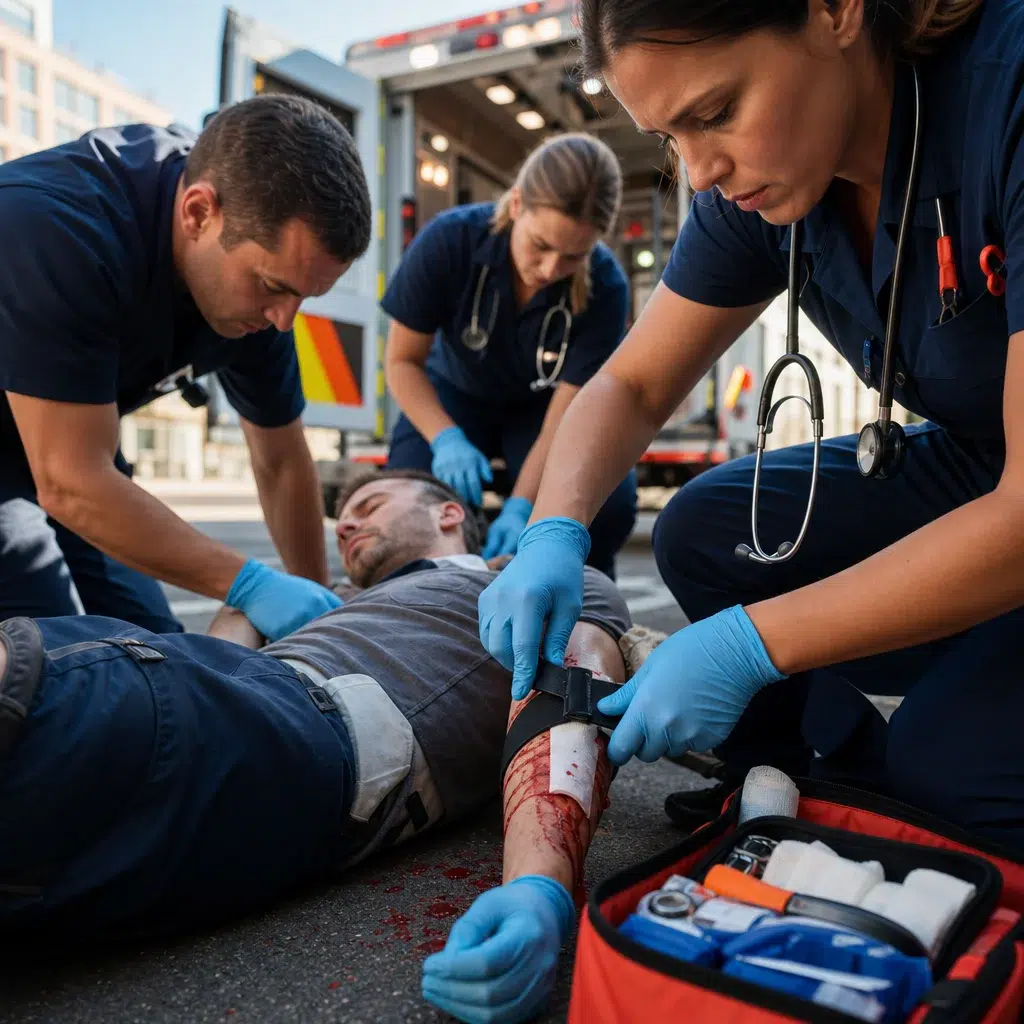
When direct pressure and bandaging cannot stop life-threatening bleeding on a limb, tourniquets become essential. A tourniquet is a device applied above an injury to completely stop blood flow to that limb. Modern tourniquets are designed to be applied quickly and effectively by trained responders.
Tourniquet application follows a clear protocol. Place the device two to three inches above the wound, between the injury and the heart. Tighten until bleeding stops completely. You should not see blood or pulsation distal to the tourniquet. Most effective tourniquets use a strap and ratchet system that allows one-handed tightening even when you’re supporting the patient or managing other aspects of care.
The key concern with tourniquets is tissue damage from prolonged application. Limb tissue can tolerate tourniquet pressure for several hours in controlled conditions, but avoiding unnecessary delay in professional medical care remains critical. Document the time the tourniquet was applied. This information guides surgical decisions at the hospital.
Hemorrhage control devices such as hemostatic gauze offer another option for wounds that cannot be controlled by pressure alone. This specialized gauze contains agents that accelerate clotting and works by being packed directly into the wound. Apply hemostatic gauze only when direct pressure has failed and you’re facing life-threatening hemorrhage that won’t respond to standard techniques.
Our Blended Learning Approach to Bleeding Control Training
We design our hemorrhage control instruction to combine the best of virtual learning and hands-on practice. This blended approach means you study the anatomy and decision-making frameworks online at your own pace, then practice the actual techniques with our instructors in person.
Your online session covers the physiology of hemorrhage, recognition of shock, decision trees for selecting the right technique, and legal considerations. This foundation prepares you so that when you arrive for your skills practice, you focus entirely on muscle memory and real-world application.
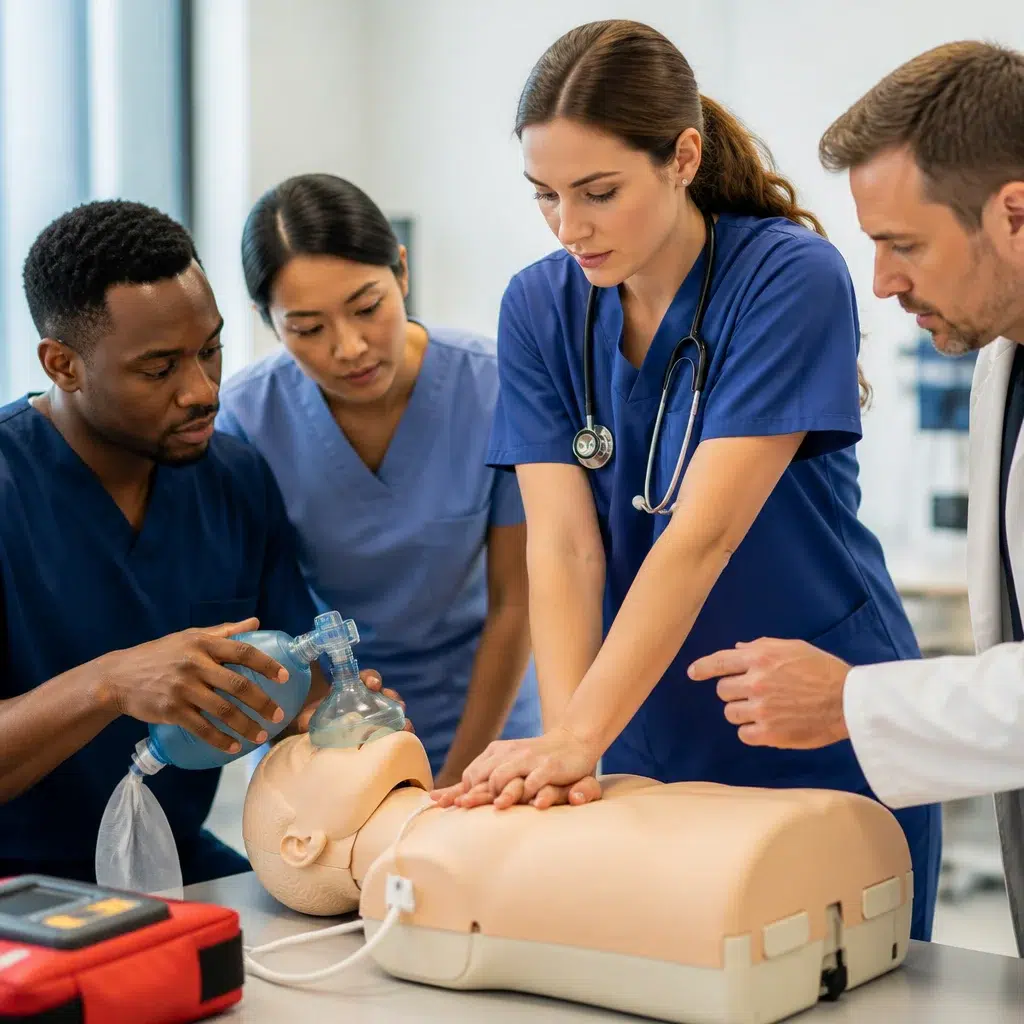
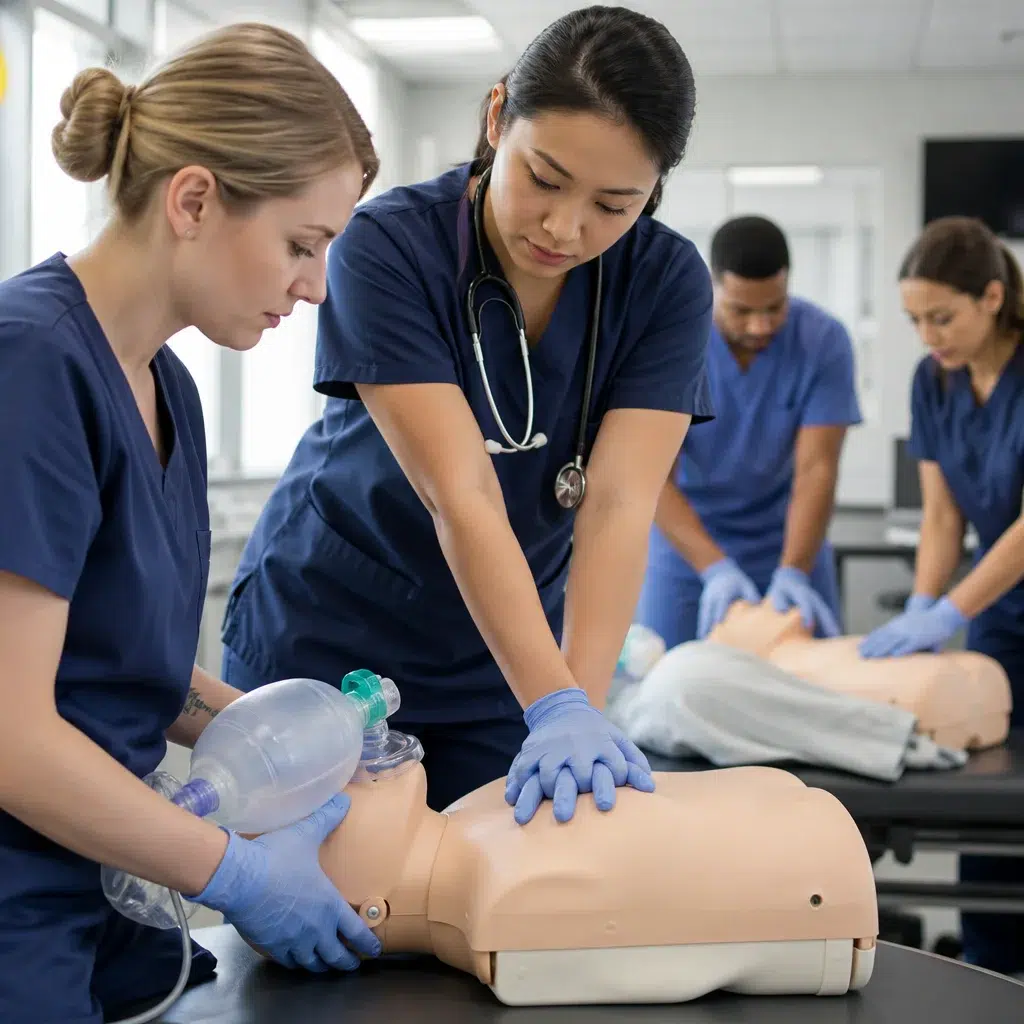
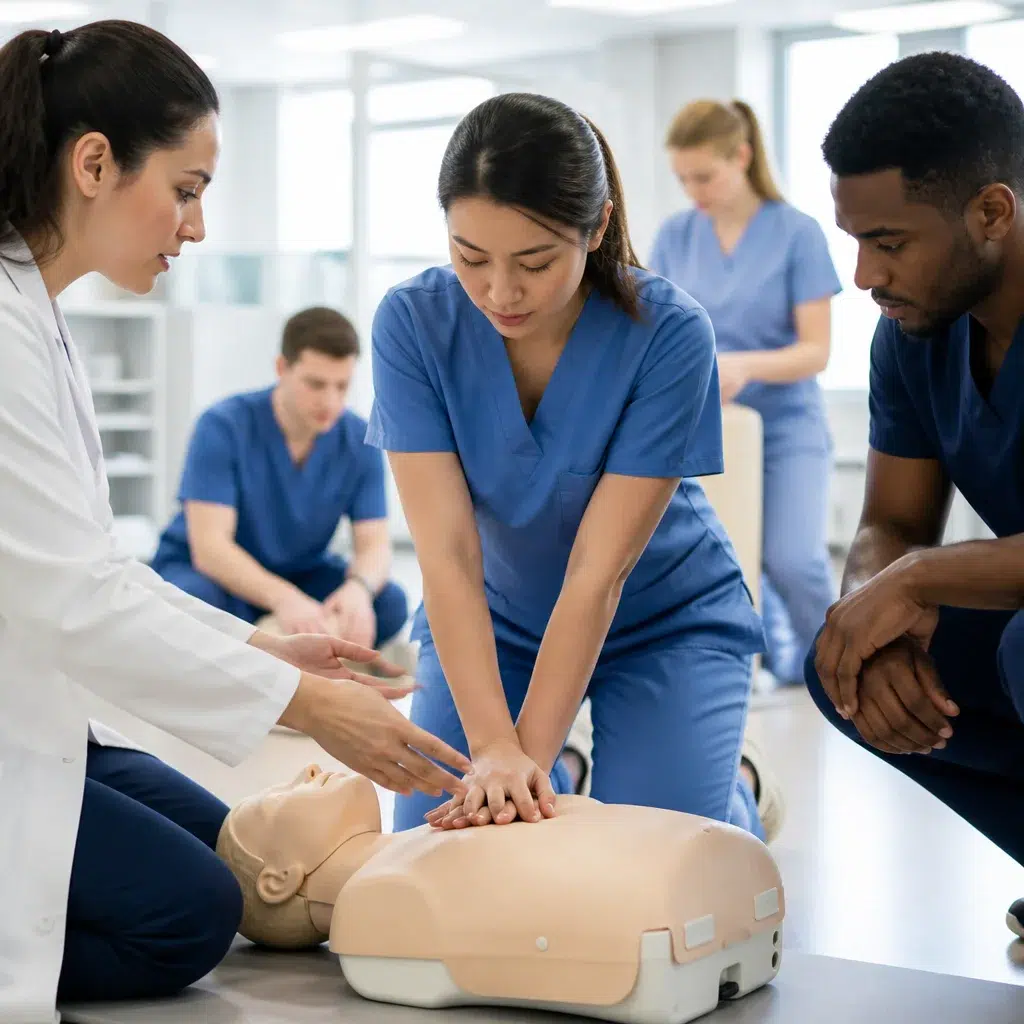
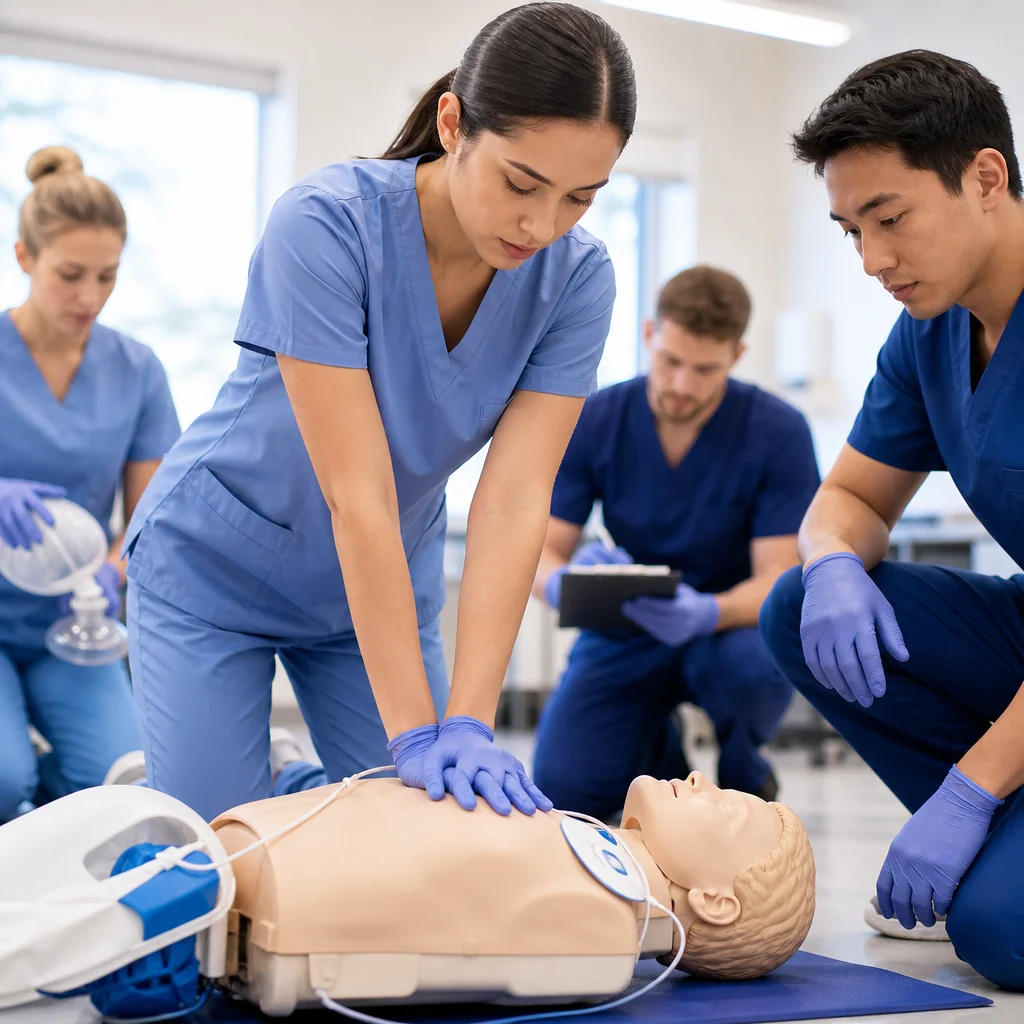
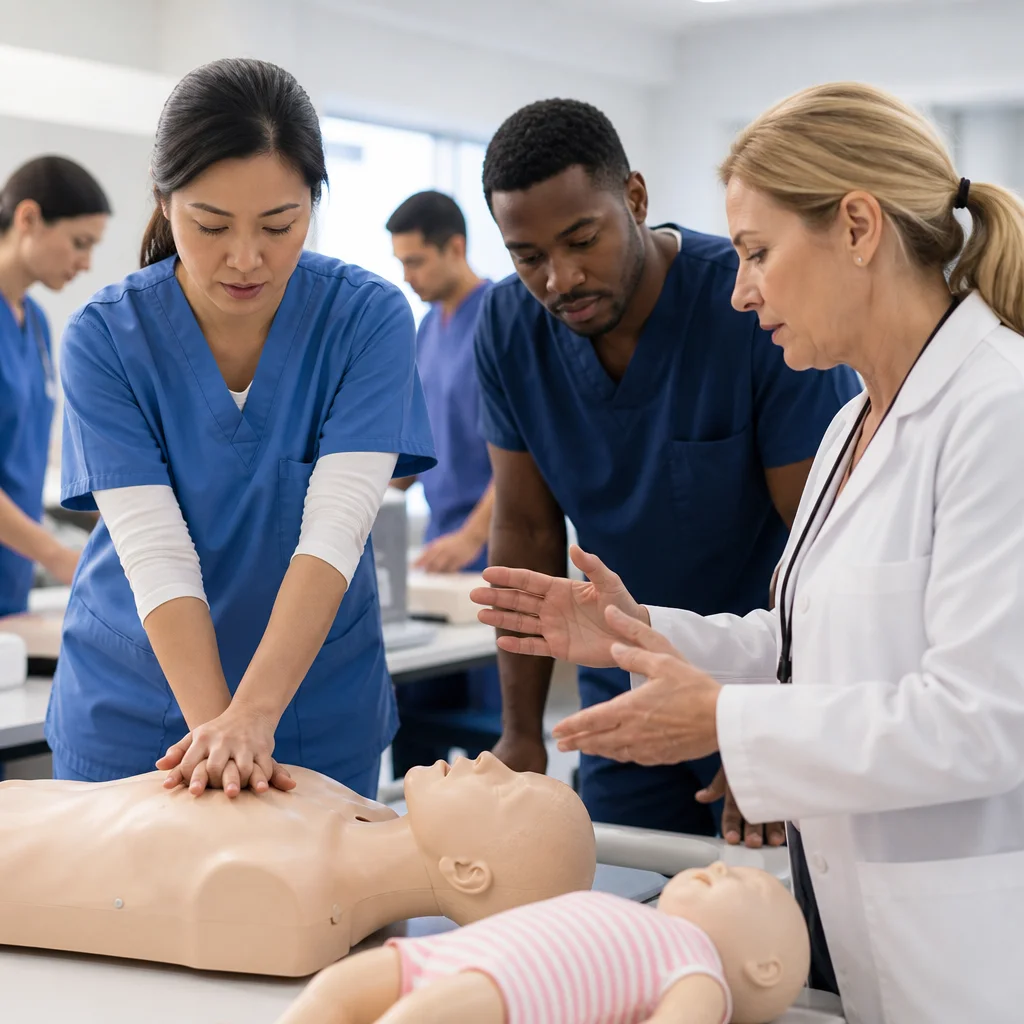
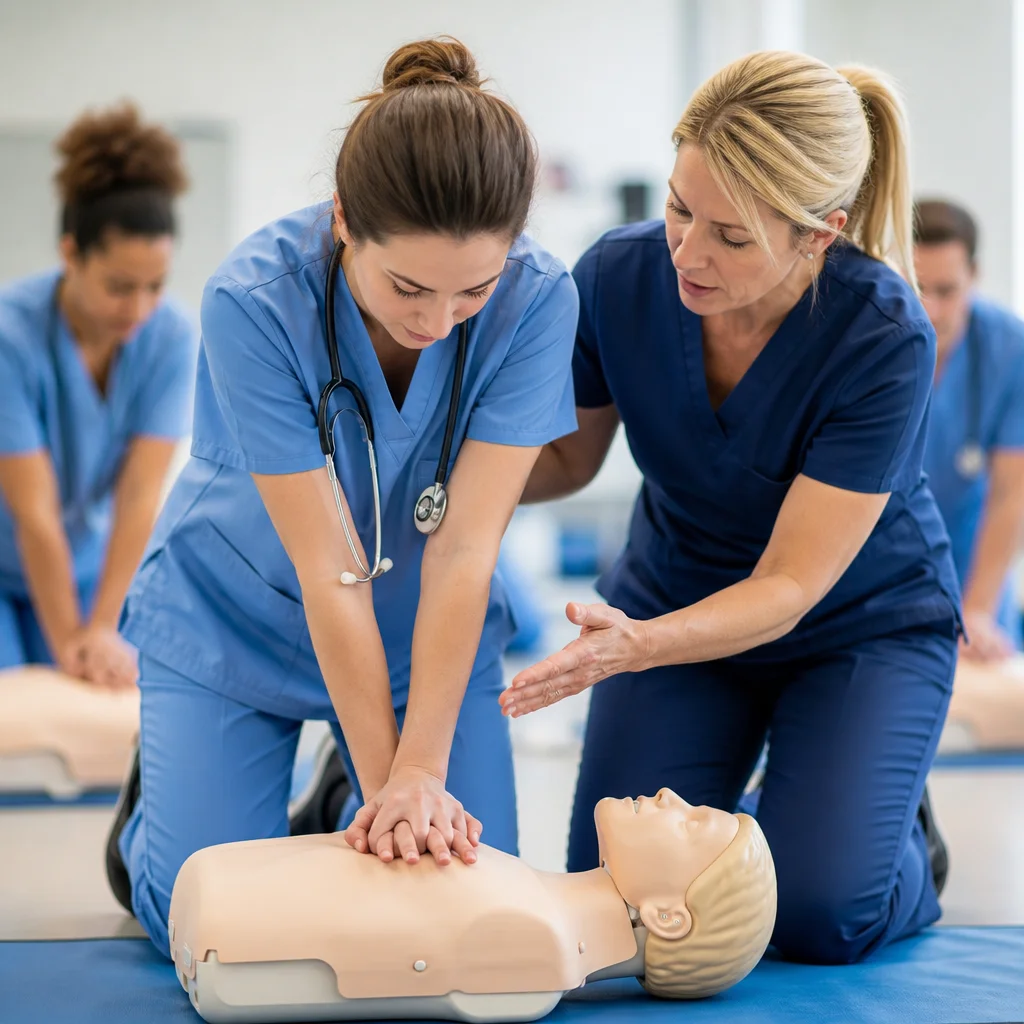
During the in-person session, you practice on realistic training mannequins. Our instructors observe your technique, correct hand placement, guide your pressure application, and ensure you can execute these skills confidently. You’ll practice with bandaging materials, tourniquets, and hemostatic gauze so these tools feel familiar when an actual emergency occurs. Practice repetition is proven to improve retention and performance under stress.
This structure respects your time as a busy healthcare professional while ensuring you leave with genuine competence. We’ve found that professionals retain skills longer and apply them more confidently when they’ve practiced physically before certification.
Same-Day Certification for Healthcare Professionals
We understand your schedule is demanding. Waiting weeks between sessions or traveling across the state adds friction to your professional development. That’s why we offer same-day certification options at multiple California locations including Sacramento, San Francisco, Oakland, and San Jose areas.
Same-day courses condense the blended experience into a single intensive day. You’ll complete the virtual learning component first, followed immediately by hands-on skills practice and assessment with our instructors. By the end of the day, you receive your certification card, ready to show employers or licensing boards.
Our same-day format doesn’t cut corners on quality. You still receive comprehensive instruction and adequate practice time. Instructors maintain the same standards whether you’re attending an evening session in Pleasant Hill or a morning class in Fresno. Your certification carries the same weight and recognition.
Scheduling a same-day session is straightforward. Visit our website, select your preferred location and date, and book online. We hold courses daily at major locations, and we match your availability across morning, afternoon, and evening slots.
CPR and First Aid Training at Over 100 California Locations
We maintain over 100 training sites throughout California, ensuring you can find a location convenient to your work or home. Whether you’re based in Alameda, Bakersfield, Chico, or Visalia, we have certified instructors ready to teach you the skills you need.
Our network includes urban centers like San Francisco’s Mission District and Mission Bay locations, growing suburbs like Roseville’s Douglas and Highland Pointe areas, and regional medical hubs like Fresno and Modesto. This geographic reach means you’re never far from quality instruction.
Each location maintains consistent standards and instructor qualifications. An experienced instructor in Berkeley delivers the same rigorous training as one in Santa Rosa. We invest in instructor development and quality assurance to guarantee that regardless of where you train, you receive evidence-based, professionally delivered instruction.
CPR and First Aid Certification courses are available daily at most locations, with flexible scheduling that accommodates shift work and clinic demands. You can attend early morning before a shift, during a lunch break, or in the evening after patient care responsibilities.
Group Training Solutions for Medical Teams and Facilities
Medical teams and facilities often need multiple staff members trained simultaneously. We offer specialized group training programs that bring our instructors to your location or arrange cohort scheduling that streamlines certification for your entire team.
Group rates provide significant savings compared to individual course costs. A nursing team at a clinic in Concord, a dental practice in Palo Alto, or an urgent care facility in Tracy can arrange group sessions that fit your operational schedule. We work around your patient care demands, scheduling training during slow periods or across multiple sessions if necessary.
Group coordination also builds team competence. When your entire staff learns together, you create a shared understanding of protocols and develop muscle memory as a unit. This cohesion matters when an actual emergency occurs within your facility. Your team responds with practiced coordination because you’ve trained together.
Our team at Safety Training Seminars handles logistics so you focus on operations. We provide equipment, materials, and certified instructors. You tell us your team size, preferred dates, and location constraints. We adapt our program to fit your needs while maintaining certification standards.
Maintaining Your Certification with Our Flexible Scheduling
Certifications expire. Most hemorrhage control and CPR certifications remain valid for two years. Rather than scrambling to find training as your expiration date approaches, plan your renewal through our flexible scheduling options.
We offer renewal courses that are shorter and less intensive than initial certification programs since you’ve already completed training. Renewal sessions reinforce technique, update any changes in guidelines, and verify your continued competence. Many healthcare professionals schedule their renewal during a slow season at work, spreading the training over two or three sessions rather than completing it all at once.
Flexible scheduling means you can renew in person at any of our California locations, select from multiple session times each week, and even combine certifications if you need both bleeding control and CPR/BLS renewal. We maintain online portals where you can check expiration dates and book renewal sessions weeks or months in advance, or call and request a session with short notice if an unexpected opening arises.
Staying current with certifications protects your professional license and ensures your knowledge reflects current evidence-based practice. As guidelines evolve, your renewal training incorporates the latest techniques and decision-making frameworks.
Why Healthcare Professionals Choose Our Training Programs
Healthcare professionals throughout California choose us because we respect your time, deliver genuine competence, and maintain consistent quality across all our locations. You don’t have to travel hours or wait weeks for a convenient training date. Our same-day options and over 100 locations mean professional-quality instruction is accessible to you.
Our low price guarantee ensures you’re not overpaying for certification. We compete on value, not by cutting training quality. You receive comprehensive instruction, hands-on practice with realistic scenarios, and experienced instructors who understand the clinical context of your work.
We’ve trained thousands of nurses, EMS personnel, dentists, and other healthcare professionals across California. These professionals return for renewal training and recommend us to colleagues because we deliver on our promise. Your certification means something because you earned it through rigorous, practical instruction.
Our blended learning approach respects how professionals actually learn. Study theory when it suits you, practice technique with expert feedback in person, and walk away confident that you can execute these skills when a patient’s life depends on it. That combination of convenience, quality, and practical focus sets our programs apart.
Start your training today. Visit our website to find a location near you, select a course date that fits your schedule, and take the next step in your professional development. Your patients depend on your skills. We’re committed to making sure those skills are current, practical, and truly life-saving.
Register for a class today.
Frequently Asked Questions (FAQ)
What bleeding control techniques does our training cover?
We teach evidence-based methods for managing severe hemorrhage, including direct pressure application, proper bandaging techniques, tourniquet deployment, and hemorrhage control devices. Our instructors walk you through real-world scenarios so you can confidently apply these techniques when seconds matter. We make sure you practice hands-on during our in-person skills sessions before you complete your certification.
How quickly can I get certified in first aid and bleeding control?
We offer same-day certification for healthcare professionals across our 100+ California locations. You can complete the blended portion of your training online at your own pace, then come in for your in-person skills verification session. Many of our facilities have courses available daily, so you can schedule around your work commitments.
Can our medical team or facility receive group training?
We absolutely provide specialized group training for hospitals, clinics, EMS stations, and other healthcare facilities. Our corporate programs include customized scheduling, discounted rates for teams, and we can come to your location or host you at one of our training centers. Contact us directly to discuss your team’s specific needs and we’ll create a training plan that works for your staff.