Table of Contents
- Why Pediatric Care Teams Need PALS and NRP Credentials
- The Critical Skills Gap in Pediatric Emergency Response
- How We Deliver PALS and NRP Certification Across Southern California
- Our Blended Learning Approach for Busy Healthcare Professionals
- Same-Day Certification and Flexible Scheduling Options
- Specialized Training for Neonatal and Pediatric Scenarios
- Supporting Your Team with Group Training and Discounted Rates
- Why Healthcare Facilities Choose Our Certification Programs
- Getting Started with Your PALS and NRP Certification Today
- Frequently Asked Questions (FAQ)
Why Pediatric Care Teams Need PALS and NRP Credentials
Pediatric Advanced Life Support (PALS) and Neonatal Resuscitation Program (NRP) certifications aren’t optional checkboxes for your career. They’re essential credentials that directly impact your ability to respond effectively when infants and children face life-threatening emergencies. Whether you’re a nurse, respiratory therapist, emergency medicine physician, or pediatric specialist, these certifications demonstrate your competency in age-specific resuscitation techniques that differ significantly from adult protocols.
Your licensing board, hospital credentialing committee, or employer likely requires current PALS and NRP certification as a condition of employment or practice privileges. Beyond compliance, these credentials validate your skills in managing airway obstruction, performing high-quality chest compressions on tiny patients, and administering medications using precise weight-based calculations. When a newborn arrives in respiratory distress or a toddler collapses from an allergic reaction, your team needs personnel who’ve trained extensively on pediatric-specific algorithms and equipment.
We recognize that maintaining these certifications while managing a full clinical schedule creates real scheduling pressure. That’s why we’ve designed our PALS and NRP courses to fit your reality. Our certification programs are available at over 100 training locations throughout California, including multiple options in Sacramento, San Francisco, San Jose, and the greater Bay Area, so you can find a session near your workplace or home.
Next step: Review your facility’s certification renewal timeline. If your PALS or NRP expires within the next three months, schedule your course now to avoid gaps in your credentials.
The Critical Skills Gap in Pediatric Emergency Response
The difference between pediatric and adult emergency care extends far beyond adjusting medication doses. Children’s physiological responses to shock, hypoxia, and cardiac dysrhythmias follow distinct patterns. Their airway anatomy, chest wall compliance, and vascular access sites require specialized technique. A compression depth appropriate for an adult can cause internal organ damage in an infant. These distinctions create a critical skills gap that generic or outdated training can’t address.
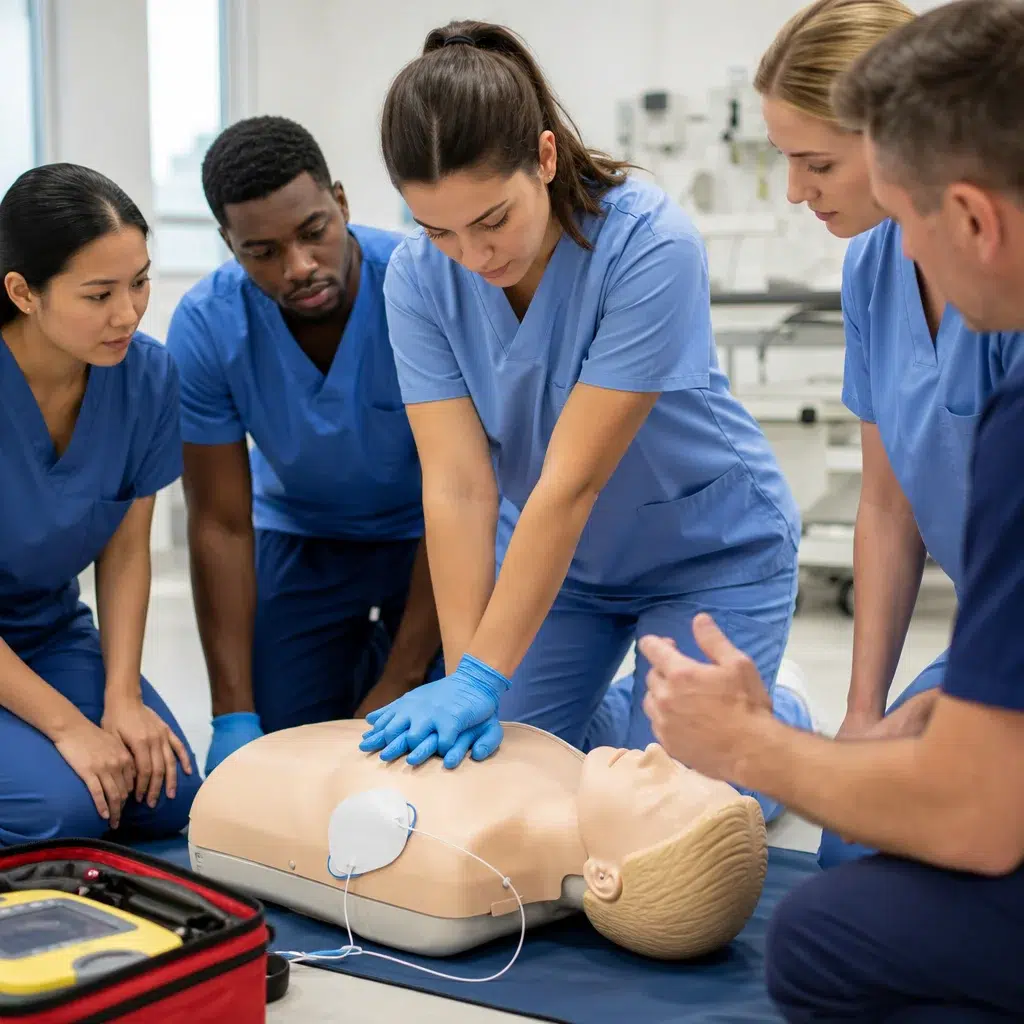
Many healthcare professionals receive initial CPR training focused on adults, then assume pediatric skills will transfer seamlessly. In reality, pediatric resuscitation demands deliberate practice and scenario-based learning. Compressions on a six-month-old require two fingers or the heel of one hand, not the two-handed technique used on teenagers and adults. Defibrillation pad placement differs. Medication calculations must account for age-based weight estimates when scales aren’t available. Without hands-on practice with pediatric mannequins and feedback from experienced instructors, even seasoned clinicians develop gaps in their pediatric response capability.
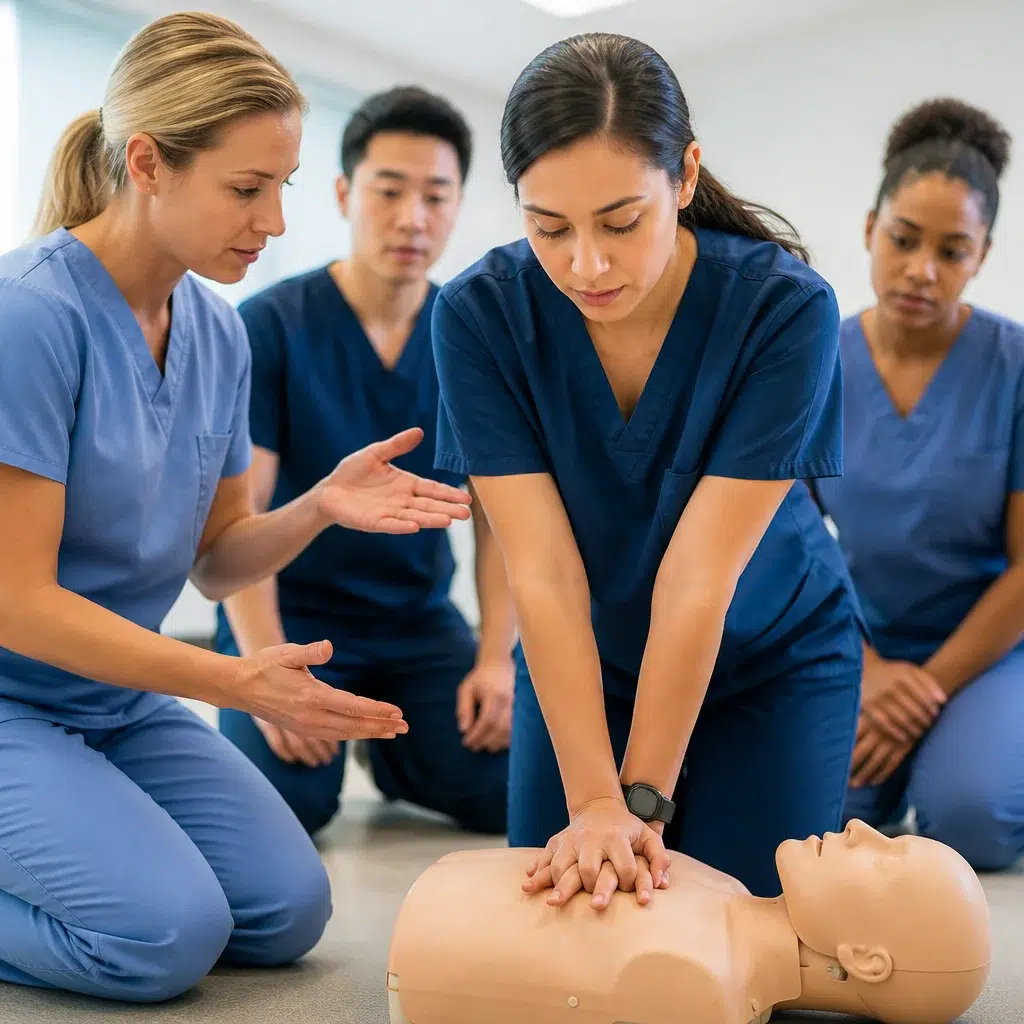
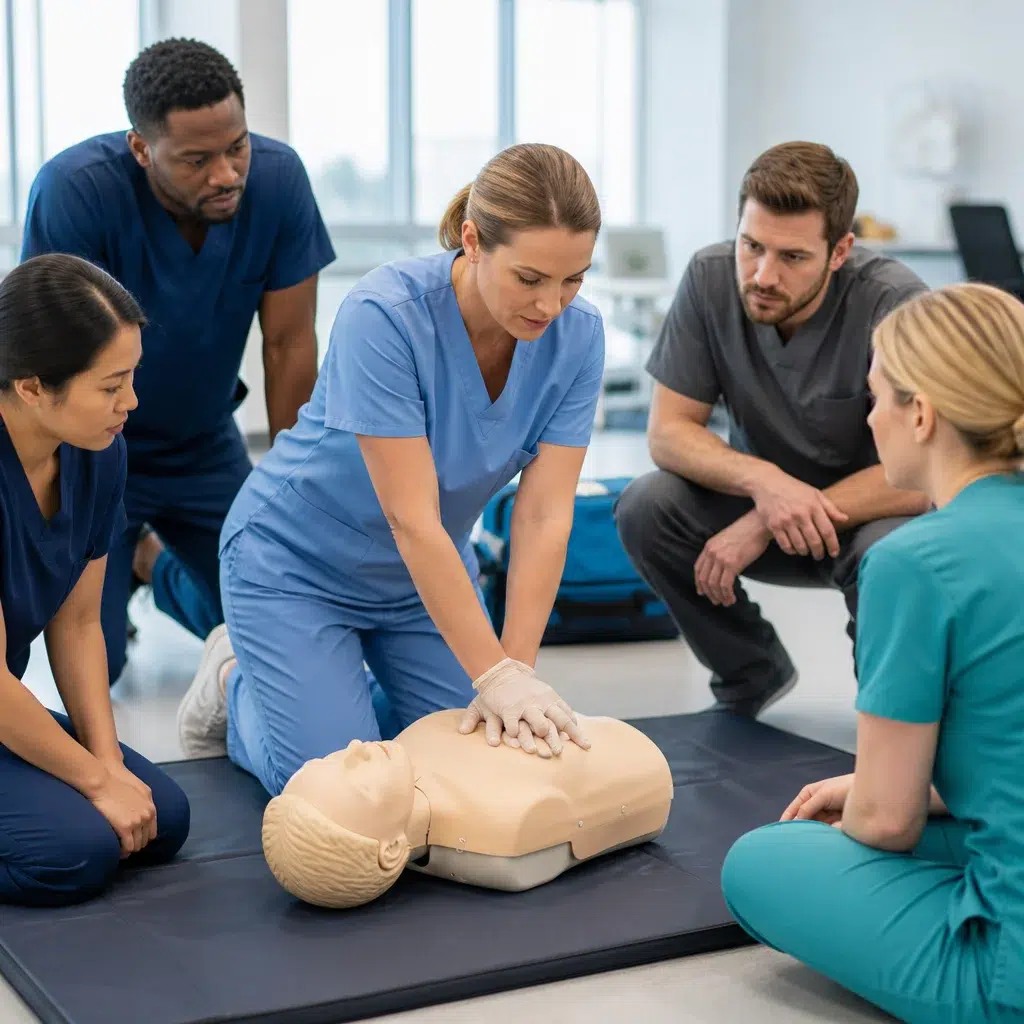
Our training addresses these gaps through scenario-based learning that exposes you to the exact situations you’ll encounter. We don’t lecture pediatric resuscitation principles and leave you to figure out application. Instead, our instructors guide you through high-fidelity simulations involving actual pediatric equipment, realistic medications, and time-pressured decision-making. You’ll practice on infant and child mannequins of appropriate sizes, building muscle memory and confidence that transfers directly to real emergencies.
Facilities across Fresno, Modesto, Stockton, and the Central Valley report that team members who complete our PALS and NRP courses demonstrate measurably better performance during actual pediatric codes compared to those trained years earlier at other institutions.
How We Deliver PALS and NRP Certification Across Southern California
We operate the largest network of certified training locations in California, strategically distributed so that pediatric care teams can access courses without excessive travel. Whether you work in Alameda, Oakland, or further inland in cities like Visalia and Redding, we’ve established training centers designed for healthcare professionals. Our schedule includes early morning sessions for night shift workers, midday options for those with variable schedules, and evening courses for clinicians who prefer to train after their clinical shifts end.
Each of our training locations maintains the same high instructor standards and equipment quality. Our instructors are experienced healthcare providers, many holding advanced certifications themselves. They understand your clinical environment because they work in similar settings. This shared background creates a collaborative learning atmosphere where you’re discussing real cases and practical challenges with instructors who’ve faced identical scenarios in their own practice.
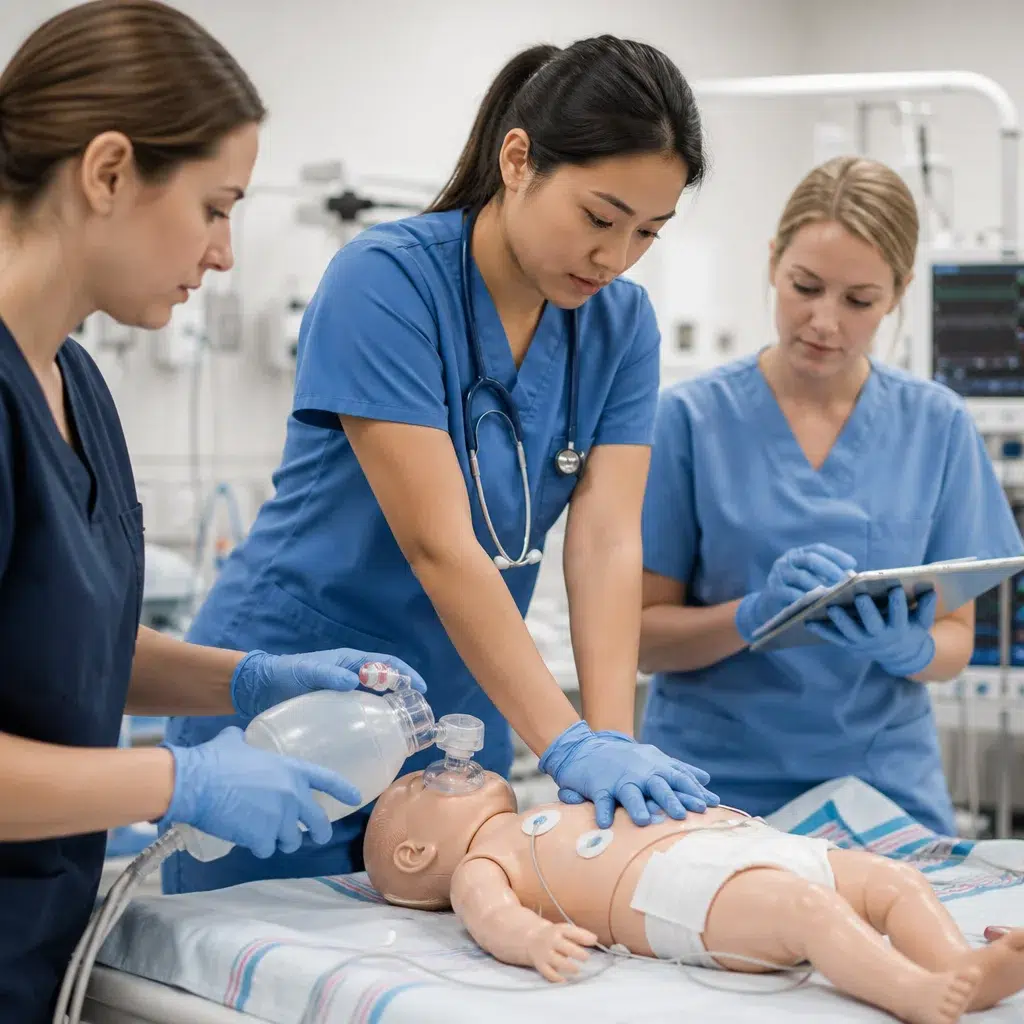
We invest in current equipment at every site. Your PALS course includes recent-generation defibrillators, comprehensive medication kits, and pediatric-appropriate airways. Your NRP training uses high-fidelity neonatal mannequins with realistic response mechanisms, thermal regulation features, and anatomy that mirrors actual newborns. This equipment investment matters because the tools change, and your training should reflect current technology you’ll use clinically.
Our curriculum aligns with the most recent evidence-based guidelines. We update our courses regularly as new research emerges in pediatric emergency medicine. You’re not memorizing outdated compression-to-ventilation ratios or deprecated medication protocols.
Our Blended Learning Approach for Busy Healthcare Professionals
We understand that your schedule doesn’t accommodate traditional all-day classroom sessions. Our blended learning model combines self-paced online modules with focused in-person skills sessions, allowing you to master foundational knowledge on your timeline before arriving for hands-on practice.

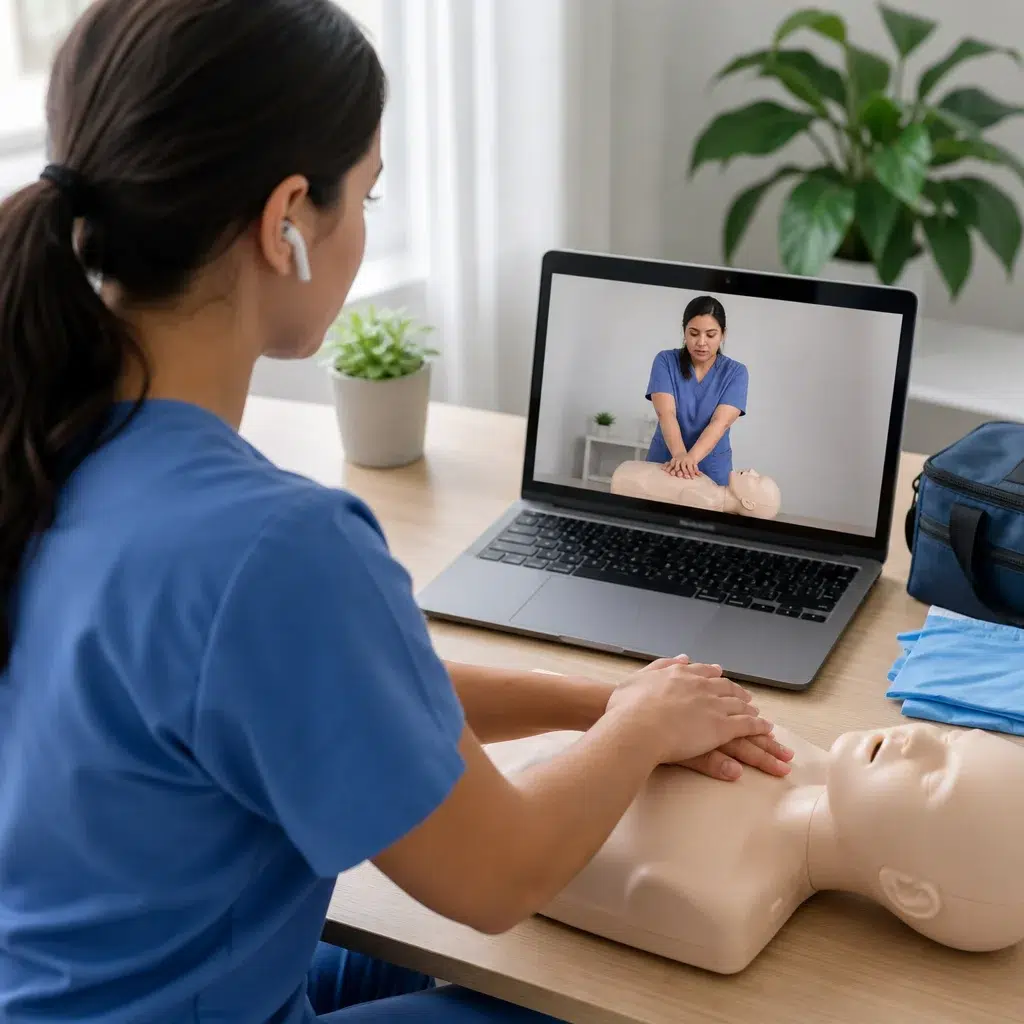
The online component covers pharmacology, algorithm review, and case-based decision-making through interactive modules you complete from home or between shifts. You work through material at your own pace, reviewing sections as needed, and testing your knowledge with practice scenarios. This approach ensures that when you arrive for your in-person session, you’ve already engaged with core concepts and are ready to focus entirely on skill development and scenario practice.
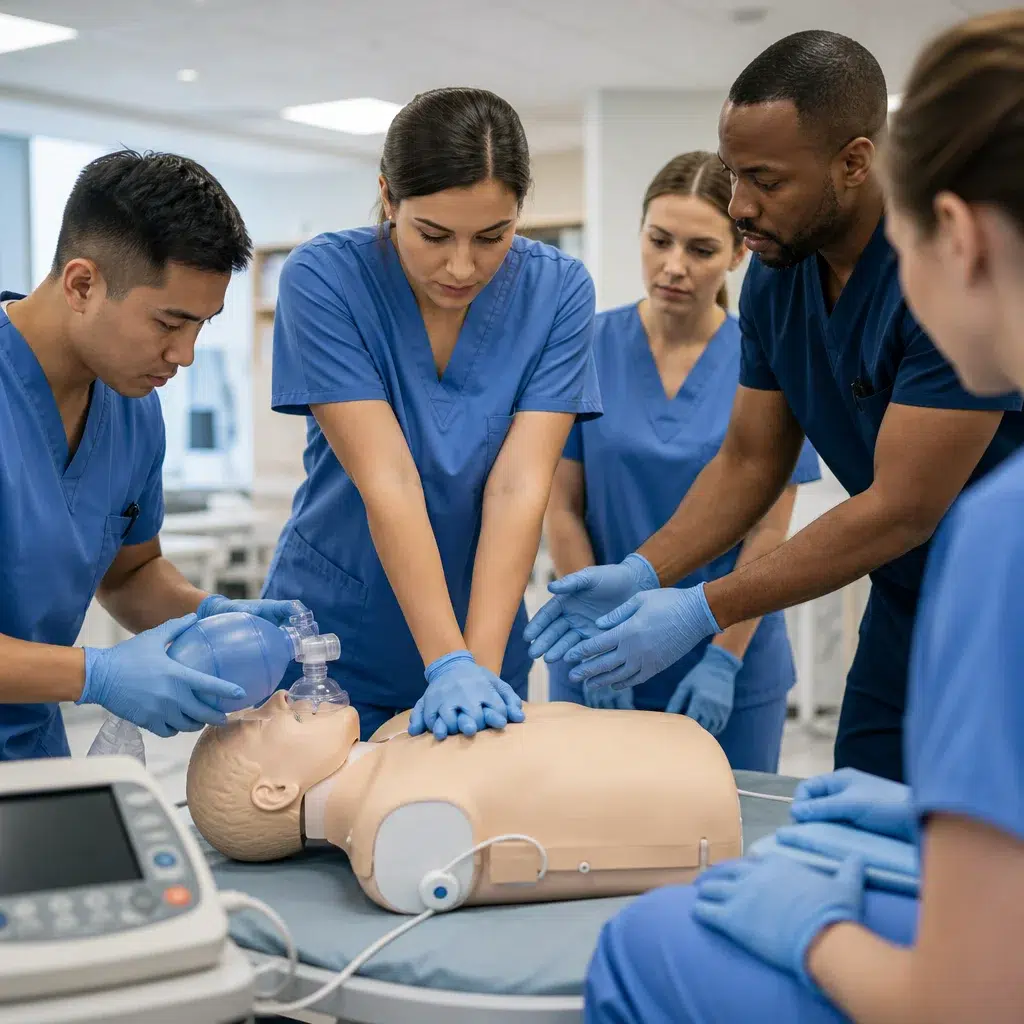
Your in-person session typically spans four to six hours, depending on whether you’re pursuing PALS alone or combining it with NRP. During this time, our instructors guide small groups through hands-on practice stations, high-fidelity simulations, and skills assessments. You’ll practice on actual equipment, receive real-time feedback on your technique, and participate in team-based scenarios that mirror your workplace dynamics.
This approach works particularly well for nurses and EMS personnel in cities like San Jose, Fremont, and Hayward who juggle clinical responsibilities with recertification requirements. You’re not losing an entire day to classroom time; you’re investing focused hours in the skills that matter most.
Our low price guarantee ensures you’re getting the best value regardless of where you train in California. We’ve eliminated the financial barrier that sometimes prevents clinicians from maintaining current certifications.
Same-Day Certification and Flexible Scheduling Options
When you complete our PALS or NRP course, you leave with your certification in hand. You don’t wait weeks for credentials to arrive or wonder about your official status. We verify your skills during the course, document your competency, and issue your certificate immediately upon successful completion.
This same-day certification matters for clinicians navigating employment transitions, new hire credentialing, or certification expirations. If you’re starting a new position and need current PALS documentation before your first shift, we can accommodate that timeline. We offer courses at multiple locations throughout the week, with early morning, midday, and evening options. Whether you’re based in San Francisco’s Mission Bay, Downtown San Jose, or further south in Santa Cruz and Visalia, you’ll find multiple session times within your preferred window.
We recognize that pediatric care teams sometimes need group training. A hospital’s neonatal intensive care unit, pediatric emergency department, or obstetric team might need to recertify a dozen clinicians within a specific timeframe. We coordinate group sessions at your facility or schedule multiple team members into our public courses. This flexibility accommodates both individual practitioners and entire departments.
Our scheduling portal displays available courses across all locations, showing real-time seat availability so you can select a session that works with your shift pattern. You can register online and complete payment immediately, confirming your spot before leaving your computer.
Specialized Training for Neonatal and Pediatric Scenarios
NRP certification specifically prepares you for the unique challenges of newborn resuscitation. Unlike pediatric PALS, which addresses infants and children post-birth, NRP focuses on the critical minutes immediately after delivery when transitions from intrauterine to extrauterine life can fail. You’ll learn the specific decision tree that guides initial assessment, determine whether a newborn requires intervention, and execute appropriate resuscitation if needed.
Our NRP training emphasizes the Apgar score assessment at one and five minutes, meconium aspiration management, and the precise chest compression technique for neonates whose tiny chests compress under the pressure that’s appropriate for older infants. You’ll practice with realistic cord management scenarios, thermal management strategies, and medication administration using umbilical access when peripheral lines aren’t yet established.
PALS training broadens your focus to infants and children throughout childhood. You’ll master pediatric-specific arrhythmias, recognize sepsis presentations that differ substantially from adult presentations, and manage respiratory emergencies specific to pediatric anatomy. Your training includes management of foreign body airway obstruction, which appears frequently in children but represents a different clinical challenge than adult airway obstruction.
Many of our trainees in the Bay Area, including those at locations in Berkeley, Oakland, and San Francisco, pursue both certifications because their roles span delivery and pediatric care. We’ve designed our combined courses to avoid redundancy while ensuring mastery of both domains.
Instructors at our Sacramento, Stockton, and Fresno locations emphasize scenario variation. You won’t simply practice the same “stable newborn” scenario repeatedly. Instead, you’ll encounter variations including respiratory distress, poor perfusion, and the need for escalating interventions. This variety builds your confidence and adaptability for the actual breadth of presentations you’ll encounter clinically.
Supporting Your Team with Group Training and Discounted Rates
Healthcare facilities benefit significantly from coordinated team training. When your entire pediatric team trains together, you develop shared language and protocols. Team members understand each other’s strengths and communication styles, improving coordination during actual emergencies.
We’ve structured our group training programs to be more affordable than individual certifications, with tiered discounting based on group size. A team of five nurses pays substantially less per person than individuals registering separately. This pricing recognizes the value of team coherence and removes financial barriers that might otherwise force some team members to train sporadically.
Our group coordinators work directly with your facility to schedule courses at times that minimize staffing disruption. We can conduct training at your facility if you prefer, using your equipment and environment so that clinicians practice in the exact setting where they’ll respond to emergencies. This approach has proven particularly effective for pediatric departments in Campbell, Concord, Pleasanton, and other communities where travel time to external training sites creates scheduling friction.
We’ve also structured our courses so that clinicians don’t all need to attend simultaneously. Staggered sessions allow your facility to maintain patient care coverage while rotating staff through training. Our coordinators track certification expiration dates for your organization, alerting you when renewals are approaching so that scheduling can happen proactively rather than reactively.

Group training participants consistently report higher confidence and more robust knowledge retention compared to those who trained individually. The team discussion, peer feedback, and collaborative scenario practice create deeper learning than individual courses achieve.
Why Healthcare Facilities Choose Our Certification Programs
Hospitals, pediatric clinics, and emergency departments across California select us as their primary training partner because we’ve eliminated the friction that makes certification inconvenient. You don’t need to travel far, you don’t need to lose entire workdays, and you don’t need to wait weeks for your credentials.
Our instructors bring clinical experience directly into the classroom. You’re learning from nurses who’ve managed pediatric codes, respiratory therapists who’ve established difficult neonatal airways, and physicians who’ve made split-second decisions in pediatric emergencies. This authenticity creates more engaging instruction and more practical learning than programs relying on instructors without deep clinical background.
Our low price guarantee differentiates us in a market where training costs can feel prohibitive. You’re getting top-tier instruction, current equipment, and same-day certification at rates that don’t require special negotiation or finding alternative funding sources.
Facilities also appreciate our accountability and documentation standards. Your completion records are maintained securely and provided in formats your credentialing office requires. We’ve streamlined the administrative burden of maintaining organizational compliance around staff certifications.
Organizations in San Rafael, Vallejo, Napa, and across Northern California have built long-term partnerships with us, knowing they can reliably access quality training whenever their team needs recertification or initial certification.
Getting Started with Your PALS and NRP Certification Today
Beginning your PALS or NRP journey takes just a few minutes. Visit our website to browse PALS classes in California and identify sessions matching your schedule. Filter by location if you prefer training near your workplace, or choose any of our 100-plus locations throughout the state.
Select your preferred course date and register online. If you’re pursuing blended learning, we’ll immediately email your login credentials for the online module. You’ll work through foundational content at your own pace over the following days or week, depending on your timeline.
On your course date, arrive a few minutes early to check in and connect with your small group and instructor. Bring any required identification and come ready to focus entirely on skills development and scenario practice. You’ll leave with your certification that same day.
Our team at locations throughout the state, from San Pablo to Bakersfield, from Woodland to Santa Cruz, is ready to support your certification journey. Whether you’re renewing after three years or earning your first PALS certification, we’re here to make the process straightforward and valuable.
Where to get certified near you provides a complete directory of all our California locations, course schedules, and contact information. Connect with us today to reserve your seat and take the next step in maintaining the credentials your role requires.
Register for a class today.
Frequently Asked Questions (FAQ)
What’s included in our PALS and NRP certification courses?
Our PALS and NRP courses combine virtual instruction with in-person skills sessions so you can learn at your own pace and still get hands-on practice with our instructors. We cover pediatric emergency protocols, neonatal resuscitation techniques, and real-world scenario training tailored to your role in pediatric care. Both certifications are valid upon completion of our blended program, and we offer same-day results at most of our Southern California locations.
How do we accommodate busy healthcare schedules?
We understand that nurses, EMS personnel, and pediatric care providers need flexibility, which is why we offer daily course options and split our training between online modules and in-person skills sessions. You can complete your virtual coursework on your own timeline, then schedule a skills session at one of our 100+ California locations that works for your calendar. Our group training programs also allow facilities to bring their teams together for coordinated certification at discounted rates.
Do you serve pediatric care teams across Southern California?
Yes, we operate training locations throughout Southern California including San Diego, Los Angeles, Orange County, and the Inland Empire regions, with over 100 sites statewide. Our instructors specialize in pediatric and neonatal emergency response, ensuring your team receives training specific to the scenarios you’ll encounter in practice. We guarantee our pricing is competitive so your facility can certify multiple providers without straining your budget.