Table of Contents
- Why California Nurses Need Current CPR Certification
- The Challenge of Maintaining Compliance Across Your Career
- Our Blended Learning Approach to CPR Mastery
- Same-Day Certification and Flexible Scheduling Options
- Specialized Training Aligned with Healthcare Standards
- Over 100 Convenient Training Locations Statewide
- Affordable Pricing with Our Low-Price Guarantee
- RQI Simulation Stations for Real-World Skills Practice
- Corporate Group Training for Your Healthcare Facility
- Fast Certification Renewal Process
- How to Enroll in Your Next CPR Course
- Frequently Asked Questions (FAQ)
Why California Nurses Need Current CPR Certification
Your CPR certification isn’t just a credential hanging on your office wall—it’s a legal requirement that directly affects your ability to practice nursing in California. State licensing boards and healthcare employers mandate current BLS (Basic Life Support) certification for all nursing roles, whether you work in acute care, home health, clinic settings, or specialty departments.
Beyond compliance, CPR skills keep your interventions sharp. In cardiac emergencies, the first few minutes determine outcomes. When you maintain current certification through hands-on practice, you build the muscle memory and decision-making confidence to act decisively when a patient’s life depends on it. This isn’t theoretical knowledge; it’s the practical competency your patients deserve.
We see nurses from Alameda to Visalia recognize that regular recertification strengthens their clinical foundation. Your employer likely requires proof of active certification annually or every two years, depending on your role. Letting your certification lapse creates gaps in your resume, could pause your work schedule, and puts your professional standing at risk.
Actionable takeaway: Review your current certification expiration date today. If you’re within six months of expiration, schedule your renewal now to avoid last-minute scheduling pressure.
The Challenge of Maintaining Compliance Across Your Career
Juggling clinical shifts, continuing education requirements, and family obligations leaves little room for lengthy training programs. Many nurses tell us they’ve delayed recertification simply because they couldn’t find a course that fit their schedule or didn’t want to spend a full day away from work.
State regulations add another layer of complexity. California requires CPR training through approved providers, and documentation standards vary slightly between employers. A course that satisfies one facility’s requirements might need verification from another. This inconsistency creates confusion and wastes your time navigating different provider portals and paperwork systems.
The cost factor compounds these challenges. When you’re paying out-of-pocket for recertification and losing shift income during training hours, the financial burden feels real. Budget constraints shouldn’t force you to choose between staying current and staying financially stable.
Distance also matters. Nurses working in rural areas around Redding or Tracy sometimes face limited local options, requiring them to travel hours for certification. Those in urban centers like San Francisco or Sacramento might find courses booked months in advance.
Actionable takeaway: Document your employer’s specific certification requirements and renewal timeline in writing. This reference guide prevents missed deadlines and eliminates guesswork.
Our Blended Learning Approach to CPR Mastery
We designed our training model around your reality as a working nurse. Our blended approach combines online theory and knowledge review with in-person skills sessions, letting you learn at your pace while guaranteeing thorough hands-on instruction.
Here’s how it works: You complete the theory component online before your skills appointment. This asynchronous learning means you study when your schedule permits, whether that’s early morning, late evening, or weekend. The online portion covers current protocols, scenario-based decision-making, and updated guidelines without forcing you into a rigid classroom timeframe.
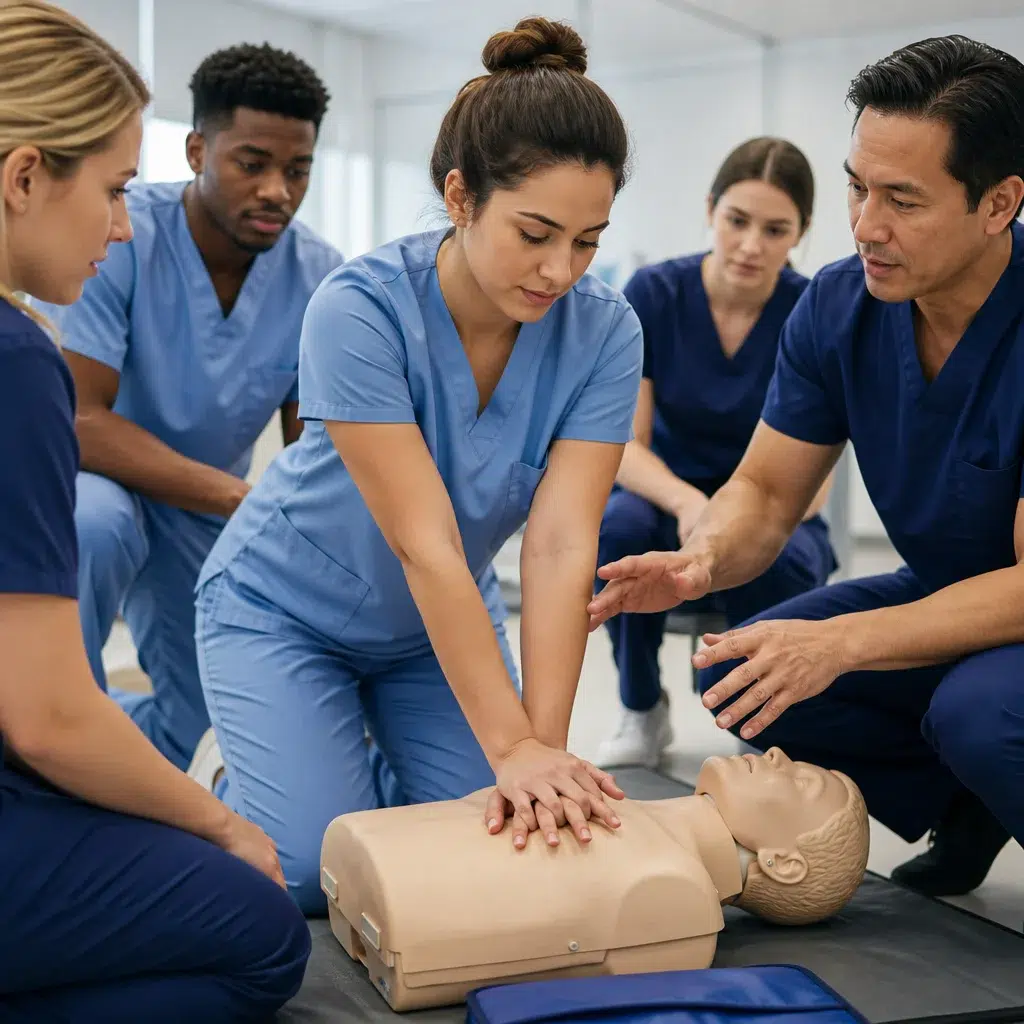
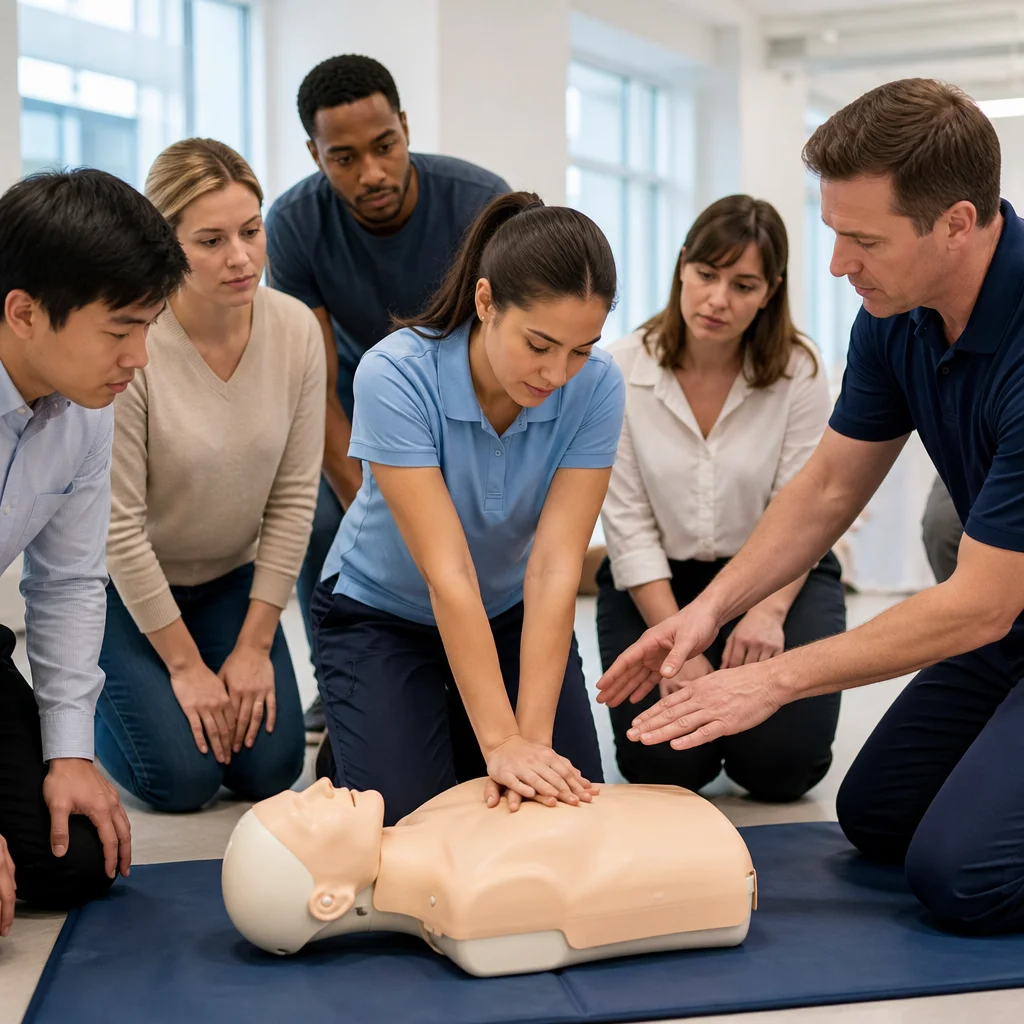
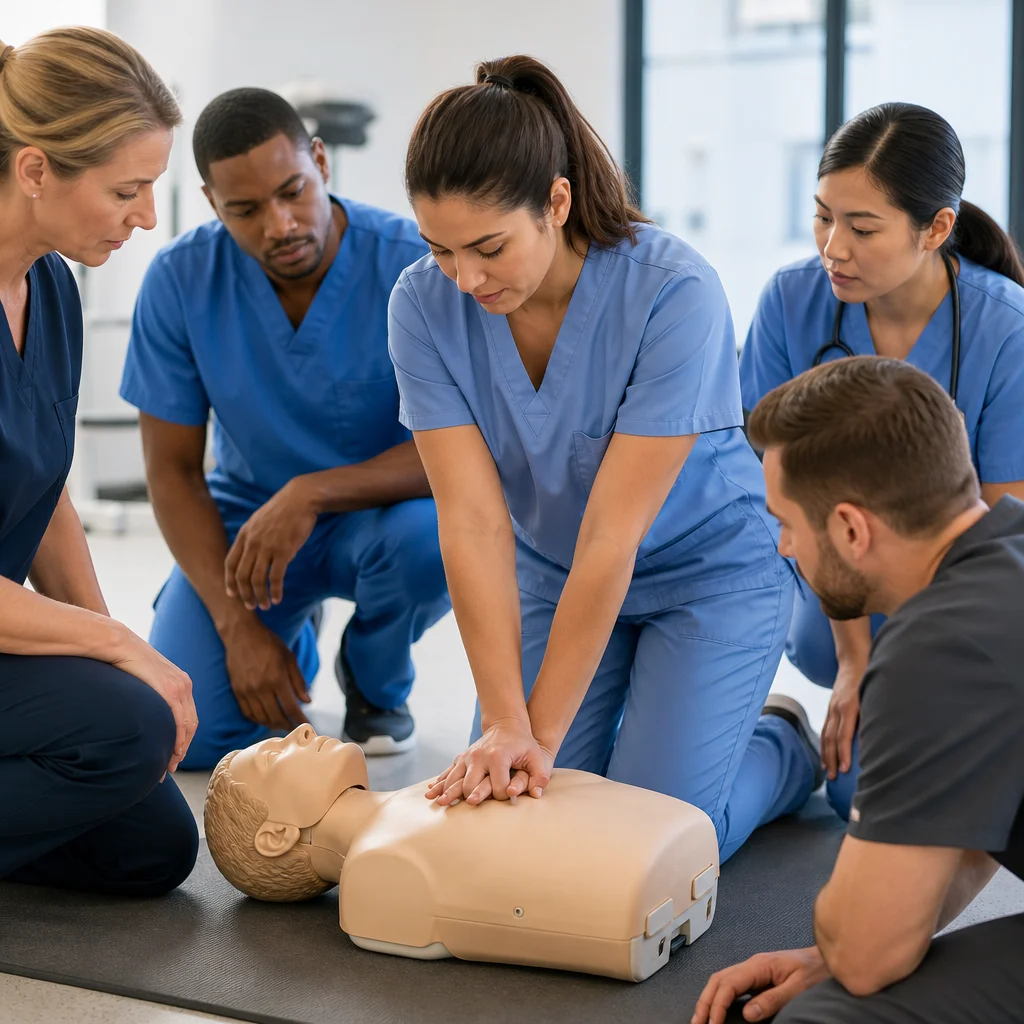
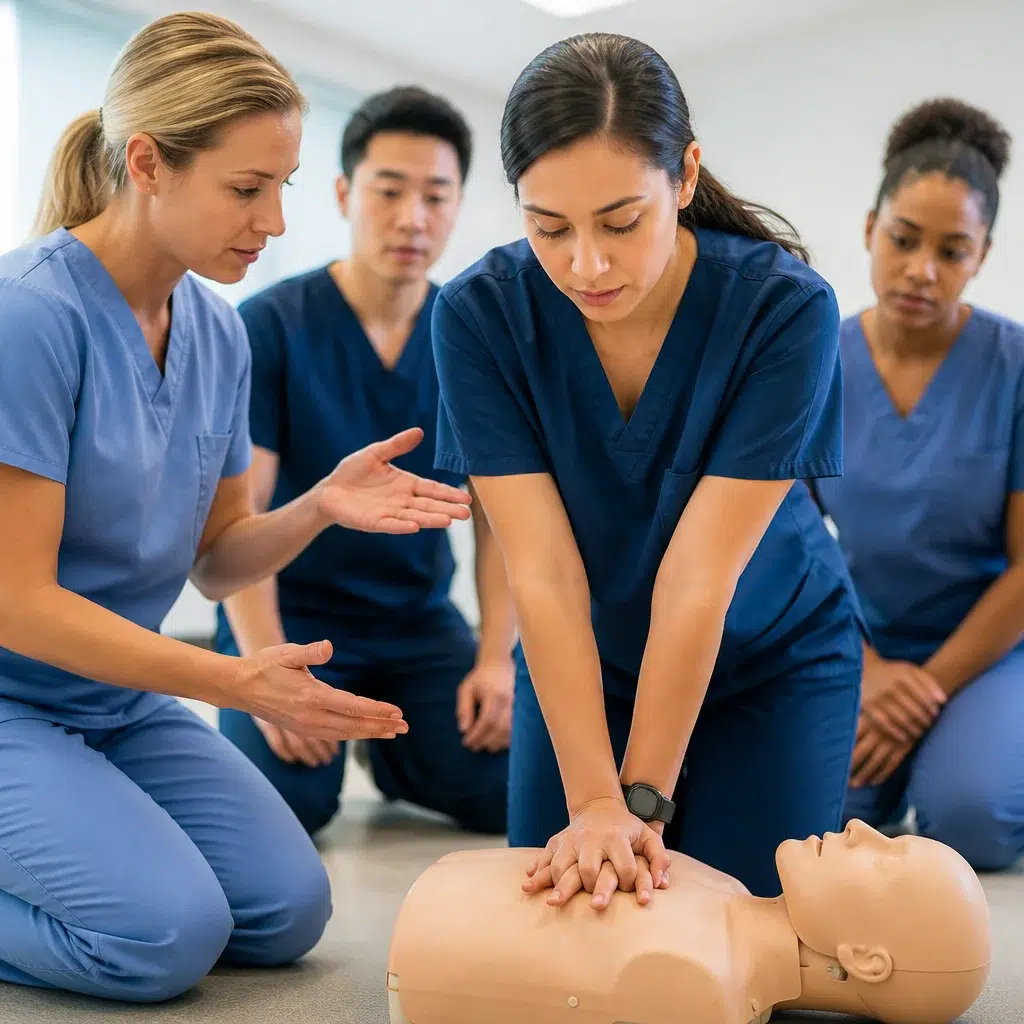
Then you attend an in-person skills session at one of our training centers. During this focused time, our certified instructors observe your chest compressions, evaluate your airway management, and provide real-time corrective feedback. You practice on manikins that simulate actual resistance and feedback, bridging the gap between theory and real-world application.
This blended ACLS and BLS training model typically requires just 3-4 hours of in-person time, compared to traditional 8-hour full-day courses. Nurses in Berkeley, Sacramento, and Fremont consistently tell us they complete the online work around their shifts and then knock out skills practice in a single focused session.
Actionable takeaway: Ask your employer whether they accept blended-format certifications before enrolling. Most do, but confirming upfront prevents any credential surprises.
Same-Day Certification and Flexible Scheduling Options
We offer CPR certification sessions daily across our statewide network, meaning you don’t have to wait weeks for the next available class. Many of our locations in San Jose, Oakland, and Palo Alto schedule early morning, evening, and weekend appointments specifically for working healthcare professionals.
Same-day certification through our streamlined process means you walk out with your verified certificate the day you complete your skills session. No delays, no pending paperwork, no waiting for mailed credentials. Your employer can verify your status immediately through our registration database.
Scheduling flexibility extends beyond just daily availability. We hold courses at multiple time slots: 7 a.m. sessions for early-shift nurses, lunch-hour appointments for mid-shift flexibility, and evening options for those working late shifts. Weekend classes accommodate nurses balancing multiple jobs or those with limited weekday availability.
Our reservation system lets you book your skills session weeks in advance, giving you the planning certainty healthcare facilities require. Once you complete your online theory component, you pick a skills appointment that works. This contrasts sharply with courses that book one session at a time with no flexibility.
Actionable takeaway: Identify the two nearest training locations to your workplace or home, then check their posted schedule for times that align with your typical availability.
Specialized Training Aligned with Healthcare Standards
Nursing roles vary widely across California’s healthcare landscape. A pediatric ICU nurse in Los Angeles has different priorities than an ED nurse in Stockton or a home health nurse in Morgan Hill. We’ve designed specialized tracks that align with your specific practice environment.
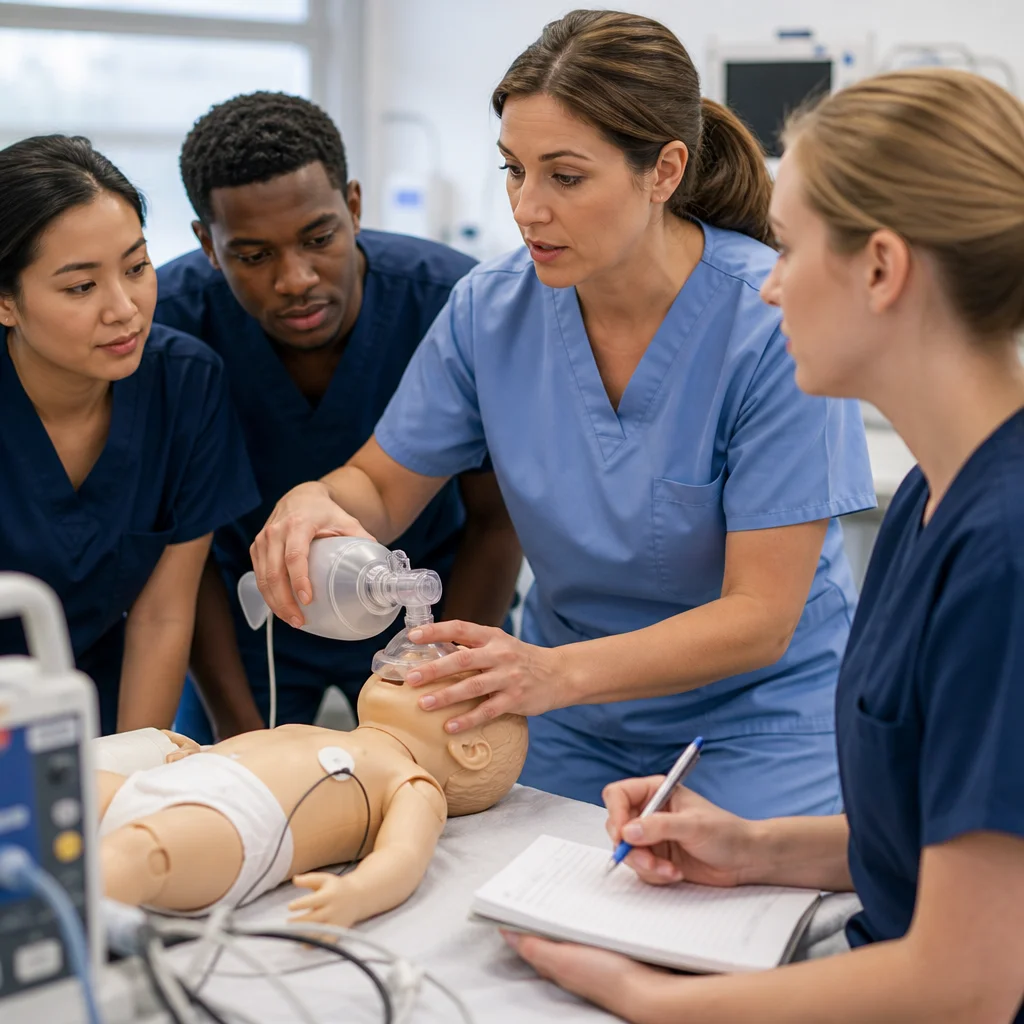
For acute care settings, our BLS certification covers rapid response protocols and team coordination in fast-paced environments. For specialty nurses, we offer ACLS (Advanced Cardiovascular Life Support) and PALS (Pediatric Advanced Life Support) courses that go deeper into pharmacology, rhythm interpretation, and complex patient scenarios relevant to your patient population.
Our instructors stay current with the latest guidelines and state regulations. They’re nurses themselves or healthcare educators with direct clinical experience, so they speak your language and understand the real conditions you manage. They explain the “why” behind protocols, not just the mechanics of chest compressions.
Each course emphasizes practical scenario-based learning. Rather than isolated drills, you work through actual clinical situations: unresponsive patient in a hallway, sudden pediatric deterioration, post-operative complications. This approach bridges certification training and bedside reality.
Actionable takeaway: Identify which specialized certification (BLS, ACLS, or PALS) your current role requires, then verify whether your employer accepts that level or requires additional certifications.
Over 100 Convenient Training Locations Statewide
We operate more than 100 training centers throughout California, from the Bay Area through Central Valley and into Northern California communities. Whether you practice in downtown San Francisco, suburban Danville, or rural Visalia, a training location exists within reasonable distance.
Our network spans major urban centers and smaller communities alike. Nurses in Hayward, Fremont, and Newark have multiple nearby options. Those in Concord, Walnut Creek, and Pleasant Hill access dedicated training centers. Rural practitioners in Lodi, Merced, and Redding find local scheduling without the burden of long-distance travel.
This extensive reach means you’re not locked into one training provider’s limited schedule. Competition between our locations keeps quality high and availability robust. If your preferred time slot books full, an alternative center typically has openings within days.
Each location maintains consistent standards and instructor credentials. Whether you train in Sacramento or Santa Cruz, you receive the same rigorous instruction and recognized certification. Our centralized system ensures seamless credential verification regardless of which location you choose.
Actionable takeaway: Search our training center locator for facilities within 10 miles of your home and workplace, noting their hours and class schedule.
Affordable Pricing with Our Low-Price Guarantee
We stand behind our commitment that you’ll find competitive pricing for CPR certification across California. Our low-price guarantee means if you locate a lower published price elsewhere, we match it and include the additional value our blended model provides.
Transparent pricing structures let you know exactly what you’re paying upfront. No hidden fees, no surprise charges during checkout, no “facility fees” tacked on later. Your course cost includes online access, in-person skills instruction, manikin practice, and same-day certification documentation.
For healthcare professionals working multiple jobs or self-employed, this affordability matters. Certification shouldn’t strain your budget. We’ve built pricing that recognizes nursing compensation realities while delivering premium instruction.
Many employers offer reimbursement for recertification costs. Confirm your facility’s policy before enrollment. If reimbursement applies, our straightforward invoicing makes the process smooth.
Actionable takeaway: Calculate your total out-of-pocket cost after employer reimbursement, then factor in time saved through blended learning (fewer hours away from income-generating shifts).
RQI Simulation Stations for Real-World Skills Practice
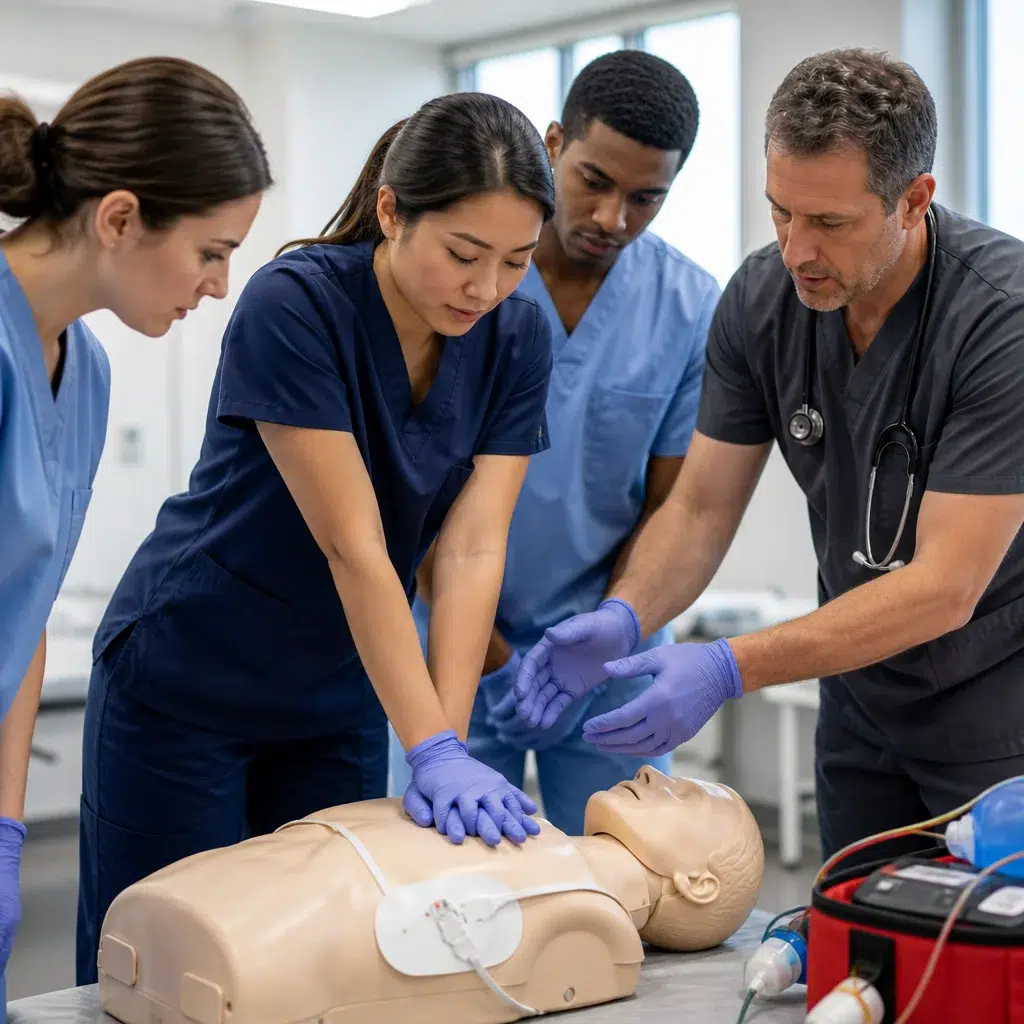
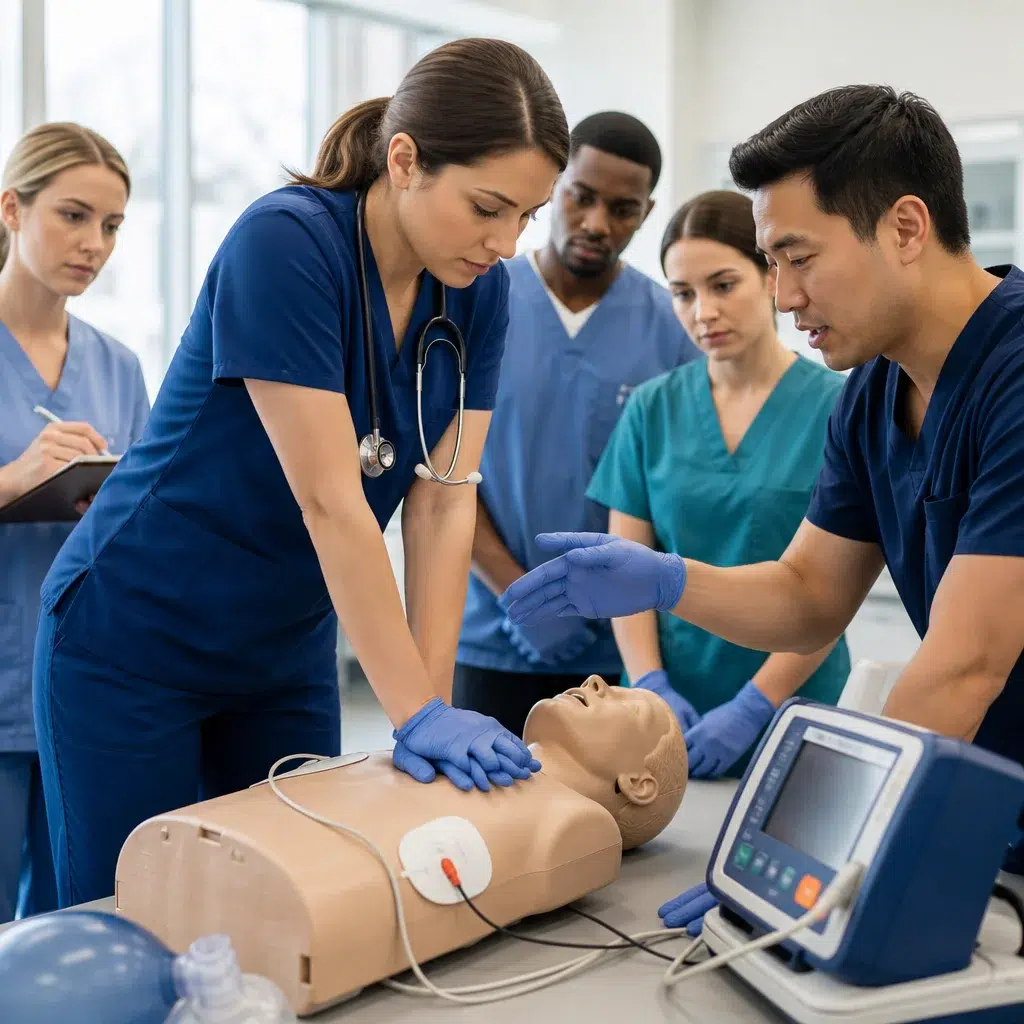
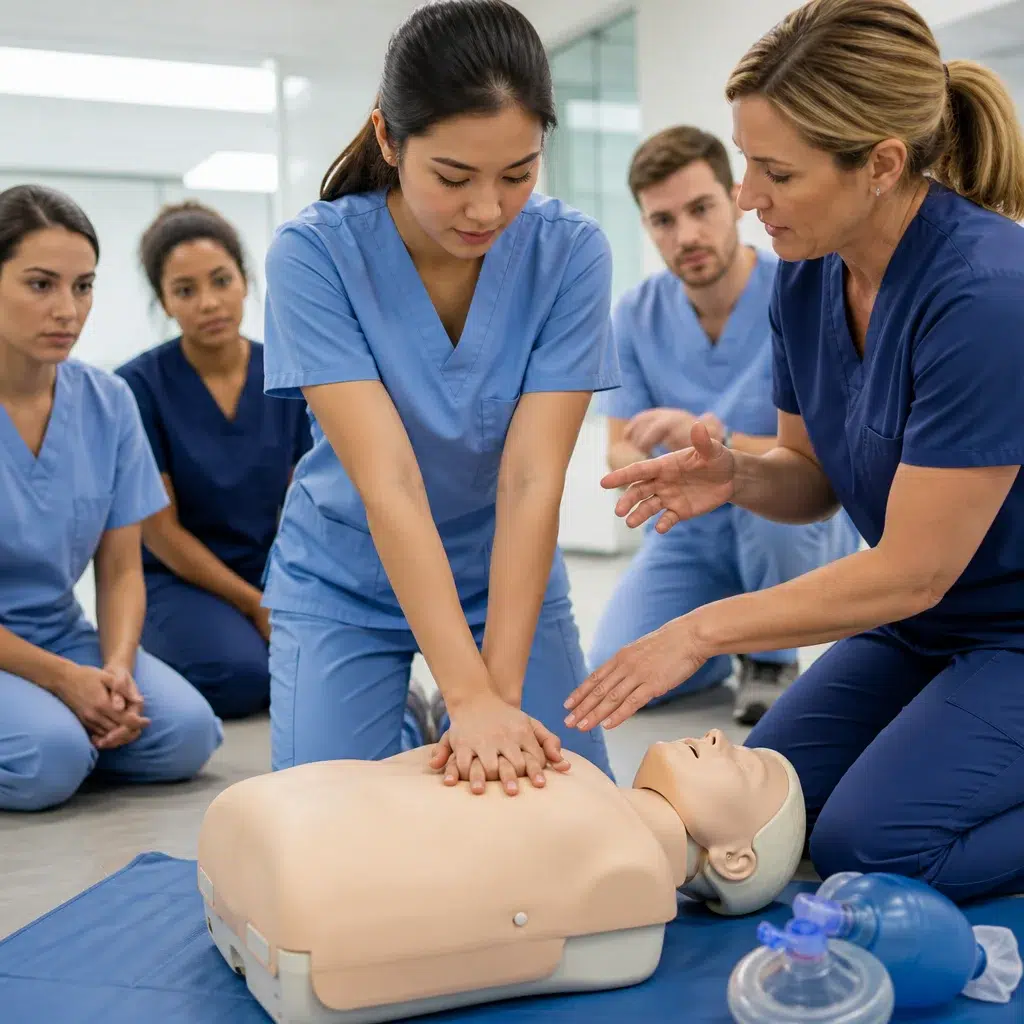
Our simulation stations use industry-standard manikins equipped with realistic feedback mechanisms. When you perform chest compressions, the manikin responds to depth and rate, helping you calibrate your technique in real time. Bag-valve-mask ventilation practice includes realistic airway resistance, building the physical skill and judgment required during actual resuscitations.
These aren’t cheap training dummies. Our equipment provides the fidelity you need to develop genuine competency. You experience the physical demands of sustained compressions, the coordination challenges of two-rescuer scenarios, and the decision-making pressure of managing an unresponsive patient.
Small instructor-to-student ratios ensure you receive personalized feedback during manikin practice. Instructors observe your technique, identify corrections, and guide you toward mastery. This direct mentoring accelerates learning compared to large lecture-based formats where individual attention is minimal.
Scenario-based practice mirrors the complexity of real emergencies. Rather than isolated skill drills, you manage complete resuscitation scenarios: assessing responsiveness, activating emergency response, initiating compressions, coordinating with a team member, and transitioning to AED use. This holistic approach builds confidence and competence simultaneously.
Actionable takeaway: During your skills appointment, ask your instructor to observe one full resuscitation scenario and provide detailed feedback on your team coordination and decision-making.
Corporate Group Training for Your Healthcare Facility
Staffing an entire department’s recertification can overwhelm your HR department and fragment your team across multiple public courses. We offer dedicated corporate group training where your nursing team completes certification together at your facility or a central location.
Group sessions provide cost advantages through volume discounts, reducing per-person expenses compared to individual enrollments. We schedule training around your facility’s operational needs, whether that means off-shift sessions to maintain coverage or rotating small groups through blended programs.
Our corporate model includes customization. If your facility serves pediatric populations, we emphasize PALS skills. If you manage complex acute care, we tailor ACLS content to your specific patient scenarios and protocols. Your facility’s clinical leadership can influence curriculum focus while maintaining certification rigor.
On-site coordination means your team doesn’t juggle multiple training locations and times. Everyone completes training together, strengthens team dynamics through shared learning, and returns to your unit with synchronized knowledge and techniques.
Actionable takeaway: Contact our corporate training team with your facility’s size, certification needs, and preferred timeline to receive a customized proposal and volume pricing.
Fast Certification Renewal Process
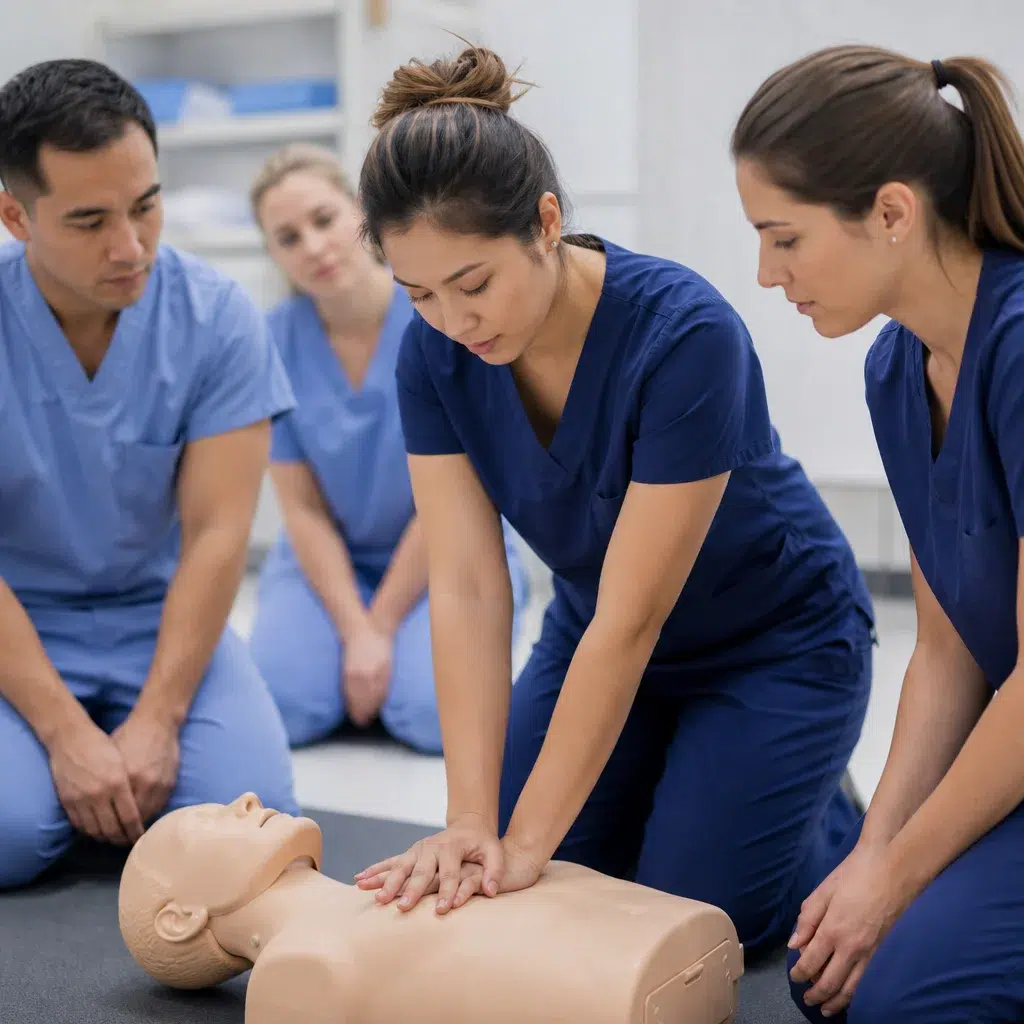
Renewal shouldn’t require starting from scratch. If you held current certification previously, our abbreviated renewal path recognizes your existing knowledge while ensuring skills haven’t atrophied. You complete a condensed online review component and attend a focused skills validation session.
The entire renewal typically takes 2-3 hours of in-person time for previously certified nurses. This efficiency means minimal disruption to your schedule while maintaining the hands-on practice essential to certification integrity.
Documentation processes move quickly too. Our digital verification system uploads your certificate to your learner profile immediately upon successful completion. Your employer can verify credentials within hours, not weeks. This speed matters when you’re starting a new position or your current role has strict compliance deadlines.
If life circumstances caused your certification to lapse, we don’t penalize you. You simply complete the full initial certification course, which still moves faster through our blended model than traditional full-day programs.
Actionable takeaway: If previously certified, gather your old certificate or documentation of your credential. This streamlines your renewal enrollment and reduces your required in-person training time.
How to Enroll in Your Next CPR Course
Getting started takes just a few minutes. Visit our website and select your preferred training location from our network spanning Pleasanton, Roseville, San Ramon, and dozens of other California communities. Choose your preferred course type (BLS, ACLS, or PALS) and select an available skills appointment date and time.
Complete our brief enrollment form with your contact information and nursing credentials. You’ll receive immediate access to your online learning module, which you can start completing right away. Most nurses finish the online component within 2-3 days, allowing flexibility in your preparation timeline.
Once you’ve completed the online material, attend your scheduled in-person skills session. Bring a valid photo ID and your nursing license. Our instructors will guide you through scenario-based practice, observe your technique, provide feedback, and administer a final skills assessment.
Upon successful completion, you’ll receive your printed certificate and digital credential that same day. Your certification uploads to our verification system, accessible to your employer or licensing board immediately.
Questions before enrolling? Our team in Sacramento, San Francisco, and regional offices responds quickly to specific inquiries about course content, location accessibility, or employer verification requirements. Reach out anytime—we’re here to support your certification journey and keep you confidently prepared for whatever your nursing practice demands.
Register for a class today.
Frequently Asked Questions (FAQ)
How quickly can I get my CPR certification renewed?
We offer same-day certification for most of our courses, allowing you to complete both the virtual coursework and in-person skills assessment on your schedule. Many nurses complete their renewal in a single session at one of our over 100 California locations, making it easy to stay compliant without disrupting your work calendar.
Do you offer training specifically for healthcare professionals like nurses?
Yes, we provide specialized BLS, ACLS, and PALS certifications designed specifically for healthcare providers. Our curriculum aligns with the standards your employer requires, and we tailor our instruction to the clinical scenarios you encounter in your nursing practice.
What makes your pricing different from other training providers?
We back our competitive rates with a low-price guarantee on all our classes, so you can train with confidence knowing you’re getting the best value available. We also offer corporate group discounts for healthcare facilities looking to certify multiple staff members at once.