Table of Contents
- Why Healthcare Professionals Need ACLS and PALS Recertification
- Understanding California's ACLS and PALS Certification Requirements
- The Consequences of Letting Your Certifications Lapse
- Our Streamlined Blended Learning Approach for Busy Professionals
- Flexible Scheduling Across 100+ California Training Locations
- Same-Day Certification Cards and Fast Checkout Process
- Specialized Healthcare Provider Training Programs
- Group Training and Corporate Discount Options
- Our Low Price Guarantee on All Recertification Courses
- How to Get Started with Your Recertification Today
- Frequently Asked Questions (FAQ)
Why Healthcare Professionals Need ACLS and PALS Recertification
Your ACLS (Advanced Cardiac Life Support) and PALS (Pediatric Advanced Life Support) certifications represent more than a credential on your resume. They demonstrate your ability to respond decisively when patients experience life-threatening cardiac events or pediatric emergencies. Recertification ensures your knowledge stays aligned with the latest treatment protocols and clinical guidelines.
Recertification matters because emergency medicine evolves. Treatment algorithms change, equipment updates, and best practices refine based on recent research. When you recertify every two years, you’re not just renewing a card—you’re sharpening critical skills that directly impact patient outcomes. For nurses, emergency room staff, respiratory therapists, and other healthcare providers across California, staying current in ACLS and PALS isn’t optional; it’s essential for maintaining clinical credibility and meeting employer expectations.
Healthcare institutions require current certifications for several reasons. Patient safety protocols depend on staff being trained in the most current emergency response techniques. Your recertification shows employers that you’re committed to professional development and meeting regulatory standards. Beyond compliance, recertification gives you confidence to manage high-stakes situations when seconds matter most.
Understanding California’s ACLS and PALS Certification Requirements
California healthcare facilities follow national evidence-based standards for emergency care training. Most hospitals, clinics, and medical centers require ACLS certification for physicians, nurses, respiratory therapists, and paramedics. PALS is mandatory for pediatric nurses, emergency department staff, and any provider who treats children in acute care settings. These aren’t suggestions—they’re job requirements tied to licensure renewal and credentialing.
The recertification cycle typically requires renewal every two years from your original certification date. Some specialized roles may have different intervals, so verify your specific requirements with your employer or licensing board. Your current certification card includes the expiration date, which serves as your deadline for renewal.
We’ve worked with healthcare professionals across Alameda, San Francisco, Oakland, and the entire Bay Area to understand what documentation employers actually request. Most require a valid certification card within 30 days of employment and proof of current status for ongoing work. Some healthcare systems won’t allow you to practice until your renewal is complete, which is why planning ahead matters. If your certification is set to expire in six months, that’s the time to schedule your recertification course—not the month before expiration when options become limited.
The Consequences of Letting Your Certifications Lapse
A lapsed certification creates immediate problems. Many healthcare facilities won’t permit expired staff to work in critical care roles. You might face temporary reassignment, unpaid leave, or disciplinary action depending on your employer’s policies. In worse scenarios, ongoing practice with an expired certification could result in license suspension or legal liability.
Beyond employment consequences, letting certifications lapse affects your professional credibility. When your ACLS or PALS card expires, you lose the documented proof that you maintain current emergency response knowledge. This becomes especially problematic if you’re seeking new positions, applying for specialized roles, or needing to demonstrate competency to licensing boards.

The financial impact extends beyond lost wages. Emergency recertification courses often cost more than scheduled renewals because you’re working outside normal class schedules. Travel time to distant training centers in Sacramento, Los Angeles, or other regions can consume entire workdays. The stress of rushing to recertify while managing your regular clinical duties isn’t worth the hassle.
Preventive planning eliminates this risk entirely. Setting a recertification date four to six months before expiration gives you flexibility to choose convenient class times and locations throughout California, from San Jose to Redding, without the pressure of an approaching deadline.
Our Streamlined Blended Learning Approach for Busy Professionals
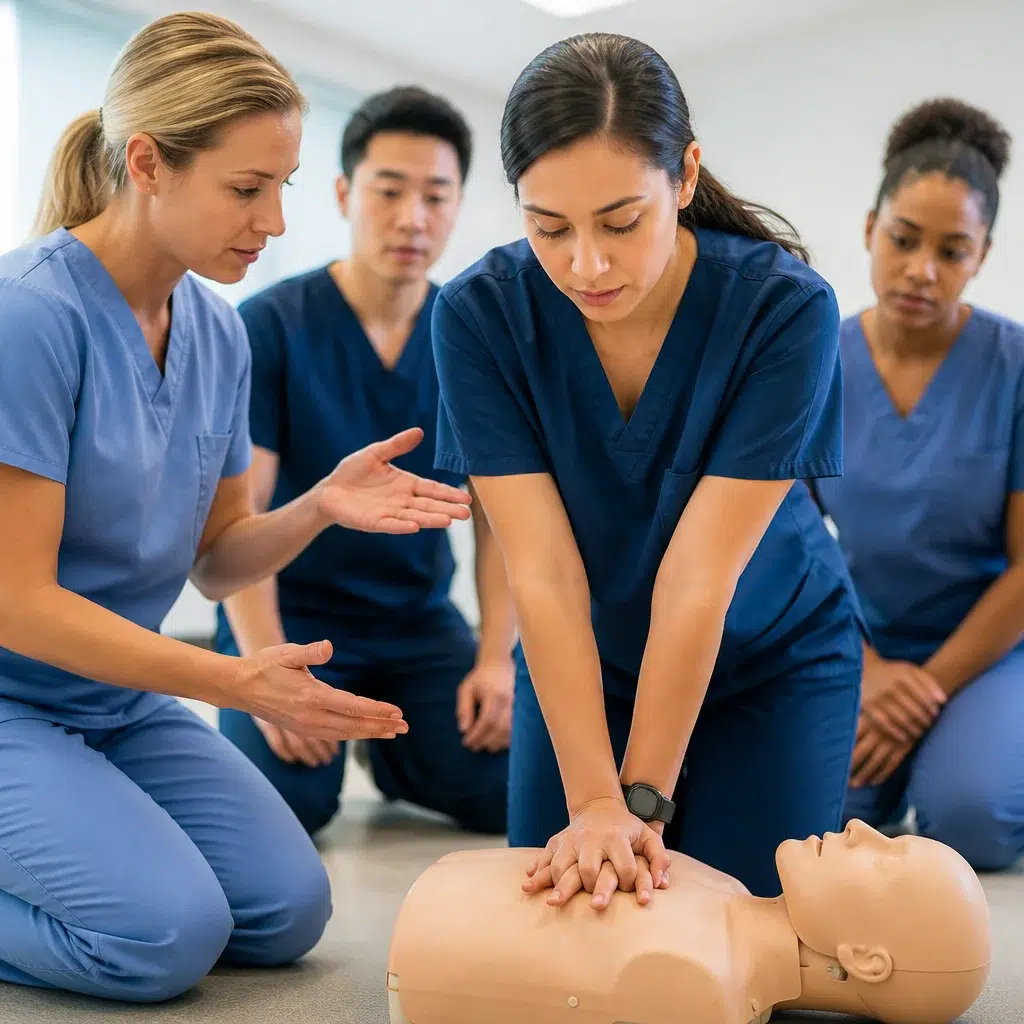
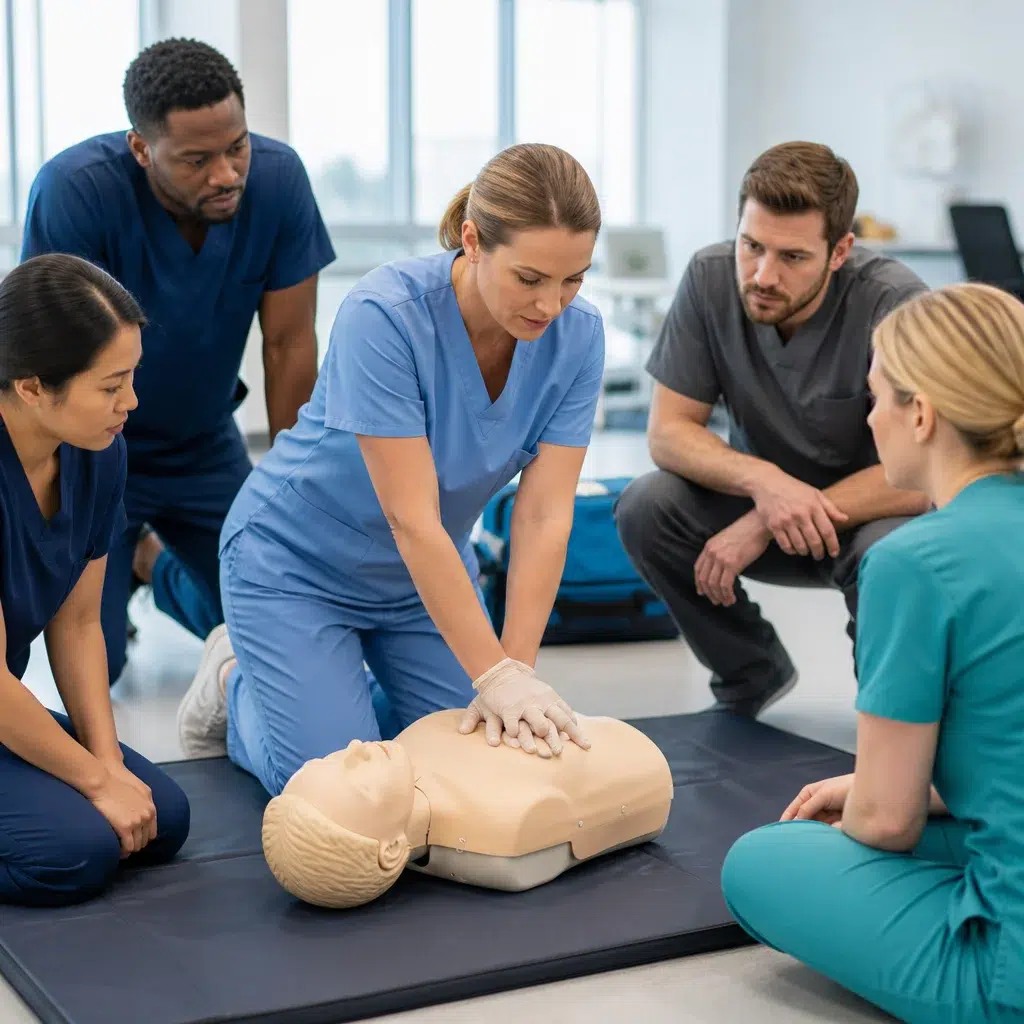
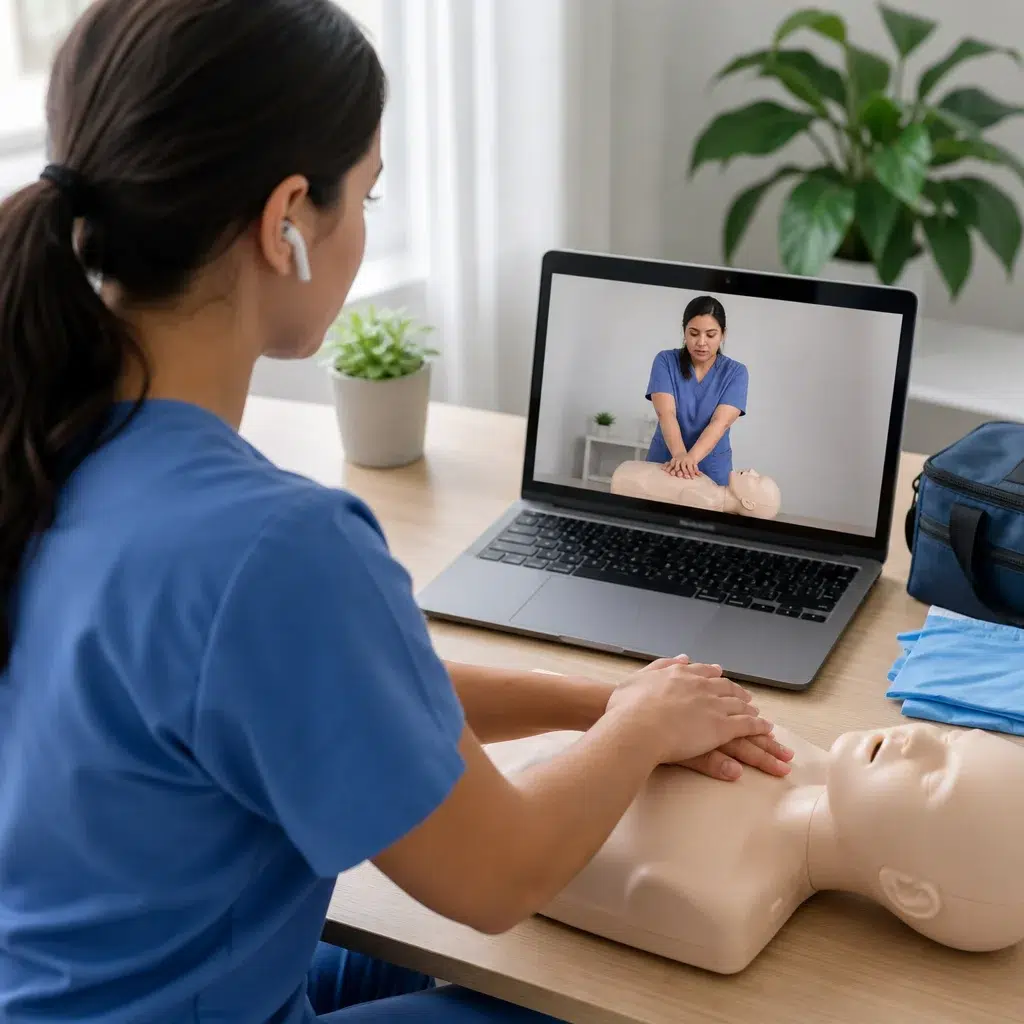
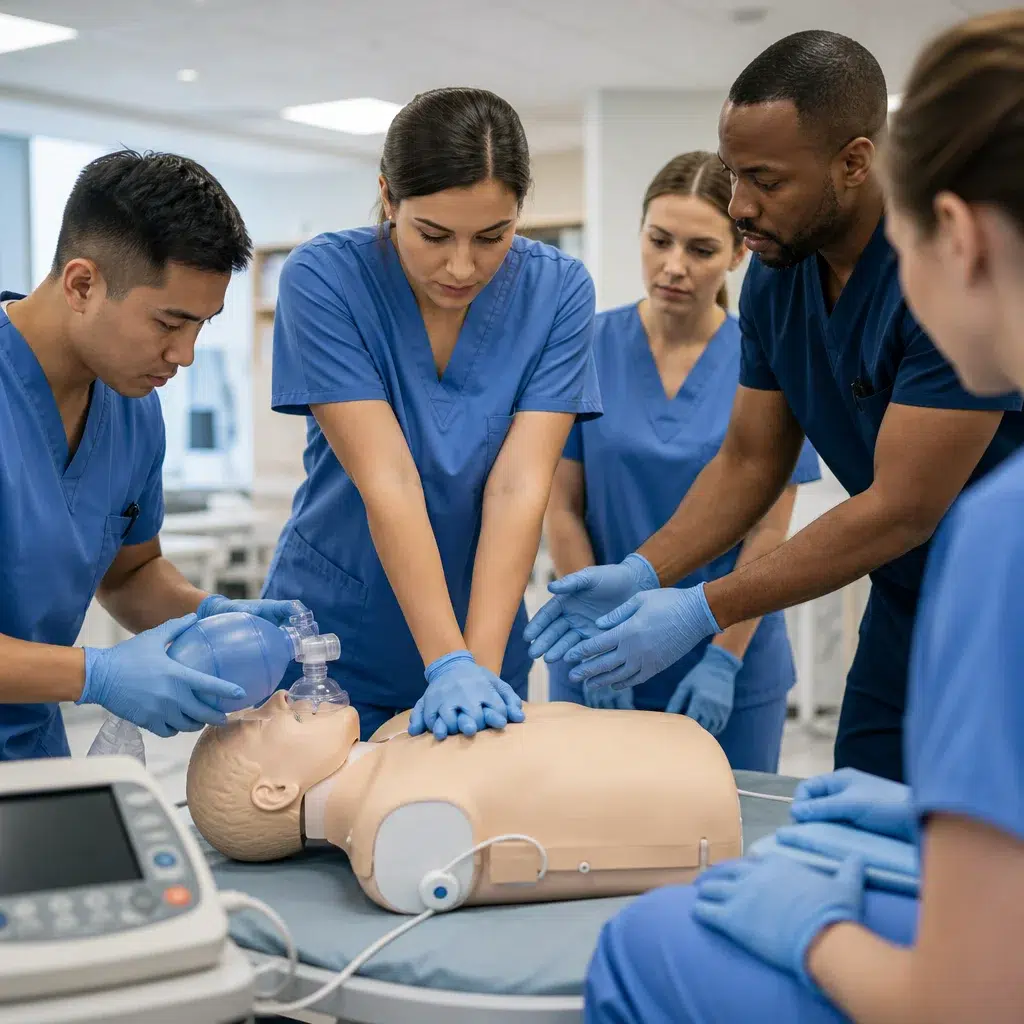
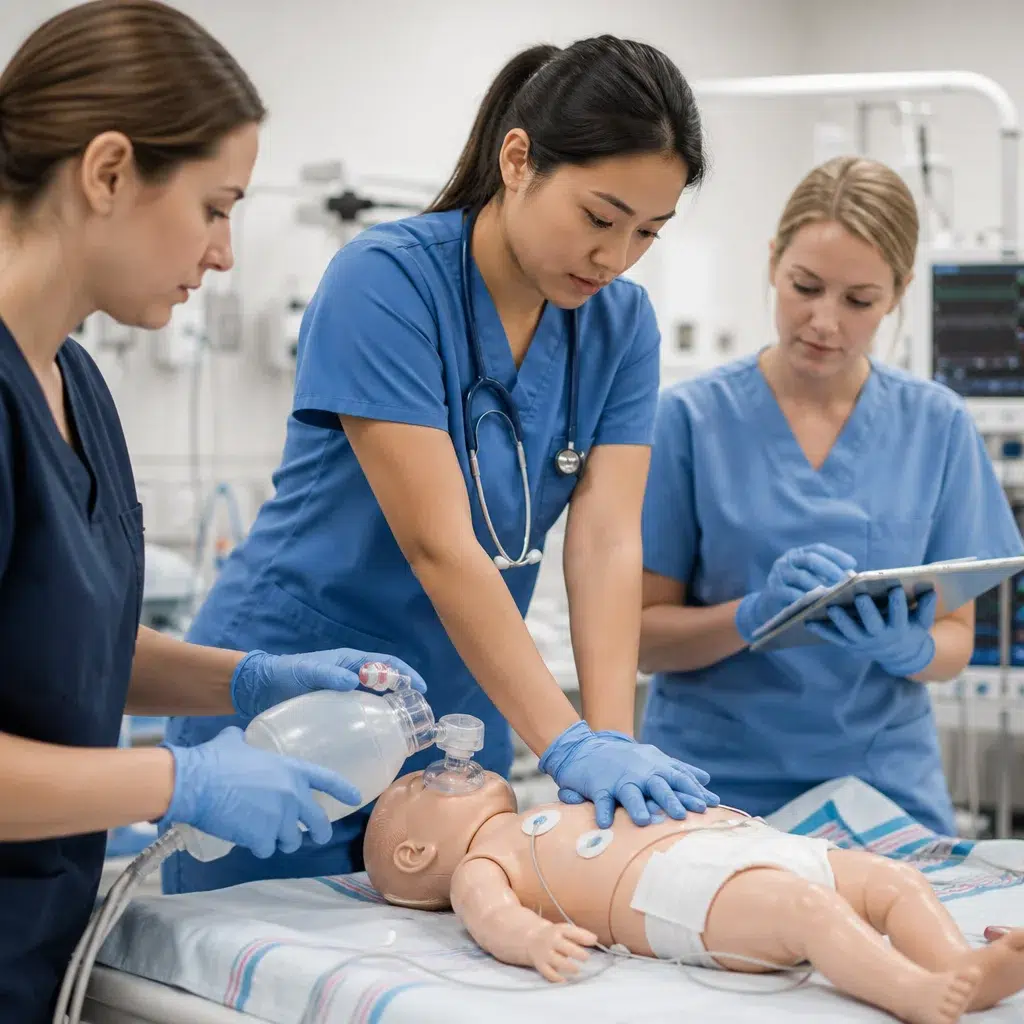
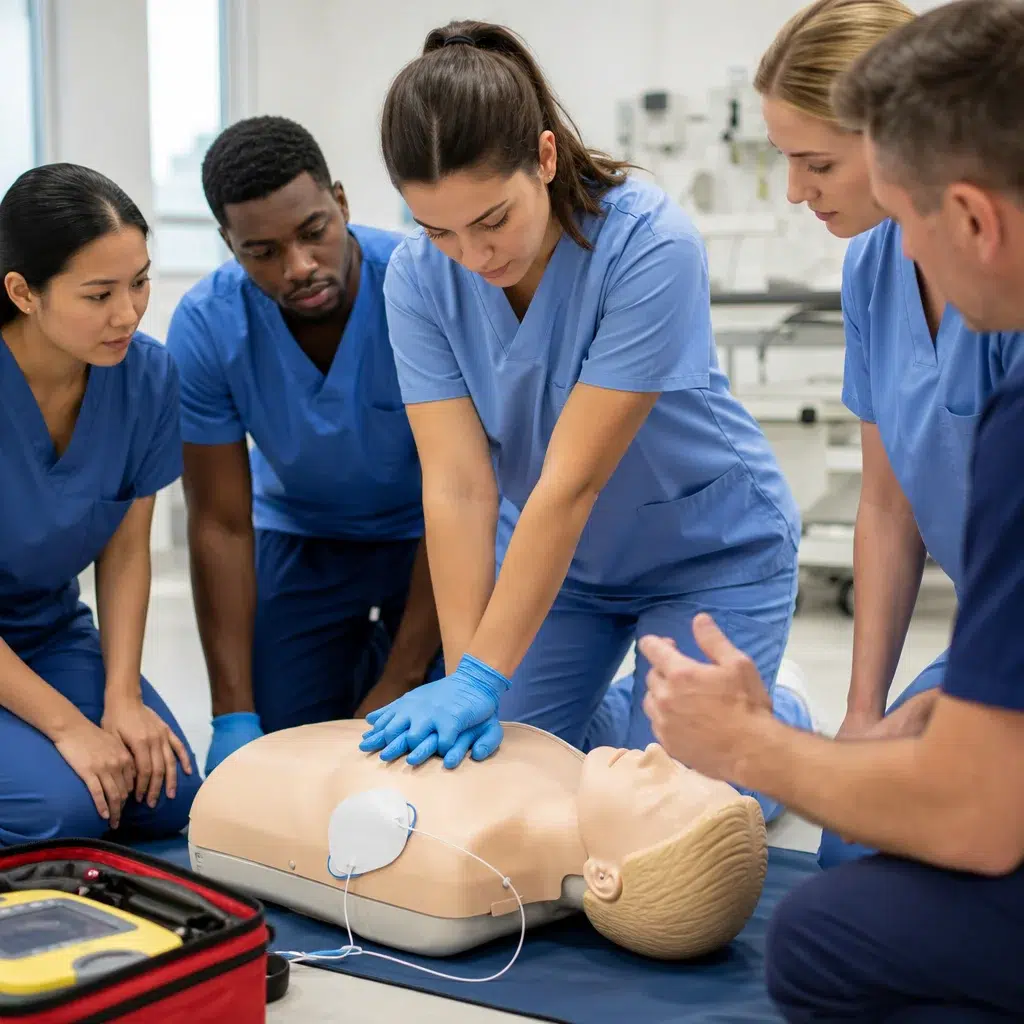
We understand that your schedule doesn’t accommodate traditional, all-day classroom training. Our blended learning model combines online self-paced study with hands-on skills practice sessions held at convenient times. You complete the knowledge review remotely, then attend a focused skills session where you practice compressions, medication administration, airway management, and other critical techniques with our instructors.
This approach respects your time. Compress your learning into a single evening or weekend session rather than losing an entire workday. Complete the online component whenever it fits your schedule—during a quiet evening, between shifts, or during lunch breaks. You retain the classroom experience where it matters most: practicing physical skills with real equipment and receiving immediate feedback from certified instructors.
Our instructors bring real-world emergency medicine experience. They’ve worked in critical care units, emergency departments, and trauma centers across Northern California and beyond. They understand the pressure of actual resuscitation events and can share practical insights that textbooks don’t capture. When you practice chest compressions on our manikins, you’re learning from providers who’ve actually used these techniques in life-or-death situations.
Flexible Scheduling Across 100+ California Training Locations
Convenience isn’t a luxury—it’s necessary when you’re balancing clinical shifts, family responsibilities, and professional development. We operate over 100 training locations throughout California, from Berkeley and San Jose to Bakersfield, Fresno, and Santa Rosa. Whether you work in Sacramento, work in the Bay Area, or serve patients in the Central Valley, we have a class near you.
Our Sacramento locations in Midtown, Arden, Oak Park, and Rosemont serve state government employees, hospital staff, and independent practitioners across the region. San Francisco professionals can choose from seven convenient locations including Mission Bay, Telegraph Hill, and our Parnassus/UCSF facility. Oakland offers three locations to minimize travel time. San Jose professionals can attend classes in Downtown, Japantown, South San Jose, or Willow Glen depending on where their shift ends.
We offer daily class schedules to match your availability. Evening classes accommodate daytime shift workers. Weekend sessions work for healthcare professionals juggling multiple positions or teaching responsibilities. Specialized morning slots exist for those with flexible schedules. Rather than waiting three months for the next available class, you typically find an opening within two weeks of your preferred date.
Regional clusters make sense for group training too. If your medical clinic in Palo Alto or your dental practice in Livermore wants to certify multiple staff members, we schedule group courses at your location or a nearby Training facility. Multiple people recertifying together often pay significantly less per person.
Same-Day Certification Cards and Fast Checkout Process
Passing your ACLS or PALS course means you deserve your card immediately. We issue certification cards on the same day you complete your course, not weeks later. You walk out with physical proof of your renewed certification, ready to present to your employer or licensing authority first thing Monday morning.
Our checkout process is deliberately simple. Bring your government-issued ID, your expiring certification card, and your course fee. No paperwork delays. No waiting for mail delivery. No wondering if your card is actually on the way. Instant verification happens at course completion, and your card prints before you leave.

This matters when you’re employed at a healthcare facility with strict credentialing requirements. Same-day certification ensures your paperwork stays current with zero gap in documentation. If you’re transitioning between jobs and need to prove current status for your new employer, we make that process frictionless.
Specialized Healthcare Provider Training Programs
Different healthcare roles require different training emphases. ACLS focuses on adult cardiac arrest scenarios, medication administration, and EKG interpretation—essential for nurses, physicians, and paramedics. PALS specializes in pediatric algorithms, including neonatal resuscitation (NRP) for labor and delivery staff and NICU nurses.
Our PALS curriculum addresses the unique physiology of children, infant-specific compression techniques, and age-appropriate medication dosing. Respiratory therapists get specialized content on airway management and ventilation strategies. Dentists learn ACLS protocols adapted for office-based emergencies where advanced equipment may be limited.
We also offer BLS (Basic Life Support) for healthcare professionals, which serves as the foundation for ACLS and PALS. If you’re new to emergency response training or returning to practice after a gap, BLS provides the core skills before advancing to provider-level courses.
Our instructors customize discussions based on your role. A pediatric ED nurse in Hayward will have different concerns than an ICU nurse in Fremont or a dental hygienist in San Mateo. We honor that context and ensure training feels relevant to your actual clinical environment.
Group Training and Corporate Discount Options
Healthcare organizations benefit from coordinated recertification schedules. Rather than staggering individual employees through courses throughout the year, group training synchronizes your entire team. Everyone recertifies together, minimizing scheduling conflicts and maintaining consistent emergency response protocols across your department.
We offer Group CPR Discounts for organizations certifying five or more healthcare professionals. Larger medical practices, hospitals, dental offices, and clinics see substantial per-person savings when scheduling as a cohort. Group sessions also foster team cohesion—your colleagues learn together, discuss real scenarios you’ve all encountered, and leave with renewed confidence in shared emergency protocols.
Scheduling a group session is straightforward. Contact us with your team size, preferred dates, and location. We’ll arrange instructors and coordinate with your facility to accommodate shift schedules. Many healthcare organizations use group training during quarterly in-service days or professional development weeks. This approach keeps everyone current while maximizing training efficiency.
Our Low Price Guarantee on All Recertification Courses
We’re confident our pricing is fair and competitive across California. Our Low Price Guarantee means you’re not overpaying for recertification. We keep costs low without compromising instructor quality, course materials, or facility standards.
Healthcare professionals shouldn’t face excessive costs just to maintain compliance. Recertification is mandatory, not optional, so pricing should reflect that reality. We structure our fees to be accessible whether you’re an independent practitioner, part of a hospital system, or working for a smaller clinic. If you find a lower advertised price from another provider for identical ACLS or PALS training, we’ll match it.
Blended learning also reduces your indirect costs. When you don’t lose an entire workday to training, you’re not losing clinical income or having your facility scramble for coverage. Your schedule remains relatively intact, which saves money beyond just the course fee.

How to Get Started with Your Recertification Today
Begin by checking your current certification card. Note the expiration date and your specific certification type (ACLS, PALS, BLS, or combination). If expiration is within six months, now is the right time to register.
Visit our website and browse available course dates and locations nearest you. If you work in the Bay Area, Sacramento, Central Valley, or anywhere else across California, filter by your preferred region. Most dates show availability immediately. Select your course, complete registration online, and confirm your booking.
Arrive 10 minutes early on course day. Bring your government-issued ID and current certification card (or proof of your certification). Our instructors will guide you through the skills stations, answer questions about recent protocol changes, and ensure you feel confident handling actual emergencies.
After passing the practical skills assessment, you’ll receive your certification card immediately. Your recertification is complete, documented, and ready to present to your employer, licensing board, or credentialing committee.
Questions about course content, your specific role requirements, or scheduling? Our team has helped thousands of California healthcare professionals stay current. Reach out and let us help you maintain your credentials without unnecessary stress or expense.
Register for a class today.
Frequently Asked Questions (FAQ)
How long does it take to complete our ACLS or PALS recertification?
Our blended learning format lets you complete your coursework on your own schedule, then attend a skills session at one of our 100+ California locations. Most professionals finish their online portion in 1-2 hours and attend an in-person session lasting 3-4 hours, allowing you to earn your certification in as little as one day. We offer daily class sessions across all our training centers, so you can find a time that works with your clinical schedule.
What happens if my ACLS or PALS certification expires?
If your certification lapses, you lose the credentials required for patient care in most healthcare settings, which can result in suspension from clinical duties or job termination depending on your employer. We recommend renewing 30 days before your expiration date to avoid any gaps in your certification status. We make recertification convenient with flexible scheduling and same-day certification cards, so staying current doesn’t disrupt your work.
Do you offer group training discounts for our hospital or medical facility?
We absolutely do. Our corporate group training program provides discounted pricing when you certify multiple staff members, and we can arrange sessions at times that work for your facility’s needs. We’ve trained healthcare teams across California and can customize scheduling to minimize workflow disruption. Contact us directly to discuss your group’s specific requirements and pricing options.