
Table of Contents
- 1. Assess Your Team's Specific Certification Needs and Requirements
- 2. Choose Blended Learning for Maximum Flexibility and Skill Development
- 3. Prioritize Hands-On Practice with Advanced Simulation Technology
- 4. Leverage Multiple Training Locations for Employee Convenience
- 5. Ensure AHA-Aligned Curriculum for Full Compliance and Recognition
- 6. Select a Provider with Same-Day Certification and Proven Expertise
- 7. Maximize Cost Savings with Group Discount Pricing Guarantees
- Frequently Asked Questions (FAQ)
1. Assess Your Team’s Specific Certification Needs and Requirements
When your healthcare team needs Advanced Cardiovascular Life Support (ACLS) or Pediatric Advanced Life Support (PALS) certification, coordinating group training can feel like juggling schedules, compliance requirements, and budget constraints all at once. The stakes are high: your nurses, dentists, EMS personnel, and other medical professionals depend on timely, quality instruction to meet licensing mandates and maintain job readiness. Getting corporate group training right transforms what could be a logistical headache into a streamlined process that strengthens your team’s emergency response capabilities while respecting your bottom line.
We’ve trained thousands of healthcare professionals across California, from single-location clinics in San Rafael to large hospital networks spanning Sacramento, San Francisco, and San Jose. Our experience has shown us what separates training programs that check a box from those that genuinely prepare teams to save lives. These seven best practices reflect what we’ve learned works best for corporate groups seeking reliable, compliant, and accessible training.
Your first step is understanding exactly what credentials your team must hold. ACLS, PALS, and BLS (Basic Life Support) requirements vary significantly based on professional role and employer. A pediatric nurse needs PALS; an ED physician needs ACLS; a dental hygienist might need BLS only. Mixing these up wastes money and leaves compliance gaps.
Start by auditing your current certifications. Which staff members are approaching renewal deadlines? Which roles legally require which credentials? Are there specialty certifications your organization values (like Neonatal Resuscitation Program certifications for NICU teams)? Document everything in a spreadsheet, organized by certification type and expiration date.
Once you’ve mapped your needs, determine whether everyone trains simultaneously or in staggered cohorts. Larger teams often benefit from phased scheduling that prevents operational gaps. For example, a 30-person nursing department might split into two groups training two weeks apart, ensuring 24/7 coverage.
This assessment step prevents overpaying for unnecessary courses and ensures every team member receives the exact credential required by their license or employer. Send us your roster, and we’ll help you sort requirements without guesswork.
2. Choose Blended Learning for Maximum Flexibility and Skill Development
Traditional in-person-only training disrupts schedules. Blended learning solves this by combining virtual instruction with focused in-person skills sessions, letting your team study theory on their own time and arrive ready to practice.
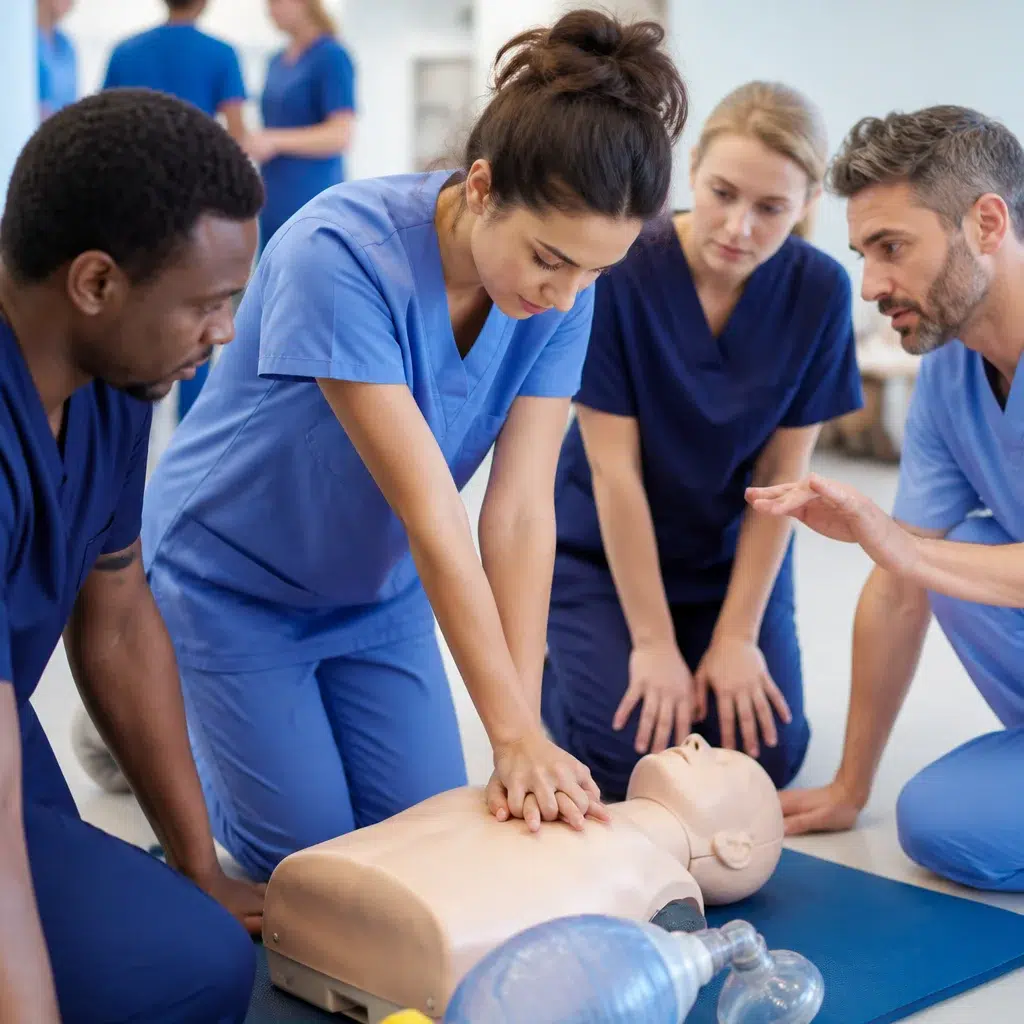
Here’s how it works: your team completes online modules covering cardiac algorithms, medication interactions, and scenario recognition at home or during breaks. Then they attend a shorter in-person session where they work directly with instructors on mannequins, practice intubation techniques, and run through realistic resuscitation scenarios. The result is deeper learning in less total time.
This approach particularly benefits nurses and EMS personnel juggling shift work. A paramedic in Oakland can watch videos between calls, then attend a two-hour skills session in Fremont when schedules align. Compare that to an all-day in-person course that forces people to miss patient care.
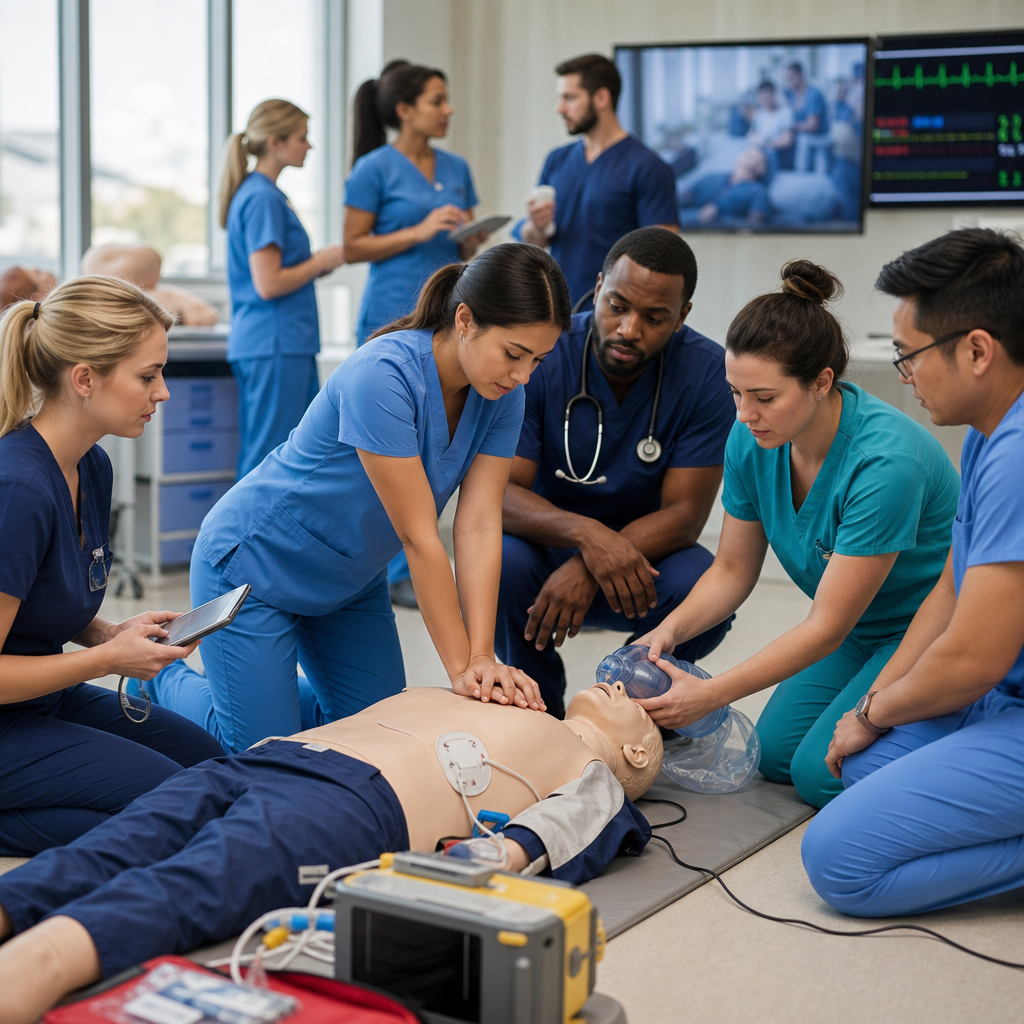
Blended learning also accommodates larger groups more efficiently. Instead of renting a conference room for 40 people for eight hours, you might use a smaller space for two four-hour sessions while participants complete prerequisite learning independently. For healthcare organizations in Concord, Sacramento, and beyond, this flexibility translates to lower operational disruption and higher participation rates.
Request a blended program outline tailored to your team’s shift patterns and size, and we’ll design a timeline that minimizes scheduling friction.
3. Prioritize Hands-On Practice with Advanced Simulation Technology
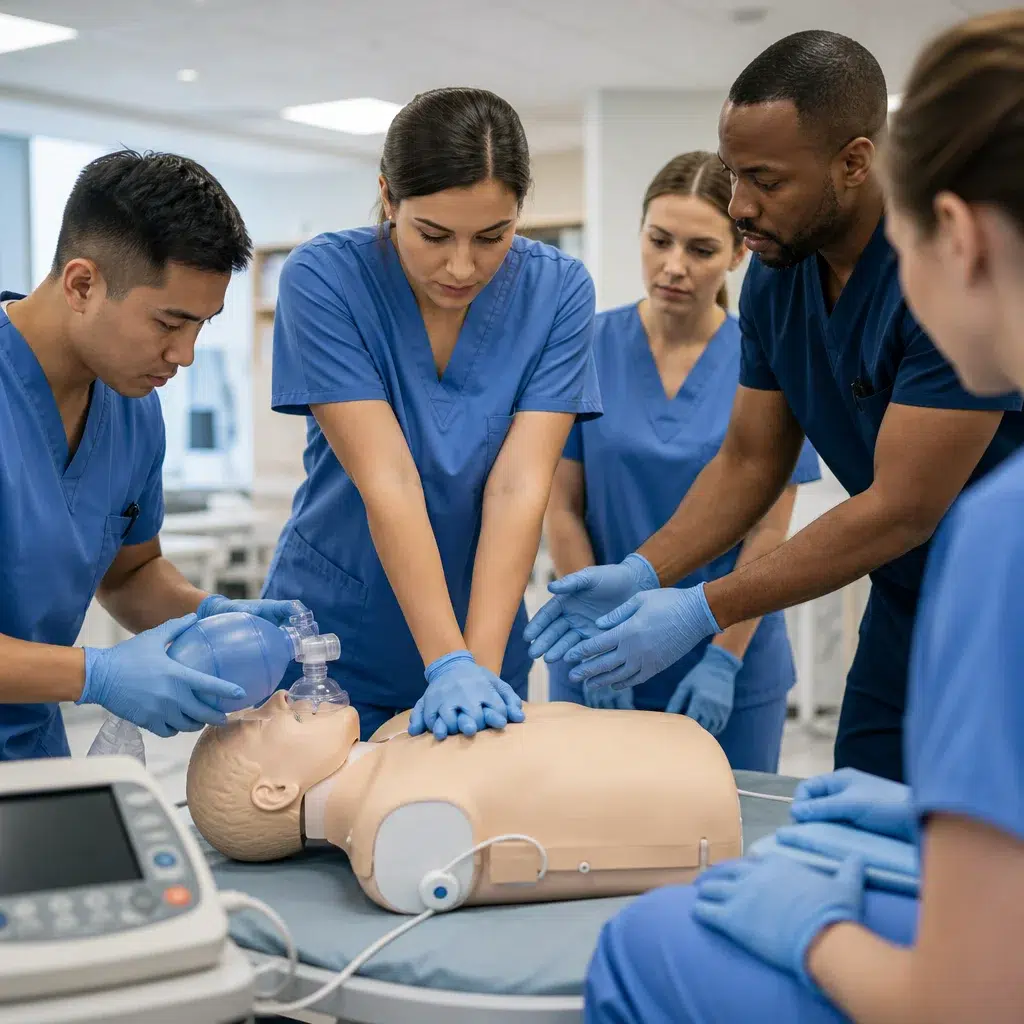
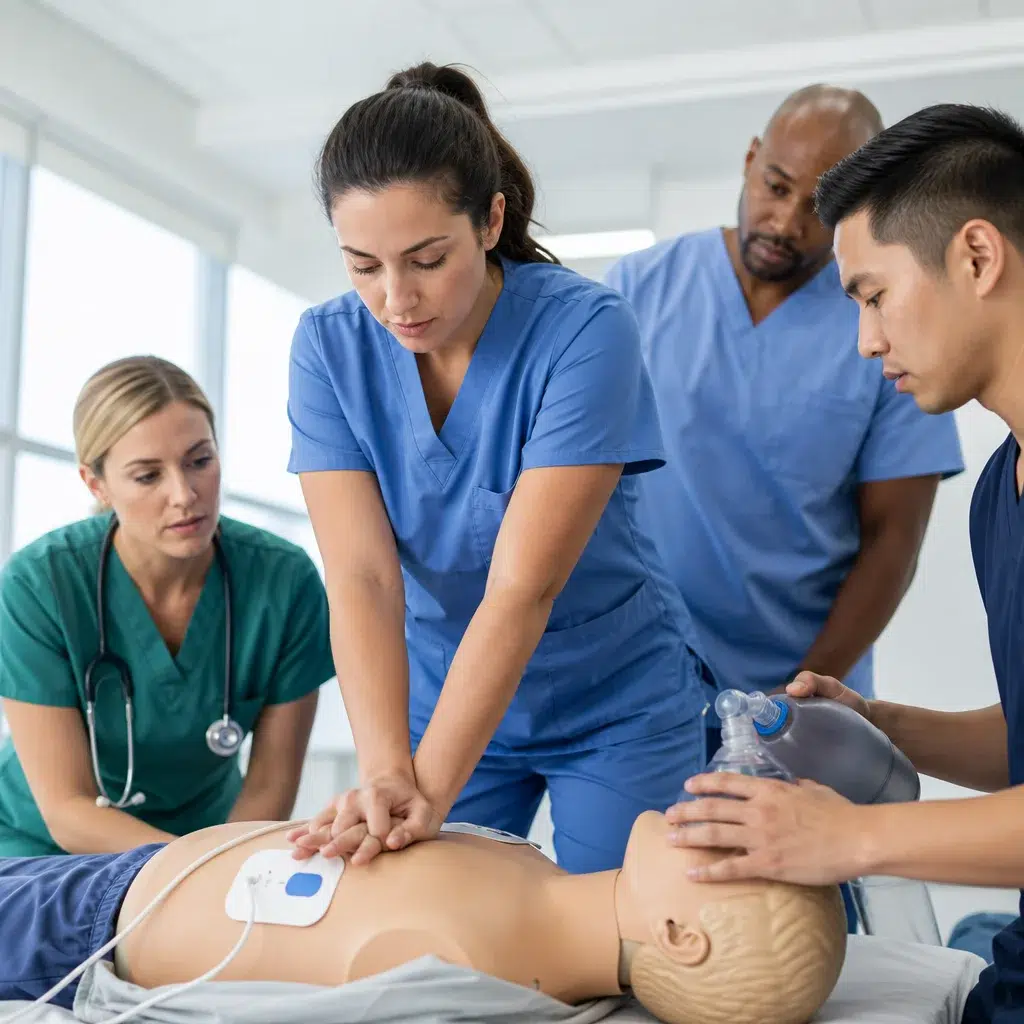
Knowing the algorithm and actually performing chest compressions under pressure are different skills. High-fidelity manikins with real-time feedback technology close that gap.
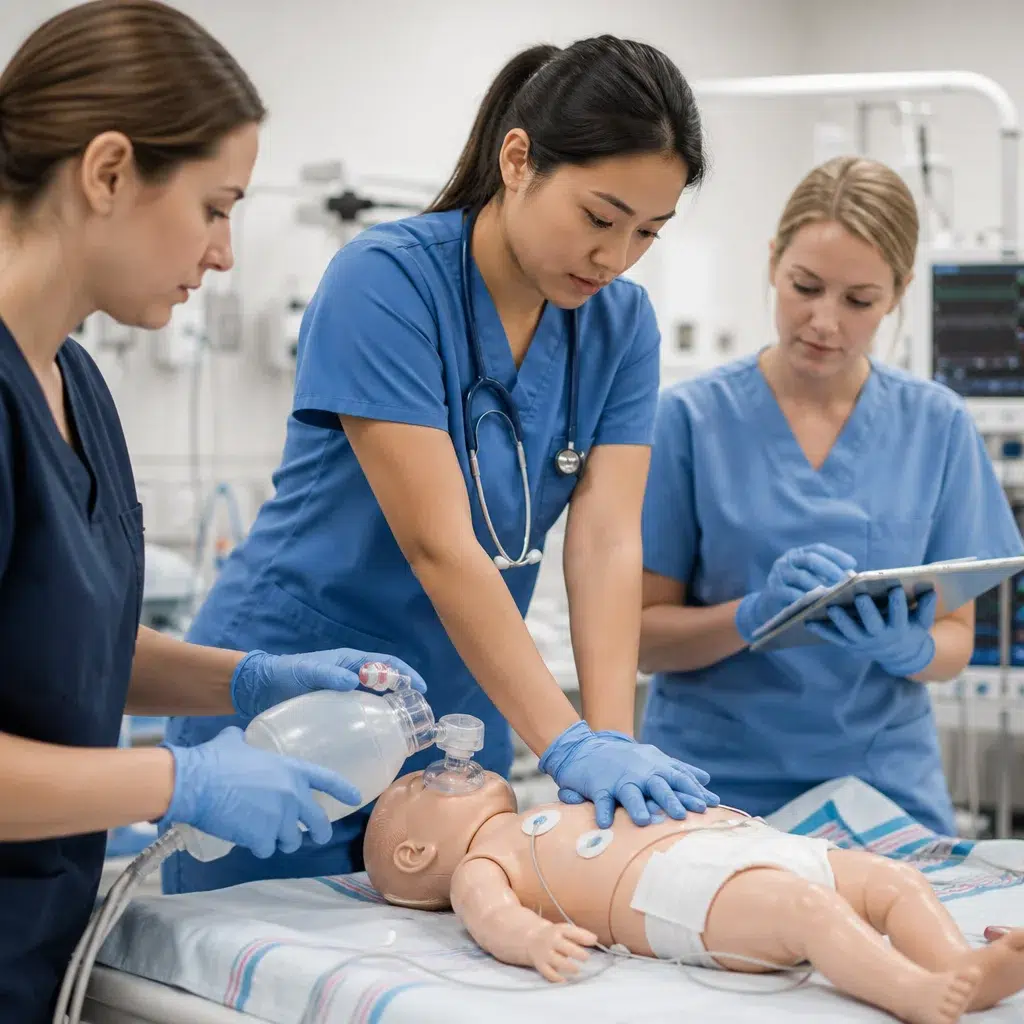
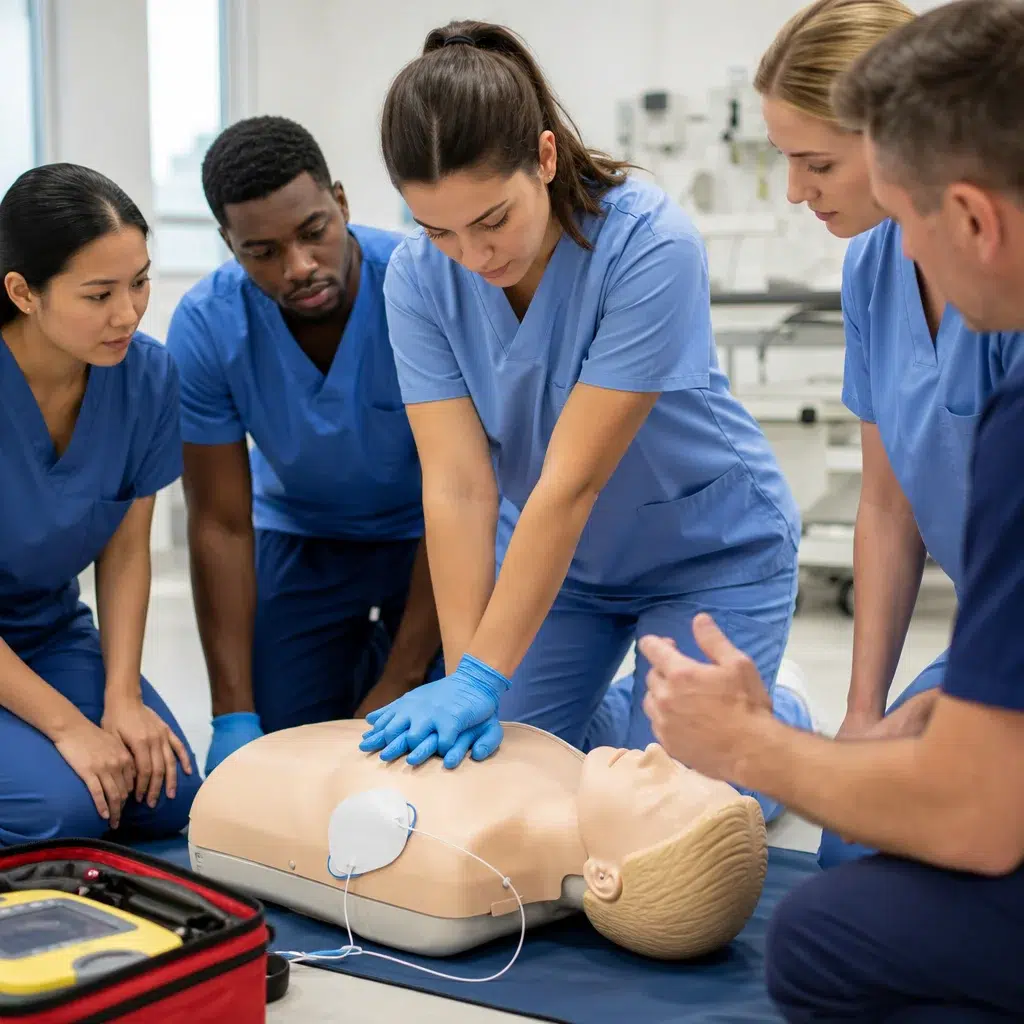
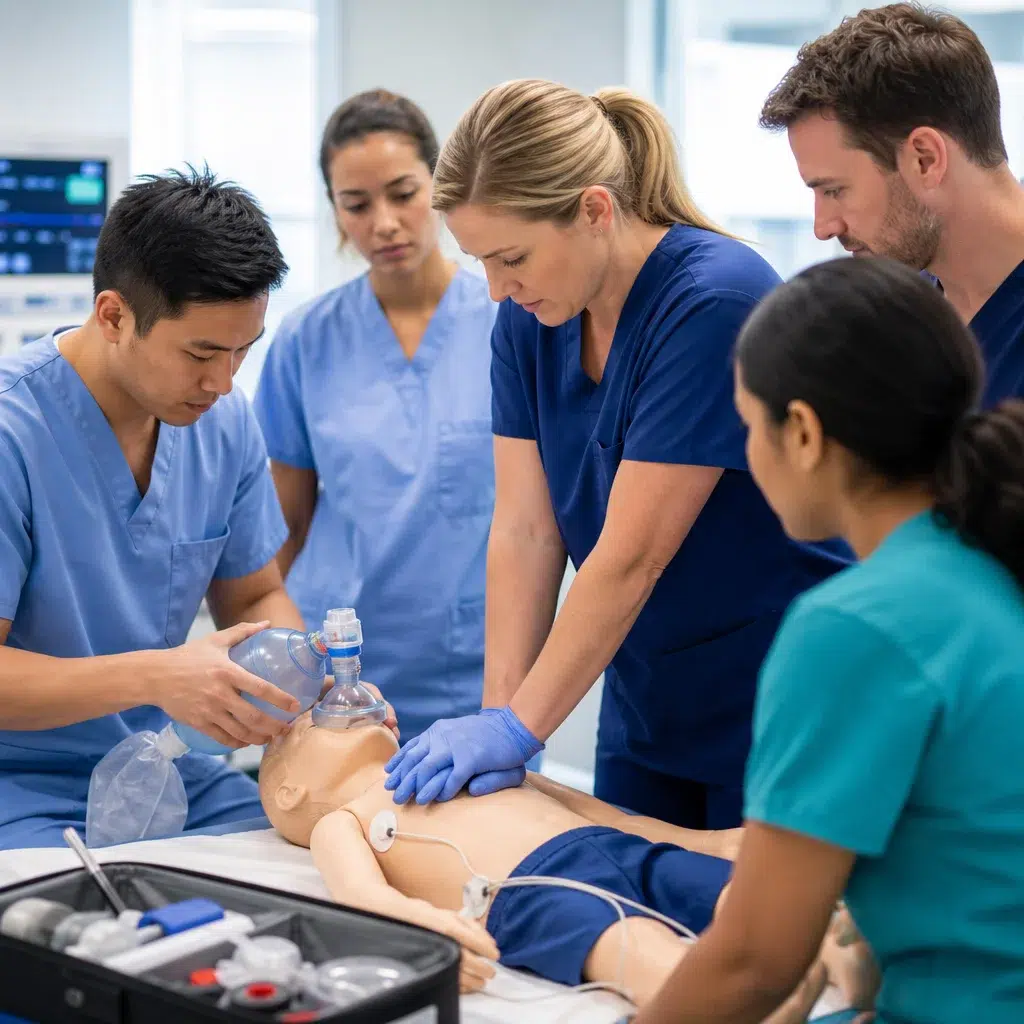
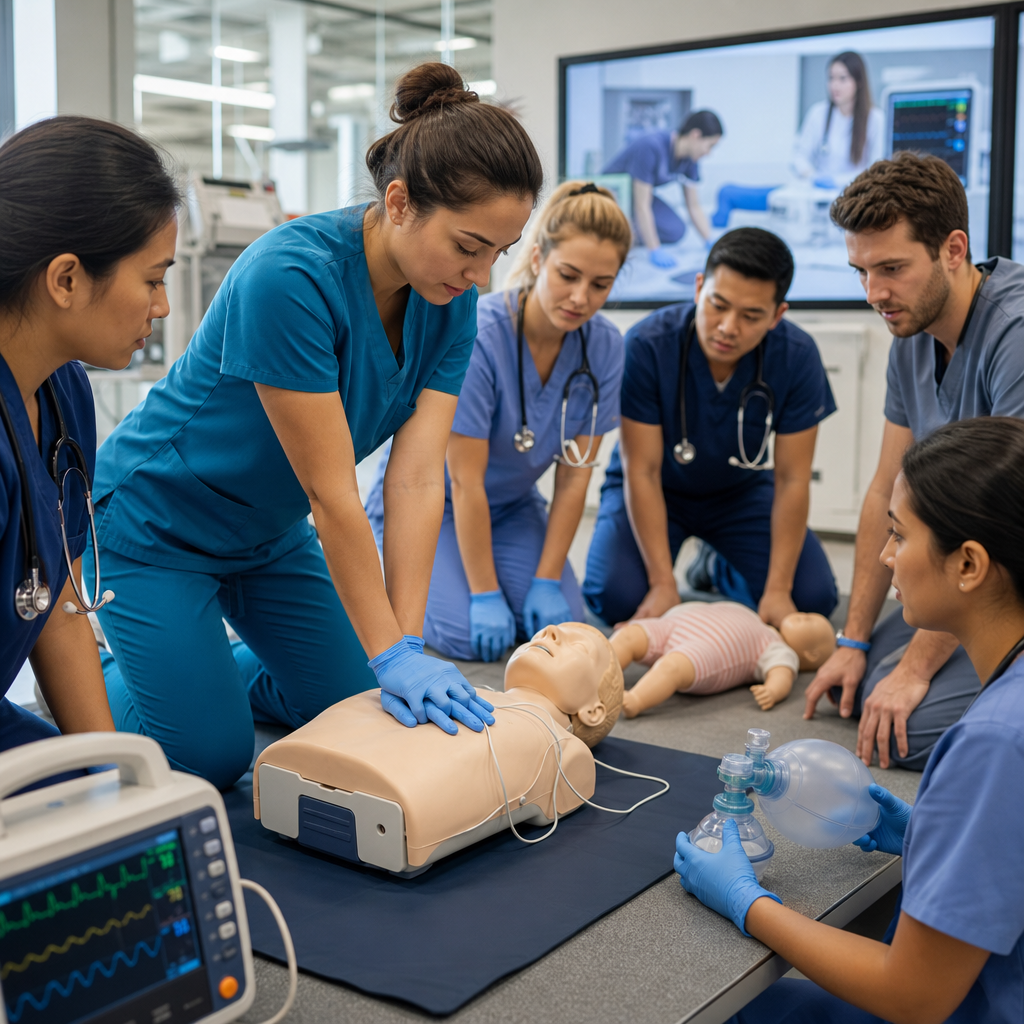
Our training centers feature mannequins that measure compression depth, rate, and hand position, giving immediate feedback so participants refine technique on the spot. Video-based scenario training lets your team respond to realistic cardiac arrests, septic shocks, and pediatric emergencies without waiting for an actual crisis to test their skills.
Why this matters: a nurse who practiced high-quality CPR on a feedback-enabled mannequin performs better in real emergencies than one who practiced on a basic model. Studies show deliberate practice with corrective feedback produces faster, more confident decision-making during actual cardiac events.
Advanced simulation also builds team cohesion. When your entire cardiac unit practices a code together on a realistic scenario, communication improves, roles clarify, and trust builds. That translates directly to better outcomes when a real patient arrives in arrest.
Our [ACLS Skills Testing] page details the specific equipment and scenarios we use, so you know exactly what your team will experience.
4. Leverage Multiple Training Locations for Employee Convenience
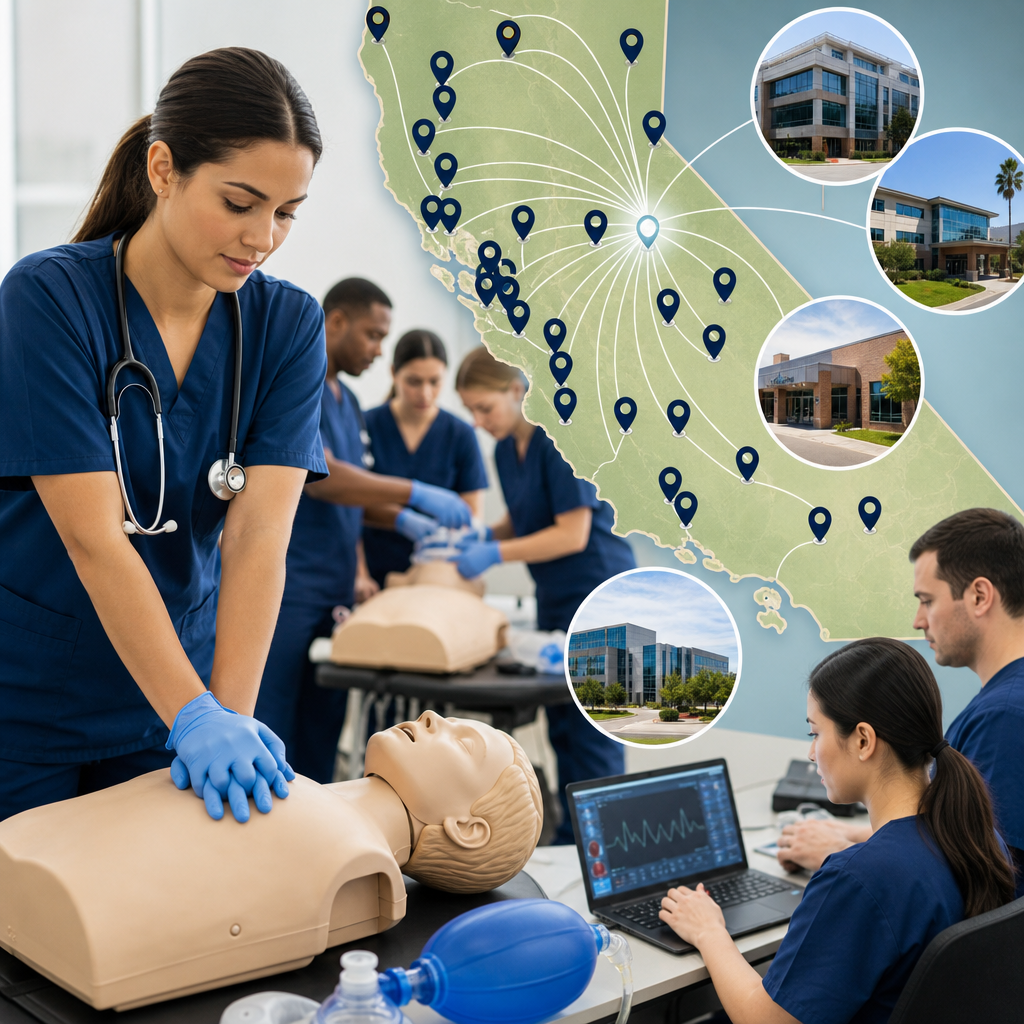
Asking employees to travel an hour to training creates scheduling friction and resentment. We operate over 100 training locations throughout California, from Alameda and Berkeley to Visalia and Redding. This density means your team likely trains within 15 minutes of their primary workplace.
When training is local, attendance improves and completion rates climb. A dentist in San Mateo doesn’t reschedule their practice to drive to San Francisco. A respiratory therapist in Milpitas doesn’t waste two hours commuting to Sacramento. Convenience removes a barrier that otherwise prevents timely certification renewal.
Consider your team’s geographic distribution. A multi-location healthcare organization might coordinate simultaneous training sessions at the Fremont center for your South Bay team, the Sacramento Midtown location for your capital region staff, and the San Francisco Mission District site for your city-based employees. We’ll synchronize instructors, schedules, and curriculum so everyone learns the same content in the same certification window.
This approach also simplifies logistics for your HR team. Instead of coordinating a single all-hands training that requires travel stipends and accommodation, you arrange local sessions that your teams can attend without disruption.
5. Ensure AHA-Aligned Curriculum for Full Compliance and Recognition
Your certifications must be recognized by licensing boards, employers, and healthcare networks nationwide. Our curriculum aligns with current AHA guidelines, covering the latest protocols for CPR techniques, medication dosing, and post-resuscitation care. This ensures your team’s credentials are legitimate and valued.
AHA-aligned training also keeps your organization compliant with Joint Commission standards and state nursing board requirements. If your hospital is in Stockton, Fresno, or any California market, AHA recognition prevents certification disputes with regulatory agencies.
During the course, instructors teach evidence-based resuscitation science, not shortcuts or outdated methods. Your team learns why hand placement matters, how to interpret rhythm strips, and when to escalate care. This depth of knowledge prepares them not just to pass a written exam, but to make sound clinical decisions in actual emergencies.
Request a curriculum overview so your medical director or compliance officer can verify alignment with your organization’s standards before enrollment.
6. Select a Provider with Same-Day Certification and Proven Expertise
The ability to receive your certificate immediately after course completion eliminates delays in credential verification and licensing renewal. Many healthcare professionals need proof of certification within days, not weeks.
Our instructors are experienced healthcare providers themselves. Your ACLS instructor might be a former ICU nurse or emergency medicine physician, bringing real-world context and credibility to every scenario. This expertise creates stronger connections between training content and actual clinical practice.
When your team learns from someone who’s managed actual cardiac arrests, the training feels relevant and trustworthy. A paramedic training in Hayward or a dentist in San Jose gets insights that generic instructors can’t provide. We emphasize not just how to follow protocols, but why those protocols matter and how to adapt them to different patient contexts.
Verification is seamless too. Our CPR verification stations let you confirm credentials on the spot, and we provide both physical and digital certificates recognized by state boards and national databases. No waiting for mail or tracking down lost paperwork.
7. Maximize Cost Savings with Group Discount Pricing Guarantees
Corporate group training should cost less per person than individual enrollment, and we guarantee it. Our group discount pricing ensures your organization gets transparent, competitive rates without hidden fees. Whether you’re training 10 people or 100, you receive our [Group CPR Certification Classes] pricing structure.
We also offer a price-match guarantee. If you find a lower advertised rate elsewhere, we’ll match it. This removes shopping friction and lets your procurement team move forward confidently knowing they’ve secured the best available value.
Many organizations overlook cumulative savings. A 20-person ACLS cohort trained annually through our group program saves thousands compared to individual enrollment over a three-year cycle. Those savings can fund additional training, equipment, or staffing.
Coordinate scheduling to maximize discounts further. Grouping team members into single cohorts rather than trickling them through individual classes increases your per-person savings. Our account coordinators help right-size cohort timing based on your certification renewal calendar and budget cycles.
Start by requesting a group pricing quote for your organization, and we’ll break down the per-person cost, total savings, and available dates at your preferred location or locations.
—
Corporate group ACLS and PALS training succeeds when you align it with your organization’s actual needs, leverage flexible learning formats, invest in quality hands-on practice, and eliminate scheduling barriers. We’ve built our training network across more than 100 California locations with instructors who understand healthcare culture and corporate timelines. Whether your team is in Walnut Creek, San Jose, or Santa Rosa, our blended approach, advanced simulation technology, and same-day certification combine to deliver the compliance, confidence, and cost-efficiency your organization needs. Contact us today to discuss your team’s training plan and receive a customized group pricing proposal.
For further reading: Group CPR Certification Classes.
Register for a class today.
Frequently Asked Questions (FAQ)
How do we customize ACLS and PALS training for our corporate clients?
We assess each organization’s specific needs by reviewing your team’s certifications, job requirements, and scheduling constraints. Our training coordinators work directly with your leadership to design a program that covers the exact competencies your staff needs, whether that’s ACLS for nurses, PALS for pediatric specialists, or multi-credential training across departments. We deliver this through our blended learning model, combining virtual coursework with in-person skills sessions scheduled at one of our 100+ California locations that work best for your team.
What’s included in our same-day certification process?
When your team completes our in-person skills session, we verify and issue certifications on site so employees can resume patient care duties immediately without delay. We maintain alignment with current guidelines and standards, ensuring your certifications meet your facility’s compliance requirements right away. Our verification stations handle the paperwork and credential processing while your staff wraps up their final skills assessments.
How much can organizations save through our group discount pricing?
We offer tiered group pricing that decreases as your team size grows, and we guarantee our rates remain competitive across all our training locations. Whether you’re training 5 staff members or 50, we provide transparent pricing with no hidden fees, and we handle the enrollment so administrative burden stays minimal on your end. Our low price guarantee means you won’t find better rates elsewhere in California for the same quality instruction.