Table of Contents
- Why CPR Certification Matters for Your Dental Practice
- California Dental Board Mandates and Certification Standards
- The Critical Gaps in Generic CPR Training Programs
- How Our AHA-Aligned Curriculum Meets Dental-Specific Needs
- Flexible Blended Learning That Fits Your Schedule
- Same-Day Certification Cards and Instant Verification
- Our Network of California Training Locations Near You
- Corporate Group Training and Practice-Wide Discounts
- Maintaining Compliance Year After Year
- Schedule Your Certification Today
- Frequently Asked Questions (FAQ)
Why CPR Certification Matters for Your Dental Practice
Cardiopulmonary resuscitation (CPR) isn’t optional in dentistry. California’s Dental Board requires active CPR certification as a condition of licensure, and patients expect their dentists to respond effectively in medical emergencies. When a patient experiences cardiac arrest, choking, or respiratory distress in your chair, your team’s preparedness directly influences survival odds.
Beyond regulatory compliance, CPR certification protects your practice’s reputation and your team’s confidence. Staff who’ve trained recently respond faster and with greater composure. Patients observe this readiness, and it builds trust. We’ve worked with dental practices across California who report that their teams feel genuinely equipped to handle emergencies once they complete hands-on training.
CPR skills also extend your scope as a healthcare provider. Dentists perform conscious sedation, administer local anesthetics, and work with medically complex patients. These scenarios increase the likelihood of needing rapid intervention. Certification ensures you and your staff maintain the knowledge to recognize complications and respond within the critical first minutes.
Action item: Review your current team’s certification expiration dates this week. Most dentists find that having one or two staff members lapsed drives them to schedule updates for everyone.
California Dental Board Mandates and Certification Standards
The California Dental Board explicitly requires active CPR certification for all dentists and registered dental hygienists. This mandate is non-negotiable for license renewal and active practice. The Board accepts certifications aligned with American Heart Association (AHA) guidelines, which establish the gold standard for CPR education and skills assessment.
Specifically, California dentists need BLS (Basic Life Support) certification or an equivalent course that covers adult CPR, automated external defibrillator (AED) use, and relief of choking. Dental hygienists follow the same requirement. Your certification must remain current throughout your license period, typically three years, and you’ll need proof of current certification during renewal.
Beyond state-level rules, many dental insurance plans, sedation protocols, and employer policies also require documented CPR certification. If you work in multiple settings or hold hospital privileges, additional certifications like ACLS (Advanced Cardiovascular Life Support) may be mandatory. Understanding your specific obligations prevents gaps that could jeopardize your licensure.
Action item: Contact your licensing authority or dental board representative now if you’re uncertain whether your current certification meets California standards. A 10-minute call prevents costly compliance problems later.
The Critical Gaps in Generic CPR Training Programs
Many general CPR courses teach universal techniques without addressing the unique environment of a dental practice. In a dental operatory, you’re working in a confined space with limited visibility, a patient supine in your chair, and medical equipment already in place. Generic training doesn’t prepare your team for these specifics.
Standard CPR programs also may not account for conscious sedation scenarios, which are common in dentistry. If a sedated patient stops breathing, your response differs from CPR performed on a patient in a public setting. Dental-specific training covers positioning challenges, airway management near dental instruments, and recognizing sedation-related complications that general programs overlook.

Another gap: many generic programs lack emphasis on dental emergency prevention and early recognition. Understanding when a patient’s blood pressure is dropping, identifying signs of allergic reaction to local anesthetics, or recognizing airway obstruction before it becomes critical separates well-trained teams from adequately trained ones. Dental practices benefit from scenarios tailored to their actual workflow.
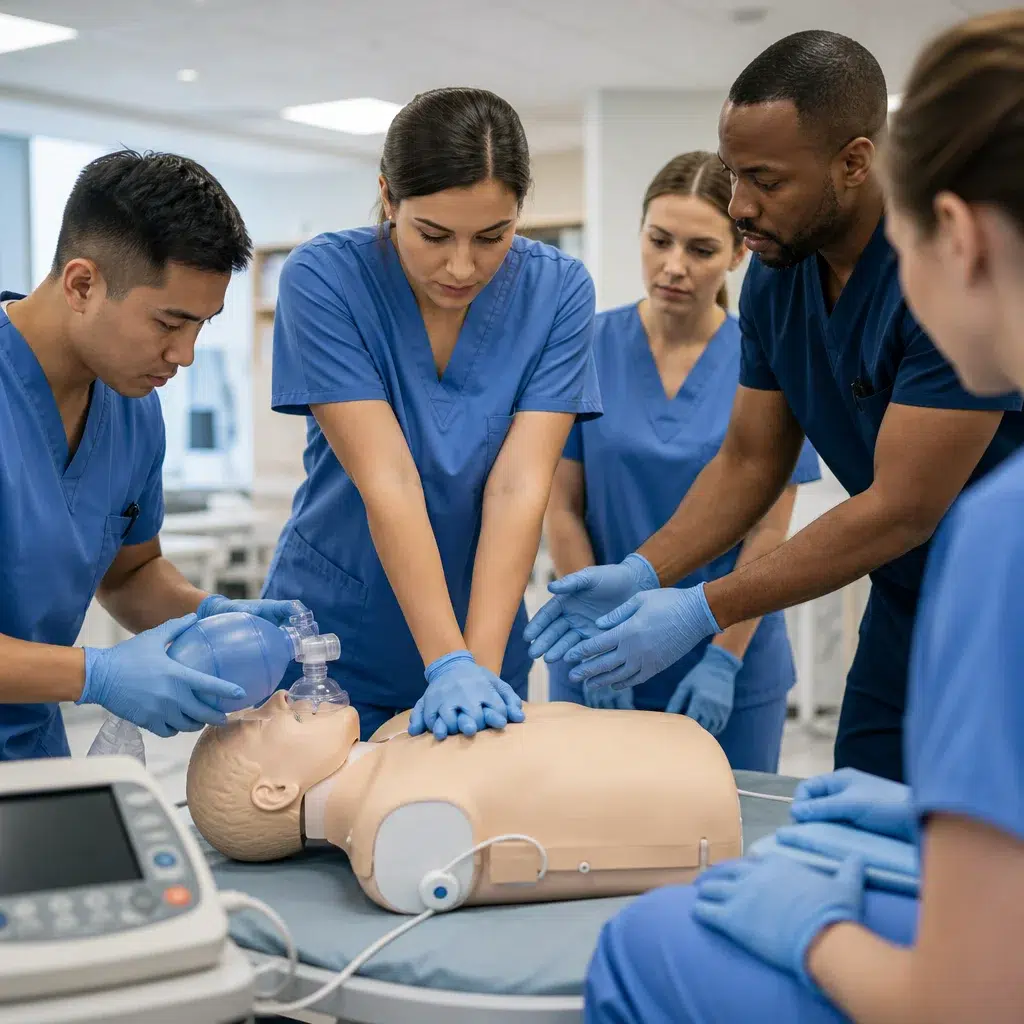
Finally, generic courses often underestimate team coordination. In your office, multiple team members need to respond seamlessly. One person manages the airway, another summons emergency services, a third retrieves equipment. Coordinated drills specific to your practice layout and staff roles make the difference between chaos and effective response.
How Our AHA-Aligned Curriculum Meets Dental-Specific Needs
We’ve designed our CPR certification curriculum specifically for dental professionals. Our instructors are experienced healthcare educators who understand the dental environment and the pressures you face. We teach core CPR skills aligned with AHA guidelines while weaving in dental-specific scenarios and emergency management.
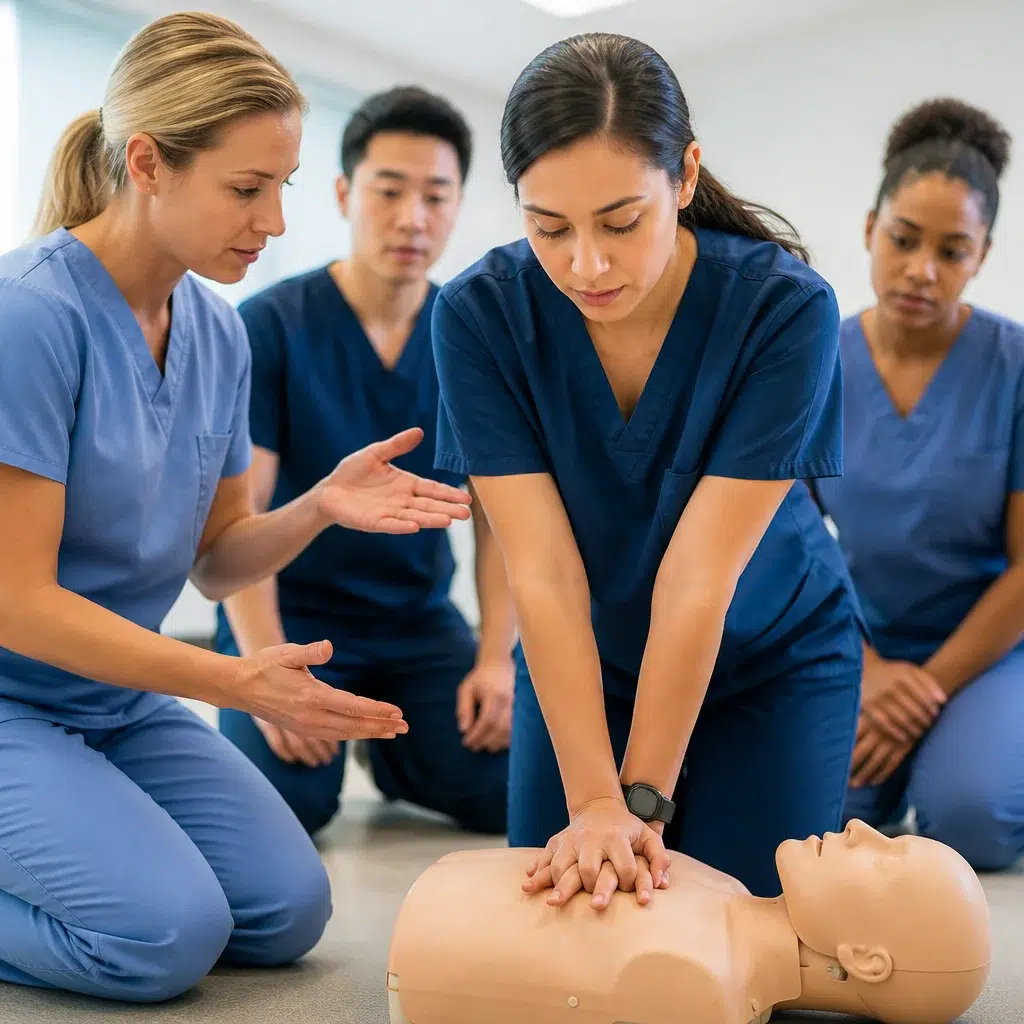
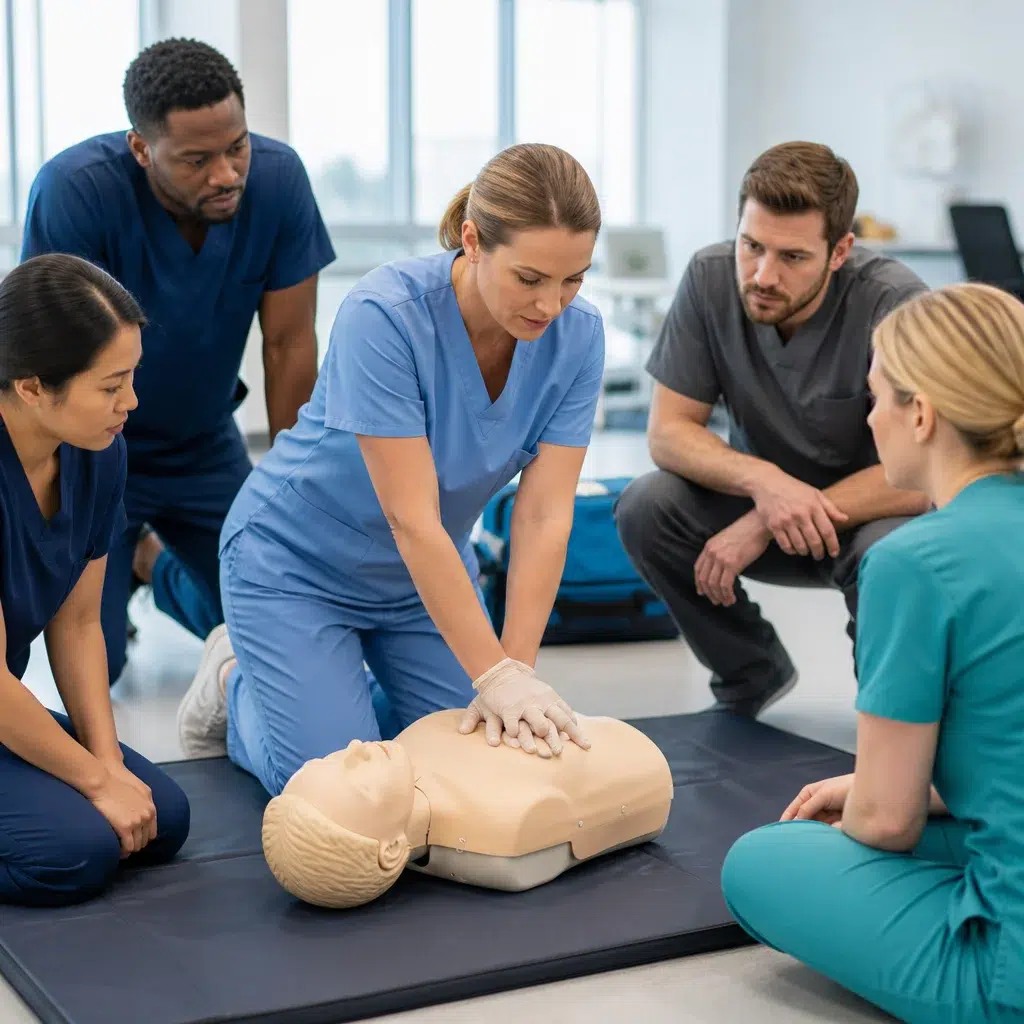
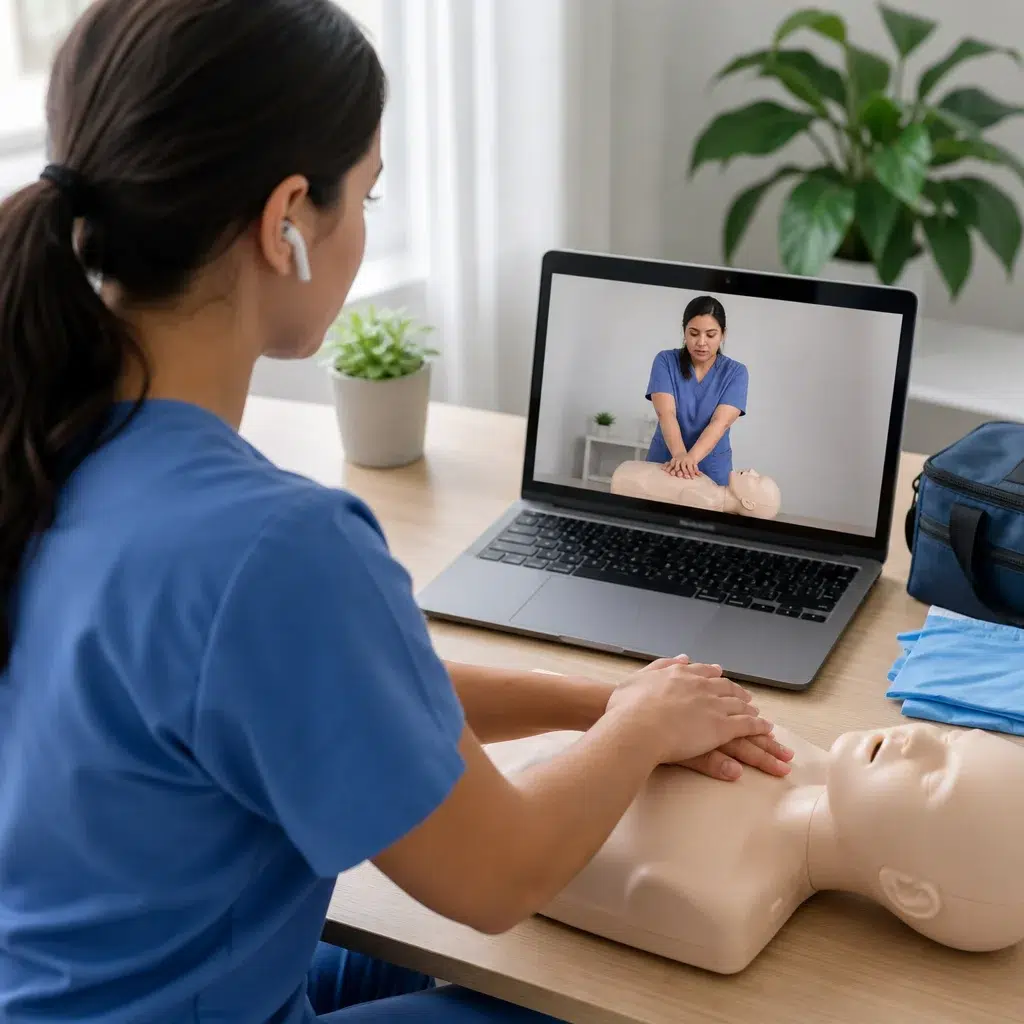
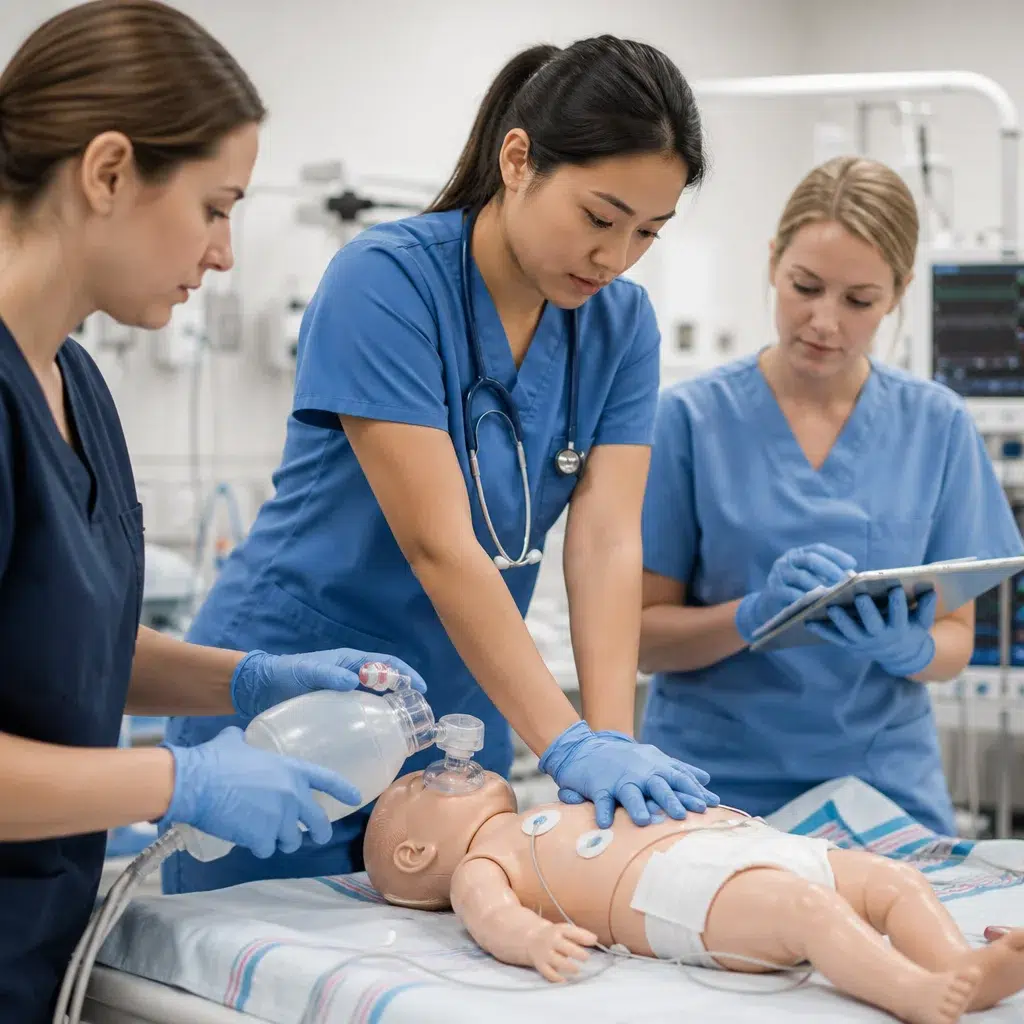
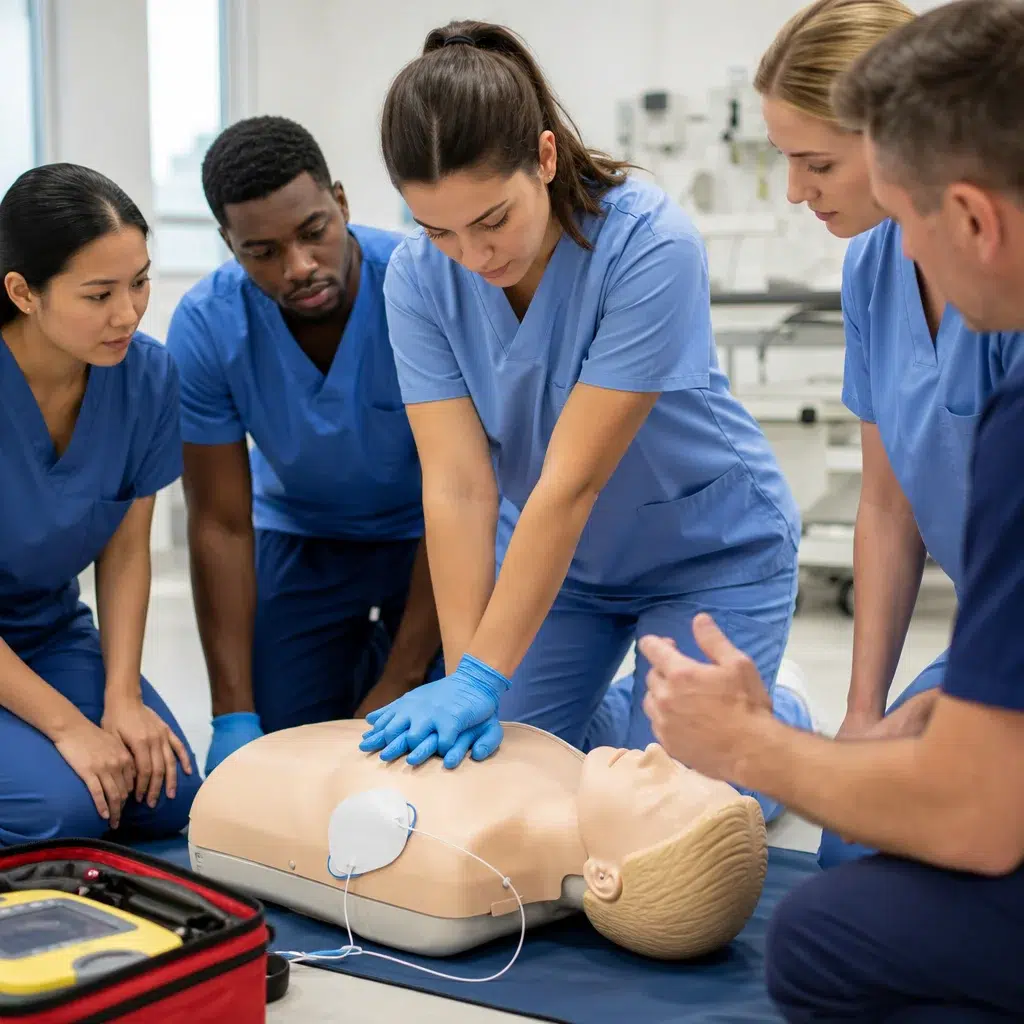
Our blended approach means you’ll complete knowledge review online at your own pace, then attend a hands-on skills session where you practice on manikins in realistic setups. During the in-person portion, we simulate common dental emergencies: a patient becoming unresponsive while supine, recognizing early signs of anaphylaxis, and managing airway obstruction with dental instruments present. Your team practices team communication and role assignment so everyone knows their job during an actual emergency.
We cover conscious sedation recovery, recognizing signs of respiratory depression, and responding to local anesthetic toxicity. These topics aren’t part of standard CPR but are essential for dentists using sedation. We also include AED operation in the dental setting and discuss equipment placement in your operatory.
All our instructors hold current certifications and bring real-world healthcare experience. They understand not just how to teach CPR but how to make it relevant and memorable for dental teams. You’ll leave the course confident that your certification is current and that your team can execute coordinated, effective emergency response.
Action item: Compare course syllabi: Does the program explicitly mention dental sedation, airway management in supine positions, or dental office scenarios? If not, you’re missing critical preparation.
Flexible Blended Learning That Fits Your Schedule
We recognize that running a dental practice leaves little time for lengthy in-person training. Our blended learning model splits coursework between online modules and a focused hands-on session. You complete the knowledge portion on your own schedule, accessing videos, quizzes, and reference materials from your phone or computer.
The online segment typically takes 90 minutes. You can break it into smaller chunks and return later without losing progress. Once you’ve completed that portion, you schedule a two-hour in-person skills session at one of our California locations. During that session, you practice chest compressions, rescue breathing, AED use, and choking relief on manikins while our instructors provide real-time feedback.
This structure minimizes practice disruption. Instead of closing your office for a full day of training, you arrange coverage for two hours. Many dental teams schedule sessions during lunch or after hours. We offer classes throughout California, including Sacramento, San Francisco, Oakland, San Jose, Fresno, and Bakersfield, so you can find a location near your practice.
We also offer weekend and evening sessions to accommodate busy schedules. If your entire team needs certification, we can coordinate group sessions that work around your operatory schedule. Our instructors are flexible about timing because we understand that healthcare professionals can’t simply pause their work.
Same-Day Certification Cards and Instant Verification
You’ll receive your certification card immediately after completing the in-person skills session. No waiting for documents to arrive in the mail. Your proof of certification is in hand before you leave, which means you can submit it to your licensing authority, employer, or insurance provider right away.

We also provide instant digital verification through our CPR verification station. If anyone needs to confirm your certification status online, they can do so immediately. This digital option is increasingly important as regulatory bodies and employers adopt electronic verification systems. Your certificate includes your name, certification date, expiration date, and course details.
Our certification is valid for three years, aligning with California’s renewal cycle. You’ll receive a reminder six months before expiration so you can schedule your renewal course without risk of lapse. Many practices set a standing calendar reminder to schedule renewals during slow months in their schedule.
Action item: After certification, add your expiration date to your phone calendar and set a reminder for six months before. A 30-second action prevents last-minute stress during renewal.
Our Network of California Training Locations Near You
We operate over 100 training locations throughout California, making it easy to find a class near your practice. Whether you’re in Sacramento’s Midtown or Rosemont area, San Francisco’s Mission District or Nob Hill, or the Central Valley in Fresno, Visalia, or Modesto, we have nearby options. Bay Area dentists can choose from locations in Alameda, Berkeley, Concord, Danville, Dublin, Fremont, Hayward, Livermore, Milpitas, Oakland, Palo Alto, Pleasanton, Redwood City, San Jose, San Leandro, San Mateo, and Walnut Creek.
Our locations include convenient spaces in high-traffic areas with ample parking. You’re not traveling to remote facilities; our training centers are in accessible neighborhoods. If you’re in Stockton, Tracy, Lathrop, or the Central Valley, we have multiple locations spread throughout that region. Santa Rosa, Petaluma, Fairfield, and Vacaville dentists also benefit from nearby options.
Scheduling is straightforward through our website. You select your preferred location and date, complete the online module on your timeline, then show up for your two-hour skills session. If your preferred date fills, alternatives are usually available within days. Our distributed network ensures you’re never waiting weeks for the next available class.
Corporate Group Training and Practice-Wide Discounts
If your entire dental practice needs CPR certification, we offer group CPR discounts that reduce per-person costs significantly. Rather than scheduling individual sessions, we can arrange a session specifically for your team at a location convenient to your practice.
Group pricing typically saves 20 to 40 percent per person compared to individual enrollment, depending on your group size. For a dental practice with six to eight team members, the savings are substantial. We can conduct sessions at our training centers or, for larger groups, sometimes arrange on-site training at your office.
Coordinating your entire team at once also ensures everyone is trained simultaneously. All your staff shares the same baseline of knowledge and recent practice. This consistency is valuable during actual emergencies because team members have practiced together and understand each other’s approach. After a group training session, your team returns to daily operations with a shared sense of preparedness.
Contact us to discuss group pricing. We’ll provide a quote based on your team size and preferred location. Most practices find that the combination of discounted per-person rates and simplified scheduling makes group training the obvious choice.
Maintaining Compliance Year After Year
CPR certification requires renewal every three years. Planning ahead prevents lapses that could complicate your license renewal or create gaps in your practice’s emergency readiness. Start thinking about renewal at the two-year mark, even though you have time. This mindset keeps certification current without last-minute scrambling.
We send renewal reminders to dentists we’ve trained, and our system tracks your expiration date. You can renew the skills portion; the online knowledge segment is brief and straightforward. Many dentists renew during their practice’s slower season, whether that’s summer, winter, or another predictable period.

Your renewal certification is identical to initial certification in content and validity. You’re not earning a lesser credential; you’re demonstrating continued competency and commitment to emergency preparedness. Renewal also provides an opportunity for your team to refresh skills they haven’t needed to use, which is typical in dentistry.
Maintaining compliance also includes keeping your certification information updated with the California Dental Board. When you renew with us, we provide documentation that supports your board renewal application. Check your board’s specific renewal requirements and submission deadlines so you meet them with time to spare.
Action item: Mark your three-year expiration date on your practice’s master compliance calendar right now. Pair it with a note to your office manager or compliance coordinator so the renewal is handled systematically.
Schedule Your Certification Today
Your CPR certification directly supports your ability to protect patients and maintain compliance with California’s Dental Board. We make the process straightforward, flexible, and practical for busy dental professionals.
Visit our website to browse available dates and locations across California. Select the class format and timing that work for your schedule, complete the online module whenever you’re ready, and attend your two-hour hands-on skills session. You’ll leave with an immediate certification card and the confidence that you and your team are prepared for emergencies.
If you have questions about course content, group pricing, or specific requirements for your practice, contact us directly. Our team understands the dental profession and is here to support your compliance and safety goals. Schedule your certification with us today and take an active step toward protecting your patients and your practice.
Register for a class today.
Frequently Asked Questions (FAQ)
Do you offer CPR certification courses that meet California dental board requirements?
Yes, we provide CPR and BLS certification courses specifically designed to satisfy California’s dental licensure mandates. Our curriculum aligns with the standards dentists need to maintain their professional licenses and protect their patients. We offer these courses at over 100 training locations throughout California, with classes available daily to fit your practice schedule.
How quickly can I receive my certification card after completing a course?
We issue same-day certification cards upon successful completion of our training, so you can leave with your credential in hand. Our instant verification system also allows you to confirm your certification status immediately through our platform. This means you won’t face any delays in meeting your compliance deadlines or updating your licensing records.
Can you train my entire dental practice at a discounted rate?
We absolutely support group training for dental practices and offer specialized corporate pricing to make certification affordable across your team. Our group training programs are flexible and can be customized to your practice’s schedule, whether you need everyone trained at once or prefer staggered sessions. Contact us directly to discuss your practice’s needs and get a customized group rate quote.