Table of Contents
- Why Poisoning Response Training Matters for California Healthcare Professionals
- Immediate Recognition of Poisoning and Ingestion Symptoms
- Critical First Steps Before Emergency Services Arrive
- How Our Comprehensive Emergency Response Training Prepares You
- Poison Control Resources and When to Call for Support
- Real-World Scenarios: Our Hands-On Training Approach
- Blended Learning Model: Virtual Knowledge Plus In-Person Skills Mastery
- Certification That Meets Your Employer's Compliance Requirements
- Our Statewide Network: Training Near You in California
- Why Healthcare Professionals Choose Our Certified Instruction
- Getting Certified: Fast, Affordable, Same-Day Credentials
- Your Next Step: Enroll in Emergency Response Training Today
- Frequently Asked Questions (FAQ)
Why Poisoning Response Training Matters for California Healthcare Professionals
Poisoning and toxic ingestion emergencies demand immediate, confident action. Whether you’re a nurse in Sacramento, a dentist in San Francisco, or an EMS professional in Fresno, you’ll likely encounter a poisoning case during your career. The first minutes determine survival outcomes and long-term recovery prospects.
We know that California healthcare professionals face regulatory mandates requiring current emergency response certifications. Beyond compliance, though, lies a deeper responsibility: your patients trust you to act decisively when seconds count. Proper poisoning response training bridges the gap between textbook knowledge and real emergency judgment.
Our certified instruction focuses on practical decision-making rather than memorization. You’ll learn to identify poisoning patterns, stabilize patients, and coordinate with emergency services effectively. This combination of clinical knowledge and hands-on practice transforms you from a responder who knows the steps into one who executes them under pressure.
Immediate Recognition of Poisoning and Ingestion Symptoms
Poisoning symptoms vary dramatically based on the substance, amount, and exposure route. Early recognition accelerates appropriate treatment and dramatically improves patient survival rates.
Common poisoning presentations include:
- Altered mental status, confusion, or drowsiness
- Respiratory distress, rapid breathing, or abnormal breathing patterns
- Gastrointestinal symptoms (nausea, vomiting, abdominal pain, diarrhea)
- Cardiovascular changes (rapid or slow heart rate, low blood pressure)
- Skin changes (burns, unusual coloring, chemical odors)
- Pupil dilation or constriction
- Seizures or muscle rigidity
The context matters enormously. A patient found near cleaning supplies suggests chemical ingestion. Someone discovered unresponsive with paraphernalia nearby indicates drug overdose. Environmental clues like spilled medications, empty bottles, or hazardous chemical containers point toward specific substances.
Your role involves documenting what you observe without delay. Note the time symptoms began, substances present, and any information from bystanders. This information proves invaluable when emergency services arrive and guides poison control recommendations.
Critical First Steps Before Emergency Services Arrive
Your immediate actions create the foundation for everything that follows.
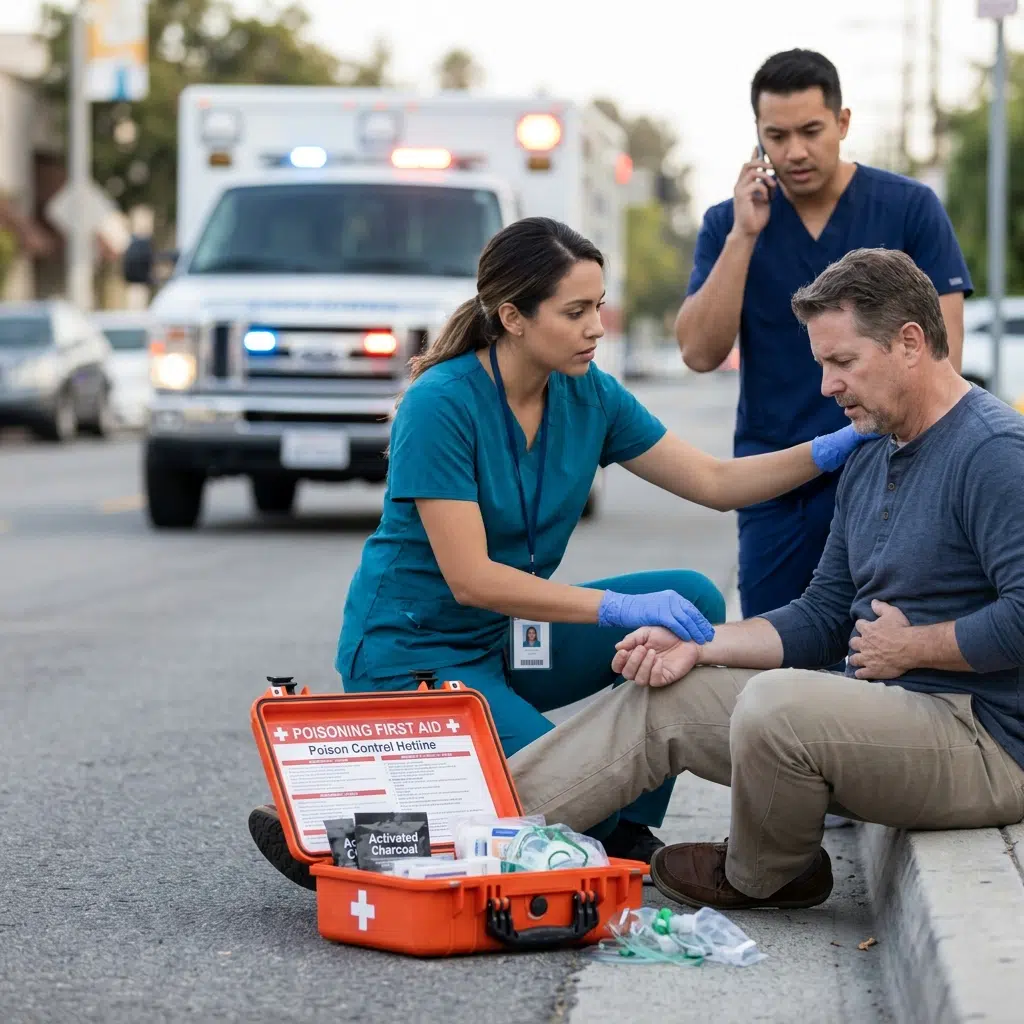
First, ensure scene safety. Never enter an environment that poses ongoing chemical exposure or hazard. Move the patient away from the poison source if safe to do so. Worn gloves protect you from skin contact with unknown substances.
Next, call for emergency services immediately. Most poisoning cases require professional evaluation regardless of symptom severity. Hidden effects like internal organ damage may not manifest visibly for hours.
While waiting for arrival, support the patient’s airway, breathing, and circulation. Position an unresponsive patient on their side to prevent aspiration if vomiting occurs. If the patient remains conscious and alert, keep them calm and seated comfortably.
Remove contaminated clothing if chemical exposure occurred. Rinse skin thoroughly with water for at least 15-20 minutes if chemical contact is suspected. Have the patient rinse their mouth with water if ingestion happened, but do not induce vomiting.

Gather specific information:
- What substance was involved (if known)
- When exposure occurred
- Approximate amount ingested or contacted
- Patient’s current medications and medical history
- Any treatments already attempted
Keep this information ready for paramedics and emergency department staff. Accurate substance identification dramatically improves treatment precision.
How Our Comprehensive Emergency Response Training Prepares You
We design our emergency response curriculum specifically for healthcare professionals managing real-world poisoning scenarios. Rather than generic first aid principles, our instruction emphasizes the decision trees and clinical judgment you’ll actually use in practice.
Our certified instructors bring field experience from emergency medicine, critical care, and paramedicine. They teach you to recognize subtle presentation differences between common poisoning types and to anticipate complications before they become critical.
During our courses, you’ll practice the assessment techniques that matter most: gathering substance information quickly, recognizing airway compromise, evaluating vital sign changes, and knowing when to escalate care. We emphasize the communication skills needed to work effectively with poison control specialists and emergency teams.
You’ll also understand your professional scope and documentation requirements in California. Proper charting protects your license and ensures continuity of care for your patient.
Poison Control Resources and When to Call for Support
California poison control centers exist specifically to support your decision-making during toxic emergencies. The California Poison Control System operates 24/7 with specialists trained to guide management of virtually any poisoning case.
Call poison control when:
- You suspect poisoning but aren’t certain of the substance
- Symptoms are mild or uncertain in severity
- The patient is stable but requires specialist guidance
- You need information about drug interactions or medication overdoses
- A child or elderly patient ingested unknown substances
Have ready: the patient’s age and weight, suspected substance name, time of exposure, and current symptoms. Poison control specialists provide real-time recommendations and help determine whether hospital evaluation is necessary.
In California, poison control reaches you at the regional number specific to your location. Emergency services can connect you if you’re unsure. Never delay emergency 911 calls while seeking poison control information, though. Both services work together to optimize patient outcomes.
Real-World Scenarios: Our Hands-On Training Approach
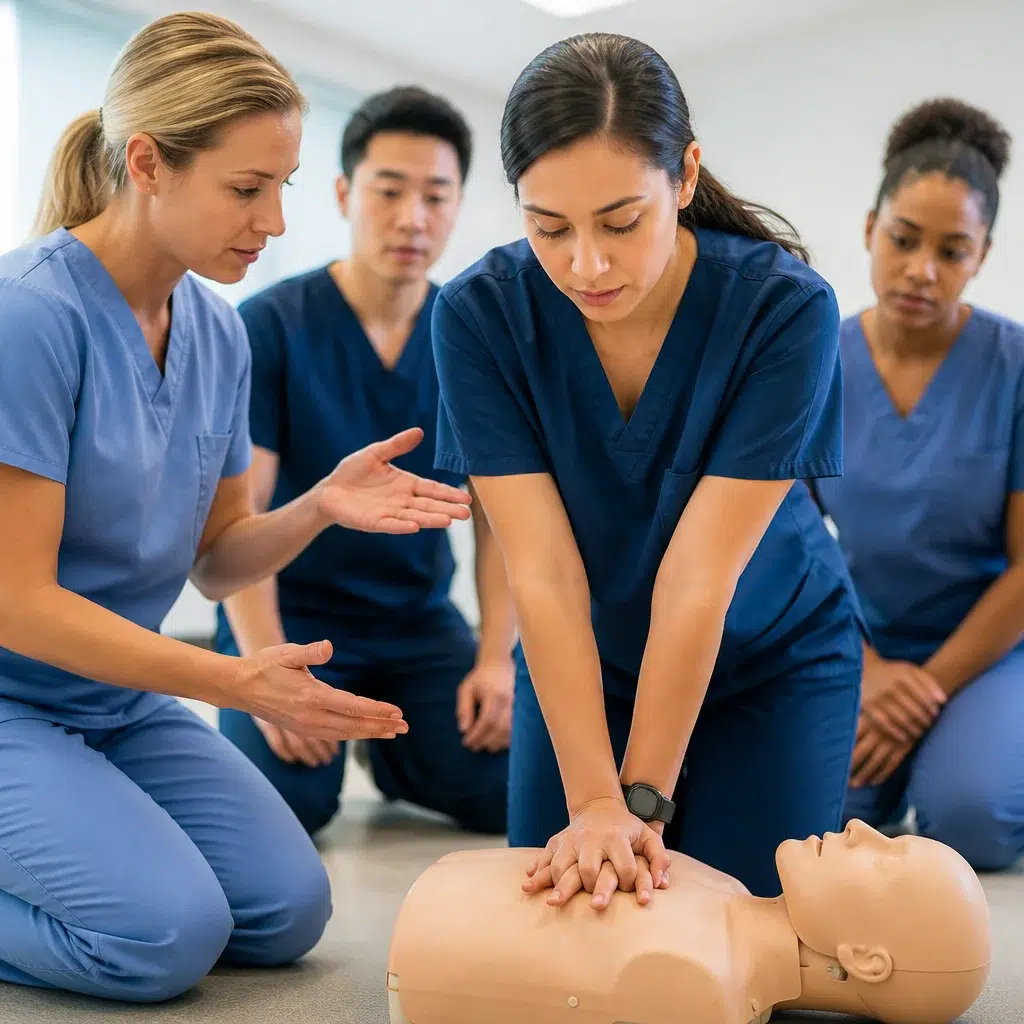
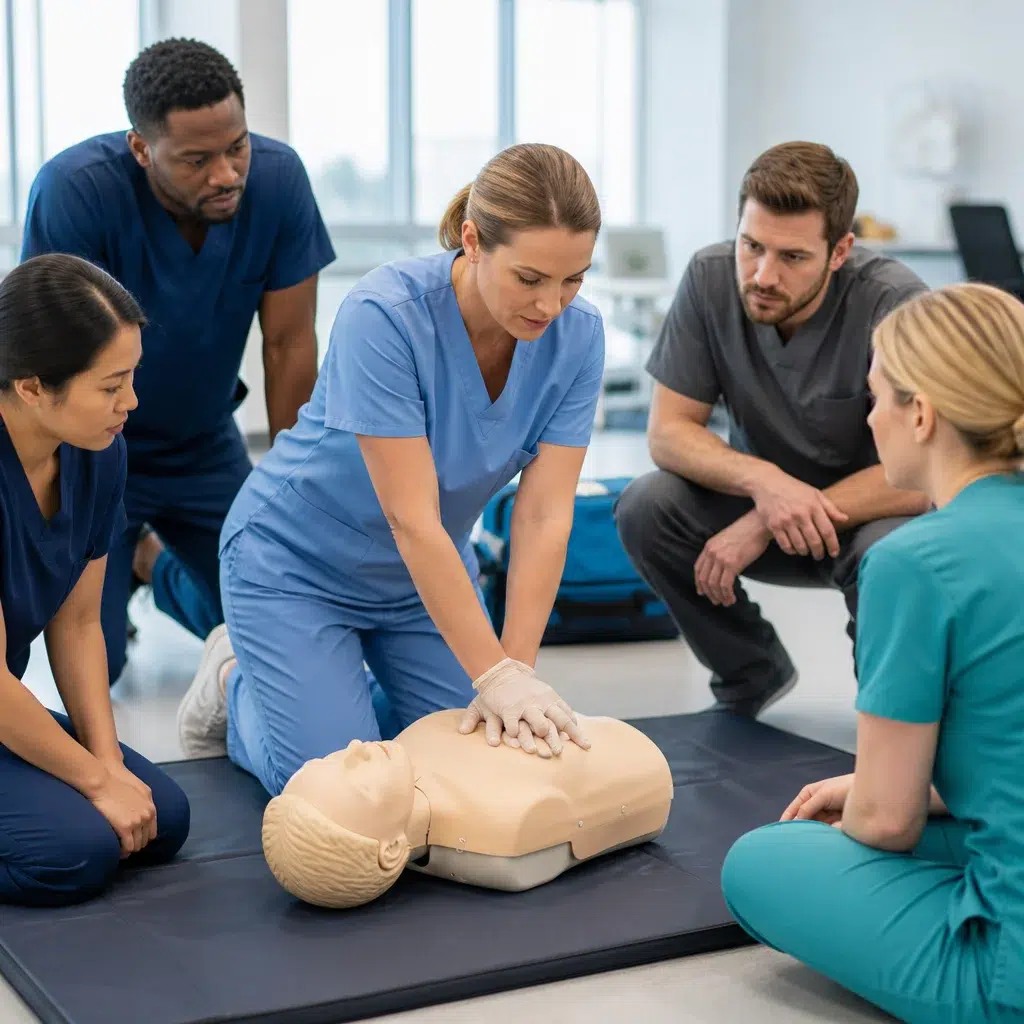
Classroom theory separates from the reality of treating an actual poisoning emergency. Our training model emphasizes scenario-based learning where you practice responding to common presentations.
Consider this scenario: A 34-year-old nurse in Walnut Creek arrives at work and finds a colleague unresponsive in the break room. An empty bottle of unknown medication lies nearby. Heart rate is 48 and blood pressure is 92/54. How do you prioritize care while awaiting paramedics?
Or this one: A parent in Berkeley calls the clinic reporting their two-year-old swallowed an unknown number of iron supplements. The child appears well currently. Do you recommend emergency evaluation? Poison control consultation?
Another: A dental assistant in Santa Clara sustains a chemical burn to her forearm from spilled surface disinfectant. Skin is red and painful. What immediate treatment prevents deeper tissue damage?

Through these scenarios, you develop pattern recognition and decision confidence. You practice communicating with poison control. You learn to balance reassurance with appropriate urgency. Our instructors debrief each scenario to reinforce critical thinking rather than rigid protocols.
This hands-on approach transforms abstract knowledge into embodied skill. When a real poisoning emergency occurs, your training becomes instinctive rather than hesitant.
Blended Learning Model: Virtual Knowledge Plus In-Person Skills Mastery
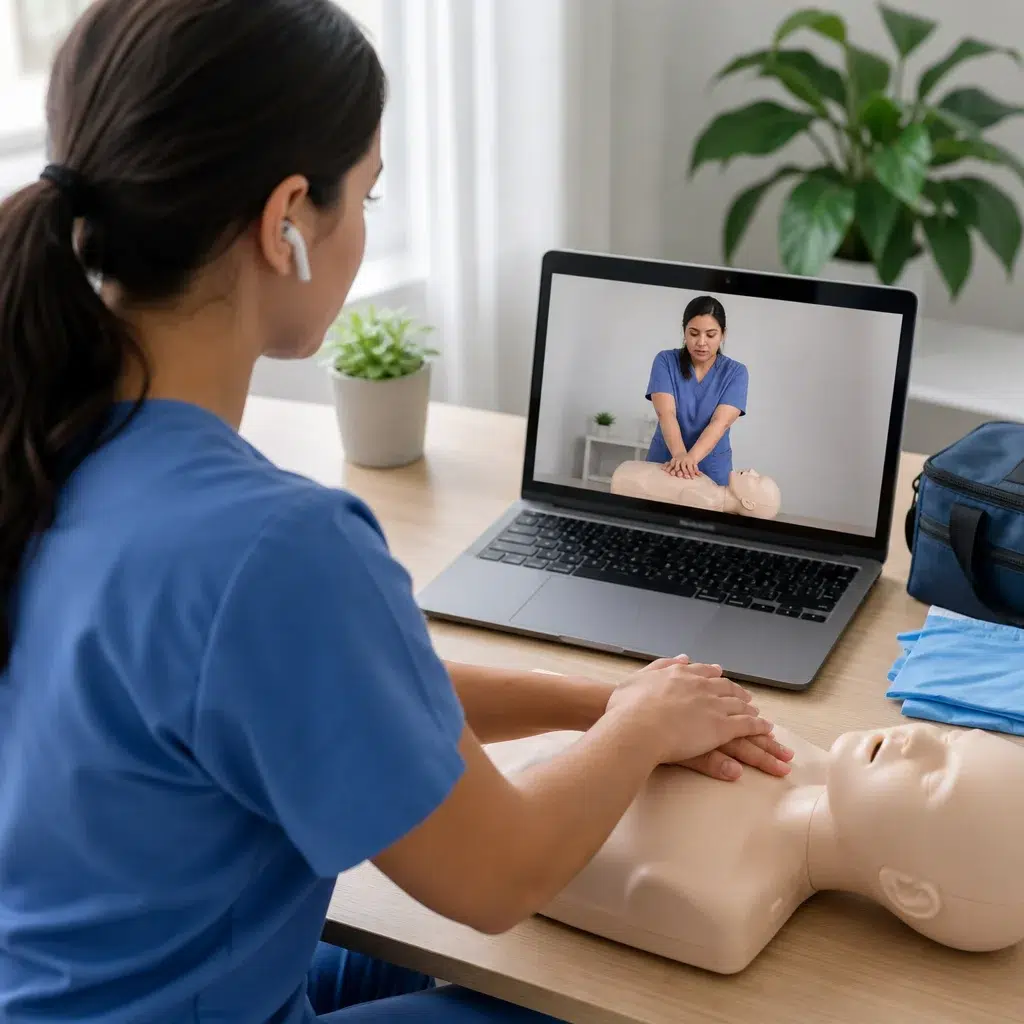
We recognize that California healthcare professionals juggle demanding schedules. Our blended learning approach combines self-paced online instruction with essential in-person skills practice.
Your virtual modules cover poisoning recognition, pathophysiology, poison control resources, and documentation requirements. You progress through material on your timeline, reviewing sections as needed. Quizzes confirm your understanding before proceeding.
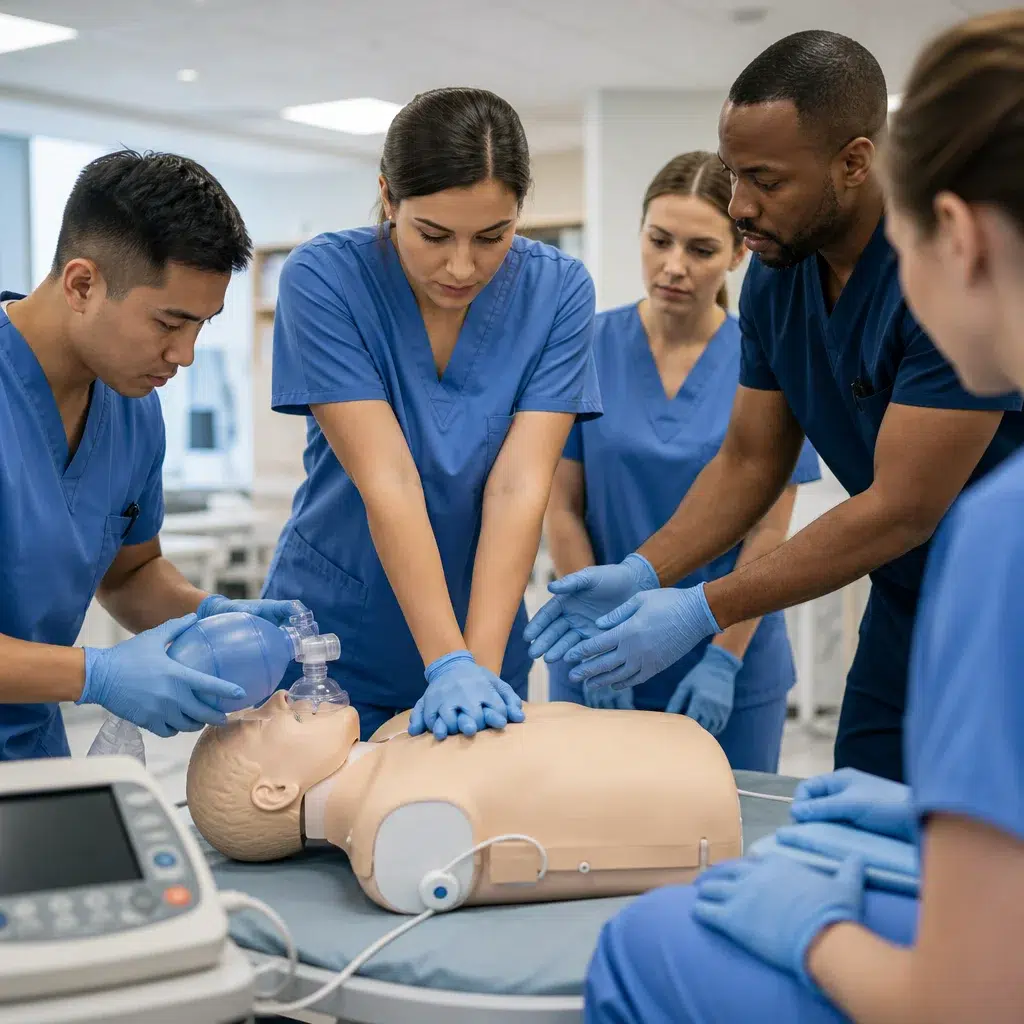
Then you attend an in-person skills session at one of our training locations throughout California. Whether you’re in Modesto, Oakland, or San Diego, you’ll find a convenient location nearby. During this hands-on portion, our certified instructors observe your assessment techniques, guide your decision-making, and provide feedback that online learning cannot replicate.
This model respects your time while ensuring genuine competency. You don’t waste class hours on lectures you could complete independently, but you gain the instructor interaction and peer learning that matter most for emergency response skills.
Certification That Meets Your Employer’s Compliance Requirements
California healthcare employers require current emergency response certification for many clinical roles. Nursing boards, dental licensing, and EMS agencies maintain specific credentialing standards.
Our certifications meet or exceed employer requirements for emergency response and poisoning management. Your credential reflects mastery of California-specific protocols and demonstrates your commitment to professional development.
We provide same-day verification documentation that you can share immediately with your employer or licensing board. No waiting for credentials in the mail. Your certification becomes active the moment you complete your final skills assessment.
Your certification remains valid as long as you maintain it, but we recommend refresher training annually or whenever your employer updates protocols. Healthcare practices evolve, and staying current protects your patients and your license.
Our Statewide Network: Training Near You in California
We operate over 100 training locations throughout California, from Redding in the north to Visalia in the south. Whether you work in San Francisco’s Mission District, San Jose’s Japantown, Sacramento’s Midtown, or the rural communities of Tracy and Woodland, we have training nearby.
This statewide network means you don’t sacrifice quality instruction for convenience. Our instructors maintain consistent, high standards regardless of location. A class in Hayward delivers the same rigorous training as one in Petaluma or Concord.
Many healthcare professionals appreciate training in their own communities. You avoid lengthy commutes and can often schedule classes around your shifts. Our multiple locations in larger cities like San Francisco, San Jose, and Sacramento provide scheduling flexibility even during peak seasons.
Why Healthcare Professionals Choose Our Certified Instruction
Thousands of California nurses, dentists, EMS professionals, and clinical staff have trusted us for their emergency response training. They return because we deliver what we promise: practical, relevant instruction taught by experienced instructors.
We maintain a low price guarantee, ensuring affordability never compromises access to essential training. Corporate group discounts make it economical for clinics and hospitals to certify entire teams. Verification stations throughout our network provide convenient re-certification when you need quick turnaround.
Our students appreciate the respectful, collegial approach our instructors bring. We acknowledge your professional experience and clinical judgment rather than lecturing down to you. The collaborative learning environment makes continuing education feel like professional development rather than box-checking.
Beyond individual certifications, we partner with healthcare organizations to develop customized emergency response programs. Schools, hospitals, and clinics in cities like Livermore, Davis, and Santa Rosa have built training relationships with us because we adapt to their specific needs.
Getting Certified: Fast, Affordable, Same-Day Credentials
Your certification process begins with course enrollment. Select your preferred location and class date. Openings fill quickly, particularly at popular times, so booking early ensures your preferred schedule.
Attend your blended course, completing both virtual modules and in-person skills sessions. Our instructors assess your competency directly rather than relying on automated systems. You receive personalized feedback and guidance tailored to your learning needs.
Upon successful completion, you walk out with your credential the same day. No waiting weeks for processing. Your certification becomes immediately valid for employer requirements, licensing applications, and job compliance.
Pricing remains transparent with no hidden fees. We publish our rates clearly and honor our low price guarantee. If you find lower pricing elsewhere for equivalent California-based instruction, we’ll match it.
Your Next Step: Enroll in Emergency Response Training Today
Confident poisoning response begins with proper training and regular certification renewal. We invite you to explore California CPR Classes or our CPR and First Aid Certification offerings to find the emergency response course matching your professional needs.
Browse our statewide locations and select a class that fits your schedule. Whether you’re in Palo Alto, Stockton, or Santa Rosa, enroll in training that prepares you to protect your patients when poisoning emergencies occur.
Your patients depend on your competence. Your license requires current certification. Your career deserves ongoing professional development. We’re here to support all three.
Register for a class today.
Frequently Asked Questions (FAQ)
What poisoning and ingestion scenarios does our emergency response training cover?
We train you to recognize and respond to common poisoning incidents including chemical exposures, medication overdoses, toxic substance ingestion, and household product poisoning. Our hands-on scenarios prepare you for the specific emergencies you’re most likely to encounter in your healthcare setting, with practical skills practice at one of our training locations across California. We focus on real-world situations rather than theoretical knowledge alone.
How quickly can I get certified after completing your blended learning course?
We structure our courses so you complete your virtual knowledge component at your own pace, then attend an in-person skills session where we verify your competency and issue your certification the same day. Most healthcare professionals finish their certification within one to two weeks from enrollment, and we offer daily class options at over 100 locations throughout California to fit your schedule.
Does our training meet my employer’s CPR and emergency response requirements?
Yes, we provide certifications that satisfy California healthcare employer compliance standards for nurses, dentists, EMS personnel, and other medical professionals. Our credentials meet the mandatory certification requirements you need to maintain your professional licensing and job compliance.