Table of Contents
- 1. Virtual Flexibility Combined with Hands-On Skills Training
- 2. AHA-Aligned Curriculum with Real-World Simulation Technology
- 3. Same-Day Certification Cards and Rapid Turnaround
- 4. Multi-Location Convenience Across 100+ California Training Centers
- 5. Affordable Pricing with Our Low Price Guarantee
- 6. Expert Instructors Committed to Compliance-First Instruction
- 7. Flexible Scheduling to Fit Demanding EMS Shifts
- Frequently Asked Questions (FAQ)
1. Virtual Flexibility Combined with Hands-On Skills Training
EMS professionals in California face a real challenge: you need current ACLS certification to maintain your license and meet job requirements, but squeezing classroom time into shifts is nearly impossible. Blended ACLS programs offer the answer, combining online learning with in-person skills practice so you don’t sacrifice study time or hands-on competency.
We’ve designed our blended ACLS programs specifically for EMS professionals who can’t afford to step away from the field for multi-day courses. You complete the didactic portion on your schedule, then attend a focused skills session where you practice real-world scenarios with instructors who understand emergency medicine. The result is certification that sticks because it’s built on genuine clinical application, not just test prep.
Here’s what makes a truly effective blended ACLS program, and why we believe ours sets the standard across California.
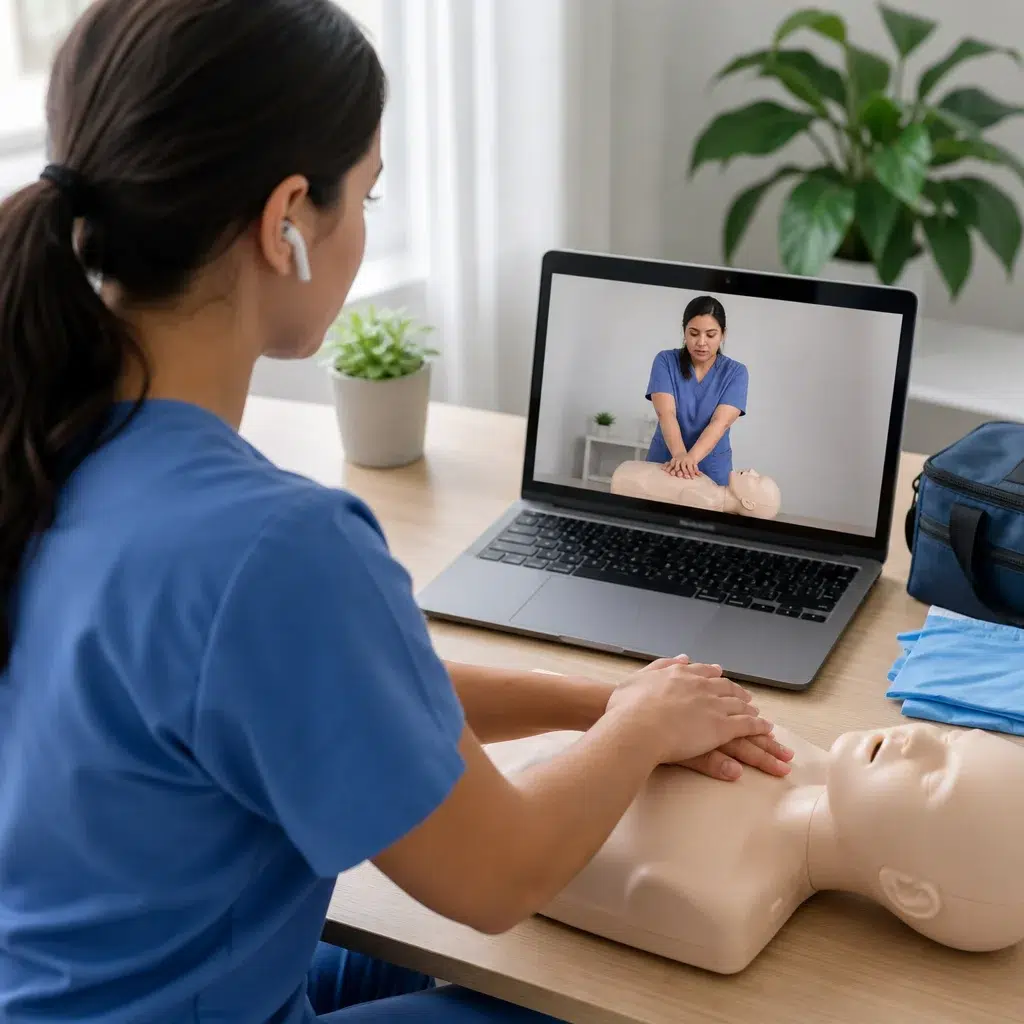
The biggest advantage of blended learning is control. You work through the online modules when it fits your life, whether that’s midnight between shifts or early morning before your next call. There’s no waiting for a cohort to assemble or locked schedule that conflicts with your rota.
Our virtual component covers everything from rhythm interpretation to pharmacology and team dynamics. You move through it at your own pace, take practice quizzes to identify weak spots, and build confidence before you ever step into a skills lab. The online portion typically takes four to six hours, spread across the days or weeks leading up to your hands-on session.
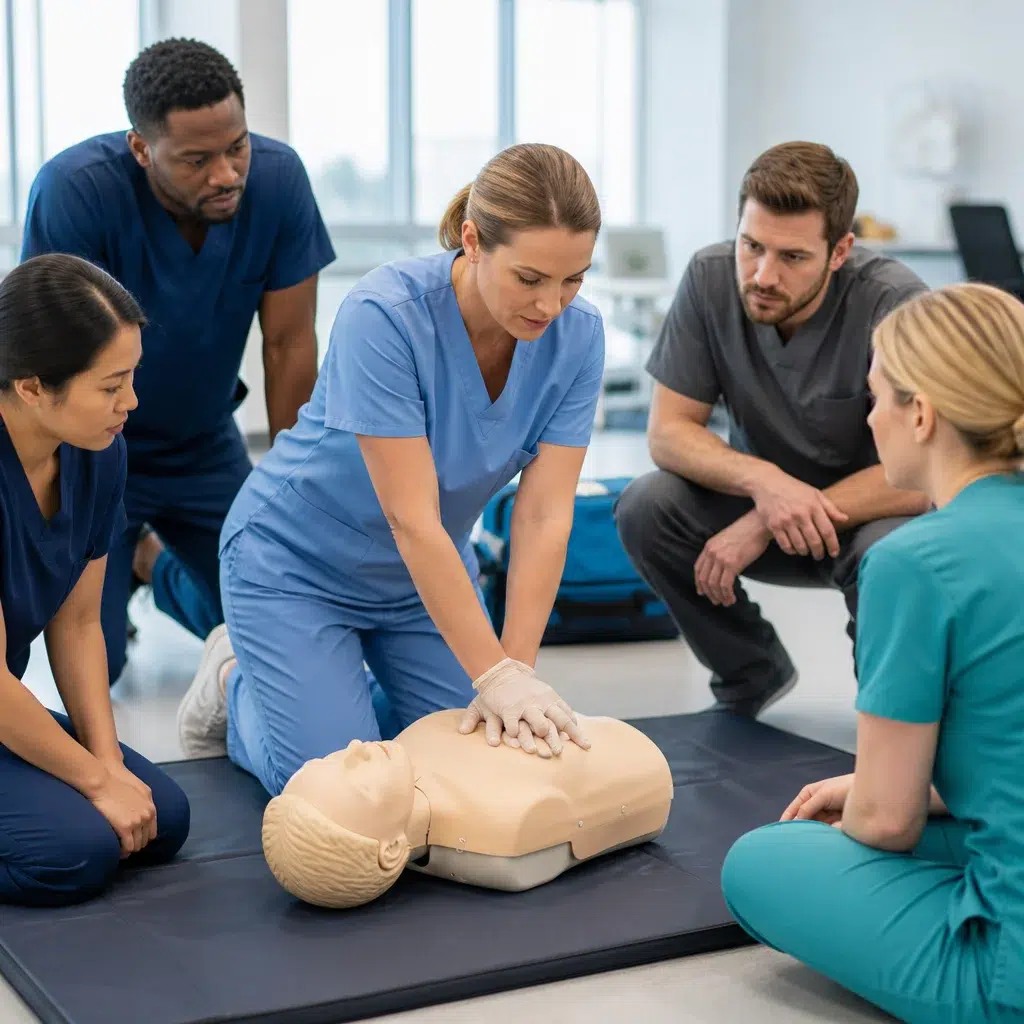
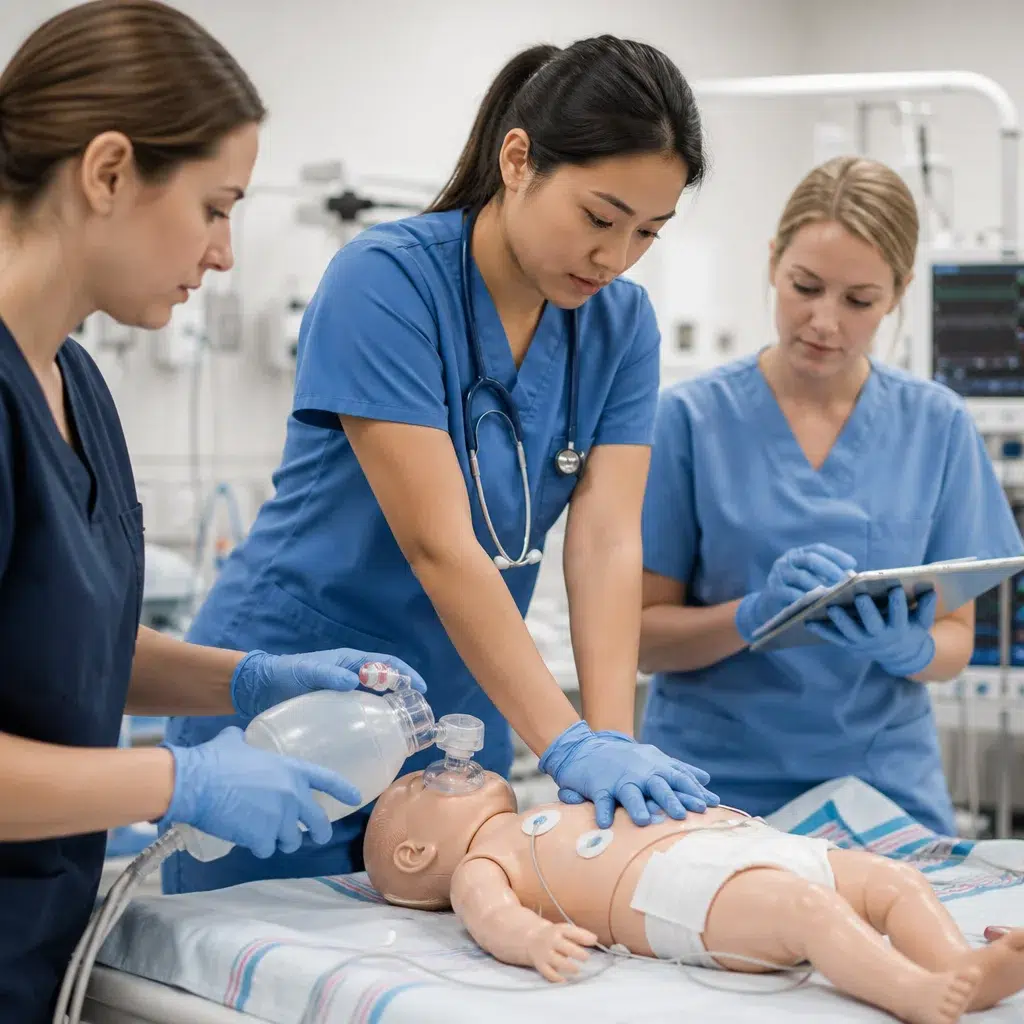
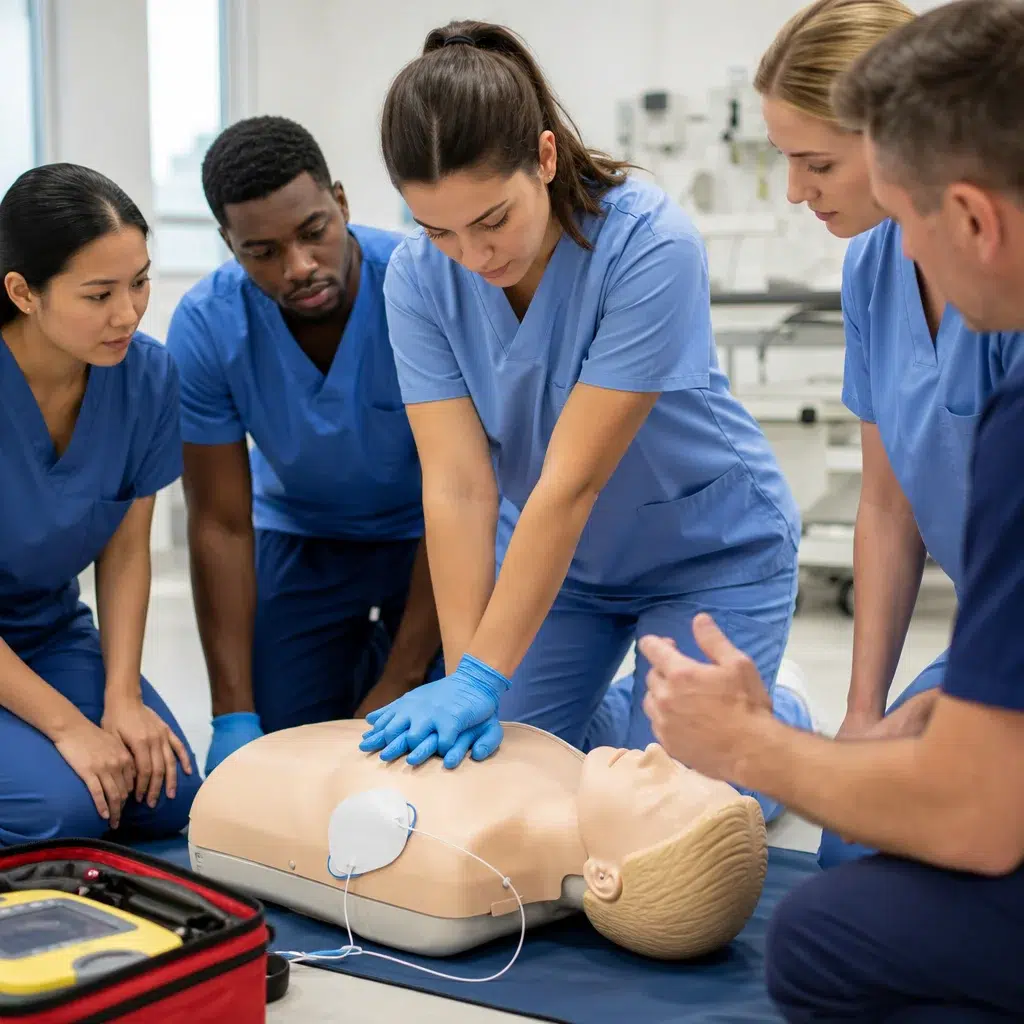
Then comes the irreplaceable part: in-person simulation. You work directly with our instructors in a clinical environment with actual equipment, practicing compressions on manikins, running through code scenarios, and getting real-time feedback on technique and decision-making. This hybrid approach ensures you understand the concepts and can execute them under pressure.
What to do next: Schedule your online portion for a week before your skills session so concepts are fresh when you’re practicing hands-on. This timing strengthens retention and lets you ask your instructor about any confusion that came up during the modules.
2. AHA-Aligned Curriculum with Real-World Simulation Technology
Our curriculum follows the current guidelines and standards that employers and licensing boards expect. We integrate evidence-based protocols with practical decision trees you’ll actually use in the field. When a patient presents with unstable ventricular tachycardia or goes into cardiac arrest after a medication error, you’ll recognize the pattern and act decisively.
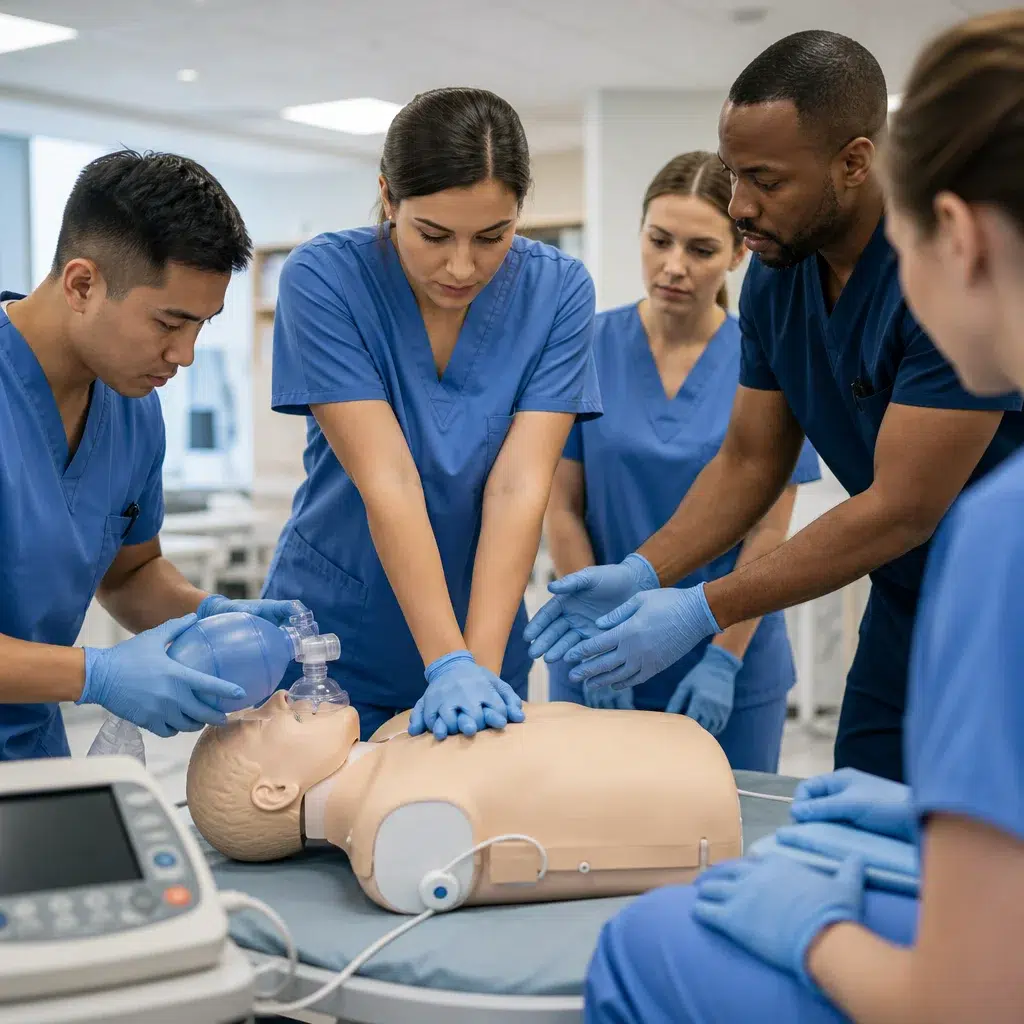
We use advanced simulation mannequins that provide realistic feedback. You perform CPR and immediately see compression depth and rate metrics. Defibrillators respond as they would in reality. Medications are staged just as they are in your rig. This isn’t abstract learning; it’s rehearsal for scenarios you encounter in real calls.

Our instructors rotate the scenarios so that no two students practice the exact same situations twice. You might manage a witnessed collapse in one scenario and an unwitnessed event in another. You lead a code once and play a team member the next time. This variation builds adaptive thinking, not rote memorization.
Actionable takeaway: Ask your instructor during the skills session to run at least one scenario that mirrors a real call type you’ve encountered recently. This bridges the gap between training and your actual work environment.
3. Same-Day Certification Cards and Rapid Turnaround
After you complete your in-person skills session, you walk out with a certification card. No waiting weeks for a certificate to arrive by mail. No administrative delays. You’re compliant the same day you finish.
For EMS professionals on tight schedules, same-day cards matter enormously. You don’t have to worry about a gap in your credentials if you need to update your employer immediately or if you’re bidding on shifts that require current ACLS certification. Your credentials are valid the moment you leave our training center.
We maintain this rapid turnaround across all our locations, from our Sacramento facilities in Arden, Midtown, Oak Park, and Rosemont to our San Jose centers in Downtown, Japantown, South, and Willow Glen. Whether you train in Fresno, Oakland, or Santa Rosa, you receive your card on the same day.
Next step: Bring a valid government-issued ID and have your employer information handy when you arrive for your skills session. This ensures smooth registration and faster card issuance.
4. Multi-Location Convenience Across 100+ California Training Centers
California is vast, and driving hours to a training center eats into your day off or forces you to take unpaid time. We operate over 100 training locations across the state specifically to keep travel time reasonable for EMS professionals wherever you’re stationed.
Whether you’re based in Bakersfield, Modesto, Stockton, or Tracy, you’ll find a class near you. We have multiple sites in major hubs like the San Francisco Bay Area, with centers throughout San Francisco including Mission Bay, Parnassus/UCSF, and Nob Hill, plus dedicated locations in Oakland’s Fruitvale, Lake Merritt, and Piedmont neighborhoods. Southern Sacramento has classes in Arden and Rosemont, while Northern California EMS professionals can access training in Redding and Chico.
This distribution means you’re never more than 20-30 minutes from one of our facilities. You can pick the location and time that fits your schedule without sacrificing quality. Every center meets the same standards and staffing requirements, so your experience is consistent whether you train in Hayward, Pleasanton, or San Rafael.
What to do next: Check our ACLS classes in Santa Rosa and other regional pages to see dates and times at your preferred location, then book the session that works best with your shift rotation.
5. Affordable Pricing with Our Low Price Guarantee

ACLS certification shouldn’t drain your professional development budget. We price our blended programs to be accessible for working EMS professionals while maintaining the quality and hands-on practice you need. Our low price guarantee means if you find a lower advertised price for the same blended ACLS course, we’ll match it.
This guarantee removes the risk of shopping around. You won’t second-guess whether you overpaid or missed a better deal elsewhere. Transparent pricing and direct access to course costs help you plan financially without hunting for hidden discounts.
Corporate groups also benefit from dedicated discounts. If your EMS service needs to recertify a team or rotate new hires through ACLS training, we offer group rates and flexible scheduling that work for your operations. This keeps costs per person low while ensuring your entire team stays current.
Actionable tip: Ask about group discounts if you’re part of a fire department, ambulance service, or hospital EMS team. Coordinating training for multiple personnel often reduces your per-person cost substantially.
6. Expert Instructors Committed to Compliance-First Instruction
Your instructor isn’t reading from a script. Our instructors are experienced EMS providers, nurses, and critical care professionals who’ve taught hundreds of students and run real codes. They understand the pressure of a cardiac arrest and know which skills collapse under stress.
Each instructor maintains current certification and undergoes regular continuing education. They teach to your level, whether you’re recertifying a seasoned paramedic or preparing a newly hired EMT. More importantly, they focus on compliance first: they ensure you understand not just the techniques, but the reasoning behind protocols and when to deviate based on clinical judgment.
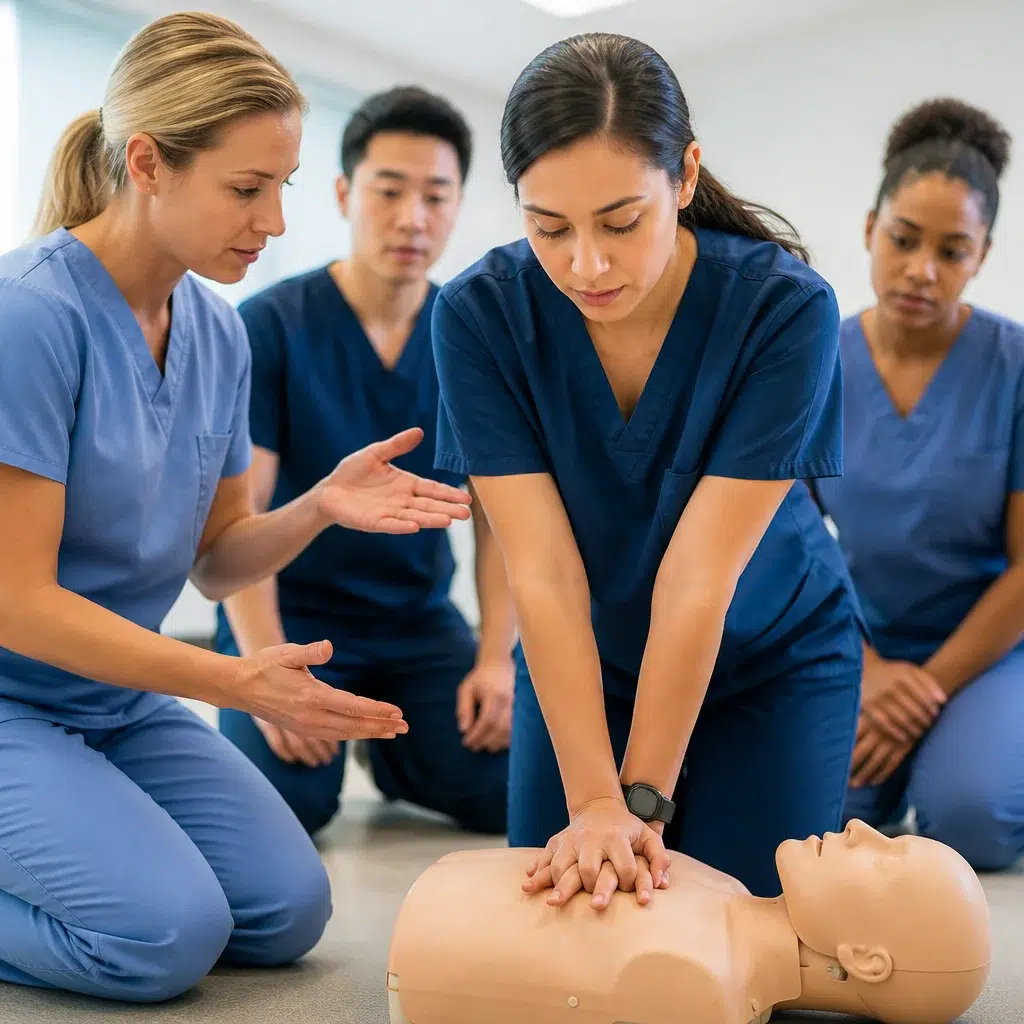
Instructors also correct technique in real time. If your hand placement is slightly off during chest compressions or you’re rushing your medication verification, they catch it and coach you through the right method. This personalized feedback is impossible in large classroom settings and invaluable for competency.
Next step: Arrive 10 minutes early to your skills session and ask your instructor about any specific scenarios you struggle with in the field. They can prioritize practice time on your weak spots.
7. Flexible Scheduling to Fit Demanding EMS Shifts
EMS schedules are chaotic. Twelve-hour shifts, back-to-back doubles, days off that shift without notice. Traditional fixed-schedule training doesn’t fit, which is why we offer multiple class times each week at nearly every location.
We schedule early-morning classes for night-shift workers, afternoon sessions for day-shift crews, and weekend options for professionals juggling multiple commitments. Online modules are available 24/7, so you learn when you have downtime, not when an instructor is available.
Many professionals also take advantage of our blended model to spread their commitment. You might complete the online portion during a quiet week, then schedule skills training for the following week when your calendar clears. This flexibility reduces the pressure of cramming everything into a single compressed day.

Actionable guidance: Check class availability for the next four weeks and book both your online access and skills session slot in advance. This locks in your preferred time and ensures you don’t get pushed into a class that conflicts with your schedule.
—
Blended ACLS programs work because they respect your reality as a working EMS professional. You need certification that’s current, thorough, and accessible without derailing your career. We’ve built our courses around your constraints: tight schedules, geographic spread across California, and the need for practical, not theoretical, competency.
Our combination of virtual flexibility, hands-on simulation, expert instruction, and rapid certification addresses every barrier you face. You’re not choosing between convenience and quality; you get both. With over 100 locations across California and scheduling options that truly fit emergency services shift patterns, we make it possible to stay current and competent without sacrificing your time or your wallet.
Book your blended ACLS program today and complete your certification in a way that actually works for your life.
Register for a class today.
Frequently Asked Questions (FAQ)
How does our blended learning format work for ACLS certification?
We combine self-paced online coursework with in-person skills sessions so you can study theory on your own schedule and then complete hands-on practice at one of our 100+ California locations. This approach lets you master the material at your pace while ensuring you get direct instructor feedback during the critical skills demonstration portion of your certification.
Can I get my ACLS card the same day I complete training?
Yes, we issue certification cards immediately upon successful completion of your in-person skills session. We understand that EMS professionals need their credentials processed quickly for job requirements, so we have our verification stations ready to issue your card on-site when you finish.
What if my work schedule doesn’t align with typical training hours?
We offer flexible scheduling throughout our network, including evening and weekend sessions at multiple locations across California. Since we recognize that EMS shifts are unpredictable, we designed our schedule options to accommodate the demanding nature of emergency medical work.