Table of Contents
- Why California Nurses Need Current AHA Certifications
- Understanding Your State License Renewal Requirements
- What AHA Certifications We Offer for Healthcare Professionals
- How Our Blended Learning Approach Fits Your Schedule
- Same-Day Certification Cards and Fast Verification
- Our Low Price Guarantee for Nurse Certifications
- Flexible Training Locations Across California
- Getting Started With Your Certification Renewal Today
- Frequently Asked Questions (FAQ)
Why California Nurses Need Current AHA Certifications
As a nurse in California, maintaining current life-saving certifications isn’t optional—it’s a requirement for keeping your license active and your career moving forward. The California Board of Registered Nursing expects nurses to demonstrate competency in emergency response and patient resuscitation throughout their professional lives. This expectation exists because patient safety depends on your ability to respond quickly and effectively when someone’s breathing stops or their heart fails.
We understand that juggling clinical shifts, patient care, and administrative requirements leaves little time for training. Yet the stakes are high: an expired certification can delay your license renewal, limit your employment options, and put you in violation of state regulations. Beyond compliance, current certifications give you genuine confidence in high-pressure moments. When a patient codes, you need to know your skills are current and your knowledge reflects the latest evidence-based techniques.
Current AHA certifications demonstrate to employers, patients, and regulatory bodies that you take professional accountability seriously. Healthcare facilities increasingly verify certification status during hiring and credentialing. Having valid credentials ready removes friction from the job application process and signals your commitment to staying current with clinical best practices.
What to do next: Review your current certification expiration dates. If any expire within the next 90 days, planning your renewal now prevents last-minute stress and potential licensing delays.
Understanding Your State License Renewal Requirements
California’s nursing license renewal cycle typically occurs every four years, but certification requirements apply continuously throughout that period. The California Board of Registered Nursing requires nurses to maintain current BLS certification for nurses as part of their license conditions. Many employers add additional requirements: some hospitals mandate ACLS (Advanced Cardiovascular Life Support) for floor nurses, while critical care units and emergency departments typically require both BLS and ACLS at minimum.
Different specialty areas carry different expectations. An ICU nurse in Sacramento, for example, faces stricter requirements than a clinic nurse in San Jose. Emergency departments expect immediate ACLS readiness. Perioperative nurses often need both BLS and ACLS. Understanding your specific workplace requirements prevents you from pursuing unnecessary certifications while ensuring you never fall short of mandatory credentials.
The state expects your certifications to remain valid—lapses create compliance issues. If your BLS certification expires and you continue working, you’re technically out of compliance, even if you haven’t yet renewed your nursing license. Many facilities conduct quarterly audits of staff certifications, flagging any expirations before they happen.
Your employer’s human resources department can clarify which certifications your role requires. We recommend confirming requirements directly rather than assuming, since policies vary significantly across healthcare settings. Once you know what you need, we make it straightforward to stay compliant without unnecessary delays.

What AHA Certifications We Offer for Healthcare Professionals
We provide all the major certifications California healthcare professionals require: BLS (Basic Life Support), ACLS (Advanced Cardiovascular Life Support), PALS (Pediatric Advanced Life Support), and NRP (Neonatal Resuscitation Program). Each certification addresses specific clinical scenarios and patient populations you’ll encounter in your nursing practice.
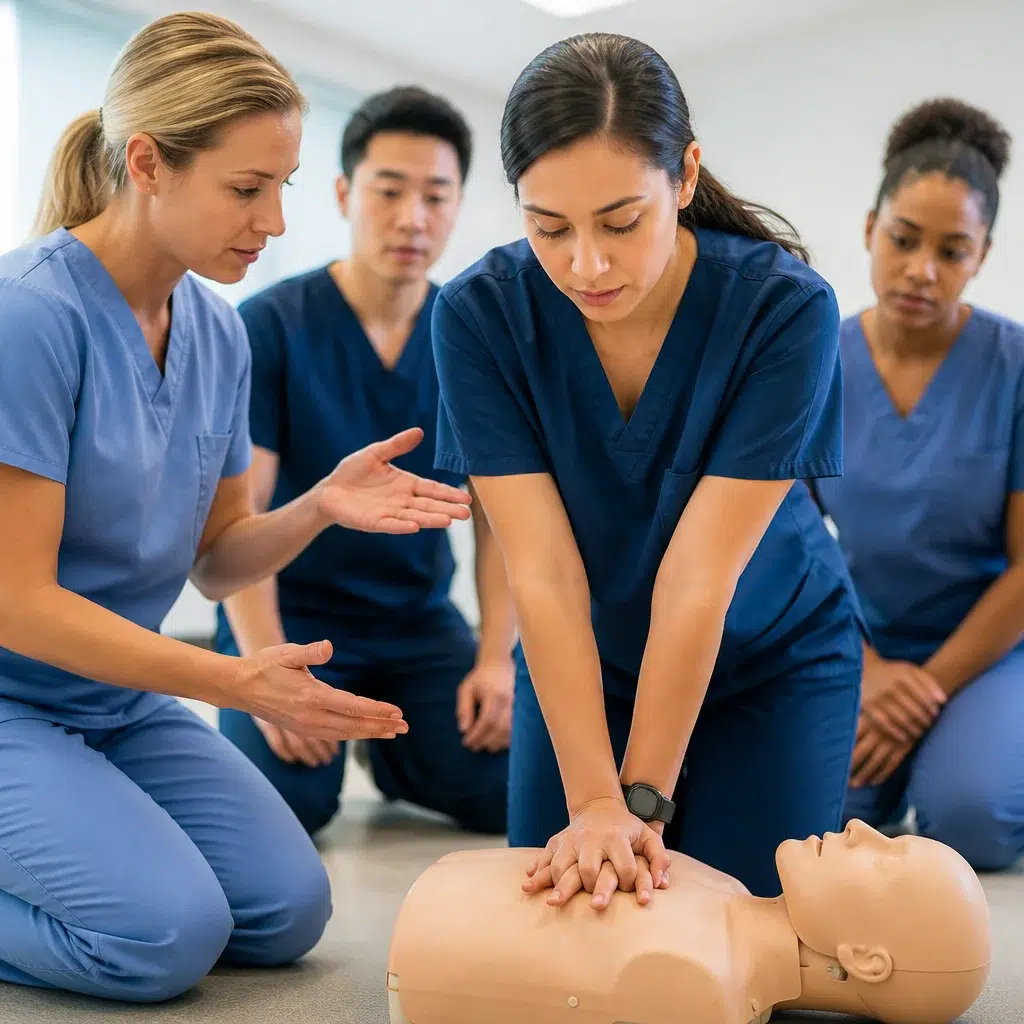
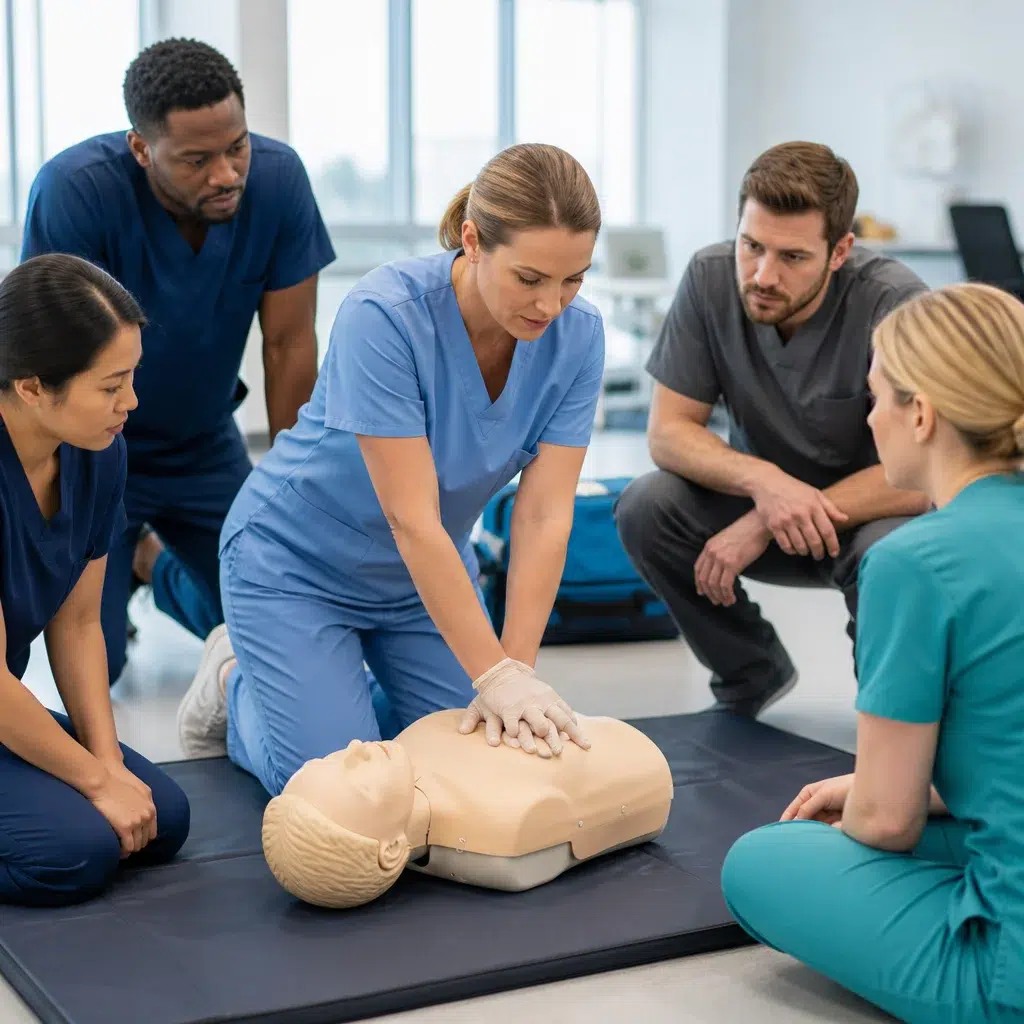
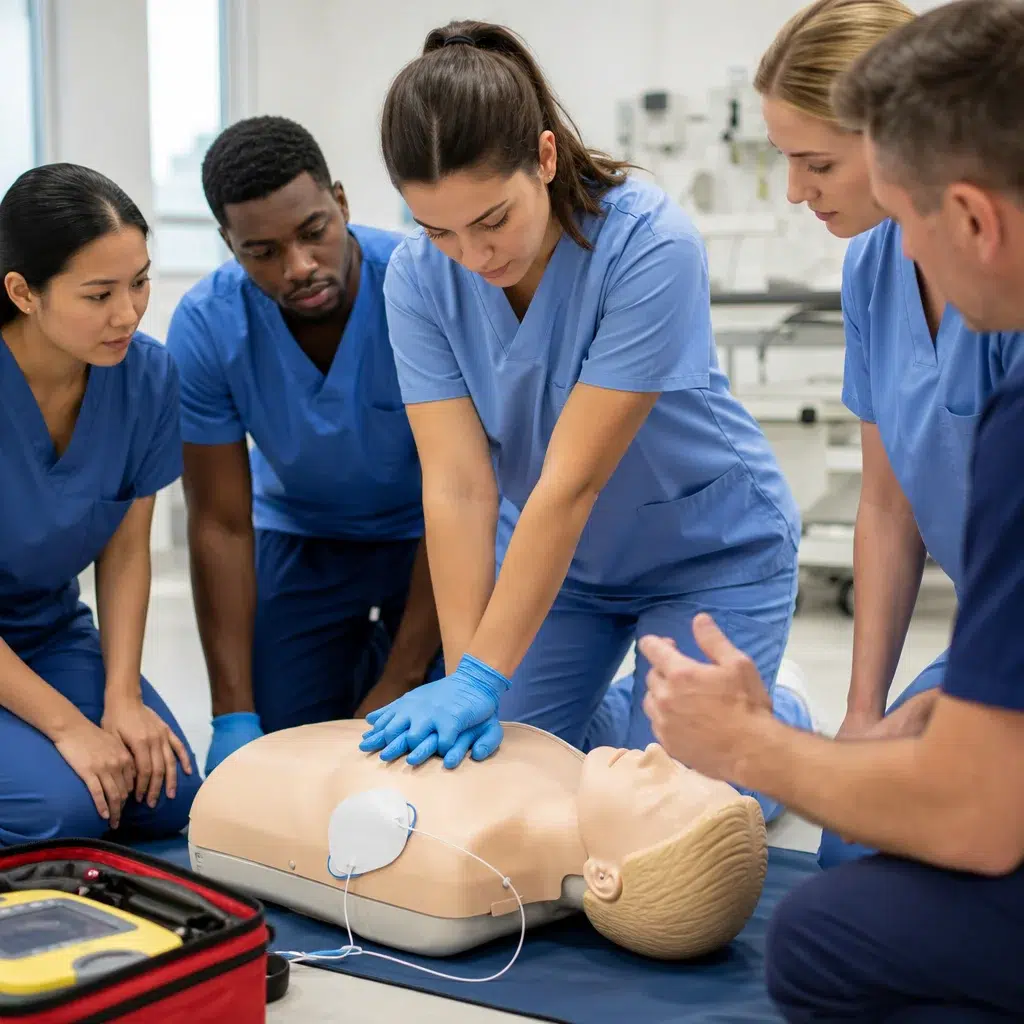
BLS forms the foundation—every nurse needs current BLS certification. This course teaches single-rescuer and two-rescuer CPR, relief of choking, and proper use of automated external defibrillators (AEDs). You’ll practice hands-on skills with manikins and learn the latest compression techniques and airway management.
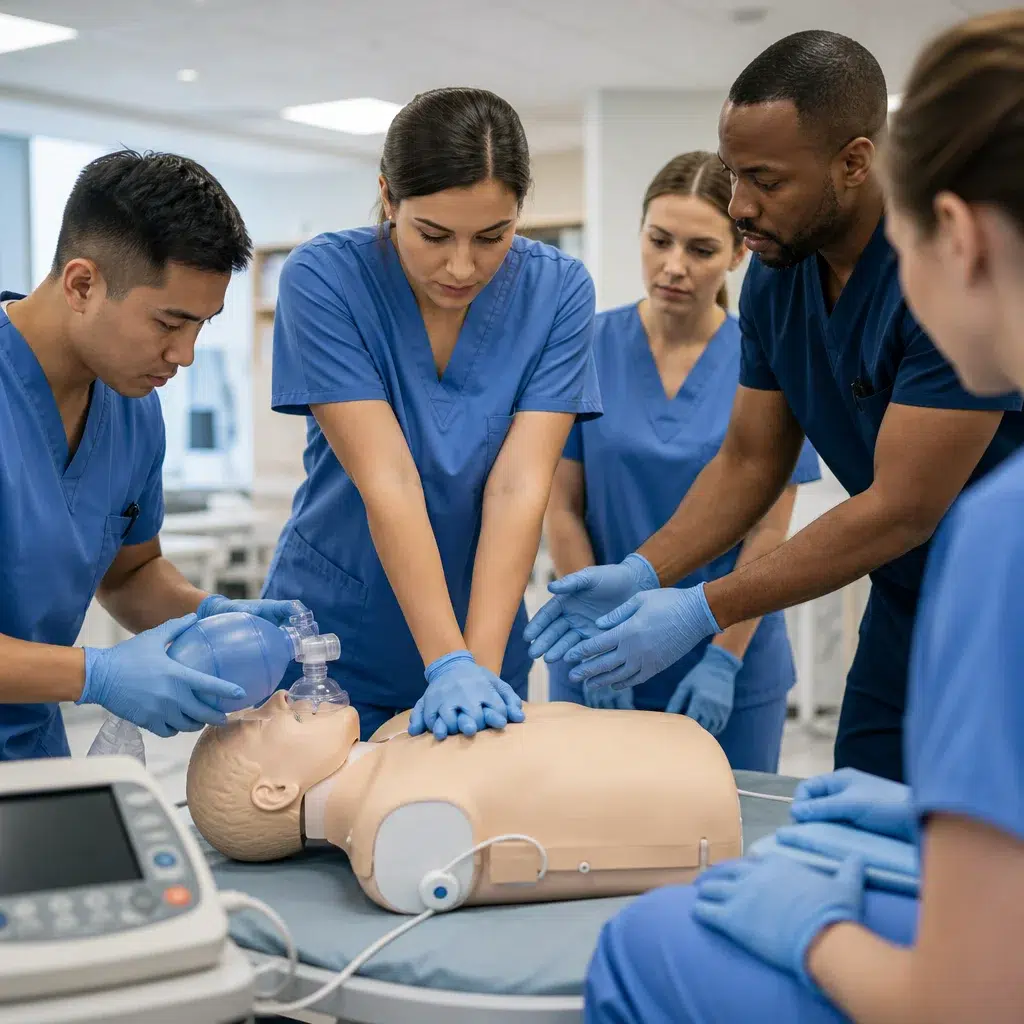
ACLS builds on BLS for nurses who work in settings where cardiac emergencies are common. You’ll learn pharmacology relevant to cardiac arrest, recognize dangerous arrhythmias on EKG strips, and manage complex resuscitations. This certification is essential for emergency departments, intensive care units, and acute care floors.
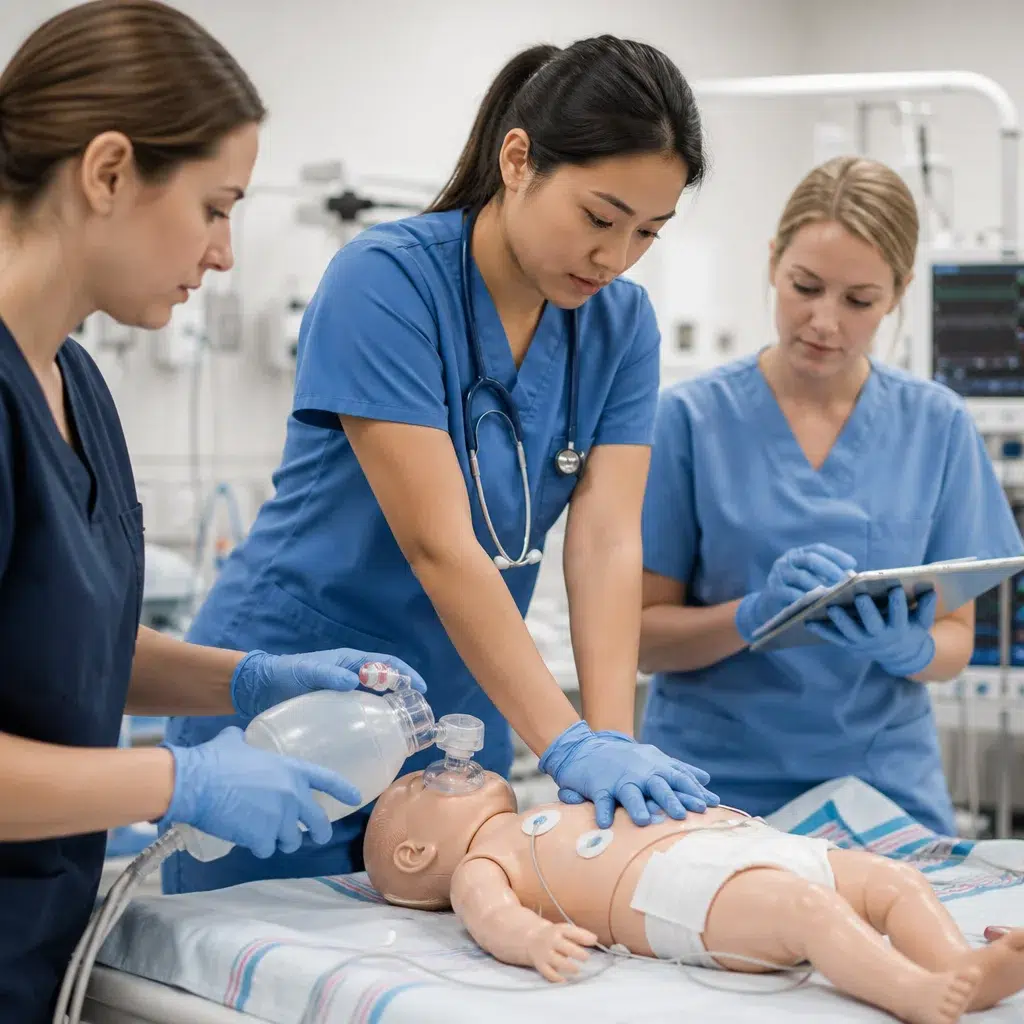
PALS prepares you for pediatric emergencies, covering infants and children from newborns through puberty. You’ll learn how pediatric physiology differs from adult physiology and how those differences change your approach to compressions, medication dosing, and breathing support.
NRP focuses specifically on newborn resuscitation in delivery rooms and immediately after birth—critical knowledge for labor and delivery nurses, nurse midwives, and neonatal nurses.
We deliver these certifications through our blended learning model, offering courses across our 100+ training locations throughout California, from Alameda to Woodland. Your certification choice depends on your specialty and workplace requirements, not on a one-size-fits-all approach.
How Our Blended Learning Approach Fits Your Schedule
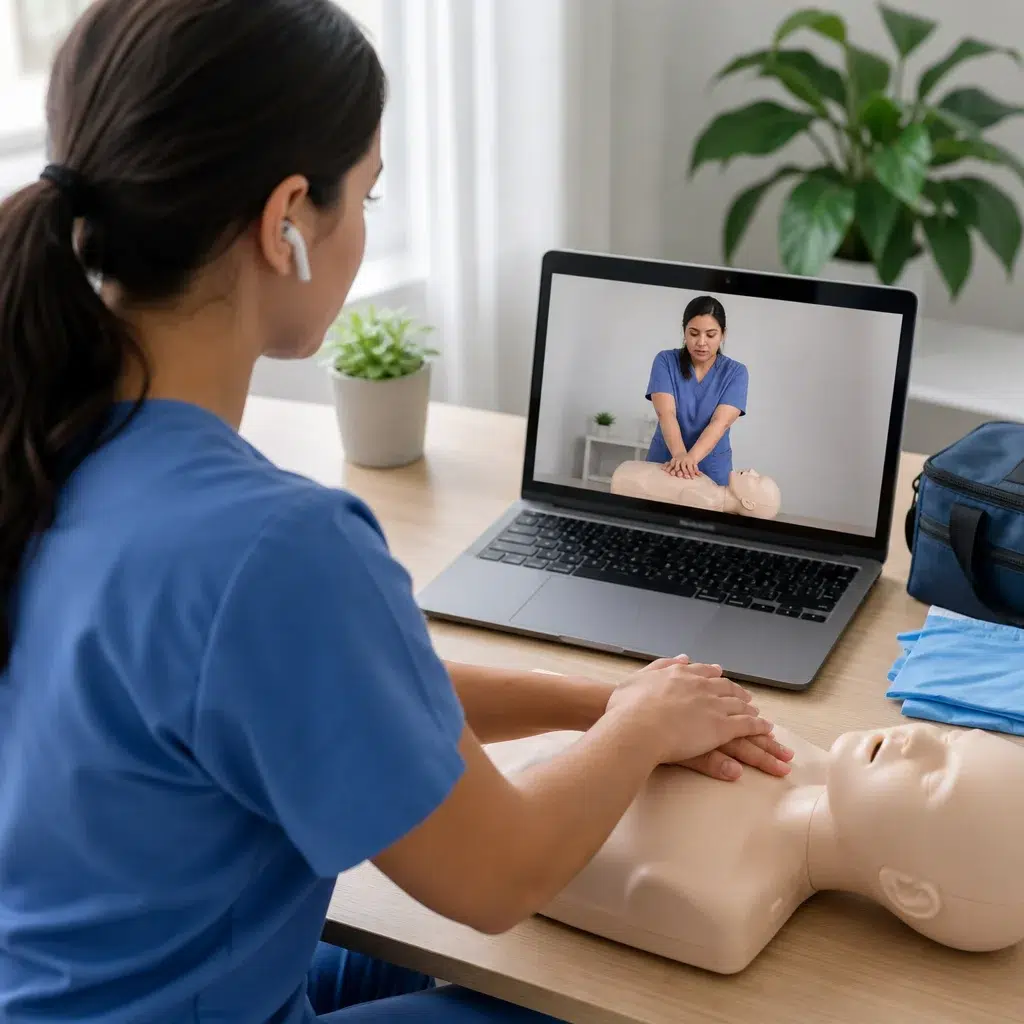
We know 12-hour shifts and unpredictable call schedules make traditional classroom training frustrating. Our blended model combines self-paced online learning with hands-on skills sessions, so you study when it works for you and practice when we schedule skills verification.
You begin with our online component, reviewing course material, watching instructional videos, and completing knowledge checks at your own pace. This portion typically takes 2-4 hours depending on the certification level. There’s no artificial deadline—you move through content as your schedule allows. Work nights? Complete your online module during day rest. Planning a vacation? Pause and resume whenever convenient.
Once you’ve finished the online portion, you attend a brief in-person skills session where our instructors verify your hands-on abilities. You’ll demonstrate proper chest compression technique, airway management, and any certification-specific skills. These sessions typically run 1-2 hours. We offer sessions throughout California in locations like Oakland (Fruitvale, Lake Merritt, and Piedmont), San Francisco (Mission Bay, Parnassus/UCSF, and Sunset), and Sacramento (Midtown, Oak Park, and Rosemont), among our many other training centers.
This approach acknowledges your reality: you don’t have hours for classroom lectures, but you can find a window for focused skill practice. You avoid sitting through content you already understand while still getting the personalized feedback only an instructor can provide.
Actionable step: Check our online schedule for your preferred certification and location. Most nurses can complete their online component within one week, then book a skills session that fits your calendar.

Same-Day Certification Cards and Fast Verification
After your skills session, you’ll receive your certification card the same day in most locations. We don’t make you wait weeks for credentials to arrive by mail. This matters when you’re job hunting or when your current certification expires within days of your course date.
Same-day cards mean you can present proof of current certification to your employer or licensing board immediately. No explanations needed. No temporary documentation required. You walk out with wallet-sized evidence of your current credentials.
We also provide rapid online verification for employers who need to confirm your status. Our verification system allows your employer’s credentialing department to confirm your certifications instantly, which speeds up hiring processes and reduces administrative friction. If you’re changing jobs or updating your facility’s compliance records, fast verification eliminates the back-and-forth delays.
Your certifications remain valid for two to three years depending on the certification type, giving you a clear window before renewal becomes necessary again. We’ll even send you reminders as your renewal date approaches, so you’re never surprised by an expiration.
Our Low Price Guarantee for Nurse Certifications
We guarantee the lowest pricing for AHA certifications in California. If you find a lower advertised price elsewhere for the identical certification, we’ll match it. This guarantee means you can feel confident that cost isn’t forcing you toward a less reputable provider or delaying your renewal.
Healthcare professionals already stretch budgets across student loans, continuing education requirements, and licensing fees. We don’t believe certification costs should add unnecessary financial stress. Our pricing starts at competitive rates and only goes lower if you’re renewing multiple certifications or enrolling colleagues.
Corporate and group discounts apply if you’re coordinating training with coworkers. Healthcare facilities in cities like Fremont, Pleasanton, Livermore, and Modesto frequently schedule team certifications with us, taking advantage of volume pricing while ensuring their entire staff stays compliant.
Immediate value: Request a quote for your specific certification needs. Group pricing might save more than you expect, especially if colleagues need renewal within similar timeframes.
Flexible Training Locations Across California
Whether you work in a major metropolitan area or a smaller community, we have training centers within reasonable distance. Our 100+ locations span from Redding in the north to Visalia in the south, covering the Bay Area, Central Valley, and Sacramento region comprehensively.
Urban nurses in San Jose (Downtown, Japantown, South, and Willow Glen), San Francisco (Bayshore, Mission District, Nob Hill, and Telegraph Hill), and Oakland (Fruitvale, Lake Merritt, and Piedmont) have multiple options. Suburban professionals in areas like Folsom, Roseville (Douglas and Highland Pointe), Danville, and Walnut Creek (Downtown and Shadelands) have dedicated centers nearby. Even smaller communities like Tracy, Lathrop, and Visalia have local training sites.

This geographic reach eliminates the excuse of inconvenient location. You’re not driving two hours to attend a skills session. Most nurses find a center within 10-20 minutes of their home or workplace.
Our instructors at each location share the same rigorous standards and certification requirements. Whether you train in Concord, Santa Rosa (Downtown or Larkfield-Wikiup), Petaluma, or Napa, you receive equivalent instruction and credentials. Your certification is valid statewide and nationally.
Getting Started With Your Certification Renewal Today
Begin by identifying which certifications your role requires. Check your current cards for expiration dates and confirm your employer’s requirements with your nurse manager or HR department. Once you know what you need, visit our website to explore available courses and schedule options at your preferred location.
Select your certification type—BLS, ACLS, PALS, or NRP—and choose whether you want to complete online learning immediately or over the next few days. Pick a skills session date that aligns with your schedule. Most locations offer sessions daily or within the next few days, so you’re rarely waiting more than a week for an appointment.
Register online with your contact information and professional details. You’ll receive login credentials for the online component immediately. Complete the online material at your pace, then show up for your scheduled skills session. Answer any questions our instructors have during the session, demonstrate your competencies, and walk out with your certification card in hand.
We’re here to make renewal straightforward and stress-free. Nursing is demanding enough without complicated certification processes. California CPR and BLS courses designed specifically for your professional needs ensure you stay current, compliant, and confident in emergency situations.
Your next step is simple: identify your certification needs and schedule your training. We handle the rest, delivering the same-day credentials and verification support that keeps your license active and your career progressing.
Register for a class today.
Frequently Asked Questions (FAQ)
What certifications do nurses need to renew their California license?
We help California nurses maintain the certifications required for license renewal, including BLS for Healthcare Providers, ACLS, and PALS depending on your specialty area. Your employer or licensing board will specify which certifications you need, and we offer all of these courses at over 100 locations throughout California. We can guide you on which certifications apply to your specific nursing role when you contact us.
How quickly can we issue my certification card after completing training?
We provide same-day certification cards for most of our courses, so you can meet your renewal deadlines without waiting. If you need verification for your employer or licensing board before the physical card arrives, we offer CPR verification stations at our locations. Our fast turnaround helps ensure you stay compliant with your professional requirements.
Can we fit certification training around my nursing schedule?
We designed our blended learning approach specifically for working healthcare professionals like you. You complete online modules at your own pace, then attend a skills session at one of our convenient California locations when it works for your schedule. With daily BLS courses and flexible class times, we make it easier to fit certification into your professional life without missing shifts.