Table of Contents
- The EMS Professional's Schedule Challenge: Why Flexible Training Matters
- What Makes Blended Learning Essential for EMS Personnel
- Our Comprehensive Blended Learning Approach for California EMS
- Evening Skills Sessions: Hands-On Training After Your Shift
- Weekend Workshop Options: Complete Your Certification on Your Timeline
- RQI Simulation Stations: Advanced Skills Practice Without Sacrificing Schedule
- Same-Day Certification Cards: Immediate Job Compliance and Credentialing
- How We Compare: Why Our Flexibility Outperforms Other Training Models
- Location Convenience: 100+ California Centers Near You
- Affordable Excellence: Our Low-Price Guarantee for EMS Training
- Enrollment Guide: Getting Started with Your Flexible EMS Certification
- Frequently Asked Questions (FAQ)
The EMS Professional’s Schedule Challenge: Why Flexible Training Matters
Your shift just ended at 6 p.m., and you’re already exhausted. The last thing you want is a rigid training schedule that demands you sit in a classroom during the only free hours you have. Yet your American Heart Association (AHA) certification renewal is due next month, and mandatory refresher training feels like another obstacle when you’re juggling call shifts, clinical rotations, or back-to-back ambulance runs.
This is the reality for EMS personnel across California. Whether you’re a paramedic, EMT-Basic, or advanced life support provider, your licensing requirements don’t pause for your schedule. The problem isn’t the training itself—it’s the delivery model. Traditional all-day seminars or rigid weekday-only classes force you to choose between your paycheck and your credentials.
Flexible training options exist specifically because we understand your reality. You need certifications that fit your life, not the other way around. EMS professionals deserve access to high-quality, AHA-aligned instruction available during evening hours and weekends, without compromising hands-on skills practice or instructor quality.
What Makes Blended Learning Essential for EMS Personnel
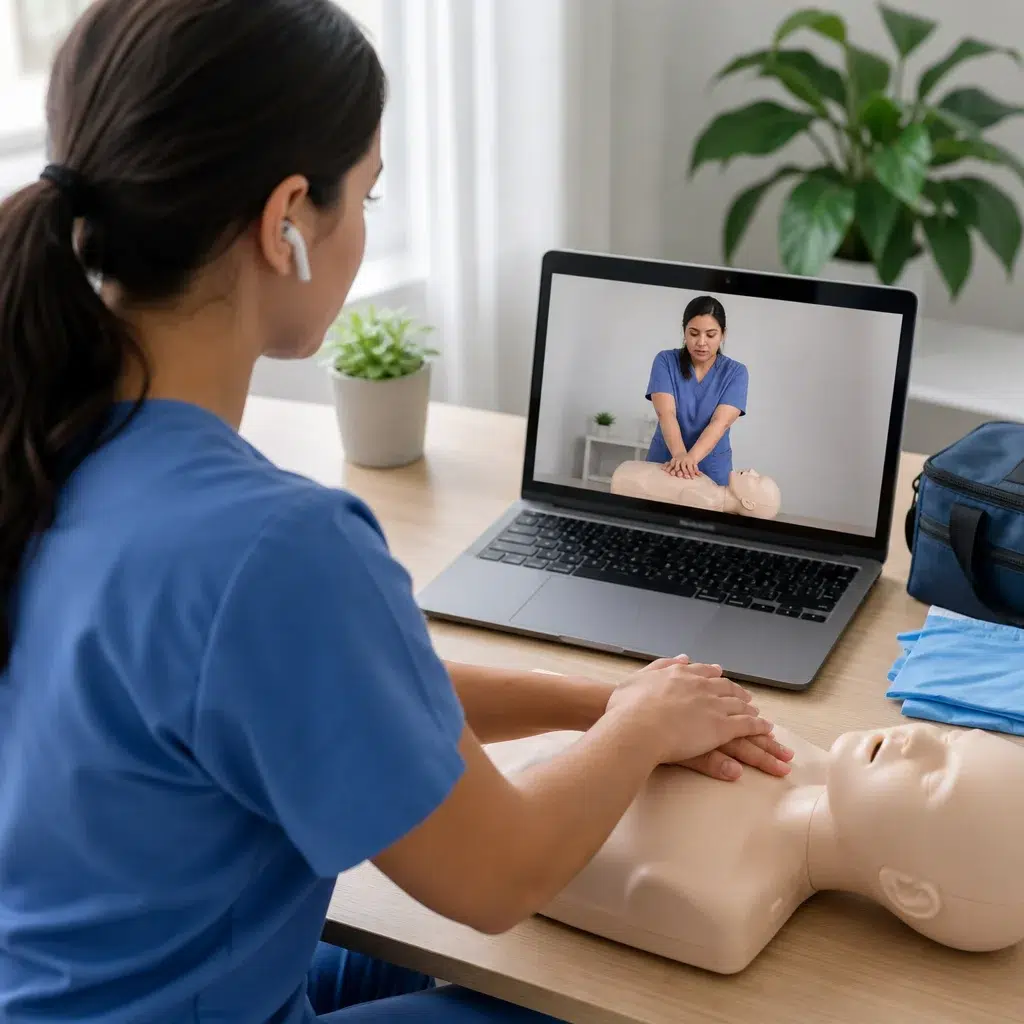
Blended learning combines self-paced online modules with in-person skills sessions, creating a model built for busy healthcare professionals. Instead of sitting through eight hours of classroom lectures, you complete theory and knowledge checks at home or between shifts, then focus your precious in-person time on the practical skills that matter most: chest compressions, airway management, IV techniques, and scenario-based decision-making.
This approach directly addresses EMS personnel needs. You retain information better when you study material on your own timeline, then immediately apply it under instructor guidance. Research shows that spaced learning and hands-on practice improve skill retention compared to traditional lecture formats. For emergency responders, that means higher-quality certifications and better patient outcomes.
Blended learning also respects your professional reality. You’re not losing a full workday; you’re investing focused hours where they count. The online component keeps costs lower because instructors spend less time lecturing theory and more time coaching real-world application. This efficiency benefits both your schedule and your wallet.
Our Comprehensive Blended Learning Approach for California EMS
We designed our blended programs specifically for EMS providers like you. Our curriculum aligns with AHA guidelines while integrating real-world emergency scenarios you’ll actually encounter. You complete online modules covering CPR, Basic Life Support (BLS), Advanced Cardiac Life Support (ACLS), and Pediatric Advanced Life Support (PALS) fundamentals at your own pace, with 24/7 access from any device.
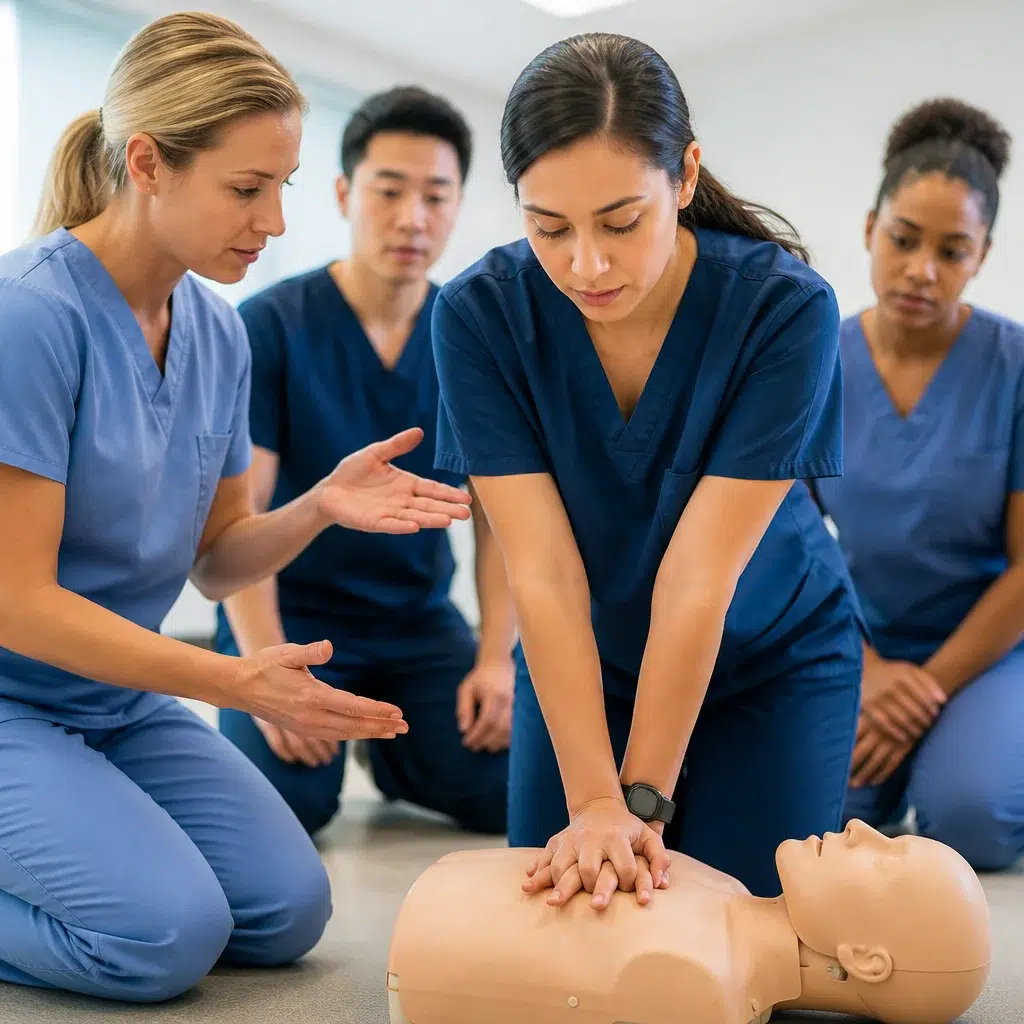
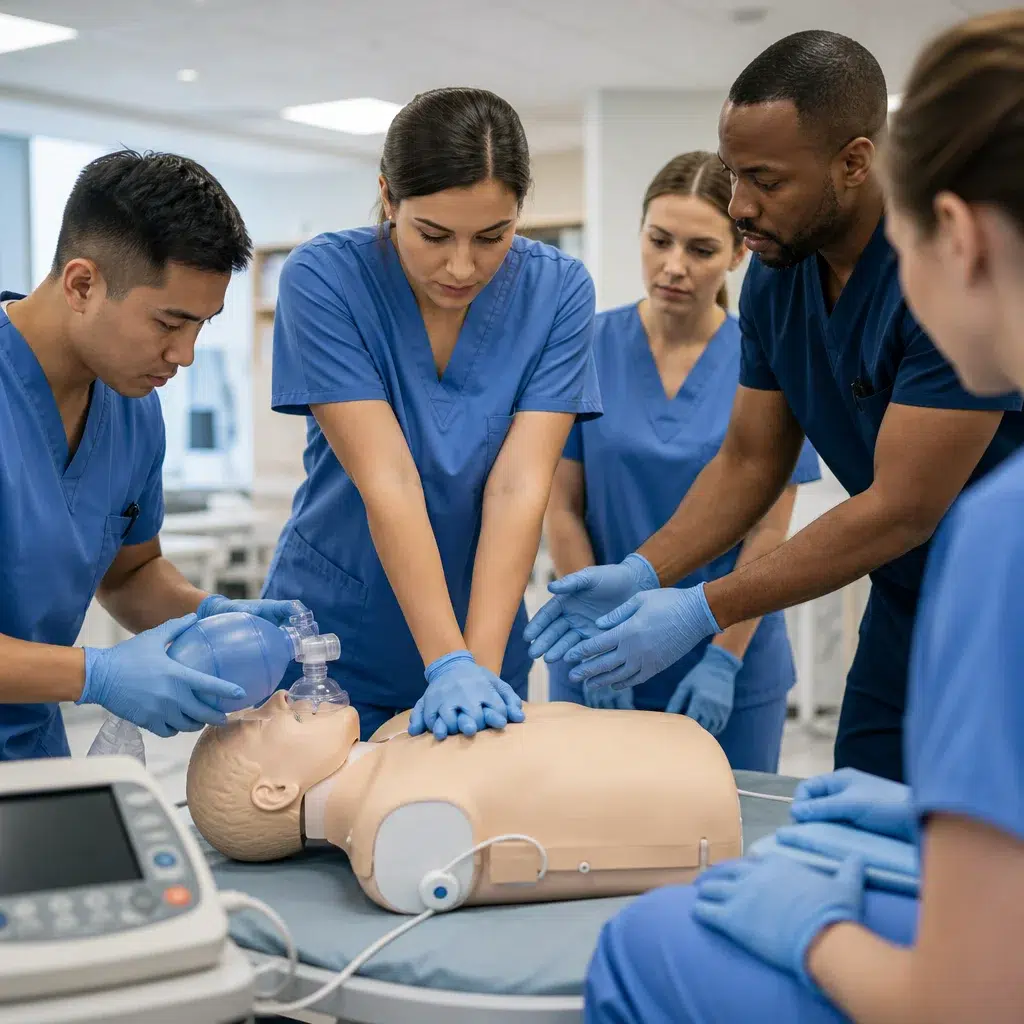
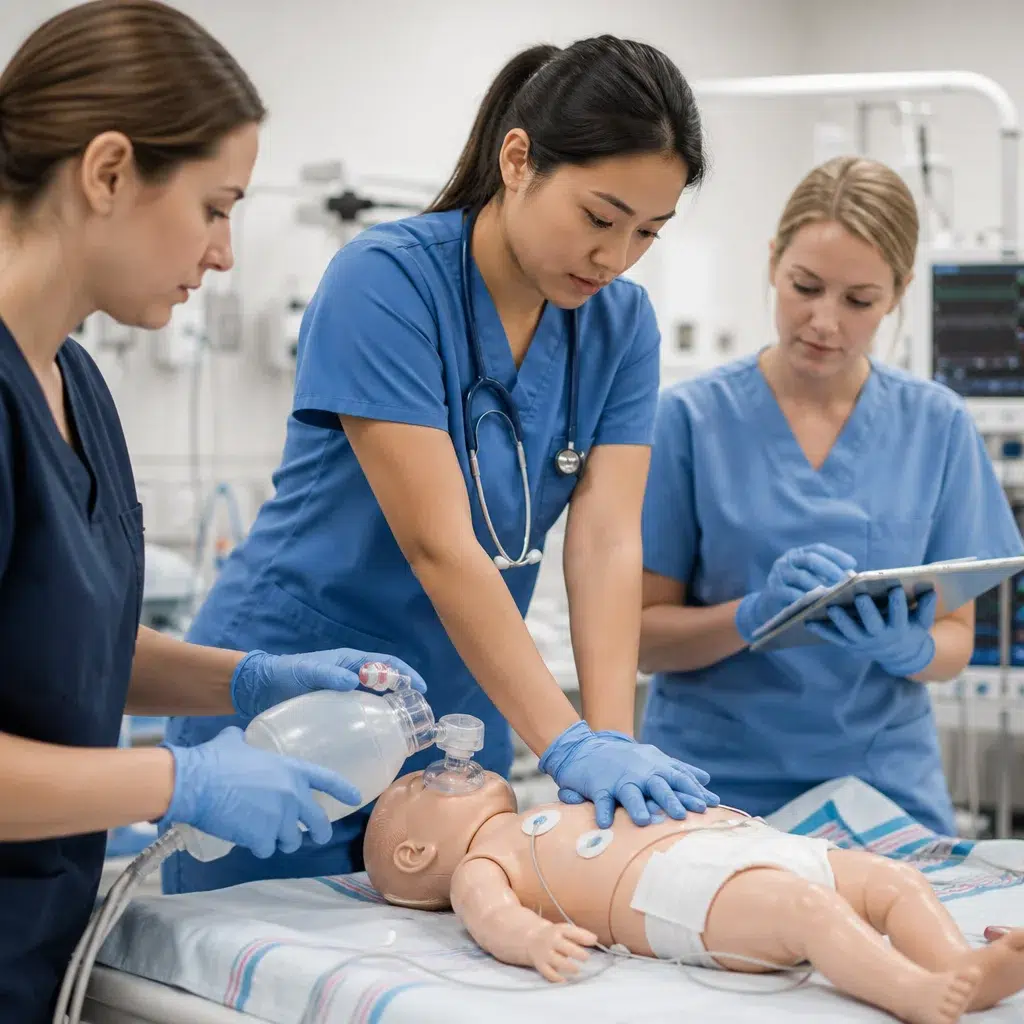
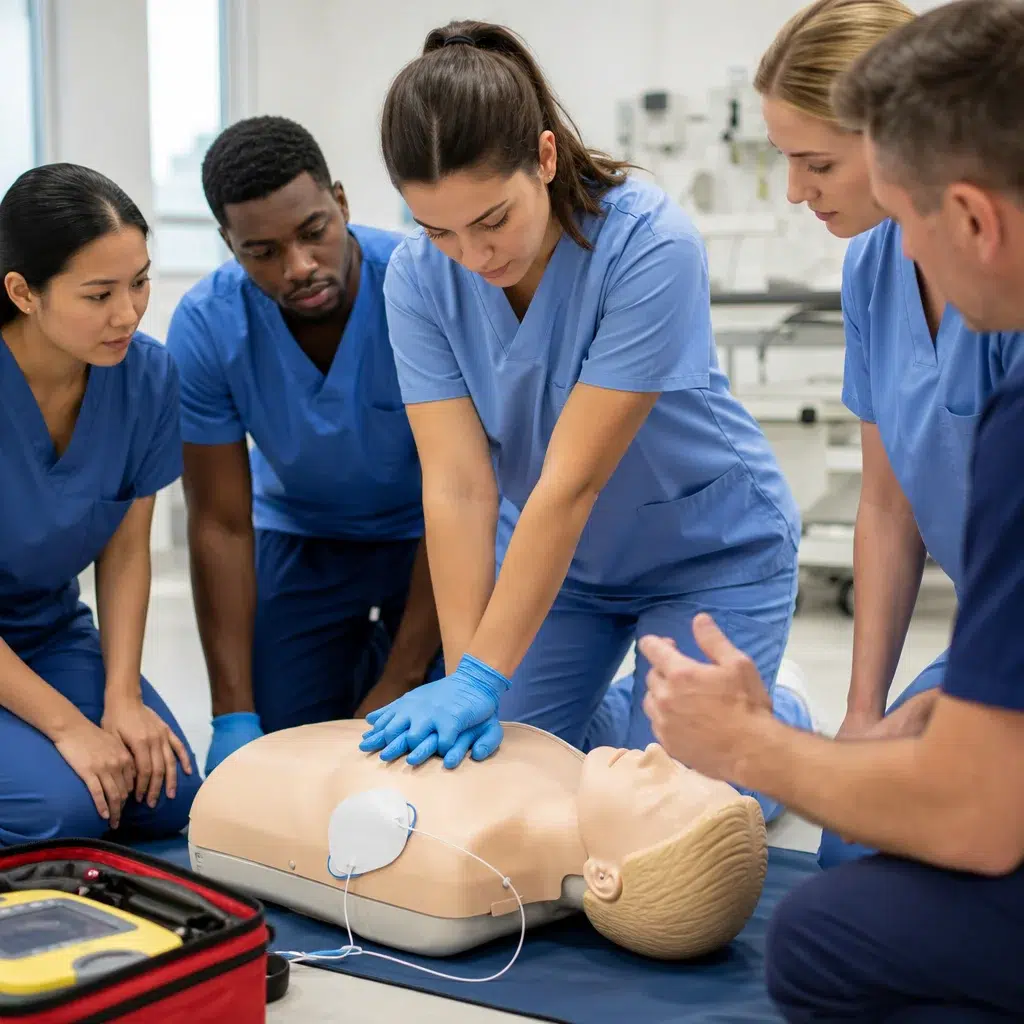
When you arrive for your skills session, our instructors focus entirely on hands-on practice. You’ll perform compressions on manikins, practice two-rescuer techniques, manage airways, and work through code scenarios with feedback that sharpens your decision-making. No wasted time. No lectures you’ve already watched online.
Our instructors are seasoned EMS professionals themselves. They’ve run calls. They understand the pressure you face and design scenarios reflecting real-world complexity. This isn’t theoretical training; it’s practical instruction from people who’ve been in your shoes. Whether you’re testing at a Sacramento location, Fresno, or Alameda, you’ll work with experienced, certified educators invested in your success.

Evening Skills Sessions: Hands-On Training After Your Shift
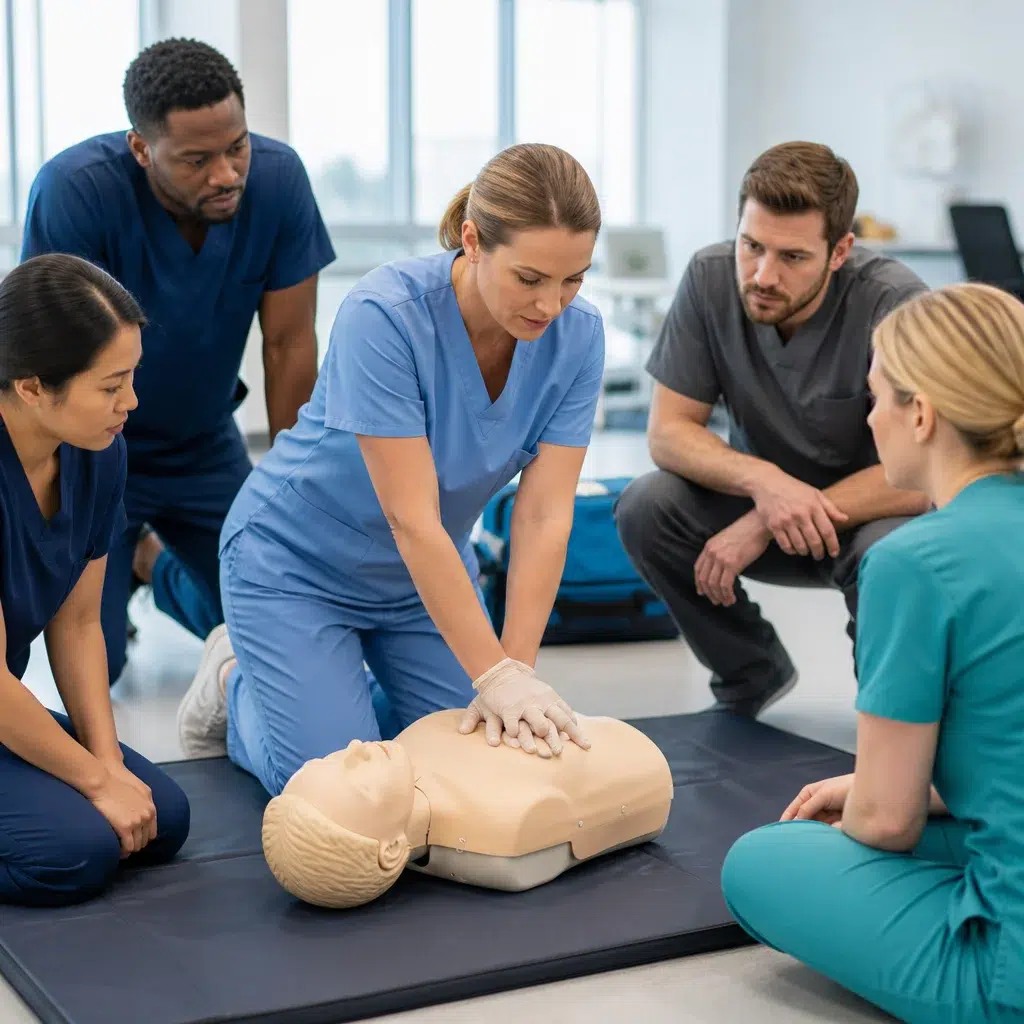
We offer evening skills sessions across our 100+ California locations, scheduled between 4 p.m. and 8 p.m., so you can complete your certification without taking unpaid time off. After completing your online modules, you attend a focused two to three-hour skills session where instructors evaluate your performance against AHA standards.
Evening sessions run daily at high-traffic centers including San Francisco (Mission Bay and Bayshore), Oakland (Lake Merritt and Fruitvale), San Jose (Downtown and Japantown), and Sacramento (Arden and Midtown). Smaller centers like Hayward, Pleasanton, and Modesto also maintain regular evening hours because we know your shift rotations don’t follow a 9-to-5 calendar.
Here’s what a typical evening session includes: arrival check-in, equipment review, hands-on BLS or ACLS skills evaluation, scenario-based practice, knowledge verification, and certification issuance. You’re finished in time to grab dinner, study for tomorrow’s shift, or spend time with your family. No multi-day conference center requirement. No waiting weeks for results.
Actionable tip: Schedule your evening session right after your online completion to keep skills fresh and momentum high.
Weekend Workshop Options: Complete Your Certification on Your Timeline
Some EMS professionals prefer to cluster their training into one weekend rather than split it across evening sessions. We offer comprehensive weekend workshops combining online review sessions with intensive skills practice on Saturday and Sunday mornings or afternoons.
Weekend options are available at most major California locations, including Fresno, Bakersfield, Davis, Santa Rosa (Downtown and Larkfield-Wikiup), and Stockton. These workshops run 8 a.m. to 1 p.m. or 1 p.m. to 6 p.m., giving you flexibility to design your own schedule. Some EMS professionals attend Saturday afternoon, others choose Sunday morning, and many use both days for ACLS and PALS certification in a single weekend.
Weekend workshops are ideal if you have a rotating schedule or prefer consolidating your training into one concentrated effort. You’ll still complete online modules ahead of time, but your contact hours happen compressed into a single or two-day block. Many EMS teams coordinate group workshops too, which qualifies you for our corporate group training rates.
Next step: Check our California locations page to confirm weekend workshop availability at your preferred center.
RQI Simulation Stations: Advanced Skills Practice Without Sacrificing Schedule
We’ve invested in RQI (Resuscitation Quality Improvement) simulation stations equipped with VAM (Voice Assisted Manikin) technology, allowing advanced skills practice beyond standard manikin training. VAM-enabled manikins provide real-time audio feedback on compression depth, hand position, and rate, helping you develop muscle memory and technique without requiring constant instructor intervention.
This technology is significant because it multiplies training capacity. Multiple EMS providers can practice simultaneously while manikins guide their performance. You get more repetitions, more corrections, and faster skill mastery in the same timeframe. For busy professionals, this means shorter skills sessions without compromising quality.
RQI stations are available at our larger California centers, including Oakland (Lake Merritt), San Francisco (Parnassus/UCSF and Mission Bay), and Sacramento (Rosemont and Midtown). These stations accelerate competency development, especially valuable if you’re pursuing multiple certifications like BLS and ACLS in close succession.
Same-Day Certification Cards: Immediate Job Compliance and Credentialing

Upon successful completion of your skills evaluation, you receive your AHA certification card immediately. No waiting for lab reports. No two-week processing delays. You walk out certified and ready to work the next shift.
This immediacy matters because your licensing and employment depend on current certifications. Many EMS agencies require documented proof before your next shift begins. Our same-day card issuance eliminates barriers to recertification and removes stress from the compliance process. You complete training in the evening, pass your evaluation, and hand your employer proof of current certification the following morning.
Digital copies are also available instantly for credential verification systems, so you can update employment records immediately even if you’re waiting for the physical card in mail.
How We Compare: Why Our Flexibility Outperforms Other Training Models
Traditional CPR certification classes often demand full-day commitments or multi-week course schedules that conflict with EMS shifts. Some programs still rely on lectures and passive learning, which lead to lower retention and weaker practical performance. Others charge premium fees because they operate from expensive standalone facilities without volume efficiency.
Our model differs fundamentally. Blended learning separates theory from practice, allowing you to study when it suits your brain and train hands-on when you’re alert and focused. We operate 100+ centers across California, which means lower overhead, higher efficiency, and savings passed directly to you. Our instructors are current EMS professionals, not outside educators reading from scripts.
Equally important, we maintain low prices not through discounts that require comparison shopping, but through a low-price guarantee we stand behind. If you find a lower price elsewhere, we’ll match it. You’re never paying premium rates for convenience and quality; you’re paying fair prices for a better model.
Location Convenience: 100+ California Centers Near You
Whether you’re working in rural Northern California or dense urban cores, we’ve positioned training centers to minimize your commute. EMS professionals in Redding, Chico, and Eureka have local access to evening and weekend training. So do providers in Los Angeles basin areas like Santa Clarita and specialists in Central Valley regions like Lathrop, Tracy, and Visalia.
Our California locations include specialized centers near major medical institutions and EMS hubs. If you’re a paramedic in San Francisco working out of Mission Bay, your nearest training center is likely within 10 minutes. Rural paramedics in Modesto or Danville have comparable access despite lower population density.
This geographic reach isn’t coincidence. We’ve invested in California comprehensively because we know EMS providers shouldn’t travel an hour to find evening training that fits their schedule. Regional access is foundational to our model.
Affordable Excellence: Our Low-Price Guarantee for EMS Training
EMS personnel typically earn reasonable salaries but often face continuing education costs they’re paying out-of-pocket. Your employer might cover some training, but recertification gaps sometimes fall to you. That’s why we built affordability into our core offering.
Our pricing is transparent and low. We don’t use confusing tier systems or hidden fees that appear at checkout. A BLS certification costs the same whether you take it in San Jose, Redwood City, or Rocklin. ACLS and PALS pricing is consistent across our network. No surprise charges. No upsell coaching during registration.
Our low-price guarantee means if you find identical certification training elsewhere for less, we’ll match that price. This guarantee removes the anxiety of shopping multiple providers. You can confidently choose us knowing you’re getting the best available rate.

Group training discounts are available for EMS agencies, hospital departments, and training academies. Many teams recertify together, which reduces per-person costs further while building team cohesion and ensuring collective competency updates.
Enrollment Guide: Getting Started with Your Flexible EMS Certification
Starting is straightforward. Select your certification type (BLS, ACLS, PALS, or combination), choose an evening or weekend session at your preferred California location, and complete registration online. You’ll immediately receive access to online modules.
Spend the next five to seven days completing theory, knowledge checks, and review materials at your own pace. Most EMS professionals finish modules faster because the content is focused and relevant to their experience level. When you’re ready, attend your scheduled skills session and take your evaluation.
From enrollment to certification card is typically 7-14 days of elapsed time but only 5-6 hours of your actual time investment. Compare that to traditional programs requiring two full days of classroom time plus admin delays, and the efficiency advantage is clear.
We’re women-owned, founded in 1989, and have built our reputation on reliable instruction and professional support. Your colleagues across California have chosen us because we respect your schedule and deliver certifications that matter. You’ll do the same because our model simply works better for EMS professionals managing real-world demands.
Start today by selecting your location and certification. Your next skills session could be this week.
Register for a class today.
Frequently Asked Questions (FAQ)
How do your blended learning programs fit around my EMS work schedule?
We offer evening skills sessions after your shift and weekend workshops so you can complete certification on your timeline. Our virtual components let you study whenever works best, then you come in for hands-on practice during times that don’t conflict with your job. We understand EMS professionals can’t always attend traditional daytime classes, so we’ve built flexibility directly into our courses.
Can I get my certification card the same day I finish training?
Yes, we issue same-day certification cards once you complete your course requirements. This means you can meet job compliance and credentialing deadlines immediately without waiting for processing. We have CPR verification stations at our locations to make this process quick and seamless.
What locations do you have available for training?
We operate over 100 training centers throughout California, including major hubs in San Francisco, Los Angeles, Sacramento, and San Diego areas. You can find a location convenient to your home or workplace, whether you’re in urban centers or surrounding communities. Check our website for the specific facility nearest you.