
Table of Contents
- Why AHA Certifications Matter for Your Practice Compliance
- Understanding Licensing Audit Requirements in California
- The Challenge of Managing Multiple Certifications Across Your Team
- Best Certification: BLS for Core Medical Staff
- Best Certification: ACLS for Acute Care Providers
- Best Certification: PALS for Pediatric Specialists
- Best Certification: NRP for Labor and Delivery Teams
- Best Certification: First Aid for Support Staff
- How We Simplify Multi-Location Certification Management
- Our Blended Learning Approach Ensures Team Readiness
- Why Our Same-Day Certification Cards Keep You Audit-Ready
- Why Safety Training Seminars is Your Definitive Compliance Partner
- Frequently Asked Questions (FAQ)
Why AHA Certifications Matter for Your Practice Compliance
AHA (American Heart Association) certifications form the backbone of medical practice credibility and legal compliance in California. These credentials demonstrate that your team possesses current, evidence-based knowledge in emergency response and patient care. When licensing boards conduct audits, they’re checking one thing first: do your staff hold valid AHA certifications aligned with their roles?
Without current AHA credentials, your practice faces serious exposure. Licensing violations can result in fines, staff suspension, or practice closure. More importantly, outdated or missing certifications create genuine patient safety gaps. Healthcare professionals who maintain AHA certifications stay sharp on the latest resuscitation protocols, medication administration during emergencies, and age-specific interventions that can mean the difference between patient recovery and tragedy.
We’ve helped hundreds of California medical practices maintain perfect compliance records by ensuring their teams stay certified year-round. Our AHA-aligned curriculum mirrors the exact standards licensing auditors expect, and our instructors keep pace with annual guideline updates from the American Heart Association itself.
Understanding Licensing Audit Requirements in California
California’s Medical Board and nursing licensing authorities conduct compliance audits on varying schedules, but they’re predictable in what they scrutinize. They verify that clinical staff hold current certifications matching their job descriptions. A registered nurse working acute care must hold BLS certification at minimum; critical care nurses need ACLS. Pediatric specialists require PALS. Labor and delivery nurses need Neonatal Resuscitation Program (NRP) certification.
The audit process typically begins with a request for staff credentials during a random inspection or as part of a renewal investigation. Auditors cross-reference your practice’s job descriptions against individual staff certifications. Gaps here generate immediate violations. Expired certifications count as non-compliance, even if expiration occurred by mere days.
California also mandates that your practice maintain documentation proving compliance. This means keeping physical or digital records of completion dates, card numbers, and instructor names for all team members. We track all this automatically in our system, so your practice has complete audit documentation ready on demand from locations across California, from Sacramento to San Francisco to San Jose.
The Challenge of Managing Multiple Certifications Across Your Team
Most medical practices employ staff with overlapping but distinct certification needs. Your front desk may need CPR only, while nurses require BLS, your acute care specialists need ACLS, and pediatric staff need PALS. Tracking renewal dates across 5, 10, or 50 team members becomes a logistical nightmare without proper systems.
Late renewals happen frequently because certification tracking falls through organizational cracks. Office managers juggle schedules across multiple staff roles and certifications expiring at different times throughout the year. One nurse’s ACLS expires in March, another’s in September, a third’s in June. Multiply this across a growing team, and you’re managing dozens of individual renewal timelines.
We solve this with centralized tracking that flags upcoming expirations before they happen. You receive automated reminders, and your staff can schedule renewals at any of our 100+ California locations, from Fresno to Oakland to Petaluma, fitting certifications around clinical schedules.
Best Certification: BLS for Core Medical Staff
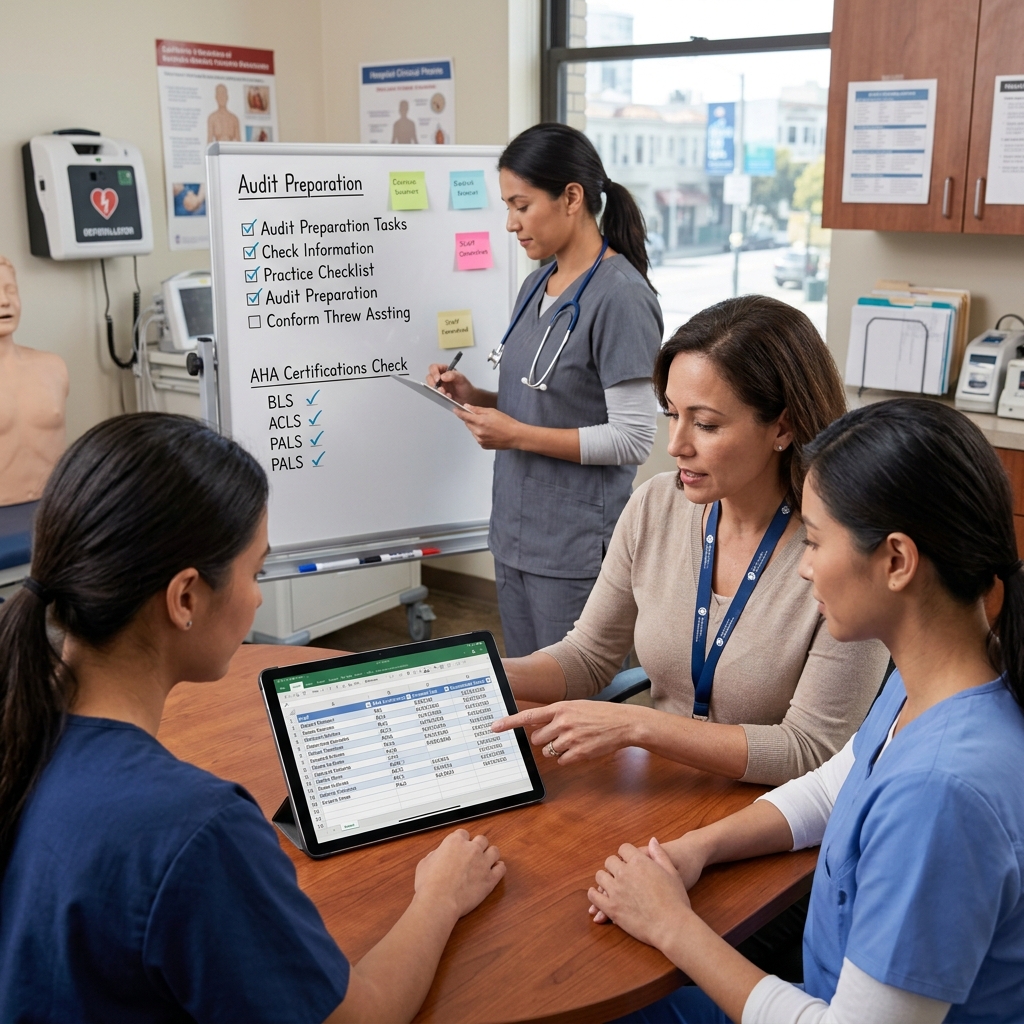
Basic Life Support (BLS) certification is the foundational credential every medical professional must hold. Nurses, dentists, paramedics, and emergency medical technicians all need valid BLS certification. California licensing requirements are unambiguous: clinical staff without current BLS cannot legally practice.
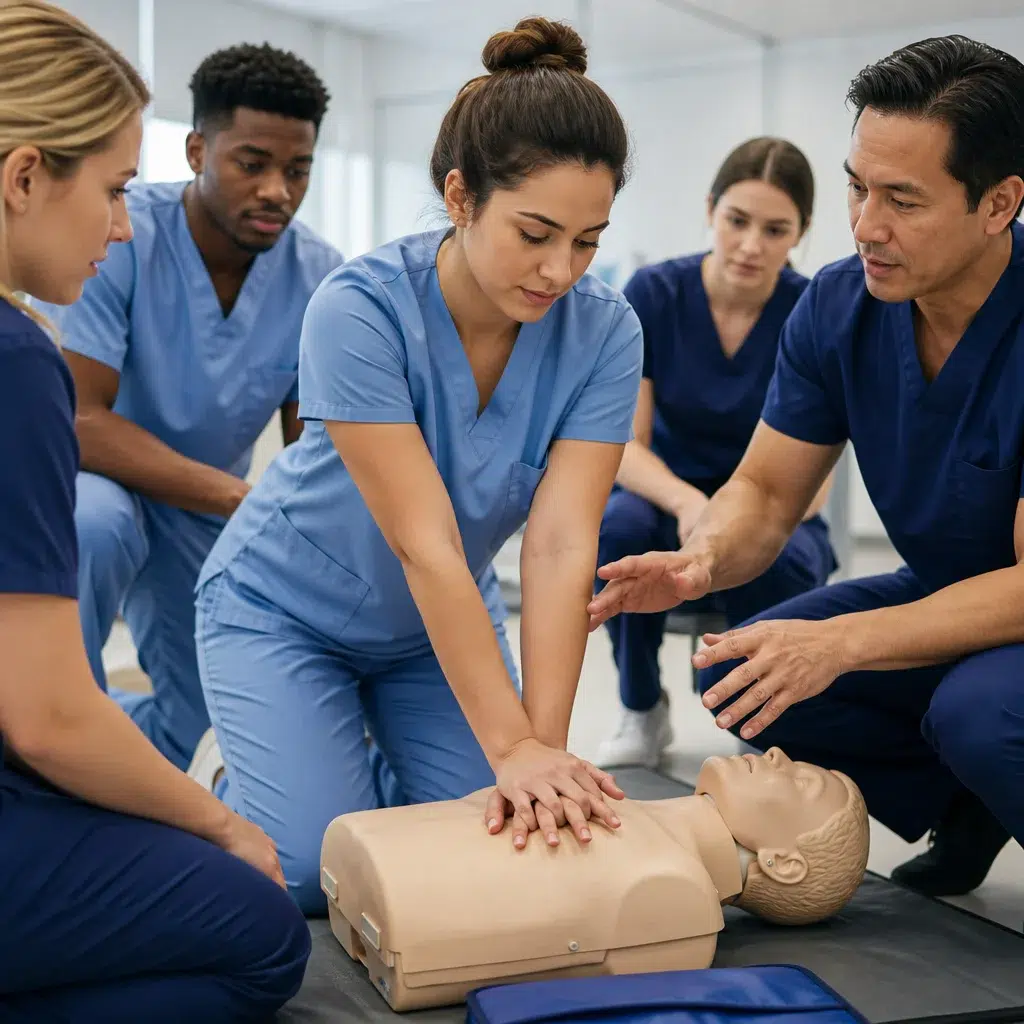
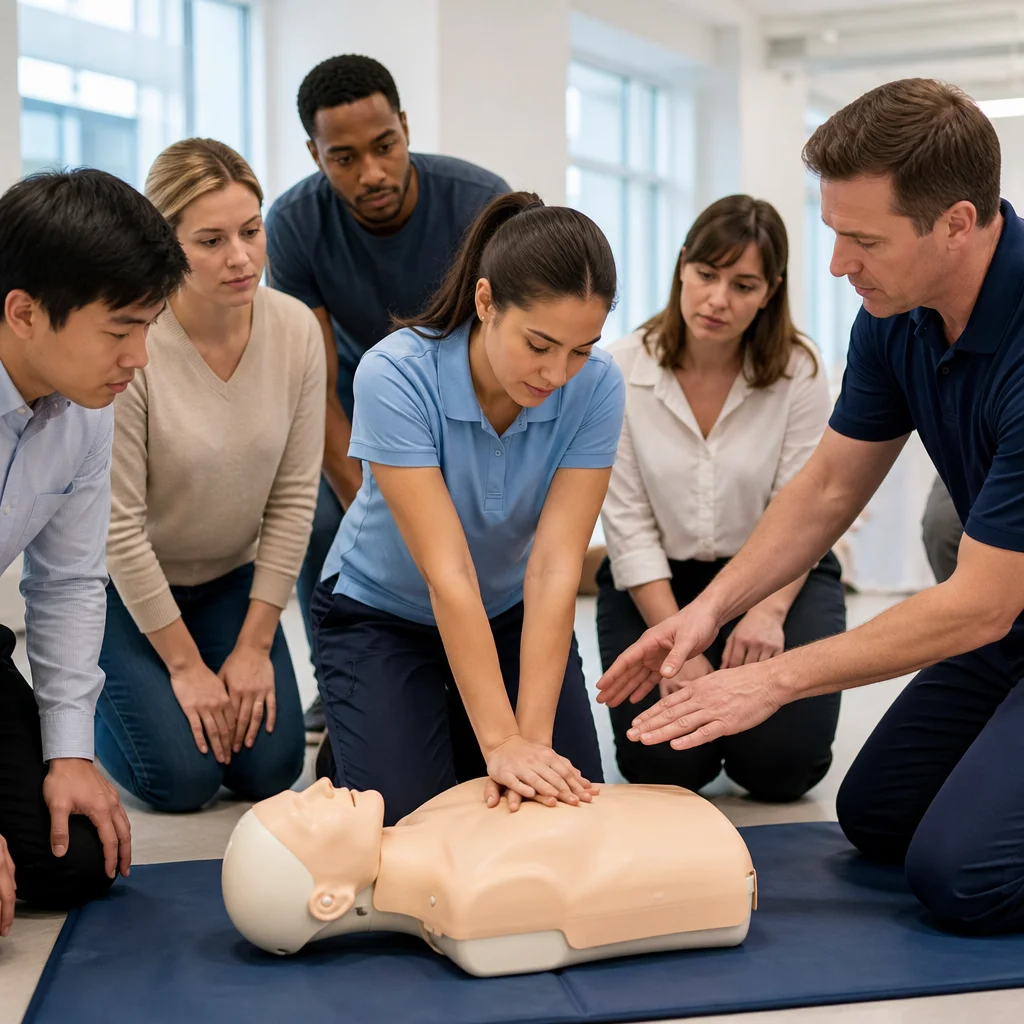
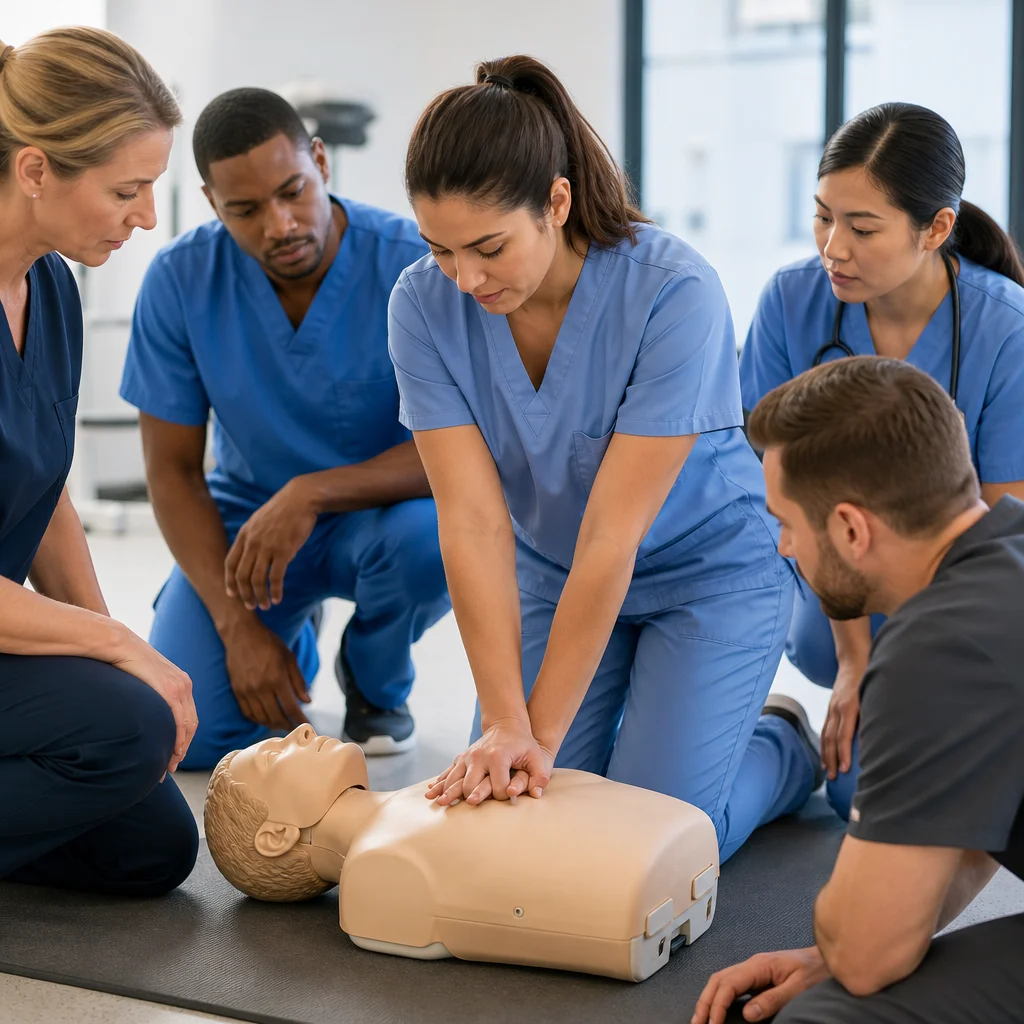
BLS teaches single and two-rescuer CPR, automated external defibrillator (AED) use, and relief of choking in adults, children, and infants. Our BLS, ACLS, PALS courses follow AHA guidelines precisely, with hands-on practice on high-fidelity manikins using our simulation stations featuring VAM (Virtual Augmented Mannequin) technology.
Your practice should prioritize BLS renewals first because it’s the universal requirement. We offer BLS certification daily across our California locations, including Alameda, Antioch, Berkeley, Bakersfield, and many others, ensuring no staff member misses a renewal deadline due to scheduling conflicts.
Best Certification: ACLS for Acute Care Providers
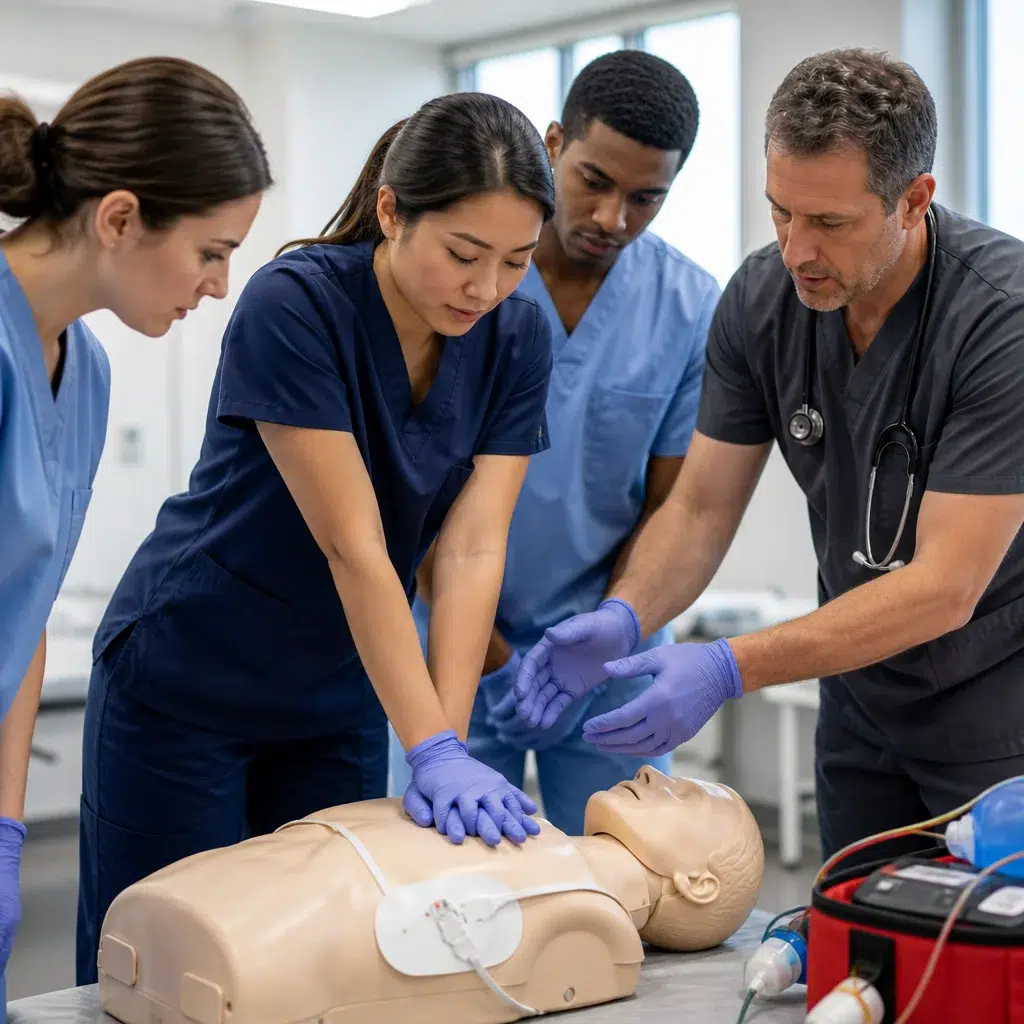
Advanced Cardiovascular Life Support (ACLS) certification is mandatory for nurses, physicians, and paramedics working in acute care, emergency departments, intensive care units, and cardiac care units. ACLS builds directly on BLS knowledge, adding pharmacology, rhythm interpretation, and post-resuscitation care protocols.
During licensing audits, auditors specifically verify that critical care nurses hold current ACLS credentials. An expired ACLS certification for acute care staff is treated as a serious compliance violation because it directly impacts emergency response capability.
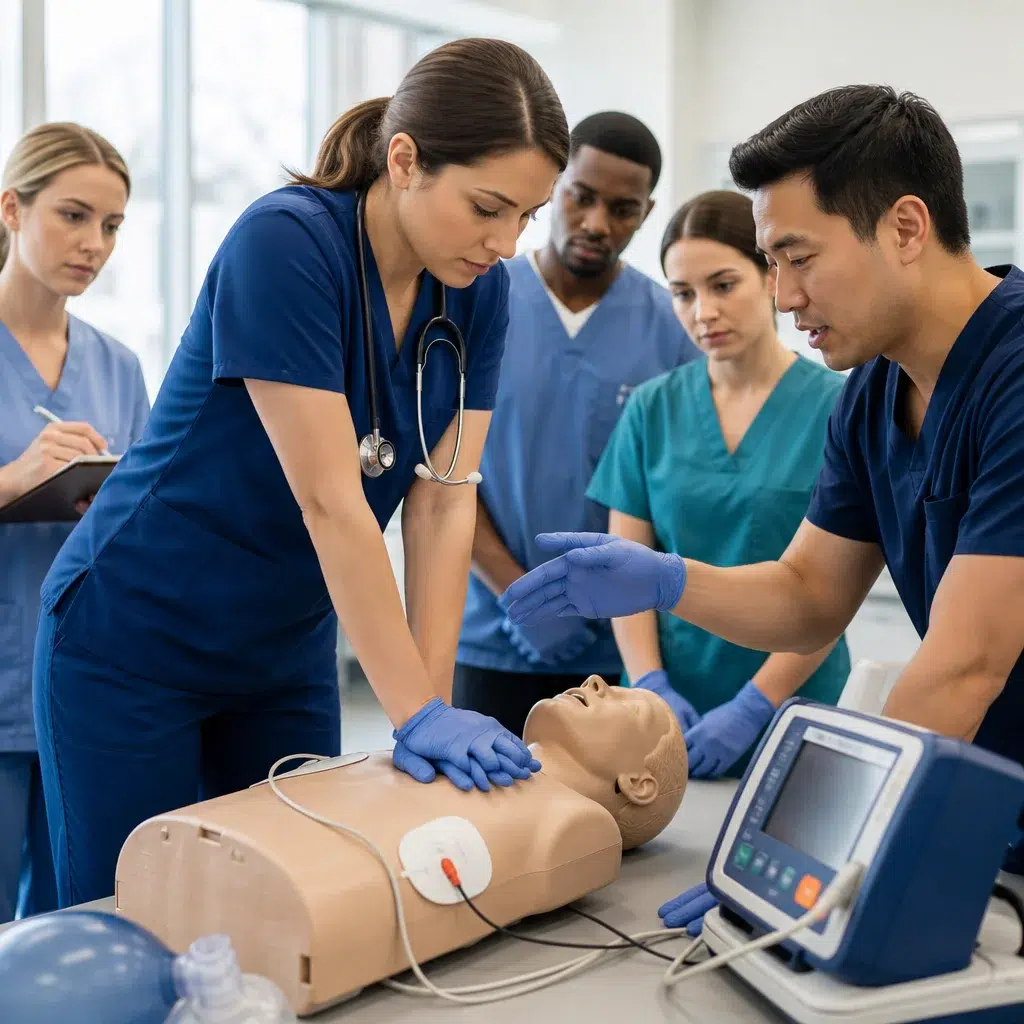
Our ACLS training covers the management of cardiac arrests, stroke protocols, sepsis recognition, and megacode scenarios that replicate real clinical emergencies. Instructors walk your team through decision trees for medication administration, defibrillation timing, and when to activate cardiac teams. We deliver ACLS courses throughout California, from Sacramento to San Francisco, with flexible scheduling that works around shift rotations.
Best Certification: PALS for Pediatric Specialists
Pediatric Advanced Life Support (PALS) certification is required for any healthcare professional who provides emergency care to pediatric patients. Pediatricians, pediatric nurses, emergency department staff treating children, and hospital staff in mixed-age settings all need PALS.
PALS differs significantly from adult-focused certifications because pediatric physiology, medication dosing, and intervention algorithms are age-specific. A child’s airway anatomy, cardiovascular response to arrest, and appropriate defibrillator energy levels require specialized knowledge. Licensing boards verify that pediatric staff possess this pediatric-specific training through valid PALS credentials.
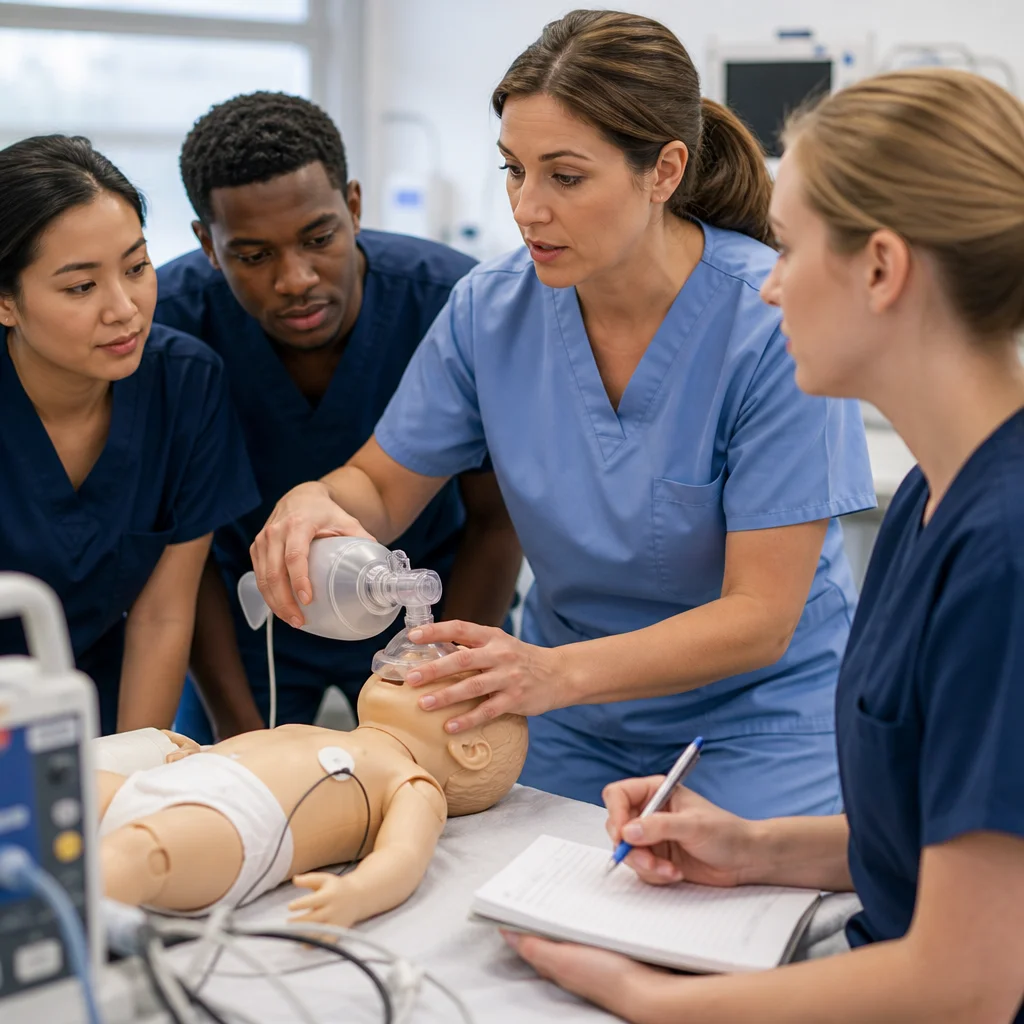
Our PALS certification courses emphasize pediatric rhythm recognition, systematic assessment for shock and hypoxemia, and family-centered communication during critical moments. We conduct PALS training at locations convenient to pediatric centers and children’s hospitals throughout California, from San Jose to Fremont to Oakland.
Best Certification: NRP for Labor and Delivery Teams
Neonatal Resuscitation Program (NRP) certification is essential for labor and delivery nurses, midwives, neonatologists, and obstetric staff who manage newborn emergencies immediately after birth. California licensing requirements mandate NRP for any staff member present during delivery and responsible for initial neonatal assessment or resuscitation.
Neonatal resuscitation follows different algorithms than pediatric or adult resuscitation. Birth physiology, cord clamping timing, initial breaths, and temperature management all require specialized protocols. An untrained attendant during a newborn emergency can cause preventable harm. Auditors verify NRP credentials as a critical compliance marker for obstetric and neonatal units.
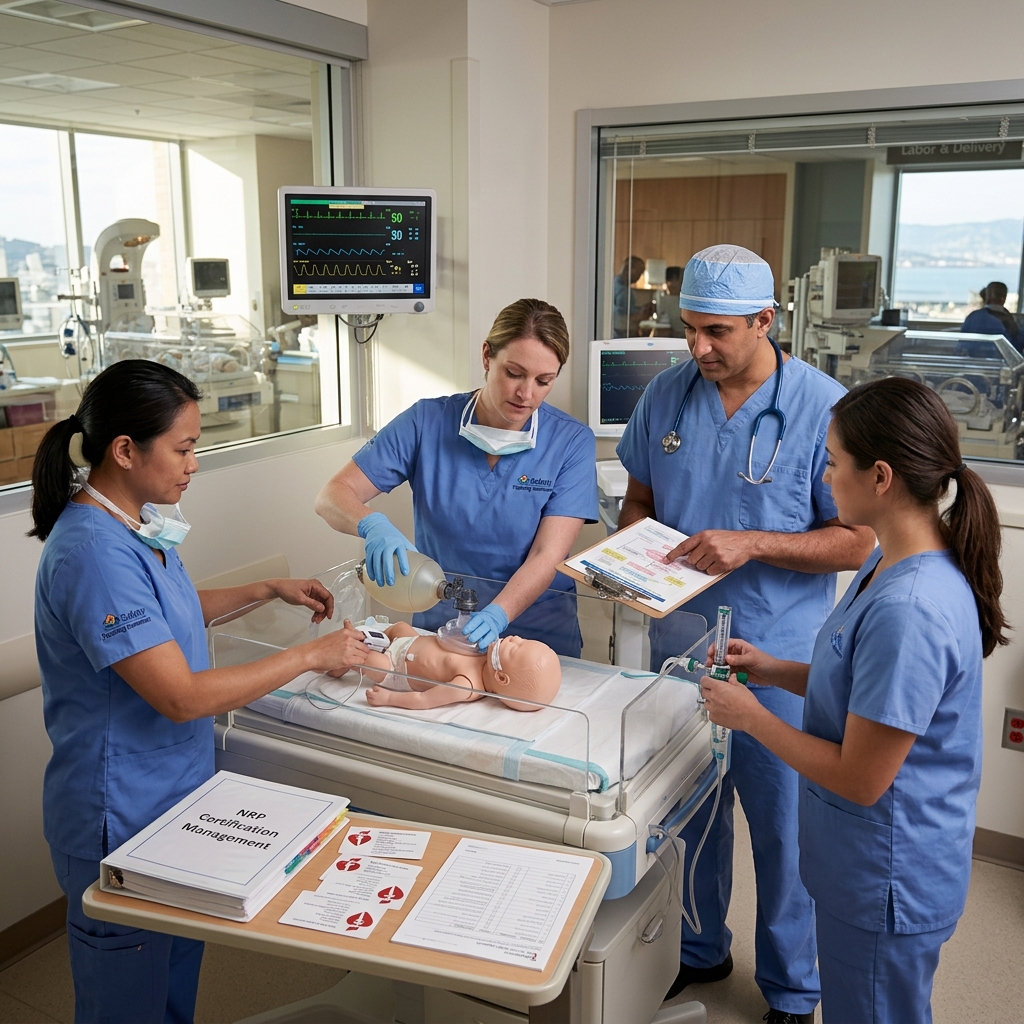
Our NRP program teaches the entire resuscitation sequence from initial assessment through stabilization, with emphasis on teamwork and communication in high-stress birth environments. We maintain NRP programs at our locations near major obstetric centers across California, from Sacramento Midtown to San Francisco Mission Bay to San Jose.
Best Certification: First Aid for Support Staff
First Aid certification is often overlooked in compliance planning but matters for non-clinical staff who may encounter medical emergencies. Receptionists, medical assistants, administrative staff, and facility managers should hold First Aid certification to safely provide basic care until paramedics arrive.
While California licensing requirements don’t mandate First Aid for all practice staff, many practices require it as a condition of employment. First Aid training also demonstrates due diligence during liability investigations. If an employee failed to provide basic care during an emergency, your practice documentation showing mandatory First Aid training protects you legally.
Our First Aid courses teach wound care, severe bleeding control, shock recognition, and when to call emergency services. We offer First Aid at convenient locations throughout California, making it easy to include administrative and support teams in your compliance program.
How We Simplify Multi-Location Certification Management
Managing certifications across multiple practice locations multiplies complexity. If your team spans locations from Walnut Creek to San Mateo to Santa Rosa, coordinating training becomes nearly impossible without centralized systems.
We operate over 100 training locations throughout California, so your staff can complete certifications near their actual workplace. A nurse working in Pleasant Hill can train in Pleasant Hill. Another staff member at your San Rafael office attends class in San Rafael. This eliminates travel time, improves attendance, and keeps your compliance program on schedule.
Our enrollment system tracks every staff member’s certifications across all your practice locations in one dashboard. You see at a glance who needs renewal, when expirations occur, and which locations offer upcoming classes. This unified view prevents the gaps that trigger audit failures.
Our Blended Learning Approach Ensures Team Readiness
We combine virtual learning with in-person skills sessions through our blended learning model. Your staff completes knowledge modules online at their own pace, then attends a focused in-person session at one of our California locations to practice hands-on skills and take the written exam.
This approach works better than either method alone. Online modules allow flexibility around clinical schedules. In-person practice ensures competency on actual manikins and equipment. Your team gains both knowledge and muscle memory, which matters when they’re applying CPR or managing a real cardiac arrest under pressure.
We schedule in-person skills sessions regularly at locations from Davis to Visalia to Hayward, so your staff never faces a long wait between completing online work and practicing live scenarios.
Why Our Same-Day Certification Cards Keep You Audit-Ready
Many training providers mail certification cards weeks after completion. Your staff finishes class on Friday and waits three weeks for their card to arrive. If an audit happens during that gap, you’re technically non-compliant even though your team was trained.
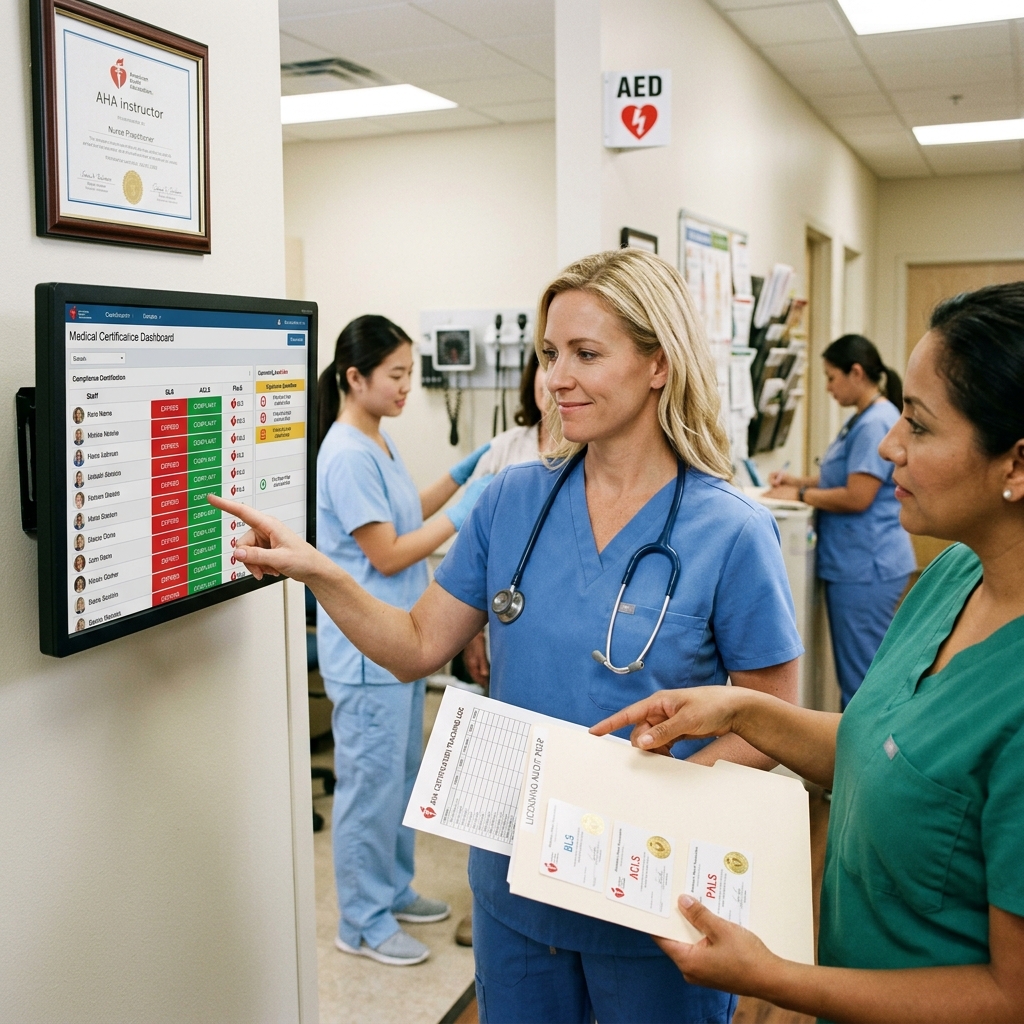
We issue same-day certification cards immediately after successful completion. Your nurse finishes the ACLS megacode on Tuesday afternoon and walks out with a valid AHA card in hand. This means your practice is audit-ready the moment the course ends, with no waiting period or compliance gaps.
Same-day cards also reduce staff anxiety. Nurses no longer worry about whether their renewal was “processed” yet. They hold physical evidence of current certification before leaving class, which is especially critical for staff working in high-turnover environments or those with flexible schedules.
Why Safety Training Seminars is Your Definitive Compliance Partner
We’ve trained healthcare professionals for over 35 years, earning the trust of hospitals, clinics, and medical practices throughout California. Our instructors are active clinical staff who understand your workplace pressures firsthand. We’re a woman-owned training center committed to exceptional customer support and consistent quality.
Our low-price guarantee ensures you’re never overpaying for AHA certifications. We match any competitor’s pricing and often undercut it. Combined with our 100+ California locations, flexible blended learning, and same-day certification cards, we deliver unmatched value.
We don’t just issue credentials; we build sustainable compliance systems. Our practice dashboard, automated renewal reminders, and centralized documentation mean your team stays current without administrative burden. You focus on patient care while we ensure your practice passes every audit with zero gaps.
When licensing auditors review your staff certifications, they’ll find current, valid credentials issued by an AHA-recognized provider with complete documentation. That’s the compliance foundation every practice needs. Schedule your team’s certifications with us today at a location near you, from Redding to San Diego, and transform compliance from a stressful burden into a managed process you can rely on.
Register for a class today.
Frequently Asked Questions (FAQ)
What AHA certifications do we recommend for different healthcare roles?
We recommend BLS for all core medical staff as a foundation, ACLS for providers in acute care settings, PALS for those working with pediatric patients, and NRP for labor and delivery teams. First Aid certification works well for support staff who may encounter emergency situations. The specific combination depends on your job duties and your employer’s compliance requirements.
How does our blended learning format help us stay current with certifications?
Our blended approach combines virtual instruction with in-person skills sessions, so we can learn the theory on our own schedule and practice hands-on techniques with our instructors. This means we can maintain our certifications without excessive time away from patient care, and we retain the critical skills that licensing audits verify.
Can we manage certifications for multiple staff members across different locations?
Yes, we handle this through our network of over 100 training locations throughout California and daily BLS certification courses. We can schedule different team members at convenient locations near their work, track everyone’s credential status, and ensure your entire practice stays audit-ready without coordinating across multiple training providers.