Table of Contents
- 1. Choose a Training Provider with Multiple California Locations for Maximum Convenience
- 2. Verify Your Provider Offers Blended Learning Options for Flexible Scheduling
- 3. Look for AHA-Aligned Curriculum and Guaranteed Same-Day Certification Cards
- 4. Compare Pricing and Confirm Your Provider Offers a Low Price Guarantee
- 5. Select a Center with RQI Simulation Stations and VAM Technology
- 6. Ensure Your Provider Offers Both Virtual and In-Person Skills Sessions
- 7. Find a Training Center with Proven Experience Serving Healthcare Professionals
- Frequently Asked Questions (FAQ)
1. Choose a Training Provider with Multiple California Locations for Maximum Convenience
Your time is valuable. Commuting across town for training wastes hours you could spend with patients, family, or rest. Look for a provider that operates across California’s major healthcare hubs and smaller communities alike.
We maintain over 100 training locations throughout California, from the Bay Area through Sacramento, down to Fresno and Bakersfield. This means whether you work in Oakland, Concord, or San Ramon, you’ll find a class close to your workplace or home. No 90-minute drive to reach an ACLS course.
The logistics matter more than people realize. A provider with limited locations forces you to choose between inconvenient timing and impossible geography. When your certification expires on a specific date and the nearest option is 45 miles away, that convenience factor becomes critical to actually getting recertified on time.
What to do next: Search for providers with centers in multiple areas near where you live or work. Check whether they’re truly distributed across Northern and Southern California, not clustered in just one region.
2. Verify Your Provider Offers Blended Learning Options for Flexible Scheduling
Full-time nurses often can’t block out a solid eight-hour day for in-person training. EMS personnel work shifts that don’t align with standard business hours. Dentists juggle patient schedules alongside their own continuing education requirements.
Blended learning solves this problem by splitting your course into virtual theory sessions (where you learn algorithms, recognizing rhythms, and decision-making) and separate in-person skills sessions (where you practice chest compressions, defibrillation, and medication administration under instructor supervision). You complete the knowledge portion on your timeline, then attend a focused hands-on component when it works for you.
We offer blended learning in California with virtual modules you can finish during evenings or between shifts, followed by brief, intensive skills days. Some professionals complete their virtual portion over a Tuesday and Wednesday night, then attend Saturday morning skills training. Others space it across two weeks. The flexibility means you’re not forced to choose between your job and your certification.
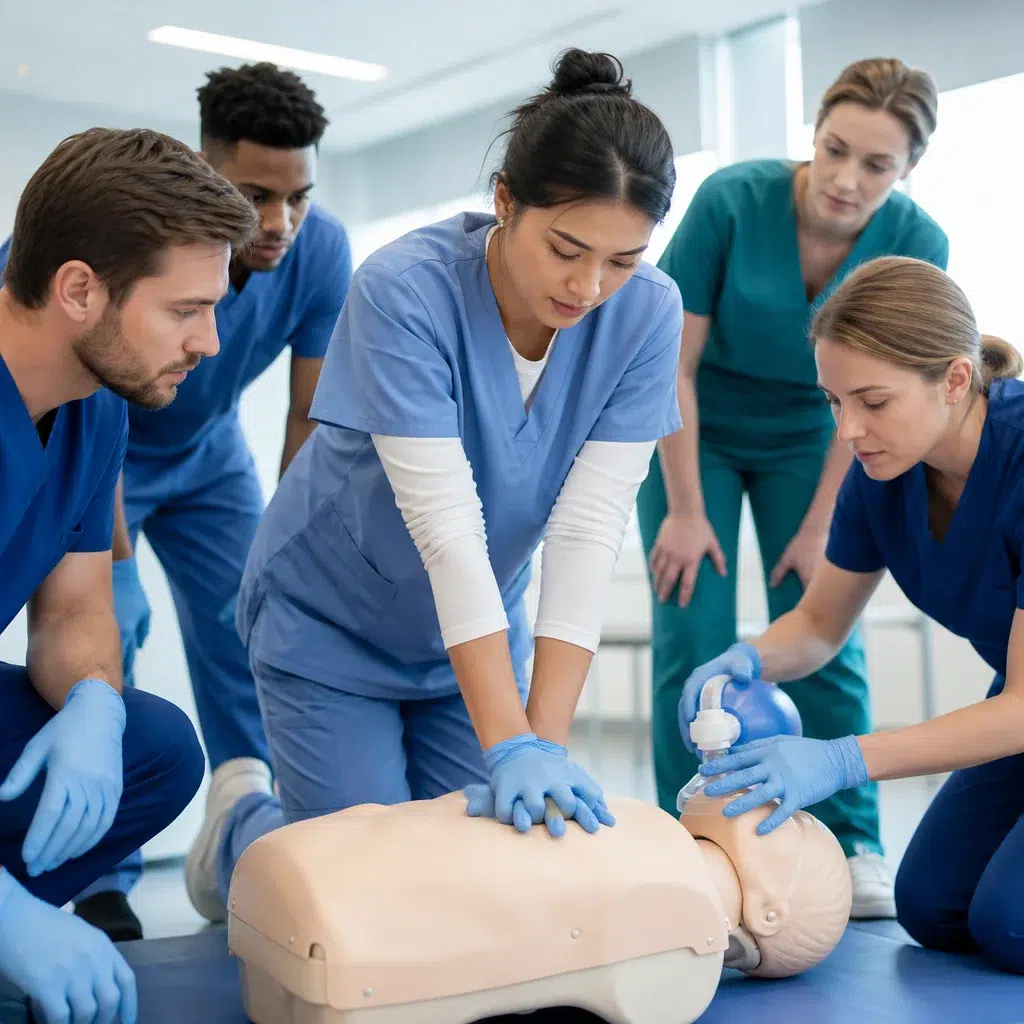
This model also works exceptionally well for professionals in smaller communities like Woodland, Tracy, or Visalia who might otherwise drive to Sacramento or Fresno just for a standard course.
What to do next: Ask prospective providers whether they offer blended formats with independently scheduled virtual and in-person components. Confirm you can complete theory sections at your own pace.
3. Look for AHA-Aligned Curriculum and Guaranteed Same-Day Certification Cards
Your employer and state licensing board expect ACLS training that follows current American Heart Association (AHA) guidelines and protocols. Non-aligned courses won’t count toward your professional requirements, no matter how thorough they seem.
Beyond curriculum alignment, insist on same-day certification. When you pass your final assessment, you should walk out with your official certification card in hand, not wait weeks for mail delivery or digital processing. This matters when your license renewal deadline is approaching or when a new job requires proof immediately.
We deliver curriculum aligned to current AHA standards and issue certification cards on the day you complete and pass your course. You’re not dependent on postal delays or administrative backlogs. This certainty eliminates last-minute panic when licensing deadlines loom.
What to do next: Verify that any provider you consider explicitly guarantees AHA-aligned content and same-day card issuance. Ask what happens if you need a replacement card quickly.
4. Compare Pricing and Confirm Your Provider Offers a Low Price Guarantee
ACLS certification costs vary widely across California. Some providers charge premium rates, betting that convenience or reputation will override budget concerns. Others use artificially low introductory pricing, then add fees during checkout.
We offer a low price guarantee on all ACLS certification classes. If you find a lower advertised rate elsewhere in California for an equivalent blended or in-person course, we’ll match it. This transparency means you’re not hunting through fine print or discovering surprise registration fees.
Pricing comparison becomes simpler when you’re evaluating providers in multiple areas. A course in Sacramento, Palo Alto, and Fresno should reflect similar base costs; if one region is dramatically cheaper, ask why. Often it signals lower instructor experience or skipped skills stations.
What to do next: Get firm pricing quotes from at least two providers. Ask about all-inclusive costs, including any administrative, material, or card fees. Confirm whether the price varies by location.
5. Select a Center with RQI Simulation Stations and VAM Technology
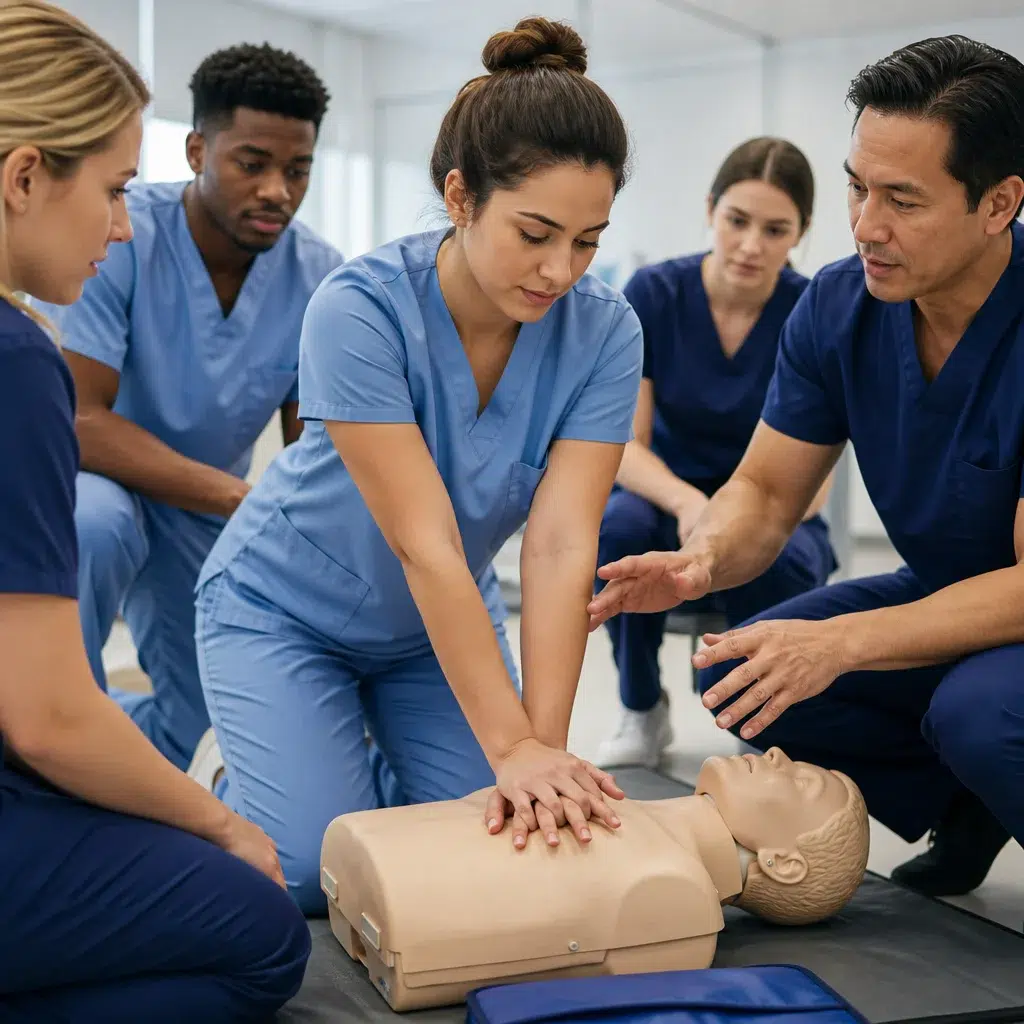
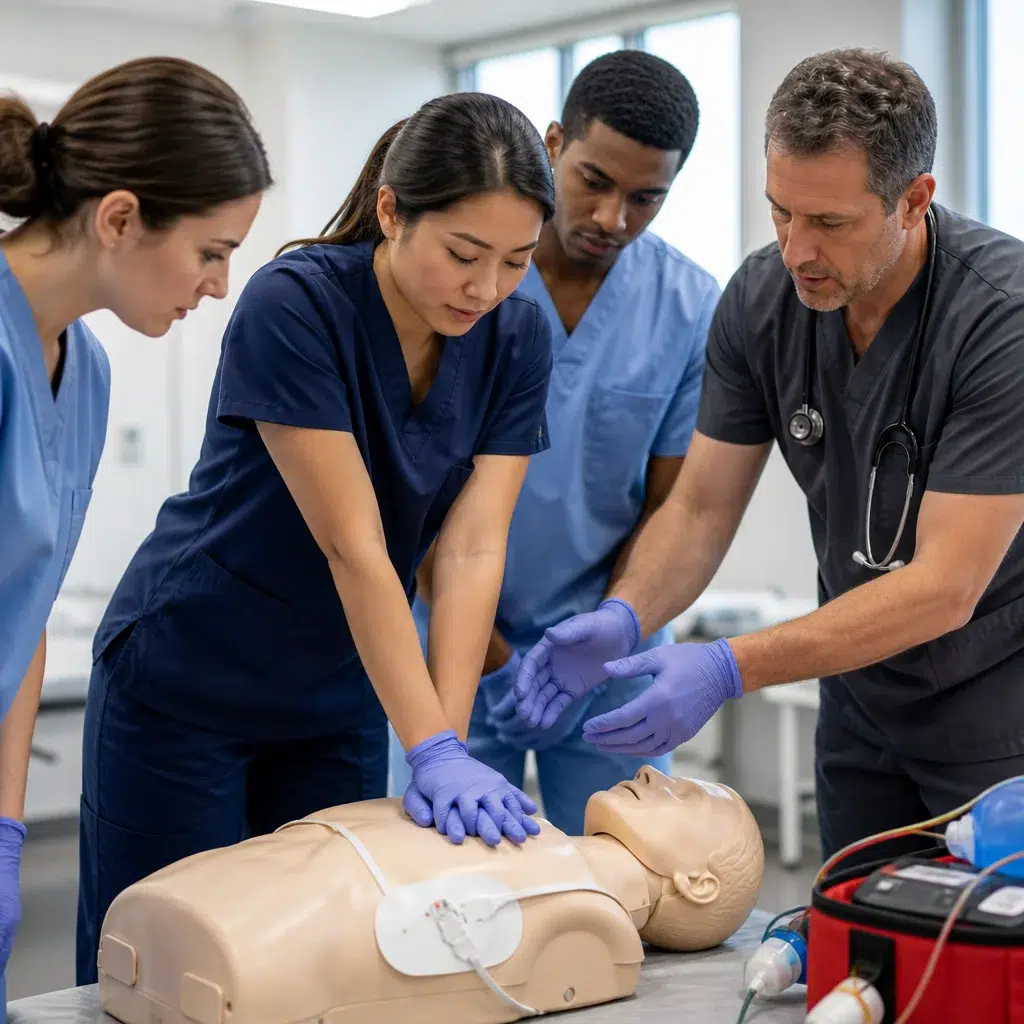
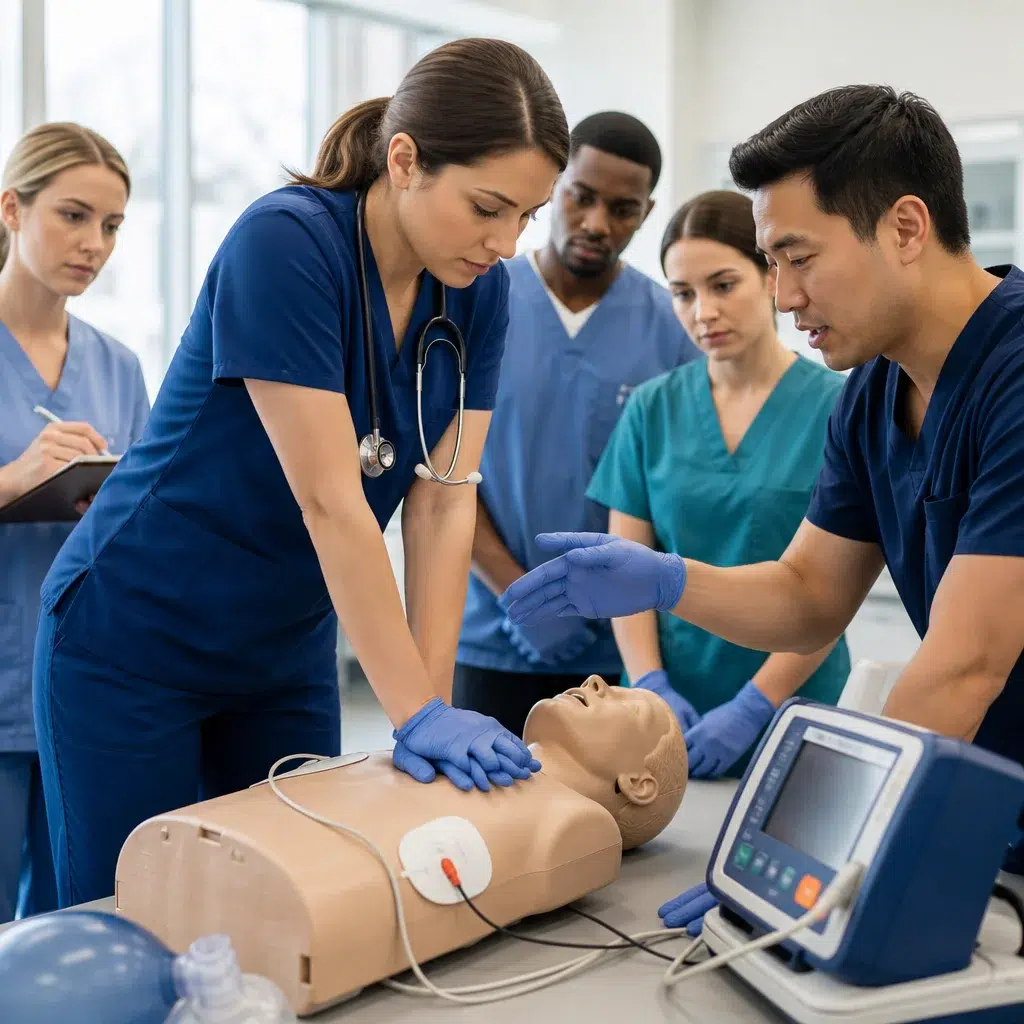
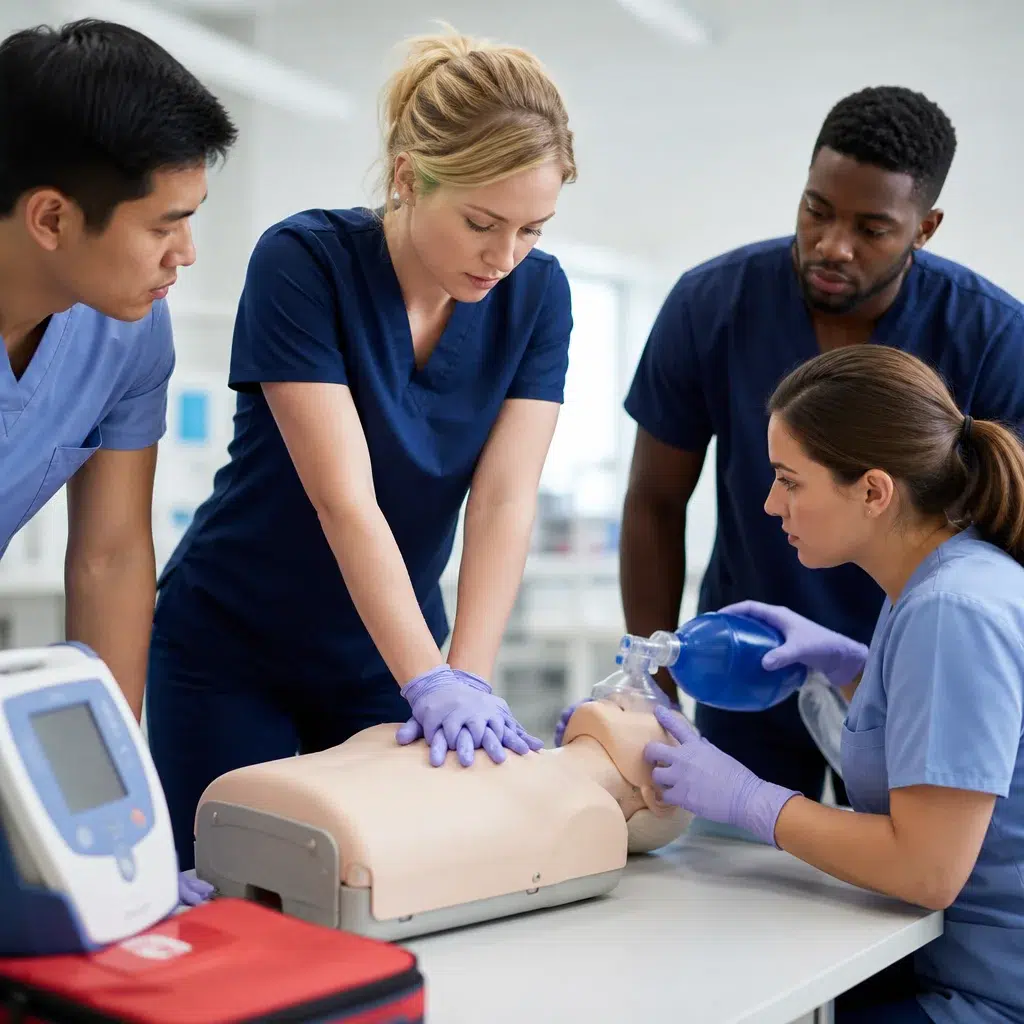
Quality hands-on training depends on realistic practice equipment. CPR manikins with real-time feedback (like CPR rate and compression depth sensing) show you whether you’re achieving the recommended 100-120 compressions per minute with adequate force. Defibrillator simulation machines let you practice electrode placement and device operation without waiting for a live trainer to reset equipment between students.
We equip our centers with RQI (Resuscitation Quality Improvement) simulation stations and VAM (Video-Assisted Manikin) technology that provides immediate, detailed feedback on your technique. When your compressions are too shallow or your rhythm analysis hesitant, the equipment tells you in real time, letting your instructor coach you to mastery before the formal assessment.
This technology-enhanced practice is what separates adequate training from excellent training. Centers in Berkeley, San Jose, Oakland, and across Sacramento with advanced equipment create dramatically better learning outcomes than those relying on basic manikins and instructor observation alone.
What to do next: Ask your provider whether their skills stations include real-time CPR feedback manikins and whether they use simulation technology during practice scenarios.
6. Ensure Your Provider Offers Both Virtual and In-Person Skills Sessions
The most flexible approach combines truly virtual theory content with flexible in-person skills sessions available at multiple times throughout the week.
Some providers claim “flexible scheduling” but only offer in-person courses that run 7 a.m. or 6 p.m. on fixed days. If those days don’t align with your shift schedule, flexibility disappears. True flexibility means virtual theory completed on your timeline and skills sessions offered morning, afternoon, evening, and weekend options.
We schedule skills sessions throughout the day and week across our 100+ California locations. You might complete your virtual modules on a Tuesday and Wednesday, then choose from a Saturday morning skills session in San Francisco, an evening session in Sacramento on Thursday, or a Monday afternoon slot in Fremont. This genuinely accommodates the varied schedules of nurses working 12-hour shifts, paramedics on rotating schedules, and dental professionals managing patient calendars.
What to do next: When you contact a provider, specifically ask what days and times skills sessions are available at your nearest location. Confirm they run evening and weekend options, not just standard business hours.
7. Find a Training Center with Proven Experience Serving Healthcare Professionals
Not all ACLS instructors have equal experience. A provider that trains office workers and the general public occasionally differs significantly from one deeply embedded in healthcare professional communities. Healthcare instructors understand your terminology, the clinical contexts where ACLS matters, and the specific scenarios EMS, nursing, and dental professionals face.
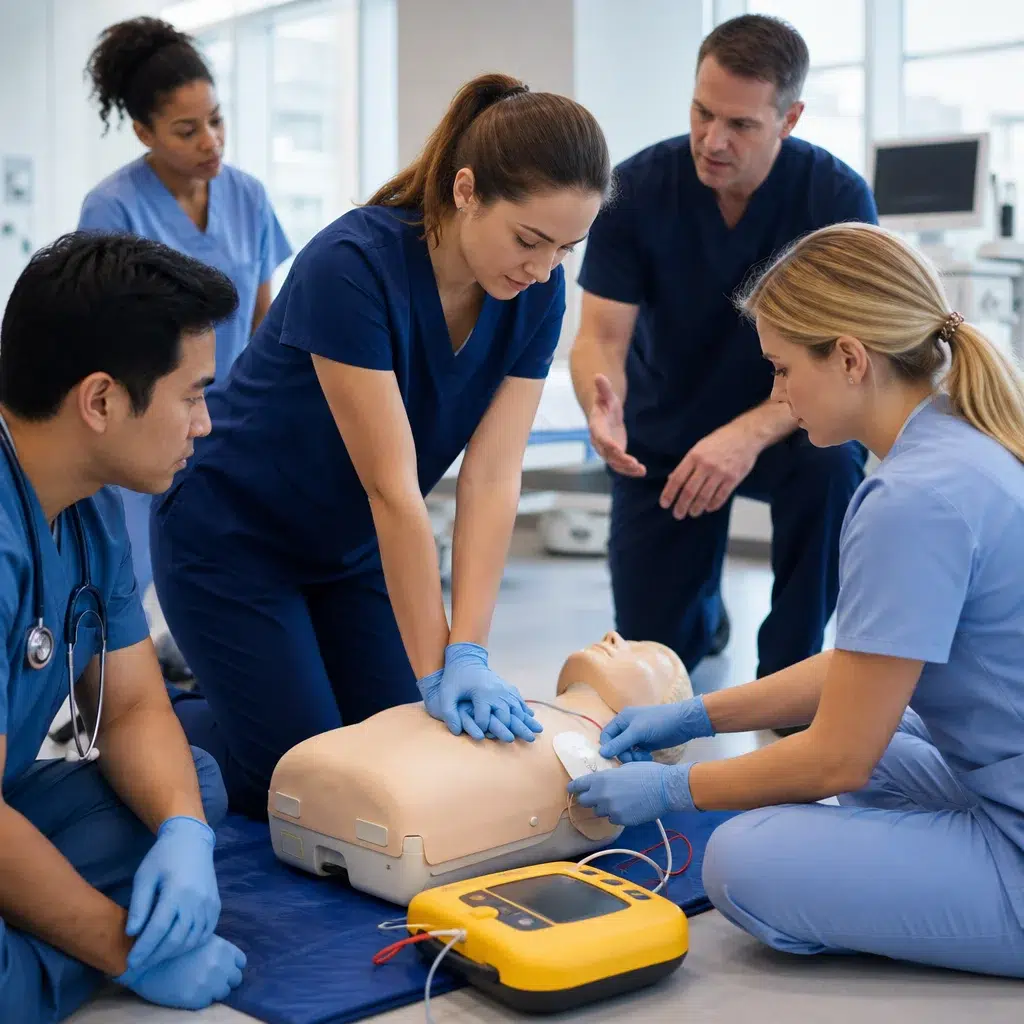
We’ve trained thousands of California nurses, EMS personnel, paramedics, and dental professionals over many years. Our instructors understand hospital protocols, field response realities, and the licensing requirements driving your recertification need. When you’re practicing code responses or algorithm decision-making, your instructor speaks your professional language.
This experience also means we maintain relationships with major healthcare employers and licensing bodies across California. We know what employers in Hayward, Modesto, Napa, and Walnut Creek expect from certified ACLS providers, and we build our courses to exceed those standards consistently.
What to do next: Ask potential providers how many healthcare professionals they train annually and how long they’ve been serving your specific profession. Request to speak with a recent graduate from your profession if possible.
For further reading: Blended learning in California.
Register for a class today.
Frequently Asked Questions (FAQ)
How many ACLS training locations do we have across California?
We operate over 100 training locations throughout California, making it convenient for you to find a class near your home or workplace. Whether you’re in Sacramento, San Francisco, Los Angeles, or anywhere in between, we have centers ready to serve your certification needs with daily BLS and ACLS courses available.
Can we offer flexible scheduling with both online and in-person training?
We provide blended learning that combines virtual coursework with hands-on in-person skills sessions. This approach lets you complete theory work on your schedule while still getting the practical training and same-day certification card you need to meet your professional requirements.
Do we guarantee competitive pricing for ACLS certification?
We stand behind our low price guarantee on all our classes, so you can trust you’re getting the best value for your certification. We also offer corporate group training with special discount pricing for healthcare teams and organizations.