Table of Contents
- 1. Understanding ACLS Certification Requirements for California Healthcare Professionals
- 2. Why Choosing the Right Training Provider Matters for Your Career
- 3. Blended Learning Models That Balance Flexibility with Hands-On Skills
- 4. Same-Day Certification Cards and Rapid Completion Options
- 5. AHA-Aligned Curriculum and Compliance Standards You Can Trust
- 6. Affordable Pricing Without Compromising Quality or Instruction
- 7. Multi-Location Access Across California for Your Convenience
- Frequently Asked Questions (FAQ)
1. Understanding ACLS Certification Requirements for California Healthcare Professionals
Advanced Cardiac Life Support (ACLS) certification is non-negotiable for California healthcare professionals. Whether you’re a nurse, emergency medical technician, cardiologist, or respiratory therapist, your employer and state licensing boards require proof of current certification to maintain your credentials and ensure workplace safety compliance. The challenge isn’t understanding that you need ACLS training, it’s finding a provider that actually fits your schedule, teaches you properly, and delivers your card without unnecessary delays.
We’ve trained thousands of healthcare professionals across California, and we’ve seen how the right training program removes barriers while the wrong one creates headaches. This guide walks you through what ACLS requires, why your choice of training provider shapes your career trajectory, and how to get certified efficiently without sacrificing quality.
ACLS certification demonstrates your competency in managing cardiac emergencies, stroke, and other life-threatening situations. California hospitals, urgent care centers, EMS agencies, and healthcare practices all require current ACLS certification for nursing staff, physicians, paramedics, and many support roles.
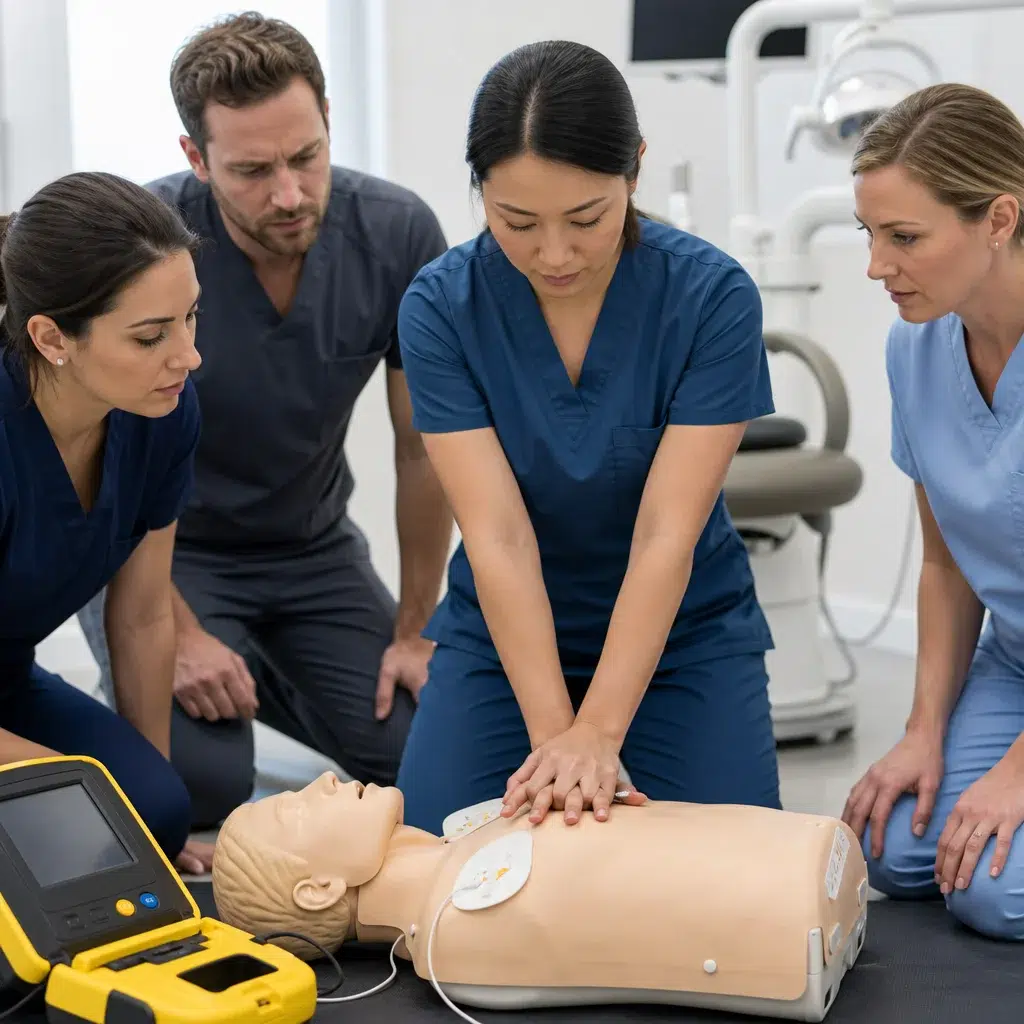
The core requirement includes mastery of core concepts: recognizing cardiac arrest and stroke, performing high-quality cardiopulmonary resuscitation (CPR), operating automated external defibrillators (AEDs), administering essential medications, and coordinating team dynamics during emergency scenarios. Your certification proves you can execute these skills under pressure and make decisions that save lives.
Here’s what most California employers expect:
- Current ACLS card valid for your job classification (hospital provider, pediatric, resuscitation team member)
- Completion within the past two years for active certification status
- Hands-on skills testing during your course, not just online quizzes
- Documented knowledge of current guidelines and protocol updates
The practical difference between passing a test and truly being ACLS-ready matters when a real patient arrest happens in your unit. That’s why we emphasize scenario-based practice during every course, not just lecture content.
Your action item: Check your current card’s expiration date and your employer’s renewal timeline. Most healthcare facilities require recertification well before your card expires, so plan for scheduling 60-90 days ahead.
2. Why Choosing the Right Training Provider Matters for Your Career
Not all ACLS courses deliver the same education quality or value. Your instructor’s experience, the course structure, and the training environment directly influence whether you leave the classroom confident and competent or uncertain about applying these skills in emergencies.
We’ve built our training program around what healthcare professionals actually need: instructors who work in clinical settings, realistic scenarios that mirror what you’ll face on the job, and flexibility that respects your demanding schedule. When you train with experienced clinicians, you gain practical insights that matter. An instructor who regularly manages cardiac patients brings authenticity that generic trainers cannot replicate.
The stakes are high. A poorly structured course might get you a card, but it won’t prepare you to lead a code or recognize subtle stroke warning signs. Your patients depend on you to respond correctly the first time. We treat every class as if lives depend on it, because they do.
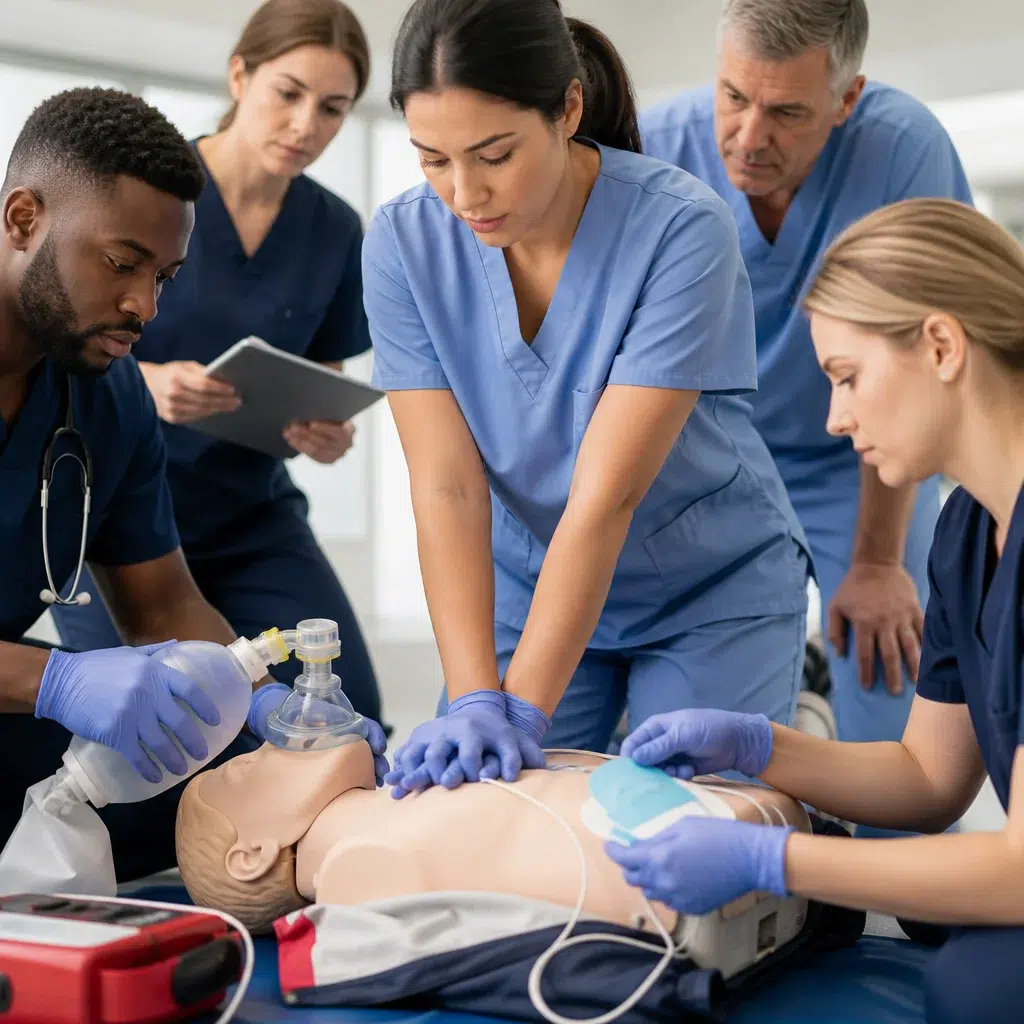
Choosing the right provider also protects your employment standing. Your employer accepts certifications from providers who maintain rigorous standards. We maintain alignment with current clinical guidelines and ensure every graduate receives a card recognized across California healthcare systems.
Your action item: Before enrolling anywhere, verify the instructor’s clinical background. Ask whether they currently work in patient care. If the answer is vague, keep looking.
3. Blended Learning Models That Balance Flexibility with Hands-On Skills
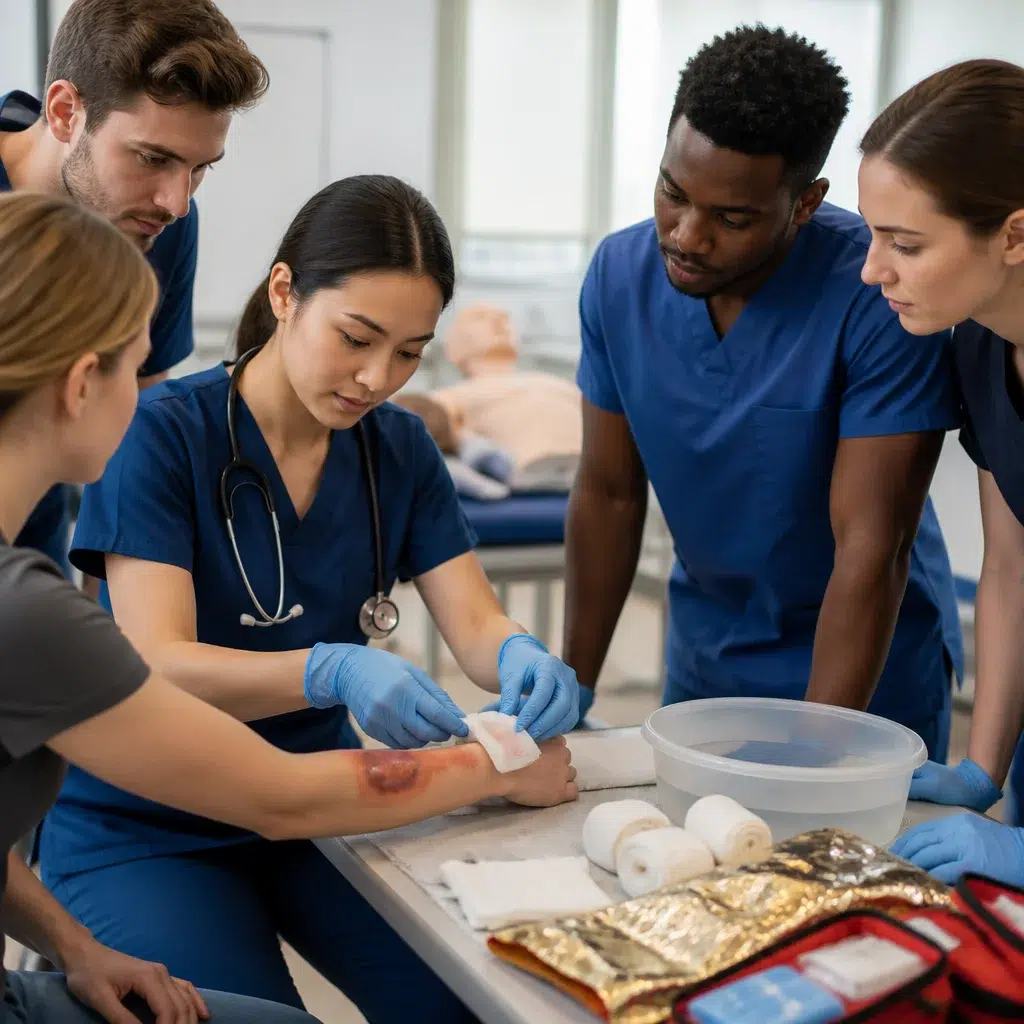
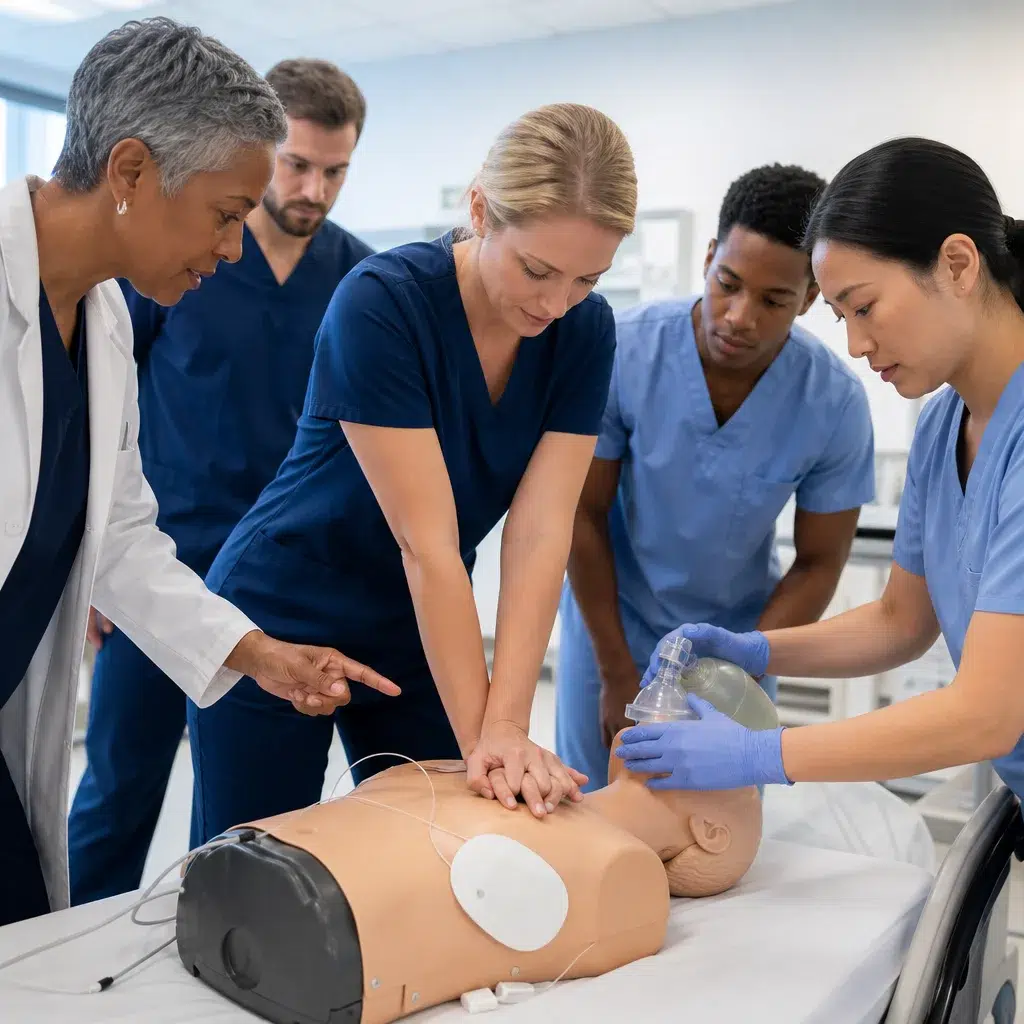
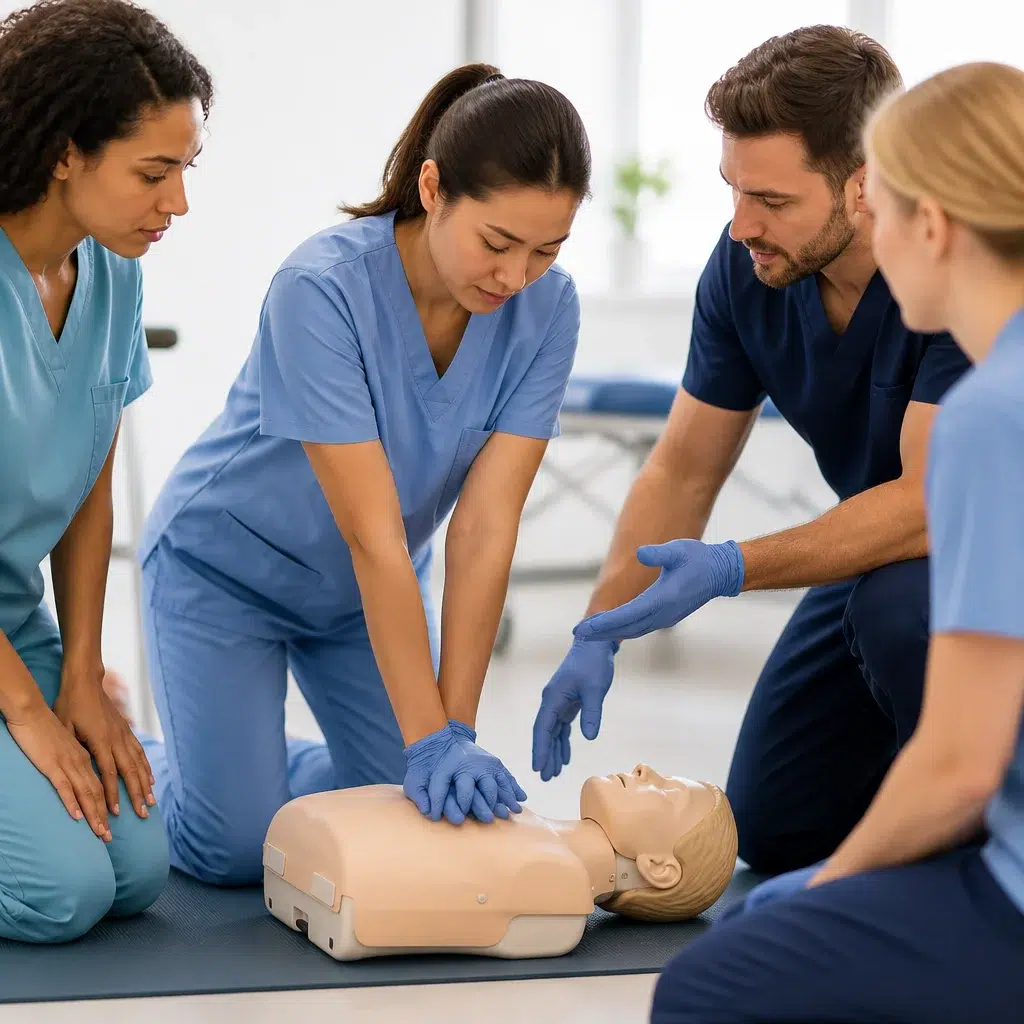
ACLS certification requires hands-on skills practice. You cannot master chest compressions, defibrillator operation, or team communication through video alone. Yet traditional all-day classroom sessions conflict with your work schedule and patient care responsibilities.
Our blended learning models combine focused online modules with structured in-person skills sessions. You complete knowledge-based content on your own time, then attend a shorter in-person session dedicated entirely to hands-on practice and scenario testing. This approach cuts classroom time roughly in half while maintaining educational rigor.
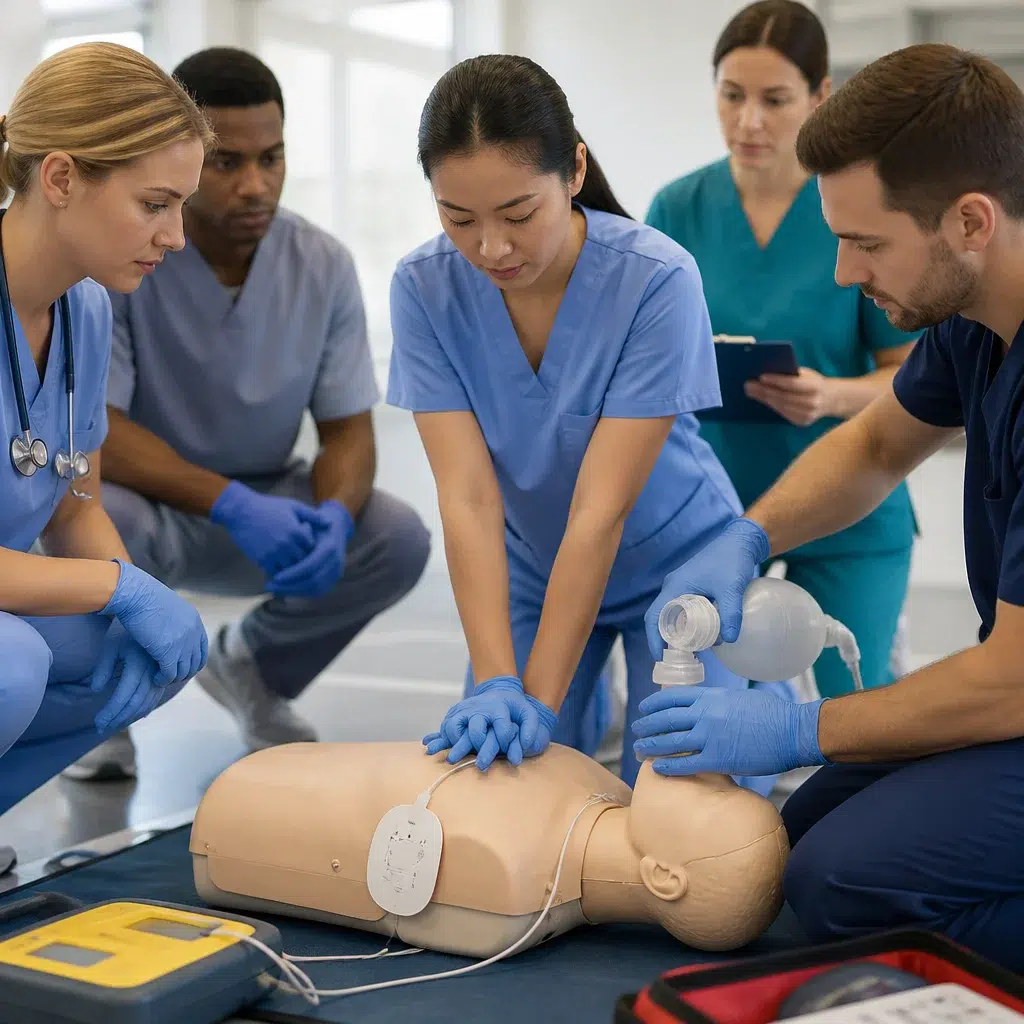
Here’s how it works in practice: A nurse in Oakland might complete the online module during off-hours, then attend a 3-hour in-person session at our Oakland Lake Merritt or Fruitvale location where she performs CPR on mannequins, practices defibrillation, and runs through cardiac arrest scenarios with our instructors. No wasted time on lectures she’s already reviewed; 100% of class time focuses on skills you need to demonstrate.
The flexibility matters across California’s diverse healthcare landscape. We offer sessions at over 100 training locations, including Sacramento, San Francisco, San Jose, Fresno, and smaller communities like Lathrop and Visalia. Whether you work in a bustling emergency department or a rural clinic, we have a location and schedule that works for you.
Your action item: Confirm that any course you consider includes genuine hands-on practice with real equipment. Online-only courses don’t meet California employer standards for ACLS certification.
4. Same-Day Certification Cards and Rapid Completion Options
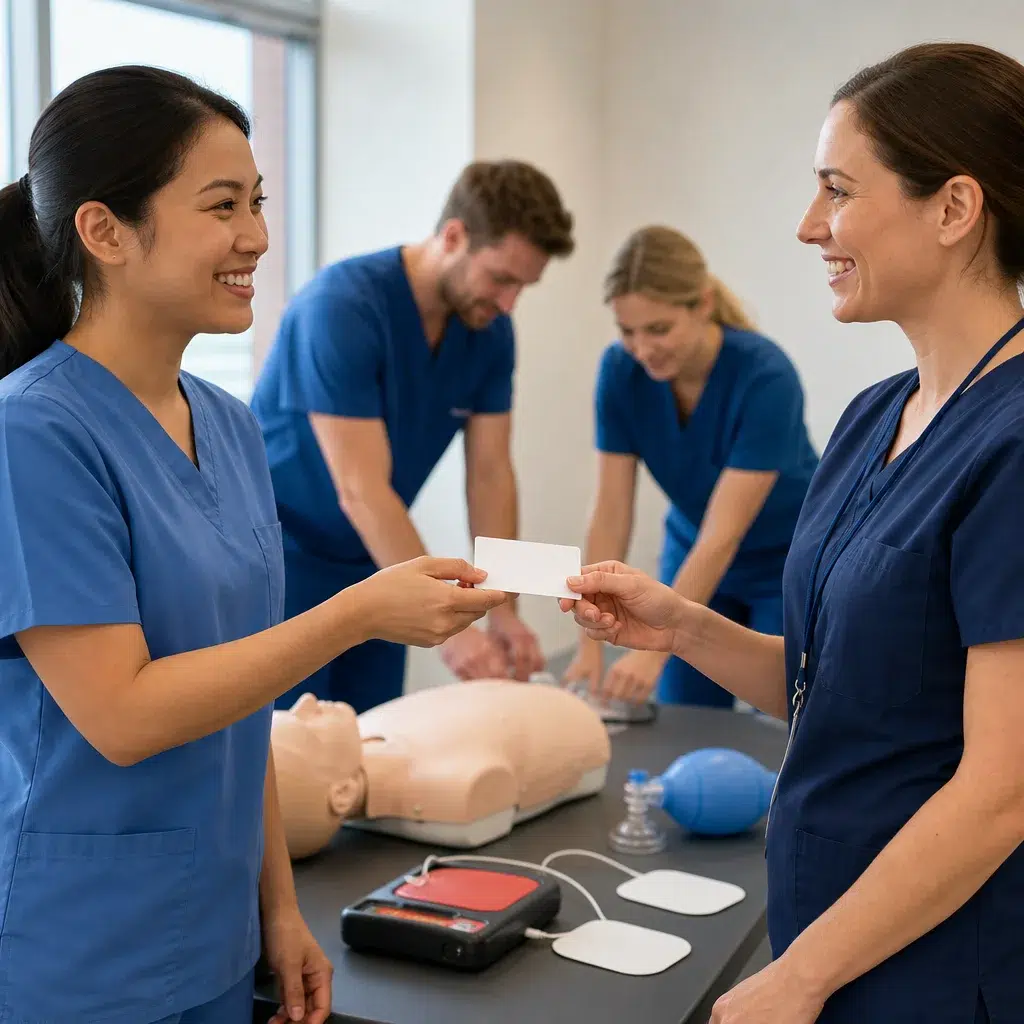
Time matters when your renewal deadline approaches or your facility suddenly needs additional certified staff. We issue certification cards the same day you pass the skills assessment. No waiting for digital processing, no mail delays, no uncertainty about your official credential.
This rapid turnaround is possible because we’ve streamlined our verification process and maintain efficient recordkeeping. The moment you complete your final scenario and demonstrate competency, you receive your card, and your information enters our verification system. Many healthcare facilities check our verification database within hours, so your credential is officially active before you leave our facility.
We also offer daily BLS certification courses alongside ACLS, allowing you to renew multiple credentials in one visit if needed. Nurses at our Fremont, Pleasanton, or Dublin locations sometimes combine their ACLS and BLS renewals in a single afternoon, checking two requirements off their compliance list efficiently.
For urgent situations, our specialized intensive sessions compress core content into accelerated formats without cutting corners on hands-on practice. Whether you’re a newly hired emergency physician in Bakersfield or a paramedic in Hayward, we can often schedule you within days rather than weeks.
Your action item: When renewing ACLS, schedule at least six weeks before your card expires to account for any scheduling conflicts. We fill quickly during peak renewal seasons.
5. AHA-Aligned Curriculum and Compliance Standards You Can Trust
Your ACLS certification must align with current American Heart Association (AHA) guidelines and California’s healthcare regulatory expectations. We maintain strict alignment with the latest clinical guidelines and update our curriculum regularly as new evidence emerges.
Our instructors are not simply trained to teach generic CPR. They understand the specific protocols your employer uses, the medications your facility stocks, and the team dynamics unique to different care settings. A course designed for ICU nurses looks different from one for emergency medicine residents because their responsibilities and environment differ meaningfully.
Every course meets California’s highest standards for healthcare training. Our curriculum covers:
- Current AHA-guided cardiac life support protocols and recent updates
- Stroke recognition and response using validated assessment tools
- Medication administration and drug interactions relevant to arrest scenarios
- Team leadership and communication that prevents errors during emergencies
- Ethical considerations and decision-making in critical moments
We track outcomes and regularly seek feedback from healthcare facility managers and participants to ensure our training translates to real-world competence. This commitment to continuous improvement keeps our program ahead of generic training models.
Your action item: Ask your employer which specific protocols and guidelines your facility follows. Confirm that your training provider explicitly covers your facility’s approach, not just generic ACLS theory.
6. Affordable Pricing Without Compromising Quality or Instruction
You shouldn’t have to choose between affordable and excellent. We offer competitive pricing without sacrificing instructor quality, hands-on practice, or curriculum rigor. We also guarantee our rates are among the lowest available for genuine ACLS certification that meets your employer’s standards.
Corporate and group discounts make sense for facilities training multiple staff members. If your hospital in Concord, Modesto, or Redwood City is updating your entire cardiac team, we offer specialized group pricing and can often schedule multiple cohorts to fit your facility’s needs.
We transparently list all costs upfront. No hidden fees for cards, verification requests, or scenario practice. The price you see is what you pay, and it includes everything required for certification.
Affordability shouldn’t require sacrificing the hands-on practice you need. Some competitors cut corners by reducing practice time or using less experienced instructors to hit lower price points. That approach saves money upfront but costs you later when you’re unprepared during a real emergency or need to retrain because your initial certification didn’t stick. We invest in quality instruction and adequate practice time because that’s what actually protects patients and advances your career.
Your action item: Compare total costs including card issuance, verification, and any makeup sessions. The cheapest headline price often hides additional charges.
7. Multi-Location Access Across California for Your Convenience
We operate over 100 training locations across California, from the Bay Area through Sacramento, down the Central Valley to Fresno and Visalia, and everywhere in between. Your certification doesn’t require traveling across the state or waiting months for a seat.
Our California training locations include major hubs like San Francisco (with multiple neighborhood locations including Mission District, Nob Hill, and Parnassus/UCSF), Sacramento (Midtown, Arden, Oak Park, and Rosemont), San Jose (Downtown, Japantown, South, and Willow Glen), and Fresno. We also maintain smaller community locations in places like Napa, Santa Cruz, Vallejo, and Visalia because healthcare professionals everywhere deserve accessible, quality training.
This network matters practically. If you work in Livermore but prefer training near your home in Tracy, we have locations that work for you. If your schedule is tight, you might find an evening session in Folsom but a daytime option in nearby Roseville or Citrus Heights. The flexibility to choose your location and schedule removes barriers that prevent timely certification.
Our instructors across all locations maintain the same rigorous standards, curriculum quality, and commitment to hands-on practice. Whether you train in San Rafael, Walnut Creek, or Lodi, you receive the same level of professional instruction and preparation.
Your action item: Browse our locations and schedule your ACLS renewal at the site that best fits your geography and calendar. Booking early ensures you get your preferred time and location.
—
ACLS certification is your professional responsibility and a direct investment in patient safety. Choosing the right training provider shapes whether you feel genuinely prepared when a cardiac emergency unfolds in your workplace or whether you’re hoping your certification actually prepared you.
We’ve designed our ACLS program specifically for California healthcare professionals who demand convenient access, quality instruction, hands-on practice that actually matters, and rapid certification without cutting corners. Our blended learning approach respects your time, our 100+ locations make scheduling feasible across the state, our same-day cards eliminate delays, and our instructors bring real clinical experience into every scenario.
Your patients, your employer, and your own professional confidence deserve ACLS training that truly prepares you. Start your certification or renewal with us today and experience the difference quality instruction makes.
Register for a class today.
Frequently Asked Questions (FAQ)
What ACLS certification requirements do healthcare professionals in California need to maintain?
We require our ACLS students to complete both didactic and hands-on skills training to meet the standards for California healthcare providers. Our courses cover the latest cardiac emergency protocols, and we issue certifications valid for two years from your completion date. We recommend renewing your certification before expiration to avoid gaps in your professional credentials, and we offer renewal courses at all our locations throughout California.
How does our blended learning approach help you balance work schedules with certification training?
We combine virtual coursework with in-person skills sessions so you can study material on your own time and only come to our location when you’re ready for the practical assessment. This means you’re not sitting through hours of instruction you could learn independently, giving you back valuable time while ensuring you receive expert feedback on your hands-on skills from our certified instructors.
Can we issue your certification card on the same day you complete training?
Yes, we provide same-day certification cards upon successful completion of both the knowledge and skills components of our course. This allows you to meet immediate job requirements without waiting for documentation to arrive by mail, and we maintain verification stations at our locations for employers who need instant confirmation of your current certification status.