Table of Contents
- 1. Bay Area CPR Training Centers for Busy Healthcare Professionals
- 2. Sacramento Region CPR Certification: Access and Convenience
- 3. Southern California CPR Classes: Fresno, Visalia, and Beyond
- 4. Same-Day Certification Stations Throughout Our Network
- 5. Blended Learning CPR Programs: Virtual Flexibility Meets Hands-On Skills
- 6. Corporate Group Training at Your Preferred Location
- 7. Specialized ACLS and PALS Certification for Medical Professionals
- 8. Flexible Scheduling Options Across 100 Plus Training Sites
- 9. Our Low-Price Guarantee on All CPR Certifications
- 10. AHA-Aligned Curriculum with Expert Instructor Support
- 11. Why Location Accessibility Matters for Your Certification Timeline
- 12. Getting Started: Finding Your Nearest CPR Training Center Today
- Frequently Asked Questions (FAQ)
1. Bay Area CPR Training Centers for Busy Healthcare Professionals
Finding convenient, high-quality CPR certification shouldn’t require a cross-county commute or months of waiting. Whether you’re a nurse renewing your BLS (Basic Life Support) credential, a dentist staying current with emergency protocols, or EMS personnel managing mandatory recertification, we understand that your schedule demands flexibility and your career demands excellence. We operate over 100 training locations throughout California specifically to bring certified instruction closer to you, with same-day certification options and proven expertise across every region.
The Bay Area remains California’s densest healthcare employment hub, and we’ve expanded our footprint to match that demand. Our San Francisco centers span seven distinct neighborhoods (Bayshore, Mission Bay, Mission District, Nob Hill, Parnassus/UCSF, Sunset, and Telegraph Hill), ensuring you can attend training near your hospital, clinic, or office without major travel friction. In the East Bay, we staff locations in Oakland (Fruitvale, Lake Merritt, Piedmont), Berkeley (Downtown and Solano), and surrounding cities like Fremont, Hayward, and Pleasanton.
What makes our Bay Area network distinct is instructor continuity and scheduling density. You won’t wait weeks between class dates. We run BLS and CPR courses daily across multiple locations, meaning you can typically schedule certification within days, not months. Nurses working 12-hour shifts at UCSF Medical Center or Kaiser facilities can attend our Parnassus/UCSF center on their preferred schedule. Similarly, dental teams in San Jose (Downtown, Japantown, South, Willow Glen) can bundle group training at one of our four city locations.
Action step: Check our location finder for your nearest Bay Area center and confirm current class availability before planning your month.
2. Sacramento Region CPR Certification: Access and Convenience
Sacramento’s healthcare workforce, from UC Davis Medical Center staff to community health centers, relies on our four regional training hubs (Arden, Midtown, Oak Park, and Rosemont). Rather than a single downtown location, we deliberately distributed our centers across the metro area so commute times stay under 15 minutes for most professionals.
Our Sacramento region particularly serves rural and semi-rural healthcare providers who travel into the capital for ongoing training. Professionals from Woodland, Davis, and Vacaville can attend a Sacramento session without the uncertainty of travel delays. We’ve structured scheduling to accommodate shift rotations common in critical care and emergency departments, with early morning, afternoon, and evening class times. This flexibility proves essential when your hospital operates 24/7 and staff must cover all shifts.
The region’s demand for ACLS (Advanced Cardiac Life Support) and PALS (Pediatric Advanced Life Support) certifications is particularly strong given the medical center volume. We maintain expert instructors with active emergency department or trauma center experience, so instruction reflects current protocols and real-world scenarios your team encounters.
Action step: Reserve your seat at a Sacramento center at least one week ahead during peak hiring seasons (spring and fall) when cohort sizes grow larger.
3. Southern California CPR Classes: Fresno, Visalia, and Beyond
Serving California’s inland and southern regions, we maintain training centers in Fresno, Visalia, Bakersfield, and surrounding communities. These regions face particular staffing pressures, with healthcare workers often traveling significant distances for compliance training. Our Fresno and Visalia centers anchor the Central Valley and Southern Sierra Valley markets, eliminating the need for professionals to drive toward Los Angeles or San Francisco for certification.
Bakersfield’s healthcare providers benefit from our local center, reducing travel time and scheduling conflicts for hospital staff, clinic nurses, and EMS personnel. We’ve specifically designed these centers to accommodate the agricultural and industrial health needs of inland communities, including higher-demand ACLS and emergency response courses for industrial accidents and trauma scenarios common in these regions.
The advantage of regional centers is they understand local healthcare standards and employment requirements. Our instructors stay current with state licensing boards’ standards and regional medical director protocols, so your certification reflects the specific credentialing landscape where you work.
Action step: Contact our Fresno or Visalia center directly if you manage a rural clinic or EMS team requiring group training, as we offer bulk scheduling and rate reductions.
4. Same-Day Certification Stations Throughout Our Network
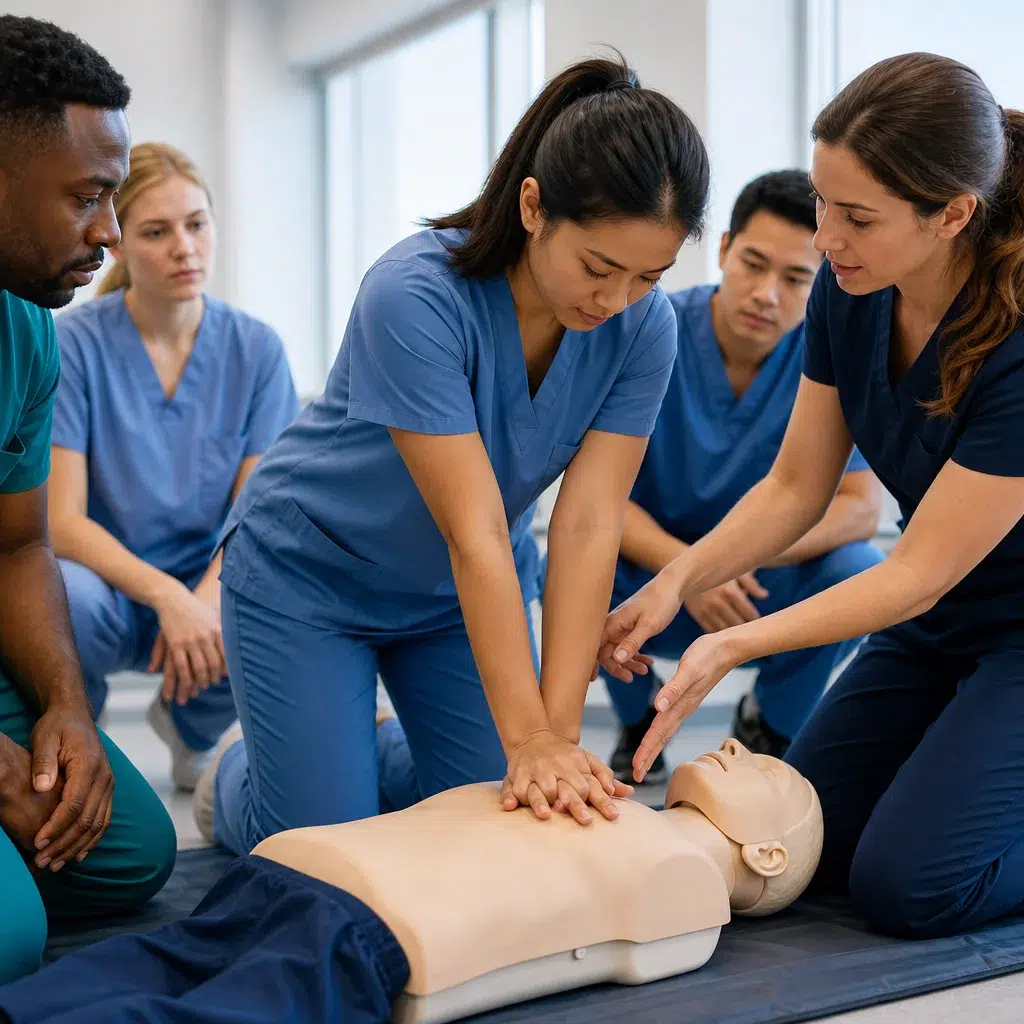
Speed matters when hiring deadlines approach or your certification expires unexpectedly. We operate same-day certification stations across our 100-plus California locations, allowing you to complete BLS or CPR certification in a single session without returning for a skills verification appointment.
Same-day certification means you attend skills training in the morning or early afternoon, pass your practical exam with one of our instructors, and walk out with a valid, printed certification card by end of business. No waiting for mailed credentials or delayed online records. For employed professionals or those interviewing at new healthcare organizations, this same-day turnaround removes a significant barrier to rapid job placement or credential verification.
Our certification stations maintain equipment and instructor capacity year-round, not just during high-demand seasons. This consistency means a nurse in Walnut Creek (Downtown or Shadelands locations), a dentist in Campbell, or an EMT in Stockton can count on same-day options without special requests or premium pricing.
Action step: When booking, specifically select a “same-day certification” option to secure both training and exam in one session.
5. Blended Learning CPR Programs: Virtual Flexibility Meets Hands-On Skills
We’ve built our blended learning model around a realistic scheduling truth: you can’t always attend in-person training on the exact date it’s offered. Our program splits instruction into two components: virtual knowledge review and in-person skills practice and testing.
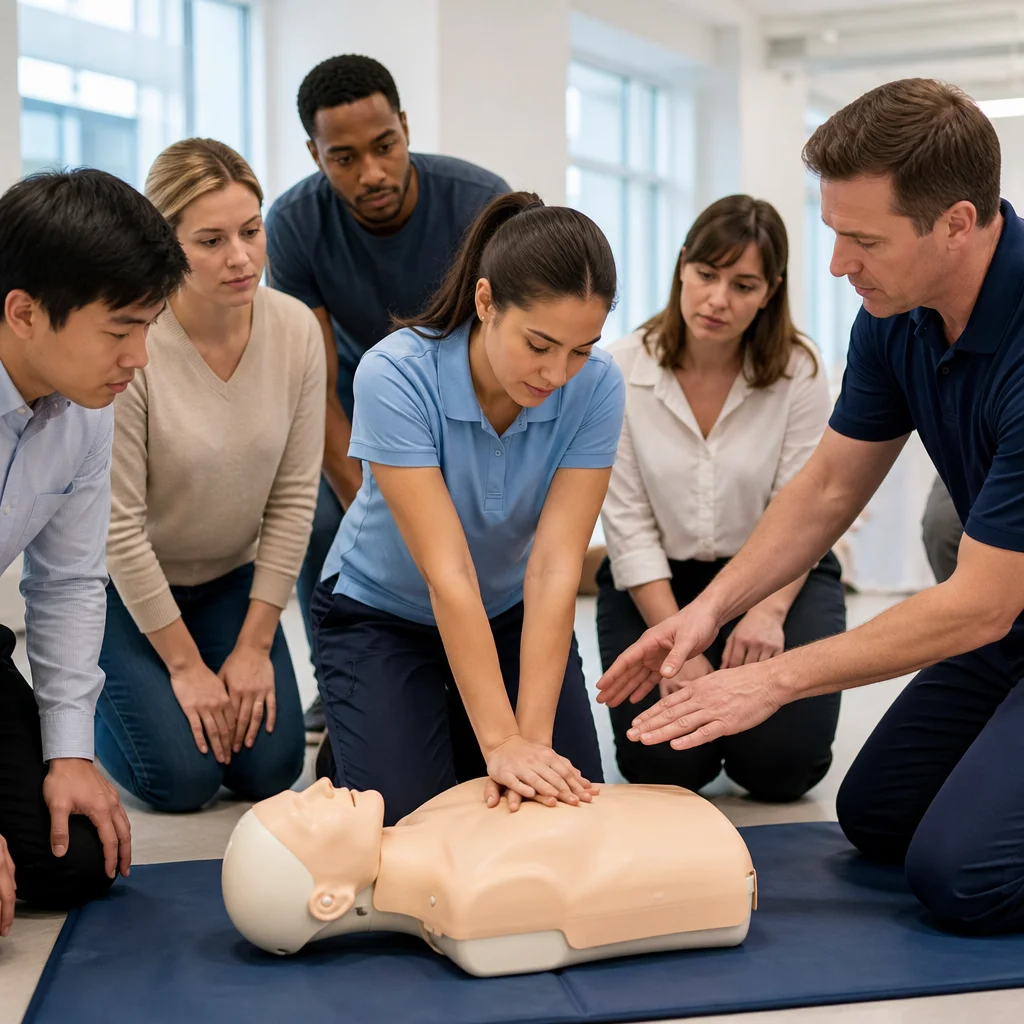
The virtual component covers anatomy, physiology, and protocol instruction through our online platform, allowing you to learn at your own pace (typically one to two hours) before attending your skills session. You can complete virtual training at midnight on a Sunday if your schedule requires it. Then you attend a shorter, focused in-person skills session (usually two to three hours) at your preferred location, where you practice compressions on manikins, learn proper rescue breathing techniques, and demonstrate competency under direct instructor observation.
This split approach dramatically increases scheduling flexibility without compromising hands-on practice quality. A traveling healthcare professional or someone with unpredictable shift rotations can spread their training over several days rather than committing to a full six-hour in-person day.
Action step: Register for our blended program if your schedule is unpredictable, and complete the virtual portion at least three days before your in-person skills appointment.
6. Corporate Group Training at Your Preferred Location
Hospitals, clinics, dental practices, and EMS departments frequently need to certify multiple staff members simultaneously. Rather than stagger individual enrollments, we offer corporate group training at your facility or our nearest center, with customized scheduling and dedicated instructors.
Group training typically qualifies for volume discounts, reducing per-person costs when you certify five or more team members. You select the date, location, and course type (BLS, ACLS, PALS, or combinations), and we staff an instructor and equipment to match your cohort size. Many larger organizations in the Bay Area, Sacramento, and San Jose regions schedule quarterly group sessions to maintain compliance rates across their entire staff.
The logistical benefit extends beyond price. Your team trains together, reinforcing protocols your organization emphasizes and answering facility-specific questions in real-time. An obstetric team at a women’s health clinic might focus on neonatal resuscitation scenarios, while a primary care practice might emphasize adult respiratory emergencies.
Action step: Contact our corporate training team with your facility size and preferred quarter (Q1, Q2, Q3, or Q4) to lock in pricing and instructor availability three months in advance.
7. Specialized ACLS and PALS Certification for Medical Professionals
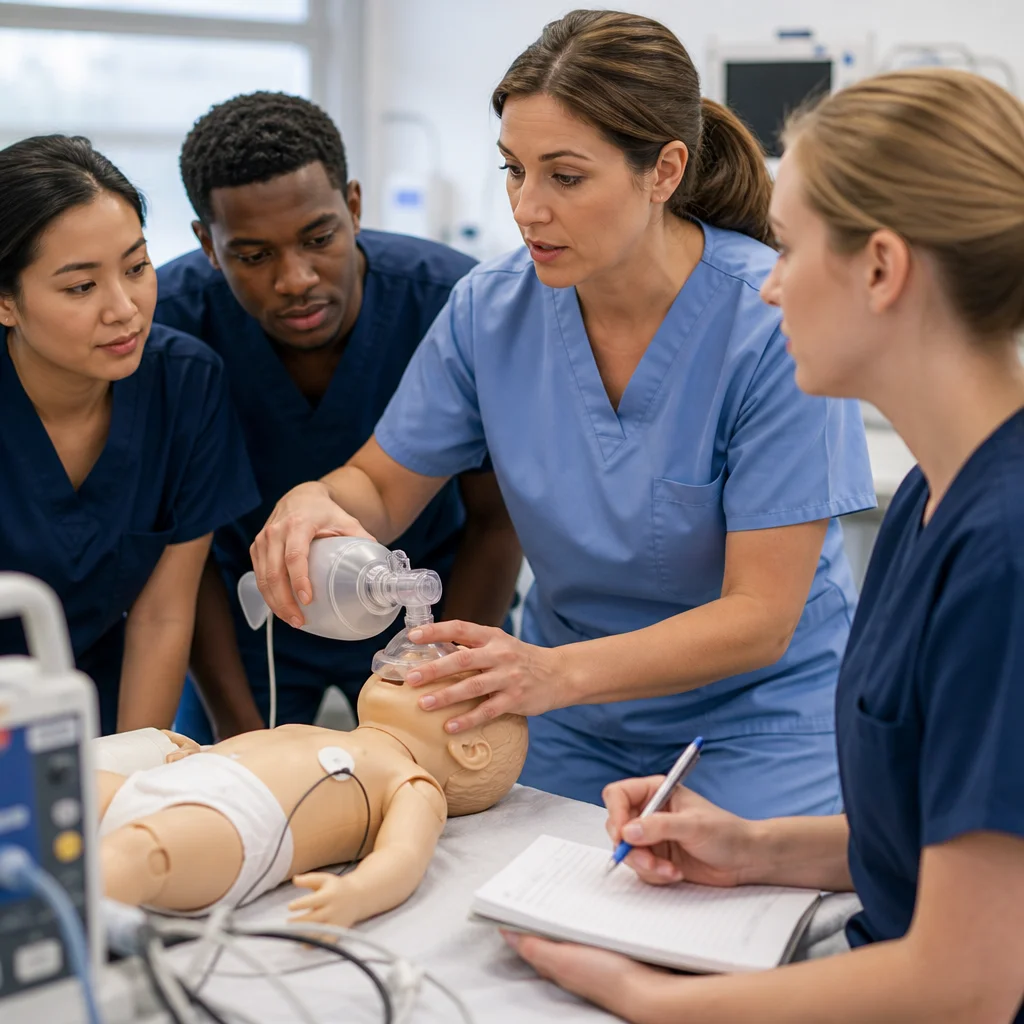
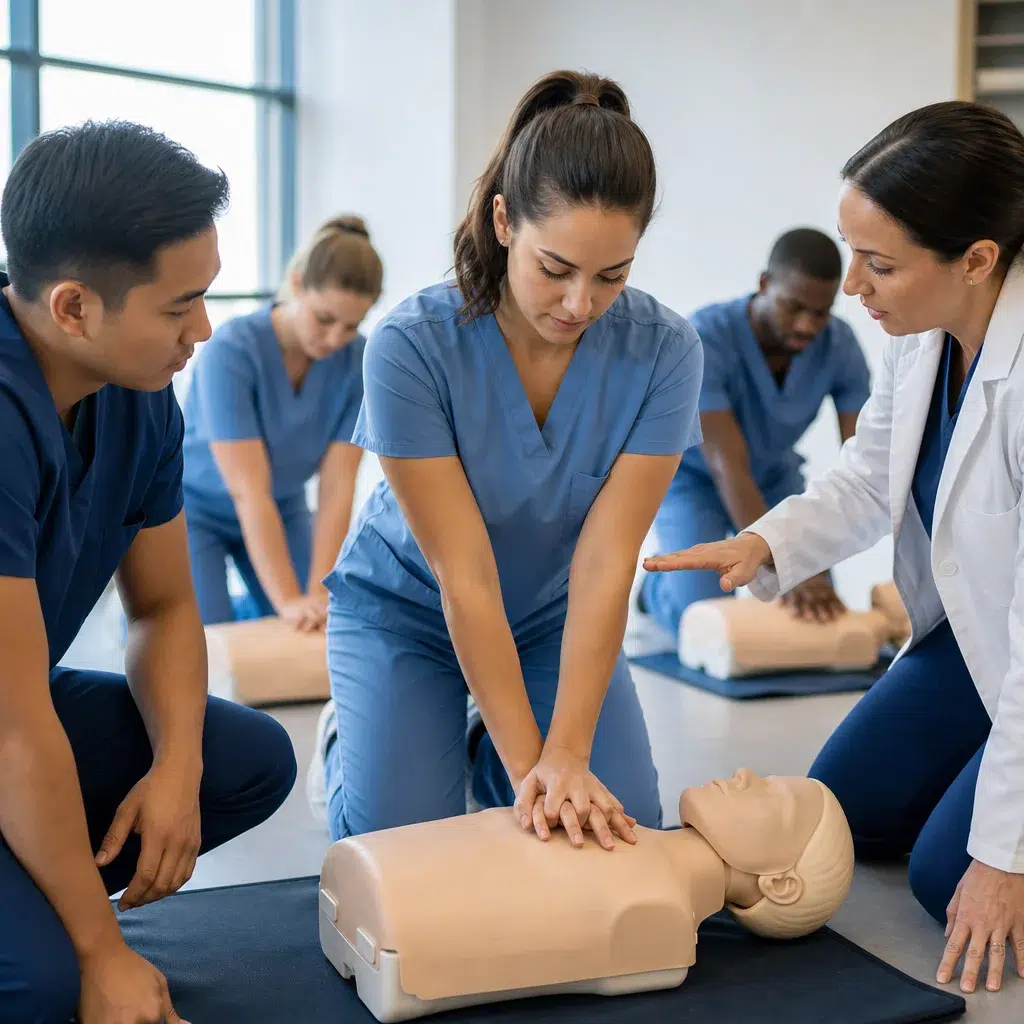
Beyond foundational BLS certification, we offer advanced certifications specifically required for emergency medicine, critical care, anesthesia, and pediatric specialties. Our ACLS courses teach recognition and treatment of cardiac arrhythmias, acute coronary syndromes, and stroke management using evidence-based algorithms and pharmacotherapy. PALS certification covers pediatric emergencies including airway management, medication dosing, and resuscitation for infants and children.
These advanced certifications demand instructors with active clinical experience in high-acuity settings. Our ACLS and PALS instructors include emergency medicine physicians, critical care nurses, and paramedics with current clinical practice, so scenarios and discussions reflect contemporary hospital protocols. This level of expertise translates directly to your clinical competency and confidence when managing real emergencies.
ACLS and PALS certifications renew every two years, and we maintain consistent scheduling across major centers (Oakland, San Francisco, Sacramento, San Jose, Fresno) plus satellite locations in Antioch, Concord, Davis, Fairfield, Lodi, Merced, Modesto, Napa, Palo Alto, Petaluma, Rocklin, Roseville, Santa Cruz, Santa Rosa, Sunnyvale, Tracy, Vacaville, and Vallejo. Advanced certifications are in steady demand, so booking three to four weeks ahead ensures preferred dates.
Action step: Review your facility’s specific protocols before attending ACLS or PALS training so you can ask context-specific questions during the hands-on practice scenarios.
8. Flexible Scheduling Options Across 100 Plus Training Sites
Flexibility isn’t just about same-day certification or blended learning. We structure class times to fit healthcare schedules: early morning sessions starting at 6:00 AM for night-shift workers, midday classes for providers with split schedules, and evening sessions ending by 9:00 PM for those coordinating childcare.
Weekend classes run regularly at our larger centers (San Francisco, Oakland, Sacramento, San Jose), acknowledging that some professionals prefer training outside traditional work hours. Our calendar typically opens scheduling four to six weeks in advance, giving you visibility into available dates and times. Mobile providers in rural areas like Visalia, Merced, or Redding can plan around seasonal patient demands and staffing cycles.
The breadth of scheduling options means you’re not forced into a one-size-fits-all time slot. A dental hygienist in Los Gatos can attend a 7:00 PM Tuesday class. A paramedic in Morgan Hill can book a Saturday afternoon session. A clinic nurse in Elk Grove can register for a 5:00 AM Friday class before a shift change.
Action step: Filter available classes by your preferred time window when browsing locations, and check our calendar monthly since new dates release regularly.
9. Our Low-Price Guarantee on All CPR Certifications
Your certification’s value doesn’t scale with its cost. We’ve committed to a low-price guarantee across all courses: if you find equivalent BLS, ACLS, or PALS certification priced lower elsewhere in California, we’ll match or beat that price. This guarantee reflects our confidence in our instructional quality and operational efficiency, not a race to the bottom.
Transparent pricing means no surprise fees for skills testing, station access, or digital records. The price you see when registering is the price you pay. Volume discounts apply automatically to group registrations without requiring special codes or advance negotiation. Recertification pricing is typically lower than initial certification, acknowledging that returning students have foundational knowledge.
We offer this guarantee because we believe qualified healthcare professionals shouldn’t delay or defer mandatory certifications due to cost. Insurance benefits, employer reimbursement, and payment plans are available through our enrollment team for professionals facing budget constraints.
Action step: Confirm our current pricing against any other provider quotes before enrolling, and contact our office if you discover a legitimate lower rate elsewhere.
10. AHA-Aligned Curriculum with Expert Instructor Support
Our curriculum aligns with current American Heart Association guidelines and evidence-based emergency medicine standards. This means your training reflects the protocols your employing hospital or EMS service recognizes and expects. You’re not learning from an instructor who last practiced emergency medicine a decade ago; our core team includes active emergency medicine specialists, trauma surgeons, and critical care nurses.
Expert instructor support extends beyond class day. We provide study materials, scenario walkthroughs, and pre-class guidance to set you up for success. If you fail a skills evaluation (which happens infrequently), our instructors offer constructive feedback and remediation options rather than dismissing you or requiring expensive retesting at another facility.
This level of instructor engagement particularly matters for ACLS and PALS certifications, where algorithmic decision-making and confidence in emergency response scenarios directly influence your clinical capability. An instructor who practices emergency medicine weekly can distinguish between textbook scenarios and the messy reality of a code blue in a real hospital.
Action step: Review the instructor biography for your scheduled class; experienced instructors in your specialty area often deliver the most clinically relevant training.
11. Why Location Accessibility Matters for Your Certification Timeline
Certification deadlines aren’t flexible. Your nursing license renewal, job hire timeline, or hospital credentialing deadline arrives on schedule, regardless of whether you’ve completed your training yet. When your nearest training center is 45 minutes away versus 10 minutes away, that difference compounds across your career.
We’ve invested in 100-plus California locations because accessibility directly impacts your certification rate and career momentum. A medical professional in Antioch shouldn’t need to travel to Oakland. A clinic nurse in Danville shouldn’t drive to San Francisco. A dentist in Santa Clara shouldn’t cross the Bay for a BLS class. Location density removes scheduling friction and reduces the likelihood you’ll defer training until the last crisis moment.
Accessible locations also reduce no-shows and cancellations. When training is genuinely convenient, professionals commit to scheduled classes and complete certifications on planned timelines. This regularity keeps your credentials current and protects your employment continuity.
Action step: Before accepting a new healthcare position, confirm that CPR and specialty certifications are available within 15 minutes of your workplace or home using our location finder.
12. Getting Started: Finding Your Nearest CPR Training Center Today
Registering for CPR certification takes less than five minutes. Visit our website, enter your city name or zip code, and our location finder displays nearby training centers with current availability. You’ll see pricing, available dates, course types (BLS, ACLS, PALS), and class times all in one view.
Select your preferred location, date, and time, then complete registration with basic information (name, license number, facility affiliation). You’ll receive a confirmation email with class details, online access if enrolling in a blended program, and parking or facility information for your in-person appointment.
If you’re coordinating group training for your team or have questions about course requirements for your specific role (dental hygienist, nurse anesthetist, paramedic, etc.), our enrollment team is available by phone or email. They can clarify which certification levels apply to your licensing board and help you schedule the right course immediately rather than months from now.
Your next step is straightforward: visit California healthcare training locations through our site, find your nearest center, and secure your spot in an upcoming class. Accessibility and affordability shouldn’t be barriers to professional compliance and patient safety readiness.
Register for a class today.
Frequently Asked Questions (FAQ)
How many training locations do we have across California?
We operate over 100 training sites throughout California, spanning from the Bay Area to Southern California. Our locations include major cities like San Francisco, Los Angeles area alternatives, Sacramento, San Jose, and many surrounding communities, making it convenient for you to find a class near your home or workplace.
Can we offer same-day CPR certification?
Yes, we provide same-day certification stations at our training locations. Our blended learning model combines virtual coursework with in-person skills assessments, allowing you to complete your certification quickly without sacrificing quality instruction.
What specialized certifications do we provide for healthcare professionals?
We offer ACLS, PALS, BLS, and NRP certifications specifically designed for nurses, dentists, EMS personnel, and other medical professionals. Our courses align with current guidelines and meet the mandatory certification requirements for job compliance and professional licensing renewal.