Basic Life Support (BLS) certification is the foundational credential required for healthcare professionals across virtually all clinical disciplines. Designed for nurses, nursing students, physicians, emergency medical technicians (EMTs), paramedics, dentists, dental hygienists, physical therapists, and allied health staff, the AHA BLS course teaches single-rescuer and team-based basic life support skills applicable in both pre-hospital and in-hospital healthcare environments.
The BLS Provider curriculum focuses on early recognition of sudden cardiac arrest, prompt activation of emergency response systems, and immediate delivery of high-quality chest compressions. Key topics include:
BLS training is delivered through traditional instructor-led classroom settings or blended learning (HeartCode® BLS), which combines interactive online coursework with an in-person hands-on skills evaluation. Upon successful completion of the cognitive examination and practical skills testing, participants receive an official AHA BLS Provider eCard, valid for two years.
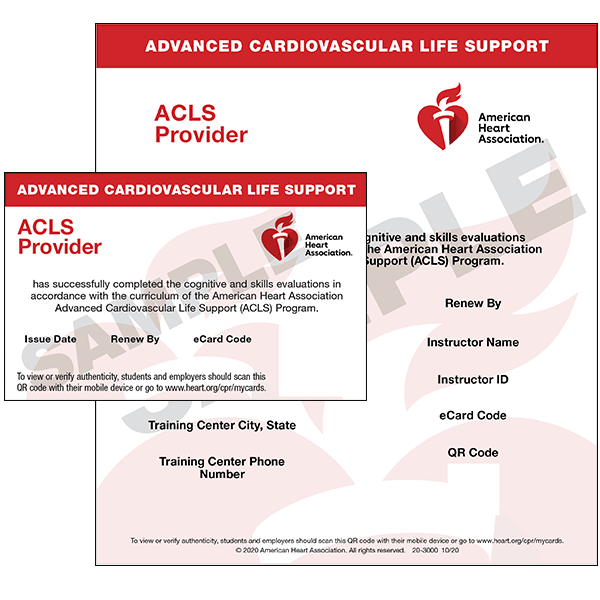
Advanced Cardiovascular Life Support (ACLS) is an advanced resuscitation program tailored for healthcare providers who direct or manage adult cardiac arrest, acute coronary syndromes, stroke, and other life-threatening cardiovascular emergencies. ACLS is mandatory or strongly recommended for physicians, emergency department nurses, intensive care unit (ICU) staff, cardiologists, anesthesiologists, surgeons, paramedics, and critical care transport specialists.
Building on the foundation of high-quality BLS, the ACLS curriculum integrates clinical assessment, electrocardiogram (ECG) rhythm recognition, pharmacology, and invasive/non-invasive airway management into systematic treatment algorithms. Key components include:
Participants can complete ACLS through traditional instructor-led classroom sessions or blended learning options (HeartCode® ACLS) requiring hands-on skills verification. Successful completion yields an official AHA ACLS Provider eCard, valid for two years.
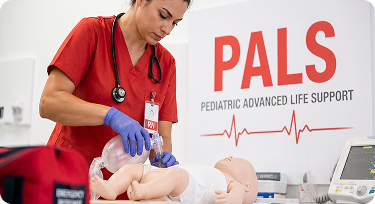
Pediatric Advanced Life Support (PALS) is specifically developed for healthcare providers who care for critically ill or injured infants and children. PALS certification is essential for pediatricians, pediatric emergency nurses, pediatric ICU personnel, emergency physicians, paramedics, respiratory therapists, and pediatric surgical teams.
Children rarely present with sudden primary cardiac arrest; instead, pediatric cardiac arrest typically results from progressive respiratory failure or shock. The PALS curriculum emphasizes systematic evaluation and early intervention to prevent clinical deterioration:
PALS training is offered via instructor-led classroom instruction or blended learning (HeartCode® PALS) with required hands-on skills demonstration. Participants who meet all evaluation standards earn an official AHA PALS Provider eCard, valid for two years.
Developed jointly by the American Academy of Pediatrics (AAP) and the American Heart Association (AHA), the Neonatal Resuscitation Program (NRP) conveys an evidence-based approach to resuscitation of the newborn at birth. NRP certification is critical for neonatal intensive care unit (NICU) nurses, neonatologists, pediatricians, obstetricians, certified nurse-midwives, labor and delivery nurses, respiratory therapists, and pre-hospital personnel involved in field deliveries.
Transitioning from intrauterine to extrauterine life represents a critical physiological window. NRP focuses on immediate assessment and rapid intervention during the first minutes of life:
NRP certification requires online cognitive testing and simulation-based, hands-on practical evaluations. Successful participants receive NRP Provider status, valid for two years.
AHA Heartsaver® CPR, AED, and First Aid courses are tailored for non-healthcare personnel, corporate employees, and community members. This training is ideal for teachers, daycare providers, fitness instructors, construction workers, security guards, occupational safety officers, parents, and caregivers who want to be prepared to act in an emergency.
Heartsaver® courses provide practical, hands-on instruction covering:
Heartsaver® courses offer hands-on skills practice led by certified AHA instructors or blended online learning paired with a hands-on skill verification. Successful students receive an official AHA Heartsaver® eCard valid for two years, fulfilling OSHA and regulatory workplace requirements.
American Heart Association certification courses provide standardized, evidence-based emergency response training for every level of care provider. From community Heartsaver® CPR and First Aid to specialized clinical programs like BLS, ACLS, PALS, and NRP, AHA certifications ensure that individuals are fully equipped with the knowledge, hands-on skills, and confidence needed to save lives in critical situations.