Table of Contents
- 1. Understanding Your ACLS and PALS Renewal Requirements
- 2. Blended Learning: Virtual Preparation with In-Person Skills Testing
- 3. Same-Day Certification Cards for Immediate Compliance
- 4. Over 100 Training Locations for Maximum Convenience
- 5. Flexible Scheduling with Daily Class Offerings
- 6. Low Price Guarantee for Budget-Conscious Healthcare Professionals
- 7. Specialized Nursing-Focused Curriculum and Expert Instruction
- Frequently Asked Questions (FAQ)
1. Understanding Your ACLS and PALS Renewal Requirements
Your certification renewal deadline is approaching, and you’re juggling patient care, shift work, and the need to stay current with Advanced Cardiovascular Life Support (ACLS) and Pediatric Advanced Life Support (PALS) requirements. Finding a renewal program that fits your schedule while delivering quality instruction feels impossible. The good news: flexible renewal options exist, and they don’t require sacrificing convenience or breaking your budget.
We’ve designed our renewal programs specifically for California healthcare professionals like you—nurses, emergency medical technicians, and dentists who can’t afford downtime but absolutely need legitimate, recognized certifications. Here’s what sets the best flexible options apart, and why our approach delivers what you actually need.
Your ACLS and PALS certifications expire every two years, and your employer, licensing board, or facility won’t accept lapsed credentials. Understanding your specific renewal window prevents compliance gaps that could affect your career.
ACLS certification demonstrates your ability to manage cardiac emergencies, operate defibrillators, and lead resuscitation teams. PALS covers pediatric-specific scenarios and is mandatory for nurses in emergency departments, pediatric units, and many primary care settings. Both require hands-on skills validation, not just online study. Your renewal must include actual CPR practice with an instructor present, medication administration simulation, and rhythm recognition—these can’t be completed through a computer screen alone.
Many renewal programs still operate under outdated models: rigid classroom schedules, long in-person sessions that demand you take entire days off, or online-only formats that bypass the skills practice your patients deserve you to have. The disconnect between work flexibility and certification quality leaves you choosing between non-compliance and work disruption.
This is where modern blended renewal programs bridge the gap. You complete knowledge review on your own schedule, then attend a focused in-person session for hands-on skills testing. Your next step: identify programs in your area that separate knowledge review from skills practice, allowing you to control timing.
2. Blended Learning: Virtual Preparation with In-Person Skills Testing
The blended approach splits your renewal into two phases: self-paced online preparation followed by a single, focused in-person session for skills assessment and certification. This isn’t two separate commitments—it’s strategic efficiency.
During the virtual component, you review case scenarios, medication protocols, and algorithm updates at midnight, during a quiet shift break, or whenever your schedule permits. You move through material at your own pace without an instructor waiting or classmates ahead of you. You complete knowledge checks and identify weak areas before arriving for skills testing. This preparation time typically runs 2-4 hours total, spread across days or weeks based on your availability.
Your in-person session concentrates on what matters: demonstrating competency. You’ll perform high-quality CPR on mannequins, respond to simulated emergency scenarios, practice medication administration timelines, and show you can interpret rhythms correctly. One instructor evaluates your performance directly. This typically takes 3-4 hours—a single afternoon or morning—rather than a full two-day classroom commitment.
The efficiency gains are real. Nurses in Fremont, San Jose, and Stockton tell us they complete preparation while on call, then schedule their skills session around one shift. Pediatric nurses in San Francisco and Oakland fit renewal between unit coverage changes. You’re not sitting in a classroom for 16 hours listening to content you already know.
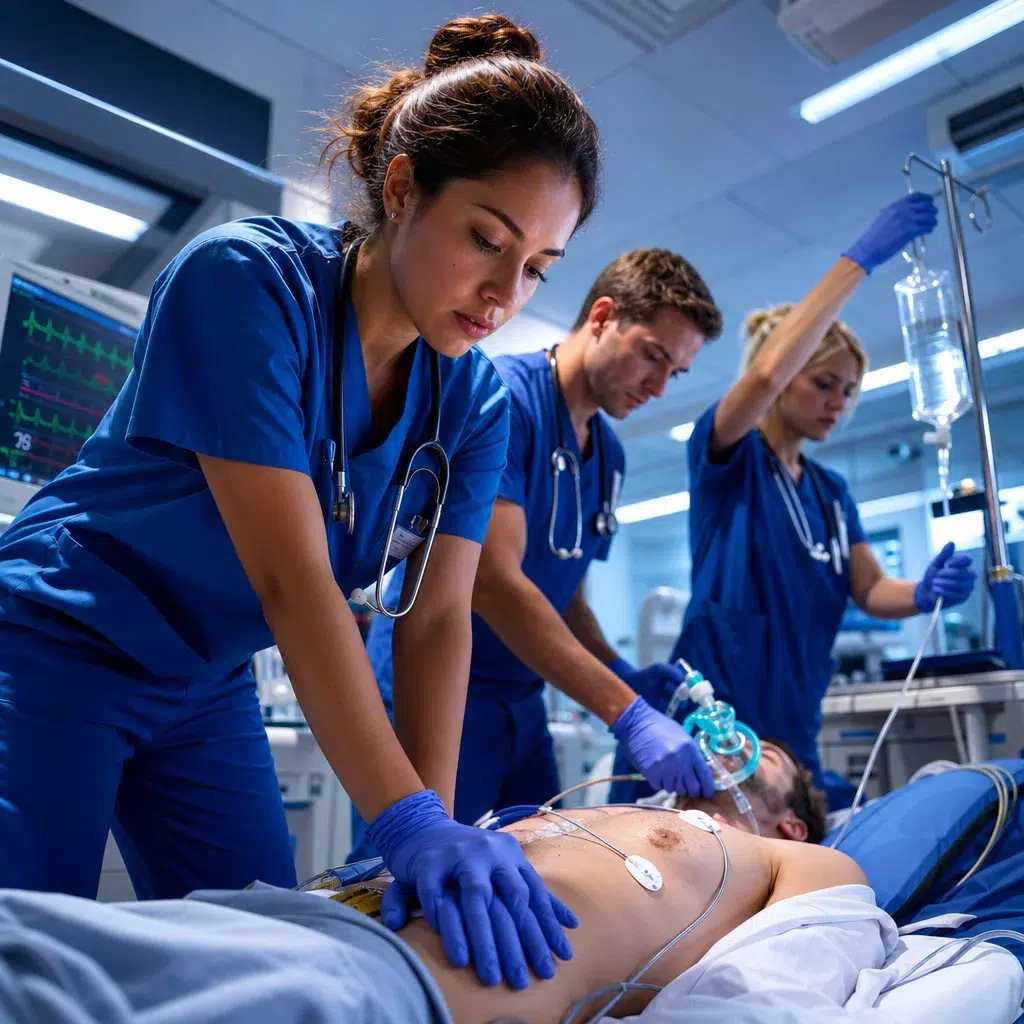
We’ve built our virtual platform to feel like learning, not compliance. You’ll see updated guidelines, watch expert-led technique videos, and work through realistic case studies that match your specialty. The goal isn’t just passing—it’s reinforcing the decision-making that saves lives in your actual workplace.
Your action step: Look for programs offering separate online and in-person components with flexible scheduling between phases. Avoid programs requiring consecutive days or rigid sequential timing.
3. Same-Day Certification Cards for Immediate Compliance
Here’s a scenario many nurses face: your certification expires in six days, you finally complete a renewal program, and you’re waiting ten business days for a card in the mail. Your facility’s compliance officer emails asking for proof. Your employment contract technically required current credentials. This gap—between course completion and physical credential arrival—shouldn’t exist.
We issue same-day certification cards immediately upon course completion. You finish your skills session, pass your assessment, and walk out with a wallet-sized card and digital credential valid nationwide. No waiting. No compliance risk. No administrative stress calling to verify when your credentials will arrive.
This matters more than convenience. Hospitals in Sacramento, Fresno, and the Bay Area require current ACLS or PALS for shift scheduling. If your card is “in transit,” you may not be schedulable until it arrives, affecting your income and your team’s coverage. Same-day cards eliminate this entirely.
We also provide digital wallet integration, so you can display your credential through your phone while the physical card is in your pocket. Your employer can verify your certification status in real time through our verification system, eliminating manual follow-up.
Your action step: Confirm that any renewal program offers same-day card issuance before enrolling. Ask specifically about digital credential delivery to ensure compliance the moment you complete the course.
4. Over 100 Training Locations for Maximum Convenience
Geography shouldn’t determine whether you can renew conveniently. We operate over 100 training locations throughout California, including dedicated centers in Alameda, Antioch, Bakersfield, Berkeley, Concord, Davis, Dublin, Fremont, Hayward, Lathrop, Livermore, Modesto, Oakland, Palo Alto, Redwood City, Sacramento, San Francisco, San Jose, Santa Clara, Santa Rosa, Sunnyvale, Tracy, Vallejo, Walnut Creek, and 70+ additional cities.
This network means you’re likely within 15-20 minutes of a skills session. Nurses in Campbell can attend downtown San Jose. EMS personnel in Visalia access Bakersfield facilities. Dental hygienists in Marin County reach Larkspur or Petaluma centers. You choose your location based on geography and schedule convenience, not on where the single program in your area offers classes.
We’ve positioned locations near major healthcare clusters: UCSF in San Francisco, Kaiser facilities across the Bay Area, Sutter Health centers in Sacramento, and community hospitals throughout the Central Valley. If you work in Danville, you’ll find classes in Pleasanton and Walnut Creek. Working in Chico means Redding or Sacramento options nearby.
Locations near you help you plan around your commute and schedule without traveling an hour for a certification.
Your action step: Map your workplace and home locations, then identify which of our training centers sits closest to your routine. Build your renewal timeline around a convenient location rather than waiting for a distant program.
5. Flexible Scheduling with Daily Class Offerings
Inflexible class schedules force you to request specific days off, sometimes weeks in advance. That conflicts with shift trading, staffing coverage, and your own unpredictable schedule. Real flexibility means options, not constraints.
We offer ACLS and PALS skills sessions daily at most locations, with morning, afternoon, and evening time slots. Nurses working 12-hour shifts can attend a morning session before work or an evening session after. Those with rotating schedules pick sessions that align with their days off. Traveling nurses or agency staff fit renewal between assignments. Day shift, night shift, weekend shift—we accommodate it.
This differs fundamentally from programs running classes once or twice monthly on fixed weekdays. That model forces your schedule around their offering, not the other way around. If the next available class is three weeks away and it’s a Tuesday, you either request time off or miss your renewal window.
Daily offerings also create backup options. If an unexpected patient crisis or family emergency blocks your scheduled session, you can reschedule to the next available time without waiting weeks. This flexibility prevents the frustration of non-refundable deposits and rigid no-show policies.
Your action step: Verify that your chosen program offers at least 4-5 class times per week at your selected location. Ask about their rescheduling policy if you need to shift your date due to work demands.
6. Low Price Guarantee for Budget-Conscious Healthcare Professionals
Renewal costs matter, especially when you’re paying out of pocket or your employer only reimburses specific amounts. We guarantee the lowest price on ACLS and PALS renewal in California—if you find a lower rate elsewhere, we match it and refund the difference.
This pricing approach removes the hunt for deals and the uncertainty about whether you’re overpaying. You enroll knowing you’ve selected the best financial value available. That certainty is worth something, especially for nurses paying renewal costs from their own budgets.
Bulk and group pricing amplifies the savings. If your unit, clinic, or practice schedules multiple nurses for renewal together, we offer tiered discounts that lower the per-person cost further. A pediatric ICU in Fremont or an emergency department in San Francisco can coordinate group sessions and reduce total costs while keeping everyone current.
We also accept payment plans and most health savings accounts, removing the barrier of needing full payment upfront. You’re not choosing between renewal and paying a bill this week.
Your action step: Request a quote from us and any program you’re considering. Confirm their pricing model and ask about group discounts if you work with colleagues planning renewal soon. Use our price guarantee to validate you’re getting the best available rate.
7. Specialized Nursing-Focused Curriculum and Expert Instruction
Not all ACLS instructors are created equal. An instructor who teaches once a year as a side gig differs fundamentally from one who works in clinical nursing or emergency medicine daily. Your curriculum and instructors shape whether renewal feels like compliance or actually reinforces skills you’ll use immediately.
Our instructors are active healthcare professionals—nurses, emergency medicine physicians, paramedics, and cardiologists who practice what they teach. They’ve managed the exact cardiac emergencies your courses cover. They understand hospital workflows, nursing hierarchies, and the real-world constraints you face during actual resuscitations. Their teaching reflects that lived experience.
Our curriculum emphasizes scenarios you’ll encounter: acute coronary syndrome in the post-op unit, arrhythmia recognition in the ICU, pediatric decompensation on a busy pediatric floor. You’re not memorizing algorithms for hypothetical situations. You’re practicing decision-making in your actual workplace context.
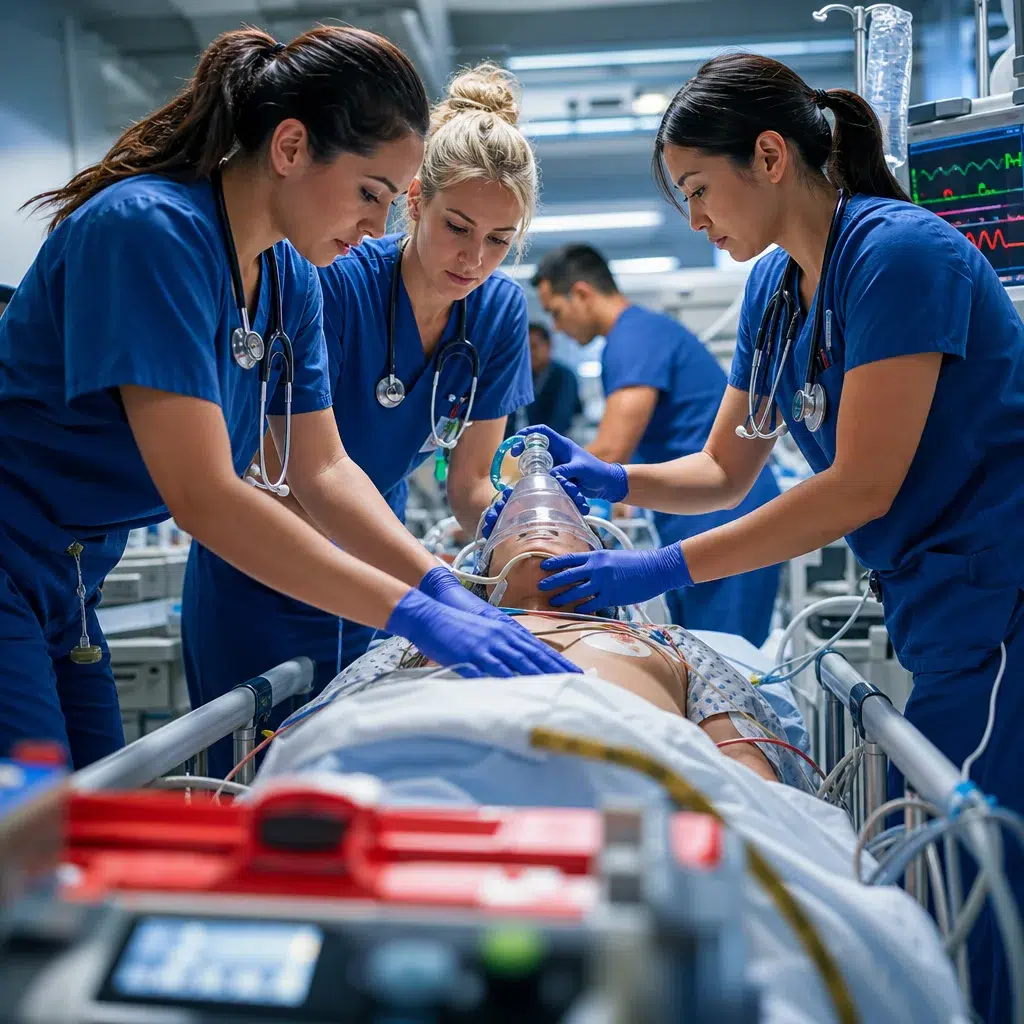
For nurses specifically, we integrate documentation requirements, chain-of-command communication, and team leadership roles. PALS content emphasizes the unique physiology and medication protocols for pediatric patients. ACLS covers the role nurses play in code leadership and post-resuscitation care, not just CPR technique. You complete your renewal understanding how your skills fit into your professional scope.
Small class sizes ensure personalized instruction. You’re not in a 50-person auditorium where the instructor can’t see whether your chest compressions are adequate. Our typical skills groups have 6-10 participants, allowing direct feedback and confidence-building before you leave. You walk out knowing your performance is solid, not just hoping you passed.
Your action step: Ask potential programs about their instructor background and ask to review course curriculum before enrolling. Prioritize programs led by active clinicians, not just certification trainers. Your renewal should reinforce skills directly applicable to your role.
—
Finding flexible ACLS and PALS renewal doesn’t mean compromising on quality, cost, or convenience. It means selecting a program designed for your reality as a busy healthcare professional. Blended learning structures your study time around your schedule. Daily class offerings eliminate the waiting game. Same-day cards ensure immediate compliance. Our 100+ California locations put training near your workplace and home. Low pricing guarantees remove financial stress. Expert instructors from your own profession ensure the content matters.
We’re committed to making renewal the least disruptive part of maintaining your professional credentials. Your patients deserve your current knowledge and skills. You deserve a renewal process that respects your time and your budget.
Start your renewal today. Enroll in a program that fits your life, not the other way around.
Register for a class today.
Frequently Asked Questions (FAQ)
What makes our blended learning approach different for ACLS and PALS renewal?
We combine online coursework with in-person skills testing so you can study at your own pace and then complete your hands-on evaluation when it fits your schedule. Our model lets you prepare from home or between shifts, then come to one of our 100+ California locations for the practical component that counts toward your certification.
Can I get my certification card the same day I complete our course?
Yes, we issue same-day certification cards upon successful completion of both the written and skills portions of our courses. This means you can renew your credentials and return to work with immediate compliance documentation, which we know matters for your licensing and employment requirements.
How do we keep our renewal courses affordable compared to other options?
We back our low price guarantee so you won’t find a lower rate for the same quality certification anywhere else. We maintain competitive pricing while offering daily class availability across our extensive network, which reduces overhead and lets us pass those savings directly to you.