
Table of Contents
- Why Proper First Aid Response Matters for Injury Prevention
- Understanding the Difference Between Sprains and Fractures
- The RICE Protocol: Our Proven Method for Initial Care
- Recognizing Fracture Symptoms and When to Seek Emergency Help
- Immobilization Techniques We Teach in Our Certification Courses
- Common Fall Injuries and Immediate Treatment Approaches
- How Our Blended Training Prepares You for Real Emergencies
- Legal and Professional Liability When First Aid Goes Wrong
- Creating a First Aid Kit Your Team Can Access Immediately
- Why Healthcare Professionals Need Updated Certification Every Two Years
- Get Certified Through Our California Training Network Today
- Frequently Asked Questions (FAQ)
Why Proper First Aid Response Matters for Injury Prevention
The first few minutes after an injury occur are critical. How you respond in those moments can mean the difference between a quick recovery and long-term complications. Whether you’re a nurse managing a patient fall, a dentist responding to a workplace incident, or an EMS provider on scene, knowing exactly what to do prevents secondary injuries and accelerates healing.
Improper first aid can worsen swelling, cause nerve damage, or allow minor injuries to become permanent disabilities. We’ve trained healthcare professionals across California, from Sacramento to San Francisco, who understand that prevention starts with knowledge. When you respond correctly to sprains, fractures, and falls, you reduce inflammation, stabilize the injury, and buy critical time for professional medical evaluation.
The stakes are especially high in healthcare settings where patient safety directly impacts licensing and liability. Your workplace protocols depend on staff who can act decisively and confidently. Taking time to understand injury response isn’t optional in your role, it’s a core professional responsibility that protects both patients and your organization.
Understanding the Difference Between Sprains and Fractures
A sprain involves stretched or torn ligaments, the tissues connecting bone to bone. A fracture is a break or crack in the bone itself. This distinction matters because treatment approaches differ, and misidentifying an injury can delay proper care.
Sprains typically show these signs:
- Immediate swelling and bruising at the joint
- Pain that increases with movement
- Ability to bear some weight (though uncomfortable)
- Gradual onset of symptoms over hours
Fractures usually present with:
- Severe, sharp pain that’s often unbearable
- Visible deformity or unusual bone angle
- Inability to move the limb normally
- Immediate swelling that progresses rapidly
In real scenarios, determining the exact injury isn’t always clear, especially in the first moments. That’s why our training emphasizes treating suspected fractures conservatively, immobilizing the area, and erring on the side of professional evaluation. A nurse in Fremont treating a patient who fell in the bathroom should assume fracture until proven otherwise if severe pain is present.
The key takeaway: when doubt exists, treat it as a fracture and get imaging confirmation rather than risk permanent damage by under-treating.
The RICE Protocol: Our Proven Method for Initial Care
RICE stands for Rest, Ice, Compression, and Elevation. This framework guides immediate care for both sprains and suspected fractures in the first 24 to 48 hours.
Rest means stopping activity immediately. Don’t encourage weight-bearing or movement of the injured area. A patient who twisted their ankle should sit down, not “walk it off.” Rest prevents further tissue damage and allows your body’s natural healing process to begin.
Ice reduces swelling and numbs pain. Apply ice for 15 to 20 minutes every 2 to 3 hours during the first 48 hours. Always wrap ice in a towel, never place it directly on skin. Too much ice application causes tissue damage, so set a timer.
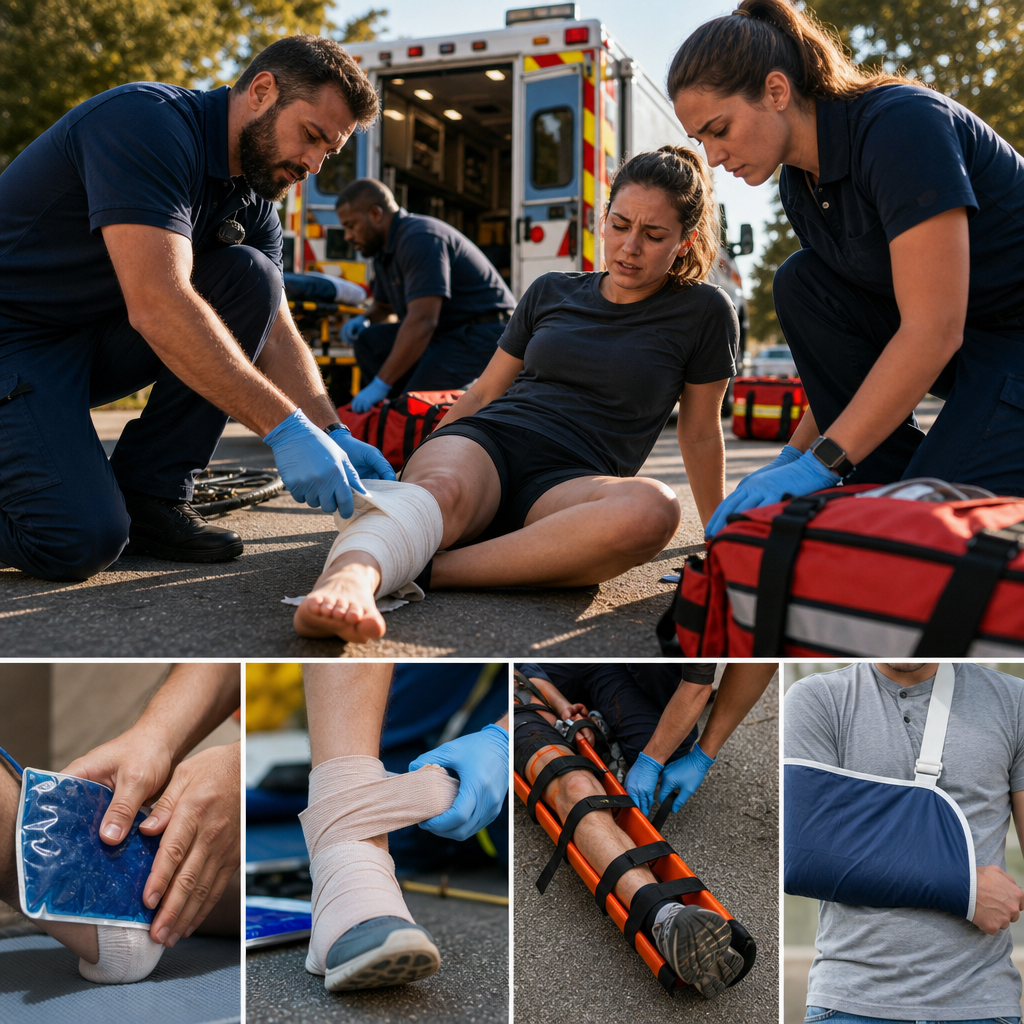
Compression limits swelling by applying gentle pressure with an elastic bandage or wrap. Wrap snugly but not so tight that you cut off circulation. The person should be able to slip a finger under the bandage.
Elevation uses gravity to reduce fluid accumulation. Raise the injured limb above heart level whenever possible. Someone with a wrist sprain should prop their arm on pillows while sitting.
Our instructors across locations from Bakersfield to Oakland teach this protocol hands-on so you can practice applying wraps and understand pressure points. When you execute RICE correctly, you minimize inflammation and set the stage for faster recovery without requiring advanced interventions.
Recognizing Fracture Symptoms and When to Seek Emergency Help
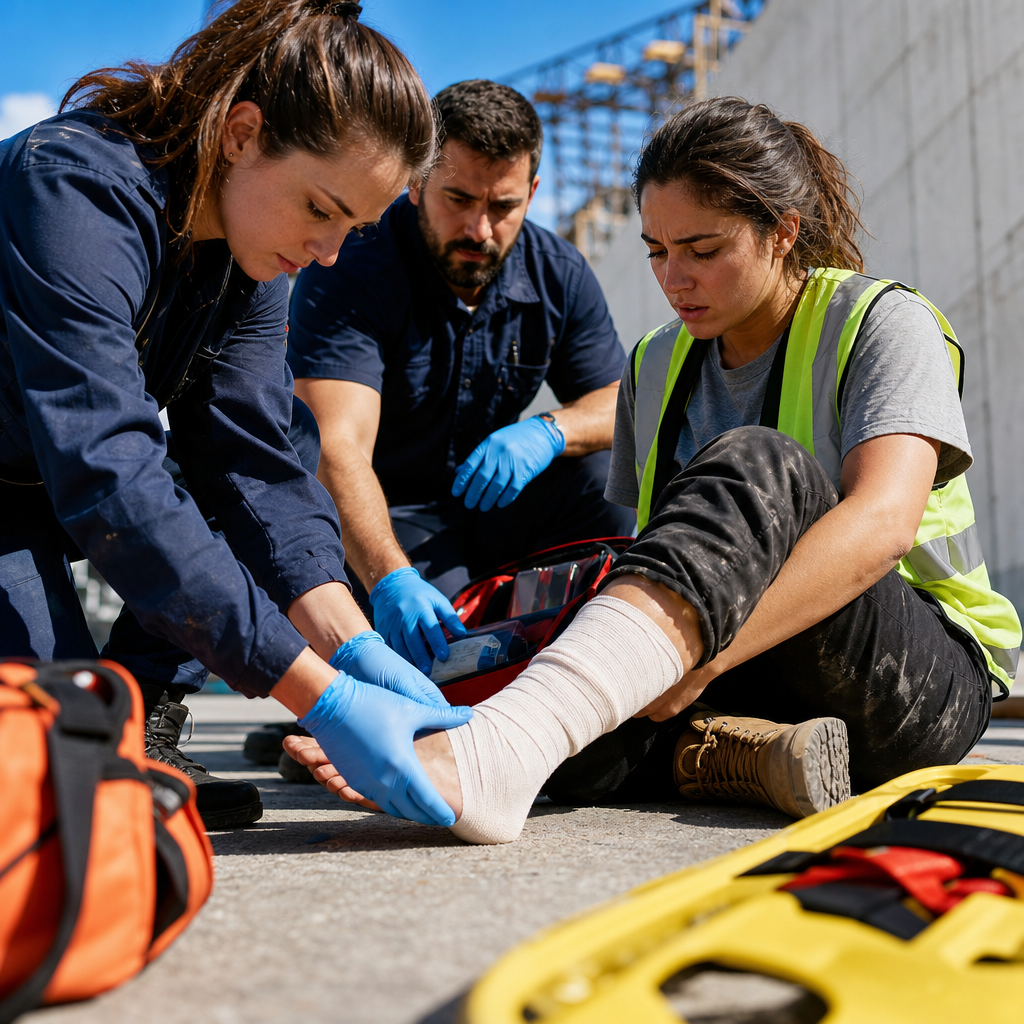
Some injuries demand immediate emergency transport. Recognizing these red flags prevents delays that could result in permanent disability or death.
Seek emergency help immediately if you observe:
- Severe, uncontrollable pain
- Obvious deformity, bone protruding through skin, or limb at an unnatural angle
- Loss of feeling or numbness below the injury
- Pale or cold skin below the injury (signs of compromised circulation)
- Open wounds with heavy bleeding
- Suspected spinal injury (neck or back pain after a fall)
- Injury involving multiple areas or suspected internal bleeding
A fall that results in chest pain, difficulty breathing, or head trauma requires emergency evaluation even if fractures aren’t obvious. EMS personnel in Modesto or San Jose should never delay transport to assess an injury fully in the field when these symptoms exist.
Delayed fracture symptoms can also develop. Swelling that worsens over 24 hours, increasing numbness, or color changes (deep purple or blue) warrant urgent imaging. Some fractures don’t show obvious signs initially but cause serious complications if left untreated.
Your professional judgment and confidence in recognizing danger signs protects lives. When in doubt, call for emergency services and don’t move the patient unnecessarily.
Immobilization Techniques We Teach in Our Certification Courses
Immobilization prevents a suspected fracture from becoming a confirmed fracture. Proper technique stops bone ends from shifting, reduces pain, and protects surrounding nerves and blood vessels.
Basic immobilization methods include:
- Slings and swathe for arm and shoulder injuries (supporting the arm across the chest with a triangular bandage)
- Splints using padded boards, rolled newspapers, or pillows to support limbs rigidly
- Cervical collars for suspected neck injuries (applied before any movement)
- Spinal boards for full-spine protection after major falls
The principle is consistency: the injured area shouldn’t move. A nurse at a Berkeley facility treating a patient with a fractured femur would use a long board with padding and secure straps, ensuring the leg stays aligned until imaging confirms the injury.
We demonstrate these techniques in our courses so you can practice under instructor guidance. You’ll learn how to assess limb alignment, check circulation before and after immobilization, and recognize when a bandage is too tight. Our hands-on sessions in Concord, San Rafael, and across California give you real-world experience that builds muscle memory.
Many immobilization mistakes happen because providers rush or haven’t practiced the steps. Deliberate practice in training eliminates hesitation during actual emergencies.
Common Fall Injuries and Immediate Treatment Approaches
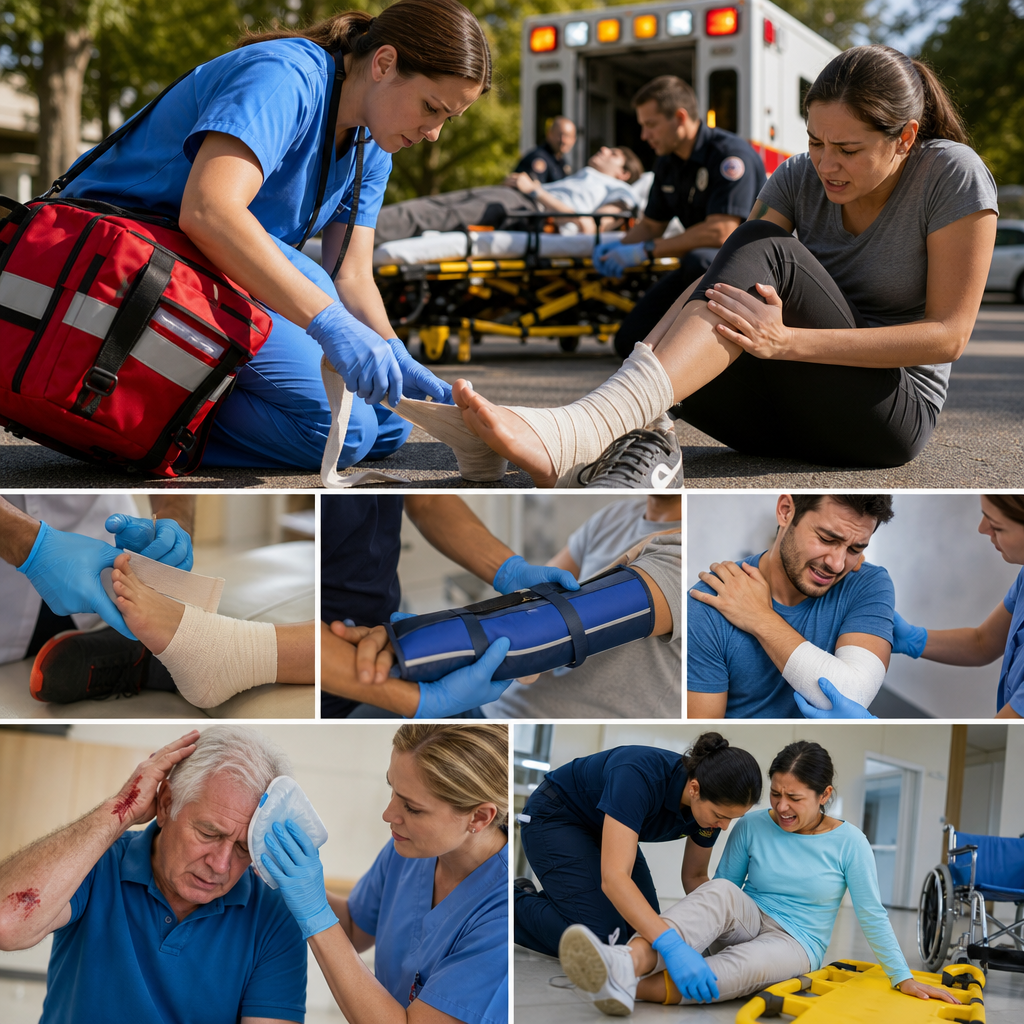
Falls are the leading cause of unintentional injury in adults, and healthcare settings see them frequently. Common fall injuries include wrist fractures, ankle sprains, hip fractures, and head injuries.
Wrist fractures often occur when someone catches themselves falling. Apply RICE, immobilize with a sling, and seek imaging. Even falls from standing height can cause serious fractures requiring surgery.
Ankle sprains range from mild to severe. Have the person sit immediately and elevate the leg. Apply ice and compression, then assess whether they can bear weight without severe pain. Inability to stand suggests fracture rather than simple sprain.
Hip fractures are particularly dangerous in older patients. The person typically cannot stand or walk, experiences severe pain with any leg movement, and may have internal bleeding. Immobilize the leg and call for emergency transport immediately.
Head injuries require careful observation even if the fall seems minor. Look for confusion, dizziness, vomiting, or loss of consciousness. In healthcare settings in Hayward, Sacramento, or anywhere in California, document any head impact and monitor closely, knowing that some brain injuries develop over hours.
Rib fractures from falls can puncture lungs if overlooked. Sharp pain with breathing or coughing, especially if the person breathes shallowly to avoid pain, signals serious injury needing imaging.
For any fall involving a patient or staff member, document exactly what happened, how they fell, and what body parts struck what surfaces. This information helps emergency providers and reduces liability questions later.
How Our Blended Training Prepares You for Real Emergencies
We combine virtual instruction with hands-on in-person skills sessions to build confidence and competence. You watch technique videos and review anatomy on your own time, then practice the actual responses with our certified instructors at one of our training centers.
This blended approach mirrors how you’ll actually respond in emergencies. You won’t have time to reference a manual when someone falls in your facility. Your muscle memory, decision-making process, and calm demeanor come from practicing the exact motions with real equipment.
Our instructors, based across more than 100 California locations including Redding, Fresno, and the Bay Area, teach what you need to know without excess complexity. You’ll practice wrapping sprains, immobilizing suspected fractures, moving injured patients safely, and making rapid decisions about when to call for emergency help.
Each course emphasizes repetition and scenario-based learning. You might practice treating a coworker’s wrist sprain one moment and responding to a simulated workplace fall the next. This variety builds adaptability so you’re prepared when actual emergencies don’t follow textbook patterns.
Our low price guarantee ensures you’re not choosing between cost and quality. Professional certification shouldn’t be a financial barrier, especially when your job depends on current credentials.
Legal and Professional Liability When First Aid Goes Wrong
Improper first aid can result in lawsuits, licensing investigations, and financial liability for you personally and your organization. A worsened injury from incorrect immobilization, missed fracture symptoms, or delayed emergency transport creates legal exposure.
Most jurisdictions protect healthcare professionals who provide care in good faith using appropriate training and techniques. However, this protection only applies if your actions reasonably align with accepted standards. If you immobilize a fracture incorrectly or fail to recognize emergency signs you should have known, legal liability increases significantly.
Employers also face vicarious liability if staff provide substandard first aid. Your organization can be held responsible for employee actions, which is why mandatory training requirements exist. When all staff hold current certifications through verified courses, the organization demonstrates due diligence and standard-of-care compliance.
Documentation protects everyone. Write down what happened, when you responded, what actions you took, and what the outcome was. If an incident later becomes a legal matter, your notes provide evidence that you acted appropriately based on the information available at that moment.
We track and verify all certifications so your records remain current and auditable. Our verification stations at locations throughout San Jose, Sacramento, and statewide make renewal convenient.
Creating a First Aid Kit Your Team Can Access Immediately
Your workplace first aid kit should contain supplies for treating sprains, fractures, and minor injuries. Location and accessibility matter as much as contents.
Essential items include:
- Elastic bandages in multiple sizes for compression
- Triangular bandages for slings
- Gauze pads and antibiotic ointment
- Non-adherent pads for wounds
- Adhesive tape and scissors
- Pain reliever and anti-inflammatory medication (if permitted by your workplace)
- Ice packs (reusable or instant chemical)
- Splinting materials or padded boards
- Gloves and face masks
- CPR face shield or barrier device
- First aid manual or quick reference guide
Mount the kit in a visible, labeled location that staff can reach in seconds, not minutes. In a Walnut Creek or Stockton healthcare facility, the kit should be as accessible as the emergency phone. Multiple kits in different areas ensure someone is always near supplies when needed.
Regularly audit and replenish supplies. Expired items and depleted bandages reduce your kit’s effectiveness. Assign someone to check it monthly and replace used items immediately.
Train your team on kit location and contents during orientation and certification courses. Staff who don’t know where the kit is can’t use it in emergencies.
Why Healthcare Professionals Need Updated Certification Every Two Years
Certification requirements exist because medical knowledge evolves. Guidelines change, new research emerges, and techniques improve. Maintaining current certification ensures you’re practicing based on current standards, not outdated methods learned years ago.
Your professional license often requires proof of current first aid certification. Employers verify these credentials during credentialing processes and annual compliance reviews. Lapsed certification creates compliance gaps and professional risk.
Recertification serves a second purpose: skill maintenance. If you complete first aid training once and never practice again, muscle memory fades and confidence erodes. Recertification courses refresh your hands-on skills, update you on any guideline changes, and rebuild confidence through practice.
We offer CPR and First Aid Certification courses at convenient times and locations across California. Many professionals complete recertification within 30 days of expiration to maintain continuous validity. Some complete renewal before expiration ends to avoid any gap.
Most courses take just one day, and our blended format means less classroom time. You complete virtual modules at your pace, then attend a focused in-person session for skills verification. This flexibility accommodates nursing shifts, dental practice schedules, and EMS rotations.
Get Certified Through Our California Training Network Today
Whether you’re in Alameda, Pleasanton, Woodland, or any location throughout California, we offer certification courses that fit your schedule and location. Our 100+ training centers mean a certified course is likely within minutes of where you work or live.
Our instructors bring real-world emergency experience to every course. They teach what actually happens in emergencies, not just theory. You’ll leave with practical, applicable knowledge and verified certification.
We maintain our low price guarantee because professional safety training shouldn’t strain your budget. Competitive pricing, convenient scheduling, and accessible locations make maintaining current certification straightforward.
Visit our California training locations to find a course near you or schedule online today. Your patients, coworkers, and professional license depend on your preparedness. The time to train is now.
Register for a class today.
Frequently Asked Questions (FAQ)
What’s the difference between how we teach sprain treatment versus fracture care?
We emphasize that sprains involve stretched or torn ligaments and typically respond well to our RICE protocol (rest, ice, compression, elevation) during initial care. Fractures are broken bones requiring immediate immobilization to prevent further damage, which is why we dedicate specific modules in our certification courses to proper splinting and stabilization techniques that you’ll practice hands-on during your in-person skills session.
Why do we require healthcare professionals to renew their certifications every two years?
We’ve found that staying current with our training protocols ensures you’re equipped with the latest injury response standards and techniques. Your role demands precision in emergency situations, and our refresher courses keep your skills sharp while meeting your professional licensing requirements across California.
How does our blended learning format prepare you for real emergency situations?
We combine virtual coursework covering anatomy, assessment protocols, and decision-making frameworks with practical in-person skills practice at one of our 100+ California locations. This approach means you’ll understand the “why” behind first aid protocols and then actually perform immobilization, CPR, and other critical techniques under expert guidance before you encounter a real emergency.