
Table of Contents
- Why San Francisco Healthcare Professionals Need Current ACLS Certification
- The Challenge of Finding Convenient, Quality ACLS Training
- How Our Blended Learning Approach Fits Your Busy Schedule
- Same-Day Certification: Get Compliant Quickly
- AHA-Aligned Curriculum You Can Trust
- Flexible Scheduling Across Multiple San Francisco Locations
- Affordable Pricing with Our Low-Price Guarantee
- What to Expect During Your ACLS Skills Session
- Support for Nurses, Dentists, and Emergency Responders
- Renewing Your ACLS Certification Made Simple
- Frequently Asked Questions (FAQ)
Why San Francisco Healthcare Professionals Need Current ACLS Certification
Your ACLS certification isn’t just a credential to display on your wall. It’s proof that you can respond confidently when a patient experiences cardiac arrest. In San Francisco’s healthcare environment, maintaining current Advanced Cardiac Life Support certification is a job requirement for nurses, emergency medicine physicians, dentists performing surgical procedures, and EMS personnel.
Hospitals, clinics, and dental practices across the Bay Area mandate ACLS recertification every two years. Without it, your license renewal may be delayed, and you could face restrictions on the duties you’re allowed to perform. Beyond compliance, ACLS training teaches you the latest protocols for recognizing and treating life-threatening cardiac events, from defibrillation techniques to medication administration during code scenarios.
We understand the pressure you face to maintain credentials while managing patient care, continuing education, and personal commitments. That’s why accessible ACLS certification near you matters. When your renewal is due, you need training that fits your timeline without compromising quality instruction.
Next step: Check your certification expiration date. If you’re within 90 days of renewal, scheduling your next class now prevents compliance lapses.
The Challenge of Finding Convenient, Quality ACLS Training
Finding a training provider that aligns with your schedule can feel impossible. Many facilities cluster classes during limited evening or weekend windows, forcing you to book weeks or months in advance. If your certification expires in two weeks, traditional options leave you scrambling.
Quality matters too. You need instructors who understand healthcare protocols firsthand, not trainers reading from a script. A cardiology nurse or emergency responder leading your session brings real-world context to case scenarios and rhythm strips. This experience-based teaching helps you apply skills in actual clinical situations.
Location is another consideration. Traveling across the Bay Area after a shift to Fremont or Hayward adds hours to your day. If you work in the Mission District and training is in South San Francisco, that commute eats into your recovery time.
We’ve built our ACLS program specifically to address these frustrations. Our instructors include working healthcare professionals who teach between their clinical shifts. We offer classes across multiple San Francisco neighborhoods and throughout California, with sessions scheduled to accommodate your availability.
How Our Blended Learning Approach Fits Your Busy Schedule
Our blended learning model splits training between online coursework and in-person skills practice. You complete the knowledge component at your own pace, on your schedule. This means reviewing cardiac rhythms, pharmacology, and treatment algorithms whenever it works for you, whether that’s early morning, during lunch, or late evening.
The online portion typically takes three to four hours and covers:
- Recognition of cardiac arrest and stroke
- Core ACLS algorithms and decision-making
- Medication administration and dosing
- Team communication during resuscitation
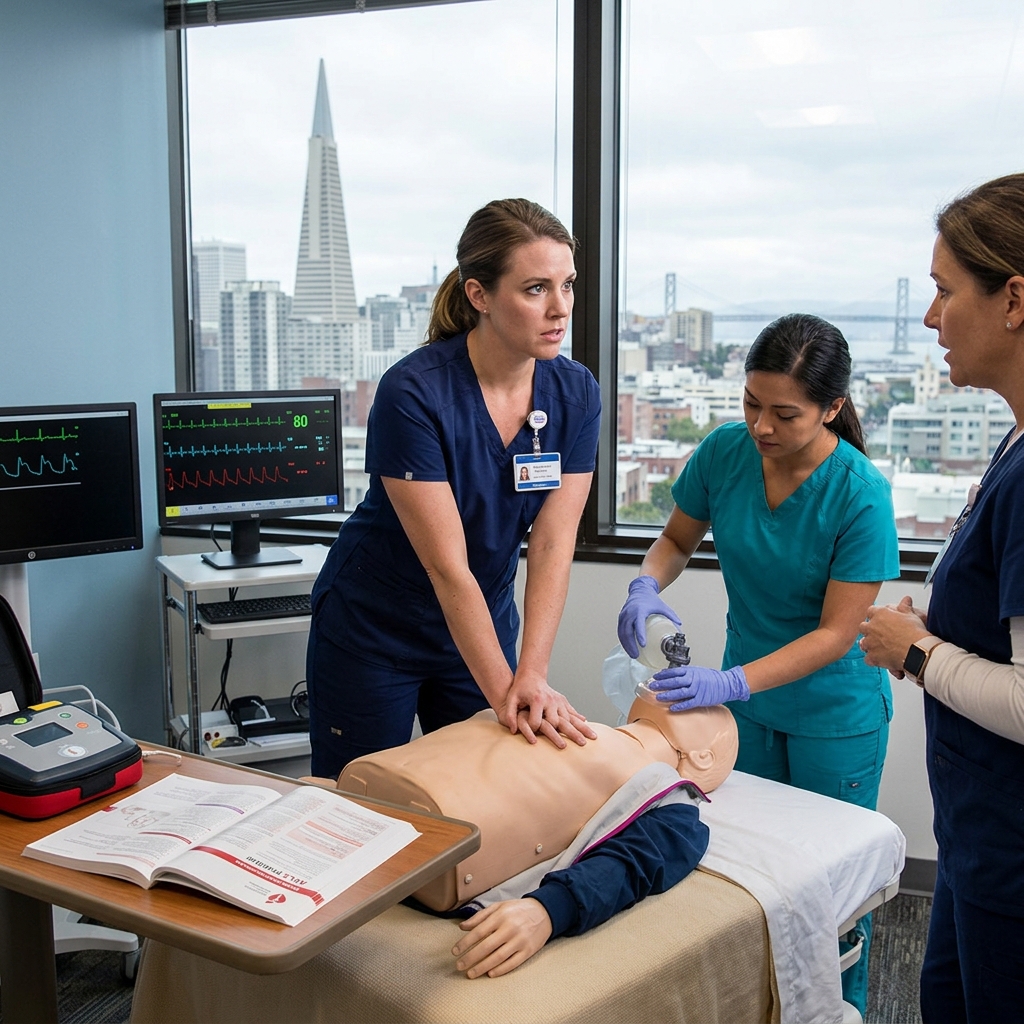
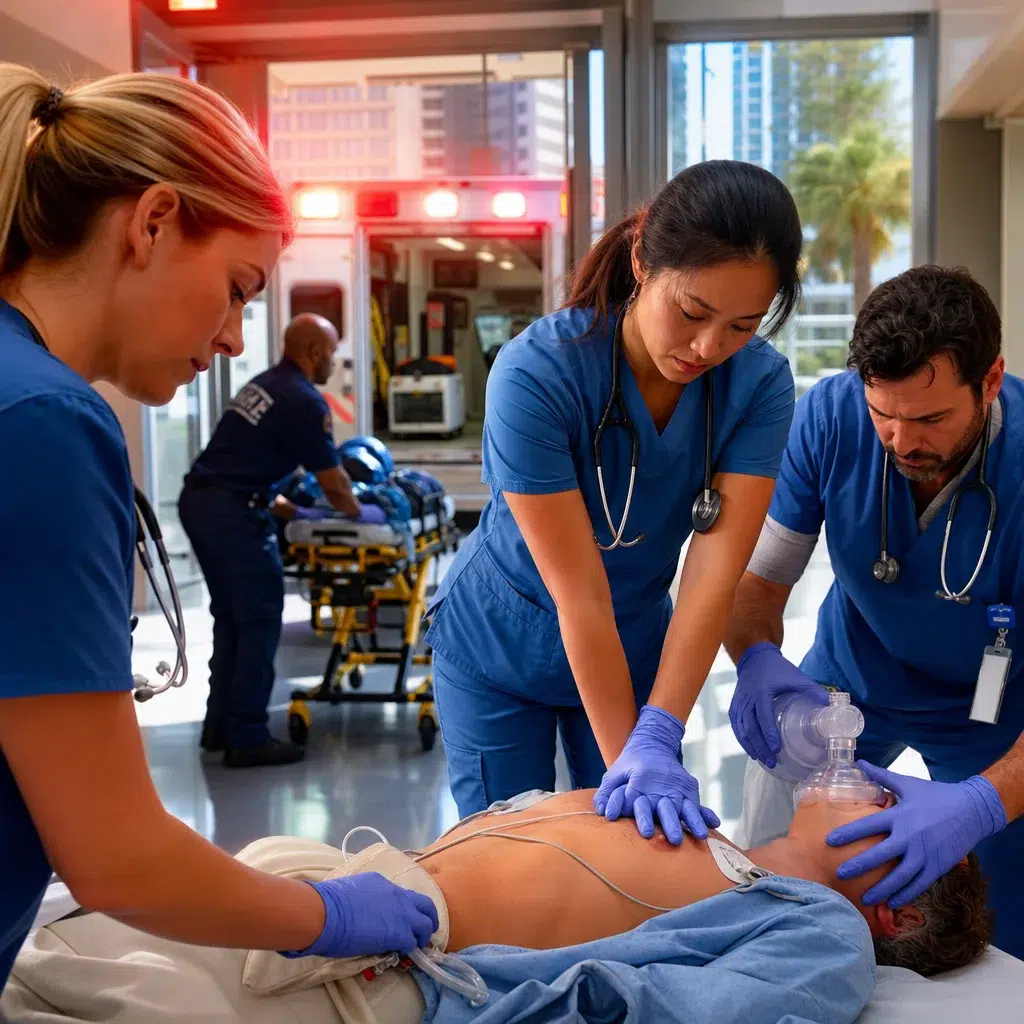
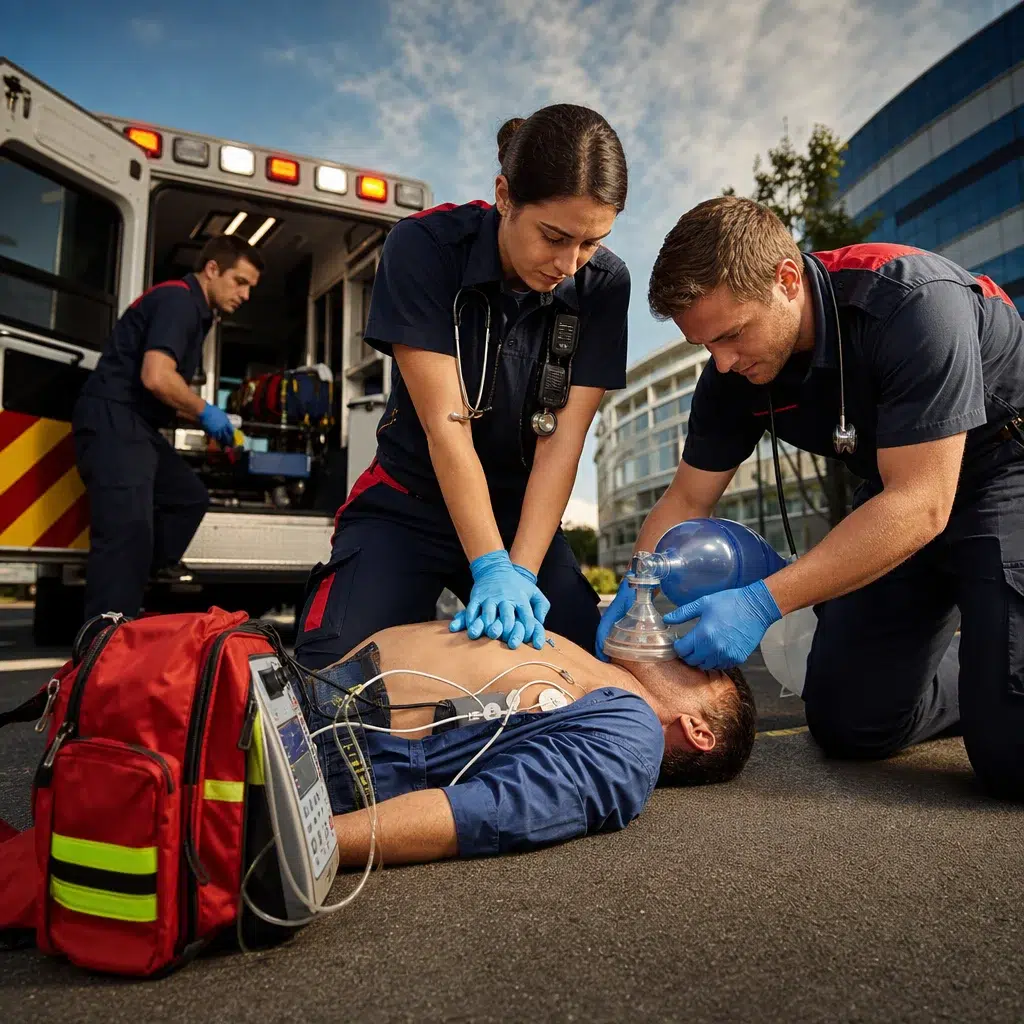
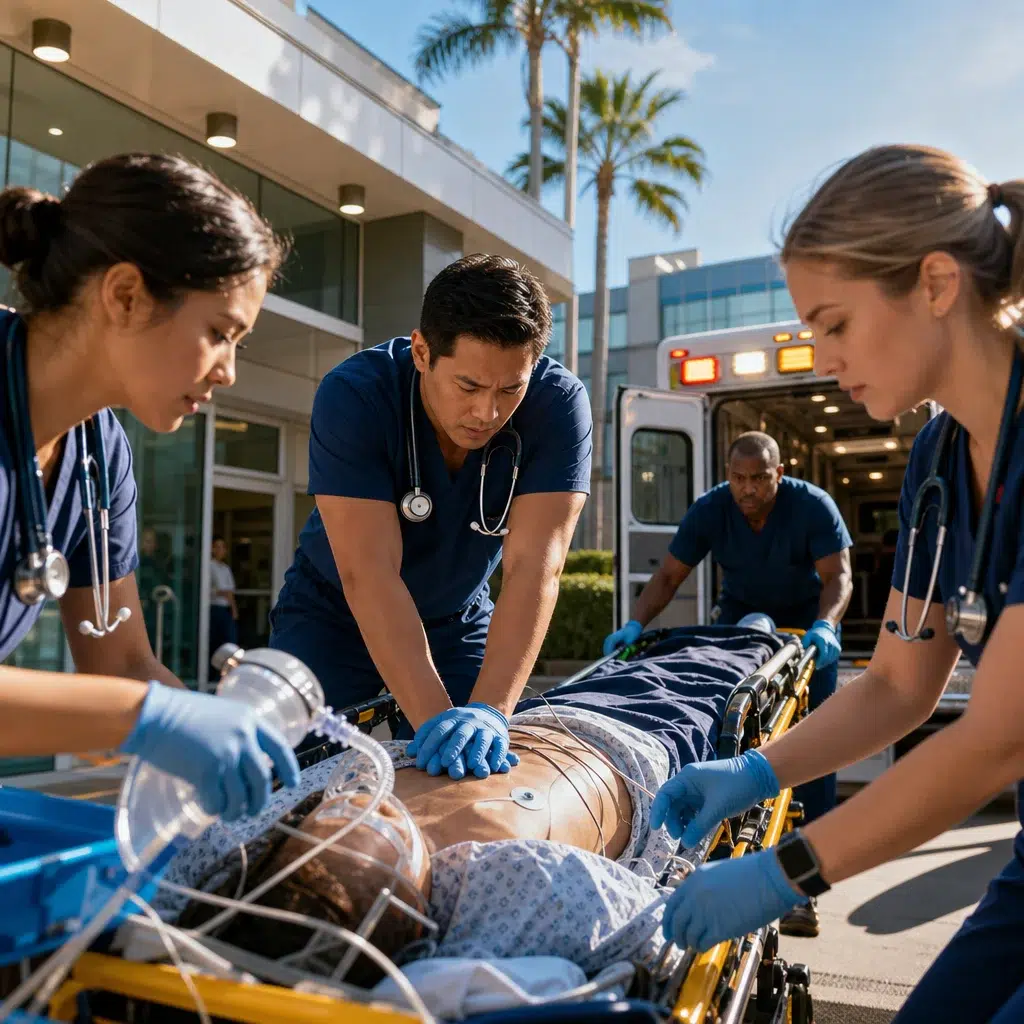
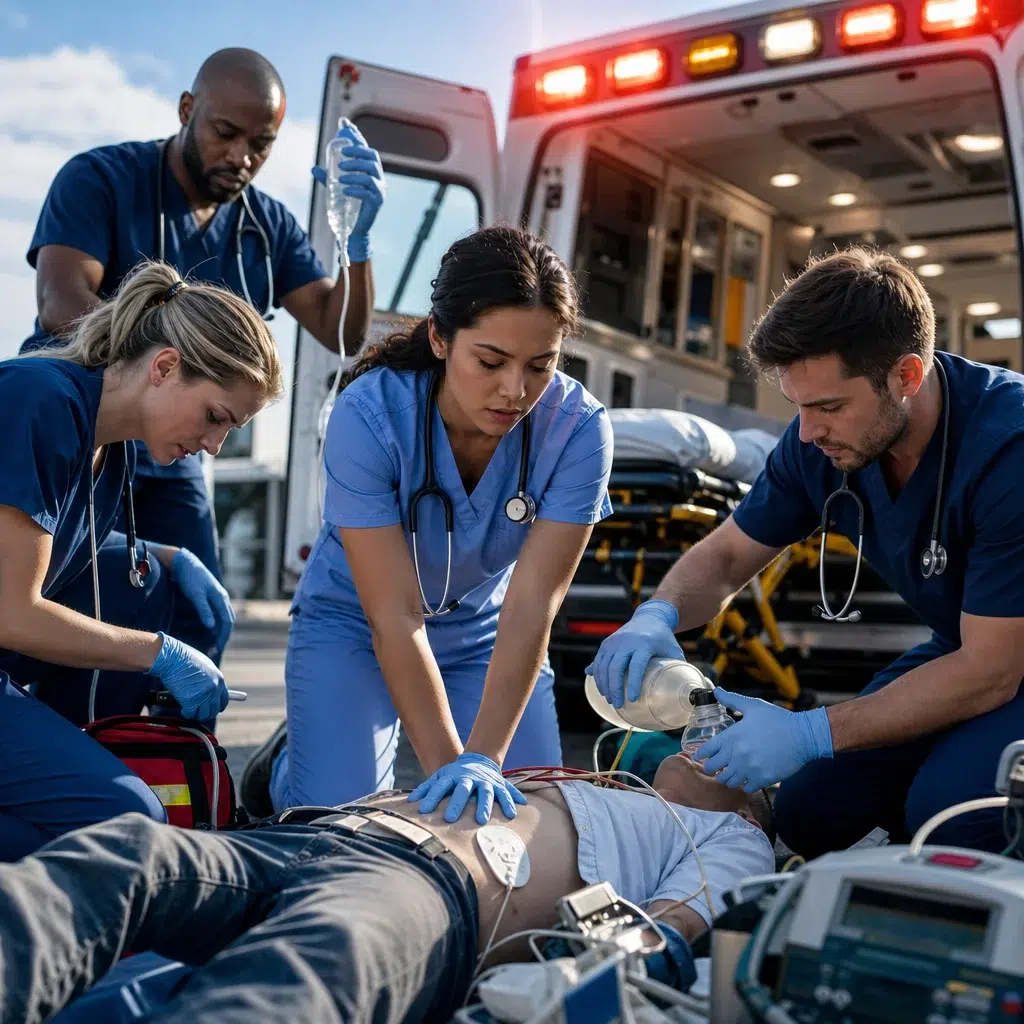
After completing the online content, you attend a hands-on skills session where you practice chest compressions, airway management, and scenario-based code simulations with our instructors. This in-person component usually runs two to three hours and includes supervised practice on manikins until you demonstrate competency.
This approach works because it respects your reality as a working healthcare professional. You’re not sitting through eight hours of lecture material you could read in half the time. Instead, you absorb concepts independently and come ready to practice and demonstrate mastery during your skills session.
Actionable tip: Register for your online course today and complete the knowledge component over the next week. Your skills session can be scheduled as soon as you finish.
Same-Day Certification: Get Compliant Quickly
If your certification expires soon, we offer same-day ACLS certification at most of our San Francisco locations. Complete your online coursework one day, then attend your skills session the next morning or afternoon. After passing the hands-on evaluation, you walk out with a valid certification card.
This rapid timeline prevents compliance gaps that could restrict your practice. We’ve helped countless nurses at facilities throughout San Francisco and nurses at surrounding areas like Fremont, Oakland, and San Mateo renew their credentials without workplace disruption.
Our same-day option doesn’t mean shortcuts. Your instructor will thoroughly evaluate your chest compression technique, code management decisions, and communication under simulated stress. You must demonstrate competency before certification. The speed comes from our flexible scheduling and streamlined process, not reduced standards.
Many healthcare professionals ask whether they can complete both components in a single day. Yes, though most find spacing them across two days more effective for retention. However, we accommodate single-day completion when your situation demands it.
AHA-Aligned Curriculum You Can Trust
Our curriculum aligns with American Heart Association guidelines, ensuring you learn current standards taught across healthcare facilities nationwide. Whether you transition to a new hospital in Sacramento, Los Angeles, or elsewhere in California, your training translates directly.
We cover the most recent updates to resuscitation science, including the latest evidence on compression rates, ventilation strategies, and post-resuscitation care. Your instructors stay current through ongoing professional development, so the protocols you learn reflect what your institution actually uses.
This consistency matters for patient safety and your professional credibility. When you lead a code, your team expects you to follow established algorithms. Our training ensures you’re equipped to do exactly that.
You’ll encounter scenario-based cases during your skills session that reflect real situations: a patient collapsing in the emergency department, a community member experiencing sudden cardiac arrest, a pediatric patient requiring modified technique. These aren’t hypotheticals. They’re the situations you’ll face in your role.
Flexible Scheduling Across Multiple San Francisco Locations
We operate training centers throughout San Francisco, including Parnassus near UCSF, the Mission District, Nob Hill, Sunset, and additional Bay Area locations in Oakland, San Jose, Berkeley, and surrounding communities. With over 100 locations across California from Redding to Visalia, you’re likely within 15 minutes of a convenient training site.
Classes run mornings, afternoons, and evenings throughout the week. Weekend sessions are also available if you prefer to complete your skills practice on days off. This scheduling flexibility means you’re not forced to take unpaid time off or arrange coverage just to renew your certification.
If you work in the East Bay, locations in Fremont, Hayward, Pleasanton, and Walnut Creek are available. Peninsula professionals can train in San Mateo, Palo Alto, or Los Gatos. Central Valley healthcare workers have access to classes in Sacramento, Modesto, Fresno, and other communities.
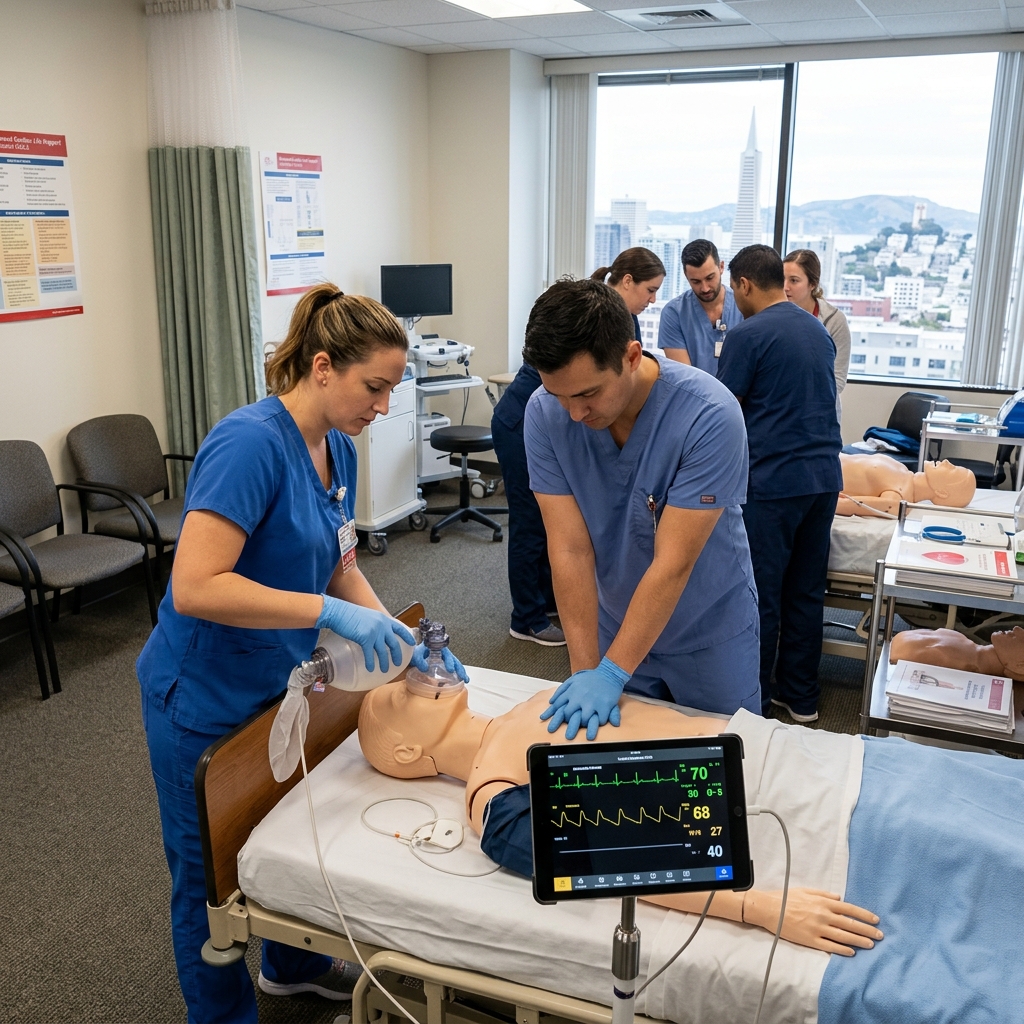
Our online component has zero scheduling constraints, so you’re never limited by classroom availability. Complete it whenever you want, then select your preferred in-person session from our current schedule.
Action item: Browse our San Francisco locations and note which is closest to your workplace or home. Knowing your options makes booking easier when you’re ready.
Affordable Pricing with Our Low-Price Guarantee
We price ACLS certification competitively and guarantee you won’t find the same quality instruction for less. Our low-price guarantee means if you find an equivalent course at a lower rate, we’ll match it.
Professional healthcare training shouldn’t drain your budget. Many employers offer tuition reimbursement for mandatory certifications, and we provide documentation to streamline that process. Even without employer support, our transparent pricing has no hidden fees. You know the total cost upfront.
We also offer group discounts for healthcare facilities. If your clinic, hospital, or practice needs to certify multiple staff members, we provide substantial per-person savings on bulk bookings. This approach has helped facilities throughout California from San Francisco to Fresno manage workforce certification efficiently.
Compare our service: experienced instructors, flexible blended learning, multiple convenient locations, and rapid certification. This combination typically costs more with other providers. We deliver it affordably because our model is efficient and our instructor pool includes working professionals earning less than full-time trainers.
What to Expect During Your ACLS Skills Session
When you arrive for your skills session, expect a small class, typically four to eight participants. This ratio ensures your instructor can watch your technique closely and provide personalized feedback.
Your session begins with a brief orientation to the manikins and equipment, then moves immediately into practice scenarios. You’ll perform:
- High-quality chest compressions on an adult manikin, demonstrating correct depth, rate, and hand placement
- Airway assessment and ventilation technique
- Defibrillator operation and pad placement
- Full code scenario management, typically lasting four to six minutes
- Team communication during resuscitation
Your instructor will walk you through each skill the first time, then observe you execute it independently. They’ll correct technique in real time, offering specific guidance. “Push a bit deeper” or “Slow your rate to 100 compressions per minute.” This feedback is immediate and actionable.
The scenario component simulates real stress. You’ll manage a manikin while your instructor plays the role of the patient’s family member, a concerned nurse, or another team member. This dynamic element teaches you to stay focused on the task while managing distractions.
After demonstrating competency in all skills and passing a brief knowledge check, you’ll receive your certification card before leaving. Many participants finish their session and return to work that afternoon certified and ready.
Support for Nurses, Dentists, and Emergency Responders
Healthcare professionals have different ACLS needs. Nurses working in cardiac units require deep familiarity with arrhythmias and code leadership. Dentists performing conscious sedation need to recognize sudden emergencies and respond appropriately. Emergency responders balance rapid intervention with transportation decisions.
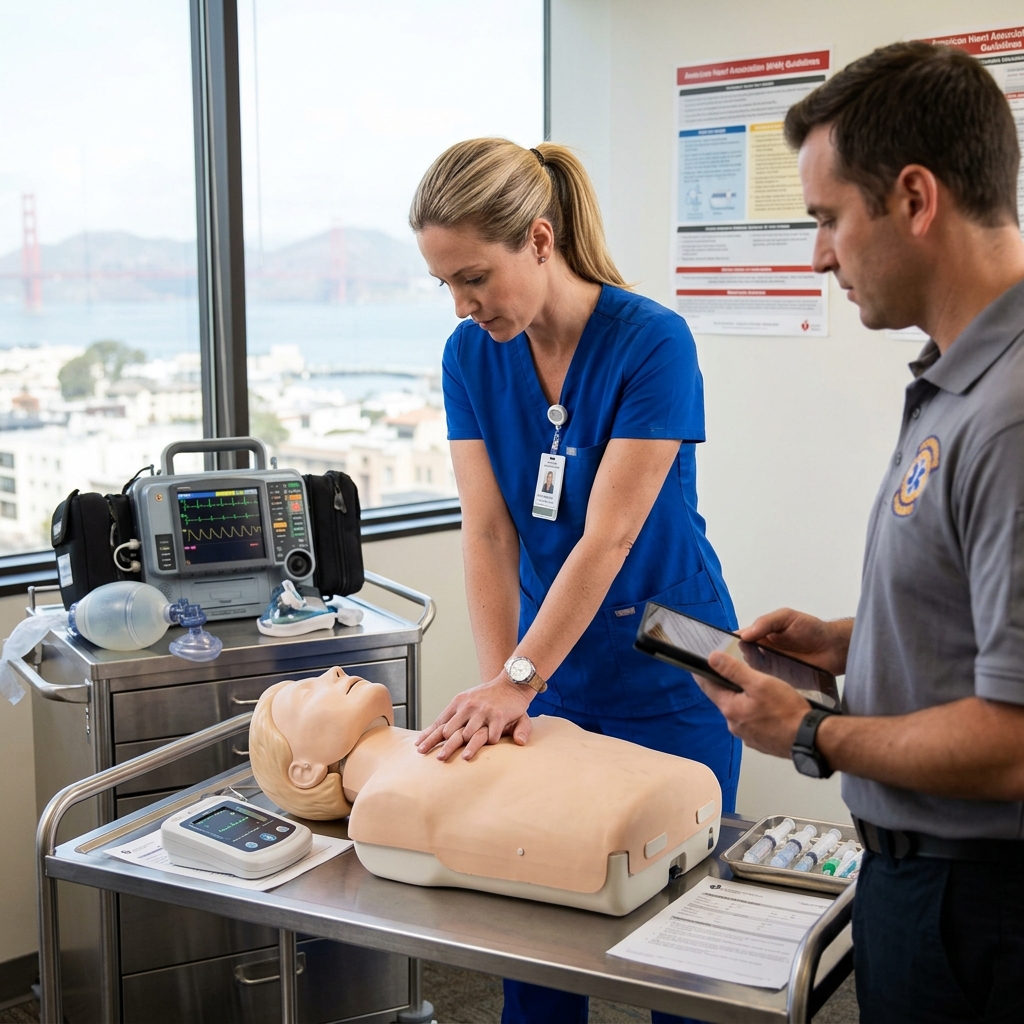
Our instructors tailor instruction to your role. Dentists might spend extra time on medication interactions and rapid airway assessment. Nurses will dig deeper into code algorithms and post-resuscitation care. Emergency responders practice scene assessment and rapid decision-making under limited information.
This flexibility means you’re not sitting through irrelevant material. Your training addresses the situations you’ll actually encounter in your practice setting, whether that’s a San Francisco dental office, a hospital ICU, or an ambulance responding to a call in neighborhoods across the Bay Area and beyond.
We’ve trained thousands of healthcare professionals across California, from nurses at major medical centers to dentists in small practices. This experience shapes how we teach. We know what your patients need, what your employer requires, and what will actually save lives in the scenarios you face.
Renewing Your ACLS Certification Made Simple
Renewal is as straightforward as your initial certification. Complete the online knowledge review, attend a skills session, and you’re recertified. Many professionals renew annually or biannually, staying ahead of expiration dates.
Set a calendar reminder 90 days before expiration. This window gives you flexibility to schedule without urgency. If your certification expires June 30th, starting the renewal process in April ensures you’re covered before any compliance deadline.
We maintain records of all certifications issued, so you can request replacement cards if you lose yours. Our customer support team can help track your renewal date, send reminders, and answer questions about prerequisites or course updates.
Your new certification card is valid for two years and recognized by healthcare employers throughout California. Whether you transition between facilities in San Jose, Bakersfield, Santa Rosa, or other California communities, your credential travels with you.
Final step: Schedule your initial or renewal ACLS certification today. Visit our ACLS certification page to register for your online coursework and select your preferred skills session. Your certification timeline begins immediately.
Register for a class today.
Frequently Asked Questions (FAQ)
Can I get ACLS certification on the same day?
Yes, we offer same-day certification through our blended learning model. You’ll complete the online portion at your own pace, then attend an in-person skills session at one of our seven San Francisco locations to demonstrate your competency. Most healthcare professionals finish within 24 hours of signing up.
What locations do you have in San Francisco?
We operate seven training centers across San Francisco to keep you close to work or home: Bayshore, Mission Bay, Mission District, Nob Hill, Parnassus/UCSF, Sunset, and Telegraph Hill. You can choose whichever location works best for your schedule when you book your skills session.
Do you offer renewal courses for expired ACLS certifications?
We absolutely do. Renewing your ACLS certification with us follows the same efficient process as initial certification, and our renewal courses are designed specifically for healthcare professionals who need to quickly get back into compliance without unnecessary repetition.