Table of Contents
- Why California Healthcare Professionals Need Flexible BLS Training Solutions
- The Challenge of Balancing Work and Mandatory Certifications
- How Blended Learning Transforms Your BLS Training Experience
- Our Two-Phase Training Model: Virtual Preparation Plus Hands-On Skills
- Real-World Practice with RQI Simulation Technology
- Convenient Scheduling Across 100+ California Training Locations
- Same-Day Certification Cards for Immediate Compliance
- Low Price Guarantee Without Compromising Quality Standards
- Perfect for Nurses, Dentists, EMS, and Healthcare Teams
- Schedule Your Blended BLS Training Today
- Frequently Asked Questions (FAQ)
Why California Healthcare Professionals Need Flexible BLS Training Solutions
Your schedule doesn’t pause for training requirements, and neither should your certification path. California healthcare professionals face mounting pressure to maintain current BLS (Basic Life Support) credentials while juggling patient care, shift work, and ongoing education demands. We understand that traditional all-in-person training often forces you to choose between time away from work and staying compliant with licensure requirements.
Blended BLS training solves this conflict by splitting your learning into manageable phases. You complete knowledge review and theory online at your own pace, then attend focused, hands-on skills sessions when your schedule permits. This approach cuts total classroom time significantly while ensuring you master critical techniques like chest compressions, rescue breathing, and automated external defibrillator (AED) operation.
We’ve designed our blended model specifically for California’s healthcare workforce. Whether you’re in Sacramento, San Francisco, or smaller regional centers like Lathrop or Visalia, you gain access to flexible scheduling without sacrificing the rigorous, instructor-led skills validation your license demands.
Next step: Evaluate whether your current certification expires within the next 90 days. If so, blended training can be scheduled around your existing commitments rather than forcing time off.
The Challenge of Balancing Work and Mandatory Certifications
Mandatory BLS certification isn’t optional for nurses, dentists, EMS personnel, and many other healthcare roles in California. Yet the traditional model of blocking out 4-6 hours for a single in-person session conflicts with patient responsibilities, shift rotations, and the reality of healthcare work.
Many professionals postpone recertification until the last moment, creating stress and workplace compliance gaps. Others miss their renewal window entirely, leading to temporary credential suspension or practice restrictions. We’ve seen talented clinicians delayed from starting new positions because certification lapsed by weeks.
Blended learning removes this pressure. You’re not locked into a rigid, full-day commitment. Instead, you manage theory content during downtime—early mornings, lunch breaks, or evenings—then reserve just 2-3 hours for the hands-on skills assessment. This flexibility particularly benefits night-shift nurses in Oakland or EMS crews rotating through Fremont and Pleasanton schedules.
The compliance window stays predictable and controllable, reducing last-minute scrambling and ensuring your credentials remain continuously valid for employer compliance audits.
Actionable takeaway: Check your current certification expiration date today and work backward 30 days. Begin the online portion of training at that point to eliminate renewal stress.
How Blended Learning Transforms Your BLS Training Experience
Blended learning isn’t simply “watch a video, then show up for skills.” It’s a structured two-component system designed to maximize retention while respecting your time constraints.
Our model integrates interactive online content covering cardiac emergency protocols, recognition of cardiac arrest, and decision-making frameworks. You review scenarios, complete knowledge checks, and refresh your understanding of current guidelines. This self-paced phase typically takes 1-2 hours and can be completed from your home, a break room, or between shifts.
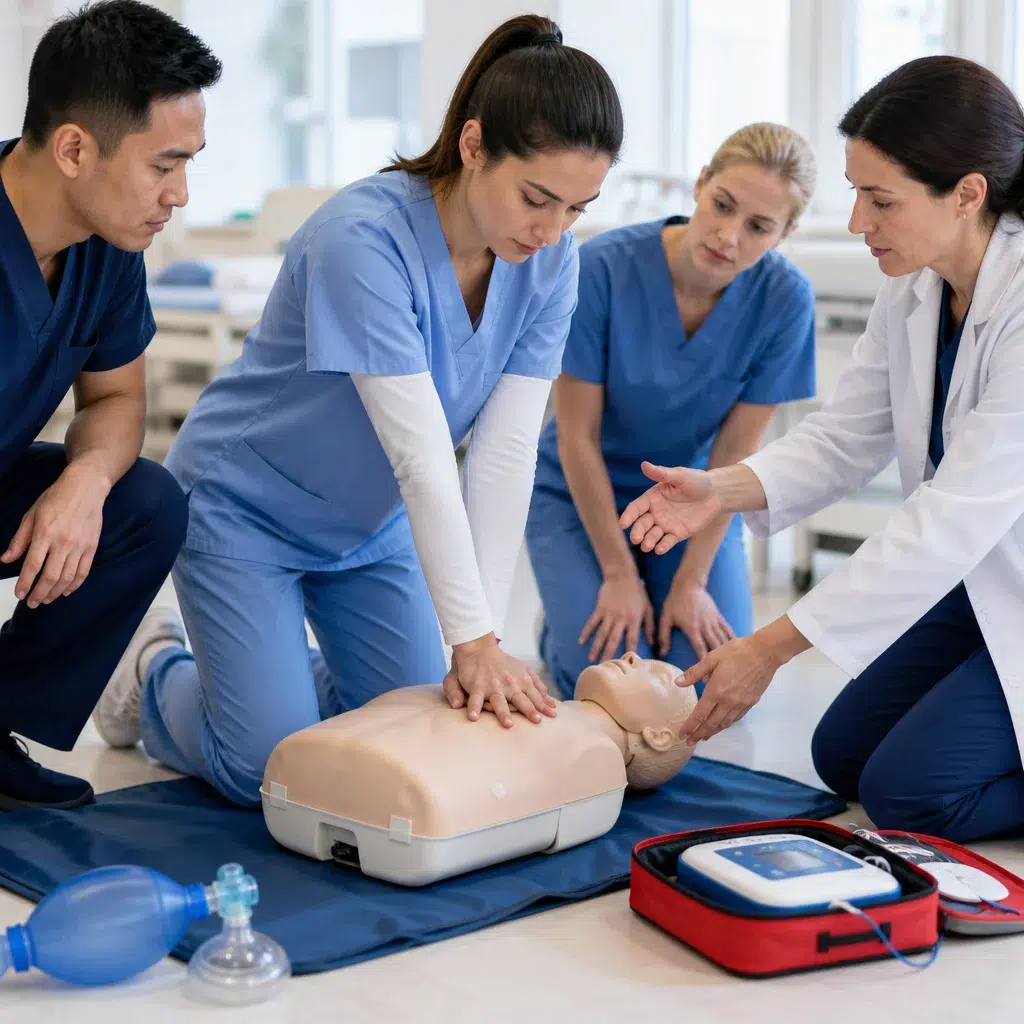
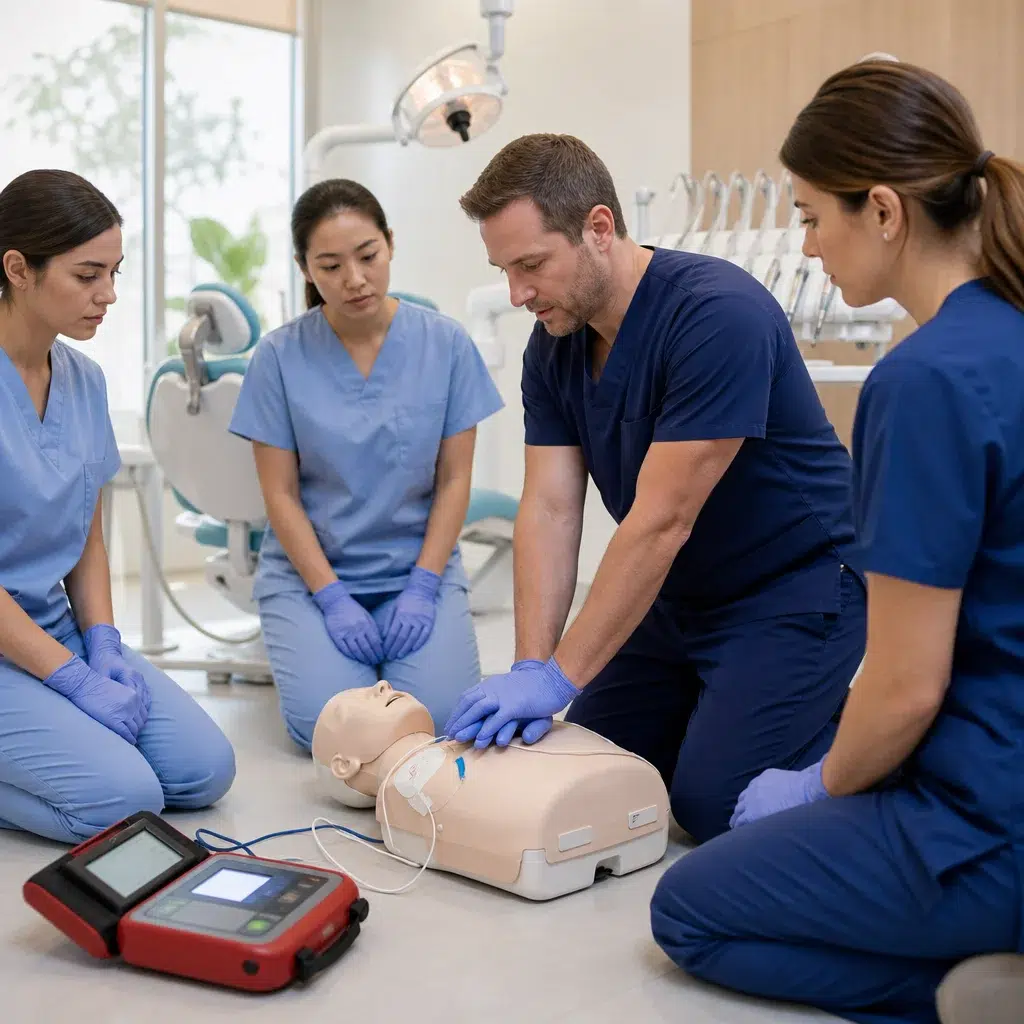
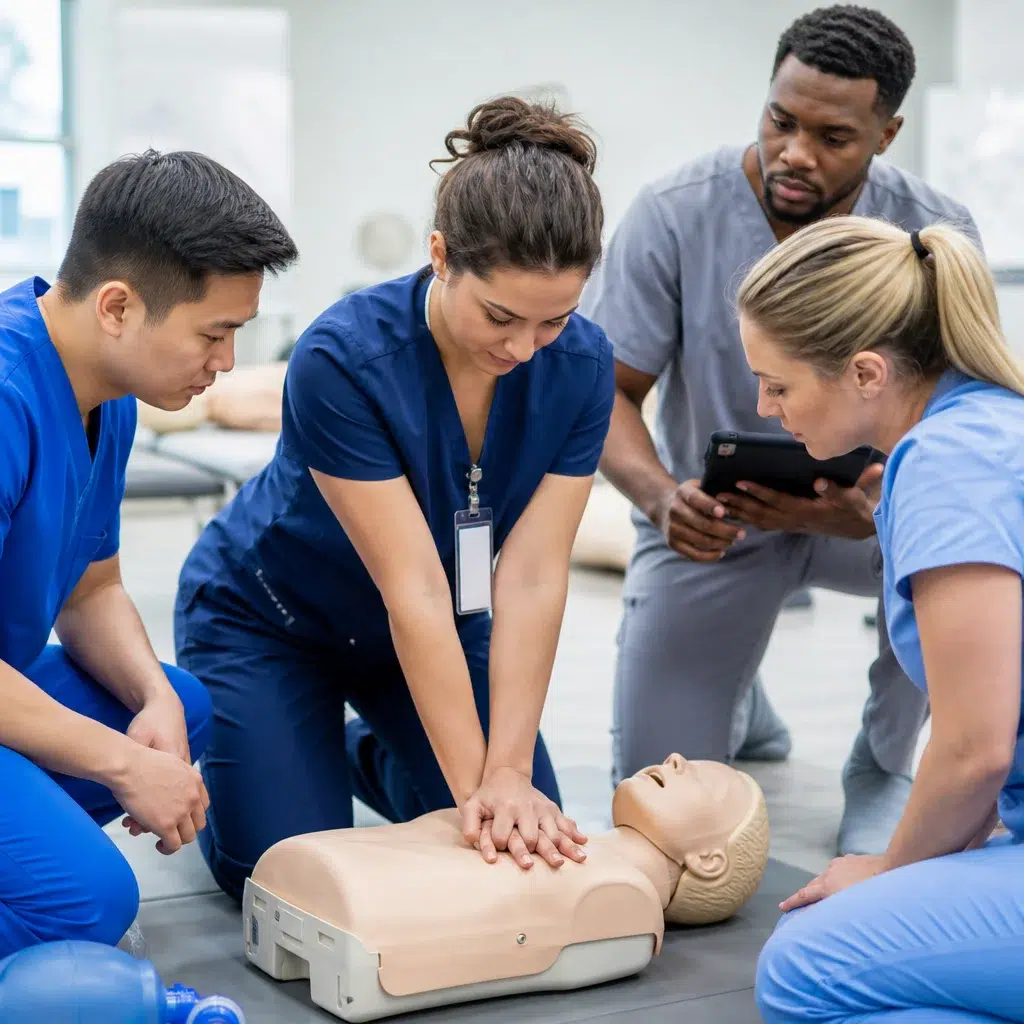
The second component focuses entirely on what matters most: demonstrating competency with a skilled instructor. You practice chest compressions with real-time feedback, learn proper AED placement and use, and work through team dynamics scenarios. Instructors observe your technique, correct form issues immediately, and ensure you meet certification standards.
This split approach transforms the learning experience. You arrive at your in-person session already oriented to concepts and vocabulary. Classroom time becomes productive practice rather than passive lecture. Retention improves because you’re applying knowledge actively, not absorbing information passively for the first time.
We’ve structured our flexible EMS blended learning to align with how emergency responders actually learn, and that same methodology benefits every healthcare professional seeking current certification.
Our Two-Phase Training Model: Virtual Preparation Plus Hands-On Skills
Phase One covers everything you need conceptually. Our online platform walks you through cardiac arrest recognition, basic life support techniques, and algorithm updates from current guidelines. You complete interactive modules, take a knowledge assessment, and receive immediate feedback. There’s no time limit to Phase One—you move through content at your pace. Many professionals complete it in a single evening.
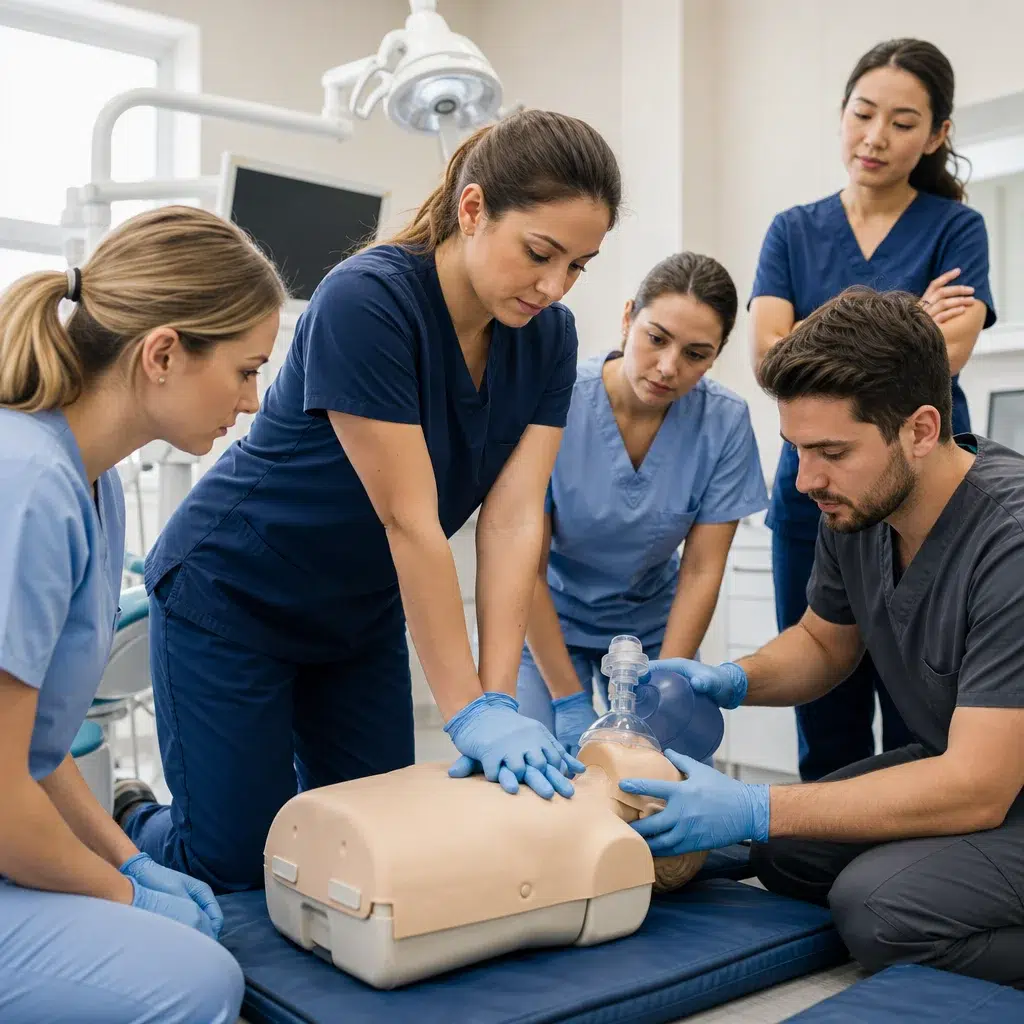
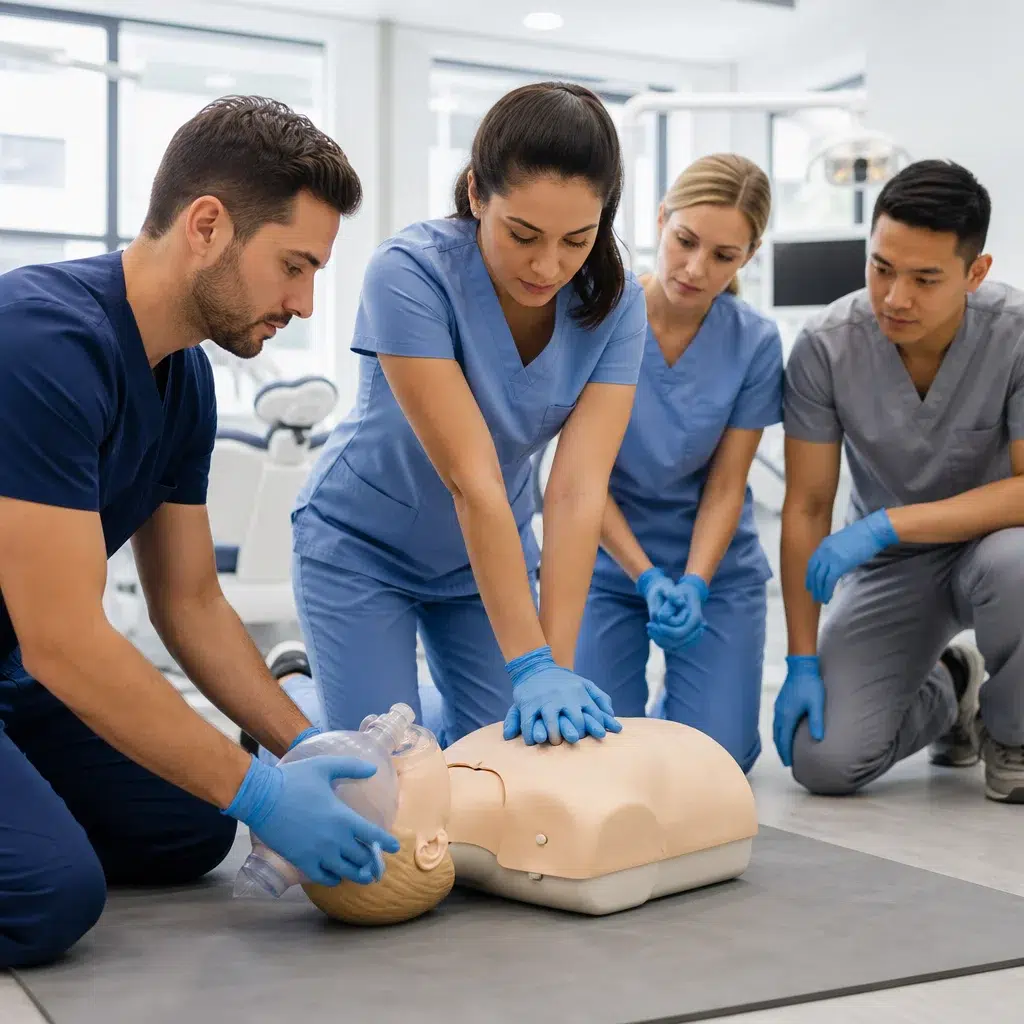
Phase Two is your skills session. You’ll work one-on-one or in small groups with certified instructors who observe your performance, provide hands-on corrections, and guide you through realistic scenarios. We use manikins that simulate real cardiac arrest presentations so your muscle memory translates directly to patient care.
Both phases are required for certification, but their separation means you control when and where Phase One occurs. Phase Two is scheduled at one of our 100+ locations across California, from Alameda to Woodland, with appointments available daily. Many of our locations in densely populated areas like San Jose (Downtown, Japantown, South, and Willow Glen), San Francisco (Mission Bay, Nob Hill, Parnassus/UCSF, and Sunset), and Sacramento (Arden, Midtown, and Rosemont) offer morning, afternoon, and evening time slots.
Your certification is valid immediately after successful Phase Two completion, with same-day card issuance available at most locations.
Real-World Practice with RQI Simulation Technology
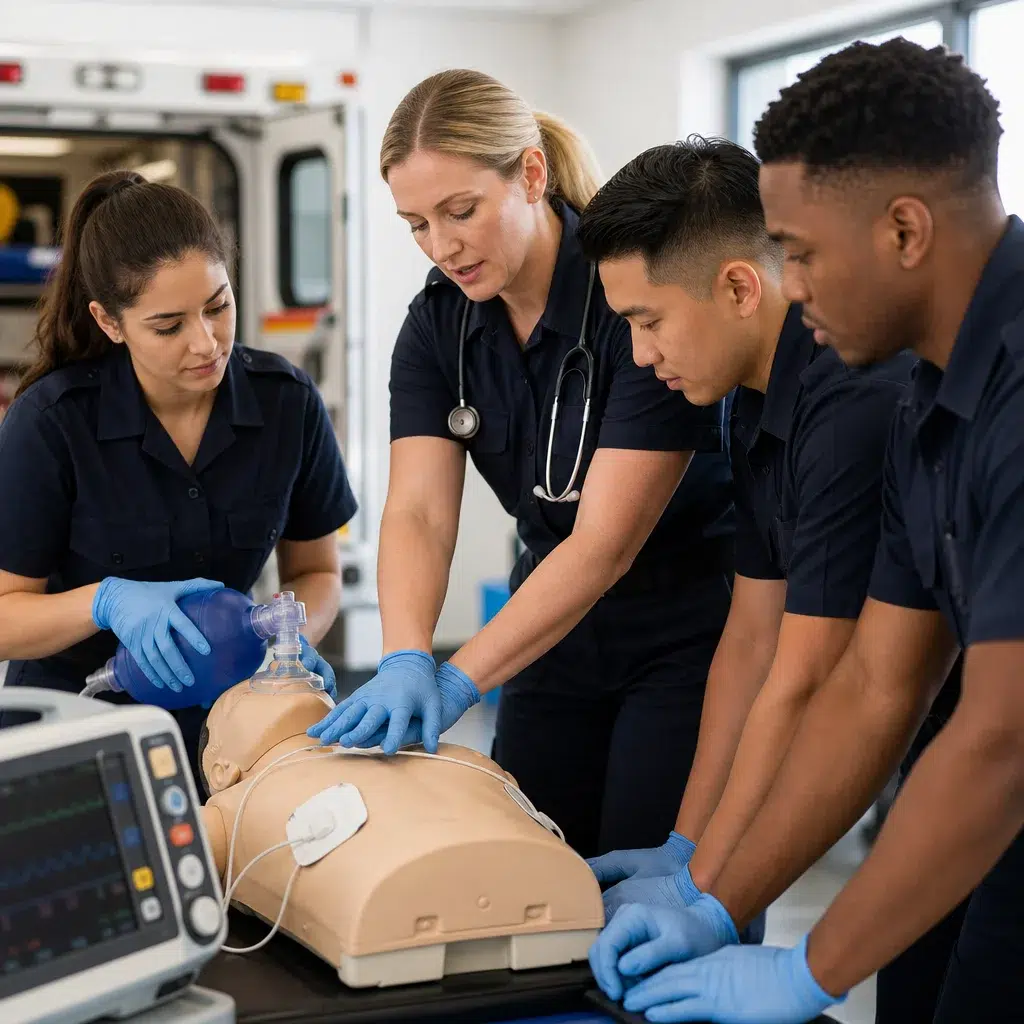
We use Resuscitation Quality Improvement (RQI) simulation technology to bridge the gap between training and clinical reality. RQI manikins provide real-time feedback on compression depth, rate, and hand placement. You see your performance metrics instantly, adjust your technique on the spot, and build muscle memory that translates to actual patient care.
This technology matters because studies show that traditional training, while essential, doesn’t always predict real-world performance during actual emergencies. With RQI simulation, you practice until your technique becomes instinctive. The feedback isn’t judgmental; it’s coaching. Our instructors use the data to personalize instruction, ensuring weak areas receive targeted attention.
For teams undergoing corporate group training, RQI creates a level playing field. Everyone starts with baseline data, trains to competency, and exits with measurable skill validation. Healthcare organizations across California—from small dental practices in Campbell to large hospital systems in San Francisco and Sacramento—rely on this objective measurement approach.
Your RQI-guided practice session becomes a confidence builder before you ever face a real cardiac emergency.
Convenient Scheduling Across 100+ California Training Locations
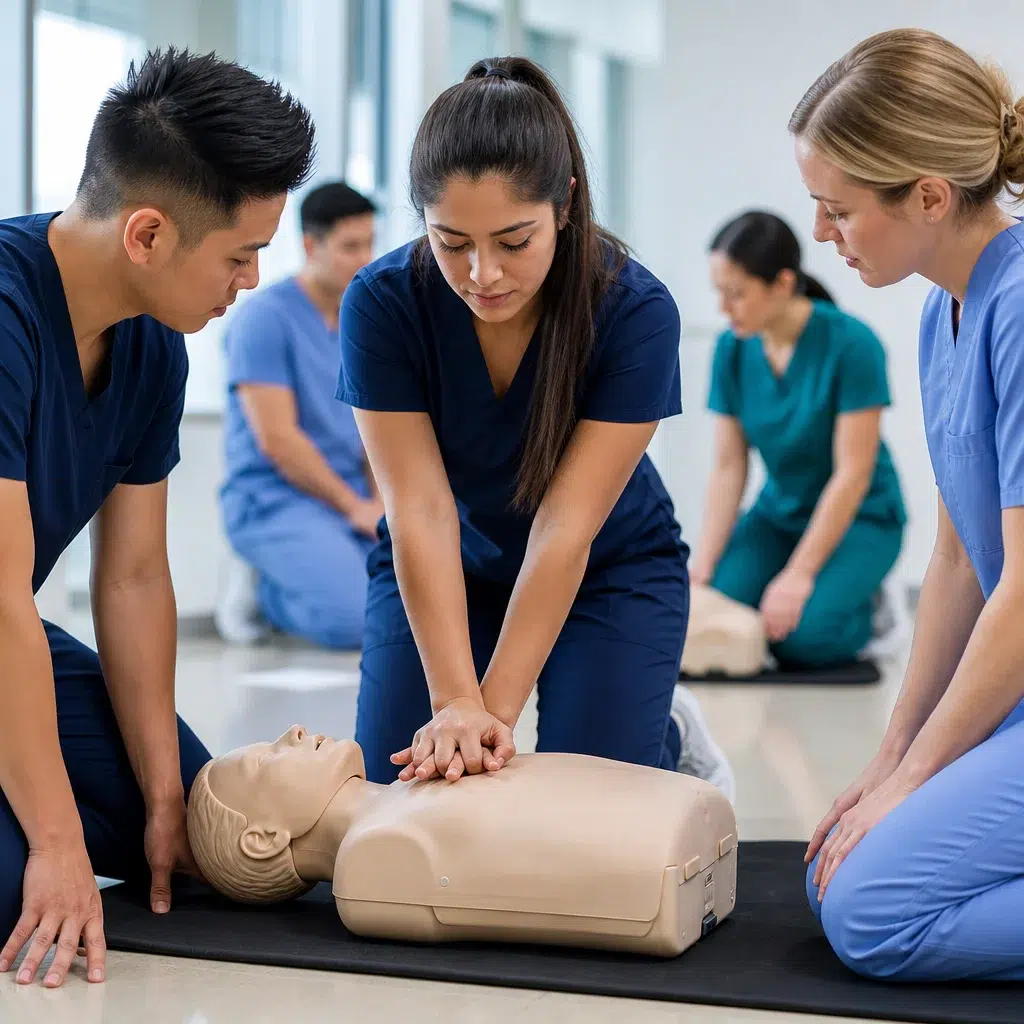
Geographic accessibility removes the last barrier to timely certification. We operate training centers throughout California’s major population centers and underserved regions. If you work in Chico or Redding, you’re not traveling five hours to the nearest training site. If you’re based in the Bay Area, we offer multiple locations across Alameda, Contra Costa, and San Francisco counties, with options in Oakland (Fruitvale, Lake Merritt, Piedmont), Walnut Creek (Downtown, Shadelands), and Palo Alto.
Central Valley professionals access training in Bakersfield, Fresno, Modesto, and Stockton without lengthy commutes. We also serve smaller communities like Lathrop, Lodi, Tracy, and Visalia with regular scheduling.
Our daily course offerings mean you’re never waiting weeks for the next available session. Most locations have openings within days, not months. Blended learning amplifies this convenience because Phase One can begin immediately while you search for your preferred Phase Two time slot.
Action item: Visit our location finder and identify the training center closest to your work or home. Note their hours. Many facilities operate early morning, evening, and weekend sessions.
Same-Day Certification Cards for Immediate Compliance
Your employer needs proof of current certification, sometimes before your first shift. We issue certification cards immediately upon successful Phase Two completion at our Bakersfield, Berkeley, Concord, Davis, Dublin, Fairfield, Folsom, Fremont, and Hayward locations, as well as throughout the San Francisco Bay Area, Sacramento region, and Central Valley.
No waiting for mail delivery. No PDF placeholders. You walk out with a physical card valid for three years, meeting all California licensing board and employer requirements. For healthcare professionals, this same-day credential is often the difference between starting a new position on schedule or experiencing a delay.
Our verification stations across California also provide backup confirmation if your original card is lost or damaged between certifications. This service is included in your training package.
The same-day model works because blended training’s efficiency means scheduling remains predictable and timely. You’re not waiting in long queues after classroom sessions. Skills assessment happens quickly, evaluation is immediate, and your card is issued within minutes of completion.
Low Price Guarantee Without Compromising Quality Standards
Certification costs shouldn’t force difficult budget choices. We’re committed to competitive pricing that reflects the value we deliver. Our low price guarantee ensures you’re not overpaying for BLS training compared to other certified providers in California. If you find a lower price elsewhere for equivalent certification, we’ll match it.
This pricing approach doesn’t mean cutting corners on instruction quality. Our instructors are certified healthcare professionals with real clinical experience. Your RQI manikins are current generation. Classroom facilities meet safety standards. The low price reflects our efficient blended model and high training volume, not reduced quality.
For corporate groups undergoing team certification, we offer additional discounts on already-competitive rates. Dentists in Los Gatos, nursing teams in San Leandro, and EMS crews throughout the San Francisco Bay Area regularly train with us at rates that improve their training budgets.
Next step: Request a quote for your specific certification needs. Compare not just price but total value: instruction quality, scheduling convenience, and same-day cards.
Perfect for Nurses, Dentists, EMS, and Healthcare Teams
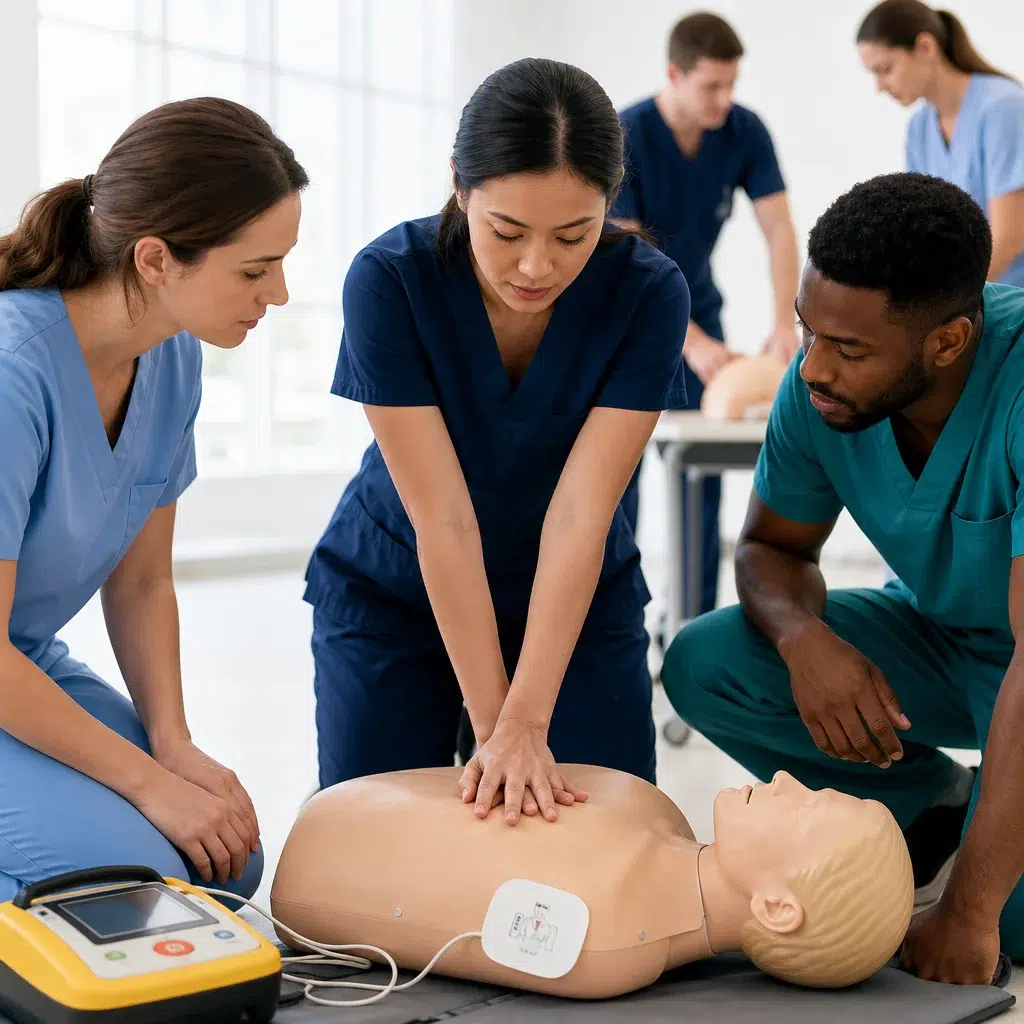
Our blended BLS training serves the entire spectrum of California’s healthcare workforce. Nurses renewing certification to maintain active licensure appreciate the flexibility because shift schedules are unpredictable. Dentists benefit from evening and weekend scheduling at locations like San Mateo, San Pablo, and San Rafael. EMS personnel, often working 24-hour rotations, can complete Phase One during downtime and schedule Phase Two between shifts.
Specialized certifications for healthcare providers, including ACLS (Advanced Cardiac Life Support) for nurses and physicians and PALS (Pediatric Advanced Life Support) for pediatric specialists, follow the same blended model. Teams undergoing group training—whether an urgent care clinic in Danville, a dental practice in Novato, or an ambulance service in Vallejo—benefit from coordinated scheduling and group-rate pricing.
The blended approach scales across all these specialties. A critical care nurse in Sacramento uses the same Phase One platform as a paramedic in Visalia or a dentist in Rocklin. Instructors tailor Phase Two discussions to include role-specific scenarios: nurses practice in hospital cardiac rhythms and medications, paramedics work with pre-hospital protocols, dentists review office emergency management. You receive certification relevant to your practice environment.
Schedule Your Blended BLS Training Today
Your pathway to current, valid BLS certification is simpler than you think. Begin by identifying your certification expiration date and working backward 30 days. That’s when Phase One should start. Visit our website to complete your online knowledge review at your own pace, then select your preferred Phase Two skills session at a location convenient to your work or home.
We’ve eliminated the obstacles that delay recertification: rigid scheduling, lengthy commutes, unclear pricing, and delayed credential issuance. Blended training with Safety Training Seminars combines online flexibility with hands-on rigor, delivering certification excellence without disrupting your practice.
Your next step is straightforward. Reserve your Phase One access today, complete it within days, and schedule your skills assessment within the following week or two. You’ll hold your certification card before your current credential expires, maintaining uninterrupted compliance and positioning yourself for career advancement or position changes without credential delays.
Ready to train? Our 100+ California locations and daily course scheduling ensure your certification path fits your life.
Register for a class today.
Frequently Asked Questions (FAQ)
What makes our blended BLS training different from traditional in-person courses?
We combine virtual preparation with hands-on skills practice, allowing you to complete theory at your own pace before coming to us for the critical skills verification. This approach respects your schedule while ensuring you receive the same rigorous certification standards. You’ll spend less total time away from work since our online component handles the knowledge portion independently.
Can I get my certification on the same day as my skills session?
Yes, we issue certification cards immediately after you complete our in-person skills assessment and pass our evaluation. This means you can fulfill your mandatory compliance requirements in a single visit to one of our 100+ California locations. We understand healthcare professionals can’t afford delays when licensing deadlines approach.
How do we guarantee affordable pricing without cutting corners on instruction quality?
We maintain competitive rates across all our courses through our low price guarantee, which means we won’t charge more than our published rates for any certification level. Our instructors remain fully certified and our curriculum meets the same standards as higher-priced alternatives. We’ve built our business on volume and efficiency rather than premium pricing, so you get genuine quality at fair costs.