Table of Contents
- Why Healthcare Professionals Need Hands-On ACLS Training
- The Challenge of Maintaining ACLS Competency
- What Our ACLS Skills Sessions Include
- Blended Learning: Virtual Preparation Meets Practical Practice
- Our RQI Simulation Stations with VAM Technology
- Same-Day Certification Cards and Flexible Scheduling
- Healthcare Provider Requirements Across California Locations
- How Our Training Meets AHA Standards
- Specialized ACLS for Different Medical Specialties
- Corporate Group Training for Healthcare Teams
- Next Steps: Schedule Your ACLS Skills Session
- Frequently Asked Questions (FAQ)
Why Healthcare Professionals Need Hands-On ACLS Training
Advanced Cardiac Life Support (ACLS) certification isn’t just a credential—it’s your foundation for responding to life-threatening cardiac emergencies with confidence and precision. Nurses, dentists, EMS personnel, and other healthcare professionals across California depend on ACLS knowledge to manage airways, deliver effective chest compressions, and administer critical medications during cardiac arrest.
The difference between textbook knowledge and real competency shows up in high-stress moments. When a patient’s heart stops, hesitation costs time. Our hands-on ACLS skills sessions ensure you’ve practiced the exact scenarios you’ll face: recognizing shockable rhythms, performing synchronized cardioversion, and making rapid treatment decisions under pressure. This isn’t about memorizing algorithms—it’s about building muscle memory and clinical decision-making that protects lives.
Whether you’re renewing certification to meet licensing requirements or training for a new role, we understand that your schedule is already packed. That’s why our training approach combines efficient virtual preparation with intensive, focused in-person practice sessions available across over 100 California locations, from Sacramento’s Arden neighborhood to San Francisco’s Mission District and everywhere in between.
The Challenge of Maintaining ACLS Competency
Let’s be honest: ACLS competency fades. Studies consistently show that healthcare providers lose critical skills within months of training if they don’t practice regularly. A nurse in Pleasanton or a dentist in Palo Alto might feel confident in their knowledge but freeze when facing an actual cardiac arrest scenario because the practical skills have degraded.
The challenge isn’t remembering that compressions should be 100-120 beats per minute—it’s executing them correctly while simultaneously assessing rhythm, communicating with team members, and deciding on interventions. This complexity is exactly why simulation-based practice matters. You need to rehearse in a controlled environment where mistakes become learning moments, not patient outcomes.
We’ve designed our recertification process to address this reality. Rather than expecting you to retain everything from a single classroom session, we structure training so you spend minimal time on review and maximum time on the skills that matter most: hands-on practice with realistic equipment and feedback from experienced instructors who understand the pressures of healthcare work.
What Our ACLS Skills Sessions Include
Our comprehensive ACLS skills sessions combine core competencies with flexibility tailored to your role and experience level. Here’s what you’ll complete:
Core Components:
- Rhythms recognition and interpretation with real cardiac monitor strips
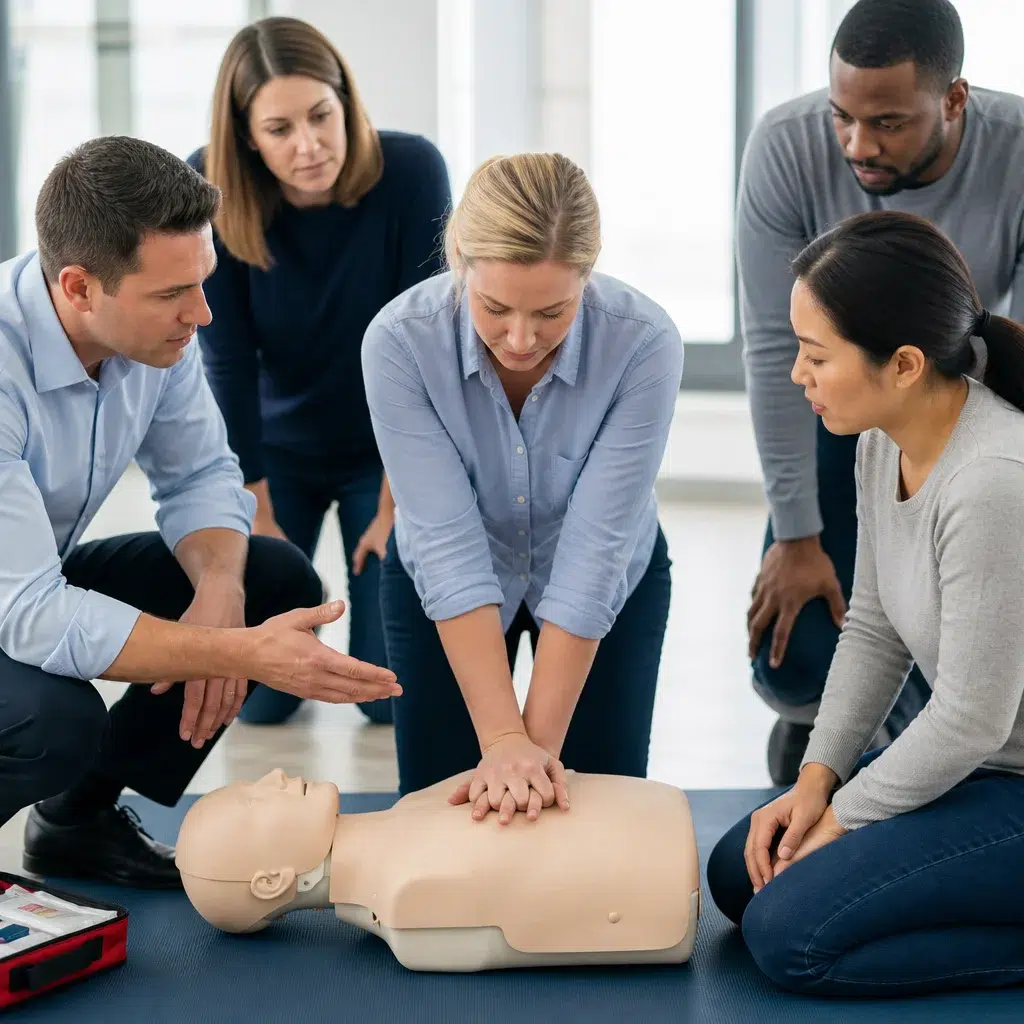
- High-quality chest compression technique with immediate feedback
- Airway management and bag-valve-mask ventilation
- Medication administration in cardiac arrest protocols
- Synchronized cardioversion and defibrillation
- Megacode scenarios (integrated team-based simulations)
- Post-resuscitation care and therapeutic hypothermia principles
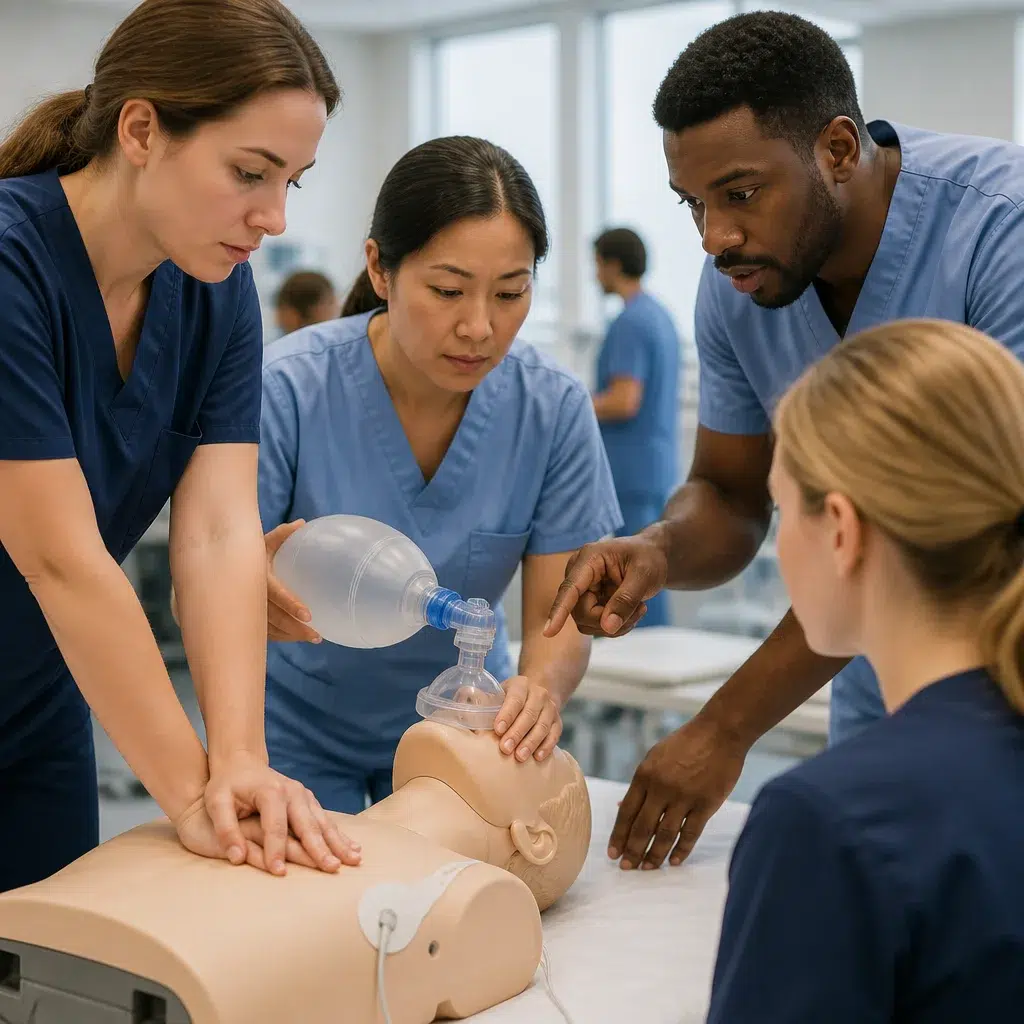
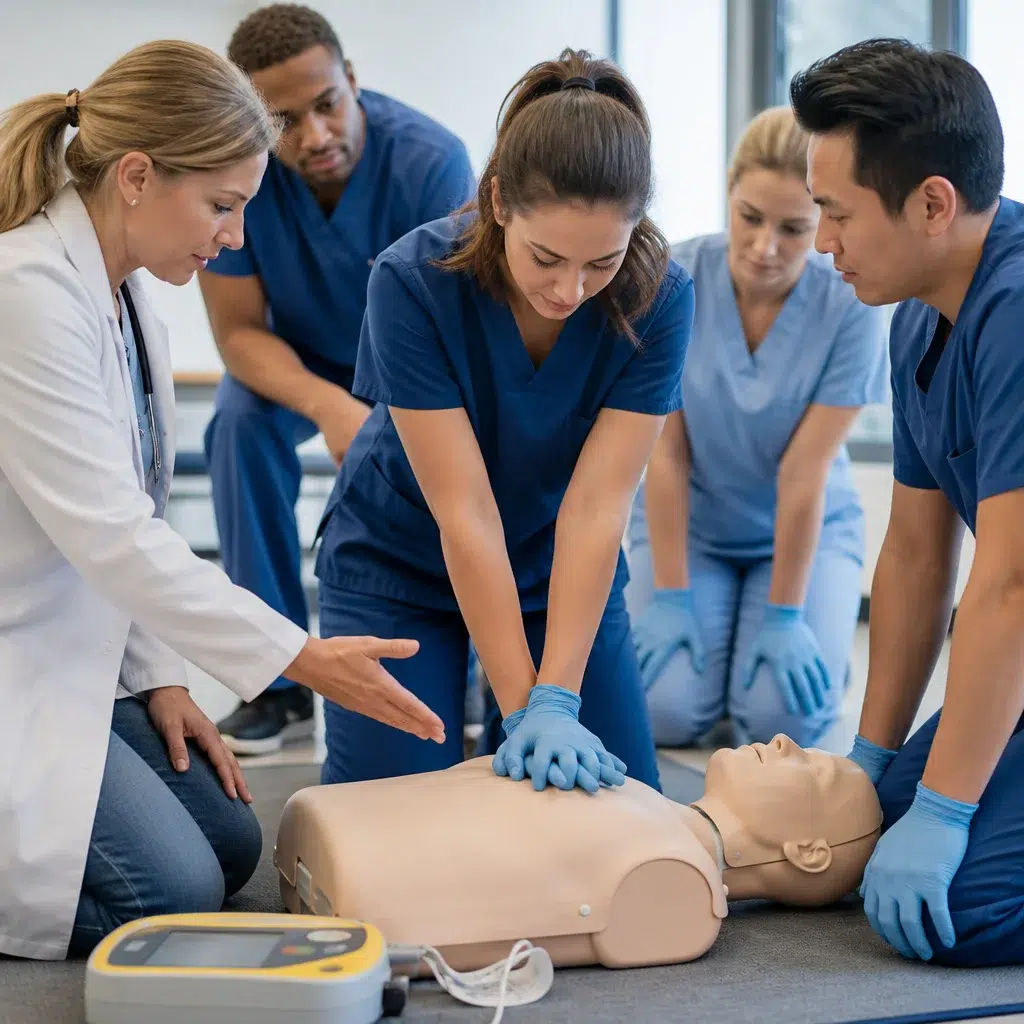
Practical Application: You’ll work through multiple megacodes—realistic cardiac arrest scenarios that require you to lead or support a resuscitation team. These simulations test your ability to recognize dysrhythmias, call out interventions, and adjust treatment based on patient response. Our instructors provide immediate, corrective feedback so you can refine technique and decision-making in real time.
Whether you’re training in Fremont, Oakland’s Lake Merritt location, or downtown San Jose, every session prioritizes the clinical skills that directly apply to your workplace.
Blended Learning: Virtual Preparation Meets Practical Practice
We’ve learned that the most effective training respects your time constraints while maximizing skill retention. Our blended learning model splits preparation and practice into two focused components.
Virtual Preparation (Self-Paced): Before your in-person session, you’ll complete online modules covering ACLS guidelines, rhythm recognition, and pharmacology. This allows you to review at your own pace—whether that’s early morning before your shift or late evening from your Visalia apartment. The virtual platform includes interactive decision trees and rhythm strips so you arrive at your skills session ready to practice, not ready to lecture.
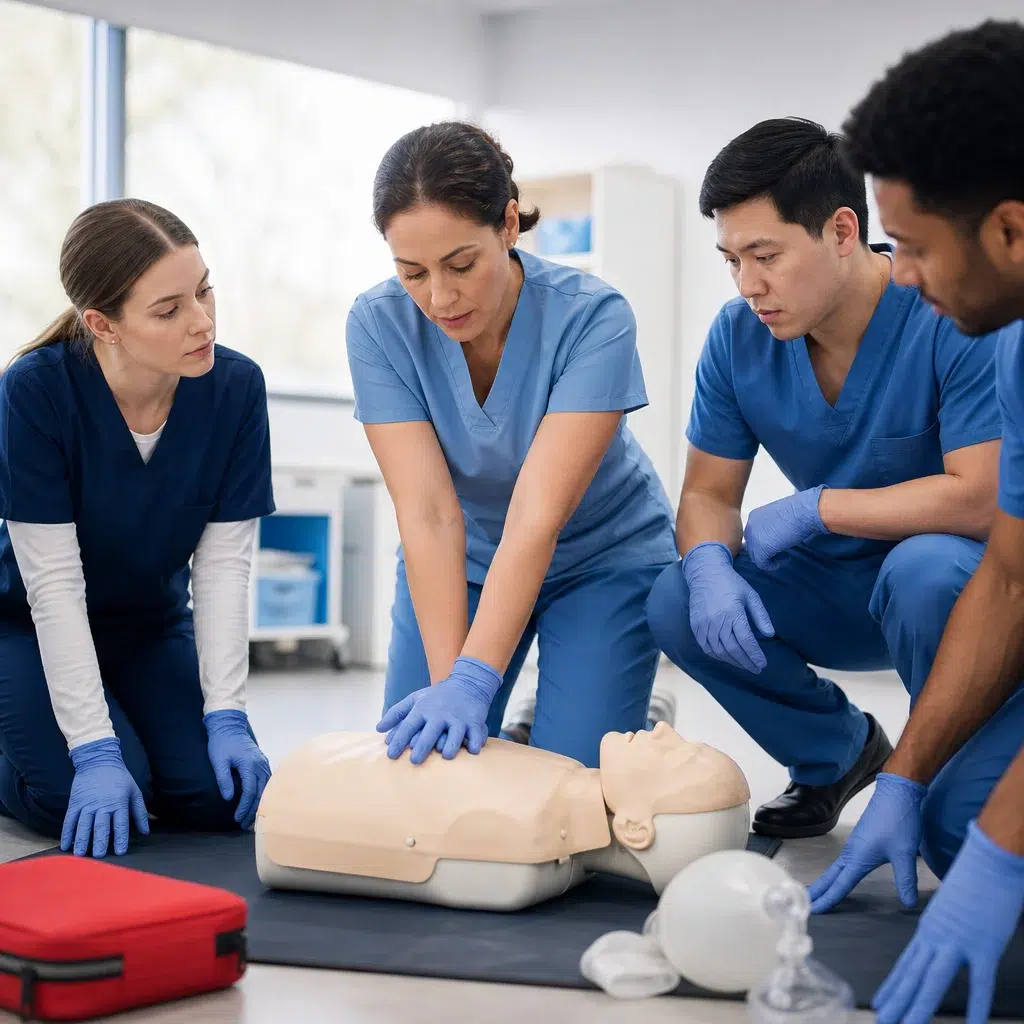
In-Person Skills Sessions (Intensive Practice): Your hands-on training day is dedicated entirely to skill execution and megacode scenarios. There’s no time wasted on passive instruction. With small class sizes and multiple stations, you’ll spend significant time with equipment—getting repetitions on compressions, practicing ventilation, and running full resuscitation codes. This concentrated, activity-based format means you leave with genuine confidence, not just a passing test score.
Our instructors, many of whom work clinically as nurses and paramedics, understand what real ACLS looks like in your department or clinic. Flexible EMS Blended Learning options are available for professionals with non-standard schedules across locations like Hayward, Concord, and Walnut Creek.
Our RQI Simulation Stations with VAM Technology
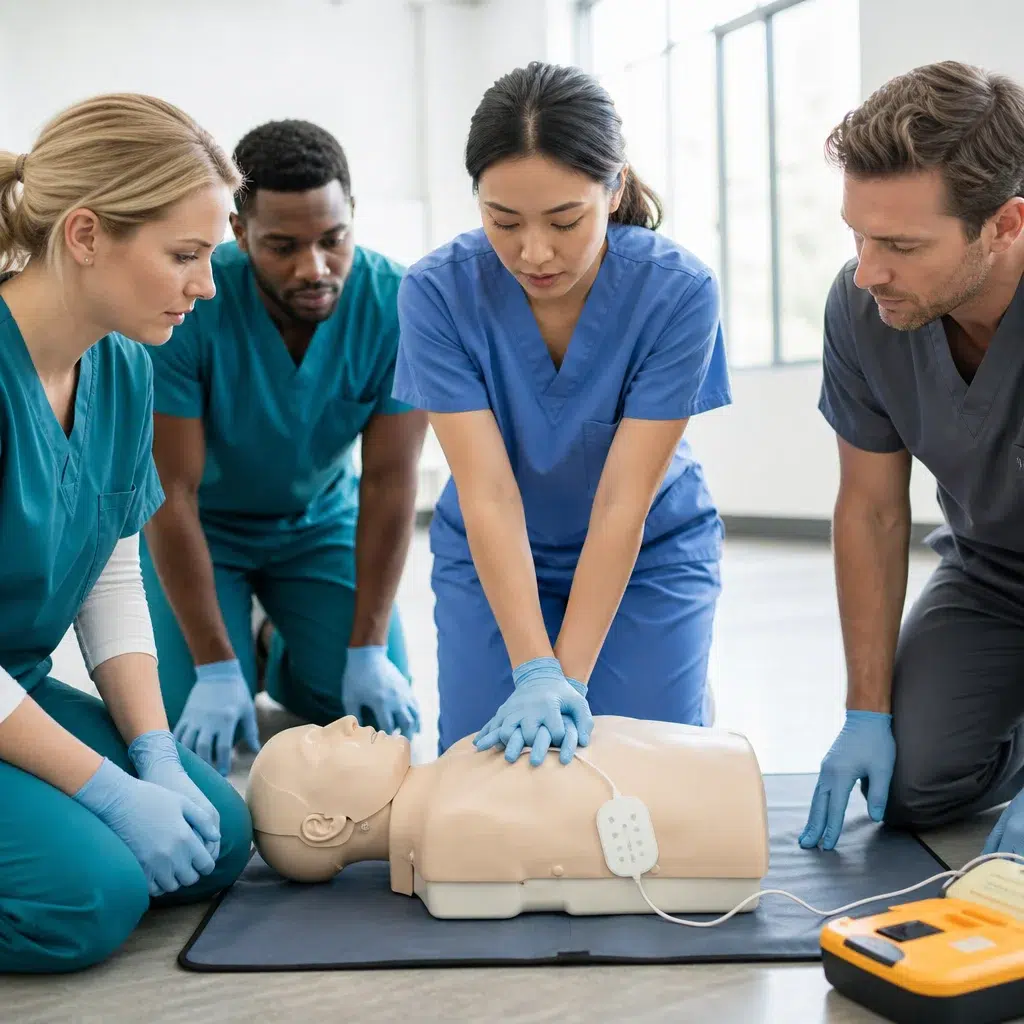
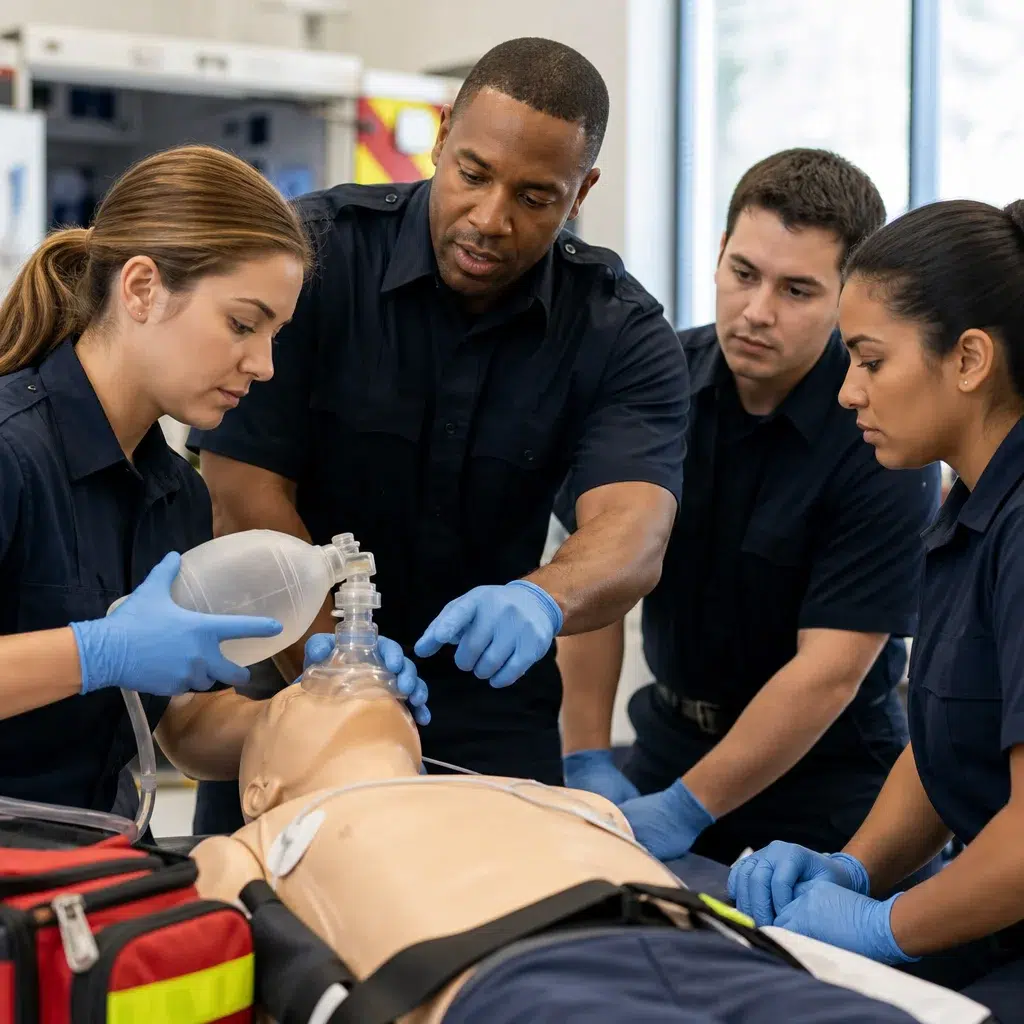
We use industry-standard manikins equipped with RQI (Resuscitation Quality Improvement) sensors and voice-activated metronome (VAM) technology. Here’s why this matters: every compression you deliver is measured for depth, rate, and recoil. You receive real-time audio feedback guiding you toward the exact parameters that save lives.
The VAM metronome keeps your team synchronized to optimal compression rates. You’ll hear immediate corrections—”Deeper, deeper”—so you’re not guessing whether your technique meets standard. This precision training translates directly to better outcomes when you’re managing actual cardiac arrests.
Our simulation stations are distributed across our California network, including locations in Bakersfield, Martinez, and Redwood City, so you train on equipment consistent with national standards regardless of where you’re certified.
Same-Day Certification Cards and Flexible Scheduling
Your time is valuable. That’s why we issue certification cards the same day you complete your skills session—no waiting, no paperwork delays. You’ll walk out with valid ACLS credentials ready for your employer, licensing board, or hospital credentialing department.
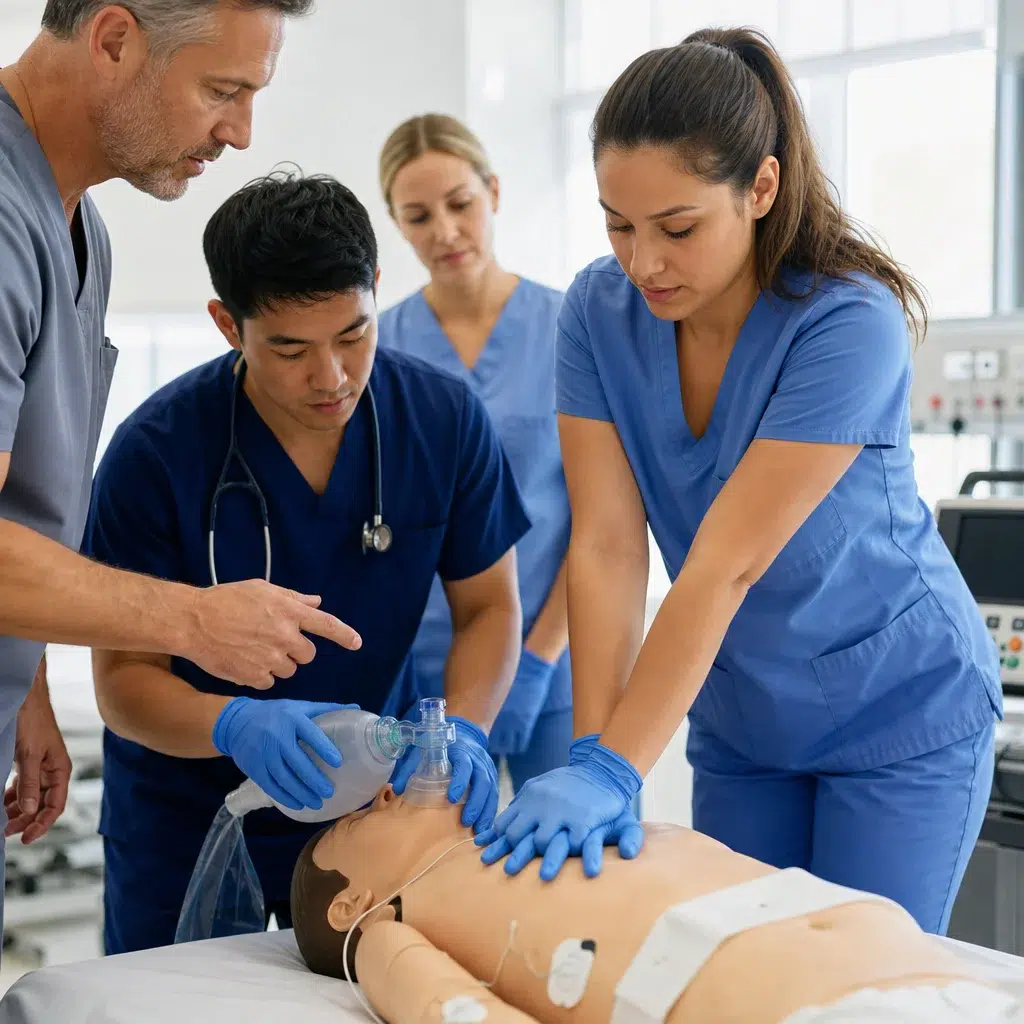
We recognize that healthcare professionals have unpredictable schedules. Evening and weekend skills sessions are available across nearly every location, from Danville to Stockton to Santa Rosa. Whether you need to train before your next shift rotation or coordinate with colleagues, we offer scheduling flexibility that fits your reality. Many professionals in Dublin, Livermore, and Modesto book sessions quarterly to maintain competency alongside their recertification cycle.
Healthcare Provider Requirements Across California Locations
ACLS certification requirements vary by role and employer, but healthcare professionals across California rely on consistent, recognized training. Hospital systems, emergency departments, urgent care clinics, dental offices, and EMS agencies all require current ACLS certification as a condition of employment or clinical privileges.
We maintain training compliance with professional standards recognized statewide. Whether you’re a registered nurse renewing every two years, a paramedic managing your continuing education, or a dentist maintaining emergency preparedness, our certification meets your specific professional requirements. Our instructors are familiar with the varying needs of facilities in Sacramento’s different neighborhoods, San Jose’s healthcare systems, and the unique demands of clinics across the Bay Area.
How Our Training Meets AHA Standards
We align our curriculum, assessment criteria, and practical skills stations with the guidelines established by the American Heart Association. This means your certification reflects actual, evidence-based best practices—not outdated or non-standard protocols.
Our instructors maintain current provider status and receive ongoing training in the latest guideline updates. When protocols change, your recertification includes those updates so you’re never practicing with outdated information. The scenarios you practice, the medication doses you administer in our simulations, and the rhythms you interpret all reflect current clinical evidence.
This commitment to standards-aligned training gives you confidence that your certification is genuinely respected across California—whether you move positions, change employers, or transfer between healthcare settings.
Specialized ACLS for Different Medical Specialties
Not all ACLS training addresses the unique contexts where healthcare professionals practice. A dentist managing cardiac arrest in a treatment chair faces different constraints than an ICU nurse, and both differ from an EMS paramedic in the field.
Our instructors tailor scenario complexity and clinical context to your role. Dental professionals practice resuscitation with limited equipment and space, rehearsing rapid position changes and managing airway logistics specific to the dental environment. ICU nurses run advanced scenarios with multiple vasoactive infusions and post-resuscitation interventions. EMS providers practice field resuscitation with transport decisions and resource limitations.
This specialized approach means your training isn’t generic—it’s directly applicable to your actual working environment, whether that’s in Alameda, Berkeley, or any of our other 100+ California locations.
Corporate Group Training for Healthcare Teams
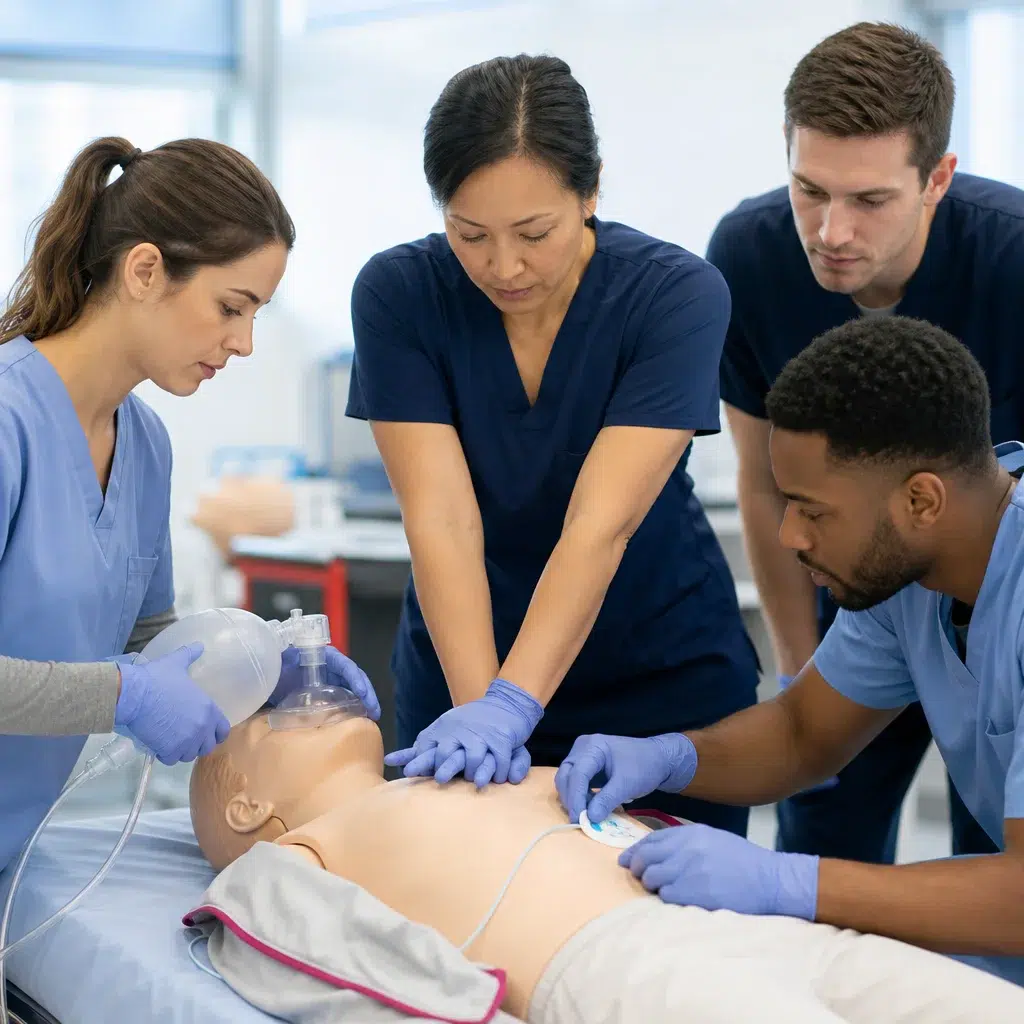
We also offer Onsite ACLS and PALS Skills Sessions for healthcare organizations. When your clinic, hospital, or EMS agency needs to train teams efficiently, we can bring comprehensive skills sessions directly to your location.
Group training offers several advantages: your team practices together in familiar equipment, you minimize scheduling disruption by coordinating all certifications at once, and you receive our lowest group pricing with volume discounts. Facilities in Napa, Fresno, and Rocklin frequently schedule corporate sessions to align team recertification and maintain consistent operational readiness.
Next Steps: Schedule Your ACLS Skills Session
Your ACLS certification is a professional commitment to being ready when a patient’s life depends on your competency. Starting today, you can register for an upcoming skills session at one of our over 100 California locations.
Visit our website to check availability at your preferred location and time, then complete the brief registration. You’ll receive instructions for your virtual preparation modules, and our team will confirm your session details. Most professionals complete the entire process—from online prep through certification card—within two weeks.
We’re committed to supporting your professional development with convenient, high-quality training that respects your schedule and prepares you for real emergencies. Your patients deserve a healthcare provider who practices what they’re certified to do.
Register for a class today.
Frequently Asked Questions (FAQ)
What’s included in our ACLS skills sessions?
We combine virtual coursework with hands-on practice at our RQI simulation stations equipped with VAM technology. Our sessions focus on core competencies like high-quality CPR, airway management, rhythm recognition, and medication administration. We conduct skill assessments during the practical portion and issue same-day certification cards upon successful completion.
How many California locations do we operate?
We maintain over 100 training centers across California, from San Francisco to Visalia and everywhere in between. This extensive network means we can schedule your ACLS recertification near your workplace or home. Our locations include urban centers like San Jose and Sacramento, plus communities like Danville, Lathrop, and Redding.
Can we accommodate corporate group training for our healthcare team?
Yes, we specialize in corporate group training with discounted pricing for nurses, EMS personnel, dentists, and other healthcare teams. We’ll work with your organization to schedule sessions at times that minimize staffing disruptions. Our instructors deliver the same rigorous standards whether you’re training individually or as a large team.