Table of Contents
- Why Severe Nosebleeds Demand Immediate Action
- Understanding What Causes Severe Nosebleeds
- Step-by-Step First Aid for Stopping a Severe Nosebleed
- When to Seek Emergency Medical Care
- The Critical Role of Training in Nosebleed Response
- Our Comprehensive First Aid Certification Program
- Why Healthcare Professionals Choose Safety Training Seminars
- Getting Your First Aid Certification Today
- Frequently Asked Questions (FAQ)
Why Severe Nosebleeds Demand Immediate Action
A severe nosebleed can be frightening for both the patient and the person providing care. Blood loss, even when it appears dramatic, demands a calm and systematic response. Severe nosebleeds (medical professionals call this epistaxis) occur when blood vessels in the nasal passages rupture and bleed heavily, sometimes continuing for 15 minutes or longer despite initial intervention.
The stakes matter here. While most nosebleeds are minor and stop on their own, a severe nosebleed can lead to significant blood loss, airway compromise, or aspiration if blood flows into the throat. For healthcare professionals in roles like nursing, emergency medicine, or dentistry, knowing the right steps isn’t optional—it’s part of your professional responsibility. Your patients and colleagues depend on your ability to act decisively under pressure.
What to do next: If you haven’t reviewed emergency nosebleed protocols recently, this article walks you through the exact sequence you’ll need. Consider scheduling a refresher on first aid fundamentals if your current certification is more than two years old.
Understanding What Causes Severe Nosebleeds
Severe nosebleeds typically stem from one of two categories: anterior (front of the nose) or posterior (back of the nose) bleeding. Anterior bleeds, which account for about 90 percent of cases, usually originate from blood vessels in the nasal septum. Posterior bleeds are rarer but more serious, occurring deeper in the nasal passage.
Common triggers include trauma (a fall, a punch, or even forceful nose-blowing), dry nasal passages from environmental conditions, high blood pressure, blood thinning medications like warfarin or aspirin, and bleeding disorders. Intranasal drug use, nasal surgery, or tumor growth can also cause severe bleeding. Environmental factors matter too—dry California winters in places like Redding, Davis, and Visalia can make nosebleeds more likely, especially in patients with sensitive nasal membranes.
Understanding the cause helps you manage the immediate situation and communicate risk factors to emergency responders if needed. However, in the moment of a severe bleed, identifying the exact cause takes a backseat to stopping the bleeding itself.
Step-by-Step First Aid for Stopping a Severe Nosebleed
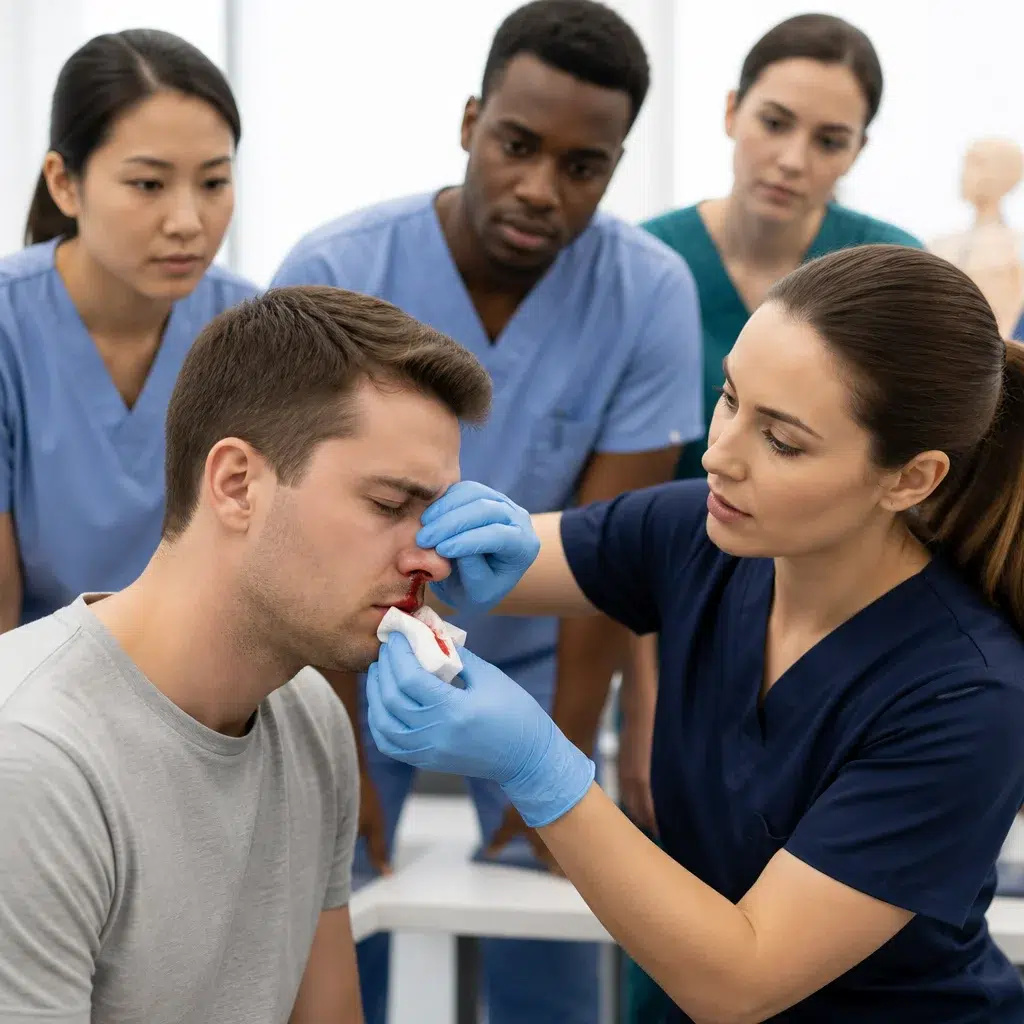
Position your patient correctly. Have them sit upright or lean slightly forward. This prevents blood from flowing into the throat and airway, which could cause aspiration or gagging. Avoid the common mistake of tilting the head back—this sends blood down the throat and masks how much blood loss is actually occurring.
Apply direct pressure. Pinch the soft part of the nose (the nostrils and septum) firmly between your thumb and index finger. Use steady, consistent pressure for 10 to 15 minutes without releasing. This gives blood vessels time to form a clot. Many people release pressure too early, thinking they’ve waited long enough. Set a timer on your phone or watch to ensure you’re applying pressure for the full duration.
Use ice or cold compresses. While maintaining pressure, apply a cold pack wrapped in cloth to the bridge of the nose or the back of the neck. Cold causes blood vessels to constrict, reducing bleeding. If ice isn’t available, cool water on a gauze or cloth works as a substitute.
Have your patient breathe through their mouth. This keeps the nasal passages still and prevents dislodging any clots that are forming. Instruct them to avoid sniffling, coughing, or blowing their nose for at least 30 minutes after the bleeding stops.
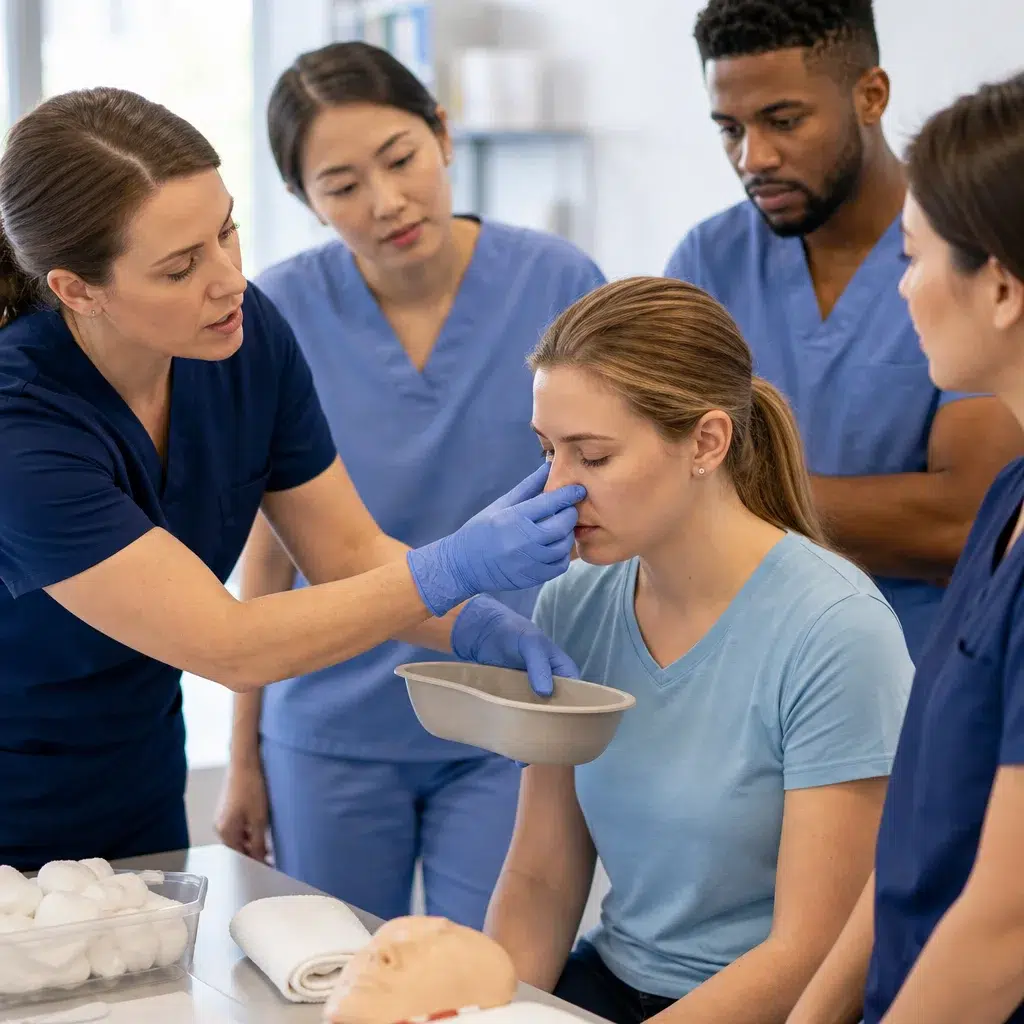
Avoid common pitfalls. Don’t pack the nose with cotton unless you’ve received specific training—improper packing can cause additional trauma. Don’t have the patient lie flat. Don’t let them swallow blood; instead, provide a basin or tissues so they can spit blood out safely.
If bleeding continues after 15 to 20 minutes of direct pressure, or if your patient shows signs of shock (dizziness, rapid heartbeat, pale skin), move to the next section’s guidance on emergency care.
When to Seek Emergency Medical Care
Not every nosebleed requires a hospital visit, but certain situations demand professional medical evaluation. Seek emergency care if bleeding persists after 20 minutes of direct pressure, if blood loss is heavy and ongoing, or if your patient becomes lightheaded or short of breath.
Also escalate to emergency services if the nosebleed follows head trauma, if your patient is on blood thinning medications and cannot stop the bleeding, or if they have a known bleeding disorder. Posterior nosebleeds (where you can see blood dripping into the throat) almost always need emergency intervention because at-home pressure won’t reach those deeper vessels.
Call 911 or drive your patient to the nearest emergency department if you’re unsure. Emergency physicians have access to topical medications, specialized instruments, and cautery techniques that can stop bleeding that home first aid cannot manage. In California locations from San Francisco to San Jose to Sacramento, emergency departments are well-equipped to handle severe epistaxis quickly.
What to do next: When calling emergency services, clearly state “severe nosebleed” or “epistaxis” and mention whether the patient is on blood thinning medications. This helps paramedics and receiving hospitals prepare the right resources.
The Critical Role of Training in Nosebleed Response
Recognizing when nosebleed management has moved beyond first aid into medical emergency territory requires confidence built on solid training. Healthcare professionals who’ve completed comprehensive first aid and emergency response courses respond faster, stay calmer, and make better decisions about whether to treat at home or escalate care.
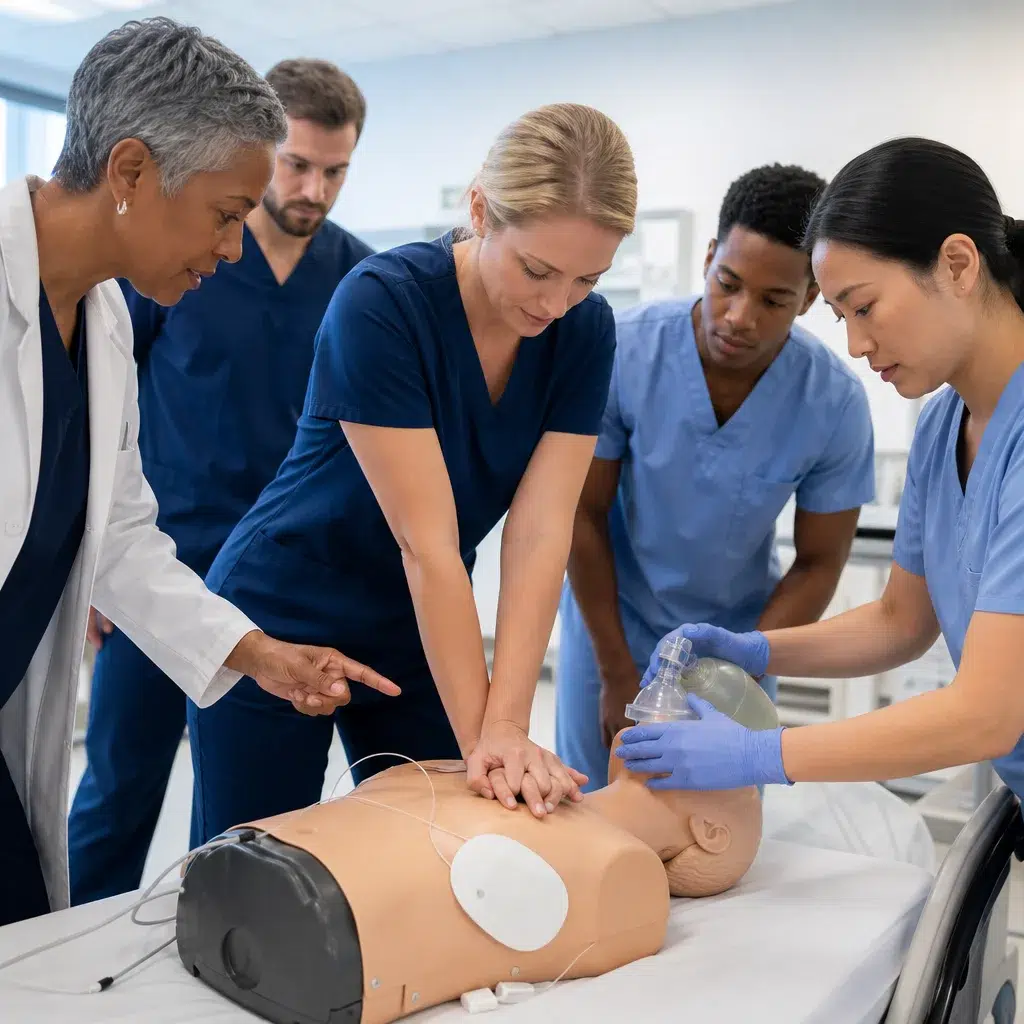
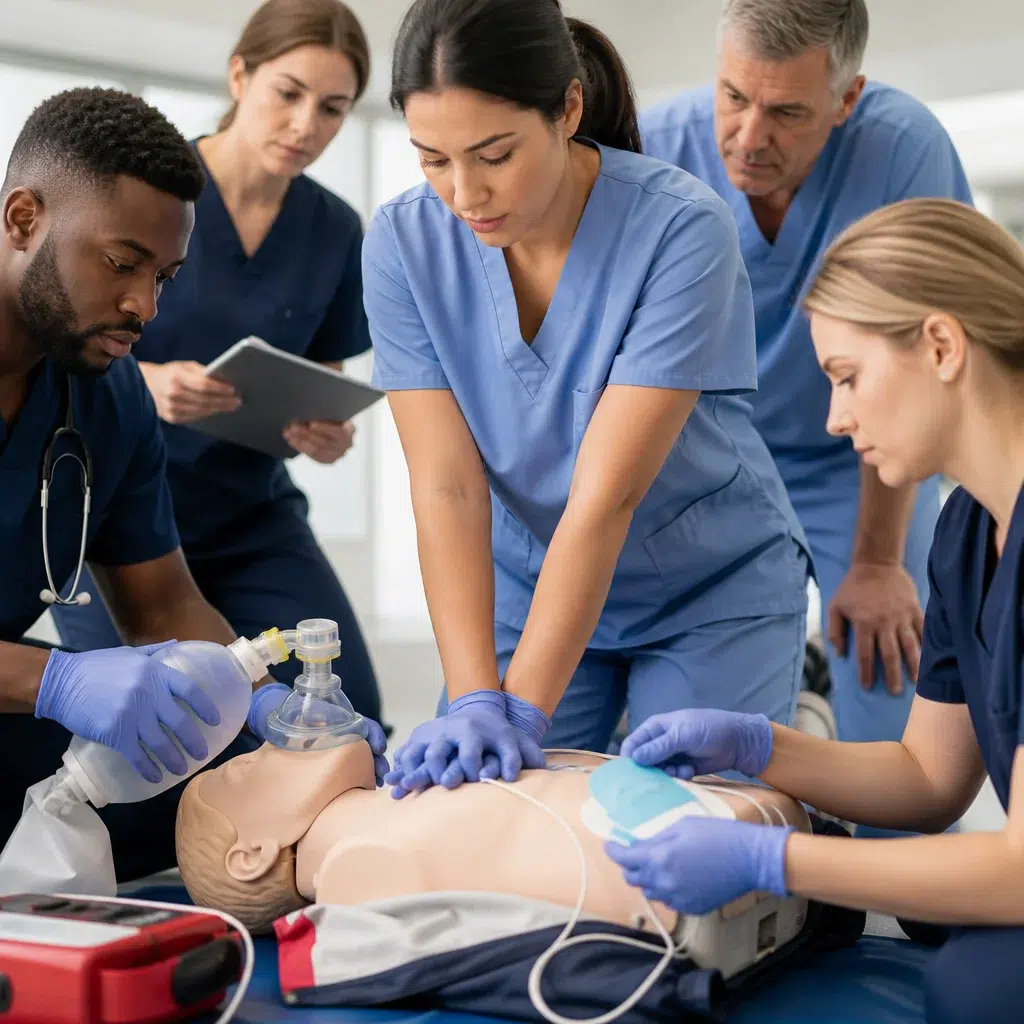
Training teaches you not just the steps, but the reasoning behind each step. You understand why positioning matters, why timing the pressure application is critical, and why certain interventions actually make bleeding worse. This foundation transforms a panicked reaction into a methodical response. When you’ve practiced these skills on a manikin or in a simulated scenario, your muscle memory and decision-making improve significantly.
For professionals like nurses, dentists, and EMS personnel, this training becomes part of your professional identity. Your patients notice when you handle an emergency with competence and reassurance. Your team respects your ability to take charge. Your confidence directly affects how calm your patient remains, which itself reduces panic-driven complications.
Our Comprehensive First Aid Certification Program
We offer first aid certification courses designed specifically for healthcare professionals who need rapid, practical training without lengthy classroom time. Our blended learning approach combines online modules with hands-on skills sessions at one of our over 100 training locations throughout California, including convenient spots in Alameda, Bakersfield, Concord, Folsom, Hayward, and throughout the San Francisco Bay Area.
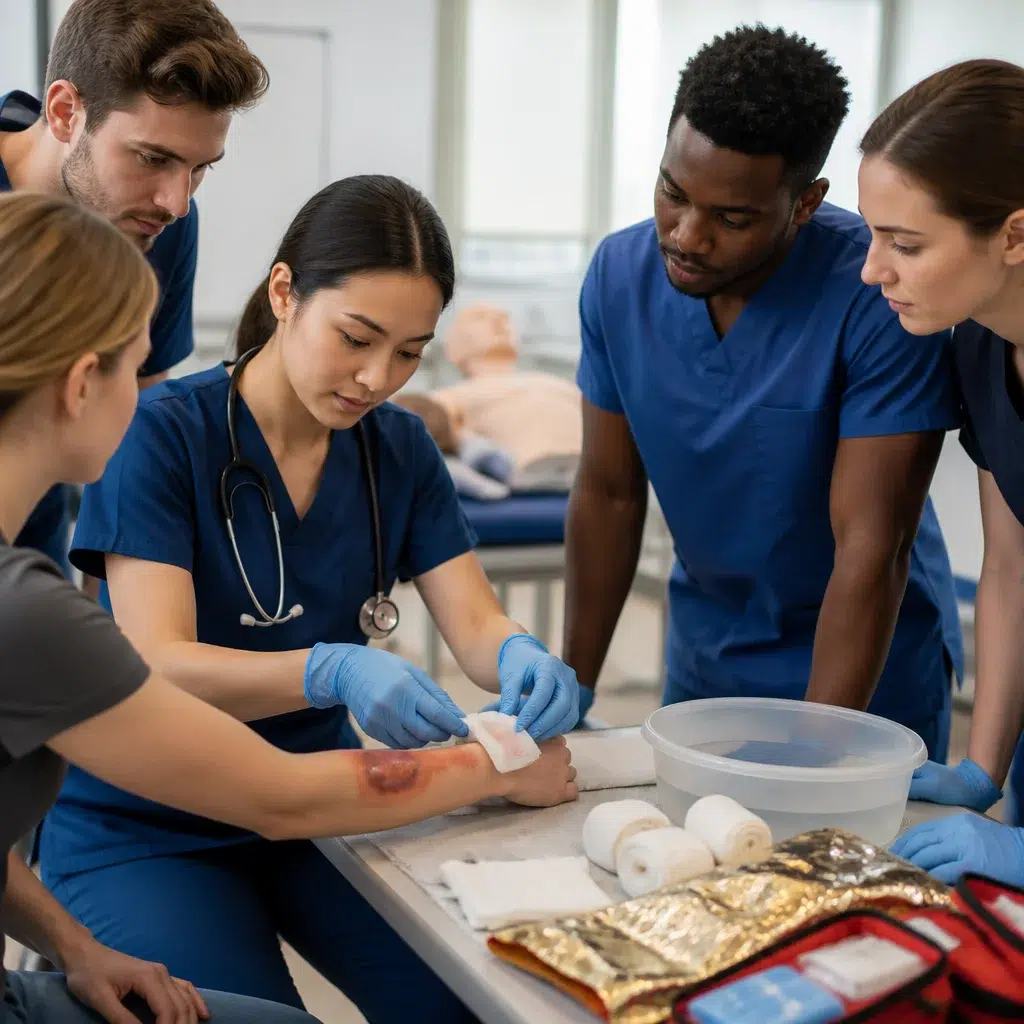
Our instructors are experienced healthcare professionals who teach real-world scenarios, not just textbook procedures. You’ll practice on realistic manikins and learn troubleshooting techniques for the situations you actually encounter in clinical and emergency settings. We cover nosebleed management, airway emergencies, choking, wound care, and shock recognition—everything a healthcare professional needs to respond confidently.
We also offer specialized certifications like BLS (Basic Life Support), ACLS (Advanced Cardiac Life Support), and PALS (Pediatric Advanced Life Support) for those needing additional credentials for professional licensing or job requirements. With BLS certification courses offered daily at locations from Folsom to Fremont to Santa Rosa, we ensure you can find a schedule that works with your shifts and availability.
Our low price guarantee means you’re getting high-quality instruction without paying premium rates. Many healthcare professionals complete their certification with us and return because they appreciate the practical, supportive teaching style and the convenience of our California-wide network.
Why Healthcare Professionals Choose Safety Training Seminars
Hundreds of nurses, dentists, EMS personnel, and other California healthcare professionals choose us year after year. They choose us because our instructors understand the demands of healthcare work. They’ve been in your position, managing emergencies, juggling schedules, and needing certifications that are both current and genuinely useful.
They choose us for our commitment to hands-on learning. Every skill you learn gets practiced multiple times until it feels natural. Our verification stations ensure your certification is recognized across California employers and licensing boards. They choose us for accessibility—with locations in Sacramento’s Arden and Rosemont neighborhoods, plus multiple San Jose locations and training hubs in places like Pleasanton, Vacaville, and Visalia, you can find a class near home or work.
Most importantly, healthcare professionals choose us because they trust our training will serve them when it matters. The first aid skills you learn in our courses become reflexive under pressure. Your ACLS or BLS certification carries the credibility your employer and patients expect. You leave our courses more confident in your ability to handle nosebleeds, chest pain, airway emergencies, and other critical situations.
Getting Your First Aid Certification Today
Starting your certification is straightforward. Visit our website to view available courses at your nearest California training locations, then select a date that fits your schedule. If you’re pursuing certification training for the first time, we recommend starting with First Aid and BLS together—many employers require both anyway.
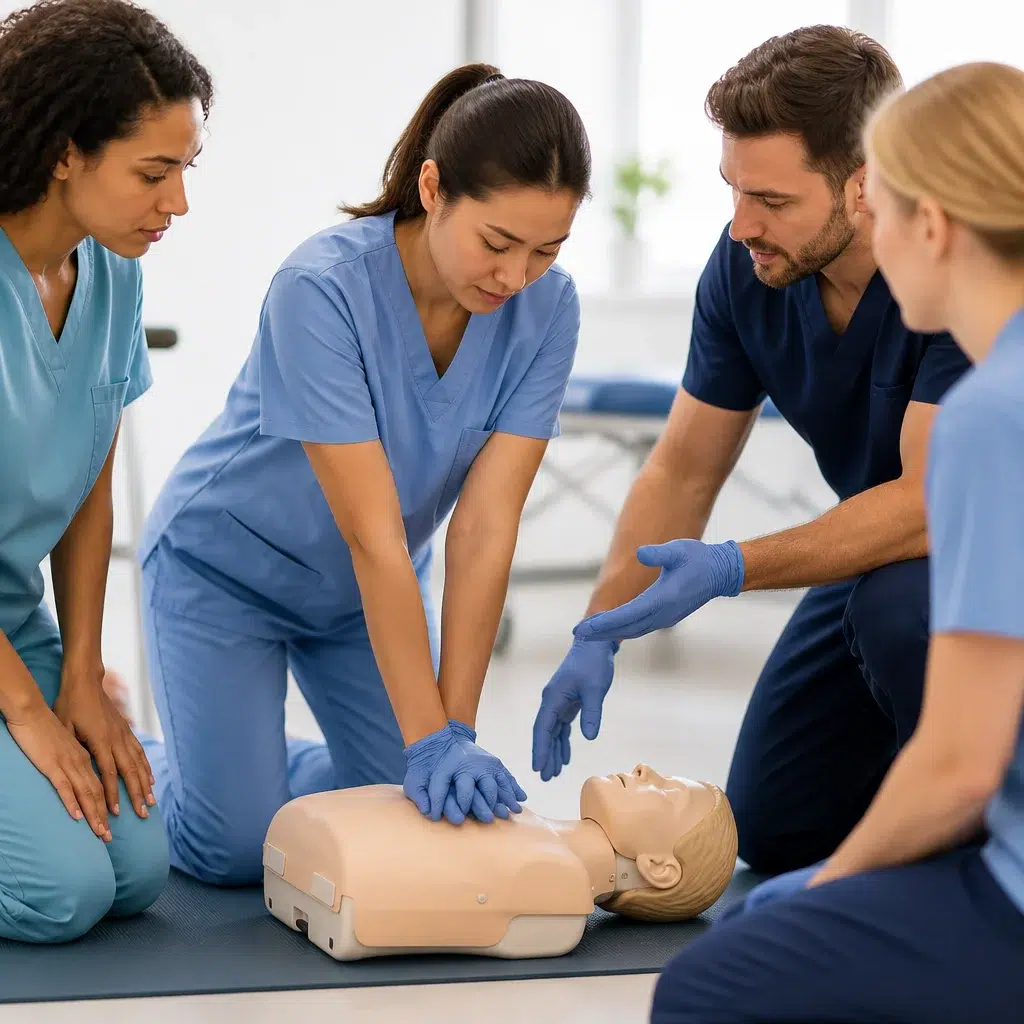
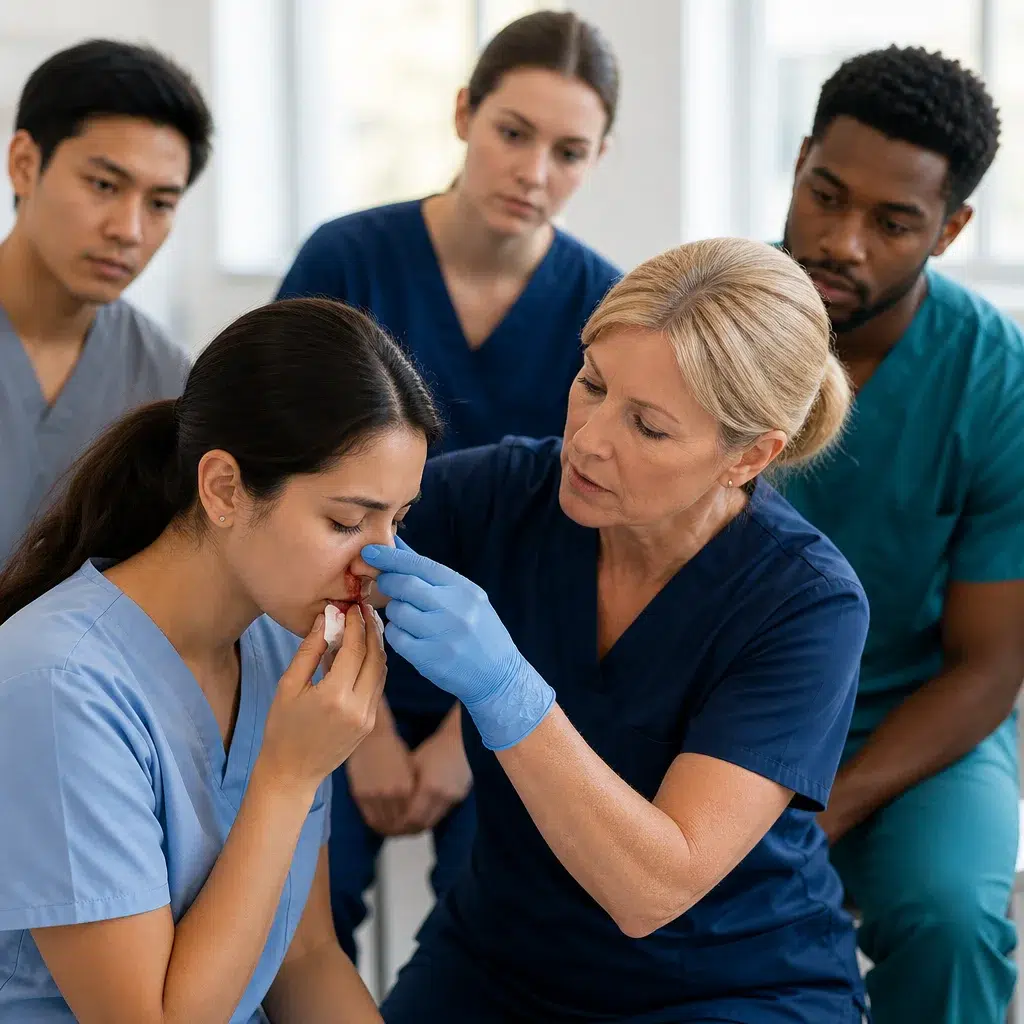
Our online component gets you up to speed on theory at your own pace. Then you’ll attend a skills session where you’ll practice nosebleed management, CPR, rescue breathing, and other hands-on techniques with our instructors observing and coaching. Most healthcare professionals complete their certification within two weeks of enrollment.
Register today and take a concrete step toward being the professional your team and patients can rely on in emergencies. Severe nosebleeds and other medical crises don’t announce themselves in advance. Being trained and certified means you’re ready when they arrive.
Register for a class today.
Frequently Asked Questions (FAQ)
How do we recommend positioning a patient during a severe nosebleed?
We advise keeping the patient upright or slightly leaning forward to prevent blood from flowing into the airway or being swallowed, which can cause aspiration or mask the severity of bleeding. Have them pinch the soft part of their nose firmly for 10-15 minutes without releasing pressure to check if bleeding has stopped. We also recommend they breathe through their mouth and avoid talking or swallowing forcefully during this time.
What training does our organization provide for emergency nosebleed management?
Our BLS and comprehensive first aid certification courses equip healthcare professionals with the knowledge to assess and respond to severe epistaxis appropriately. We cover when to apply direct pressure, how to recognize signs requiring emergency intervention, and documentation practices for patient care records. Our blended learning approach combines virtual instruction with hands-on skills sessions at over 100 locations throughout California.
When should our trained professionals recommend a patient seek emergency medical care for a nosebleed?
We teach that emergency care is necessary if bleeding doesn’t stop after 20-30 minutes of direct pressure, the patient shows signs of shock, or there’s evidence of facial trauma or difficulty breathing. Uncontrolled posterior nosebleeds, blood loss affecting vital signs, or nosebleeds in patients on anticoagulants also require immediate professional medical evaluation. Our courses emphasize recognizing these critical indicators so healthcare professionals can act decisively in urgent situations.