Table of Contents
- 1. Understanding California Hospital ACLS Mandates
- 2. Who Requires ACLS Certification in California Hospitals
- 3. AHA-Aligned ACLS Curriculum Standards for Compliance
- 4. Blended Learning Options for Working Healthcare Professionals
- 5. Same-Day Certification and Hospital Credentialing Speed
- 6. ACLS Renewal and Recertification Frequency Requirements
- 7. Our Convenient Multi-Location California Network for Your Certification Needs
- Frequently Asked Questions (FAQ)
1. Understanding California Hospital ACLS Mandates
California hospitals operate under strict regulatory frameworks that mandate Advanced Cardiac Life Support (ACLS) certification for specific healthcare roles. If you’re a nurse, emergency department physician, intensive care specialist, or paramedic working in California, understanding these requirements isn’t optional—it’s essential for maintaining your credentials, passing hospital credentialing reviews, and keeping your license current.
We’ve trained thousands of healthcare professionals across California, and we know that navigating certification mandates while balancing clinical shifts can feel overwhelming. This guide breaks down the seven core ACLS requirements that California hospitals enforce, so you can stay compliant without disrupting your schedule.
California hospital accreditation standards require ACLS certification as a condition of employment and privileges for certain clinical positions. The state doesn’t mandate ACLS through legislation alone—accreditation bodies, licensing boards, and individual hospital credentialing committees enforce these rules. This means your employer likely has written policies that spell out exactly who needs ACLS, when it must be current, and what happens if it lapses.
Most California hospitals follow guidelines aligned with national cardiac care standards, which means your certification must demonstrate competency in adult resuscitation algorithms, medication administration during cardiac emergencies, and defibrillation protocols. Hospital credentialing departments review your certification status during onboarding and at renewal intervals.
The key takeaway: your ACLS card isn’t just a piece of paper—it’s a legal requirement for your role. If your certification expires, your hospital privileges can be suspended, affecting your ability to work. We recommend checking your hospital’s specific policy documents to confirm exact requirements for your position, then scheduling renewal training well before your expiration date.
2. Who Requires ACLS Certification in California Hospitals
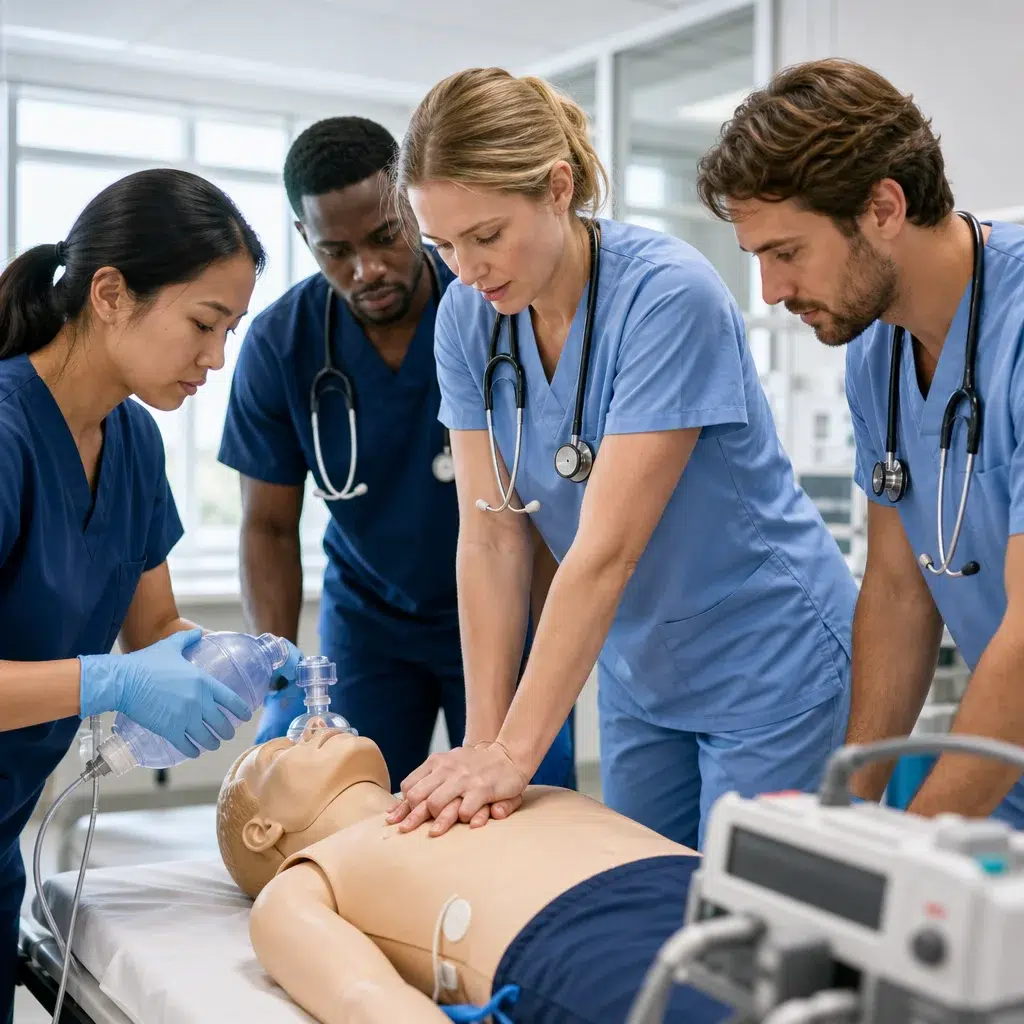
Not every hospital employee needs ACLS, but the list is broader than many realize. Your position likely requires certification if you work in emergency departments, intensive care units, coronary care units, operating rooms, or critical care transport roles. Nurses in these settings universally need active ACLS. Physicians providing direct patient care in acute settings also require it.
Beyond traditional acute care, California hospitals increasingly require ACLS for respiratory therapists, anesthesia assistants, critical care paramedics, and certain physician assistants. Some hospitals extend the requirement to charge nurses who supervise resuscitation efforts, even if they don’t perform interventions directly.
Dental professionals in hospital-based settings, particularly those administering sedation or anesthesia, often face ACLS mandates as well. Telemetry technicians and other monitoring specialists in some facilities also need current certification.
The practical reality: your job title alone doesn’t determine whether you need ACLS—your employer’s credentialing standards do. We recommend confirming your specific requirement with your hospital’s human resources or credentialing office during your first month. This prevents surprises during privilege renewal or when moving between departments.
3. AHA-Aligned ACLS Curriculum Standards for Compliance
California hospitals expect ACLS training that meets internationally recognized cardiac care guidelines. Our curriculum aligns with current resuscitation science standards, covering the compression-first approach to adult cardiac arrest, effective ventilation techniques, and proper defibrillator use.
Your certification must demonstrate competency in several core areas: recognizing cardiac arrest and activating the emergency response system, performing high-quality chest compressions at the correct rate and depth, operating automated external defibrillators (AEDs) safely, managing airways without over-reliance on advanced techniques, administering appropriate medications during arrest, and recognizing rhythms that require immediate intervention versus those requiring different approaches.
Our instructors emphasize the “Chain of Survival” concept—early recognition, early CPR, early defibrillation, and early advanced care—because hospitals want team members who understand not just the technical steps but the clinical reasoning behind them. This knowledge directly improves outcomes when real cardiac arrests occur.
What matters most: hospitals verify that your training provider teaches current, evidence-based protocols. They won’t accept outdated or inconsistent training. We update our curriculum annually to reflect the latest resuscitation guidelines, ensuring that your certification carries immediate credibility with credentialing committees across California hospitals in Sacramento, San Francisco, San Jose, Oakland, and beyond.
4. Blended Learning Options for Working Healthcare Professionals
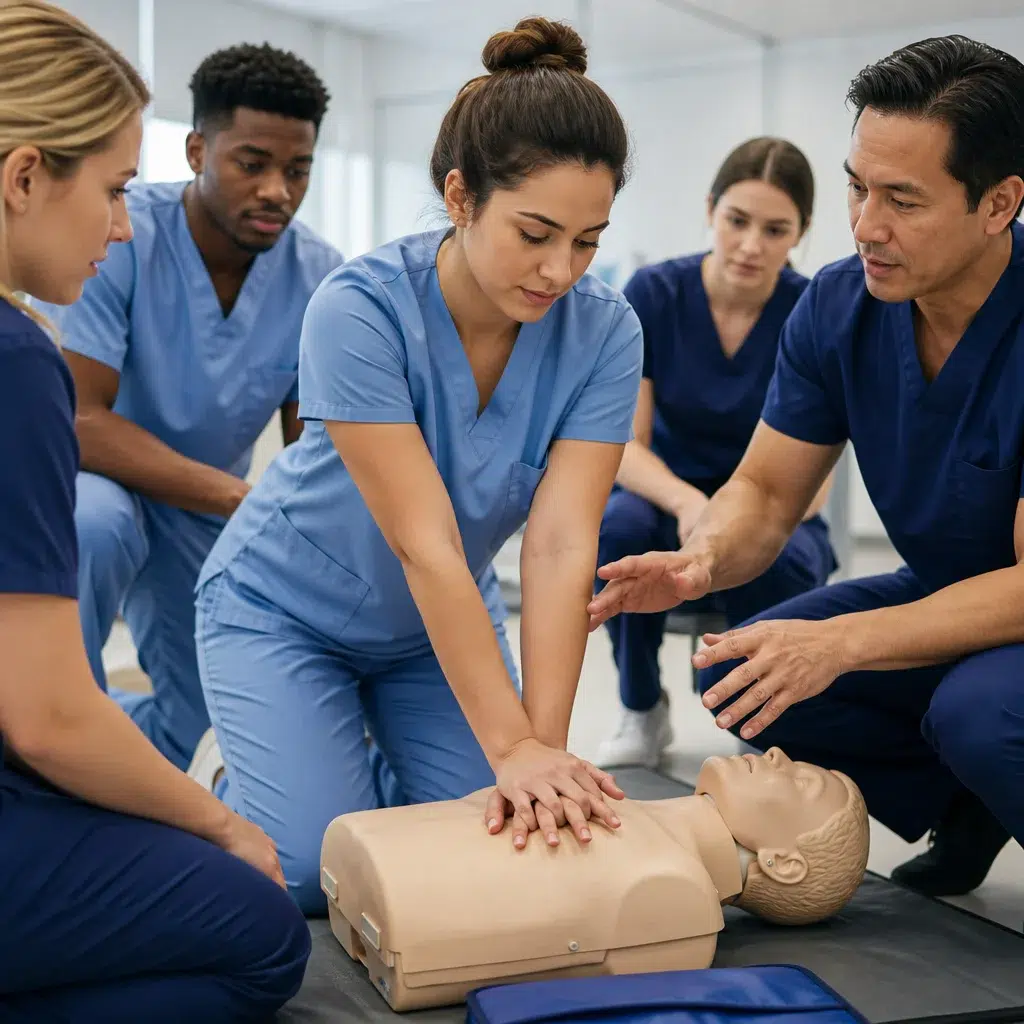
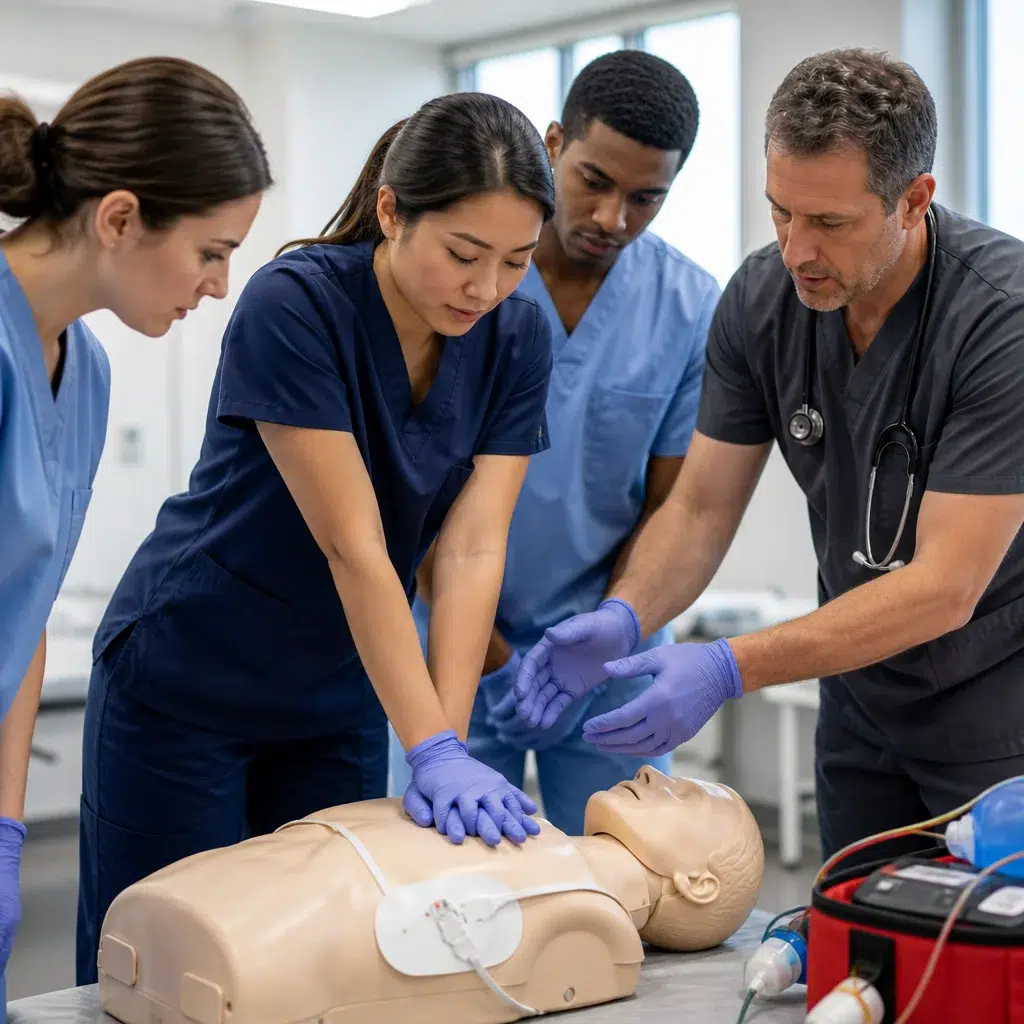
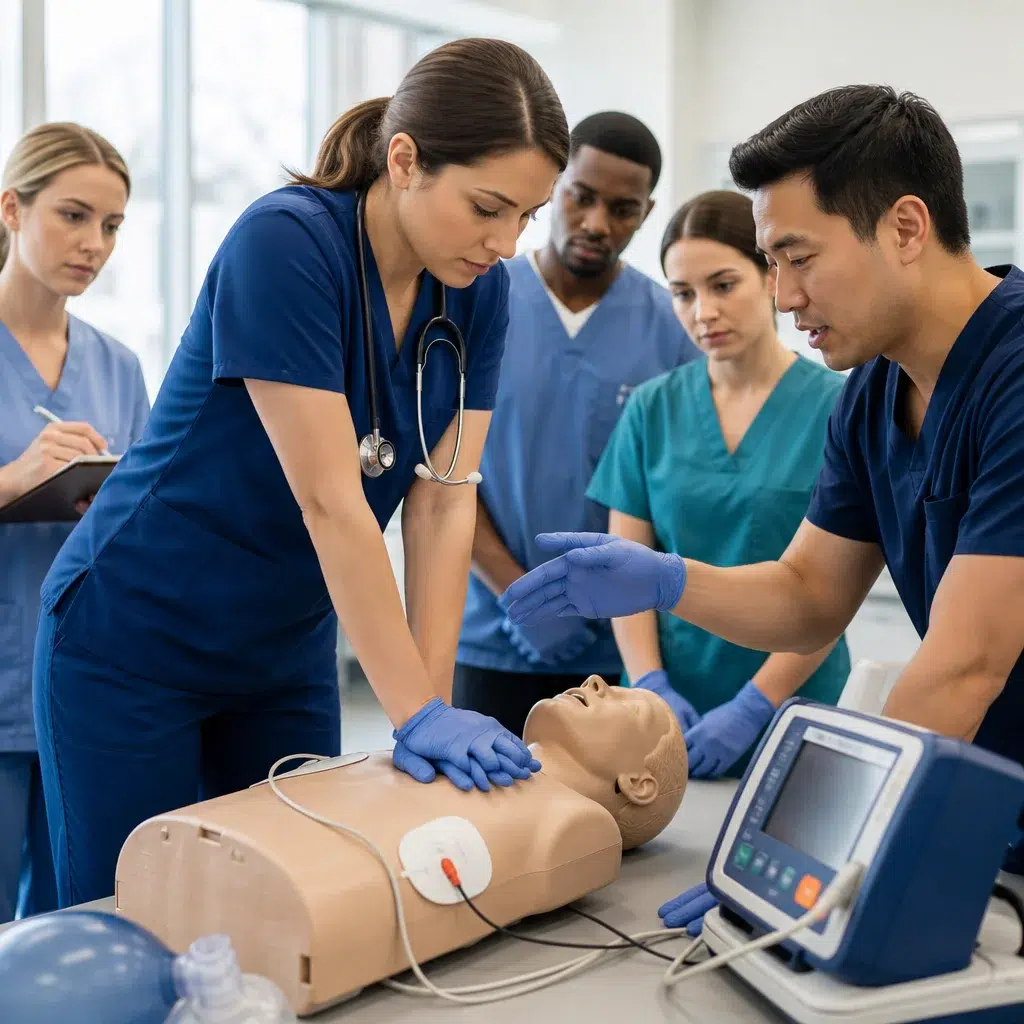
We understand that you can’t afford to spend two full days away from clinical work for training. That’s why we offer blended learning formats that combine self-paced online instruction with compact in-person skills sessions where you actually practice compressions, airway management, and defibrillator operation on realistic manikins.
Your online portion covers the algorithm changes, medication administration rationale, and case scenarios at your own pace. You review rhythm strips, work through decision trees, and take a knowledge check—all from home or between shifts. Then you attend a focused 4-6 hour skills session where our instructors observe your practical abilities, ensure your technique is correct, and answer questions about real-world application in your specific clinical setting.
This approach works especially well for experienced nurses and paramedics who already understand the principles but need to update their skills and certifications. You’re not sitting through hours of material you already know. Instead, you’re refreshing your competency efficiently and earning your credential.
We schedule in-person sessions across over 100 locations throughout California, including Fremont, Pleasanton, Davis, Chico, Redding, Fresno, Bakersfield, Visalia, and many other communities. This means you can often find a session near your home or workplace, minimizing travel time. Our daily course availability also means you can find sessions that fit your specific schedule—early mornings, evenings, or weekends—rather than forcing your availability around rigid training calendars.
5. Same-Day Certification and Hospital Credentialing Speed
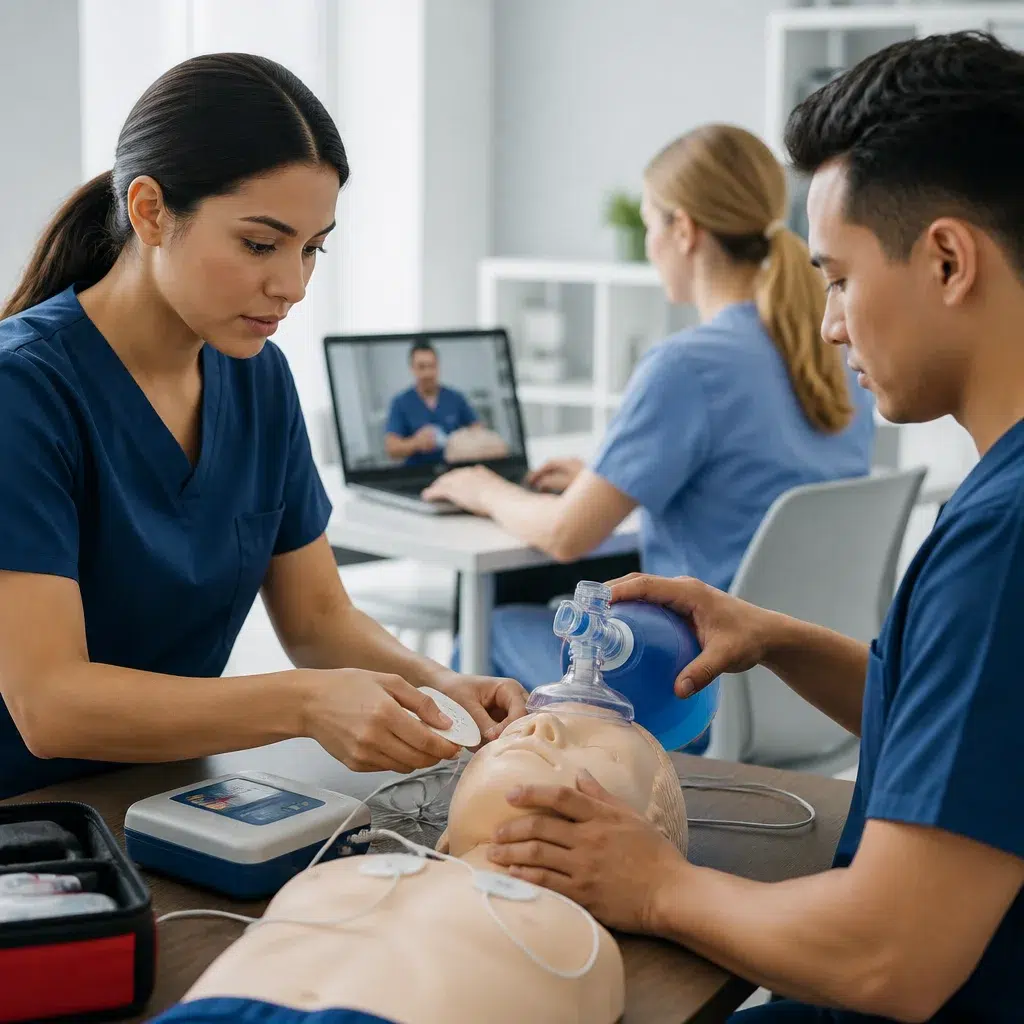
When your hospital notifies you that your ACLS certification expires in six weeks, you need a training provider who can get you certified quickly without unnecessary delays. We issue ACLS cards on the same day you complete your skills session, not weeks later.
This matters for credentialing because hospitals often suspend or place conditions on clinical privileges if certification lapses even briefly. Same-day certification means you walk out of our training session with your valid card in hand. You can immediately provide proof to your credentialing office, preventing gaps in your authorization to work.
Our streamlined verification process also speeds credentialing review. Hospitals can quickly confirm your certification directly with us, and our documentation is formatted exactly as credentialing departments expect. This reduces back-and-forth communications and approval timelines.
Actionable step: don’t wait until your expiration date is 30 days away. Schedule training 45-60 days before expiration. This gives you buffer time for any scheduling conflicts while ensuring you complete renewal before your credentials lapse. If you work in San Francisco, San Jose, Sacramento, Oakland, or Alameda County, we can likely schedule you within two weeks.
6. ACLS Renewal and Recertification Frequency Requirements
ACLS certification in California is typically valid for two years from your course completion date. Most hospitals require recertification before expiration, not after. This means if your card expires on June 15, 2028, your hospital likely expects you to renew by that date, not weeks later.
Some specialized roles or certain hospital systems require annual ACLS updates or skills verifications even if your certificate hasn’t technically expired. Check your employee handbook or ask your credentialing coordinator about your specific renewal timeline—don’t assume two years applies everywhere.
If your certification does expire—which we want to help you avoid—you’ll need to take the full course again, not just a quick refresher. There’s no “expired certification waiver” that lets you skip straight to renewal. Your hospital won’t restore expired credentials until you complete new training and provide a current, valid card.
Calendar management is simple: enter your ACLS expiration date into your phone calendar, set a reminder for 60 days before expiration, and book your renewal training immediately. We keep renewal sessions fully scheduled because thousands of California healthcare professionals renew on similar timelines.
7. Our Convenient Multi-Location California Network for Your Certification Needs
Finding ACLS training near you shouldn’t be a hassle, and we’ve built our network specifically to solve that problem. With over 100 training locations throughout California, you have options whether you work in urban medical centers or smaller community hospitals.
Our locations span the entire state: Alameda, Oakland, Fremont, and Hayward in the East Bay; Berkeley, San Francisco, South San Francisco, Palo Alto, and San Jose in the Peninsula and Bay Area; Sacramento, Roseville, Folsom, and surrounding communities in Northern California; Fresno, Bakersfield, and Visalia in the Central Valley; Santa Cruz, Santa Rosa, and Napa in the North Bay; and dozens of other communities including Concord, Walnut Creek, Pleasanton, Lathrop, Tracy, Stockton, and Modesto.
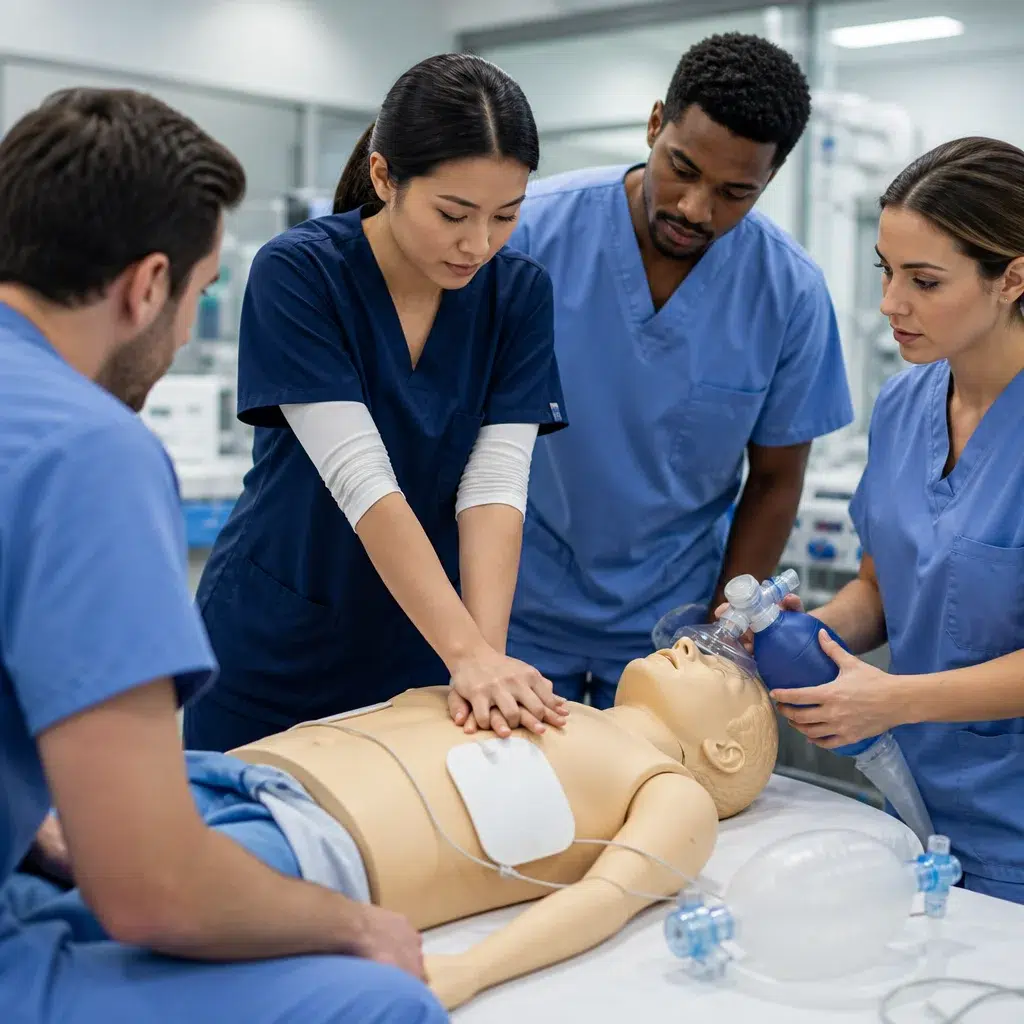
We schedule BLS, ACLS, PALS, and specialized certifications daily across this network. You can filter locations by your work address, home address, or preferred commute pattern. Many of our courses fill quickly because healthcare professionals appreciate the convenience and quality, so booking in advance ensures you get your preferred date and location.
Our instructors are experienced nurses, paramedics, and emergency physicians who understand your clinical reality. They don’t just teach the steps—they explain the “why” behind protocol changes, discuss real-world application challenges specific to California hospitals, and ensure you leave confident in your ability to lead resuscitation efforts when cardiac arrest occurs.
We also offer corporate group training and preferred pricing for hospital departments that need to certify or recertify multiple team members. If your department is facing a recertification cycle, we can often schedule on-site training or bundle multiple employees into dedicated cohorts, reducing overall cost and scheduling complexity.
Your next step is straightforward: visit our website to locate the training center nearest you, check available dates that fit your schedule, and book your ACLS certification well before your current card expires. Same-day certification, blended learning convenience, experienced instructors, and a statewide network mean you can meet California hospital ACLS requirements without disrupting your clinical practice. Don’t let credentialing delays or expired certifications interrupt your career—schedule your renewal today.
For further reading: California training locations.
Register for a class today.
Frequently Asked Questions (FAQ)
Does our ACLS certification meet California hospital credentialing requirements?
Yes, we provide ACLS certifications that align with California hospital credentialing standards and mandatory compliance requirements for healthcare professionals. Our curriculum is designed to meet the specific competencies that hospitals expect from their clinical staff, and we can issue same-day certifications to help you meet your facility’s onboarding timelines. We maintain verification stations throughout our 100+ California locations to streamline your credentialing process.
How often do I need to renew my ACLS certification with us?
We follow the standard recertification timeline of every two years for active ACLS holders. If your certification has expired, we can enroll you in our renewal courses, which are offered daily across California and can be completed faster than initial certification through our blended learning format. We recommend scheduling your renewal at least 60 days before expiration to avoid any gaps in your hospital credentials.
What’s the difference between taking our courses virtually versus in-person at your locations?
We offer blended learning that combines virtual instruction with in-person skills sessions, allowing you to complete knowledge portions on your schedule and attend hands-on practice at one of our conveniently located facilities. This approach works well for working healthcare professionals who need flexibility without sacrificing the practical training that hospitals require. Both delivery methods result in the same certification credential and meet all California hospital requirements.