Table of Contents
- 1. Blended Learning Models That Fit Your Schedule
- 2. Expert Instructors with Real-World Healthcare Experience
- 3. Same-Day Certification Cards for Immediate Compliance
- 4. Multiple Training Locations Across California
- 5. Specialized Instruction for Medical Professionals
- 6. Low-Price Guarantee on All ACLS Courses
- 7. RQI Simulation Stations with Advanced Technology
- Frequently Asked Questions (FAQ)
1. Blended Learning Models That Fit Your Schedule
Your time is non-negotiable. Shift work, call schedules, and patient coverage don’t pause for training courses. That’s why we’ve moved beyond the all-in-one-day model that forces you into a classroom when you can’t spare eight hours at once.
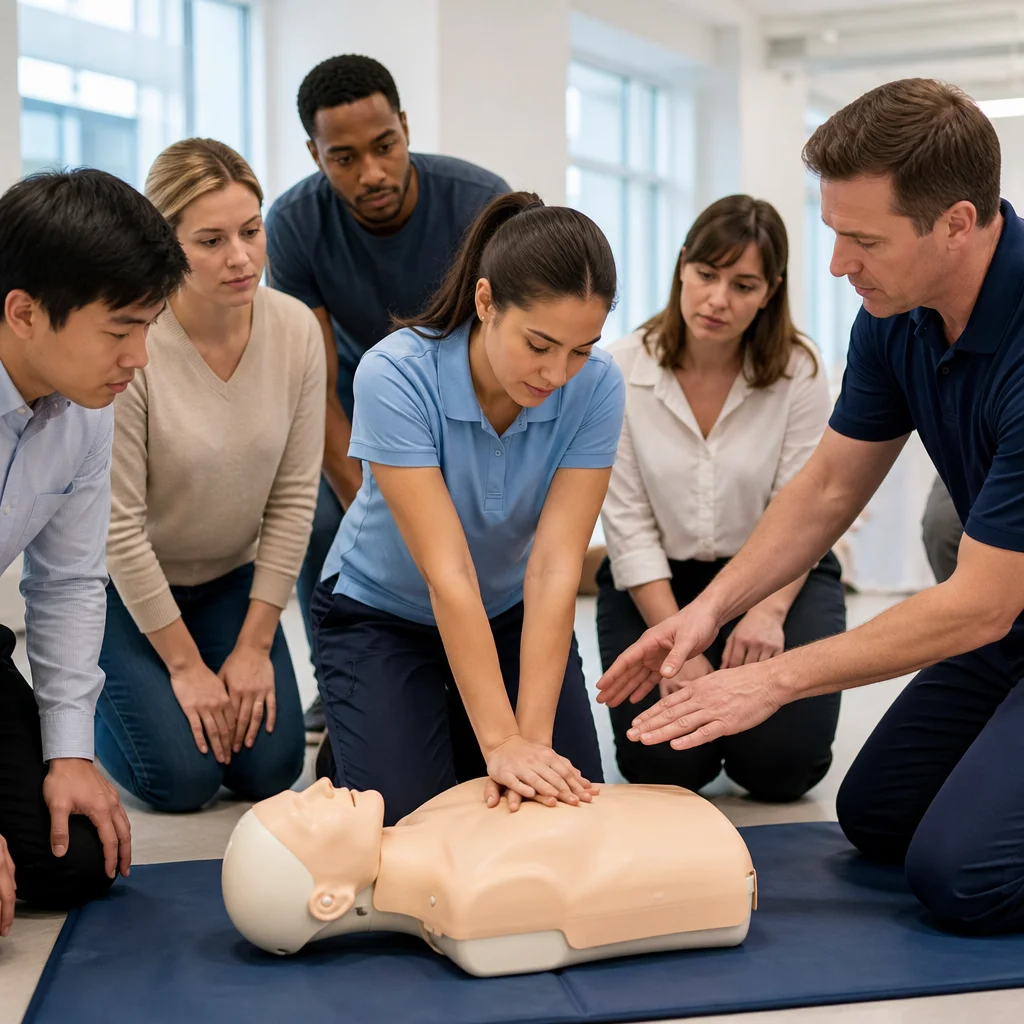
Our blended learning model splits ACLS instruction into two components. You complete the knowledge portion online at your own pace, reviewing rhythm recognition, medication algorithms, and scenario decision-making whenever it fits your schedule. Then you attend a focused in-person skills session where you practice chest compressions, airway management, and team leadership in realistic simulations. This approach cuts classroom time while ensuring you actually retain and can execute critical skills.
Nurses in Sacramento, EMS personnel in Fresno, and dentists throughout the San Francisco Bay Area use this flexibility to maintain their licenses without sacrificing income or exhausting themselves. You can study the cognitive material between shifts, at home, or even during your commute. When you arrive for the skills session, you’re prepared to dive straight into high-fidelity practice.
Actionable takeaway: Check our schedule at your nearest California training location to find a blended program window that matches your next two weeks of availability. The online component typically takes 2-3 hours.
2. Expert Instructors with Real-World Healthcare Experience
Instructors matter more than course structure. A former CPR instructor or volunteer doesn’t teach ACLS the way a working emergency medicine nurse or intensive care nurse does.
Our instructors aren’t curriculum readers. They’re active or recently retired healthcare professionals who’ve managed actual cardiac arrests. They’ve intubated patients, run code teams, and made split-second decisions under genuine pressure. That real-world context transforms the classroom from theoretical to practical. When an instructor explains why epinephrine timing matters, they’re drawing from cases they’ve managed, not textbook examples.
This distinction shows up immediately in how we teach decision-making. You won’t memorize flowcharts; you’ll practice the cognitive process experienced clinicians use. Instructors who’ve stood at a patient’s bedside during a true cardiac emergency teach you not just what to do, but how to think under stress.
Participants from Bakersfield to Berkeley consistently report that our instructors validate their concerns, adjust pacing to their knowledge level, and create an environment where it’s safe to ask hard questions. That psychological safety during practice translates to confidence and competence when you’re managing actual emergencies.
Actionable takeaway: When registering, read instructor bios. Ask about their clinical background during enrollment. The best certification comes from learning directly from clinicians who’ve walked in your shoes.
3. Same-Day Certification Cards for Immediate Compliance
Licensing boards and employer credentialing departments don’t care about “pending” certifications. You need proof in hand, now.
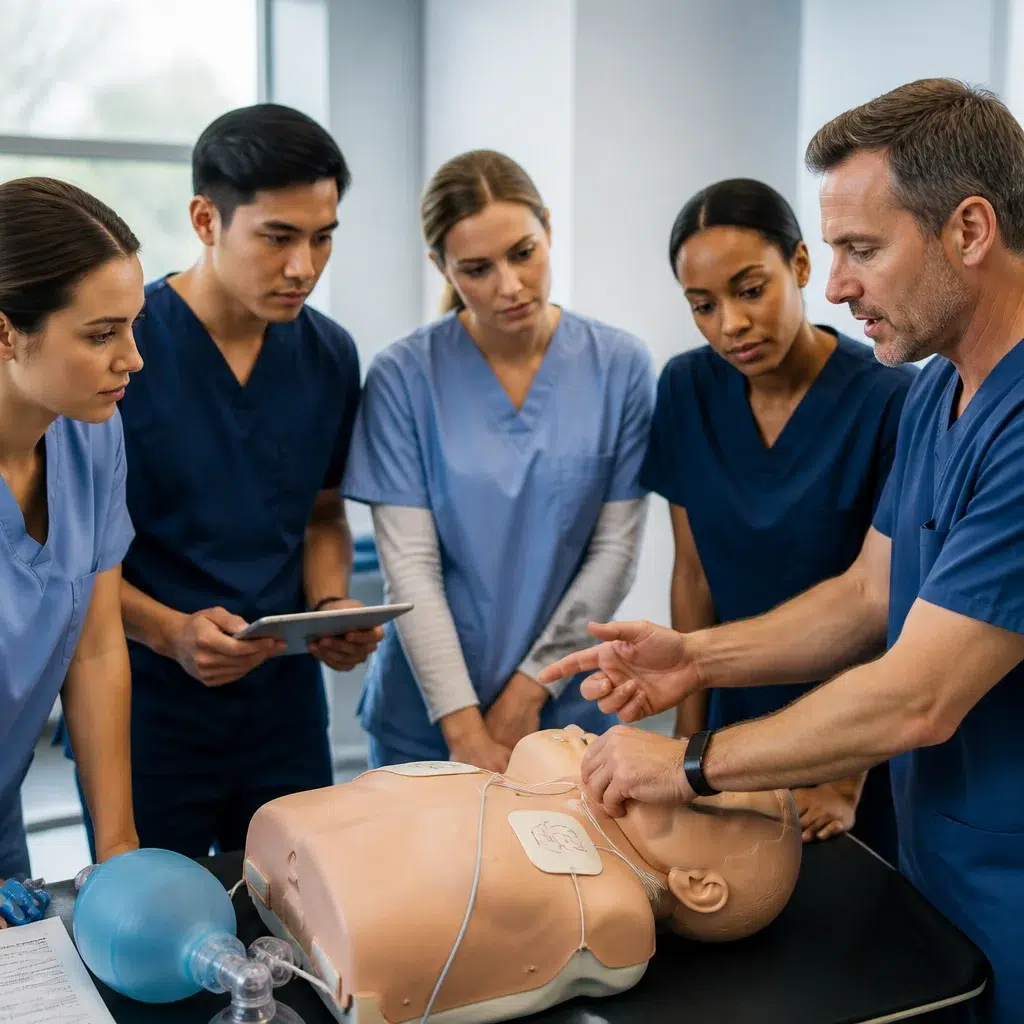
We issue verifiable certification cards immediately after you complete the in-person skills session. No waiting 5-10 business days for digital documents or mailed certificates. No interim periods where you’re technically not compliant. You walk out of your skills session in Sacramento, San Jose, or Oakland with a card you can present to your employer or licensing board that day.
This matters enormously when you’re changing positions, renewing licenses, or joining a new medical practice. Credentialing departments expect immediate documentation. We’ve eliminated that gap. Your card is printed, signed, and in your hand before you leave the training site. Most importantly, it’s recognized by all major healthcare employers and regulatory bodies throughout California.
This same-day turnaround prevents the compliance headaches that can delay hiring, slow credential verification, or leave you in an awkward position with your current employer. You’re covered immediately.
Actionable takeaway: Schedule your skills session with enough lead time before credential deadlines, but know that even if you’re cutting it close, you’ll have valid certification the moment your training ends.
4. Multiple Training Locations Across California
Geography shouldn’t force you to drive two hours for a certification course. We operate over 100 training locations throughout California, positioned so that you can find instruction near your workplace, home, or both.
Whether you’re based in Citrus Heights, Petaluma, Livermore, or Visalia, you have access to convenient, local ACLS training. Urban centers like San Francisco, Los Angeles, and Sacramento host multiple locations across different neighborhoods and times. Rural regions like Redding, Chico, and Visalia have scheduled courses that respect the reality of traveling to obtain training.
This geographic accessibility means you’re not choosing between convenience and quality. You get both. A dental hygienist in Palo Alto can train in their neighborhood. An ICU nurse in Concord can choose between multiple nearby options. An EMS supervisor in Vallejo schedules courses without highway commutes cutting into already tight windows.
We regularly update our location schedule based on demand, so newer offerings appear in high-traffic areas like San Jose’s Japantown and Downtown neighborhoods, San Francisco’s Mission District, and Sacramento’s Midtown and Rosemont regions.
Actionable takeaway: Search your city or nearest major hub on our site to see current options. If your exact location isn’t listed yet, nearby alternatives within 15-30 minutes are likely available.
5. Specialized Instruction for Medical Professionals
ACLS certification comes in different flavors. A general provider course teaches fundamentals. Specialized instruction addresses your role’s specific demands.
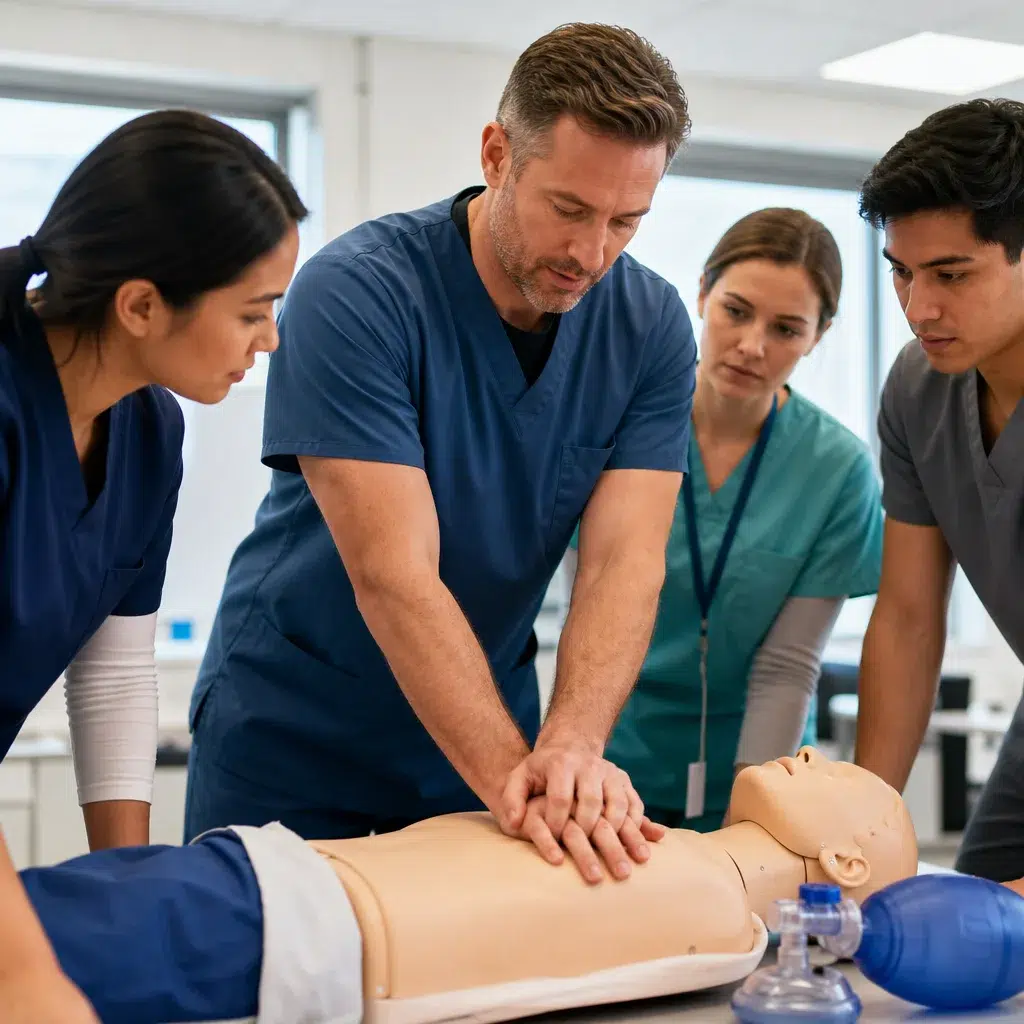
We offer focused ACLS pathways for nurses, dentists, anesthesia personnel, and other clinician types. This specialization means the scenarios you practice, the team dynamics you rehearse, and the decision-making frameworks you develop directly match your clinical reality. An ICU nurse practices code team leadership differently than a dentist in general anesthesia. Both need ACLS; both benefit from instruction tailored to their environment.
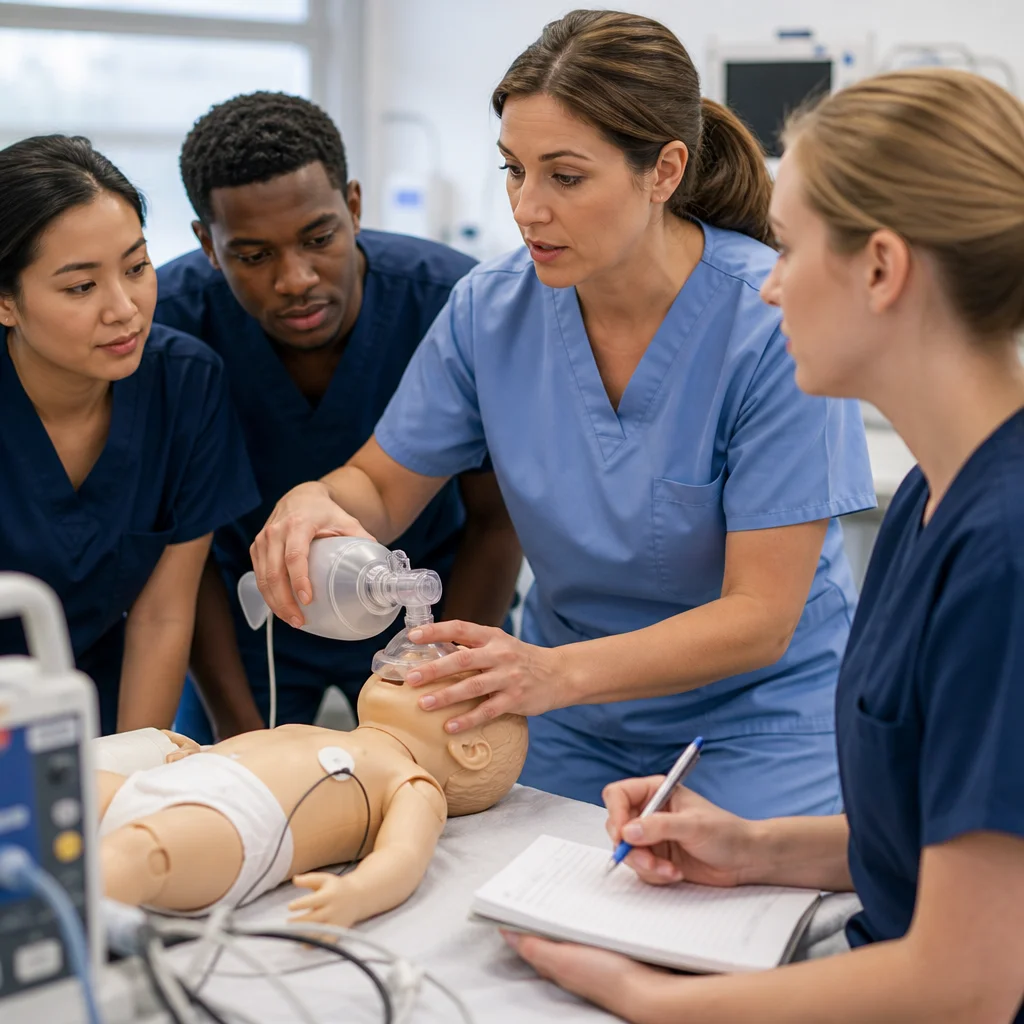
Pediatric Advanced Life Support (PALS) serves healthcare professionals managing infants and children. Neonatal Resuscitation Program (NRP) training covers delivery room scenarios for obstetric and neonatal teams. These certifications build on ACLS foundations but address the distinct physiology and protocols of pediatric and newborn emergency care.
This specialization prevents the frustration of spending time on scenarios that don’t apply to your practice. You’re not wasting hours on details irrelevant to your role. Instead, you’re building genuine competence in high-stakes situations you’ll actually encounter.
Actionable takeaway: Identify whether you need general ACLS, PALS, NRP, or another specialized certification for your license renewal or job requirements. Check course descriptions carefully to confirm the pathway matches your clinical setting.
6. Low-Price Guarantee on All ACLS Courses
Cost shouldn’t be a barrier to maintaining your license. We guarantee the lowest pricing on ACLS courses throughout California, and we honor that commitment transparently.
Many healthcare professionals face certification costs out of pocket or navigate complex reimbursement policies with employers. We’ve structured our pricing to be predictable and competitive. If you find a lower-priced ACLS course from another provider offering equivalent instruction, we’ll match or beat that rate. No games, no hidden fees, no pressure toward expensive add-ons.
This pricing transparency extends to corporate group training. If your medical practice, hospital, or clinic needs multiple staff members certified, we offer substantial group discounts that lower per-person costs while maintaining the same high-quality instruction. Practices in Fremont, Merced, Stockton, and throughout California have successfully certified entire teams at predictable, manageable costs.
Beyond pricing, we eliminate surprise expenses. Your certification card is included. No separate verification station fees. No additional charges for course materials. What you see quoted is what you pay.
Actionable takeaway: Get a binding price quote before committing. Ask about group discounts if you’re coordinating certification for your entire team or department.
7. RQI Simulation Stations with Advanced Technology
Practice doesn’t just reinforce skills; it builds the muscle memory and decision-making speed you need when seconds count. We use advanced manikins and simulation technology designed specifically for ACLS training, not generic classroom models.
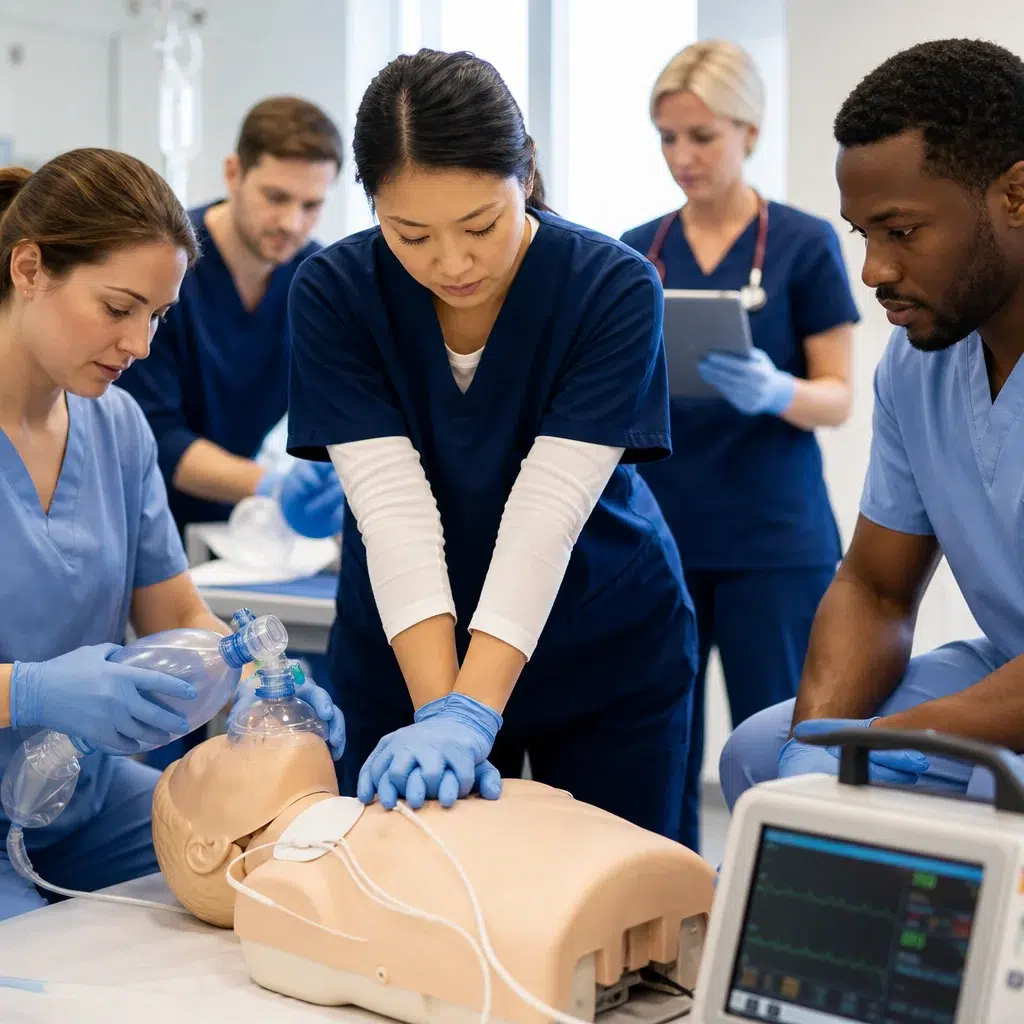
Our RQI simulation stations provide realistic feedback. Chest compression depth, rate, recoil, and hand position generate real-time data so you can correct technique immediately. Airway management stations simulate the anatomical resistance and airway dynamics you encounter in actual patient care. Defibrillator scenarios run through realistic rhythms, medication timing, and team communication protocols.
This technology-enabled practice means you’re not just going through motions. You’re building genuine competence through repeated, corrected practice in scenarios that replicate actual emergencies. The feedback loop is immediate. If your compressions are too shallow, the manikin’s data tells you instantly. If your medication timing is off, the scenario progresses realistically, showing consequences.
Learners from Campbell to Redwood City, from Vallejo to Santa Cruz, consistently report that this high-fidelity practice builds confidence. You’re not guessing whether you’re doing things right. You know, because the technology shows you.
Actionable takeaway: Request a facility tour or ask about simulation station quality during registration. Hands-on practice quality directly determines how prepared you’ll be in a real emergency.
For further reading: Blended learning model.
Register for a class today.
Frequently Asked Questions (FAQ)
How does our blended learning model work for ACLS certification?
We combine online coursework with in-person skills sessions so you can complete your training on your schedule. Our virtual component covers knowledge requirements, while our instructors evaluate your hands-on skills during supervised practice sessions at one of our 100+ California locations. This approach lets us deliver your certification efficiently without sacrificing the hands-on practice that matters most.
Can we issue same-day ACLS certification cards?
Yes, we provide verification cards immediately upon successful completion of our courses. Since we maintain our own certification system, we don’t rely on external processing delays. Your card is valid for professional licensing and employment requirements across California healthcare settings.
What makes our ACLS training different for healthcare providers?
Our instructors are experienced medical professionals who teach from real-world clinical perspectives rather than generic scenarios. We offer specialized instruction paths for nurses, dentists, EMS personnel, and other healthcare roles, and we back all our courses with our low-price guarantee so you get expert training without overpaying.