Table of Contents
- 1. Understanding Mandatory CPR Certification for Dental Staff
- 2. Blended Learning: The Most Effective Training Delivery Method
- 3. Same-Day Certification Cards for Immediate Compliance
- 4. Flexible Scheduling to Minimize Office Downtime
- 5. RQI Simulation Stations with Advanced VAM Technology
- 6. On-Site Group Training for Your Entire Team
- 7. Multi-Location Accessibility Across California
- 8. Comprehensive Support and Low-Price Guarantees
- Frequently Asked Questions (FAQ)
1. Understanding Mandatory CPR Certification for Dental Staff
Dental offices across California face a straightforward but non-negotiable requirement: every team member must maintain current CPR certification. Whether you manage a solo practice in San Jose or a multi-location operation spanning from Sacramento to San Francisco, keeping your entire staff compliant while minimizing disruption to patient care is a real operational challenge.
The difference between a training solution that works and one that doesn’t often comes down to three things: does it fit your schedule, does it deliver genuine skill competency, and can you get certified immediately when you need it? We’ve designed our approach specifically for dental practices, and we’ve learned what actually works in a clinical environment.
California’s dental boards and licensing requirements are clear: dentists, hygienists, and clinical assistants must hold current Basic Life Support (BLS) certification. Many practices also require front desk and sterilization staff to maintain CPR skills, even if it’s not explicitly mandated. The reasoning is straightforward: a dental emergency can happen during treatment, in the waiting room, or while a patient is under sedation.
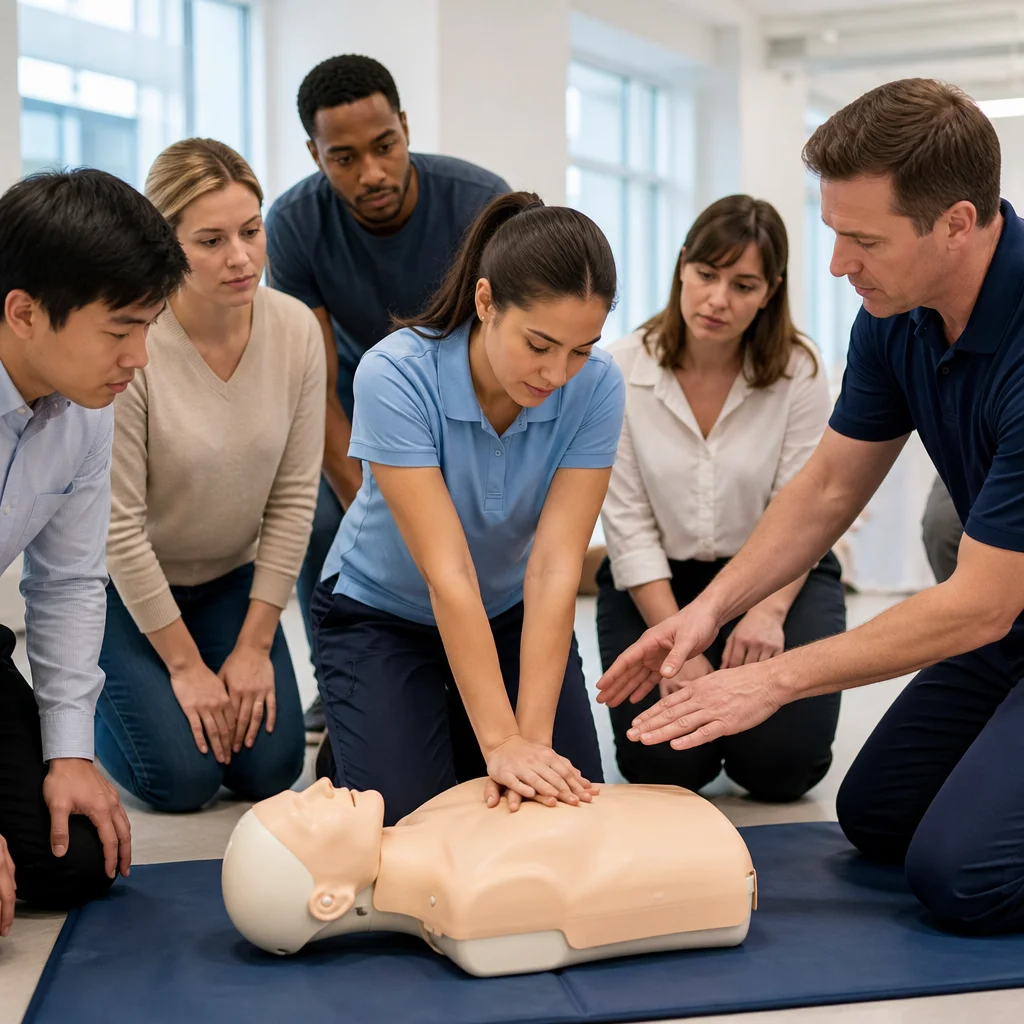
What makes CPR compliance different from other continuing education is the hands-on verification component. You can’t simply watch a video and call yourself certified. Instructors must personally observe your technique on a manikin to confirm you can perform chest compressions at the correct rate and depth, position your hands properly, and execute a rescue breathing sequence if needed. This is why blended approaches that combine online learning with in-person skills practice have become the standard in healthcare training.
Action to take: Check your current team roster and identify whose certifications expire in the next six months. Many practices discover they have a compliance gap only when someone’s card lapses.
2. Blended Learning: The Most Effective Training Delivery Method
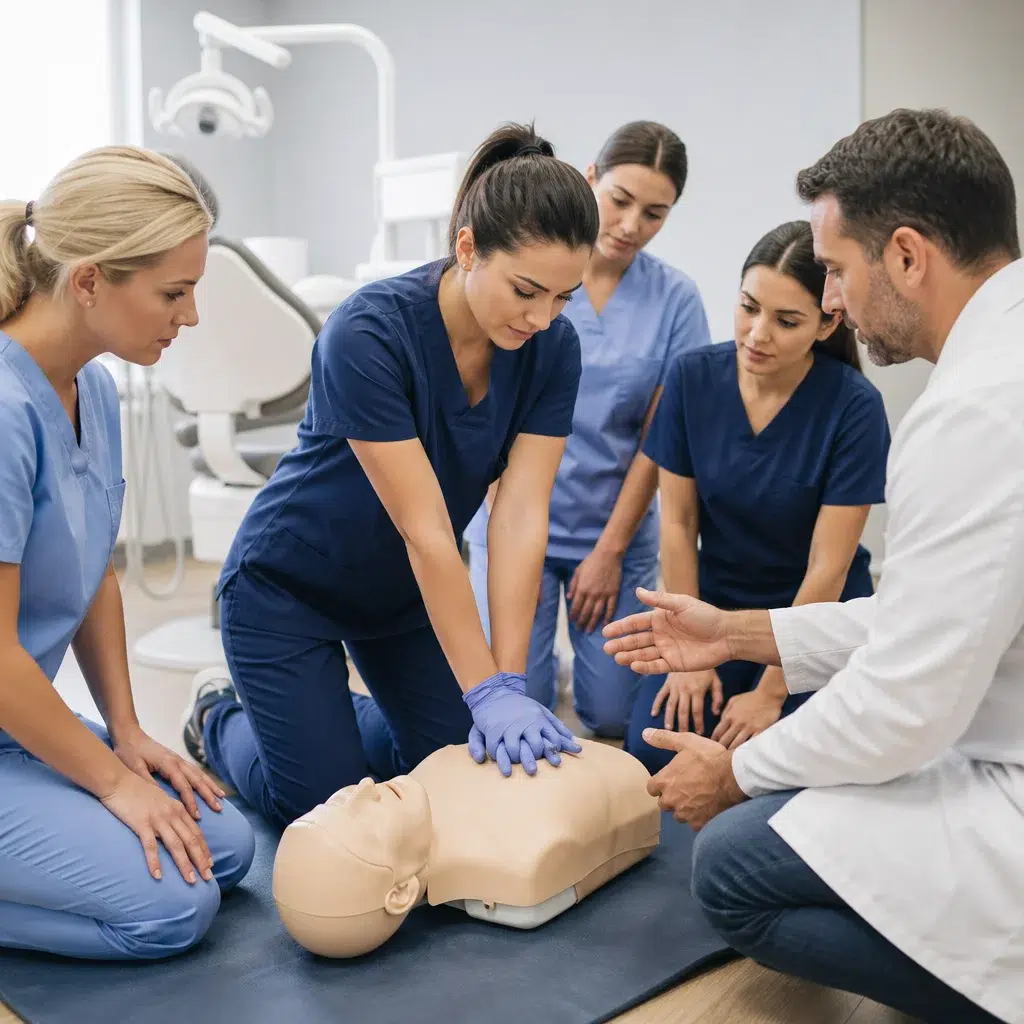
We’ve moved away from the traditional all-day classroom model because it doesn’t respect your time or your practice schedule. Our blended learning model allows team members to complete the cognitive portion online at their own pace, then attend a brief, focused skills session where they demonstrate competency with a live instructor.
Here’s the practical advantage: your hygienist completes the online module Tuesday evening after work. On Saturday morning, they spend 90 minutes with our instructor at our Folsom or Livermore location, pass the skills assessment, and walk out with their certification card. No full day away from the operatory. No stressing about scheduling around patient appointments.
The online portion covers the foundational knowledge: when to call 911, how to position an unconscious patient, recognizing signs of cardiac arrest, and the role of automated external defibrillators (AEDs). Your team learns the “why” before they practice the “how.” When they arrive for the in-person session, they’re already oriented and can focus entirely on hands-on technique refinement.
Studies consistently show that distributed learning with a practical verification session produces better knowledge retention and actual skill performance than either format alone. Your team isn’t drowsy after six hours in a classroom; they’re focused, purposeful, and confident when they demonstrate their skills.
Action to take: Ask your staff how many would prefer a split-session approach over a full-day commitment. You’ll likely find stronger participation when training doesn’t consume an entire workday.
3. Same-Day Certification Cards for Immediate Compliance
One of the most frustrating delays in traditional training occurs after the course ends: you’re waiting for the certification card to arrive by mail, sometimes weeks later. In the meantime, your compliance status is technically uncertain, and if an auditor or licensing board questions your staff files, you’re navigating an uncomfortable gray area.
We issue certification cards on-site, immediately upon successful skills completion. Your team member walks into our Sacramento, Hayward, or San Francisco location, demonstrates their skills competency, and walks out 15 minutes later with a physical card in hand. They can photograph it, add it to their employee file, and document compliance that day.
This same-day approach eliminates administrative headaches. Your office manager isn’t tracking pending cards or following up with staff about status. You have documented proof of compliance before the training session even ends. If you need to verify certifications for licensing renewal, insurance audits, or accreditation reviews, your records are current and physical.
Action to take: Keep your certification cards in a centralized file and set calendar reminders three months before expiration dates. This prevents last-minute scrambling and ensures your practice maintains continuous compliance.
4. Flexible Scheduling to Minimize Office Downtime
Dental practices run on tight schedules. Losing two staff members on the same Tuesday afternoon creates a ripple effect: patient appointments get compressed, your schedule becomes fragile, and the entire team feels the stress of understaffing.
We offer training sessions across over 100 California locations during weekday evenings and weekends specifically to accommodate healthcare professionals. If you have a team of eight people who need recertification, we can stagger them across different weeks and different time slots. Two people attend Saturday morning in Walnut Creek. Two more attend Wednesday evening in Concord. Another pair goes on Thursday evening in Berkeley, and your final two attend the following Monday evening in Redding or Fresno.
Flexible scheduling also means you can certify new hires on their first week without disrupting established staff. A dental assistant starting Monday can complete their online module that evening and attend a skills session Saturday, arriving for their first patient interaction fully certified.
Action to take: Work with a training partner who offers at least 10-15 session times per week in your region. This flexibility is non-negotiable for multi-person teams.
5. RQI Simulation Stations with Advanced VAM Technology
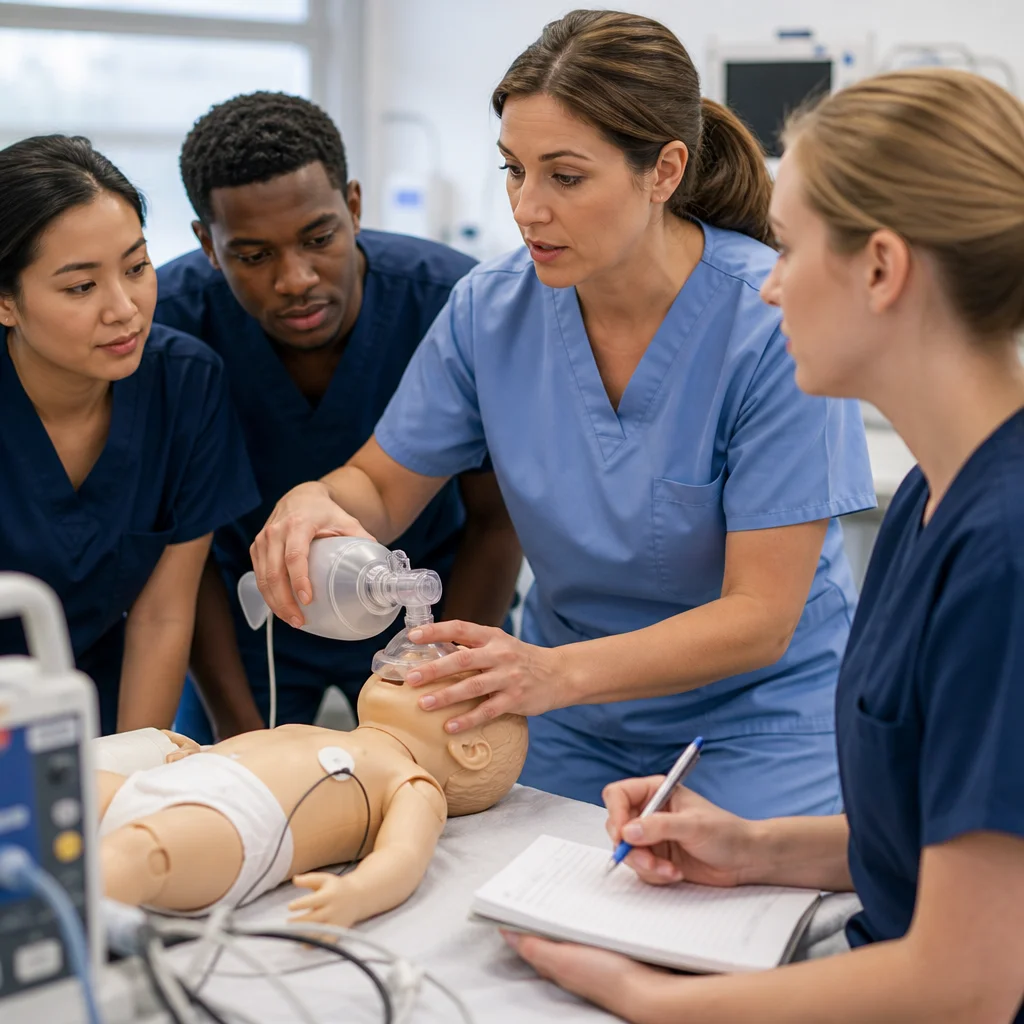
The manikins and feedback systems matter more than many practices realize. We use advanced simulation stations with Voice Assisted Manikin (VAM) technology that provides real-time feedback on compression depth, rate, and hand placement. Your team member receives immediate audible guidance during practice: “Compression depth okay. Increase rate. Good. Recheck pulse.”
This immediate feedback accelerates learning. Instead of an instructor watching from the side and correcting technique after the fact, your staff member hears confirmation in the moment. They adjust, they improve, and they build muscle memory faster. By the time they’re ready for formal assessment, they’re confident because they’ve already practiced with a system that mimics real-world feedback.
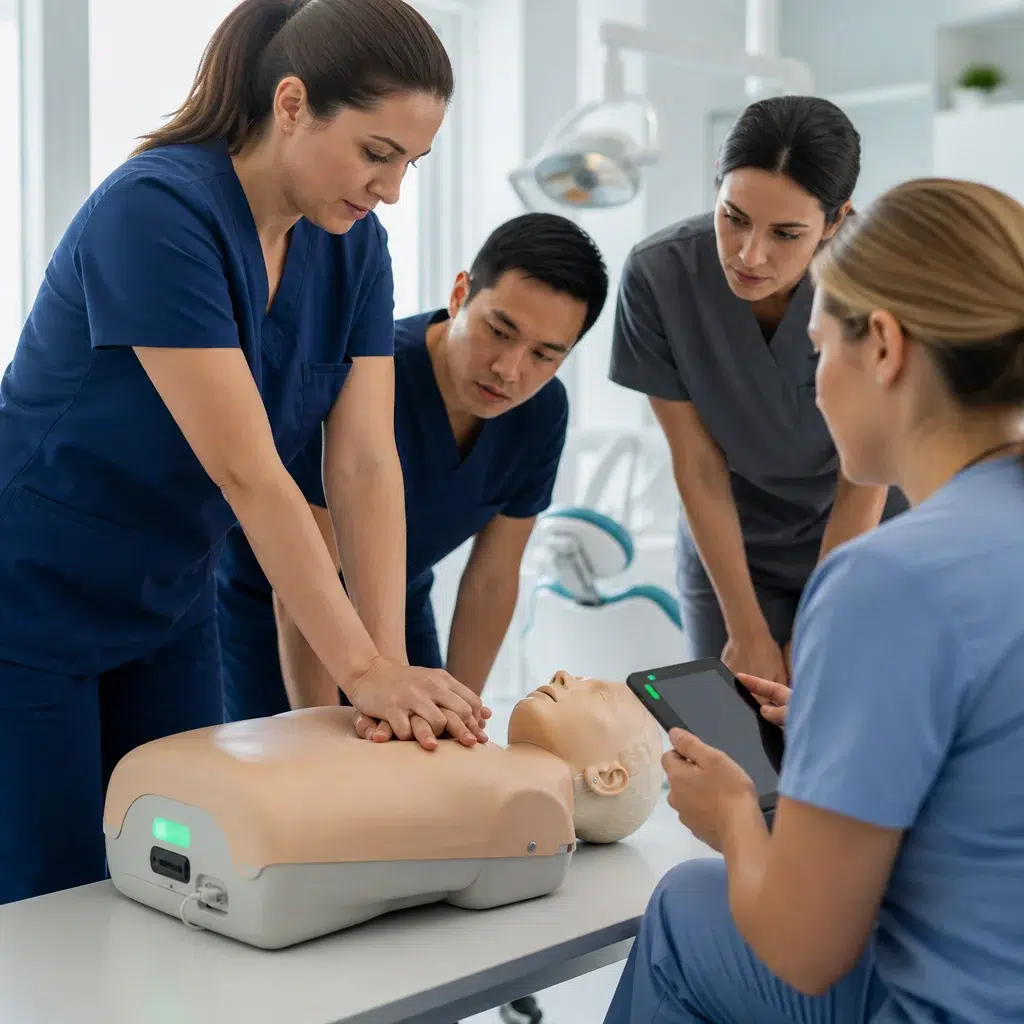
The VAM stations also provide objective data. You’re not relying solely on instructor judgment; the system logs compression metrics and your team member receives a printout showing exactly where they performed well and where they might need extra practice during recertification.
Action to take: Ask potential training providers whether their equipment provides real-time feedback. It’s a significant upgrade from older manikins that provide no guidance during practice.
6. On-Site Group Training for Your Entire Team
Many practices don’t realize we can bring our instructor and equipment directly to your office. Your Fremont or Morgan Hill dental practice can host an on-site skills session where your entire team demonstrates competency without traveling anywhere.
On-site training works especially well for larger practices with 6-10 clinical and administrative staff who need concurrent certification. We bring the manikins, set up stations in your break room or conference area, and conduct the session after hours or during a scheduled clinic closure. Your team completes training in their familiar environment, eliminating travel time and logistical coordination.
The cost-per-person for on-site group training is often lower than sending individuals to community sessions, and your entire team becomes certified on the same schedule. Documentation is handled immediately, and you maintain unified compliance timelines going forward.
Action to take: If you have six or more staff members, request a quote for on-site group training. Most practices find the convenience and value justify the investment.
7. Multi-Location Accessibility Across California
We maintain over 100 training locations throughout California, from Visalia to Redding, Santa Cruz to Bakersfield, and throughout the San Francisco Bay Area. Whether your practice is in Pleasanton, Novato, Santa Rosa, or any of our other locations, you have nearby options for in-person skills sessions.
This accessibility matters more than it sounds. If your Modesto-based dentist needs certification and the nearest option is a 90-minute drive to Sacramento or Fresno, they’re less likely to schedule promptly. But if certification is available in Modesto itself, compliance becomes a matter of finding one convenient session per year.
We’ve strategically distributed our California training locations to serve metropolitan areas and smaller communities alike. Urban practices in San Jose, Oakland, and Los Angeles have multiple session options each week. Practices in more rural areas like Lathrop, Tracy, or Woodland have nearby regional hubs in Stockton or Sacramento.
Action to take: Confirm that any training partner you select has at least two locations within 30 minutes of your practice. Proximity matters for sustaining compliance culture.
8. Comprehensive Support and Low-Price Guarantees
We’re confident in the value we deliver, so we back it with a low-price guarantee. If you find identical BLS or CPR certification elsewhere in California for a lower price, we’ll match it. This guarantee applies to our published class rates, and it removes the concern that you’re overpaying for convenience.
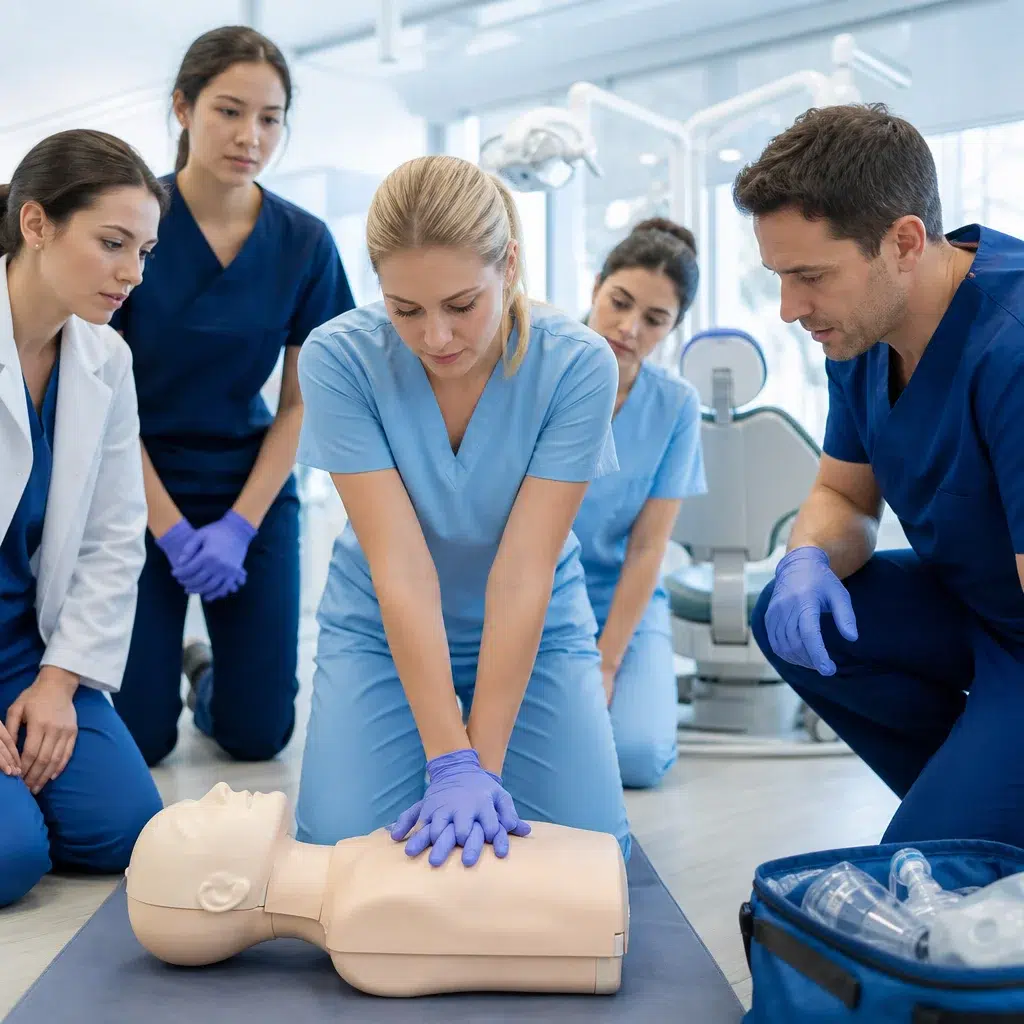
Beyond pricing, our customer support extends to your entire team. We provide pre-course guidance so staff knows what to expect, we offer extended skills practice time for anyone who wants extra confidence before assessment, and we follow up after certification to answer questions about maintenance and recertification timing.
We also recognize that dental practices often need certification customization. Some offices want all clinical staff in BLS; others need a subset in ACLS if they administer sedation. We design training packages that match your specific requirements rather than forcing everyone into a standard program.
Action to take: Request a pricing quote and ask about our low-price guarantee in writing. Transparency in cost and service terms prevents surprises later.
—
CPR training for dental offices doesn’t have to be complicated or disruptive. It requires a provider who understands clinical schedules, delivers genuine skill competency, and makes compliance straightforward. We’ve built our entire approach around those three pillars because we work with dental practices every day and we understand your reality.
Start by identifying your compliance timeline, then connect with us to explore how our blended learning, flexible scheduling, and same-day certification can fit your practice. You’ll find that proper CPR readiness isn’t just a regulatory checkbox; it’s a professional safeguard that gives you and your team genuine confidence in an emergency.
Register for a class today.
Frequently Asked Questions (FAQ)
Why do dental offices need CPR certification for their staff?
We require CPR certification for dental offices because California dental board regulations mandate that dentists and clinical staff maintain current life-saving credentials. Our courses ensure your team can respond to medical emergencies in your practice, protect patient safety, and keep your office compliant with licensing requirements. Most dental positions, from hygienists to assistants, need renewal every two years.
How quickly can our dental team get certified with your blended learning format?
We combine online coursework with hands-on skills sessions, allowing your team to complete the knowledge portion on their own schedule and attend in-person practice at one of our 100+ California locations. Most dental professionals finish their certification within one week, and we issue same-day certification cards after passing our skills station, so your staff meets compliance immediately. This approach minimizes disruption to your patient schedule while ensuring thorough training.
Can we bring our entire dental office team to train together?
We absolutely offer on-site group training tailored to dental practices, where we come to your office with our simulation equipment. We work around your appointment schedule to minimize downtime, and we provide discounted group rates regardless of your team size. Contact us to discuss custom scheduling that works best for your practice.