Table of Contents
- 1. Assess Your Team's Current Certification Status
- 2. Choose Flexible Scheduling Options That Work for Dental Hours
- 3. Opt for Blended Learning to Minimize Chair Time Away
- 4. Select Training Providers with Multiple Location Convenience
- 5. Prioritize Same-Day Certification to Meet Licensing Deadlines
- 6. Implement Group Training for Your Entire Dental Team
- 7. Schedule Annual Recertification Before Certifications Expire
- Frequently Asked Questions (FAQ)
1. Assess Your Team’s Current Certification Status
Running a dental practice means juggling patient schedules, staff coordination, and mandatory compliance requirements. Basic Life Support (BLS) certification stands as a non-negotiable credential for your entire team, yet fitting training into your already packed calendar feels like another impossible puzzle piece. The good news: with the right approach and training partner, scheduling BLS training doesn’t have to disrupt your operations or drain your budget.
We’ve worked with hundreds of dental teams across California, from solo practices in Santa Cruz to multi-location operations in San Francisco, and we’ve identified the most effective strategies that keep your practice running smoothly while ensuring every team member maintains current, valid certification.
Before you book anything, create a detailed inventory of your team’s certification timeline. Pull expiration dates for each staff member—dental hygienists, assistants, front desk personnel, and dentists all need to track when their credentials expire.
Start by listing each team member with their current certification status. Note whether they hold BLS, ACLS (Advanced Cardiovascular Life Support), PALS (Pediatric Advanced Life Support), or other specialties. Flag anyone whose certification expires within the next 90 days as high priority. This gives you a realistic view of your actual training needs versus vague assumptions.
Many practices discover they’ve been tracking certifications informally, which creates gaps and last-minute scrambles. A simple spreadsheet with names, credential types, expiration dates, and renewal status prevents costly lapses that could affect licensing or patient trust.
Once you identify expiration dates, you’ll know whether your team needs renewal training (a shorter refresher for recertification) or initial certification (the full course). This distinction affects your scheduling choices and budget planning.
Action item: Audit your team’s credentials this week. Contact your state licensing board if you’re unsure about specific renewal requirements for dentists versus hygienists in your region.
2. Choose Flexible Scheduling Options That Work for Dental Hours
Dental offices operate on tight schedules. Your hygienists and assistants can’t simply step away mid-morning without canceling patient appointments, and your dentist’s schedule is typically booked months ahead.
Look for training providers offering early morning, evening, and weekend sessions specifically designed for healthcare professionals. Sessions starting at 6:00 AM before office hours or scheduled for 5:30 PM after the last patient leaves give your team options that don’t require rescheduling appointments. Weekend offerings in locations throughout the Bay Area, Sacramento, San Diego areas, and beyond provide additional flexibility.
Some providers offer flexible attendance windows, allowing team members to attend different sessions if everyone can’t gather simultaneously. This approach works particularly well for larger practices where staggered training prevents complete operational shutdown.
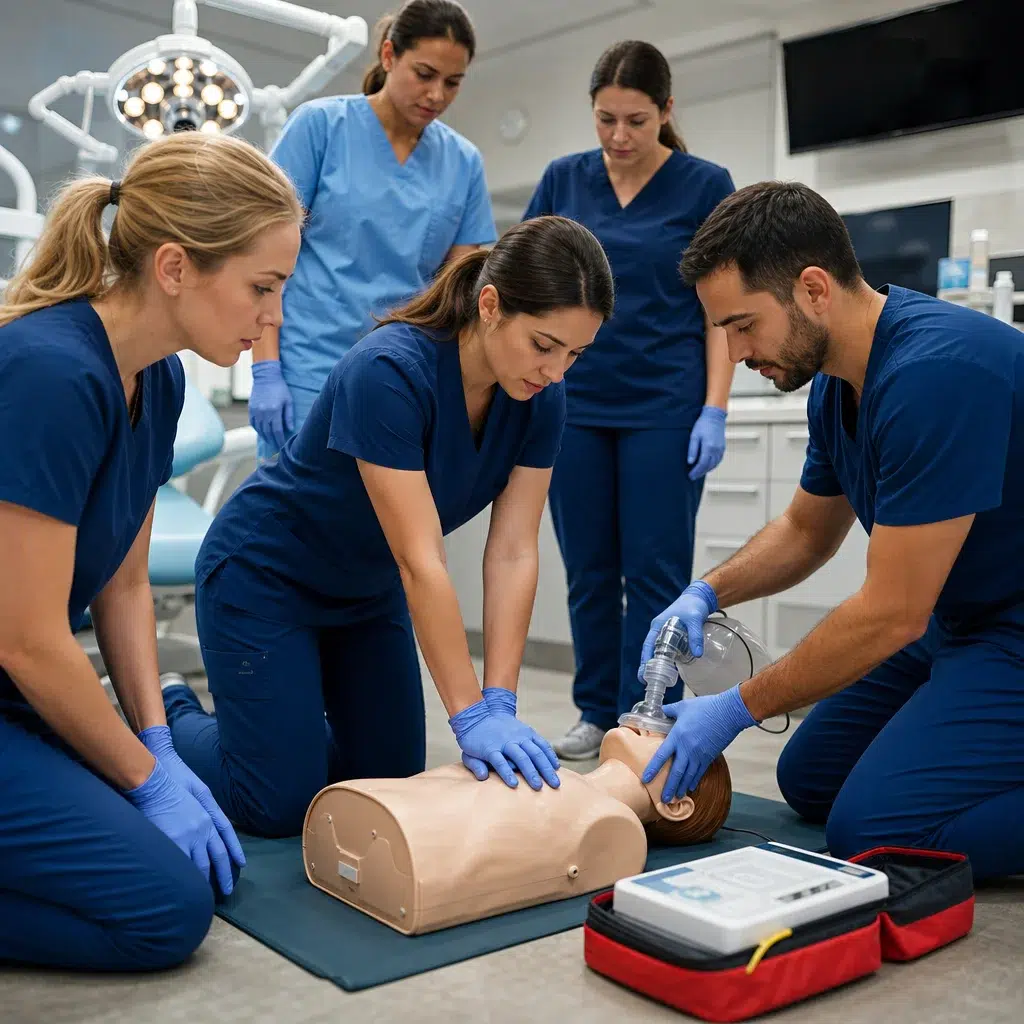
Request training partners who understand dental scheduling constraints and won’t lock you into rigid time slots that conflict with patient care. The best partners work around your practice’s rhythm, not against it.
Action item: Contact potential training providers and ask specifically about early morning, evening, and weekend class availability in your area.
3. Opt for Blended Learning to Minimize Chair Time Away
Blended learning combines online instruction with hands-on skills sessions, reducing time your team spends away from the practice while maintaining the critical hands-on training that BLS certification requires.
With blended learning, your team completes theory, videos, and knowledge checks from home or during breaks. They attend the practice location only for the practical skills session where they work directly with an instructor on mannequins and real techniques. This typically requires just 2-4 hours in-person rather than a full 8-hour course day.
Your hygienist can review CPR algorithms and chest compression techniques on her own time, arriving at class ready to practice under direct supervision. Your dental assistant gains confidence with the equipment and technique during the practical session without consuming your entire afternoon schedule.
We’ve developed blended programs specifically for healthcare teams because we understand that chair time away costs your practice real revenue. The online portion ensures comprehensive knowledge, while the in-person segment delivers the tactile, supervised practice that certifying bodies require and that truly matters in an emergency.
Action item: Look for BLS training options that offer blended learning to cut in-person time without cutting corners on instruction quality.
4. Select Training Providers with Multiple Location Convenience
Choosing a provider with widespread California locations means your team isn’t traveling an hour to reach training. If you have multiple office locations or team members in different areas, location flexibility becomes essential.
Having over 100 training locations throughout California—from Visalia in the south to Redding in the north, and including major centers like San Francisco, Los Angeles, Sacramento, and San Diego—means your team accesses training near home or work. A dentist in Walnut Creek can train locally rather than driving to a distant center. Your assistant in Santa Rosa attends a session near her commute.
Wide location networks also provide scheduling flexibility. If your preferred Tuesday session fills, alternative locations nearby often have Thursday or weekend availability. This removes the frustration of being told “our next opening is three months away.”
Beyond convenience, choose providers with instructors experienced in dental and healthcare settings. They understand the specific emergencies your practice may face and can teach scenarios relevant to your environment rather than generic, one-size-fits-all content.
Action item: Research training locations near you and verify they offer multiple sessions weekly to maximize scheduling flexibility.
5. Prioritize Same-Day Certification to Meet Licensing Deadlines
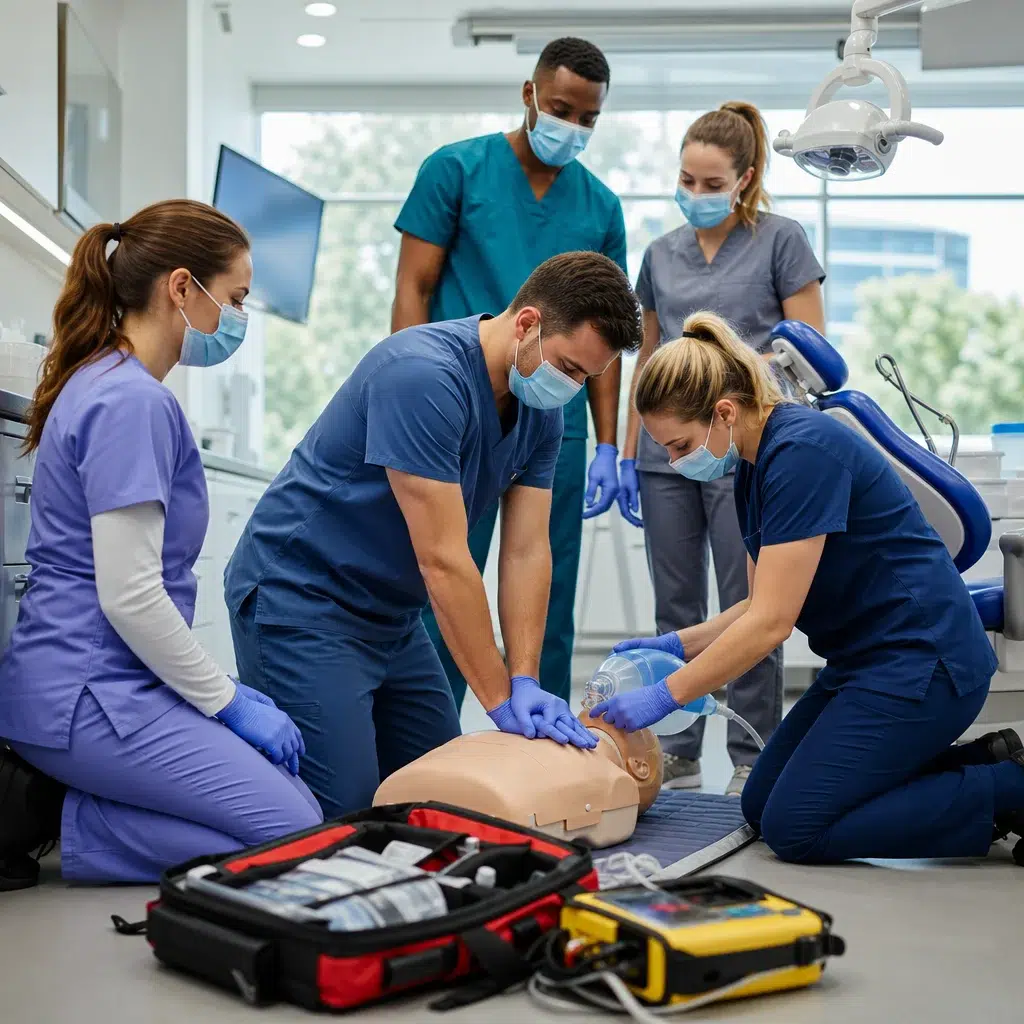
When your dentist’s or hygienist’s certification expires in 30 days and you’re scrambling, same-day certification becomes a lifeline. Some training providers can issue your certification card immediately upon course completion, rather than mailing it days or weeks later.
Same-day certification matters because your state board and employers require proof of current certification immediately. Mailed certificates or delayed digital versions create unnecessary risk. You need documentation in hand on the day you complete training.
Beyond emergency situations, same-day certification works strategically when you’re managing renewal deadlines across a team. If you schedule four team members for training across different dates, receiving each certification immediately ensures everyone stays compliant without administrative follow-up delays.
Verify that your training provider offers same-day digital and/or physical certificates that meet your state’s and your employer’s specific requirements. Not all providers deliver this level of efficiency.
Action item: When booking training, confirm your provider issues same-day certificates that your dental board recognizes as valid proof of current certification.
6. Implement Group Training for Your Entire Dental Team
Group training brings your entire team through certification simultaneously, creating several advantages. Your team practices together on the same protocols, strengthening communication and response coordination should an actual emergency occur in your practice. Your dentist, hygienists, and assistants all know how each person responds because you trained together.
Group training also dramatically reduces costs. We offer substantial discount pricing for teams training together, making comprehensive compliance affordable. A team of eight dentists and assistants typically pays far less per person than individual registrations, freeing budget for other operational needs.
Beyond cost, group training eliminates the “someone’s always out for training” scenario. Rather than staggering training across months, schedule your whole team on one or two dedicated dates. You close for half a day or a full day, train everyone, and move forward knowing your entire team carries current certification.
Group sessions also boost engagement and accountability. Your team members encourage each other, ask questions together, and leave feeling confident rather than anxious about their skills.
Action item: Calculate your full team’s training timeline and book a group session that includes everyone from dentists to front desk staff.
7. Schedule Annual Recertification Before Certifications Expire
Most BLS certifications remain valid for two years, but we recommend planning recertification training at the 18-month mark. This buffer prevents the crisis scenario where multiple certifications expire simultaneously and you scramble for available seats.
Set a practice-wide recertification schedule that staggers training if your budget doesn’t allow everyone to train simultaneously, or batch it if you prefer a single training day. Either way, establish a recurring reminder system so recertification never catches you off guard again.
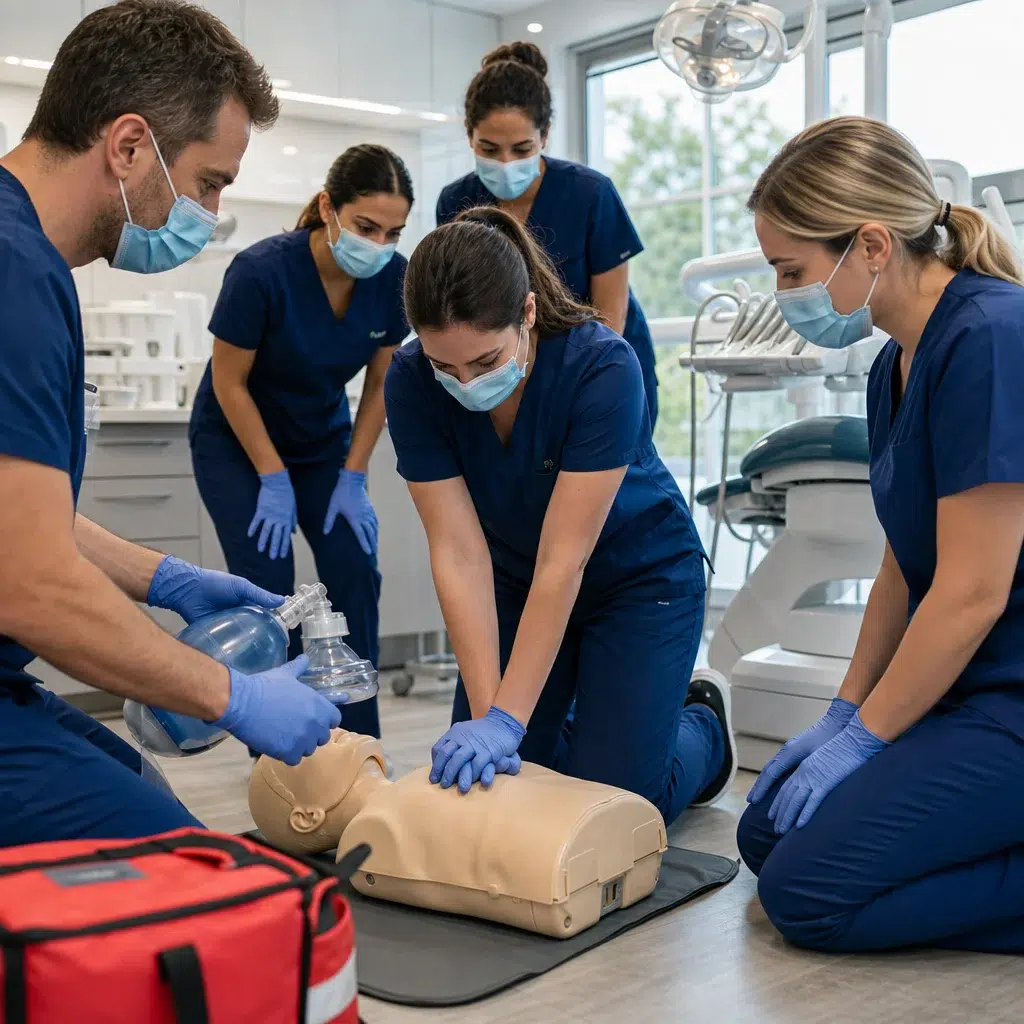
Some practices block the same week each year for training renewal, treating it as a non-negotiable calendar item like equipment maintenance. This consistency prevents certification lapses and keeps your compliance record clean.
Review recertification requirements periodically because guidelines evolve. Your training provider should communicate any updates to protocols or techniques, ensuring your team learns current best practices rather than outdated methods.
Action item: Mark your calendar now for annual recertification timing, block those dates with your team, and confirm your training provider will hold seats for recurring annual groups.
—
Effective BLS training scheduling transforms what feels like an administrative burden into a streamlined, affordable compliance process. The practices we work with consistently tell us that choosing the right training partner—one that understands dental scheduling, offers location flexibility, delivers blended learning, provides same-day certification, and supports group training discounts—eliminates the stress entirely.
We’ve built our training programs specifically for California healthcare professionals like you. Our blended learning approach keeps your team away from the practice for minimal time. Our 100+ training locations across California mean training happens near you, whether you’re in Oakland, San Jose, Sacramento, or any other California community. Our same-day certification ensures immediate compliance documentation. Our group training discounts make certification affordable for your entire team.
Start scheduling your team’s BLS training today with a provider who understands that your practice’s success depends on both clinical excellence and operational efficiency.
Register for a class today.
Frequently Asked Questions (FAQ)
How do we help dental practices minimize disruption when scheduling BLS training?
We offer blended learning formats that combine virtual instruction with in-person skills sessions, so your team spends less time away from patient care. Our flexible scheduling works around typical dental office hours, and with over 100 training locations throughout California, we can accommodate your staff at a location convenient to your practice. This approach lets your team stay current on certifications without sacrificing productivity.
What’s the fastest way for our dental office to get the entire team certified?
We recommend our group training option, which we can schedule at your practice or at one of our nearby locations. Our same-day certification courses mean your whole team can complete both the knowledge and skills components in a single session and walk out with valid credentials. We also have BLS certification courses offered daily across California, giving you flexibility to find a session that fits your practice calendar.
How do we ensure our dental team stays compliant with recertification requirements?
We suggest implementing an annual recertification schedule before current certifications expire, which prevents lapses in your team’s credentials. We can help you track your team’s certification dates and work with you to schedule recertification courses in advance. Our low price guarantee on all classes makes it affordable to keep your entire dental staff continuously compliant with licensing standards.