Table of Contents
- Understanding the Critical Differences Between ACLS and PALS
- Who Needs ACLS Certification and When
- Who Needs PALS Certification and When
- Key Similarities in ACLS and PALS Training
- How Recertification Timelines Differ for Each Program
- Choosing the Right Certification Path for Your Healthcare Role
- Why Blended Learning Makes Recertification More Accessible
- Our Same-Day Certification Process Saves You Time
- Finding Convenient Training Locations Throughout California
- Maintaining Compliance Without the High Cost
- Getting Started with Your Recertification Today
- Frequently Asked Questions (FAQ)
Understanding the Critical Differences Between ACLS and PALS
As a healthcare professional in California, you’ve likely heard both acronyms thrown around in hospital hallways and clinic breakrooms. ACLS and PALS certifications sound similar, but they’re designed for different patient populations and clinical scenarios. Understanding which one (or both) you actually need can save you time, money, and the stress of pursuing unnecessary training.
We work with nurses, dentists, EMS personnel, and other healthcare providers across over 100 California locations who face this exact question every year. Whether you’re renewing your credential for the first time or managing multiple certifications, this guide will clarify what each program covers and how to choose the right recertification path for your role.
ACLS (Advanced Cardiac Life Support) focuses on emergency response for adult patients experiencing cardiac emergencies, stroke, or other life-threatening conditions. PALS (Pediatric Advanced Life Support) applies the same resuscitation principles but tailors them specifically to infants and children, accounting for the physiological differences that make pediatric emergencies fundamentally different from adult emergencies.
The core distinction lies in patient age and physiology. ACLS covers patients roughly 12 years and older, while PALS addresses patients from newborn through early adolescence. This age boundary matters because a child’s airway anatomy differs significantly from an adult’s, medication dosages are weight-based rather than fixed, and the underlying causes of cardiac arrest in children often differ from those in adults.
Medication protocols also diverge between the two programs. ACLS emphasizes medications like epinephrine and amiodarone delivered at standard adult doses. PALS requires providers to calculate pediatric drug doses based on patient weight, adding an extra layer of precision to emergency decision-making. Equipment considerations differ too: PALS training includes guidance on pediatric-sized airway devices, defibrillation pads, and monitoring equipment calibrated for smaller bodies.
The scenarios you’ll practice during each course reflect these differences. ACLS training typically includes situations like sudden cardiac arrest in an acute care setting or managing a stroke patient. PALS scenarios involve responding to respiratory distress in an infant, managing a seizing toddler, or recognizing signs of shock in a child. Both programs demand quick thinking and coordinated teamwork, but the clinical context shapes the decisions you make.
Who Needs ACLS Certification and When
If you work in acute care settings like emergency departments, intensive care units, coronary care units, or cardiac catheterization labs, ACLS certification is typically required for your role. Critical care nurses, cardiologists, intensivists, and emergency medicine physicians routinely need this credential. Many hospitals mandate ACLS for any provider who manages adult patients in high-acuity environments.
EMS personnel responding to adult emergencies in the field also require ACLS certification. Paramedics and advanced EMTs rely on ACLS protocols to guide their treatment decisions during out-of-hospital cardiac emergencies. Similarly, anesthesiologists, nurse anesthetists, and operating room staff must maintain current ACLS credentials since they manage patients under anesthesia who may experience cardiac complications.
Some healthcare settings extend ACLS requirements to staff who might need to respond during in-hospital emergencies. Depending on your facility’s policies, you might need ACLS even if cardiac emergencies aren’t your primary focus. Check with your employer’s credentialing requirements, as these vary widely across hospital systems and clinics throughout California.
Your initial ACLS certification involves a full course combining didactic instruction with hands-on practice using manikins. Recertification follows a simpler pathway: you’ll review updated algorithms and practice skills, but the process moves faster than the initial certification. We offer same-day recertification options at convenient times that work around your shift schedule.
Who Needs PALS Certification and When
Pediatric nurses, especially those working in pediatric intensive care, general pediatric units, or pediatric emergency departments, need current PALS certification. Pediatricians and family medicine physicians who care for children require this credential, as do physician assistants and nurse practitioners in pediatric practices.
Neonatal nurses and respiratory therapists in neonatal intensive care units (NICUs) often pursue PALS training, though some facilities offer specialized neonatal resuscitation programs instead. Anesthesiologists and nurse anesthetists providing care to pediatric patients must maintain PALS certification. Emergency medicine physicians and EMS providers who respond to pediatric emergencies in communities like Sacramento, Fresno, and San Francisco also need this credential active at all times.
Dentists treating pediatric patients may require PALS depending on their state licensing board’s regulations and whether they administer sedation or anesthesia. Verify your specific professional licensing requirements with your state board, as mandates differ across specialties.

One important distinction: PALS isn’t automatically required just because ACLS is. These are complementary but separate credentials. You might need only ACLS, only PALS, or both, depending on your patient population. Your job duties determine the requirement, not the other way around. We see healthcare providers across Berkeley, Oakland, San Jose, and the greater Bay Area who maintain both certifications because their roles require emergency response across age groups.
Key Similarities in ACLS and PALS Training
Both ACLS and PALS courses emphasize the “chain of survival” concept: early recognition and activation of emergency services, immediate CPR, rapid defibrillation (when indicated), and post-resuscitation care. The fundamental principle underlying both programs is that prompt, effective intervention saves lives during cardiac emergencies.
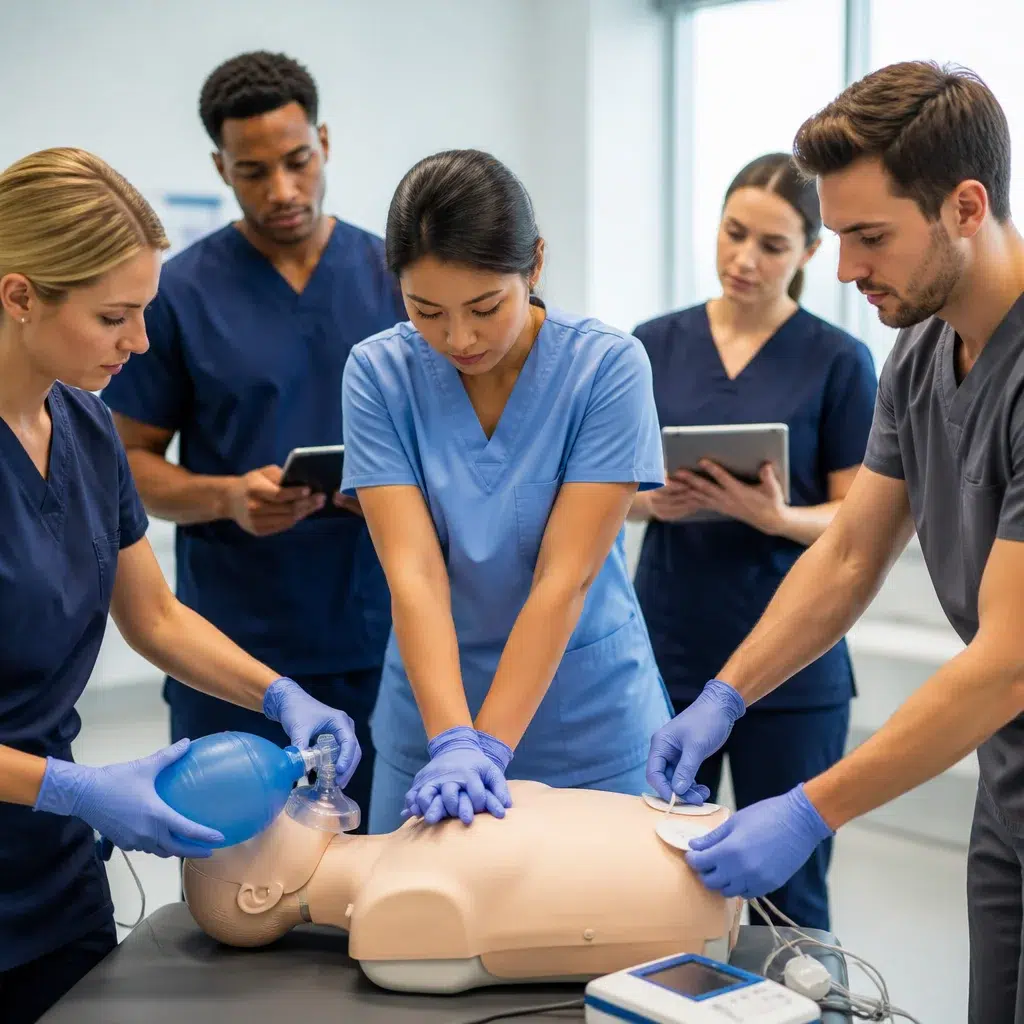
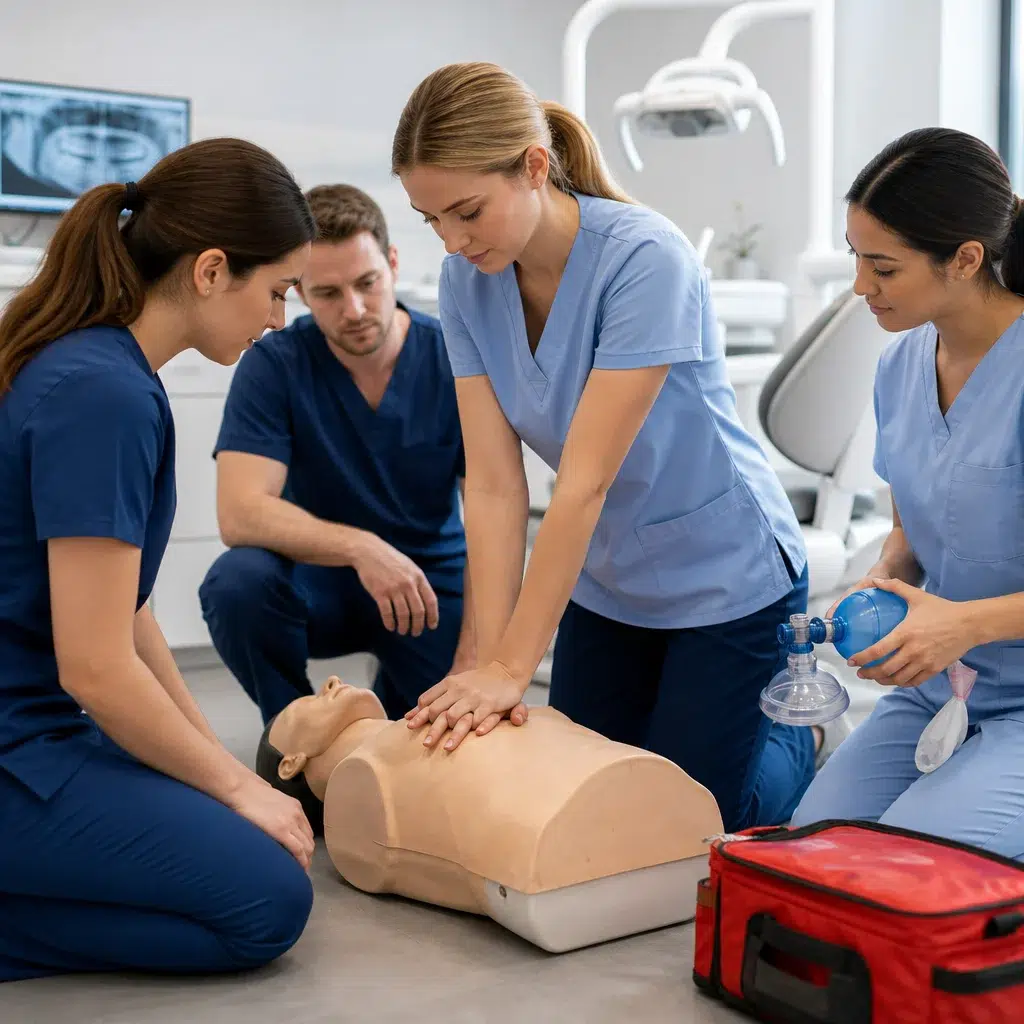
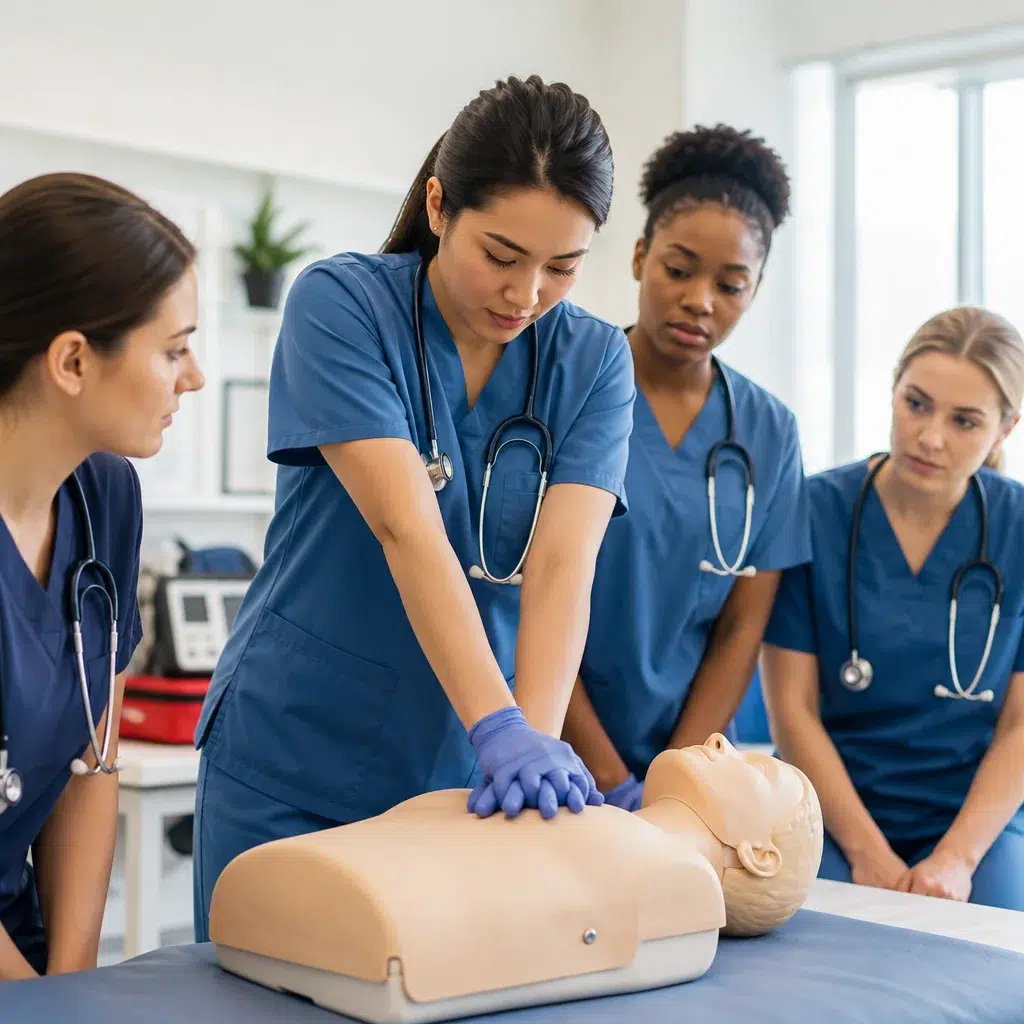
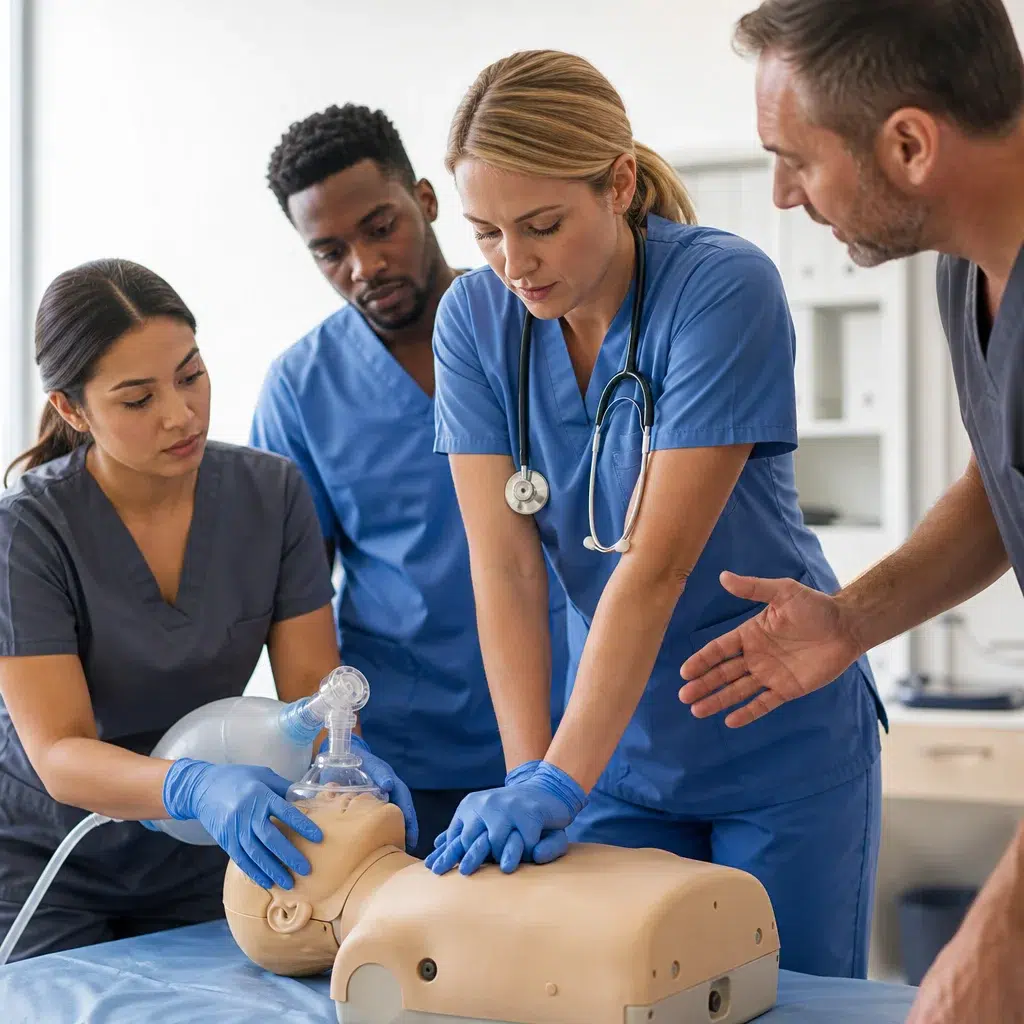
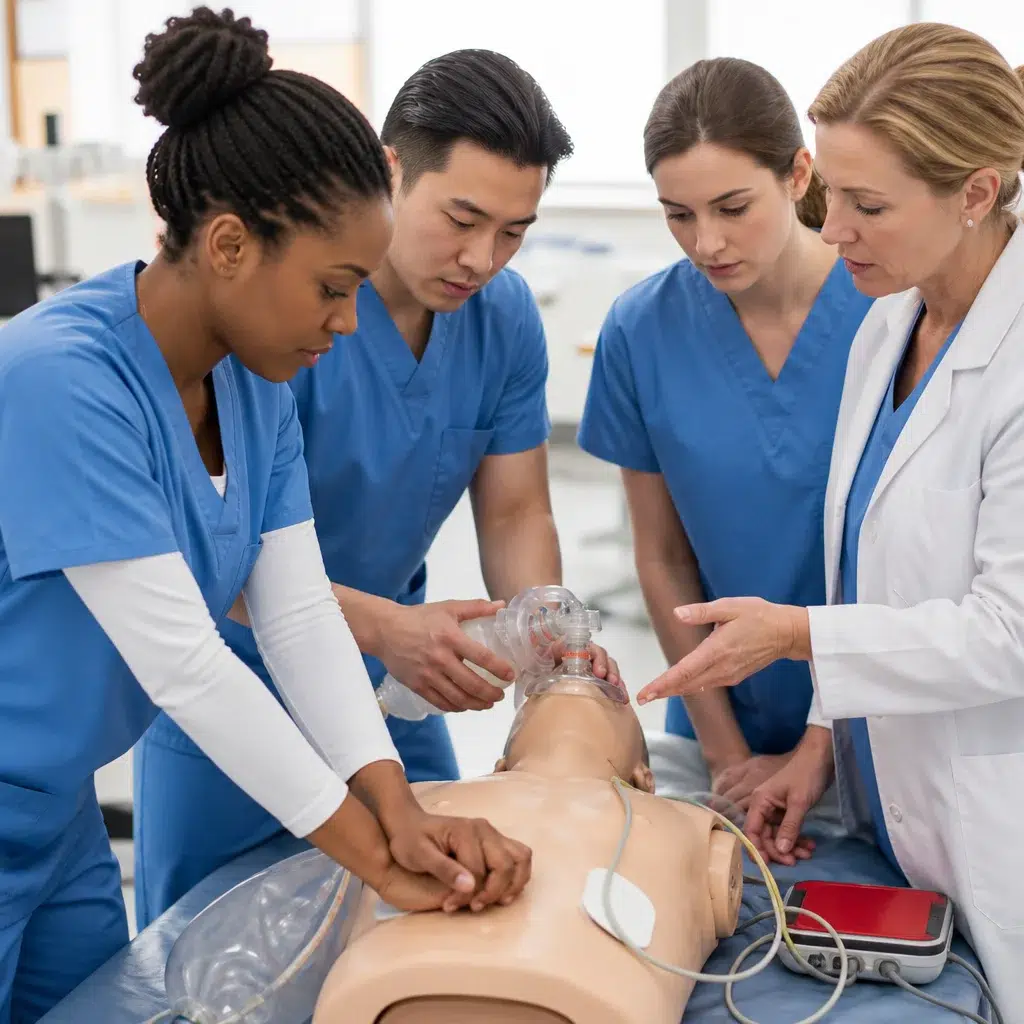
Each course requires demonstration of competency in core skills. You’ll practice chest compressions with proper technique, learn to operate defibrillation equipment, and practice bag-mask ventilation or airway management. Instructors observe your performance against standardized criteria and provide real-time feedback so you understand exactly what you’re doing well and where you need adjustment.
Both programs use algorithm-based decision trees to guide your responses. Rather than requiring you to memorize complex protocols, these visual algorithms help you assess situations systematically and determine the next appropriate action. During actual emergencies, this structured approach helps teams work cohesively because everyone follows the same logic.
Scenario-based practice forms the backbone of both courses. Instead of passively listening to lectures, you’ll participate in simulated emergencies where you apply knowledge immediately. A manikin “patient” experiences sudden collapse, and you determine whether to initiate CPR, what medications to give, and how to communicate with your team. This active learning approach builds muscle memory and confidence so you can respond effectively when real emergencies occur.
How Recertification Timelines Differ for Each Program
ACLS and PALS certifications remain valid for two years from the date you complete the course. However, the approach to renewal differs slightly between programs, and understanding these timelines helps you stay compliant without gaps in certification.
Most healthcare employers track certification expiration dates and notify staff when recertification approaches. However, you’re ultimately responsible for maintaining compliance. We recommend scheduling your recertification within 30 days before expiration to avoid the awkward situation of letting a credential lapse. Some facilities won’t allow you to work until you’ve renewed, potentially disrupting your schedule or schedule.
If your ACLS expires while your PALS remains current (or vice versa), you’ll need to recertify only the expired credential. Some providers choose to time both recertifications together for administrative efficiency, scheduling them on the same day or within the same week. This approach reduces the number of visits you need to make and streamlines your compliance calendar.
Recertification courses move faster than initial certifications. A typical recertification takes 4-6 hours instead of the 8-10 hours required for initial training. We offer flexible scheduling across our California network, including evening and weekend classes in locations like Modesto, Santa Rosa, and Vacaville, so you can renew without disrupting your work schedule.
Choosing the Right Certification Path for Your Healthcare Role
Start by reviewing your job description and your employer’s credentialing manual. These documents specify which certifications are mandatory for your position. If you’re transitioning to a new role, ask the hiring manager explicitly which credentials you’ll need and by what date.
Verify your professional licensing board’s requirements. Many state nursing boards, medical boards, and other regulatory bodies publish specific competency requirements. A pediatric cardiologist might need both ACLS and PALS, while a general practice nurse might require only ACLS. Don’t assume based on colleagues’ credentials; your specific role determines your requirements.
Consider your patient population and clinical setting. If you frequently encounter both adult and pediatric emergencies, pursuing both certifications makes sense. If your role focuses exclusively on one age group, you might need only one credential. Your specialty influences this calculation significantly.
Ask yourself whether you might transition roles within the next few years. An emergency medicine physician working primarily with adults today might relocate to a pediatric emergency department later in their career. If career flexibility matters to you, maintaining both ACLS and PALS keeps you prepared for role changes without the rush of last-minute recertification.
We help healthcare professionals across Antioch, Pleasanton, Morgan Hill, and dozens of other California communities identify their specific requirements and schedule appropriate training. During your course enrollment conversation, we’ll clarify what your employer and licensing board mandate, ensuring you’re pursuing the right credentials for your situation.
Why Blended Learning Makes Recertification More Accessible

Blended learning combines online instruction with in-person skills sessions, allowing you to study at your own pace before arriving for hands-on practice. This format respects your schedule while ensuring you receive hands-on instruction that classroom videos alone cannot provide.
You’ll complete the knowledge review online before your skills session. This might involve reviewing algorithm updates, watching brief instructional videos, and taking a simple knowledge check. Many providers complete this component over a few evenings or during a quiet shift, fitting learning around your work schedule. When you arrive for your in-person skills session, you’re already prepared, making the practical training time more efficient.
The in-person skills session focuses entirely on what matters most: performing chest compressions correctly, using defibrillation equipment, and practicing your response to realistic scenarios. Instructors don’t waste time lecturing information you’ve already reviewed online. Instead, they observe your technique, offer corrections, and build your confidence through repetition and feedback. These sessions typically take 4-6 hours for recertification, sometimes shorter if you already hold current certification.
This approach proves particularly valuable for busy healthcare professionals across San Francisco, San Jose, Sacramento, and other major California cities where scheduling conflicts make finding time for training challenging. Rather than taking an entire day away from work, you might complete online review on your days off and attend a 4-hour skills session that fits your available window.
Blended learning also means you’re not passively sitting through material you already understand. You focus your in-person time on demonstrating competency and receiving personalized feedback, which research shows improves retention compared to traditional classroom formats where everyone moves at the same pace regardless of prior knowledge.
Our Same-Day Certification Process Saves You Time
We understand that your schedule doesn’t fit neatly into training calendars. That’s why we offer same-day certification options at multiple California locations. You can complete your entire recertification, including online review and skills testing, within a single day, leaving with your renewed credential in hand.
Our streamlined process works like this: you complete the online knowledge review ahead of time (or within a few hours before your skills session if you’re pressed for time). You arrive for your appointment, complete any final assessments, practice skills with our instructors, demonstrate competency, and receive your certificate immediately upon successful completion. No waiting for mail, no delayed processing, no gaps in your credential validity.
Same-day certification particularly benefits healthcare professionals with unpredictable schedules. If you have a rare day off and want to knock out recertification before the deadline, we can accommodate you. Emergency medicine physicians, critical care nurses, and EMS personnel appreciate not having to coordinate multiple visits or wait weeks for results.
Our instructors are experienced healthcare providers themselves. They understand the demands of clinical work and design training sessions that acknowledge real-world constraints. Questions about applying skills in your specific setting? Our instructors have relevant experience and can help you connect course concepts to your daily practice.
Finding Convenient Training Locations Throughout California
We maintain over 100 training locations spanning California from Redding in the north to Visalia in the south, and from coastal cities like Santa Cruz to inland communities like Lodi. Wherever you work, we likely offer classes within reasonable driving distance.
In the Bay Area, we offer courses across multiple neighborhoods in San Francisco (including Mission Bay, Nob Hill, and Parnassus/UCSF), throughout Oakland (Fruitvale, Lake Merritt, Piedmont), San Jose (Downtown, Japantown, Willow Glen), and surrounding communities like Fremont, Hayward, and Pleasanton. Northern California professionals access training in Sacramento (with locations in Arden, Midtown, Oak Park, and Rosemont), Stockton, Fresno, and Bakersfield.
Peninsula and coastal providers can attend classes in San Mateo, Palo Alto, Santa Cruz, and Santa Rosa, while those in the East Bay foothills benefit from locations in Walnut Creek, Danville, and Dublin. Whether you’re in a major metropolitan area or smaller community like Brentwood, Lathrop, or Merced, convenient training exists nearby.
Scheduling is simple: select your preferred location and date, enroll online, and receive confirmation with parking and arrival instructions. PALS Certification Classes are available daily at many locations, and we rotate ACLS offerings throughout our network to ensure availability across regions.
Maintaining Compliance Without the High Cost
Professional certification can strain personal budgets, especially when you’re managing multiple required credentials. We’ve made ACLS and PALS recertification affordable through our low-price guarantee. You won’t find lower rates elsewhere, and if you do, we’ll match them.
Group training discounts apply when your hospital, clinic, or EMS agency enrolls multiple staff members. These bulk discounts substantially reduce per-person costs, making it easier for employers to fund compliance training. We work with healthcare organizations across California to build recertification schedules that serve entire departments or agencies.

Our pricing structure is transparent: no hidden fees, no surprise charges at the end. You know exactly what you’re paying when you enroll. Our same-day certification option also reduces costs by saving you time off work. Completing everything in one visit means one trip to our training location, one session away from your job, and one round of child care arrangements if needed.
AHA Skills Testing options allow providers who are already familiar with current protocols to test only on skills without retaking the full course. This streamlined pathway costs less than comprehensive recertification while still keeping your credentials current. If you’ve recently reviewed algorithms through continuing education or online sources, skills-only testing might be your most efficient option.
We also operate CPR verification stations where you can complete skills assessments on a convenient schedule. This flexibility means fitting your recertification around your actual work availability rather than forcing your schedule to accommodate rigid class times.
Getting Started with Your Recertification Today
Begin by checking your current certification dates. Review your employer’s credentialing requirements and your professional licensing board’s mandates to confirm which certifications you need. Don’t assume based on what colleagues have; verify your specific requirements.
Calculate your recertification timeline. If either certification expires within the next 60 days, schedule your course now. Waiting until the last week creates unnecessary stress and might limit your available course dates.
Visit our website to explore available courses in your area. We offer ACLS and PALS recertification daily at most locations throughout California. You can review class schedules, pricing, and instructor information before enrolling.
Contact our enrollment team with questions about which credentials your role requires. We’re experienced in helping healthcare professionals navigate these decisions and can clarify requirements specific to your position, specialty, and state licensing board.
Schedule your recertification during a time that works for your schedule, whether that’s a weekday evening, weekend morning, or even same-day if you have urgent timing. Our flexible approach ensures you can renew without disrupting your clinical work.
Complete your online review component before your skills session date (or arrange to complete it that morning if you’re attending a same-day certification). Arrive a few minutes early so you can settle in and prepare for hands-on practice.
Your renewed credential arrives immediately upon successful completion. You’ll leave our training location with confidence that you’re fully compliant and ready to respond effectively to cardiac emergencies across your patient population. Start your recertification process today and maintain the professional certifications that keep your license current and your patients safe.
Register for a class today.
Frequently Asked Questions (FAQ)
What’s the difference between ACLS and PALS recertification, and how do I know which one I need?
ACLS certification covers advanced life support techniques for adult patients, while PALS focuses specifically on pediatric and infant resuscitation protocols. We recommend reviewing your job requirements or licensing board standards, as nurses and EMS personnel often need ACLS, while pediatric specialists and certain emergency room staff typically require PALS. Some healthcare professionals need both certifications depending on the patient populations they serve.
How often do I need to recertify with you, and can I do it quickly?
We require recertification every two years for both ACLS and PALS credentials to keep your skills current. Our same-day certification process means you can complete your renewal in a single visit at one of our 100+ California locations, and we offer daily BLS courses so scheduling around your work shifts is straightforward.
Why should I choose your blended learning approach for my recertification?
Our blended model combines virtual coursework you complete on your schedule with hands-on skills sessions at one of our conveniently located training centers. This flexibility lets you manage the knowledge components from home while ensuring we properly assess your practical abilities in person, making recertification less disruptive to your work life without cutting corners on quality.